From Flipping Sports Cards to Building The Go-To Home Service Data Company
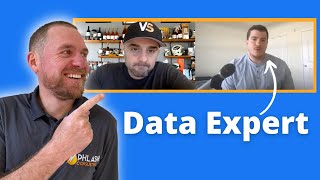
Interview (host Phil Risher) with entrepreneur John Tory describing his path from automotive digital marketing to side hustles (garage selling, sports-card flipping), to writing and content creation, and finally founding Searchlight — a company that began as a PPC agency for home services and pivoted into a SaaS/data analytics platform focused on attribution, data matching, and revenue visualization for HVAC/plumbing/home-services businesses. Key themes: spotting arbitrage/opportunity (sports cards → market patterns), product-market fit in home services, fragmented data sources and the need for accurate data-matching, KPIs Searchlight surfaces (spend, return-on-ad-spend potential/closed, match-rate, customer acquisition cost), and audience-building via a free weekly newsletter (Data Driven Trades).
Questions this video answers
data-driven-trades.substack.com
SearchlightDigital.io (branded as Searchlight Digital IO)
Chapters
Welcome back to the show. I'm your host, Phil Risher. And on today's episode, we have John Tory. John, I actually heard you on Gary V's podcast and I'm like, man, this guy speaks my language. I need to find this guy. So I found you on LinkedIn. This was probably like, I don't know, six months, even a year ago. And you are amazing entrepreneur at this point, but you have a really, really cool story that we're going to talk about. So, John, thanks so much for being on the show today.
Yeah, Phil, thank. Thank you so much for having me. And I think it's awesome that you found the, the GaryVee podcast almost a year ago and so much has changed since then. But it's always fun to connect with people in the industry from something like that and that exposure that Gary helped give me. So really excited and humbled to be here today.
Yeah, awesome. I love it. Okay, so take me back to 2019. You were living in Vermont, I believe.
Yes.
Yep. And you were working a job that you didn't like.
Yep.
Or something. And it, it was in the auto industry or what were you doing exactly.
Yeah. So we. So I was in the automotive industry, digital marketing. So you know, websites, digital advertising, CRM software for car dealerships and OEM groups. Great company. I had been there at that point for probably seven years, but they had been acquired twice. I had, I think, a dozen different managers. Some people I really liked ended up leaving to start their own businesses or do other things. So it just completely changed and I felt a little bit stuck in, stymied and, you know, my own career growth.
Yeah, I could see that. So then you're listening to Gary Vee.
Yeah.
And. And he said, go do some garage sailing. And you're like, well, I guess I'll start here. Or how does that happen?
Straight up? I mean, it was, you know, I'm someone, I'm very analytical, which ended up, you know, that's kind of in surfslides. Yeah, the whole, the whole team is. And so I just kept thinking about I need and want to do more. I can see the writings on the wall. I get that feeling in my gut that this isn't the long term place I'm going to be. Some things need to change. Where do I even start? And it's interesting because I, you know, had always been a little entrepreneur. I tried different things, you know, throughout the years. And on a whim, I put Gary V back on and he literally said, garage sailing is the thing that you can do. Starting literally today, that's going to help you build business experience and with very little barriers. Wow. And I think that was in February, so in Vermont, and I was traveling to Connecticut to visit my girlfriend, and New England is very cold, so garage sailing was a couple months away. But what I started to do is just look around my apartment for things that I no longer used and listed on Facebook, Marketplace, and that's what got the ball rolling.
Wow. That's crazy. So then I believe you got the itch for sports cards. And how did that. How did that transition come about?
My entire mindset. As I was doing the garage sailing, which is so much fun, my mindset started to change, where everywhere I would go, I would start to see the value in things and think about things a little differently. So, very specifically, this was again, back in 2018. So I'm a big Eagles fan. The Eagles had won the Super Bowl.
Yeah.
Carson Wentz took us most of the way. He got hurt, and then Nick Foles finished it for us. Thank gosh. We need. We needed one. And I was walking through them all after I had been garage sailing. This is in the summer. And I remember seeing a Carson Wentz sign helmet. And again, the garage sale brain went off. And I thought, okay, that's $400 right now. But if he comes back and I follow the Eagles. So I have maybe inside information of just. I think he's going to come back and he's going to play well, and he's got a good team around him. So I think Carson Wentstock is going to go up. But as I thought about it, a helmet is bulky. I don't know how many there are, how many autographs. There's no way to really grade it and say this one's any different than that one other than authenticity. And then Gary Vee was talking about sports cards and how he was noticing that there was an itch coming back from a larger audience. And I thought, wow, sports cards, they're smaller, so they're easily transportable and storable versus, like, a helmet in my room. And you can grade them, and there's different sets and rarities, and the quantities are a little bit more known. I thought that could be cool because, again, there's some arbitrage of I think these players are going to perform well. It's the off season, like right after football season ends, right before, you know, the draft and things like that. There's a lull period. And that was around the time, you know, like, I was kind of in the summer like this was after the draft in June. So then I started buying sports cards and man, it exploded. I think covet had a lot to do with it. I do think things heated up and over inflated, but it just absolutely went bonkers. And I just had been fortunate enough to get in early. And I was a collector too. I have a pretty, you know, interesting cards that I kept but it was just unbelievable. It was hard to fail at that point. You could pretty much have bought any modern sports card and flipped it for a profit during that period. Now it's not like that anymore, but it, but that's garage sale and turned it. And I stopped garage sailing because sports cards was so big at the time.
Yeah. And at this time you were still doing digital marketing stuff.
Yes. Like full time. Yeah, doing the digital. I mean this was nights and weekends. But because there was such a passion behind it, the energy was, was there. I know a lot of people struggle with fatigue and I, I still do. But for me when I found that passion, it over overrode that a hundred percent. I mean it was, it was just a blast. It was, it was a lot of fun.
Yeah, for sure. So then I believe you started writing blog content at that point or was it with NFTS next or how did that transition come about?
Yeah, so I've, I've always liked to write. I remember in high school like I started a little blog as part of a class but I was obsessed with it. But again I never found an entry point.
Yeah.
So when I was sitting and thinking about what could I do outside of my full time job just to get a little extra income but also build a skill set, I thought about starting a blog. But what do I started about? So what ended up happening is I traded sports cards and there was a website sports card investor that offered to his general audience, look, if you write an article and you're the number one article for that month will pay you 200, $250. So I had a really good idea for an article. I wrote it. I think I might have won that like two or three times. And then I got in contact with 1:37pm which is Gary V's one of his media companies very focused on written and video content. And I wrote a few articles as samples. I reached out to the GM on Twitter and said I wrote four articles that I think fit the voice and the style of 1.37pm Would you mind taking a look and seeing if the person that oversees sports writing would be willing to hire me as freelance? And he put Me in touch with that person. And that person, great guy Jason, he took a little while to get back to me. So I wrote another article and sent it over and then I wrote another one. And then he finally said, okay, this is the one that really, really works, but I need you to change a few things and we'll go live with it. And I, that day, changed a few things, went live with it. We didn't even talk about rates or anything. I was just so excited that I got my foot in the door in this way and the article went live. And then he said, hey, do you want to write some more? And I said, absolutely. So then it turned into writing listicles, you know, top 10 sports card or soccer card sales of all time. I got into some really, really interesting data from that perspective and learned how to tell a story around it, which comes into play for Searchlight later. And a big part of our marketing.
Yep.
But yeah, so I was writing dozens of sports card articles, very data oriented about the market and what was happening and Big Sal and the stories behind why some of these cards are worth what they're worth.
Yeah, definitely, that, that makes sense. And so once you started writing, then how did you make the transition into home services from that point?
Yeah, so it's pattern recognition. So with Garage Sailing again and sports cards, there's these. There's patterns that are cyclical that just. They tend to happen. They tend to happen. So one of the things that I would notice is sports card would become really valuable. Say Tom Brady's rookie card, his rookie ticket, autos, which there's not many of them, he's won a bunch of Super Bowls. Like that makes sense. But what would happen is that card would sell for say $2 million in a high grade. And then there was a lag. And then you would see Patrick Mahomes, you would see Peyton Manning, you would see these other quarterbacks, not secondary to Brady, but in a way secondary to some degree. The market sort of pivoted into these not lesser known, but just not the bright focal point. So if you played it, played it right. And the same thing happened with sports. Basketball was first, then football took off, then positional players in football, so it flowed down. So you could get ahead of the market and say, okay, if Tom Brady's cards are selling for a lot, a lot of money, my intuition is that eventually other quarterbacks are going to sell for a lot. And then eventually you'll see some running backs and wide receivers. So I kind of skipped a few and went to some wide Receiver cards. Got them early and was able to sell them. And then I was able to go into soccer. I had a bunch of Killian Mbappe before soccer cards had kind of blown up. So it's just looking at what's coming next and being able to predict that. So being an automotive, I was there firsthand to see the transitions that digital marketing brought forth to that industry. Part putting pricing online, which was a big, you know, pushback from, from car dealerships, companies like Cargurus coming into play and not only showing pricing, but also showing if it's a good deal, great deal, overpriced deal. There's a lot of pushback on that digital retailing. So being able to start the car buying process online. So we kind of saw these patterns and home services just kind of came about naturally. We were networking with some people about, hey, what might be want to do. And a few people had mentioned the home services space. And I ended up seeing that as, as did my team as an opportunity. This is a big industry that is now modernizing. There's good software that's out there, but there's still a ways to go and I think it's overlooked. And that's how we stumbled upon it. And obviously we had some family and friends that we talked to who were in the space. That always helps to actually get their feedback. And I think it turned out to be right because you look at what happened during COVID all of a sudden these are essential businesses staying open and doing really important work and people finally started to pay attention. So now you have private equity firms coming into the space for better or for worse. There's a lot of acquisitions happening, but that was the idea. I mean, similar thing where I am looking at the football card market and it's exploding, but soccer hasn't done anything. And there's a million. You know, there's a lot more fans of soccer. It's more of a global audience. And I know card collecting is us based. Let me take that bet. It paid off. I see it similar here. Automotive, bigger industry, absolutely. A lot more dollars floating around. But the home services space is still pretty darn big. There's a lot of really great companies, really great software, but a lot of really interesting opportunities as technology modernizes the space.
Yeah, definitely. Covid for home services, that's who we work with as well. And like the PE firms, they were going crazy. People were in their homes, they were going crazy doing stuff. And, and so to your point, you kind of saw, hey man, this is going crazy like, and I have this skill set that I could probably add value to these companies. And so you said, let me start doing that. So I believe you started Searchlight and then it was more of an agency model.
Right?
You were making websites and doing PPC and that kind of stuff.
Yes, so we started as an agency. We never made websites, but we were a pay per click agency with Facebook advertising. We're very good at that. That's what we did in the automotive industry. We had some really cool software that we were using that, you know, some, some people in our network had built and that was fairly new. So we're very confident going to market with an offering, excuse me, of PPC and Facebook advertising. Really high touch, really premium situation. You know, people with decades of experience.
Was this like H Vac companies, plumbing companies? Do you have like a niche that you started with or just home services in general? Did you have a threshold of revenue numbers, that kind of stuff?
Yeah, I mean it was H Vac and with some plumbing. A lot of H Vac companies have plumbing now and, and you know that that's part of it. But that was our core focus was H Vac and there weren't really any minimum revenue numbers. It was just like, if you're gonna spend some money on pay per click, we want you as a client because we wanted to learn. That was number one. I undercharged for our services over deliver, get our foot in the door, but just an opportunity for us to learn, take a chance on us. We each have over a decade of experience doing this and we care like we want to make your business grow. So that's how it started.
So at this point we haven't really talked much about your awesome newsletter that I love, but did you have the newsletter at this point and you were getting, did you start the newsletter first and then get the clients or how did that come about?
Yeah, so in order to get our first few clients, it was really friends and family of just, hey, we want to offer these services in the home services industry. Do you know anybody? Gary Vee actually talks about this. Text everybody in your contacts list and say, these are the services that I'm looking to offer to this particular user or niche or whatever. And we came across a couple of companies, again, pretty organically willing to take a chance on us. I think it was five clients that we had at first. And what we did is we over delivered. So the number one thing that happened is we start, you know, we rolled out our advertising and we managed the ads for these accounts and we would get the feedback, hey, we like your team and the technology you have, but we're not seeing the revenue in our CRM or fsm. And so I said, okay, let me track this manually and give me a couple months and if we suck, we suck. We're gonna move on from this. We're trying this as a business anyway. We believe in what we do and I'd be surprised if we aren't really good at it, but let me just go in and see. So that turned into a year long process of tracking lead to revenue by hand, thousands of leads to figure out where is attribution going wrong? Somewhere, where is it going wrong? And is this something that we potentially want to fix as a business model and pivot our company to doing? Long story short, that's what happened. We found a tremendous amount of issues with attribution and there wasn't really one singular company that came out and said this is the one thing that we want to be really, really good at in this particular vertical. Which again, being early in this phase of digital transformation afforded us some Runway to be able to do that. And now we've transitioned away from being an agency. We have some legacy clients that we want to take care of and there's important relationships and there's two way feedback learning that happens there. But we are now a software company focused on attribution, data matching, data storage, insights, visualization for the home services space.
Awesome. So what I gather is you, you pull in like ad data through their AdWords account, whether it's either even social media ads, whatever, CRM data, call tracking, data conversion tools like chat widgets or online scheduling, Google Analytics data. And then you're trying to marry all this stuff together to say that you spent this much, you got this many leads and then it turned into this much revenue.
Effectively, yes. So companies use different providers for different things. Call tracking, you might use what converts, you might use call rail, call tracking metrics. There's a lot of different providers. Yep. You might have a different website provider, you might have a different PPC agency, you might have Schedule engine, you might have Podium chat, you might have Pulse M chat, you have all of these different tools. You might use Service site service, Fusion House Call Pro, Sarah, you might use Chirp, you might use Go High level. There's a lot of different tooling out there. So the data is very fragmented. And what we wanted to do is make it really easy for you to connect all those data sources. And we do that work, we integrate for us to match those data sources and we do it in a very specific, differentiated way. A little bit of our secret sauce that allows us in an industry where there's a longer sales cycle to be very accurate as to the revenue flow. The customers go through different appointments, but knowing where they came from, how they converted, and then visualizing it to help you as a business understand, yes, how many dollars are my marketing channels and even campaigns driving me, but also what can I do from an operational perspective to improve the outcomes of my marketing spend?
Yeah, okay, that's great. I think for most business owners, they do not have that visibility or clarity into their numbers and they're relying on their agency and to try to present those numbers. And they're using like automated things that just say, you got this many conversions. And so then they're like, well, how much revenue did I get? And so for you to be able to put clarity to those numbers, it's pretty much a game changer for them because now they can see their true return on ad spend or return on investment in some cases.
Yeah. So it became really interesting because at that point we hadn't had the newsletter that started a little bit later once we got more clients onto this dashboard and they gave us permission to anonymize and share the data and then I could start putting out insights. So. But what ended up happening is that newsletter obviously blew up and ended up getting the attention of the entire industry. But we would. Contractors would hire us for our dashboards to be able to provide this visibility. And then they would pull their agencies in with such conviction and excitement around this new data that they could use to improve their marketing performance, their operations. And the agencies started to say, well, wait a minute, this could become useful for us too, because there's nothing worse than getting on a call with a client thinking that you've done a good job because you've driven them a bunch of new conversions, you implemented a new strategy, you feel really good about what you're doing, and they say, hey, you're fired because we're not seeing the revenue. You suck. I'm going to complain about you in a Facebook group. And then they add our dashboard and they say, well, wait a minute, you've got $5 million of open estimates. What's your follow up process? And there is none or it's very poor. So the agency started to see that value. And that's kind of when we said, look, we are not using this as a Trojan horse to get ad agency business. We're thinking long term. We want to partner with agencies. And I think We've had conversations with, you know, I can't say them all, but we've had a lot of conversations with agencies who are really excited about this because, again, it affords them another data set to dive into, but also the revenue data and some of the operational data, so that if they're put on the hot seat for some of these things, there's. There's dual accountability there where it's, hey, you're not picking up the phone. Hey, you haven't answered a form lead in two months, and your historical average ticket for form leads is $9,000, and you were getting a hundred thousand a month from that. That. We can't do all of that for you.
Yep, we have that same heartburn. So as a consulting team, we're consulting them like, you know, driving leads. And it's like, guys, what's going on with these? And they're. I completely agree. So. So on your dashboard for business owners that are out there, are there, like, a couple numbers that you would say, like, you got to know these numbers, like your customer acquisition cost or your conversion rate optimization or whatever those numbers are that people, even PE firms or people are looking at this. This data set is what you really should know.
Number one is spend. I know that sounds. Again, we integrate with the app provider, so it would pull that in. We pull in management fees as well. Like, a lot of, you know, I publish about organic benchmarks and customer acquisition costs, and people always say to me how organic is free. So what, you know, what kind of scam is this that you. And I said, no, you're paying for someone usually to manage your SEO, to manage your website, to manage your gmb, to do those things. So we use that as the cost basis. But a lot of people, even in the PE firms, you have a big portfolio of accounts. What is the spend across those channels and in aggregate? And how is it changing month over month? That is number one. And it seems very simple. But this just goes to highlight how data is fragmented in our industry. If you were to sit down as a business owner, just looking at digital marketing, and I ask you, what have you spent this month so far? You'd probably have to log in to AdWords, to Microsoft, ads to Facebook. You probably have to ask your agency and look at your invoice, wait, what am I paying again for, you know, SEO and website management? And you don't even know what that spend is. And then I ask you, well, how is that trending compared to last month? Now you got to go do the process all over again, absolutely. In our dashboard, that's the first metric. On the top left is your spend. And that's going to add a lot of context to the rest of the data, whether that's up, down or the same. And then the next one is going to be return on ad spend potential. That is the sum of open estimate, slash, unsold estimate revenue. We take one per customer, we take the average. So we're not double counting plus sold revenue, plus close revenue. So that tells me every dollar opportunity from a marketing channel or campaign in a selected time frame. As an agency, you should love that, of course, because you can't close the business. So if I bring you a 10x return on ad spend potential, I've done my job. If you only close 2 of that because you're not following up on unsold estimates, don't fire us because we're bringing you that demand measured by return on ad spend potential. Return on ad spend potential can also help you figure out if there's enough demand in your market for a specific channel. Take LSAs for example. Those have been very volatile lately. Some companies last year were seeing 30x returns. Not a lot of volume, but just really performing well. But now we're starting to see some of that return on ad spend potential sink below that 10x, which is telling me, team, there's not enough dollar opportunities to ride LSAs as our core marketing strategy. We've gotta diversify and really think about other opportunities in your market because it's getting more competitive. Everybody else has figured out that LSAs were really inexpensive and driving a lot of revenue. Google was really pushing it. And again, supply, it's all about supply and demand. There's a lot of demand for that real estate now because there's more companies that want to spend there because there is a supply of customers going through that specific channel. So that would be number two. Number three is obviously return on ad spend closed. That's again the closed and completed business. That revenue divided by your spend to tell you, hey, in this month, looking at it from an accounting perspective, what did we collect on compared to our spend and that relationship between return on ad spend potential and return on ad spend close. You want that to be about 50%. You want about 50% of your revenue opportunity to end up as closed and completed business in a given time frame. If you're well below that, there's probably some operational issues, but those are the big three that I would look at. Of course, I can go into match rate, which is the percentage of active Customers that match to a sellable opportunity in the CRM, which tells me about your lead handling processes. I can look at your paying customer rate, percentage of active customers that end up as sold or closed, which tells me about your sales process. But I also like to look at your customer acquisition cost. That is what it costs to get a paying customer. That's very different than cost per conversion. It's very even different than cost per sole job. We're really looking at sold and closed. How much did it cost from a particular channel? And then we'll look at average tickets and then we can break that out by conversion tool, which is also really useful because instead of saying, hey, lead handling is not good, fix it. We can specifically say you turned on Google LSA messages. You've gotten 60 messages, only four of them have matched to new opportunities and your average ticket is $15,000. So let's go fix. Why aren't we answering those messages? Chat. Oh, well, they're off. You know, they're after hours or they're this or they're that. We can evaluate whether or not you want to staff for that, Turn it off, et cetera, et cetera.
Nice. Yeah, I love that. So these PE firms, I'm sure they see that this is so valuable. Have you seen an instance where like an H VAC contractor has this data and then it would elevate their, their EBITDA or like what they get if they were to sell their business to these PE firms? Or how has this made an impact on those, those contractors from a standpoint of like sellable or even growing their business?
Yeah, absolutely. So that it's interesting that you asked, like, because we do work with a number of private equity firms because again, the ability to aggregate the data into one place, provide insights and a framework to evaluate the performance of a business and what juice is left to squeeze out, in a sense, and not by working more hours or punishing people, but just figuring out where are some of the revenue leaks. So we started talking about revenue leaks about a year and a half ago. I've seen other people use that, that terminology. I like to say that we coined it, but we look for those revenue leaks. So I have not seen an instance yet. Like again, a lot of our, the companies we work with, RPE firms, so they've already acquired, but we've had conversations about using our data to evaluate the performance of a business. So how well are they? Because if I'm a PE firm and I see that return on ad spend potential is a 20x and return on ad spend close as a 5x, I know that I, I want to buy that business because there's demand and I can immediately come in and I can bump that return on ad spend close from a 5x to a 10x. And you can establish benchmarks.
Exactly.
So we have some people who do that. Like, they'll establish the benchmarks of their portfolio. They look at the top performers, they figure out, okay, if everyone's a top performer, here's the revenue we could go get. But when we evaluate a new business and they have this data, we can look at where to potentially optimize. I haven't had hard numbers on that, like, oh, it's going to increase EBITDA by X amount. But again, when I think back to Gary Vee and Arbitrage, you know, like, I used to sell Nerf guns on ebay. And I know that this is a, seems like a wild how do we go from PE firms and Ebitda to Nerf guns? But what I noticed with Nerf guns is if you add a fresh set of batteries and just make sure that it's working, you could charge almost double. So if you provide some proof that, hey, this, you know, because now the new ones are automated and there's all this really cool stuff that can almost double the value if you add cartridges to it. If you add the Nerf dart, like, there's so many things. So when PE firms, I think are looking at these businesses, they're thinking about, how can I take an already successful and profitable business and make it better? And our dashboard helps people get 1% better every month with the details. And it's really fun to work with those PEs because there's a lot of actionable takeaways for them because they're very data oriented to be able to look at their portfolio, who's doing really well, what are they doing differently? And can we apply that and teach that to our other brands?
Yeah, I love that. And I think for PE firms to be able to, even in their due diligence, maybe take this and stick it in a business and just say, hey, we're just pulling some numbers here. Like, that could be an awesome way to get to the end and have your next, like, action plan going into it. So that's pretty sick. One question that I have for you about the industry in general. So like with Searchlight, have you thought about, and maybe you have this, but like, building an AI tool that could analyze the data and kind of like spit out like, hey, this is what you should Do.
Yeah. So there's a lot of people are talking about AI right now. A lot of people are building product around it. I think there's still a lot left in terms of the evolution of AI. I'm not talking years either, I'm talking within 12 months. So we have talked as a team about leveraging AI to provide automated insights and there's going to be a lot coming around that. But we kind of want that first wave of, hey, we do AI, we built this really fancy product. I mean, you saw what happened with OpenAI, right? Sam Altman, I mean, he's pushed out, he comes back and now there's grok we took, there's, there's different LLMs, there's all kinds of things that I want to see and our team wants to see shake out a little bit more.
Yeah.
But yes, like there is going to be a component of this where again, data to me is like the oil of our industry and others, if used properly. And there's still qualitative and, you know, there's, there's still, you don't need data necessarily. There's still great business owners who have, you know, can make decisions with their gut or combine those things. I'm not saying you're going to automate your entire business with data and AI, but you could probably get pretty darn close and you can probably take what you know and your intuitions and set up frameworks around that with data. But because things are so fragmented and they're really hard to get at because our industry is interesting. If you buy a piece of equipment, right, you get an install that typically starts as a lead, a phone call, then you set up a consultation which could be two or three weeks out in the summer, even longer, you get three estimates, you've got to get financing. Then they come back to do, you know, they start the work, they complete the work, they come back out for warranty. This could be a two or three month process. So it's really, really important that whatever provider is going to be feeding data through AI or visualizing data or trying to tell a story, it really has the data storage piece down to know what happened, when, what preceded that, what that's all tied to. Because otherwise, you know, and this is where. Well, let me finish that. Otherwise you're going to have bad data. And I think that a lot of people, because we were challenged pretty early on of, well, we're just going to build this, we're going to build spreadsheets and check it manually.
I said, yeah, power bi Tools that pulls it in for me.
I mean, please, like, please do that. Because a year later they came back and said, okay, we get it now. This is really freaking hard to do. Like, we're just going to buy and we are more pretty competitively priced. We're really proud of that. But we got that a lot. And we've spent every waking hour for the past couple years in this data, connecting the data, building data storage systems from the ground up. Like, everything that we have built is completely custom to support the vision that we are the leading analytics provider for the home services space. We don't think about anything else. Even the AI piece right now is a little bit of a backseat because we need to make sure that this data matching and integration piece is really, really dialed in. And that's the only thing that we focus on. We're not an agency, we're not an fsm, we're not a conversion tool. So it's kind of nice that we have that luxury of like, we can be really, really, really good at this one thing that's very valuable to our clients and can help them grow their businesses, save on stress, reduce, churn all of those things. So again, AI stuff will come. But we're not in a rush right now. We see a lot of people in a rush, you know, grabbing market share, things like that. We needed to get the fundamentals really down pat first.
Yeah, I love that. So talking about your business, it's a SaaS model that people would pay for on a monthly basis, a subscription. And what is kind of the next big thing or what's next for your business in 2024 or like going forward, what do you see as the next couple things?
Yeah, I mean, for us, it's educating the industry. That's it. I mean, that, that is the core focus here. So we've had a lot, a lot of people reach out to us from this, you know, newsletter, which is pretty cool to see because that's been completely free. So I write a weekly newsletter where I talk about some of these insights in aggregate to give people an idea of the power that this data can wield in terms of decision making for their businesses. And I'm still kind of getting over cold and little rsv. So now I'm kind of breathing heavy a little bit. Apologize. Especially when I get passionate. I know the booty comes into play there. But 2024, in my eyes, is us executing for all of the new business that's, you know, kind of come to our doorstep here. A lot of really big Agencies that we're excited about, but also really getting people to understand the data and how to use it because we offer consulting services and you know, I've spent a lot of time with clients and we're getting better at putting that sort of into a formulaic process that anybody can go through. But we really just want to educate and it's fun to see when people come in and open our dashboard and they say, oh my gosh, our match rate dropped by this, here's what we need to do to address it. Or oh my gosh, our return on ad spend. Potential to return on ad spend. Close ratios below 50%. We've got to do better with follow ups. Let's go higher. Chirp. Right. So that's the piece that we're really focused on because it's pretty clear based on the outreach that people want this, they like what we've done, they like our style. We're obviously going to build a lot of different features in to the product. Like we just, you know, added campaign data so now you can see revenue by campaign and there's more stuff to come to come there in terms of roadmap. But because we have this data in a specific structure, there's more that we can do than anybody else right now. So when we're on calls with clients and they say, you know, I really wish I could see this or I really wish I could do that, we're taking that into account. And that's part of the, that's part of the education too. So if I were to revise my answer, it's 2024 is about educating the industry on data and how to use it for their business. Specifically the data that we're collecting on their behalf, that, that is only theirs, it's not shared with anybody else, that's their data to use. But then us educating ourselves on how this data can be used in the business so we can build other views and add other data points that are going to be valuable to contractors. So, you know, that's just been in our DNA is to roll up our sleeves and actually talk to our clients and try to know our clients better than anybody else. And I think that's what gives us an advantage because again, we're not trying to do 10 different things, it's just this.
Yep.
I mean I think I've now hit over a thousand calls of presenting this data and working with clients and we're excited from the learnings from that to build even more really interesting data points and views of the data.
Yeah, I Absolutely. Love the newsletter. And the thing that I love the most, I would say from your newsletter, is the customer acquisition cost breakdowns. Because a lot of times when we're talking with business owners, Even on our YouTube channel, it's like, okay, guys, if you. Everyone says, oh, I want to just run ads. And it's like, well, how much? What's your budget? Let's just start with 500 bucks. It's like, well, dude, that's going to get you one customer. And it might even just be like a maintenance call, no heat call or something. Like, we got to look at this holistically and come up with a real game plan that's going to make sense for your business.
Yeah.
And so, yeah, can you speak to.
That a little bit?
Like, how, how are these people using this data? And like, how do you connect the dots for if it comes in for a no heat call but then it ultimately gets into a new install, how does that work?
Yeah, we track all that. So again, because of the way that our data platform is built and that's our moat, in my opinion, that's why I don't give too many specifics about how we've done it. Yeah, we're able to follow that trail. And that's where I think agencies get excited because they get tired of we got you in the home. And then because you're, it's the middle of summer, you go to the home, you do a repair and you recommend, hey, you should probably get this unit replaced. Okay, let me book an appointment. Well, that we're booked three weeks out because it's June. Then they get into the home, then it's two more weeks, then it's a follow up. So it's two months since that lead has come in. And maybe they canceled. Like there might have been a cancellation in there. So we track all of that data to be able to present that. But when it comes to customer acquisition cost, so it's very interesting. I use LinkedIn as a litmus test for some of the new data that we want to put in or at least focus on. So the newsletter and the LinkedIn post, like, I get a lot of engagement on the customer acquisition costs. That's gotten the attention of a lot of agencies.
Yep.
When I trended that over 2023, and you can see for PPC, it has gotten more expensive to acquire a paying customer from ppc. The return on ad spend went up. But when I show that data in aggregate, an agency can say, hey, it's not just us. And if they're doing a good job, then you don't need to fire them and do a whole process to go get somebody new. Yeah, but I think there's some expectation setting as well with people because again, I'm in these Facebook groups and that's a gold mine for understanding customers. So for all the contractors out there, I'm studying you like I'm watching what you're saying in these Facebook groups to know what your pain points are so that we can build solutions specific to what we're good at and bring you value. That's how we as a business envision ourselves growing. And that's how I like to compete. I like to know our customers better than anybody else. I know there's a lot of people out there asking, hey, what do you love about Searchlight that we don't do? Like, I know that that's happening. And so I spent a lot of time in there and a lot of the feedback is, well, marketing is so expensive, I don't want to pay it. I'm going to fire my agency. You know, I'm just, I'm tired of this. Google sucks. This sucks. That sucks. Data is not meant to be all rainbows and unicorns. It's what our CEO Kevin Le says all the time. I know it's a very cliche statement, but it's true. If it's more expensive, it's more expensive. But that doesn't mean that you can't generate more revenue from that. Which is exactly what we did with our clients and our consulting clients over the past year. They saw that, okay, $500 customer acquisition costs. We've got to increase our spend if we want to keep generating this type of revenue. But when we do that, we've got to make sure that we're really efficient with that. We've got to improve our phone lead handling, which means we're going to go hire a company to train our CSRs, which means we're going to get Chirp on board. When you add Chirp man, oh my gosh. Like the amount of revenue that Chirp generates from that follow up. And again, we're able to see that whole customer journey. It's unbelievable. And you can save more business from something like a PPC and you can improve that return on ad spend. So it's just about the expectation, setting the reality of the market. You might hate PPC and say, okay, I'm going to go all in on organic, but wait a minute, Google's making organic changes and you need to track that. I've seen Companies that switch out the GMB number, it's the wrong number for a couple days, they miss a ton of business. There's little things like that that are very repeatable and fixable, that we can use our data to do that so that if customer acquisition cost keeps going up, then you know that you need to raise your prices. If ppc went from 400 to 800, then maybe you should think about raising your prices by 10%. And then we can look at the paying customer rate. We can look at all these things that happen downstream from that to help you make better decisions. So those decisions that keep you up at night, because I know that pain. Should we raise our prices or not? Yep. Well, I want to try it, but I need the data afterwards to be able to see what's happening. We can give you that granularity.
Yeah, no, I, I love that. And I. Good data drives good decisions.
Yes.
The better the data, the better decisions that you can make as a business, whether it's through your marketing, whether it's through your implementation and deliverables. It's all about the data. And so I completely agree and echo that for you. So we mentioned Gary Vee's podcast that you listen to. What other like books or podcasts do you like or that that have impacted you? Can you share? Do you have any other ones that you think are like, read this book or I love this podcast or yeah.
Shoe Dog by Phil Knight is a great, great book. Biography, you know, of the Nike founder Phil Knight. And there's a lot of serendipity in there. There was a lot of, like the universe just kind of. There was hard work, but it's like the universe just kind of came to help this guy. I mean, really, really fascinating story, but it's interesting that you asked that because I am a pretty avid reader. I used to read a lot of business books, but I've actually stopped doing that. I read, you know, I've read the fourth Wayne. Great book. I'm actually reading a book about circadian rhythms, which I had no idea the impacts of your health on having a good circadian rhythm, like time restricted eating, getting sunlight first thing in the morning, midday, sunset. So I'm reading a lot of health books because as we did search, I was working a lot of hours, you know, got a little unhealthy. So now I'm trying to get back in. I see a Tommy Mellows doing the same thing. And I love that that is coming into our industry and that there's people talking about Josh Crouch, same thing. 10,000 steps a day. Like, all this stuff I got back into weightlifting. I'm 34 now, so I'm like, all right, we've got to take Peter Atia's book. Forget what it. I forget what it was called, but it's all about, you know, health. So. But it's. It's interesting because while I love the business books and I love. I love to learn, if anybody thinks I'm crazy, here, here's. Here's my philosophy on it. There's some really great stories and insights, and I always follow people on Twitter and I get a lot of information there and I follow Gary Vee, but I don't need a book. It's like, okay, I'll put it this way. I can read a book about exercise or I can just do 50 pushups a day. And I think doing the 50 pushups is probably gonna help. I know Gary Vee says it all the time. So I could read books about product management, building great product marketing, this or that, or I can do the push ups of spending hours in Facebook groups, reading comments, spending hours talking to clients, and just reading that book of materials that they're presenting to me as problems that they have that they want solved, picking the ones that we can solve and building it in a way that blows their minds. So, you know, again, I don't have any dogs. Really? Awesome. Yeah, but, man, I would rather, like, if you're trying to get into an industry or if you're trying to understand your homeowners better, you know, jump into Reddit groups, Facebook groups. There's usually neighborhood groups. You know, like, I'd rather read that content from people than a book about someone else's business that's not relevant to my customers, who I want to perform really well for.
Oh, definitely. Like, listen to your prospect calls for all the jobs that you didn't book and figure out why you didn't book them and what the problems are that they're facing.
Yeah.
And figure out a solution for them or how you could solve that better. I agree. I'm a big proponent of Facebook groups too. And, like, you can even filter Facebook groups by specific keywords and then see the questions. I mean, I was actually, I was on the Jobber podcast for Jobber, the CRM, because I'm in the Jobber Facebook group and I was talking about marketing stuff and they were like, you should come on our podcast. So I completely agree with you that if you, regardless, whatever industry that you're in, and even if you're H vac business owner. Like, go into your community groups and hear what people have issues with. Like, to your point.
Yeah. And I know we're, we're coming on time, but, you know, after I did the garage sailing and the sports cards and then I got into digital collectibles, I started a blog. And I ended up selling that blog after 18 months. Like, pretty, pretty crazy ride. One of the things that I would do because I didn't know how to do SEO research, like search has never done that. I've never really done that. I would go into discord and I would use keyword searches, how to what is. And I would see the questions that people are asking over and over again. And my most popular article of all time, probably a hundred thousand views, maybe a couple hundred thousand, is how to check the rarity of an NFT when those things were hot. Yeah. And I hired someone to do pretty expensive too, to do keyword research, and that never showed up. Wow. I knew why, because people were asking it in discord groups. And then when it hit the masses and people would then go to Google and I ranked number one for that. And then every one of my competitors started to write those articles, but I just kept updating mine and I beat them there. And that's what was really cool is. And again, I think because Searchlight's a small business focused on one thing, we're going to figure out those waves of what people need in terms of data before others. Because we're so close to it. It's hard at a larger company to ask somebody to spend their Friday night reading through Facebook groups and finding that next trend. And right now, Searchlight, we just have that ability to do that. And it's on behalf of our clients, from agencies to contractors to be firms to FSMs to conversion tools. Like, we want to be a good partner to everybody in the space, connecting their data, providing insight so that all of these things can work together in a synergy to help contractors manage their businesses efficiently. But I also say our tool is a de stress tool. You don't need to wake up in the middle of the night, oh my gosh. What are we spending on pbc? Oh, my gosh. Is my return on ad spend justifying the cost? Oh my gosh. What if I have to raise prices? Are we going to lose a bunch of customers? Oh my gosh. I added schedule engine, my website, but I don't know if anybody's using it. We, we can de stress you by just showing you what's happening and talking you through it.
I love that. It really is a light at the end of the tunnel almost for people.
I love it.
Well, that's great, John. This has been so good and so much actionable stuff in here. Where should people find you? Should they subscribe to your newsletter or just go to searchlight.com or tell us where we should interact with you or find you?
Yeah. So Searchlight Digital IO to go to our website to take a look at our solutions. There is a Searchlight Motions motion picture company. So we couldn't get searchlight.com so that's fine. Searchlight, they produce like some. Some rooms. That's why it's Searchlight Digital IO. The company is called. That's the URL Searchlight Digital IO. But I would recommend going to this free newsletter, popping in your email address. You don't even have to put in your email address to read like, I make it very accessible. You don't want to give me your email address in exchange for the value. Fine. But it's the data driven trades.substack.com the data driven trades.substack.Com and then you can follow me on LinkedIn. I post a lot of content there. You can shoot me a message there if you have questions. We're always looking for feedback. We're always looking for the pulse of the industry. You can email me Jon at Searchlight Digital IO as well if you have questions or you want to talk more about any of this data.
Perfect. And I'll make sure to put the links down below so that way people can click and get all your stuff.
Amazing.
Awesome. Well, thanks so much, man. It was great connecting with you and look forward to talking with you next, getting that next newsletter.
Yeah, thanks, Bill. Really appreciate it, man.
All right, take care.
Bye. Bye.
More from Phil




The companies that win the next five years won't be the ones gaming the system.


