Grow Local Business with Dominic Rubino - Lead Conversion Process Explained
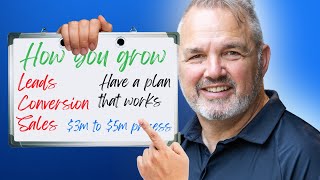
A recorded interview (Feb 19, 2024) where Phil Risher speaks with Dominic Rubino about growing and scaling trade/home-service businesses. Rubino recounts his entrepreneurial path (student painting franchise, eBay-to-pharmacy business scaled to $120M, franchisor work scaling to ~237 locations), recommends practical systems (EOS/Traction, Scaling Up, Profit First, E-Myth), and emphasizes translating vision into accountable operations via coaches, integrators, L10 meetings, and simple operational metrics (leads → appointments → sales). He also discusses franchising prerequisites, SOPs/training using YouTube/ChatGPT, and offers resources (podcasts and a five-page strategic-planning workbook).
Questions this video answers
February 19, 2024.
$120 million in sales.
About 237 locations.
Profit Tool Belt; Cabinet Maker Profit System.
315-903-7853.
Chapters
Welcome back to the show. I'm your host, Phil Risher. And on today's episode, we have Dominic Rabino. Dominic and I, we actually were. I was on his podcast, Profit Tool Belt, and I was also on his other podcast, the Cabinet Makers Profit System. And this guy helps businesses grow. And I'm like, man, you got to come on my show and talk to these business owners to help them 10x their business.
Right.
And so, Dom, thanks so much for joining us, man.
Well, I can only return the favor because you did great on both of my shows. So.
So, yeah, thank you so much.
Put me to the test.
Yeah, of course. And I know you have a lot of good stuff to say, so we could talk for hours, but let's. Let's get into this. So, yeah, you. You have built two businesses and sold two businesses. Can you tell us a little about. About those businesses?
Absolutely. And you know, keep in mind, it's always easy to talk about the victories. Yeah. But it probably. I probably learned more from the defeats, so. But, you know, it's exciting to talk about the two businesses I sold, but what about the tankers I had?
Yeah, well, so I know that you got kind of hoodwinked into buying a painting franchise or something.
I did. Well, I was in college. I didn't know and I should have known, but, you know, Yeah, I was in college and it was AAA Student Painters. Just like a regular student painting thing. And they're like, we're going to train you to run your own painting business. I'm like, wow, these people are fantastic. Because I'm a kid, I don't know. And then at the, like the last day of training, they're like, here, sign this form. You're going to be a franchisee. I'm like, well, it sounds like a good idea. I'll do it. I didn't even know what I was doing.
Yeah, that's so funny.
I learned, you know what I learned from them paper? Like, I know I'm old, right? But I learned the importance of paperwork. But that's where simple systems like, Phil, I gotta tell you, like, do you ever learn something as a kid and it still sticks with you?
Absolutely.
Yeah. Like, I worked at McDonald's for a while, a long time when I was a kid. I was making like $2.37 an hour. But I still remember the systems for how to. You know, it's called a 4. 4 turnley means nothing to you. But somebody out there's nodding, going, oh, my God, I remember the 4, 4 turn lay it just It's a system. Right. And so at Student Painters, we used to. Before you painted the side of a house, you had to take pebbles and hold your hands out to the side and drop a pebble. Those were your ladder moves before you started. Wow. So you didn't have to think about where to put the ladder next and just dumb stuff. But anyways, I learned a lot there. Yeah, yeah.
And so. So obviously you did that and you got the franchise experience. But so the two businesses that you have built in sold.
Right, right, right, right.
One of them was you were. You were flipping ebay stuff or something, right?
Yeah, I was selling stuff on ebay. Then I turned that into a used bookstore. Then I turned it into a mail order pharmacy. So this is the same company but just reinventing it while it was running. And then. So I took it from zero because selling on ebay was zero. Just fine, like after work, you know, because I was working at a corporate job and then. But it took four years, but I built the sales to 120 million in sales.
Wow.
Obviously I left corporate at that point because I was full time on that. Yeah. But it was interesting, you know, I had multiple operations inside that company. There was a call center. I had 40 pharmacists and pharmacy technicians working for me. I had 120 seat call center. We're shipping, you know. Yeah. Like 500, 000 packages a year.
Wow.
Yeah.
So that, that's a pretty big operation. And so from what I understand, you sold that company and then you started to get into France. Franchising, I guess again for coaching or something.
Yeah, Franchising has been in my life a lot, but this time I became a franchisor. So there's a gentleman named Brian Tracy who's a really well known business author. He's a little bit older now, so people might not like know him today, but you would still read his books like the. The Psychology of Achievement or Eat that Frog. Brian Tracy.
Yeah, I know that book.
Yeah. And he's. He's just a wonderful gentleman. He's the same offstage as he is on stage, except offstage he will kick my butt.
Yeah.
Oh, yeah, yeah. Having a business meeting with Brian is another level of accountability. Oh, I know, but it's. But it again, I can only take the good from that. Right. He made me better. But when I bought that from him, he had six franchisees, so we call them six units or six locations. And then about 13 years later, I sold that business and I had it at 237. You know, locations around the world. Wow.
Yes.
Yeah. I've scaled a couple of companies and.
And now you work with, like, home services, contractors, types of businesses, and help them scale their business.
Now I'm back to what I love, which is because I started in construction. You know, I started as a framer, and then I left. I was framing for my uncle, which was a job I got by, like, hey, can I have a summer job? Type thing. And I didn't think about it.
Right.
And then I, you know, I did the student painting thing in between. But then, you know, I really like contracting and contracting trades, mostly because it's how my family talks about. Yeah, it's comfortable.
It's in your blood.
It's in my blood. And so it was really. I've been waiting to get back. Yeah.
And so now you're back at it with a whole bunch of experience and.
Right.
So when you. When you. Someone in the trades or contractor, CEO, they come to you. How do you usually, like, figure out what they need to do? How do you distill down, like, okay, let's do this thing next. Or is there some framework or something that you use to get to that point?
Yeah, I mean, you might be surprised, but I don't tell them what to do. I find out what they want to do. And obviously we've got systems for that on our side, simple systems that are proven to work. I really like. I don't know if you can see my background, but there's a book here called Traction. Yeah, Right. People also refer to it as EOS the Entrepreneur Operating System. It's a fantastic book. It's written by Gino Wickman. It goes by a couple different names. Just because it's morphed a little bit over time. You feel you're laughing. Yeah.
Yeah. I've gone through the EOS implementation with several of our clients.
Okay.
And I know what you're saying about the morphing, because I think now he has actual implementers that go in and like, just implement straight EOS into people's businesses.
Right? Yeah, yeah. And that's. That's a level. But you can. You can take that. The reason I really like that is because you can take it and make it what you want it to be. It's very malleable. You know what I mean? Like, it's. It's a simple tool, and we can do with that tool anything we want. You know, the same as in construction. You know, a hammer could be used for many things. So can a screwdriver. Sometimes a screwdriver's Amber. It's, you know, vice versa. Right. But yeah, and it's powerful. And I use that primarily when I want to talk. Let's say you're the business owner of this trades company. I have to ask you specific questions to figure out what do you want to do in the next 10 years? And I usually get kind of a blank stare. So we have exercises like, what does it look like? You know, how old are your kids going to be in 10 years? What does that mean to you? Blah, blah, blah. Then we break that all the way back down to three years and then to one year. Now we've got meat on the bone. Okay. If that's what you want to accomplish in a year, what do we need to do in the next three months? And that's where coaching comes in. The accountability, the systems or the simple systems that we show people.
Yeah. There's also the scaling up out there. So, yeah.
What's.
What's your experience with those? Because I see you have scaling up back there, but what do you.
I do.
Yeah.
So, yeah.
What do you think about that?
Do you want the scoop? Is your. Is your podcast the place for the scoop?
Sure. Go for the scoop.
So listen, Scaling up was written by a fish fantastic gentleman who's leaving a massive legacy on the world. And most people don't know who he is. His name is Vern Harnish. His first version of that book was called Mastering the Rockefeller Habits. It is a crazy good book, but it's really hard to read. The first time I read it, I kind of put it down and I thought, I'm a bit of a dummy. I don't get it. And I'm in this business. I'm in this turnaround business. But I went back and read it again, believe it or not, on the treadmill at my local, like, pool. You know, where they've got the treadmill pool. Like, I. I just, like, I got to get this thing because it was. It was so valuable. But that's the tool I use to go from 0 to 120 million.
Oh, wow.
And that particular system is really good when you have a large corporation with a lot of VPs and directors. Complexity. Complexity. So Gino Wickman and Verne Harnish, we all know each other.
Yeah.
And myself, we all know each other because we're part of this global business group called eo, the Entrepreneurs Organization. So I'm not going to go too far in that. But anyways, Gino Wickman came out with his more simplified version of the Strategic plan. And there might have been some friction between the two. That's the scoop. Might have been some friction that. Between the two.
Scoop.
That is the scoop.
So since, since you're the US Guy, there's also the other book, Rocket Fuel, about getting a solid integrator as a visionary.
Can you.
A lot of times like our clients, they are visionaries for sure. They're scaling their business and they are always stuck with great ideas but lack of implementation.
Yes.
So is there like a point where you say, hey, you need to find an integrator. Is there a point where you're like, you know, like how does this work as far as the integrator and actually scaling your business? If you want to do you need an integrator in there?
This is going to sound so self serving. But if you've got a visionary owner and they can't find an integrator, that's why you get a business coach. Because. And I'm not talking about myself, let's just talk about the general category of like a trained, serious, professional business coach. They're going to help you with that integration piece because you might be splitting up accountabilities throughout the company to people that don't know they're helping in a. They don't know they're a part of a bigger machine, which is fine. They don't necessarily need to know. And then when you get the company to a certain level, then we start to have bigger meetings that they're involved in and everybody gets their own Rocks or L10 meeting.
Yeah.
I don't want to get too technical because that won't help the cause. But if you've got somebody listening right now and they're like, I'm a visionary, I like eos, I want to put it in place. But if there's anything after the word but go find yourself a coach, like a serious business coach that understands that process and they'll walk you through how to make it come to life the way it works for your company. And then like everything there is levels. Right. You're that business coach might be good for you for two years to get you from X to Y and then you need another one or a break to go from Y to the next. Right.
Is there any like you're too big or too small to run traction and then shifting to scaling up or.
No, no, you can be one person and running. I mean, I would stay away from Vern Harnish's Rockefeller habits are scaling up. No disrespect, but if you're not a large corporation. That is too much gun for the bear. It's just too much. Too much. But if you're starting out, if you're on the small, let's say, let's talk about it from number of employees or rev. Maybe revenue is easier for people.
Yeah, yeah.
Zero revenue to 10 million a year in revenue. You're, you're fine. You're more than fine. You're fantastic with EOs.
Okay.
Once you start to have more than two or three vice presidents or directors. So now we have, we've shifted from revenue to roles and responsibilities. But when you've got regional directors, things like that, maybe remote locations, then you can shift to the other.
Yeah, I'm glad you brought the revenue thing because I think there's like 1 to 5 million. It seems like it's in this side of the spectrum. 5 to 10 seems like a whole nother bear for people. And a lot of the companies we work with is they're at like 5 to 6 million and they want to get to 10 and they think that maybe marketing could help them, which that could be one of the levers. But I also think that there's some other things that maybe they're, they need to focus on. What are some of those things that you would recommend to people if they're at that 3,5 million range, to like get to 10 million?
Yeah. @ that point you really have to start understanding your, your people are your tools. And so restructuring your team and the roles and responsibilities, the flow of business, you've got to change. Because let's, let's use the number 3 million just because it's a cool number to talk about. If you're at 3 million and you want to get to 5, just keep in mind you're the perfect 3 million dollar a year business. Your textbook. This is how to run a three million dollar a year business. What you're not is running a $5 million business. And so we get stuck and you're like, last year we did 2.9. This year we're going to do 3.1. I'm not seeing the growth we used. What's going on? We're going sideways and worried that we're going down because you need $5 million systems to get there. Now I'm gonna mess with some people's brains to go from three to five. You don't need $5 million systems. You need to jump to maybe eight because you got to pull yourself through the $5 million mark. Does that make sense?
Yeah, I see what you're saying. So what are some of those systems? Like, what would you say is like a system that someone should put into their business? Like an L10.
Definitely. You should be. Yeah. So at the L10 meetings now, you need different people responsible for different areas of the business. So let's just take a typical contract. Very typical. You've got somebody in charge of marketing. You've got somebody which might be you, Phil. Right? Yeah. You've got somebody in charge of sales, like converting those leads into business. Then there's typically some sales, administration. You might call it dispatch, you might call it engineering, depending on your company. But how do you take a sale and get it into production? Right. There's somebody responsible for that. Well, let's just take that person and for the sake of our discussion, let's call it a dispatcher. The head of dispatch or the head of customer care. What are their requirements? What are their goals for the next three months? And it's going to be something very simple. Like we have to make sure everybody's using the CRM. That's the priority for the second quarter of this year. That's it. Now obviously they're still running the business. Everything else is running as normal. But if there's something that's special on their plate, the special project is making sure the CRM is being used properly. And I just picked something out of the air, you know, for field it might be. We're going to really work on our Google reviews, which you were a brilliant guest on my show about. Right, right. That might be for field operations. So everybody will have their thing that is systematically how a business owner orchestrates the growth.
I think that's such a great way that you put it that way because a lot of times people say, okay, I'm at 5 million, I want to get to 8 million. So we just need to sell 3 more million dollars worth of stuff.
And yeah.
And it's like, okay, well let's chunk this down to those three month blocks and say this person has to do this to hit that goal. This person has to do this. And I think a lot of times for business owners, especially visionaries, they're like all over the place with ideas and they don't have anyone to kind of sit down with this person and set goals and meet with them and go through this system and to help them orchestrate the growth. To your point.
Yeah. I'm going to quote Brian Tracy because he obviously a mentor and a business partner. Yeah. But he's got a great saying like before you do anything you have to do three other things first. And that's, that's where we get frustrated or feel like we're, we're not on track. Except that if you know that the big goal is that one thing and these three things have to get done, that's where your implementer would come in or your coach to say, let's do these three things because blah. If we want to hit, I'll just, just choose the number. Let's say you want to hit 46% gross profit margin on all quoted jobs. What are the three things you need to do in your company before you can get there? Who's going to hold you accountable? Who's going to break it down into simple systems? Who's going to show you the shortcuts? Who's going to make sure that this department and that department are doing their thing so that we get this little sub answer that feeds into the bigger. You know, it sounds complicated, but it's, it's really not. It's just consistently consistency, you know.
Yeah.
Consisting of pressure. I'm sorry.
Yeah. I think that's where. When you have a coach or someone who's just holding you accountable and saying like, hey, here's what we're going to do. It's not just the business owner who's out there in LA la Land reading books and just all over the place. Someone to like, sit down with them and give them some structure.
Yeah, Phil, you might see the same thing too, where you talk about the business owner out in LA la Land.
Yeah.
I wonder if any of us, and I've been guilty of this too, you know? You know, you walk in on Monday morning, you're like, okay, everybody, I just read Sun Tzu, the Art of War. You know what we're going to do. And everybody's looking at you and they're smiling. You're like, They've all got weird smiles because they know by Wednesday I've forgotten. And next Monday I'm going to come in and I'm going to say, I just reread Good to Great, you know what we're going to do. And they're like, no, boss, tell us what we're going to do because it's flavor of the week.
Yep. Yeah.
And that, that starts to wear thin. And so they real, they learn like anybody. Oh, just give it a couple days. He'll forget. Or she'll forget.
Yeah, that's so funny. So you have experience with franchising? I'm curious to get your thoughts on, you know, a lot of contractors and home services, they, they, they see the allure of franchising their business. Have you gone through that process with anyone or ha. What are some things that you would say? Like, okay, you gotta get this set up first before you think about franchising your business.
Yeah. So before you, I mean, to start a franchise. First of all, starting a franchise, the only person that makes money is the lawyer and the accountant. Yeah, right. But the beauty of a franchise is the long term, the asset class you're building. Because you're building an asset class where you've got recurring revenue and long term contracts. Okay. That's the benefit. I'm talking like a boardroom CEO right now. Right. To make that come to life, you've got to have a solid system for making sure that your franchisees succeed or that will end in class action lawsuit. How's that? So if it now everybody's just like, hold on a second, Dom, I just burped up my pizza. Like, if you want to get into franchising, you need to think really long and hard about who you are as a person, how thick your skin is and are you willing to serve the people you're about to bring in. Because in large part you're not only going to show them how to run a business. Duct cleaning, I think is your area of expertise. Right. Could be pool services, could be roof, it doesn't matter.
Yeah.
Are you really good at showing them the operational side? And are you really good at showing people how to start a business from scratch, comma when they've never been a business person before? And if you've got those systems or you want to glean on people like myself, fine. But you know, there's a lot of considerations into being a great franchisor.
Yeah, I've, I've seen it where it's. The person's business is all over the place. They have no systems and processes. Their profit at the end of the year is $100,000. And it's like, what's in it to go and franchise this thing when there's nothing that you're going to franchise? It's just a job. And I think, yeah, I think that, that people fall into that trap a lot. The allure of franchising their business as.
A way to grow and you know, maybe you need to start as a business opportunity. There's a lot less restrictions on a business opportunity than a franchise. We are going in a weird direction right now.
I'm just curious because you have experience with franchising.
Yeah.
And traction e myth all these businesses, processes in businesses, and a lot of these contractors don't have these systems and processes, but they still want to franchise their business. And so I'm just curious to see how you kind of can wrap this all together. And for. For some people that might think like, franchising is the way to go.
Yeah. Well, franchising is the way to go, so you can be the way to go. And then there's franchising, as I said, and business opportunities, they're separate, you know, classes of investment opportunity. Right.
Yeah.
Or asset classes as a business owner or an investor. When you build this, make sure you have a corporate store, one location. That's the shining example of how it's done. If you can do that, then you can replicate it.
Yeah.
And. But you've really got to be very careful. You have to be the guard at the gate. Who becomes your first franchisee is really important, especially number one, one through five. Yeah, very important. Because if you bring people with the wrong attitude or the wrong skill set, that's going to taint. That's going to be the smell, the skunk smell that exists in your franchise. For franchise terms, on franchise terms, it's a long time. You have to be very cautious about who you allow into your franchise and then support the heck out of them. Yeah, right. Because they've given you their money and their faith that you're going to train and support them. And by the way, I've. I've been. I've been the business coach of the business coaches at franchises.
I know.
Oh, like 1-800-got junk. Right. Like I was there, I was the business coach of their business, coaches of their internal team.
Wow.
They're a fantastic company. They are systems, they're processed, they're fair, they're equitable, they're a good company, but they work at being that.
And I think that goes back to whether you want to franchise your business or not. It's about building the E myth, like building the systems that your business is franchisable. And think about, if I were to franchise this, what systems would someone come in straight off the street and have to know? And that's what I think it comes down to for a lot of businesses, that they don't have systems in place to actually orchestrate growth to your.
Yeah. Can I tell you the frustration of being a franchisor?
Yeah.
So now this is. I've got my franchisor, my global master franchisor. So I had the global rates for how to do business coaching throughout the world using the Brian Tracy model. Right. Built it to 237 locations. I'm just going to tell you a little bit about my background. Before I had done that, I had my own business coaching locations and I've reinvented myself twice because I shut it down to finish that large company and then I started coaching again. I love trades, so I've always been doing that. Right. So now I've got franchisees. And they would come into the franchise network and say, but Dom, you don't know what it's really like. You don't know what it's like to go into a brand new market where nobody's heard of business coaching and start a business coaching franchise. And I'd be shaking my head like, did you not. Do you think I'm lying?
Yeah.
So if you've got a corporate store and let's just say duct cleaning or carpet clean, you know, just something that we can all visualize. Right. So let's say air duct cleaning. Be prepared for somebody to say, but you don't understand Madison, Wisconsin, nobody cleans their ducts here. And you will be shaking your head going, what kind of belief system do we have to fix so people understand, people have bought the system, understand the opportunity and are willing to go get it. Because Madison, Wisconsin is no different than Montreal, Canada is no different than some other places. Starts with M that I can't think of right now. That's what you're going to hit as a franchisor. Frustrating.
Yeah, I could definitely see that and the switching gears a little bit. I see you have profit first back there. So do you help business owners like implement profit first or what have you seen when it comes to profitability for business?
You know, I'm more of a fan of profit first than an expert of profit first.
Yeah.
Is that oversharing?
No, I'm the same way.
Yeah. I have to, like, I have to be honest. I don't, you know, I know what I know and what I don't. Bring in a guy. Get a guy.
Yeah.
Or a gal. Yeah. I think there's people stronger than me on that, but I love it.
Yeah. They have the profit first experts that almost are like bookkeepers. Profit first. They implement that in your business.
Yeah.
I think those books that you have e Myth Traction, Profit first. If someone were to just read those books and do something in there, like, you're good.
Yeah, yeah.
Then if you, if you don't know where to start and you get a coach and you start implementing these things, like, I mean that, that's really good starting point for a lot of people.
It is. And, and one of the challenges. Dom, did you read this new book? Did you read that new book? And, you know, I read some of them, but not all of them. Yeah. I got to tell you, these books back here, if you said, dom, you have to reinvent yourself, you and your family are in witness protection. We're going to reinvent you, and we're going to push you out of an airplane above Madison, Wisconsin, let me just say. Sounds like a beautiful place. By the way, what book, what reference tools are you going to take? Those are them right there.
Yeah, I agree. I need to get a little bookshelf back here with my books.
I just changed my back books.
Yeah.
Just changed my background.
I know. So if someone comes to you say someone's doing 5, 6 million, they're 20% profit margins. They do profit first. They have all this.
Yeah, 20, 20% net is good.
Yeah. 10, 20%. They have a million dollars going to. Bottom line. Do you. What do they say to you? How much money do they take out and leave in the business and reinvest back in? Do you have any thoughts on this? Because a lot of times business owners, they do all the right stuff, but then they have all this money and they want to grow to 10 million, but they're like, I don't want to risk all this again. I want to take it out and put it into, you know, S&P 500 or something. Like.
Yeah. So unfortunately, what I hear more realistically is, hey, dom, we're at 3 million, but I'm not. I'm actually making less than I did when we were at a million.
Oh, my gosh.
Yeah. And it. I don't want to make it sound like I talk to people who are in trouble. I don't. I talk to people who are growing and feel stuck, like they're already. They've already proven they can do it. Right. Let me. Can I give you a weird visual? Do we have time for a weird visual for it? This is the. This is what I want us to understand. A business owner looks like. If you want to look through my crazy wacky business, business coach and entrepreneur mind, every four years, the Olympics comes. Yeah. Let's talk about the summer Olympics and let's talk about the weightlifting category, the Olympic weightlifting. Some ridiculous looking guy comes out in a onesie, a red onesie. He's covered in hair, he's got a big beard. He walks up to a ridiculous bar, circus weights on the end, and he's going to pick that ridiculous weight up above his head. And you look at it, and you're like, how could he do that? Like, he. He's got a builder, he's got a beer belly, and you're like, this guy looks like he's really good at bar trivia. How's he going to lift that thing? Right?
Yeah.
But he walks up to that bar, he looks at it, puts his hands on it. You see him square his shoulders, set his hips, and he lifts that bar, that heavy, ridiculous weight over his head. That's a business owner. That's an entrepreneur in the trades. Through their own strength and will and conviction, they built the bar, and they lifted it over their head. But now they're standing there, and they're like, what do I. I'm starting to waver. What do I do now? And that's where a business coach comes in, or that's where EOS comes in. Because EOS will tell you, you know, we should probably build you a rack. So now you put it on the rack, you rest your arms, you step back, and you go, okay, that rack is our $3 million rack. I need a $5 million rack. And the business coach says, we can build that. That's the process steps. That's in. In. In almost cartoon visualization. That's how simple we have to keep it. Does that help?
Absolutely. I could see someone sitting there shaking.
Their hand, shaking, right? Like, what do I do, Dom? I'm like, whoa, hold on. Let's build your rack, dude. Let's put it down. Okay. Rest your arms. Take a breath.
Yeah.
Because you did it. You did it. You're already there, but now you got to get to the next level. And that next level just takes a different approach.
Yeah. There's this guy, Jason Duncan. He's a podcaster that I like, and he says the ironic imprisonment of entrepreneurship, where you literally feel like you're enslaved to your business, that you created this problem for yourself because you. You build this massive weight and bar over top of you, and you're literally the world. The weight is on your shoulders, and you don't know what to do.
Yeah. And nobody else understands it, by the way.
No one else understands it. And you made this mess for yourself, and you got into this thing, and you're like, wait a sec. I thought this would be easier when I got to 3 million.
Yeah.
Yeah. Wow.
I'm worried. I'm worried that I didn't answer your original question.
But to your point, if so, the lens that I see it through, a lot of Our clients, they run profit first. They are very efficient, but there are a lot of businesses out there that don't know their profit number. They don't even. They see profit, but don't know their numbers. Have a profit. Yeah.
Correct. Yeah. So they don't know their key numbers. Now, quite often people say, well, Dom, absolutely, I know my numbers. I look at my P and L and my balance sheet every day. I actually weave them into a blanket and I sleep under them at night. That's not. That is not what I'm talking about. Those numbers are important, but they are one eighth of the numbers I'm talking about. Because what we need to grow the business is a firm understanding of the operational numbers. I'm gonna. I'm about to sound very boring right here. Is that okay?
Go for it. I. I agree with you. I agree.
I, I goof around. But I'm serious. As you know, serious. So we need the operational numbers, and the operational numbers flow the way any customer experience flows through a company. Marketing, sales, that sales administration we talked about. Then we've got production or field operations, whatever it is. Then we've got generally. And I'll just say generally, Quality control, accounting, and legal.
Yeah.
What are the three numbers you need to know as a business owner in each of those categories so that you can be sitting on a beach in Hawaii? You just need to know three numbers in each of those categories. I don't know your numbers, but I know the question staff to get them.
Yeah.
That's what you need to know if you want to build a franchise, if you want to build a successful business, if you want to. If you want to be a business person who just happens to be a contractor. That's what we're talking about right there.
Yeah. Yeah, I like that. So what are some of the questions that you ask? Like let's. Let's take the sales and marketing, since that's what I know. What do you ask? Like, okay, a business owner you want to be in Hawaii? Like, what. What are you just saying? Like, what are the three numbers that would make you feel comfortable if you knew this marketing numbers?
Well, yeah. And you're a marketing expert, so you would already know these, These kind of figures. Right. So we want to know number of incoming leads, conversion rate to first appointment, first appointment to sale.
Nice.
There's. There's a couple of numbers now, depending on your business. First appointment means something. Like if you, if you have a 2 call close in your sales process, then first appointment means something. But I only want to know about your first appointments.
Yes.
I don't care about second, third and fourth time. You're going back to sell somebody a pool or roofing, you know, the first appointments, what counts? So I want to know incoming leads. I want to know the conversion rate to that first appointment and then the conversion rate of first appointment to sale. Then I probably want to know sales number. Like, we sold this job for 10,000 or 100,000, whatever it is. And then we, then that flows. Obviously, now we're into production. Right. We went. Just went from marketing to sales into production numbers.
Yeah, that's great. That's going to be very helpful for people. A lot of times we know there's so many numbers all over the place and they don't even know what to look at. So you just gave them some really good ones to say, hey, start here. So thank you.
Yeah, absolutely. Can I, can I just add something for people that might have been taking notes as a business, as a growth minded business owner, I need to know which levers to push, pull, or ignore.
Yeah.
Because sometimes you got to ignore a number and you might think, hey, Rubino, you're supposed to be a business coach and a turnaround guy. And what do you mean, ignore a number? Order of operations means I'm not going to worry about item number C until A and B are fixed.
That's right.
Because it's an outcome.
That's right.
Right.
That's like a lot of times we'll get. Well, we do marketing. So like, leads will come in and they won't convert them into jobs. And there's that disconnect. And it's like, well, if you don't even get them into jobs, then your sales conversions, you got to start up here, like getting these leads into jobs. That's how you're going to actually get the return on investment from what you actually invested in. Yeah, to your point, it's like kind of you got to walk through this funnel. And a lot of times people just say, I'm going to spend money on marketing and get a bunch of leads and I'm going to grow my business. And it's like, it's not that. It's, it's not that simple. Or everyone would do that.
Yeah, yeah, yeah.
All right, so in the trade specifically, do you see any big changes coming or. I know, like, AI Covid, all this crazy stuff. What have you seen? Or what do you see coming down the pike for?
Yeah, well, you're gonna have to pull me back on this one first. Like, but first of all, this is the best time to be in the trades ever in the history of the world.
Why is that ever?
Because we've just never had people who are busier, driving longer to work, who are making more money, but don't even own a ladder or a decent set of tools. Right. Think about the regular, just a regular family. The mom and the dad, they go off to work, they want to come home, they have to take their kids to soccer or to tutoring or whatever. They don't have the time that we used to have in the past to fix their fence. I'll just say something very simple. Fix their fence. And so they got to hire a guy. And I'm again, guy gal, right?
Yeah.
They got to hire somebody because they're short on time and they're long on money. They're making 120 grand in some corporate job. They have to drive an hour and a half to one way. That's three hours in traffic a day. Are you kidding me? They're going to trade your fee to get that solved because when they're home they want to crack a beer too. That's right. So it, there has simply never been a greater time ever. And it's getting better by the way. It's getting better. Less people are buying tools. How many people own a ladder on your block? Yeah, so there you go. That I just ranted. Is it okay?
Yeah, no, that's great. Thank you so much for sharing.
Yeah. Now the, the other trends is. Yeah. Like we're starting to see Chat GPT show up in a bunch of places. If you don't have an SOP for, for safety, go to Chat GPT, ask it a bunch of questions and ask it for an SOP for safety. And if you want to know an older, like not older, a 2 year old hack before GPT chat GPT, go to YouTube and you can find very valuable videos. How to read a tape measure, how to put a ladder against a building. And you know that ladder video is going to be put out by some California fire department. California's got the highest standards of, you know, all the time. Right. See how you're going to go wrong? Find one that you like because there's probably 100,000 versions of that video. That's your new SOP. Get your guys, get your crew to watch it. Yeah, this is how we do this. This is how we do that. Yeah, you don't. It doesn't have to be complicated.
Yeah, we actually do that. We have sales training for our team and it's literally Just a bunch of YouTube videos and podcasts that I've curated over the years.
Right.
Just watch this and then let's talk about them on our one to ones.
Yeah, yeah. As a matter of fact, one of the things that. That I like business owners to do when they're interviewing field staff is let's say that you come up to my roofing site today. You're like, hey, Dom, I want to be a roofer. I got experience as a roof. You're like, yeah, great. Yeah, I want you to start tomorrow. Okay, yeah, blah, blah, blah. Listen, before you come in tomorrow, I want you to watch this video. I'll send it to you on your phone on anchoring, like how we install an anchor and it's done by somebody else on YouTube. But it's. I agree with that system right now. You show up tomorrow. What's my first question?
You watch the video?
I said, yeah. What'd you think of the video? I don't need to see that. I've been doing this for years. Thank you very much. You're not going to make it on our team. It's just not going to work. You gotta go. But it was a simple. I gave you one little test. You probably watched YouTube last night anyway. You couldn't watch one little video? One. So who I am as a business owner is going to echo throughout the team. When people see that, they're like, this, dude, serious, man.
Yeah.
It means something to be on Robino's roofing crew. And they stand a little taller, their chin is up, their shoulders are back, and they're like, yeah, you don't make it on our team unless you do the right things. That's what I want in my crew.
Yeah.
You know?
Yeah, it makes sense. So, Dom, thanks so much, man. This has been great. I think you dropped a lot of good bombs for people.
Don't say that in the airport. Everybody turn it down. Yeah.
So. So, Tom, where can people find you?
Where's.
What's the best place to connect with you and. And learn about you?
Well, thank you, Phil, for having me here and thanks for being a guest on my show. So you can find me on all the socials, you know, LinkedIn, et cetera. But I've got a podcast as well. One of them is called Profit Tool Belt. That's this hat here. The other one, if anybody listening is in the finished wood trades, so cabinetry or architectural millwork, you can hear me on Cabinet Maker Profit System. But if you've got other questions, you know, reach out to me. I'm happy to help. If you want to shoot me a text, I can share my cell, if that's okay, Phil.
Go for it. Go for it.
Cool. So My cell is 315-903-7853. Actually, we were talking about strategic planning today.
Yeah.
So if somebody wants an easy strategic plan. You don't have to read a book to do this one. It's called Healthy, Wealthy, and Wise. It's a. It's a five page workbook that you just print off, and then you, you know, you do it yourself. And you don't have to read a big book to do it. Right? Yeah. But just maybe just say healthy, Wealthy, and wise in the text message and I'll send it off to you.
Awesome. Thank you so much. This has been so valuable. I really appreciate you coming on.
Yeah. This has been. It's been great to get to know you over the last month or two, because I'm really impressed. And by the way, Phil, I referred you to somebody, and you did an excellent job on following up on that, so thank you. And I also liked the conversation you're having, the value you added before the guy even met you. Yeah. Yeah. So, thumbs up for Phil Risher.
Thanks, man. All right, well, I'm sure I'll talk to you soon. I appreciate you hopping on. Thanks again, Dom.
Thanks, Phil.
All right, see you.
More from Phil




The companies that win the next five years won't be the ones gaming the system.


