How to Hire Better People Faster For Your Home Service Business With Ryan Englin
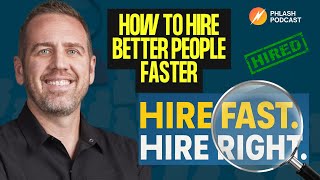
A podcast-style interview (host Phil Risher) with Ryan Englin, founder & CEO of Core Matters and author of Hire Better People Faster. Englin explains his Core FIT hiring system for home-service/blue-collar businesses, arguing recruitment, onboarding, and employee engagement should be treated as marketing channels; he emphasizes employee-first marketing, creating an applicant bench, 90-day onboarding, stay/exit interviews, servant leadership and treat candidate leads like customer leads. Practical tactics include employee-focused website/careers content, prompt candidate follow-up (target 15 minutes), daily huddles, monthly one-to-ones led by employees, and investing in employees' personal goals (e.g., Financial Peace University).
Chapters
Welcome back to the show. I'm your host, Phil Risher. And on today's episode, we're diving into how to hire better people faster with Ryan England. Thanks so much for joining us today, Ryan.
Phil, thanks for having me.
Yeah, for sure. So Ryan is the founder and CEO of Core Matters and author of Hire Better People faster. With over 20 years of experience helping blue collar businesses build high performing teams, his core FIT hiring system transforms recruitment, onboarding and retention into strategic growth channels. Ryan's passionate about empowering service based business owners to scale sustainably by investing in people and processes. All of these things are near and dear to my heart. I used to be at a home service business with 28 technicians and this was the bane of our existence, hiring and finding good people. So I'm really excited to talk with you. Can you tell me a little bit like how did you get into the home service space and learn this stuff?
Yeah. I grew up in a blue collar family. My dad was an owner operator. You might know some of these guys, they go out on their own thinking, hey, I'm going to have more money, I'm going to have more time, I'm going to have this dream life. And then they wake up a decade later and go, what the hell happened? I've got 15 employees and the business is running me ragged and I haven't had a vacation in 10 years. And that was my dad. I watched that happen. And as I, as I grew up through that, I always thought, oh, my dad's problem was he didn't know how to drive enough revenue, he didn't know how to drive enough new business. And because of that it was stunted his growth and if he could just grow more, he could get out of the business and do more. And so I started a marketing company, got out of college, did the corporate thing for a little while, started a marketing company to help home service contractors fill their pipelines with qualified leads. And four years in, I had a bunch of clients come to me and say, I don't need leads anymore. My problem is I don't have enough techs. And luckily for me, I spent 10 years in corporate dealing with the corporate reshuffle and interviewing a hundred candidates a month and building this process of how to really hire successful and build strong teams. So I said, I can help with that, I can help you do that. And so I went out and in three weeks I helped an H vac contractor get four brand new techs, all skilled, all qualified, all ready to go. And then inevitably what happened is they all left within like six weeks because the company had no idea how to onboard. They had no idea how to performance manage. They had no idea how to communicate with people. So I set out to solve these problems. As the problems came up, I was like, we're going to solve this people problem. We're going to solve this people problem. Here we are 10 years later. I've got the core fit hiring system, I got the core Fit blueprint, and we fix people problems for service contractors.
I love it. I think a lot of people don't think of marketing on both sides.
Yeah.
They think of just marketing to get customers and leads coming in when there's this whole other marketing part about attracting good technicians and then a customer journey on that side as well. Can you talk a little bit about that? Because I'm sure your marketing brain and it all kind of goes together. What does that look like?
People that really understand marketing, they look at our process. They're like, this is all marketing stuff. This is all the stuff we do to generate leads. I'm like, it's the same thing. But here's what I learned is, so recruitment is marketing. Absolutely. Employee engagement is marketing. Employee onboarding is. I mean, it's all marketing and sales. There's some sales in it too. But here's what I found a long time ago. People think that these are completely. They are mutually exclusive customer marketing, employee marketing. They are completely separate departments, completely separate skill sets. They're not. And here's what I found is that when you have a customer marketing mindset first, in other words, all decisions are driven around customer marketing. It's really hard to attract good employees. But if you flip it and you make your marketing all about attracting great employees first, customers line up in droves.
Yeah.
And I've seen contractors almost eliminate their Google Ad spend because they took this employee marketing approach first. And I'll give a quick example if that's okay.
Yeah, for sure. Yeah, I would love to.
I have seen so many websites that you go to it and right there across the banner, is your Emergency plumber available 24 7. We're on call. We're there for you in the middle of the night.
Yeah.
Which is great if you're a customer and it's the middle of the night. But how many emergency calls do you really get? But we lead with that. What's the, what's the candidate see when they go to your website? I'm going to take a phone home. My wife's going to be pissed. I'm going to miss time with my kids, like that's what they see. And we wonder why we can't attract great people. We end up attracting with that is the people that really don't want a career. They just want to step in their resume. But if you flipped it and the come to the homepage and all of a sudden it says, we only work with the beck best technicians. We train them, we teach them how to serve you better, we give them time off, we make sure that they have the work life balance. So when they show up, they're in a good mood, they're clean, they're, they look reputable. We background check all of our candidates. In fact, if you are looking for a job and you want to join the best team and work with the best people, look no further.
Yeah.
So the job seeker sees that and goes, I want to join the best team. I want to get trained. I want clean uniforms and a new truck. And I want to look like, I, I know my stuff. What's the consumer see? They see that and go, wait a minute, I want the best guys, the best teams, the ones that are trained, the ones that show up clean. So the consumer goes, I'm going to call these, this company because this is different than everything else I've ever seen. So when you take this employee marketing approach first, it actually does double duty.
Yeah, I love the employee marketing aspect of it. I think a lot of times people, business owners see themselves as the hero when they're not the hero. Right. They're the, they're the guide. And this is, this is exactly what you're saying, is positioning yourself as a guide, but in a different light, which attracts both people, people that have problems on both sides, problems with their plumbing and then problems that need a good job. And I think it's a different way. What would you say? So you, you said recruitment, onboarding and engagement are those kind of like the three big things that people need to focus on.
I, I actually. So this is gonna, this is probably gonna upset a few people. I don't think we have a labor shortage in the trades. I actually don't. I think the labor shortage is a myth. I think it sells newspapers and clicks. It makes indeed billions of dollars a year. I don't think we have a labor shortage. I, I do believe we have a labor crisis, but I think the labor crisis is caused by an inattention to engaged employees. And so we have a retention problem in the trades. And if we would just focus on the needs of our people, not just a paycheck, we would do a better job at retaining them. And when we do a better job at retaining them, they will look for ways to be more engaged. And when they're more engaged, guess what? They're more profitable. They're more productive, they're, they're happier. They treat the customers better. Like a whole bunch of things come out of it. So I think the labor crisis is really caused more by a lack of paying attention to our people and what their, their needs are than it is being able to really hire. So if we start there solves a whole lot of other problems.
Okay, so it sounds like if you were going to work with a company, you're like, hey, what does your employee engagement look like to make sure that the good people you have stick around? And what are some of the things that you would implement or talk to them about or build in their system or what should they, or what should they do?
Yeah. So here's. There's three reasons that we found that people don't stay in an organization. Number one, they don't feel valued. That's probably the biggest one. Number two is they can't stand their leader or their boss. Like, there's just a big conflict. Or number three, they're burning out because you don't know how to bring in great new talent. And they're, they're, you're working double time, they're working overtime, they're on call because you're short staffed. You. It's one of those three reasons. They don't feel valued, they don't like their leader, or you're short staffed. And so when we first come in, we look at, we do a bunch of surveys and assessments to figure out which one it usually is. It's almost always all three, but one always bubbles up to the top. There's always one that really stands out. And honestly, the one that we find most of the time in the service space is I don't feel valued. See, I think we have this belief in the trades that I pay you well, which should indicate how much I value you. But whether or not you see your kids grow up, I don't care. Like, you can't put a price tag on that. I don't care how much you pay them per hour.
Yes.
An hour of working for you is not the same as an hour of missing a kid's baseball game.
Yes.
And so we have this pro, this valuation problem. We don't know how to value our people outside of a paycheck. And that's usually what we see. I'm not saying it's for everybody, but usually that's the one that bubbles up to the top.
Yeah. It's a unit of production. And, like, you should be happy you're getting a paycheck on time. Like, yeah, all those things. I get that.
Yeah. You're a top performer. You got the biggest bonus in company history. Like, they don't care.
Exactly. So what are some ways that you can show your employees that you value them? Is there like a.
This is going to sound dumb.
Okay.
This is going to be one of those duh, kind of moments. But if you want to know how to show your employees how you value them, ask them what's important to you? Why do you get out of bed every single day, leave your family at home and come here? What is important to you? And you're going to hear things like, I want to save for my kids, college. I want to be able to buy a house. I want to be able to get out of debt. You know what? I just want to be able to have enough money in savings that I can go on a vacation and not to put it on a credit card. I want to be able to spend more time at home so I'm not always fighting with my wife and kids. Like, you're going to hear all these things that have nothing to do with work, and those are the reasons that they come to work.
Yeah.
Because they want those things. And here's the thing. In an industry that's dominated by men, and we've all men are always raised to, you know, you keep your feelings to yourself. You don't talk about these things. It's not like you're going to ask them the first time and they're going to go, oh, let me give you my list. You're not going to have that. So it takes time to have these conversations. But when you really get into it, you know, I've run sessions before where we have a few technicians on a call and we have the owner there, and I'll just start asking questions, and then at the end they'll text me. They're like, I had no idea my guys felt like this. Wow. It's like. Because you don't ask questions.
Yeah.
You gotta be curious.
Yeah. I think it sounds like, well, one, they're gonna feel valued if you even just ask them questions about themselves and their lives and their kids. And like, wow, you actually care. Thanks so much for asking. And then, yeah, weird. And then two, once you uncover those things, well, then maybe you can help incentivize them to reach those Goals or help them work towards those things.
Absolutely.
Yeah. Like you want to get out of debt. Okay, let's sign you up for Financial Peace University or something like that.
You know what, that's one of them we use.
Okay. Okay. There you go.
Smart dollar and fpu. Like we're going to get you an FPU so you get the mindset and you get to know what the goals are and then we're going to put you in smart dollars. So, you know, no budgeting.
Yeah.
And it's so, I mean, what's smart dollar cost? 30 bucks a month.
Yeah.
Trust me when I tell you investing $30 a month in your employees personal life is going to be way cheaper than letting them go work for someone else because they're chasing something they're not getting from you.
Exactly. Yeah. We, where I was at, we had 28 technicians and majority of them spoke only Spanish. So we hired an English translator to come on Wednesdays and train the technicians English so that they could speak better in general, but obviously with our clients as well. And they were so appreciative of that.
Well, you know what? And, and I encourage people, don't stop there. Go get your English only speaking people and teach them Spanish so that they can bridge that gap even sooner because we can't wait until the Spanish guys know English well enough to communicate with us English guys. Yeah, teach me some Spanish so I can meet them there. And we've seen people really value that too. Because when you're in an industry as a leader where most of your guys speak Spanish, it's really easy to feel like you're not doing enough. Like you're not there enough for them and just, I mean, you don't even need years of Spanish. You can go through like a nine week crash course and be able to communicate with these guys in a way you never thought before.
Yeah, for sure. Okay, so I want to kind of get to the little bit of elephant in the room here is, okay, ryan, I'm spending $10,000 on, on indeed ads. Like what do I do? Yeah.
Okay.
Yeah, because I, I mean this is what we did. I know home service that we work with, they just throw money at Indeed and then see what they get. Like this is a normal game plan for a lot of it is. Okay. And I'm sure you hear this too. So like what the heck should they be doing for recruitment?
Stop spending that kind of money on. Here's the thing. If this is do you know Indeed's tagline? No, it's we help people Find jobs.
Okay.
Notice the tagline is not we help employers find good people. I just want to be really clear here, okay? We help people find jobs. They don't to you, you're just their meal ticket.
Okay.
If you're spending 10,000, indeed doesn't care about you, what is the number one thing indeed says when you call them and say, hey, I'm not getting enough candidates? What do they tell you?
Spend more money.
Spend more money. You are their meal ticket. That is it. I can't stand it when people get, oh, $10,000. That hurts my heart. Even $500 is too much. So here's the thing. A couple of things keep in mind, and then I'll answer your question. Only about 3 to 5% of the job market is actively looking for work. So actively working looking means I'm either unemployed and I gotta pay the bills, so I'm out there polishing off my resume, applying for jobs, doing that, or it's so bad where I'm currently at, I get off at the end of the day and all I do is just apply for jobs. 3 to 5%. A full 70% of the job market is passively looking, which means they're not on. Indeed. Yeah, 70% is passively looking. Now, here's the scary part about that. That means 7 out of 10 of your employees are passively looking as well, which means they'd be looking somewhere else. So here's what I say. If you're spending that kind of money, the first thing I want you to do is look at your retention numbers and solve that problem. Find out why people are leaving. If you're not doing exit interviews, do exit interviews. If you're not doing stay interviews, which is the opposite of exit interviews, why you stay here, Start doing stay interviews. Find out what's keeping your people there. Start doing more of that. When you do exit interviews, make sure that you do exit interviews in a way that's actionable. In other words, a lot of times they'll give you, oh, I'm just going to go work where I can make more money. Well, you can't really do much with that. Yeah, right. But you know what? My boss makes me feel like crap every morning. You can fix that?
Yes.
Right. So do the things that are actionable. Exit interviews, stay interviews. Solve your retention problems first. If you do that, you probably won't need to hire as many people as you've been hiring, which means you're gonna instantly cut your budget. The other thing to do is realize that 70% of the market is much bigger than 3 to 5% of the market. So instead of competing and fishing in that same little pond. Cause I mean, in reality, in your area, how many skilled techs are there really? It's not that many. Which means you and every other contractor are fighting for the exact same group of people. And whoever spends the most money gets in front of that person. So get rid of that 5% and start focusing on the 70%. So how do you attract people that are passively looking for work? Well, you have to look at what they do. They go to their friends and family, they go to their community groups, they stock you on social, they look for press releases and news media and own media kind of mentions. They follow your podcast if you got one. Like they, they, they go to your careers page to learn about what it's like to work there. If you're not doing these things, you're missing out on 70% of the market. I can't tell you how many times, I mean, even this year I saw a page that said click here to download our application and fax it. Fax it. No, I don't even know how to use a fax machine anymore. I haven't seen one in 20 years. Fax it. It's crazy. Yeah, but there are some companies that are so old school, this is what they do. They haven't gotten with the times. But when I click on, when I go to your website, the call now button, the contact us button that you have for your consumers should be as big or should be actually the same size or smaller than the join our team button. If you're spending 10k a month with no opportunity for return, you gotta fix that. So they should be able to find how to join your team right on your website, top of the webpage. They shouldn't have to scroll to the footer and click careers in little tiny font. Yeah, but when they get their employee testimonials, what do employees say about working there? Maybe a video or two from the owner of the company on why you're building a great team and why you'd want to work there. Actual open jobs, not just we're looking for H vac techs and we're looking for csrs. And send us your resume at this email address. Like actually the jobs that are open, copy and paste what you're putting on deed, put it on your website and have a way for them to reach out to you directly. Text me here and we'll get, we'll get you scheduled for an interview. Don't make them download an application, email it to you, email their resume. Don't make them do all that stuff. Just say, hey, I want to connect with you. I want to build a relationship with you. If you're a skilled tech, I want to talk to you.
Yeah.
So, you know, and you do these things and it's not going to happen overnight, but you're going to see that monthly spend at Indeed go down, down, down, down. And you're going to wake up in a year and go, I don't spend anything on Indeed. And I got people still applying.
Yeah. And you have almost this recruitment funnel of a bench that where people want to work with you because of all the good stuff that you're doing, and then you can kind of pick and choose who you want to work with. It's a complete flip of the equation.
Yeah, yeah. And then, by the way, that's not. That's not a unicorn. Like a bench doesn't really exist. We just talk about it. We have clients all over the country that have put this effort into building a bench. And it doesn't happen overnight. It takes time. We had one company call us. They were in Kansas City and they worked with us probably about four, maybe five years ago. And was it last year? Last year they called me and they said, I got more people sitting on my bench that want to work here than I can grow. I haven't posted an ad in a year. I never thought, I mean, they didn't really believe it, but they trusted the process. They kept building. Three years later, they never have to worry about hiring again ever. They got people lined up.
Yeah, I had this crazy situation happen to me. I post a lot of content about digital marketing for home service businesses and I was hiring a salesperson. So I just put out there one post on LinkedIn. Hey, looking to hire someone. If anyone knows anyone. Da da da da da. A whole bunch of people from home service, business marketing company sales people that already work there reached out to me that like, are our competitors. And they're like, yeah, I've been following your content, love all your stuff. I know everything about you. Like, let's work together. Like, I trust you already. Like, when can I sign up to work with you? I'm like, this is like, this is what business, home, any business owner needs to do this.
Yes, absolutely. Yeah, absolutely.
It's pretty crazy. Okay, so talked a little about recruitment engagement and then I want to talk about onboarding because you mentioned that was something that was important because usually, you know, they last a couple months and Then out of here.
So. Yeah.
What's that look like? What should they do?
Well, I'm going to tell you what they stopped doing. Stop thinking that onboarding is your HR paperwork, because that's not onboarding. It's like compliance. So think about this for a minute. You have just committed to each other. This is. I'm going to turn this in a little bit of a relationship analogy, because people, I think, latch onto that better. You've just said, hey, will you marry me? Let's move in together and let's work together and do this thing right. That's what you've really just done.
Yeah.
And it's crazy because in some states it's easier to get a divorce than it is to fire someone, believe it or not. So. So this analogy works. But here's the thing. What happens? We move in with someone, and we are committed to this. We're going to figure it out thick and thin, all the fights. I mean, I remember when. I mean, I've been married 20 years now, but I remember when we got married, we moved in together, like that first six months was tough.
Yeah.
We fought about the dumbest things.
Yes.
And how often do we hire somebody who says they've been doing this for three years, five years, they've got it figured out. And they keep calling us, asking what we think are dumb questions. We do it all the time. And we're like, that's a dumb question. And when we push back and we say, okay, so you're getting mad at them. You want to fire them. You think you made a bad hire. How long would it actually take you to answer that question? 30 seconds. Okay, so answered a dumb question.
Yeah, exactly.
Now, if they ask the Same dumb question 12 times now we have a problem. But we don't do that. What we do is we think we hired someone that knows exactly how we keep our house in order, and then we get mad at them when they don't and we think we hired the wrong person.
Yes.
So I don't know about you, but I learned this real early on. Do you know the right way to fold a bath towel? My wife taught me there is a right way to fold a bath towel. There's a certain way that the toilet paper has to go on over. Under. Yeah. Shoes have to be sitting in a certain spot. You have to squeeze the toothpaste a certain way. Did you know that? Like, it's crazy. Like, these things blew my mind. We fought about these dumb things early on in our relationship. And I know a lot of Couples do it. Dumb things.
Yeah.
How to load a dishwasher. Like, we all have our preferences. Well, here's the reality. In your business, you have a preference, a way that you want to do things. It's not right, it's not wrong. It's different than what this employee's used to. So imagine for a minute back to the relationship analogy. Before my wife and I move in together, we sit in the driveway with a checklist and I say, okay, how do we fold a bath towel? Is it three folds or two? And she's like, I think three. I'm like, I really don't care. Good. Three. So toilet paper go over or under? She goes over. I'm like, whoa. Okay, over it is. And we just check the boxes of all the things and think about this. In this situation, my wife would be the employer. Like, how does the employer want everything done? And you just spend the first week of a new employee being on your team going over this stuff. The amount of a headache and frustration it's going to cost you in six weeks goes almost to zero. Yes, but what happens? We hire someone when we're desperate because we don't know how to forecast hiring needs. We've got two empty trucks, we've got one tech, we've got a backlog of customers that need their stuff solved. We got estimates that we can't get to. And so what do we do? They show up on day one, we're saying, thank you, you're here, your background check just came back, you're cleared, get in the truck, get on jobs. We do none of this stuff to take the time to onboard them. Now, I think that onboarding is a 90 day process, and I think you need to go through a full 90 days of onboarding. But here's the thing. In that first two weeks, that first critical two weeks, this is where they learn how you keep your house. This is where they learn what it means to close a ticket. This is where they learn what it means to put PPE on or to present yourself to the homeowner. This is where they learn what it means to upsell and how you close and everything else. How you keep a job site clean, how you keep your truck clean. All of these things they learn in that first two weeks, they learn to think like you think. And we spend no time doing this. We just want them to do like we do. But here's the thing. If you can teach them how to think like you think, it will be very natural, very intuitive for them to do like you do.
Yeah.
And all of a sudden, like, it's going to open up things for you and you're going to have no idea that there were so many quality texts out there.
Yeah.
Because we rate them based on how well they do it our way, but we spend no time teaching them how to think like us.
So do you have like a checklist that you would go through in the first two weeks of like. Okay, I mean, I'm guessing help with this, but like a sop about probably of just like, boom, boom.
We have. We have a 90 day checklist.
Yeah.
And what it is, is we actually give it to the employee on day one. And we say, one of the things that we believe is that when we create autonomy for you, you will actually be able to achieve greater results. For sure. One of the first ways we create autonomy is we let you lead your onboarding. We move as fast or as slow as you want. But here's what you need to accomplish in the first two weeks, in the first four weeks, in the first 12 weeks, here's what you need to accomplish. We're going to do day one together so you can see how we move. And it's a checklist. And sometimes, I mean, even putting things like going on a team lunch or doing a ride along with a seasoned tech, or sitting down with the owner and having coffee on day five so they get to know each other a little bit better. Like all of these things that people think, what a waste. If I have coffee with them. That's one less ticket they get to close today.
Yeah.
See, if you're not watching this and you're just listening, you should have seen Phil roll his eyes. I mean, they went in the back of his head.
Yeah. Like, it's just. We're not units of production. Right. It's like, yeah. People's lives.
Yeah.
It's real.
Yeah. Uh, you're not allowed to ask if they have kids during the interview, but my gosh, ask if they have kids.
Yeah.
It's crazy. So where I'm going with all of this is that in that first two weeks, if they do not create a single source of revenue or profit for you, you're investing in the livelihood and the longevity of this employee long term.
Yes.
So if you have problems hiring people and getting them to stick or getting them to perform, take the two weeks, invest the time, invest the money, invest the injury. It will pay dividends faster than you could ever imagine.
Yes.
But we don't do it because we always hire from a place of desperation, which is why we spend $10,000 a month with Indeed.
Yeah. And just, oh, throw the money at the Indeed gods and hopefully we get something back. And there's no system or formula. It's just, oh, this is how we do it.
Yeah.
No, this is a better way. I want to ask you about 1 to ones and EOs of some sort and big rocks and this.
Yeah.
Is this something that. It's really. I. I think that it's hard because, like, technicians are out on the road and then their team and like, how do you meet with them one to one every week or every month? Or is that a part of this engagement thing?
Yeah. So we. So we are not affiliated with EOS at all. But we have a lot of EOS clients because companies that like EOS like the processes we do as well. And multiple times we've been described as the people component on steroids. Okay. So most people go to EOS because of people problems.
Exactly. Yeah.
And they've got a couple of great tools for people problems, but they don't have that built in accountability. Like, here's the reality. If I'm a plumber and I own a plumbing company and I've got 28 techs, I'm probably not the greatest at people stuff. I'm a plumber. I fix things. Right. That's what I do. And so what happens is we. We go to these consultants that say, oh, yeah, here's the things you need to be doing. But nobody's there to hold them accountable. Sure. They get them done.
Exactly.
That's a big difference for us is, I mean, we're meeting regularly. We're meeting at least weekly, sometimes five, six times a month with clients to hold them accountable and make sure that they do this. Because it's not what they do, it's what we do.
Yeah.
But when I have a plumbing problem, guess what? I don't go play plumber because I know better. But we ask these guys all the time that have been in the trades for their whole life to go play people leader.
Yeah.
And it just doesn't work. So we have a lot of tools that we implement similar to eos. We deep dive into people components. I actually, there's a couple of tools from EOS that I just think are brilliant, and we use a couple of those as well. But this stuff just. I mean, it's like hand in glove, the way this stuff works with something like an EOS operating system.
Yeah. And so, like, one to ones. Do you think it's every week with your technicians and team or Monthly or do you guys have any thoughts on that? Because I'm always curious about one to ones and how people execute those.
Yeah. So in Eos, it's a quarterly conversation.
Yeah.
Right. That's the every quarter you can do. You can do like the L10s and the weekly meetings or huddles. I'm a big fan of a Daily Huddle. Huge fan of a Daily Huddle. Now if you're not the kind of company where all your techs come to the shop to grab their trucks and then go out, which is cool, like if your techs are taking your trucks home, you know what, get to your first, you know, before your first job, we're all going to hop on a quick zoom call at 4, you know, 7:00am, 6:00am for five minutes and we're gonna ask two questions. And then when we're done with those two questions, we're done. Right. And the questions mean by might be like, how do you feel about yesterday? Right. How did you feel about your performance yesterday? And one of the questions I love is on a scale of 1 to 10, how would you rate your sleep last night? I mean, think about the insight that you get into that.
Right? Yeah.
And that's it. And we're gonna ask those two questions every single morning for Daily Huddle. If there's any major announcements, we'll let you know. Otherwise, you know, let you get to work. I'm a big fan of Daily Huddle, but it's, it's real casual. It's where we get to know each other on the quarterly conversation. The one on one side, quarterly at a minimum. I'm a big fan of monthly. Okay, big fan of monthly. We have a process called the Core Fit Conversation, which like most of the stuff that we do, flips the one to one on its head. And it's actually led by the employee, not by the supervisor. So what I believe is that if I want my employees to be better, to do better, to produce more, I have to be better, I have to do better, I have to produce more. And the only way I know how to do that is by getting the feedback from the people who know what they need from me. So when we do a one to one, it's actually me as a supervisor getting the feedback. I mean, it's a conversation.
Yeah, it's.
We call it the Core Fit Conversation. But most of the questions are designed around how can I serve you better? How can I be a better leader to you? How can I support you better? How can I communicate with you better?
Yeah.
And that's where I really get to learn. There's nothing worse than a one to one where the employee comes in going, oh, all. I'm just going to hear him gripe about the things that I did three months ago that he can't let go of another one. We have this. I ask this question to leaders all the time. I go, why is it that your employees can do 10 things right and never hear about it, but do one thing wrong and they never hear the end of it? So true. We do it all the time.
All the time.
So one to ones are not about me reminding you of your shortcomings. It does nothing to motivate you and help you produce. One to one should all be about how can I better serve you, better equip you, better train you so you can be more effective, more productive. And when I get that personal feedback, not only a better leader, but I run a better department. Profits go up, customer satisfaction goes up. Employees that, I mean, it's crazy what happens when we flip those things and we're no longer talking down to them. We're letting them talk up to us.
Yeah. I love that. I think we, in our one to ones, we're like, hey, what can I do to better support you? What do you need from me? How can I. And I think it just flips the whole mindset of, like, I'm here to serve you so that you can do the best that you can. It's a completely different shift.
And I think servant leadership, I mean, go figure. You'd think it was created like 2000 years ago or something.
Yeah, exactly.
Exactly.
I want to ask you, so. So I'm sure people listening to this are like, okay, Ryan, of course I need a bench. I want to do all this stuff. How long does it realistically take to implement something like this in your business?
So there's two factors. Okay. One of them is how large is your team and more people, longer it's going to take. Okay, that's not. That's not the difficult one.
Yeah.
The difficult one is how fast do you want to change?
Yeah.
The number one bottleneck, the number one roadblock that we have is we have an owner or a leadership team that is resistant to change. Yeah. These. These kids these days, they're all entitled and lazy, and we can't do it like that. They need to do it our way. I'm like, yeah, I'll bet you if you go back 40 years, your supervisors were talking about you. Like, you're talking like, come on. But we get. We get a lot of pushback. I mean, the stuff that we do, I. It's, you know, it's simple, but it's not easy. Yeah, stuff we teach is simple, but it's not easy for a lot of people, especially if you're stuck in your ways. I usually tell clients, so we have the core fit blueprint, seven phases. We walk everybody through it. We build their processes, job descriptions, help them roll it out, train their people. We do all that. I typically tell people, plan about three years. Yeah, about three years. Get this right, Years. Because years.
This is not your shift. It's a whole shift.
Yeah, everything's a shift. And you're going to lose people. There are going to be people on your team that you think are the right fit for you. And when you start going through this process and you realize who you really are and you get really clear on your culture and how you communicate everything else, there's going to be people, you're like, oh, they don't fit here anymore.
Yeah.
But yeah, this is a year's thing. This isn't a. You come in and you fix it in a month or two and we're all good. Now, I say that, but can we get results in the first couple weeks? Absolutely. Of course. I can rewrite your job ads and shut down your indeed campaigns and I can still get you volume.
Yeah, of course. Just posting on your social media account with real customer technicians and videos of them and customer tests and testimonials of their experience working here. That in and of itself is a good way to get, you know, one.
Of the, one of the fastest ways that we see get. We get results for people. It's so silly. So very common scenario campaign's been running on indeed over the weekend. I come in Monday morning, I've got customers that have called over the weekend. I've got tickets that are still outstanding. I've got accounts receivable that I gotta work on Monday morning. And I've got 27 resumes in my inbox.
Yeah.
What do I deprioritize in that scenario? Of course, the resumes. So what happens is they sit there, Saturday rolls around and you're like, oh, I should reach out to those guys. You call them all on a Saturday, you're like, well, they applied over the weekend. Maybe they're available on Saturday. No one answers your call because no one answers an unknown number. And then we go see, these guys don't even want a job. But let me ask you this. How surprised would you be if you had Six voicemails on a Sunday night, or six, you know, customer requests on a Sunday night. Monday morning, you look at those customers, you're like, yeah, I'll fix those plumbing issues on Saturday. You would not be surprised one bit if they're like, dude, I moved on. Like, you ghosted me. I moved on. But we get mad at candidates because they shouldn't do that. Like, they applied. They should sit and wait for me. One of the fastest ways we get results is treat and an a resume or an application, just like you would a customer lead.
Yeah. Y.
15 minutes. That's what our target is. From the time you see it. 15 minutes. They get a phone call, an email, and a text, and people are like, do I have to do all three? Yes. Every time a phone call, an email, and a text, and you want to see, see your results change, like, it's crazy. You don't have to spend 10,000 ID anymore if you just did that one thing, treat it like a customer lead. And, you know, people are amazing. I, you know, there's. There's rough ones in there. There's people that will disappoint you, but for the most part, people are incredible. And if you treat them like they're incredible, if you treat them like they're a rock star, like they're your next great employee, most time they don't disappoint you.
Yeah, I agree. I think most people are. Want to do a great job, of course, at their job. So if you give them the opportunity and you, you know, push them and gas them up, then, like, they're going to do a good job. If they don't feel like you care, then they're not going to care and they're just going to go on to the next one and try to find someone else that does care.
Absolutely.
Yeah. Awesome. Well, Ryan, this has been great, man. So where should people go to learn about your business? What are the first steps that they should take if they're interested in learning more?
Yeah, so we publish a lot of content on LinkedIn. You mentioned LinkedIn earlier. That's. That's my platform of choice. A lot of our tools, a lot of the stuff that we're up to, we put out there, let you guys take a look at it. The easiest way to get hold of us, though, or learn more is go to my website, corematters.com and for anybody that's interested in the book I wrote about this, Hire better people faster, I'd love to offer them a free copy@corematters.com freebook, pay a little shipping handling. I will actually autograph a copy and send it out to you so you can get to see how our process works. But if you aren't the reader type, it's okay. I'm not. I'm a listener. Anywhere audiobooks are sold, you can go pick up a copy. But if you're like, you know what? I don't want to read it. I don't want to learn more about it. I just want to get started. Go to our website, learn a little bit more about our process, check out some of our customer case stories, and, you know, if it looks like the right fit for you, I'd be happy to talk to you and get you guys started on this, because you can fix this. We don't have a labor shortage in this country. We have a labor crisis. And for companies that really want to solve the problem, it can be done. Yeah.
Well, Ryan, thank you so much. Like, I do a lot of, you know, podcasts and stuff, and I just love when people have real, you know, succinct stories and strategies that people can really implement, and they give it, you know, they give the information. And I appreciate that about you. With LinkedIn content, this podcast is just like, give the recipe, sell the cooking. Like, I just want to help you grow if it makes sense to work together. And I appreciate that. A lot about you. So thank you.
Thank you.
Yeah, man. All right, talk to you soon.
More from Phil




The companies that win the next five years won't be the ones gaming the system.


