How To Streamline Communication With Your Team & Customers With Ron Nussbaum
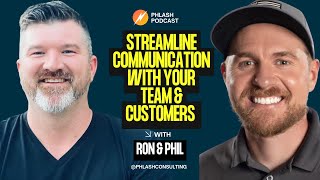
A March 31, 2025 YouTube interview (host Phil Risher) with Ron Nussbaum, CEO/founder of Builder Comms. Ron recounts his path from the Marines into residential construction (entered industry around 2010) and explains the communication problems that limit scaling in home service and construction businesses. He recommends concrete fixes: set clear expectations for both field and office staff, train and role‑play protocols for common friction points (late techs, unpaid invoices, scope changes), use pre‑job routines and checklists, and centralize project communication so customers, crews and office staff communicate in one organized place. He describes Builder Comms as an “air traffic control” for messages, photos, documents and scheduling—organized by project—so managers can access real‑time data, reduce rework, and make decisions based on evidence rather than anecdote.
Questions this video answers
How To Streamline Communication With Your Team & Customers With Ron Nussbaum — March 31, 2025.
Ron Nussbaum — CEO and founder of Builder Comms.
Since about 2010 (approximately 15 years as of 2025).
Host of the Construction Champions podcast; author of Buying for Exit.
Chapters
Welcome back to the show. I'm your host, Phil Risher. And on today's episode, we are diving into how home service businesses can scale efficiently and eliminate communication chaos with Ron Nussbaum. Thanks so much for joining us today, Ron. Hey.
It is fantastic to be here, Phil.
Yeah, for sure. So, Ron Nussbaum, CEO and founder of Builder Comms, a communication platform designed to simplify customer interactions and team coordination for construction and home service businesses. With over a decade of experience in residential construction and leadership, Ron understands the industry's unique challenges and is on a mission to eliminate communication chaos. He's also the host of the Construction Champions podcast and the author of Buying for Exit, helping business owners scale smarter and more efficiently. So, Ron, can you. Can you give us a little bit of background of how you got into construction? I know you were in the Marines for a little bit, and then you ended up getting into construction. Can you tell us a story about that?
Yeah. So I was in the Marine Corps, and the. My plan was to be in the Marine Corps. We got back from Iraq. We were on our Afghanistan workup, running some night training, and I ended up blowing my knee out. And that was it for the Marine Corps at that point in time. So I ended up in Michigan, where my wife was from, and I was trying to figure out, like, how do I train? Like, what is the next step? Because, like, my next step was the Marine Corps, and that was no longer an option. And I found this ad on Craigslist for a foreman in training, and it took me, like, two weeks to apply. Finally, like, I had to look in the mirror and be like, damn it, Ron, if you want to be a foreman in the construction, you can. Like, even though I have no past experience, I'm like, you're a United States Marine. If that's what you want to go do, go do it. I applied for the job. I ended up getting it. The guy that owned the company was 82nd, 82nd Airborne and loved Marines. Everybody else he was hiring had construction management degrees, except for Ron Nussbaum with his barely high school diploma and Marine Corps service, and the rest is really history. I fell in love with it. Like, I found a home. I found that brotherhood, that camaraderie that I was looking for on a job site. Yeah. And that letter led me down the road, and I've never left. I'm now now that was 2010, and we're in 2025 here. So coming up on 15 years being around this industry. So I found my second home.
Wow, that's amazing. You know, that's something that I struggle with a lot now because I used to be in the trades as well and there's like so much camaraderie in there and now we're all remote business and it's like, how do you still build that culture and camaraderie and. And so it resonates a lot with me. And it's great that you were able to find this team and build that relationship. Did you end up going and working there and then end up starting your own company or what were you were foreman or what ended up transpiring with that?
I've done everything from running the jackhammer to running the company, sold a couple of companies. I've done all kinds of different things. We scared from a few million a year to over 20 million in revenue. Been there, done it. I've checked a lot of boxes along the way, I guess. Yeah. The wounds and the scars to show.
Yeah, that's pretty cool. So I guess along this, this path. So the, the theme for this episode is about scaling efficiently and eliminating communication chaos. So I would imagine, well, one scaling from a couple million to 20 million, there's going to be a lot of communication chaos going on, systems processes breaking down. How did the thought process come up for builder comms? What kind of led you to that?
Yeah, so at its core root, I got tired of getting my ass chewed in driveways and not having any of the information. But what it really came down to was I had a vision to go to 100 million. And the biggest bottleneck I had was communication, team communication, client communication. We were using all of these different services from Gmail, you got Microsoft Teams, I got Slack Channels, job sites, people using WhatsApp text messaging. It was just way too messy. And I was like, how, how is this ever going to be doable? Like, it's a major pain now. We feel like we're great at it, but we're failing. It's the same complaint I hear over and over is like your community, like, if the communication was better, we wouldn't. We want to be standing here having this problem. And one night I was laying in bed and it just hit me. It's like, I need a piece of software that works as air traffic control for our communication. If we are going to scale the unscalable communication, because it's looked at as like, it's just a pain point that costs the industry $30 billion a year, but it's like nobody wants to do anything about it. And I wasn't just going to stand there and do nothing. Because I knew every time I added a crew, I added another communication headache. And I didn't want to do that. I wanted to be able to add crews, add revenue, and still eliminate the communication problems within the business.
Yeah, that's completely right. So when I was in the trades, we have 40 technicians and it's like, okay, how are we going to communicate with all these guys? They don't come back to the shop, they're out running around. We're going to change a process, we're going to change the system. So it's like, okay, well, let's get slack. Then we can add everyone in there. We have all team different channels and stuff, and we can send stuff out. But then it's like, well, what about job site pictures and communication? Is that going to CRM? And then how does that correlate and connect all the dots? Is that kind of the. The what was hitting you was like all that is the issues with things.
Yeah. I mean, you. We had no tool that was designed for us in the industry. We were trying to make other stuff work. Most project management softwares either don't do this or they just suck at it.
Yeah.
And there was just no genuine solution for the construction space when it came to this. You. You had to build. You. You had to take something and then try to make it work. And we all know in this space, that's a complete pain in the ass.
Exactly. So let's say someone is running a home service construction business and they're trying to scale and they're thinking about, how can I better communicate with my team? Your app aside, what are some of, like the. The basic communication things that people usually run into or use a communication channel like this for?
Okay. So my favorite thing to talk about is because there's a lot of things you can do to fix communication, like expectations, not just with your customers, but with your team. Clear communication just comes down to being able to set clear expectations and then follow through on those. Be able to hold people accountable. Like that's the foundation.
Okay.
And for the construction industry, we have to start speaking in ways that people understand. Like, we talk in a lot of jogging. We talk in a lot of ways that people, even employees, don't necessarily understand. We have to eliminate that as we just have to talk. Like me and you are having a conversation right now. That's all communication is. It's like we're just having conversations. It's not that it's not rocket science, but for some reason we tend to be really bad at it. We tend to sit back and be like, I'm not going to have that conversation, damned if I do, damned if I don't. I'm just not going to have it. And that is a mistake. And what I like to say and what I found is about 80% of people we deal with have no idea what we do. 10% of them think they do, 9% might, and then 5% actually do do understand what we're doing. So when we start thinking about communication in those numbers, we have to be very simple about how we communicate with people about what we're doing.
Yeah, I agree. Can you give an example for expectations with an employee? How can someone better communicate or use an app or tool to better communicate expectations with their team?
Yeah. So be clear. Let's talk about you have guys in the field, you have office employees. Expectations have to be set with both of them. Because here's what happens is office employees don't understand what's going on out in the field. And the field employees think the office staff is just there to be a pain that's wrong. Like that's that that set clarity around this for all parties. Sit them down. Because that, that was a major friction point for a wire for myself until we sat everybody down and we had a conversation about if you don't do this in the field, here is how it netically impacts the next person's job. And the same thing with the office staff is if you don't communicate this effectively to the guys out in the field, this is how it negatively impacts them. So you, you have to create clarity around that and set those expectations of this is just how we do it here and this is why we do it this way here. And that that creates transparency for everybody. And it also creates a word where people actually understand why you're asking them to do certain things.
Yeah. As you're sharing that, I'm thinking of those exact examples. So someone, you have technicians out there that their job's taking a little longer than they thought that it was going to take. So they need to be proactive about reaching out to the customer service representative to let them know that their next job is going to be a little bit delayed. Can they reach out to the client to let them know? And it's kind of this trickle effect and then there's this friction because the customer service rep gets frustrated with the technician, technician gets frustrated with this. And there's no real plan in place. It's just this communication that you think is supposed to happen. But there's no here's the game plan. If your job's running late, you need to do these things. Then customer service rep, you need to do these things, call the customer, text the customer, let them know the eta. There's all these things that have to happen that is never really communicated or a process in place that sounds like what you're saying.
Yeah, because the office staff is probably sitting there like this guy just thinks I have nothing better to do all day long than follow up with his customers. And the job site person is knee deep. Like they're, they, they're out there in the struggle. The struggle can be real when you're in the field. And you know, coming from my military background is I believe in just training and you train for the worst and create that muscle memory. So you have to do that, you have to role play. You have to train people on what happens in these situations so they have a fundamental skill set they can fall back on when they are, when everything is going wrong on the job site, you need to have those guys know how to communicate that with who needs to be communicated. Whether it's the customer that's there, whether it's the office staff. You have to have a core foundation that this is what we do when this happens and that you have practiced it. So guys just automatically fall back to it like it's just second nature when they're running behind to send that message to the office staff or if they're responsible for letting the next homeowner know they need to reach out. Like there, there's, I hate to use the word protocols because that's not necessarily just a system. Like this is just how we do it. And I, I like the, the buzzwords. I just try to stay away from, especially when I'm talking with employees and I just really lean into like this is just how we do it. Like this just makes sense. It makes your life easier, it makes everybody around you's life easier. We just need to be willing to communicate what is happening, whether it's good, bad or indifferent. Because that's just what we do.
That's right. So for business owners, from what I'm hearing from you is the recommendation would be go back and audit the internal friction communication points in your day to day business which would be, you know, technician or employees running late. What's the protocol for that? Someone's going to be late for a job. What's the protocol for that? Someone doesn't pay the invoice on site. What's the protocol for that? All These friction points that are happening in the business on a day to day basis that can compound as you continue to scale. You need to have a system or game plan in place that everyone knows the expectation of what's supposed to happen at these stages.
Yeah, absolutely. Go back to what I said about what happens when you add another crew. All you're doing is compounding your problems.
That's right.
You're adding more revenue, but you're compounding your problems that you haven't fixed. So we need to be proactively fixing the problems as we're rolling out more crews or more techs. Otherwise you're just creating more of a mess. And the more of that we can fix along the way, the easier it is every time you roll out a new tech or a new crew.
That's right. And here's to kind of to bring, bring this full circle. The issue lies in do I send a text on my personal phone to this person as a text on my personal, Do I slack this person and how do I get that over to this customer? And there's all these different parts of communication that are friction points that if there was a system to streamline, this would solve that. Which kind of leads me into the next one, which is expectations with a customer. There's a lot of opportunity for this, in my opinion. But what are some of the big ones or things that you, that you talk about or see a lot of?
I think the biggest one that I have found in just table stakes is we need to ask the customer when we show up there, what is your expectations for? How am I going to communicate with you? Do you want walkthrough in the middle of the job? At the end of the job? My goal was always to keep the client out of my job site and make it so we could actually do the work. Because a lot of times the customer can be the hoard up. So if you ask these questions at the beginning, you say, hey, we're going to be working. We're going to have tours. Like it's not an environment that we can have people coming in and out of. I need to know what your expectations are on how we're going to do the communication, why I'm here on site and set that up from the beginning like this is low hanging fruit. But most times we show up and we're just like, hello, Mr. Homeowner, Mrs. Homeowner, we're here to replace your AC unit. I'll talk to you later. Yeah, and we don't, we don't do Any of it. And now they're left. So what do they do? They're constantly walking in and out of when you're trying to replace this ac and all that does is delay your project because they have questions that you could have proactively answered and you could have set it up as, hey, I am going to come get you in an hour and a half to show you where we're at. Does that sound good with you? And they're going to know in an hour and a half. I will be able to ask my questions. Because people think of stuff all the time. And what do they do? They walk out, they get the supervisor, they get the form and then they need to have a 20 minute conversation. We need to be able to table that stuff, answer the pending questions they have and table everything else until the appropriate time on the job. And we can do that up front. It's just having a very good pre job routine that you do on every job.
Yeah, I can't agree more. We, when, when we were trying to get, you know, five star reviews, we kept getting this feedback that when I worked at an air duct cleaning company and we sent out crews, two techs, and usually they go to someone's house and usually there's one person home to let them in. And what they would do when they went in was they just one went to their master bedroom, one went to their basement and the homeowner's like, oh, who do I follow? Where do I go? What, what is it? What, how do I make sure all this stuff's happening? So we're like, okay, first tell them one person's going to go here, one person here, here's what we're going to do. Tell them the game plan. Because especially if you have three or four people and you're doing an install or something, you have people scattered all over the house. And if they don't know what's going on or who, who they should be talking to or following, it's a big mess of communication. The customer doesn't feel confident in what's going on.
1, 100%.
Yeah.
And the problem is, is like you just said, is like we bring that on ourselves.
Exactly.
We're literally shooting ourselves in the foot when we step on the job site, when we could easily have a checklist of like, this is how we do it every job. Check these items off and then do the job. We're talking literally about adding five minutes to the beginning of the job to save possibly hours. And that's like we did. We were all performance based pay. So I had to get my guys to realize I am making you more money by doing this.
That's right.
I was a foreman, I walked in those boots, I understood what they were trying to do. But what I also understood is when I was proactive at the beginning of the job with my customers, my customers left me alone, let us do all work and when I was supposed to go get them, I would go get them and then that is when we would have conversations around the project. I could give the guys a break at that point in time I could work with the customer and then we could get back to doing what we were there to do. And that was the actual work with nobody in the way.
Yeah, I think one making it a positive for the technicians. So what we would tell them is like hey, you get, you know, 10 bucks for getting a five star review. This is going to almost guarantee a five star review. If you set the expectation, you tell them your name, you let them know when they can ask questions, you show them before and after pictures at the end and communicate well. There's no way you can't make an extra 10 bucks on every single job. I think putting it as a benefit for them and not something that's okay boss. It's another thing I have to do every day and blah blah blah. I think that's a really big piece that most people miss. Can you talk a little bit about builder comm like what problems does it solve? Because a lot of people we do marketing consulting, they add us to their slack channels and we see before and after pictures and stuff or they share in their all team different things but there's a missing layer with documents being shared and other things I could imagine. So what does it look like as far as what does builder comms do and how does it help people solve these problems?
Yeah, so all three critical areas where we thrive is in that communication element. Getting all of your messages for every project in one place and then we organize them by project. The pictures that are associated with those and the documents. We have the ability to bring the customer in, your team in and then we just simply work as air traffic control. We have channels of communication so the right people are talking to the right people. One of the problems we run into is homeowners don't know who to talk to at your company. Do you have somebody come out there that does the sale then netstle the installation crew showing up in between that the company, all they have is that sales reps number or the office number and typically Those are two bad people to talk to before the project starts. So we need.
Because they have no idea.
Yeah, they need. I used to pick up the phone all the time and people would be like, hey, I was on your website, you look like the guy to talk to. I was like, I am the worst guy ever to talk to here. Let me figure it out. But what we need to do is empower the homeowner. So through Builder comms, if that homeowner has a question prior to the project, they can reach out in the general or project management channel and actually ask job specific questions. Because one of the things I would find is I would have crews sitting on a job site and the homeowner wants to change stuff that impacts our timeline. Definitely that creates a delay. Now I have to reschedule stuff. We might have to order other things just because that homeowner said to their self, I don't know who to talk to. But when they get out here, those guys on the job site will be able to answer my questions. Because homeowners have an amazing trust factor for the guys on site. Like the guys doing the work. The homeowners, look, these are the experts. They do it every day. They can answer my questions. So how do we get the customers to talk to them before we empower them? And what guys do with Builder Con is they just tell the customer right at the point of sale is you're going to download the builder comms app. That's how we're going to communicate. If you have any production questions or any installation questions, you're going to reach out in this channel and they're going to be able to answer them in real time before we even come out there. It's not, don't worry, it's not me that would be answering them. We actually, we have superintendents and production managers that will be able to, that have spent time in the field and actually understand what's going on out here that will be able to answer any of those questions for you. So now when crews show up, they can actually do the job. Because homeowners are empowered to ask questions prior to instead of during. We have scheduling channels built in there. So if that customer needs to change the schedule, they're not talking to receptionist, they're actually talking to the person that handles the schedule. They can get it changed in real time. Everything is documented. Boom, bada bang. And from an ownership perspective, from a management perspective, you have the ability to know everything that's happening on every project within about five minutes. Because you just go into that project you can see what is the homeowner said, what is the team saying, what is actually happening. And now you have a full picture of that project. So if something does happen, you go out there, you know everything, you're no longer standing there with 20% of the information at best to try to solve a problem. And our time is very valuable for us to be out on a job site dealing with a customer. That becomes even more costly than having the crew sitting there doing nothing. Because our job is to grow the business so we need to eliminate those pain points. And that is what builder comms does.
Yeah, the. Probably from, from what I'm gathering from you, the, the number one thing that I would see is from a reporting perspective and a roll up perspective as you scale you, you can't go from fire to fire and try to unravel everything. It's going to take you a day or two days to try to figure out what's going on with this. It's not like you can just go into a project and look at all the notes and figure out what's going on and very quickly diagnose. Oh, we missed the step right here. Here was where the miscommunication was, which for my business is. It was something that was very hard for us because we do all these virtual meetings and I don't know what people are saying in these meetings or not. So we, you know, so we got a fathom which would allow us to record the meetings, get us notes. That way every, every I can see a roll up of everything and know what's going on very quickly and I don't have to try to figure out, unravel this whole thing. And with this I could imagine the customer, now they have a channel that can communicate. They're not just texting the foreman or something like that. It's all documented in the, in the business. There's probably pictures every, the scope of work. All that stuff is all in one place. Sounds like.
Yeah, it really becomes a data central of what's happening on that project in real time, not pre post. It gives us actual data that you can then make business decisions off of. Like you, you start to learn stuff about your business that we could never learn before because you never had it centralized. So now you can go in there and you can actually see what are the problems, what are customer complaints, what's the hold up in the sales process. And instead of we used to sit down in these management meetings and everybody had theories. I feel it's this, this is what I'm hearing, this is what I think. And I'm like, you can't build a business off of feelings and what you think. Like, I want data. So now we create that data so we have it. And you have the ability to be able to go in there and search it out and actually figure out, like, no theories, no feelings, like, here's the hard facts about what's happening in our business and how. What we need to change or what we need to look at in real time.
Yeah, man, this is. This is. Is amazing. And the reason I think that is amazing is because with Fathom, as I mentioned before, what we do with our stuff is, like, when I go into my one to ones with our team, I just go to all their calls from the past week, and I say.
More from Phil




The companies that win the next five years won't be the ones gaming the system.


