How to Turn Your Truck Wrap Into a Sales Machine
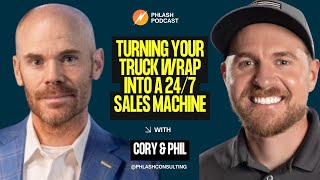
A March 24, 2025 YouTube interview (Phil Risher with Corey Moskowitz) about turning branded service vehicles into measurable mobile advertising. Corey explains how Trans Promotion and Fleetworks use an OBD-plugged beacon built on a GPS telematics backbone to collect mobile ad IDs within a tight geospatial radius, enabling digital retargeting (Facebook/Instagram, Google, streaming/OTT). The conversation covers best practices for vehicle creative (less is more, QR codes rarely work), operational metrics (sample costs, audience growth), privacy/legal framing (uses anonymized mobile ad IDs, opt-in via apps), and deployment details (integration with existing telematics, geofencing planned).
Questions this video answers
March 24, 2025
20 meters (≈65 ft)
Approximately $50–$60 per truck per month
About 6–8 vehicles (average)
About 2,000–3,000 mobile ad IDs per week per vehicle
Chapters
Welcome back to the show. I'm your host, Phil Risher. And on today's episode, we're going to be diving into how home service businesses can turn their truck wraps into a sales machine with Corey Moskowitz. Thanks so much for joining us today, Corey.
Yeah, thanks for having me.
Yeah. So Corey Moskowitz is the founder and CEO of Trans Promotion and fleetworks. His company helps businesses turn trucks into mobile billboards, reaching thousands of potential customers every single day. What makes it even more powerful is how they. They generate digital tracking to make these campaigns measurable. That's actually how he started. Now he helps home service businesses with their truck wraps, turning them into sales machine, which is more important than what we're going to talk about today. So, Corey, can you share a little bit? Like, how did you get into this whole thing? Truck wraps, tracking, performance, ads, all that?
Yeah, totally by accident. So I've been in tech for a long time. Most of my career has been in tech sales. I've run companies on the software side, hardware side, and most recently in that space, I was running a small managed IT firm. And we did a lot of advertising mainly out of home. Right. So billboards and the like. And I just felt like there had to be a better way. Right. Billboard advertising, so expensive. It's crazy. So I started this truckside ad company called Trans Promotion, which is really focused on kind of transitioning some of that and very quickly realized we had to find a way to validate who was seeing our trucks as a way to prove an roi. Right. That technology, unfortunately, didn't really exist in terms of availability in the market. So we kind of put. Put it together and started our own thing and developed the technology as a way to prove how many people were seeing the trucks. Right. And kind of an unintended byproduct of that was we started capturing mobile ID data, which is ultimately how you then digitally retarget a specific audience. And so very quickly, we realized that the mobile ID data was probably way more valuable than our truckside ad business. And so we then started fleetworks, which is really focused in the home service space and taking that technology to the. To the home service market.
Yeah. And that was the main reason why I said, hey, like, we need to definitely have a conversation. So I've talked to Corey over probably the past six, seven, eight months. And the premise of it, from my understanding, is that home service businesses have trucks that are wrapped. Your technology goes into the OBD port, where someone would typically have like a geotab or some fleetmatics type of thing that's going to keep track of their drivers. But the real technology that you've created is that now as people are driving with their truck wraps, anyone that's around them, it would build this database of people that have seen their truck wraps. But then you can market to those people.
That's right, Yeah. I mean, ultimately, you know, home service companies have done the hard work. Right. They've branded themselves and their vehicles, usually in a really, really effective way. They just don't have the ability to take that to the next level. Right. To capture that kind of what I'll call wild impression, the truck being seen out on the road or in a neighborhood or in the communities that they're already doing work in and they want more work in. And so what we do is we help them understand who's being exposed to those trucks every day. And then more importantly, give them the ability to now digitally retarget, serve ads through meta like Facebook and Instagram. But Google, you could serve ads through streaming audio and OTT or connected video even. So now your ability to target the people that are already exposed to your brand through your trucks is limitless.
Yes. So if I'm hearing you right, someone's driving down the highway, they see your truck, then they get to their destination, open up their phone and go on Facebook, and now they see an ad from you because they just saw your truck on the highway.
Yeah, I mean, that's, that's the goal. Right. Is that you're, you're exposed to the truck, and then, you know, maybe a day or two later you're getting an ad through Facebook or Instagram just because you were exposed to that truck. Right. And so it's just, it's brand recognition, frequency. We're trying to create density in the market. Right. Again, understanding that most of these guys want more work in the communities they're already in. And if we can help shorten time between service calls by creating more service calls in that market.
Yes.
We're driving profitability, which is so key.
Yeah, you're, you're 100. Right. So I want to back up a little bit about the, the truck wraps and the billboards and that kind of stuff, because a lot of people, you know, that listen to the show are like 1 to 10 million home service businesses. They have some truck wraps. Maybe they haven't invested a ton into that or they've tried different things. Do you have any best practices for like, mobile advertising? Truck wrap? Should they have QR codes? Should they have offers? Should they have Tracking numbers, vanity, all that kind of stuff. I'm curious to hear your thoughts on this because you've, I think you've done this for like tens of thousands of cars or something. Billboards and stuff, right?
Yeah, we got a lot going on. So, you know, generally speaking, I think less is more when it comes to billboards, but specifically, you know, this kind of notion of mobile billboards. Right. Truck advertising or leveraging branded fleet. And I think sometimes we're, you know, as business owners, a lot of times we want to evangelize ourselves to the fullest extent. And you've got to understand that that's not always that that's not the best place to do it on the side of your vehicle. Right. So, you know, logo, brand, that's the extent of it, I think. Right. Maybe a few things of what you do and maybe the markets you serve, but ultimately you're trying to incite the customer to come to you to get more information. Right. And. Or maybe we're going to hit them with ads later and you want to create that familiarity so that someone actually engages with the ad. It is very easy to overdo it when you, when it comes to advertising in general, but specifically on vehicles. And you mentioned QR codes. The only time that I've ever seen a QR code work in a mobile setting is if you're giving away something of value. And if you're not giving away something of value, you will get no engagement from a QR code on a vehicle.
Yeah, I think that's very important. People are not driving down the highway trying to scan your stuff. They're going to see your name and maybe your brand and colors and. And then they're gonna go to Google and type in a branded search of some sort.
Yeah.
So with the ads, have you seen that? Okay. They see your truck and then you serve up another branded display ad of some sort or is. Then you would have some call to actions. Have you seen any structure on, like how you should go about retargeting people after they seen your truck?
Yeah, I mean, there's a lot of different strategy around the actual act of the retargeting piece. Right. We've got a number of customers that will only retarget mobile ad IDs that are seen by their fleet multiple times a week. Right. Because they just want that customer, potential customer that's constantly being viewed. We've got folks that are using it as more of a brand awareness play. Right. So the digital content they're serving literally mirrors what the vehicle is Showing same design, same color, same logo, same know, look and feel. It really just depends on the strategy of the individual business. I think one of the things that makes this a little more pertinent today maybe than it has in the past is that the way consumers interact with search is very different today than it has been ever. You know, certainly in the last couple years, you know, when you go into Google and as a consumer and we type in air conditioned repair near me, right. The first couple results that pop up we now know are all paid, right. People are buying those. And so a lot of consumers now are scrolling past that. They're looking for the organic search results. And another kind of interesting phenomenon is happening where they're looking for companies that they are already familiar with, right? Because people want to do business with familiar entities. So it's not, they're, they're not clicking on the first result. They're looking for logo, brand name that they recognize. And then they start to dig in and might look at reviews and all the other stuff that goes into that. But I think that's our job as marketers, is to create brand familiarity in the space.
Yeah, that's right. The search for H vac near me. And you can show up on that, great. But the ultimate keyword that you want is you, your company's name being searched because people know about your brand and that's really what you're after. I want to take a little bit of a step back and dive a little into technology because people are probably saying, okay, well how does it know who. You know, AI's got my, my IP address, you know, like, right. Can you talk a little bit about like, okay, a truck gets, is driving by the obd, then it pings onto maybe your, your cell phone and then it knows something else about you and it kind of ties all these dots together. What does that, what does that look like?
It's far less scary than that. So first of all, the first question I always get is, is this legal? And the answer is yes. So basically what happens is we put a beacon in all of the vehicles. To your point, it plugs into the OBD port. It is built on a traditional GPS telematics backbone. Right. We then are overlaying cellular or mobile device data on top of that GPS data, right? Which is ultimately what allows us to understand the specific cell phones that come in contact with those trucks. So it's not necessarily a direct, you know, relationship with the device. It's not a Bluetooth signal. It's more geospatial Data relative to the truck and the mobile device. An important distinction though is that we are not capturing any user defined data. So mobile ad IDs are the kind of alphanumeric identifier that lives in a device in a cell phone. It doesn't know that it's Phil's cell phone. It just knows that that phone came in contact with that vehicle. Right. So that's important on a few different levels. First of which is if we were capturing that user defined data like that, we would have to get approval pretty much every time we interacted.
All of.
The data we're gathering. These mobile ad IDs are all opt in only data. So you know how when you download an app, it'll ask you, do you want to share your data once only while using the app, never depending on how you, you know, what selection you make is ultimately what dictates your willingness to share that data. And so if you've selected a few different options, we're able to pull that data under certain circumstances. So that's the data we're collecting and then that's the data we're providing back to the, to the home service company so that they can advertise, you know, target that specific device.
I got you. So someone downloads Facebook, they just check off the privacy policy thing, whatever that is, that Facebook has Facebook now on your phone. So it knows that ID number, then it comes in contact with your thing. So then when you upload this list or somehow it connects, it kind of puts it all together for you and then it's like, oh, here's this person.
Yep, exactly.
Right. Okay. All that makes sense. You mentioned about a radius. Is it like, you know, 10 mile radius is like a couple lanes over or like.
So that's a good question. It's a 20 meter radius. Now for those of you in the US that's 65ft, right? So roughly 65ft around the vehicle. That's very intentional. Right. We want to keep that radius pretty tight. And the reason for that is because we only want to capture people that have the real potential to see the brand. We're not interested in, in capturing people a half mile away because the reality is, you know, these, a lot of these are, you know, pickups, sprinter vans, that kind of thing. They're not huge vehicles. And so the ability to see them from a distance is limited. So we want to capture a pretty tight radius. You know, again, our goal here is kind of leveraging and doubling down on a truck sitting in a driveway in a neighborhood and people coming in and out of that neighborhood as they're leaving or, or you know, going to work and that kind of thing, or as the truck is driving from service call to service call. It's parked at a gas station, it's at the supermarket on the weekends or a little league game. We want to capture all of that.
Yeah, that makes complete sense. When you started this, it was to try to prove out some type of an roi. So how does that all correlate into this? Is there a component to that or how do you try to figure that out?
Yeah, I mean, ultimately it's, it's, it's kind of on, on the home service company and their, you know, their marketing person, agency, whoever that relationship is with. You know, unfortunately for us, we, we're not serving the ads right, we're simply providing the data. So it's very difficult for us to end, you know, at the end of the day, prove an ROI in this space. You know, anecdotally we hear from our clients that they're seeing, they're seeing great results. I mean, I've got, you know, I've got H Vac companies or you know, irrigation companies, landscape companies that are saying, hey, we had our best year ever. And 90% of that increased volume came from, you know, Facebook or, you know, whatever that mechanism is. And look, can we say that all came from us? Of course not. But I think, you know, we could certainly draw some correlation there for sure.
Yeah. I think for me that the moral is like if you value brand and you're investing in a truck wrap of some sort, this is another tool that you can leverage a truck wrap to actually build more brand online and taking it offline in the wild into actually online retargeting real people that have seen your brand. That's right, yeah. What about down the line, like with this technology, are there more things that you, you could do? I can imagine with AI and different things, there's so many different ways that now you can start to layer in ads or communication.
It's crazy. I mean, I constantly talk to clients that are using it in different ways. I mentioned streaming audio and video and I mean, Amazon is now kind of playing with the idea of opening up their ecosystem for non Amazon sellers to advertise, which is a whole nother opportunity. So there's, you know, there's a, an immense amount of development being done on the ad service side and obviously that has nothing to do with us. But as long as those folks are ingesting mobile ad IDs, we're able to serve in that space. I will tell you one of the unique things again, because we're built on a GPS backbone, we've had a number of our clients say to us, hey look, we've already got a GPS solution in place, we're using a Verizon Connect or whatever it is. Can we utilize your service? And so in that case, we're just turning on the GPS solution for them. We don't charge extra for it because it's already in the vehicle. So you know, that's a huge benefit. And it's full scale telematics, right? It's got alerting, it's got geofencing, it's got the ability for maintenance, all of it. You can even integrate two way AI dash cams. So the capabilities on that side are tremendous. Then when you layer in all of the digital and marketing components that we're gathering, it's really kind of a no brainer. The best part about this solution, Phil, truthfully is the cost. It ranges anywhere from let's say 50 to $60 a month per truck. It's not a heavy lift. Right. So you know, again, we understand that you still have advertising dollars that you've got to deploy, but it's not something that's going to break the bank.
Yeah, I completely agree with you on that. It's a fraction of anything that you would be spending. But more importantly, you probably already have these tools that you're paying for anyways that now you can unlock a whole bunch of other ways that you can leverage your vehicle to actually generate money for you. I used to be in the fleet management space. That's how I got into home service space in general. And we used to sell these, these tools like Geotab, Fleetmatics, whatever that you plugged in. And it was more of a keep track of your fleet, make sure your guy's not speeding, you know, check your, check engine light more preventative. Where if you're already paying for that, why not turn this into some type of a sales marketing opportunity and then couple the two with your digital ads on top of it, right? Yeah, pretty cool. So obviously the home service base, is there any like, you know, hey, you need this many trucks to really see some effect on this or what do you think?
Yeah, there's really not, you know, our. And we work with a whole bunch of different clients in a lot of different sectors. I mean most of them obviously are in the home service space, but truthfully it's, it's anybody with a branded fleet, right? Anybody that's taken the time to brand their trucks can benefit from this. Our average client size is about six to eight vehicles. Average. Right. So we've got some that have a lot more and we've got a lot that have a lot less. We've got a number of folks that are running two, three, four trucks. The reality is the guys running two, three, four trucks are probably fairly tight in their service radius. Right. So let's help them to develop that, that density within that space. And, and that's what we're after. Right. So it really doesn't matter how many. What matters is how many mobile ad IDs we're generating off of those vehicles. And, you know, depending on market. Right. Everybody's a little different. If it's urban or more rural, we're seeing anywhere from say 2000 to 3000 mobile ad IDs per week per vehicle. And that, that audience just continues to build over time. Right. So it may be, you know, if someone's got five vehicles and they're seeing 3,000, it starts at 15,000 mobile ad IDs this week. Next week you're up to 30. Then the week after you're at 45,000. It just grows very, very quickly.
Yeah. It brings up an interesting question. People might be asking this. It might be in the weeds a little bit, but is there any way to set like a radius? Like most of the companies, they're in more like, you know, main city areas, but their technicians would live more rural and they're driving an hour and then they might not want people to see their truck way out here.
Yep.
I would imagine when you get the data, you can dissect it and drill down when you're running ads like don't show it out here and that kind of stuff. But is there anything like that?
There isn't currently. To your point, you can manipulate the ad delivery.
Yes.
Right. So I've got this huge collection of data and I say, okay, I want to serve ads to all of these people, except people that live outside of this zip code, what have you. However, we do have the technology in place. Again, being built on a GPS platform, we've got the ability to start geo fencing the service areas. We just haven't been able to develop that fully yet. So it's in process. It's something that we understand is a dire need, truthfully, and one that I think will be coming online pretty quickly.
Yeah, cool. With the geofencing, from what I know about it is like if, if your technician leaves a certain area, you can get notified of that specific thing happening. And then obviously you don't want your car in California if you're in New York or something.
Yeah, yeah, that's right. And so we, we would use that on the data collection side to say, hey, look, if that, if that technician left this radius, we don't want to collect those mobile ad IDs.
Yeah, exactly. So you're already thinking step way, way far ahead. So you, you're good. What, what about any challenges coming up in the future? Like do you think people are going to be cracking down on people getting access to their data and all this kind of stuff or is that, is it more of a wild, wild west situation or.
Yeah. You know what's crazy, I mean, we've heard for the last number of years that, you know, third party cookies are going away and, you know, all of this stuff. I think what makes what we're doing really attractive is we're capturing first party data. Right. So even as things start to tighten in the world of advertising. Right. And by the way, those have been kind of idle threats, I'm not sure that third party cookies are actually going away. But in the event they do, the data we're collecting is first party data, Right. We're pulling it directly from the device. You know, having said that, I mean, there's always things that are changing and you know, you never know, you know what's going to happen. I will tell you, from the user perspective, more users share their data than they probably realize.
Just check the box.
Yeah, yeah, it's easy, right? Like, you know, they make it super easy to say yes. In fact, it's very difficult to say no. So most people are sharing their data whether they know it or not. And the reality is, I think most consumers kind of like that interaction from advertisers. Right? Because ultimately, and we can say it's Big Brother and it's, you know, it's kind of scary that my Amazon Alexa is listening to me and all of that kind of stuff, but at the end of the day, it gives advertisers the ability to really target people that are interested in certain products and services. And there's value to that as a consumer.
Yeah, that's right. As much as people complain, sometimes people get on Instagram and they like all the ads that are served to them because it's perfectly fit for exactly what they want.
Right.
Or Facebook, whatever. Yeah.
Cool.
Corey, this has been great, man. Where should people go to learn about this? Or get, do they get a demo or do they sign up or what's that look like?
Yeah, it's, you know, usually it's just a kind of a brief conversation with somebody on my team, myself or someone on the team. And, you know, there's a few things we need to understand from them in terms of what they're doing today and how they operate. But it's pretty easy. Literally, the beacons themselves are plug and play. So we ship them out. We don't, you know, they plug right into the OBD port. So you can check us out at Fleetworks US. That's FleetWorx US. And. And yeah, I mean, there's a ton of information there. There's an opportunity, I think, on the site to, you know, to actually book a kind of an exploration meeting and, yeah, it's pretty easy.
Cool, man. Well, yeah, it's been great. Keep it up. I know you're crushing it. We were talking offline, but it's like this is. This is not just some random thing that. That people are doing. It's really catching on a lot. And I think it's going to continue to be a big push for home service businesses, specifically that want to grow their business.
Yeah, it's been a lot of fun. This is not a space I grew up in and I'm enjoying it. I'm getting out, meeting a lot of great people and yeah, it's been a lot of fun.
Yeah, I love it, man. We'll keep it up and excited to share this episode and we'll talk soon.
Sounds good. Thanks, Phil.
Yeah, man.
More from Phil




The companies that win the next five years won't be the ones gaming the system.


