The Best AI Platform to Get Customers in 2027
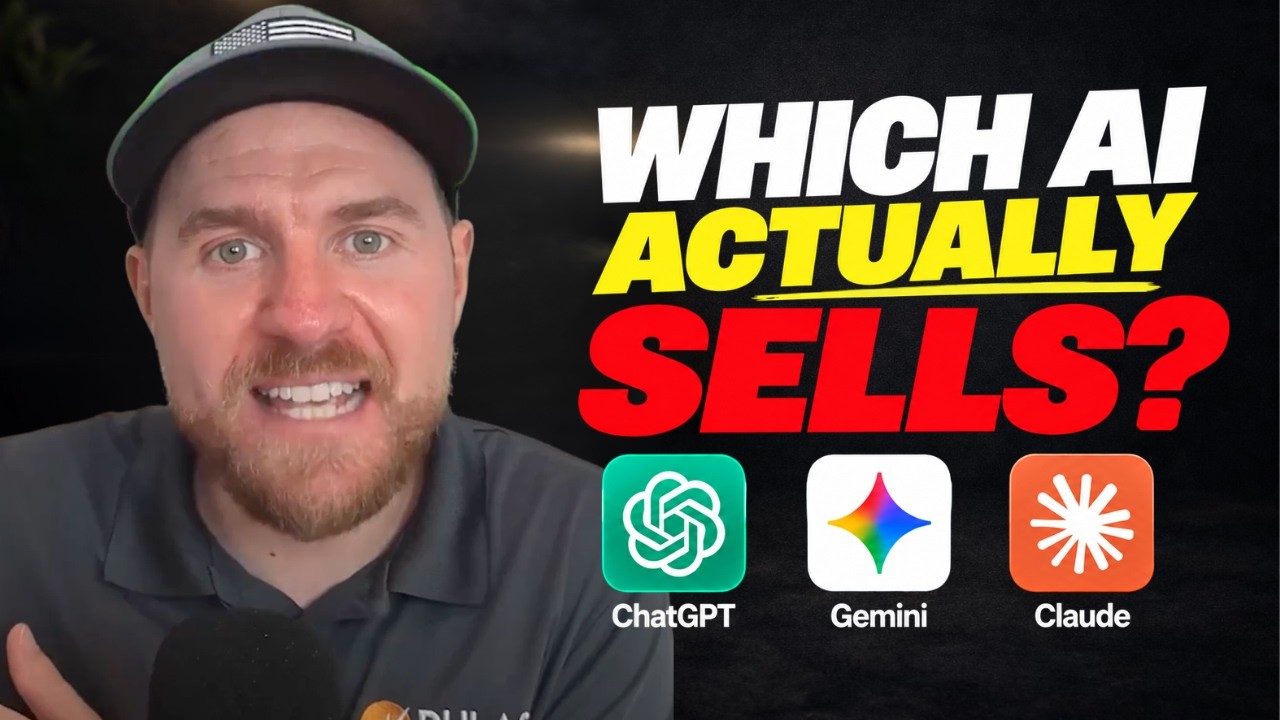
In this video Phil Risher evaluates three leading AI assistants—ChatGPT, Google Gemini, and Anthropic Claude—to determine which is most effective for acquiring customers in the home‑service sector. He structures the analysis into five rounds: (1) audience and adoption, where he cites market‑share data showing ChatGPT still holds the largest user base but Gemini is gaining ground; (2) local search ecosystem, highlighting Gemini’s deep integration with Google Maps, Business Profiles, and reviews versus ChatGPT’s emerging Yelp partnership and Claude’s limited local data; (3) buying‑intent and journey, noting that 80% of local searches start on Google and most AI‑first users still verify on Google, leading him to favor Gemini; (4) live user tests using HVAC queries (best company, pricing comparison, scheduling), where Gemini consistently provides richer, actionable results with direct links and pricing details, while ChatGPT and Claude fall short; and (5) measurability, where only Gemini (via Google Search Console’s generative‑AI reporting) offers concrete visibility and performance metrics. Phil concludes that while ChatGPT enjoys the biggest audience, Gemini is the superior platform for local customer acquisition. He offers practical recommendations: focus on Gemini/Google AI mode, track performance with Search Console, create non‑commodity, unique content (including converting customer calls into content), gather reviews, maintain a strong Google Business Profile, and distribute content across web and social channels. He also promotes his agency’s services and an AI‑agent tool to help $1‑10 M home‑service businesses implement these playbooks.
Chapters
Next week, I'm headed to Austin, Texas to speak with 600 home service business owners about the massive shift happening with AI search and share the strategies that we're using to help our clients rank there. And as I'm preparing, there's one simple question that I wanted to answer. Out of ChatGPT, Gemini, and Claude, which platform is most important if my goal is to get customers? So in this video, I'm going to put the 3 AI platforms through 5 rounds of testing to see who wins. By the end, you'll know which AI platform wins for home service businesses and exactly where you should focus your energy to make sure that you show up where customers are Round one, we're talking about audience and adoption. Who has the most people on their platform and who has the quickest adoption to the platform? So a recent study found that 45% of consumers used AI for local recommendations in the past year. So almost half of the people looking for local businesses use AI platforms to find information. Now ChatGPT currently leads this individual AI tools at 46% usage, and there's this report that came out. It's the True audience market share for top AI assistants, and you can see this is from May 2026. Now, if we go back to 2023, ChatGPT was over 80% of the market share, and slowly it's dwindled. Gemini is now 24%, and Claude is 10%, and Claude had a big surge in 2026 up to 10%, and you can see Gemini slowly chipping away at ChatGPT. Now, the reason that I believe that Gemini is going to continue to chip away at ChatGPT. Is because Google made the biggest shift to their search homepage that they've ever made in 25 years, and that is taking search away from here and putting in AI mode, driving traffic to Gemini. Google's literally herding their people into, please use Gemini, please use the AI mode, and this is why I believe that they're going to take more and more of the market. All right, so round 1, when we talk about where can you get customers and what platform should you be on, I'm going with ChatGPT on this, and the reason is, is because They have the most attention, you know, over a billion users and 46% of people or, you know, people or searches are being used on ChatGPT. So I'm going to say attention isn't the same as intent, but it's still the biggest audience on ChatGPT. So point to ChatGPT. Now round 2 is the local search ecosystem. And basically what this means is on these platforms, what local ecosystem information do they have to pull from? And we're going to do some live tests in a little bit, but essentially What are they pulling from and what information do they have? So ChatGPT is going out and doing web searches. Maybe they're looking at Reddit stuff, citations, location-aware answers, that kind of stuff. They actually did recently partner with Yelp a couple weeks ago, and I believe in 2027 they're going to be pulling in a lot more Yelp data, projects, portfolios, reviews, their request a quote feature. So they're going to have another platform to pull information from. Now obviously we know Google Gemini, they have their search, they have maps, they have business profiles, they have reviews. They have a full ecosystem of knowledge when it comes to local businesses and how customers interact with those businesses. And then Claude, I would say Claude is a capable research tool, but there's not really any embedded local discovery yet. It's more just pulling in information similar to ChatGPT, but not as defined as like what we see with ChatGPT with Reddit or some of these other platforms. So with this, I'm definitely going with Gemini on this. I think they have the most full picture of a business, and on top of that, When we think about ChatGPT partnering with Yelp, it's because Gemini is going to continue to close off their platform so that way they, they're in competition with these tools. They don't want them to be able to use their Google Business Profile, their maps, and all the information on their platforms. They want to keep it on their ecosystem. So point goes to Gemini for sure on this when we think about the local search ecosystem and finding customers. All right. Round 3 is buying intent and the journey. This one is important. When we talk about getting customers in particular, which is what this video is about, it's a lot different than just people using tools because just using tools, right? You could use Claude to build a website. You could use Claude to build a VibeCode, whatever you want. But if we're talking about where are people actually going to get customers, this is a different way of looking at this buying intent and the journey. So a recent BrightLocal report found that 80% of people start their local search on Google Search. Only 8% start with AI. And I think that this is going to continue to grow. This report probably came out before Google made their big shift to AI mode. But what I do know about people looking for businesses, 80% of them start on Google. They say, hey, I need a company for this, or they ask questions on Google. It's just a natural way that people are doing things. Now, 43% of AI-first searchers still check Google afterwards. This was a really important thing just because they might go to ChatGPT and find things or Claude or whatever other platform they might use. They're still coming back to Google afterwards to search. And this is from real user data. So this is not just made up foo-foo stuff. Like, people still go back to Google to read reviews because they believe that in that full ecosystem, they have the information. And only 18% of people would contact an AI recommendation without more research. So people are still a little fuzzy about like, do I trust these AI recommendations or not? Let me still go and do a little bit more research on my own. Based off of this information, I'm definitely going with Gemini on this. I think we would all agree that for a local business, people go to Google to find local businesses. That doesn't mean that some people use ChatGPT, some people use Claude, but holistically, 80% of people are still using Google search and they're getting funneled into AI mode for this. So I'm going with Gemini on this. All right, so let's actually put these platforms through a live test as if I was a customer and what it actually looks like. So ChatGPT, Gemini, and Claude, I'm going to ask them these 3 questions. Who's the best HVAC company near me to replace my air conditioner? Can you compare pricing amongst those companies? And how do I schedule service? So let me pull them up. All right, so let's look at ChatGPT. I said, who's the best HVAC company near me to replace my air conditioner? And you can see the results that it gave me. A couple things to notice is that yes, these are people in my local area, but even the first recommendation, there's no links or anything to contact this business. It's just said, hey, talk to these people. So what do I do? Go to Google or say, hey, can you get this contact information for me? The other thing is right up top here, it says Consumer Affairs. It links to a Consumer Affairs article, not necessarily a direct business. It takes me somewhere else to go and evaluate who I should reach out to. So this one leaves a lot to be desired. Let's look at Gemini. So Gemini asks the same question. It pulls in their Google Business Profiles and it talks about the price range, their star ratings. I can click here and go to their Google Business Profiles. We also got a nice map here, which I think is good. I would say this is pretty standard from what you would normally see, like your Google My Businesses, Google Business Profiles, Map Pack, and like stuff popping up here. And then let's look at Claude. So Claude, same thing. One thing that I did notice is that these are actually pulling in from Google Maps. So it's made a little map for us and it's pulling in Google Business Profiles straight from Google Maps. Similar thing here. There's nothing like to contact these people. Even if I click here, there's a phone number and I like this, but it's not as— it's basically like, you know, hey, this is what Gemini is with a little bit more information down here. This one's all right. All right, let's go to the next question, which is, can you compare pricing? Now, this one was pretty much the bona fide, like, much different results. So in ChatGPT, you can see, yes, I checked current published pricing. It's an important limitation. None of these 3 publish a standard installed AC replacement price, which I get that. So it pulls in information right here, Smock, Frederick Air, Mays, and then there's no real pricing read. It kind of gives you baseline information of like, here's what it should cost you to do these things. Here's what some websites might say. The best thing is to get a free replacement. What I would do, and give you a recommendation on these things. I think this is decent, but it's not great. When I go to Gemini and ask the same question, it gives me much more in-depth answers, in my opinion. And the reason is because right here you can see like Frederick Air, it gives me a mid-high range pricing for all these things. And then standout pricing and promotions. It talks about things that it's found based off of them. Flexible financing, assist with local utility rebates. Free replacement estimates. And then look at Smock. It's like they give up to $2,000 in total rebates. They have low monthly payment plans. They do free second opinion or replacement quotes. Then look at this one. So it does a little bit more research for you, in my opinion, than just saying like, hey, they don't publish this stuff. It's like they have high expertise in variable speed and ductless systems. Like it gives you more, more experience, more information. And then even breaks down here, like what drives the price differences based off of this information. Like, This to me is more in-depth than what I got from ChatGPT, which is like some baseline stuff it pulled in from the internet. And then, yeah, we don't have any information on this. Like, here's what I would do over here. Now with Claude, it's similar. Like, it's, can you compare pricing, right? It's like multiple reviewers specifically mentioned that they had the best price after comparing quotes. It pulls in some information from, from your reviews, but it's, it's still, to me, it leaves a lot to be desired from a results perspective. All right, and then the last question here is going to be, how do I schedule service? So I said, okay, well, how do I actually schedule service? You can see it's like you could call this number, you can go to the website, go to the website, call this number. When you schedule, I specifically say that you want this, which— and then it got links out. I think this is pretty good. It's got phone numbers, it's got links out, and it makes some recommendations. So I would say this is pretty good. Let's look at Gemini. I think the biggest thing with Gemini is that it pulls in their Google Business Profile. So like, how do I schedule service? Like boom, right here it pulls in all the information so you can easily, you know, get their stuff. You can contact them, go to their website. If I was on the phone, it would allow me to call them. Um, it has the phone numbers here. It also talks to do they have online booking, online booking. Just, um, this one is pretty good. I do like that ChatGPT gave me some recommendations of things to say, so that's pretty nice. And then Claude, um, links out, and this is going to go to Google Business Profiles as well. How do I schedule? Here's how to get in touch. And this is just like a list, you know, right here. Click on the one that you want to do since you're placing directly in-home estimate faster than web forms, which I would agree with. So cool. Overall, here's what I would say. I think based off of the user experience that I just experienced, I would definitely have to give the point to Gemini, mostly because it was the most complete walkthrough of who's the best HVAC company. It pulled up Google Business Profiles, gave me things. But really what I liked is when you compare pricing and it gives you a lot more information. And then how do I schedule service? And it pulls in Google Business Profiles and I can do things there. So definitely got to go to Gemini with this one. All right, so round 5. This is the probably the most important part of the whole equation is, yeah, it's cool to do all this stuff and it's cool to have people find you on these platforms, but can you measure it specifically? Like, how do we know if things are working or not? And Gemini Google is the only platform so far that has solved this. So Google Search Console now reports AI overviews, AI mode visibility, which I'm going to show you an example of that. ChatGPT and Claude recommendations are far harder to trace aside from UTM, which means You can see if someone clicks onto your website from ChatGPT or Claude, which is fine, but I want to see if I'm actually the recommendation or the answer on this platform. And Google Search Console has made that available for us because if it's, yeah, I need visibility on these platforms and then I need traffic and leads and book jobs and revenue, well, how do I see visibility? Because right now with ChatGPT and Claude, it's hard to know what content they're pulling in and if they're showing you for what things that they are. Google Search Console has made that available to everyone that has any content on the internet. You literally just set it up. So here's their generative AI feature, and it is in beta. What I will say is about half of our clients have this available to them. The other half, it's getting rolled out. And what this shows you, and this is specifically for their website content, but you can pull in social content as well, like YouTube videos, Instagram, TikTok, and X. And you can see this blog post, How Do You Know If Your Shower Pan Is Leaking? This blog post, how do I convert a bathtub into a walk-in shower? You can see in the last 28 days, generative AI features. This blog post had 649 impressions on Gemini and AI overviews. So there's no other platform that shows you this information. And this is the hardest part is like, okay, yeah, I want to make content and I want to do these things, but how do I know if it's actually working? And Gemini, Google Search Console, is the only one that answers that. So This is a simple one. This got to go to Gemini because you can actually see what's working. And that brings us to our final scoreboard. We got ChatGPT. They have the most audience on their platform, though it may be diminishing. We have Gemini, who is pretty much crushing on all the other fronts, in my opinion. And then we have Claude over here, which I think that Claude is a really great tool. And we use Claude and we build stuff on Claude. I would say that it's not the best for getting customers, though, for local businesses. So here's the takeaways. ChatGPT may be winning AI attention. Google may be still winning the customer journey, and Claude is a great tool, but may not be the best for local search. So being a phenomenal AI doesn't automatically make you a phenomenal customer acquisition channel. And this is why it's so important why I'm making this video is because just because you hear buzz about Claude and ChatGPT, at the end of the day, we all want to get customers and revenue and grow our businesses. And we need to make sure that we're optimizing for the right platforms and not just chasing a fad of like everyone's building agents on Claude, which is cool. But we want customers, right? So what does that mean? How do you optimize for Gemini and Google right now? Well, I showed you, hey, you should use Google Search Console and you should track your generative AI experience on there so you know the content is working or it's not and you're being shown more or not. But also, Google actually tells us what to do. Here's how to apply foundational SEO practices to generative AI search. And what they say is to create what they call non-commodity content. Non-commodity content is You don't want to say 7 tips for first-time homebuyers is the example that they give. You want to use things that not everyone can talk about or create, which is why you need to be creating unique content for these platforms because people are asking those qualifying questions like what I showed you. Who should I select to replace my AC unit? Who compares pricing, right? Make some pricing information. How do I schedule service? People might even go a step further in diagnosing their things. My thermostat is on and there's no air coming out of my vents. What should I do? Like these are all content pieces inside of the funnel that now are important and you can track. So if you own a home service business or local service business and you're looking for a company to help you with this stuff, that's exactly what my company does. We work with $1 million to $10 million home service businesses. We help them with all the playbooks to make sure that they're getting customers in the new era of AI search. I'll put a link down below. I love the opportunity to help you. So summary checklist, stop treating this as a beauty contest between AI models. If you go to Gemini, you go to Claude, you go to ChatGPT, and you do the searches and you say, okay, I'm in this one, I'm in that one, I'm not. I would recommend focusing on Gemini, and it's a different strategy. The strategy is creating content, getting reviews, making sure that you're the answer, and more importantly, you can track it now using generative AI in Google Search Console. Number 2 is anchor every decision in search intent, not usage volume. Just because everyone's all up in arms about Claude and you see everything on YouTube, What do the stats actually tell us? What percentage of people are using Claude? And more importantly, are people actually using Claude? And what is the experience like to get people from that platform? And this is why Gemini won. Recognize Google's local ecosystem advantage is still real. Google has Google Maps, they have Google Business Profiles, they have Google Search Console, they have Google Analytics, they have all these platforms, right, that they are syncing into their AI mode, and they still have the advantage over these other platforms. This is exactly why ChatGPT partnered with Yelp to try to get their stuff. It's exactly why Claude is pulling in Google Maps results, because Google is still the number one place for local search. Build content so any AI can understand and recommend you. If you need a simple framework for this, we built an agent, and the link is down below. His name's Turner, and he will help you create content so that you create non-commodity content And it ranks in AI search like within 7 to 14 days, usually for our clients, because it takes real stuff and builds a knowledge base and helps them with it. If you don't want to use an agent, just take your customer calls and turn it into content. It's as simple as that. And then the last thing here is create content across platforms, social and website. As we talked about in generative AI Search Console, you can see that it's pulling in not just blog posts, but it pulls in YouTube videos, it pulls in social media posts. And when we talk about share of voice, which is how many times you're being shown on certain prompts, You got to make sure you're creating content everywhere because that's what it cares about now. All right. So if you're trying to prepare your business for the new phase of AI search, the game plan for 2027 and beyond, that's exactly what my business does. Again, I'd love the opportunity to at least talk with you and see if we might be able to help you, show you the recipe, sell you the cooking, if it makes sense. There's a link down below. Also, if you like content like this, be sure to hit like and subscribe. We talk about AI search, marketing, growing businesses, all those things, and we'd love to see you at the next video.
More from Phil




The companies that win the next five years won't be the ones gaming the system.


