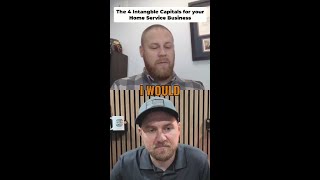
Business owners scaling past $5 million aren't working harder. They're building structural capital through documented processes, customer capital through relationships, human capital through brand loyalty instead of personal loyalty, and social capital through culture. About 80% of a firm's value comes from these intangibles.
Chapters
I would lean hard into a concept that we teach called the 4 intangible capitals. There's structural capital, that's all your standard operating procedures. It's the thing that makes your company run lean and optimizes your employees' time, including yours. Customer capital, which is pretty straightforward, right? It's our customers. The thing at the $1 to $5 million base, most of the companies were doing business with me. They weren't doing business with my company per se. Then you have your human capital, which is all of your employees. What we're kind of asking there is, are they loyal to you or are they loyal to the brand, the service, the product, the customer the culture, which is the 4 C's called social capital, which is the culture and rhythm of your business. And when you think about that as a business owner, you go, yeah, man, I call that running a business. But the problem with all of that is that it all relies on you. As you start to manage those 4 C's, you actually decentralize yourself away from your company and get yourself into a seat where you're like, I love doing this. You're going to drive profits up, you're going to retain more people, and everything's going to start really moving along. 80% of a company's value is tied to those 4 intangible capitals. You have higher profit and higher multiple equals higher valuation. So when you think about it, it's really a compounded win.