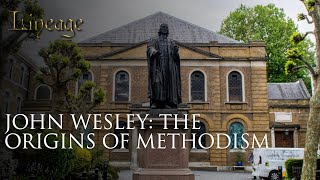
A short Pocket Pastor YouTube monologue (2017) recounting John Wesley’s early life and the origins of Methodism: born 1703 in Epworth, raised in a strict, religious household, educated at Oxford where he and Charles Wesley formed the Holy Club (later labeled the Oxford Methodists), collaborated with George Whitefield, and undertook transatlantic ministry efforts. The video emphasizes how small, practical beginnings (Bible study, disciplined habits, prison and poor relief, open-air preaching) grew into a wider movement and closes with an exhortation drawn from Zechariah 4:10.
Chapters
John Wesley was born in 1703, just before the Industrial Revolution took place, during a time when England was a firmly Anglican country. He was born in the small village of Epworth in the north of England, where his father served as the rector. This here is the family home where he would have grown up and spent his childhood.
His mother bore 19 children in total and the most famous of the others was Charles Wesley. Both of the parents were spiritual people and ran the home according to strict rules. No eating in between meals and once a week they had an interview with their mother for the purpose of spiritual instruction.
John and his brother Charles came here to study at Oxford University, where they enrolled at Christ College. Many of the great movements of this world have been born at universities and although he did not know it at the time, John Wesley was about to be part of this phenomenon. He graduated from Christ College with a bachelor's and then with a Master's before he was elected a fellow at Lincoln College, where he was given his own room and a salary. His room can still be seen today, preserved as he left it. He left for about a year or so to go back to Epworth at the request of his father, before returning back here to university.
It was on his return that he found his brother Charles had started a small club for the purpose of Bible study and in pursuit of Christian life. Each member took vows to lead holy lives, pray daily, take communion weekly and visit prisons regularly. The group was incredibly practical, preaching educating, relieving jail debtors where possible and caring for the sick. They would fast every Wednesday and on each day they would meet from 6 to 9pm and the name that they were called was the Holy Club. However, this is not what they became known by. In 1733 an unknown author wrote in a pamphlet and described them as the Oxford Methodist. And slowly this name began to stick. It was also here that John Wesley's paths would cross with another man who would go on to have a huge impact, George Whitfield.
George Whitfield graduated from Pembroke College and when he finished university, rather than settle in a parish, he immediately began preaching, becoming an itinerant preacher and evangelist. He travelled all over England, in particular in Bristol, where he spent some time with John Wesley and and they both did open air preaching.
Both the Wesleys and Whitfield would spend time in America, but with differing results in their ministries. John Wesley went to Georgia, but it did not go very well and he returned home to England. George Whitfield traveled to America on seven different occasions, had much success and was well liked. He was involved in the Great Awakening that took place in the 1700s, a great religious revival, and it's also remembered as one of the first that preached to those enslaved.
The roots of this far reaching movement of Methodism go back to a small group Bible study with a handful of students on a university campus. Zechariah 4:10 says, do not despise the day of small things. Never underestimate the impact of a small movement with humble beginnings. The Wesleys and Whitfield did not start the whole club because they wanted to found a church or travel the world, but because they wanted to change their life and the lives of those around them. I pray that you may seek to make a difference wherever you are, be it at home, work or school. Do not despise the day of small things.