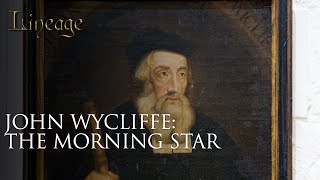
John Wycliffe, an Oxford scholar at Lutterworth, translated the Bible into English and trained preachers called Lollards roughly 150 years before Luther and Calvin. He fought the church's ban on vernacular scripture and faced papal condemnation for his reforming ideas.
Chapters
Welcome to Lutterworth, the workplace of John Wycliffe and the place where he did his most significant work. John Wycliffe has often been referred to as the morning star of the Reformation. The morning star is a term coined to describe either a planet or a star that appears shining brightly in the sky just before sunrise. John Wycliffe lived around 150 years before Martin Luther, John Calvin, Zwingli and the later English reformers. But the work that he did was key in paving the way for them. He was a reformer before the term became popular, standing alone as a voice of change in his generation and in calling people back to the Bible.
Educated at Oxford University, he was a scholar and an unrivaled debater. It was whilst he was a student that he first incurred the displeasure of Rome in denouncing the friars and their lazy lifestyle. He was a champion of civil and religious liberty, and John Wycliffe was the first in his era who coined the term Antichrist in reference to Rome. The Archbishop of Canterbury received from Rome a papal bull to investigate the writings of John Wycliffe. But due to his standing at Oxford University and the goodwill he had amongst the people, this was never followed through. Perhaps a key event that helped John Wycliffe was the papal schism of 1378, where there were two popes that each claimed to be the right pope. And so, amidst this confusion, John Wycliffe was left in a state of relative peace to carry on the work that he was called to do.
John Wycliffe was a great believer in the ministry of preaching. He trained men who were known as the Lollards and sent them out all over the country preaching the gospel. But his greatest achievement was the translation of the Bible. Today, we might not grasp the gravity of this, but back then, to read the Bible in the language of the people, as opposed to the Latin, was seen as heresy, something that was forbidden and viewed as dangerous. A church leader in Wycliffe's day, commenting on his translation, said these. And so the Gospel pearl is thrown before swine and trodden underfoot. And that which used to be so dear to both clergy and laity has become a joke. And this precious gem of the clergy has been turned into the sport of the laity. Wycliffe, though, declared plainly Christ and his apostles taught the people in the language best known to them. It is certain that the truth of the Christian faith becomes more evident the more the faith is known. Therefore, the doctrine should not only be in Latin, but in the common tongue.
John Wycliffe completed the first translation of the Bible into the English language from the Latin Vulgate. It was not a translation that was without fault, but this Bible shed light. Where previously there had been only darkness. The Bible, once read, could do only one thing, pierced through the spiritual darkness that was covering England and Europe at the time the beams of light began to shine. Now the revolution that would be the Reformation would become unstoppable. Today we have the Bible easily accessible. And today I want to challenge you to commit to read God's Word every day, to spend time in his word, because, as the psalmist says, the entrance of thy words gives life.