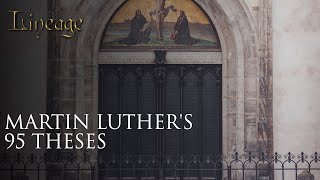
A Pocket Pastor YouTube explainer recounting how Martin Luther’s ministerial life (c.1512–1517) intersected with the papal sale of indulgences. The video describes Pope Leo X’s use of indulgences to fund St. Peter’s construction, John Tetzel’s aggressive salesmanship (including the quoted line, “as soon as the money clinks against the bottom of the chest, the soul escapes purgatory”), public pushback, Luther’s refusal to accept indulgence certificates, his sermon “Indulgences and the Grace of God,” and his posting of the 95 Theses on the university church door on the Festival of All Saints. The clip notes the popular spread of the theses and the ensuing summons from Rome.
Chapters
From 1512 to 1517, Martin Luther's life had been engaged mainly in preaching and teaching. But it was destined to change forever. When John Tetzel came, the Pope at that time was Pope Leo the tenth. As Pope Julius II had died about four years previous, he was eager to proceed with the erection of the great church of St. Peter, which his predecessor had left unfinished. In order to raise funds to complete the church, rigorous methods of fundraising needed to be resorted to, and so the Pope issued indulgences. With that in mind, he decided not to resort to this tactic in Spain, France and England, but in Germany, the responsibility for selling the indulgences was given to a salesman by the name of Tetzel.
As Tetzel came into a town, a messenger would go before him proclaiming, the grace of God and of the Holy Father is at your gates. People welcomed this false preacher as he.
Proposed a rather easy way to paradise.
He promised to pardon all the sins which the purchaser would commit from here on out, and that not even repentance was necessary. In addition to this, he promised that the indulgences had the power to forgive not only the living, but also the dead as well.
Tetzel's famous quote was, as soon as the money clinks against the bottom of the chest, the soul escapes purgatory and flies to heaven. These type of messages produce two responses. Firstly, a band of scoffers who wondered why, if the Pope had the power to release people from purgatory, he didn't do it as a matter of charity. And secondly, a stronger and deeper opposition was people who asked what the Bible said about forgiveness.
Luther was at this time still a priest of the Church and still had to hear people's confessions. A problem arose when some of his parishioners produced Tetzel's Pardoned for Their Sins, and Luther refused to accept them, declaring them nothing but a big fraud. Around this time also, Luther preached a powerful sermon entitled Indulgences and the Grace of God. And he also sent a detailed protest to the Archbishop and local bishop. It was amidst these events that on the Festival of All Saints, Luther posted on the university church door right here behind me his 95 theses, or doctrinal statements about this debated question.
This event was a turning point, and the publication of the 95 theses created a great deal of excitement amongst the German people. They were read and re read and repeated far and wide. Luther was in awe at what he had done, opposed the mightiest power on earth, and it was not long before he was summoned by Rome to appear to answer for his teachings. Never before had one man who had such a huge following people already opposed Rome and his own. At this time the people were sick of the corruption of the Church and many people were thankful that someone was saying something about it. Though not everyone was bold enough to take a stand with him at the time.
Let us never underestimate the power of remaining true to God's Word and to our convictions. While Luther didn't understand the whole Bible or understand even the whole Gospel, he he did share and stay true to what he did know. He had accepted the principle that the Bible should be the sole interpreter of faith and this one principle would light a spark that would eventually go around the whole world and lie at the foundation of Protestantism. That the Bible is to be the interpreter of our faith. May we be true to God's Word and faithful in sharing the message God has given to us wherever in the world that we are.