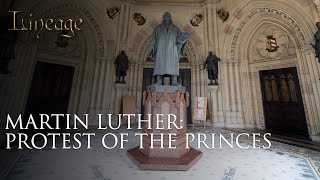
YouTube video (Pocket Pastor) explaining the 1529 Second Diet of Speyer and its significance for Protestantism. Describes the 1526 precedent, the 1529 proposal to halt conversions, the princes’ protest defending liberty of conscience, rejection of civil coercion in religious matters, and the Protest’s principles: conscience over civil magistrate and Scripture over visible Church. Argues the princes’ stand preserved the Reformation and that modern Protestants should adhere to Scripture alone.
Chapters
In 1529, the second diet of spires convened right here. The first was in 1526, which gave each state full liberty in religious affairs. In 1529, all the German princes gathered here, along with representatives of the Church. The Church's desire was to crush out the heresy of the Reformation, first by peaceable means, but using full force if needed.
One thing that was proposed was a halt on conversion. The saints that sided with the Reformation would stay that way, and the ones that did not would stay as they were. If this edict was to be enforced, then the Reformation could not be extended where it was not yet known, neither could it be established on a solid foundation where it had started. The key issue at stake was liberty of conscience. As they met to discuss what they would do with this proposal, key issues for the world lay on the table. Did Rome have the right to coerce conscience and forbid free inquiry?
As they looked back at the recent history and saw the great sacrifice that many had made to get to this point, and they contrasted this with the major restriction on civil liberties that was proposed, the princes said, let us reject this decree. In matters of conscience, the majority has no power.
They saw the state's role was to protect liberty of conscience and that this was also the limit of its role in religious matters. In their response, they used the word protest. And it's from here where we get the term Protestantism today. But it's important for us to understand the background of that term, to know what a Protestant truly is.
They said that the principles contained in this protest contain the essence of Protestantism. They opposed the abuse of man in two areas of baby firstly, the intrusion of the civil magistrate, and secondly, the arbitrary authority of the Church. Instead of this, Protestantism put the power of the conscience above the civil magistrate and the authority of God's Word over the visible Church. They rejected civil power in divine things, encouraging people, as in the Book of Acts, to obey God rather than man. They understood that it was the role of the State to protect civil liberties and not to prescribe religious actions to the masses.
In our day and age, there is a wide departure from this great Protestant principle, the Bible, and the Bible only as the rule of faith and duty. There is a need for us to have the same unswerving adherence to the Word of God as was manifested at this crisis of the Reformation.
Had these princes buckled under pressure and sought to enjoy the success they had achieved thus far in order to secure favor with the authorities, the movement would have been destroyed. They understood that there were greater issues at hand and believers around the world since that time have enjoyed the benefits of their resolute stand. While the name of Martin Luther is well known throughout the world, and the name of these princes is much less known, their place in history is nonetheless vital. May we truly understand what it means to be a Protestant. The authority of God's word and the power of the conscience in religious matters.