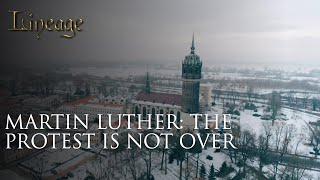
A short monologue (YouTube) reflecting on Martin Luther and the enduring relevance of the Reformation. The speaker recounts Luther’s posting of the 95 Theses (Oct 31, 1517), emphasizes justification by faith (appealing to Romans 1:16–18), critiques contemporary ecumenical compromises, and notes the 1999 Catholic–Lutheran Joint Declaration while arguing the core Reformation issues remain unresolved for the speaker.
Questions this video answers
October 31, 1517.
34.
Romans 1:16–18.
The 1999 Catholic–Lutheran Joint Declaration.
John Tetzel.
Chapters
What was at the heart of the Reformation? Was it a location? Was it Augsburg, Geneva, Wittenberg or Edinburgh? Or was it something more than that? The focal point was that the Bible was written for and could be interpreted and understood by the common man. The result of this focus was a discovery of who the Antichrist was and who Jesus Christ was, and that he was freely accessible to all.
On October 31, 1517, Martin Luther nailed his 95 Theses to the door of Wittenberg Castle Cathedral. Oblivious of the ramifications of his actions, Luther was 34, and throughout the rest of his life he would be the engine that drove the Reformation, inspiring countless generations to come. At the time, Luther was responding to John Tetzel, who was traveling through Germany selling indulgences, essentially a fast ticket to heaven, in order to fund the building of of St. Peter's Basilica in Rome.
Based on Romans, chapter 1, verses 16 to 18. Luther believed in salvation through faith by grace, while the Papacy believed that salvation required some action on our behalf, which in this case was the purchasing of indulgences.
In 1999, the Catholic Church signed a joint declaration with the Lutheran Church, which was hailed by many as a step in bridging the divide and reaching a consensus on justification. However, the Catholic Church still affirmed the view of the Council of Trent on justification, which declared upholding justification by faith alone as anathema.
The Roman Catholic Church's basic view of salvation is still still dependent on the mediation of the Church, the distribution of grace by means of the sacraments, the intercession of the saints and purgatory. Even after the joint declaration of 1999.
Jesus prayed in John 17 that his people may be one, as he and the Father are one. In the Bible at the end of time it says there will be one flock and one shepherd. However, truth must never be sacrificed, for unity and peace cannot be attained through compromise.
Today, unity is often secured through shallow statements and a minimization of historical events, and a reinterpretation of those same events to suit current agendas. Martin Luther was not a saint, nor were his beliefs completely without error. But his understanding and conviction that the Bible could be understood by the common man and that salvation was available through direct communion between the believer and Jesus Christ, still stands today.
The issues that gave birth to the Reformation 500 years ago are still relevant to the Church at large today. While we should welcome all opportunities for clarification and cooperation, we should also affirm, as did the Reformers, that that the Bible is our final authority and that salvation is through faith alone.
Luther famously said, unless I am convinced by Scripture and plain reason, I do not accept the authority of popes and councils, for they have contradicted each other. My conscience is captive to the word of God. I cannot and I will not recant anything. For to go against conscience is. Is neither right nor safe. Here I stand. I cannot do otherwise. God help me. Amen.
Today it will be well for the Church at large, and each one of us individually, to take this as our guide. It is neither right nor safe to go against conscience and Scripture, accompanied by sound reason. And the Holy Spirit needs to be our teacher. Let us be faithful to God's word, gracious in how we share it, firm in our understanding of its truths, and immovable in our convictions.