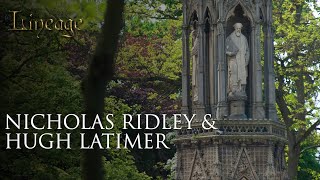
This content was created by Pocket Pastor. This content was uploaded by Pocket Pastor. This is a YouTube video titled "Nicholas Ridley & Hugh Latimer" created on September 20, 2017, discussing the historical impact of Hugh Latimer and Nicholas Ridley on Protestantism in Britain, their trials, and executions, and the broader religious implications of their martyrdom.
Chapters
As the New World was discovered by Columbus in 1492, two men were born on this side of the Atlantic who would have a powerful impact on the shaping of Protestantism in Britain. Latimer and Cranmer. Hugh Latimer was born in 1491 here in the small village of Thircasten, just north of Leicester, a similar area that John Wycliffe would have worked just over a century before. His father was a farmer. And yet, despite their humble occupation, he made sure that Latimer stayed in school and got an education, a vital decision that take him far in life.
He enrolled in Cambridge University at the age of 14 and in 1510 was elected a Fellow here at Clare College. He was at the time an ardent Papist and preached passionately against men such as Luther and Melanchthon for seven years. His belief in Catholic teachings was great and his zeal in the divine mission of the papacy was unshakable. So what turned this pillar of Papism into a pillar of Protestantism? An encounter with a man by the name of Thomas Bilney, who afterwards would visit him, even coming to the confessional booth to speak with him, and he eventually changed his views. The two men would later go and visit the sick and imprisoned in Cambridge together.
Latimer went on to become the Royal chaplain and the Bishop here in Worcester, advocating for papal reform and denouncing the clergy who did not own a Bible or the parishioners who could not even recite the Lord's Prayer. His clarion call to reform ended him in prison in 1539, but he was spared the stake by the intervention of Thomas Cromwell. He remained in prison until the death of Henry viii, when Edward VI released him from prison. He would never, ever hold the high office of bishop again, but continued to preach regularly, where audiences enjoyed his preaching, which was known for its wit, its intelligence and its biblical nature.
When Edward vi died on July 6, 1553, England was thrown into turmoil. Lady Jane Grey ascended the throne, but only had it for nine days before Mary Tudor took the throne. Despite initial favorite toward the reformers, her intentions of making England a Catholic nation soon became clear.
Mary ordered the arrest of Latimer, and word reached him that his captors were on their way, offering him an opportunity to escape. But he chose not to. As he passed Smithfield on his way to London, he commented, this place has long grown for my life. Imprisoned here at the Tower of London, he met Nicholas Ridley, Bishop of London, and Thomas Cranmer, Archbishop of Canterbury.
In March of 1554. They were tried here in Oxford, where Latimer was asked whether the natural body of Christ was in the sacrament, to which he responded, our Saviour's body is in heaven, whither he departed at the Ascension. He went on to explain that the change at Communion was not in the bread, but in the heart of the believer.
He and Ridley were sentenced to death, and on the 16th of October, they were brought to the place of their execution outside Balliol College. Here a cross marks the ground of the exact spot where they were burned to death. Before the flames, they shared an embrace and Ridley said to Latimer, be of good cheer, brother. God will either assuage the fury of the flames or strengthen us to endure it. Latimer then responded, be of good comfort, Master Ridley, and play the man. We shall this day, by God's grace, light a candle in England, as I trust in God, shall never be put out. History says that Latimer died soon after, but Ridley died a slow and painful death.
The cost of their death was just over one pound and five shillings, but the real result was the overthrow of Romanism here in England. The entire country was appalled by a religion that had to resort to such brutal methods in order to sustain itself. As we contemplate their life and their death, the real question for us, though, is does the light that they lit at their death still burn in our lives and our witness today?