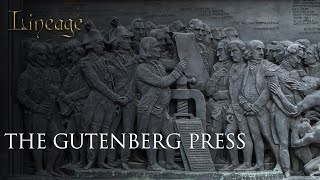
Sam explains how Gutenberg's 1452 printing press changed everything. Before it, books were handwritten on vellum and almost nobody could read. The press made copies fast, spread Protestant ideas, and shook the Church.
Questions this video answers
Johannes Gutenberg
Around 1440
1452
All 200 copies
65 years
Chapters
Every so often, a technological invention comes along that changes everything about the way we live. If you're born in this millennium, it's likely you only know a world where there have been smartphones, the Internet and satellite tv. Things are as much a part of life today as putting our shoes on in the morning when we leave the house or eating breakfast first thing in the day. Those who are a little older though, will remember a world where there was no social media, where the Internet was very slow or non existent and the idea of taking a photograph on your mobile phone was mind boggling. Video chat seem way distant in the future, and yet today these things are considered normal and a part of.
There was a time where if you wanted to read something, then it would have been handwritten by someone else. Books were expensive and hard to come by. The materials were costly. Monks would write on treated skins called vellum, and a single copy of the Bible would require 300 sheepskins or 170 calf skins. Most people could not read, and the majority of books were in Latin, a language that only the most educated could understand.
In the 15th century, the printing press came along and revolutionized the world of literature, fundamentally changing the way that we communicate as it enabled the fast flow of information and led to the quick spread of new ideas. Once text could be reproduced quickly, people had access to read books that they didn't have before. A previously illiterate populace now turned into a more educated and inquisitive one.
The printing press was invented by a German goldsmith by the name of Johannes Gutenberg. The exact date of his birth is not known, as he was not a famous man during his lifetime and but it is believed he finished working on the printing press at around the year 1440.
The first book to be published in several volumes and multiple copies was the Bible. In 1452, the Gutenberg Bibles would prove to be immensely popular, with all 200 copies of them being sold before the copying was even complete. This was 65 years before Martin Luther published his 95 Theses, and while he was able to preach to only a relatively small number of people, the printed page would reach thousands of people in a short space of time and across national borders.
With books being translated from Latin into other languages, people naturally began to ask, why was mass still being conducted in Latin? People began to ask why church service were not conducted in the language that members of society, regardless of their wealth or education, could actually understand.
Gutenberg's printing press meant more access to information, more detailed discussion, and more widespread criticism of the authorities as such, the printing press popularized ideas associated with with the Protestant faith during the Reformation, allowing the press to shape and channel a mass movement.
The printing press removed control of written material from the Catholic Church and made it difficult for the Church to inhibit the spread of ideas that they regarded as heretical. Had it not been for Gutenberg's invention, the news of Luther's revolutionary ideas were would not have spread as quickly as they did today. God has given us technology that we can use to spread ideas very quickly. May we use the talents we have, the gifts we have, and the technology we have to spread the news of Jesus to the world today.