King John faced pressure from Pope Innocent III over church appointments and payments to Rome, which sparked a baronial rebellion. The 1215 Magna Carta established church liberties, rule of law, and trial by peers. It shaped later English religious conflicts and influenced the US Constitution and Bill of Rights.
Chapters
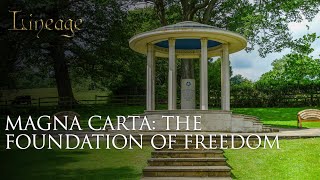
The Magna Carta was signed just over 800 years ago here in Runnymede, a document that would have both civil and religious importance for England and also for the whole world. The backdrop to the signing of the Magna Carta was the growing tension between the King of England and the Pope over who had the authority to appoint the bishops of London and Canterbury. At that time, the King of England, King John, was probably one of our weaker kings. The Pope at that time, Pope Innocent iii, was probably one of the of the stronger popes. And in this battle, the Pope eventually won because the King was unable to count on the support of the barons because he had conflict with them. He eventually surrendered to the Papal Legate in 1213, even laying his crown down at the feet in an act of submission. He also agreed to pay 1000 marks per year, and that should any of his successors break that agreement, they would lose all authority in the realm. England was humiliated.
The barons were stung into action. They would never be slaves to the Pope. The issue of national sovereignty and the exchanging of money for spiritual benefits was at stake. They feared, and rightly so, that this could be one step, step in a course of events that would lead the Pope to setting up who he wanted to on the English throne, overreaching his authority into national matters. These were some of the main reasons why Magna Carta was signed on the 15th of June, 1215.
The first clause stated, the Church of England shall be free and hold her rights entire and her liberties inviolate. This issue would rumble on for the next 150 years and the money due to be paid to Rome lapsed over time and became sporadic. This was one of the main reasons of John Wycliffe's early disagreements with Rome.
Another key aspect of the Magna Carta was the basis of law that it set up. That the King and the lawmakers were subject to the same law that they themselves wrote, that those accused were granted the right to be tried by a jury of their peers. These, among many other clauses, form the basis of law and justice as we know it today. Many of the principles of Magna Carta form the basis of the US Constitution and the Bill of Rights in America. In fact, this monument here was paid for by the aba, the American Bar Association. Today, there are four remaining original copies of the Magna Carta. One in the Lincoln Castle, one in St Mary's Cathedral in Salisbury, and two in the British Library. The principles of Magna Carta, which live on today, stand to us as a testament that we should cherish our civil liberties, that we should protect our civil liberties and that we should use the time that we have now in the spreading of the gospel while we have the ability to do so.