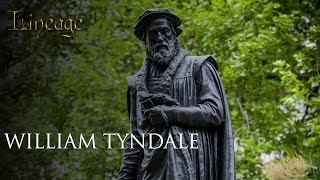
This content was created by Pocket Pastor. This content was uploaded by Pocket Pastor. This is a YouTube video titled "William Tyndale" created on August 16, 2017, providing a historical account of William Tyndale's life and contributions to the English translation of the Bible, his challenges, and his legacy.
Chapters
The 16th century was populated by some of the greatest minds in religious history. Luther, Calvin, Zwingli, Knox, Latimer, Ridley, Cranmer. And sitting comfortably amongst this group of luminaries was William Tyndale, translator of the English Bible. Tyndale was born In Gloucestershire in 1494, in a small village called North Nibley, marked today by this monument overlooking the village. He was educated at Oxford and completed his BA in 1512 and his MA in 1515 before coming here to Cambridge University, where he met Dutch scholar Erasmus, who was teaching Greek. Tyndale wanted to translate the Bible into English, but no one in England was willing to undertake such a daring task.
Since 1408, the Oxford Commission had forbidden the translation of the B into the English language, even prohibiting its use in the training curriculum for preachers. Cochalius, a notorious papal theologian, had this perspective. The New Testament translated into the language of the people is in truth the food of death, the fuel of sin, the veil of malice, the pretext of false liberty, the protection of disobedience, the corruption of discipline, the depravity of morals, the termination of concord, the death of honesty, the wellspring of vices, the disease of virtue, the instigation of rebellion, the milk of pride, the nourishment of contempt, the death of peace, the destruction of charity, the enemy of unity, the murderer of truth.
Immersed in such a climate, Tyndale encountered a Lear friend who said, we were better without God's laws than the Pope's. To which Tyndale responded, I defy the Pope and all his laws. If God spare my life ere many years I will cause a boy that driveth the plough shall know more of the Scriptures than thou doest.
Forbidden to work in England, Tyndale travelled through Europe, from Hamburg to Cologne to Worms to Antwerp, using the Greek and Hebrew texts to craft a masterpiece of the English language. Time and time again, the papacy tried to stop his work, but the Lord watched over his servant. One account tells us how the Bishop of Durham, seeking to hinder his work, bought all his Bibles. But this merely provided him with the money he needed to produce a larger number of better quality Bibles.
Tyndale contributed as much to the scholarship of English literature as Shakespeare and Chaucer, producing many of the translations of the Bible that we use today. In fact, much of the King James Bible produced 60 years later was taken almost verbatim from Tyndale's Bible. Phrases such as the spirit is willing, but the flesh is weak. O death, where is thy sting? And seek ye first. All these came from William Tyndale. Today, there are two remaining copies of Tyndale's Bible, one of which is here in the British Library, purchased for £1,000,000 and accessible to view free of charge.
Sadly, Tyndale was betrayed by Henry Phillips in Antwerp, who feigned friendship in order to gain Tyndale's trust and betrayed him to guards as he was leaving his house. He was taken to a castle in Vilvord, Belgium, condemned as a heretic, strangled and burned to death. In 1536. His last words were, lord, open the King of England's eyes. Within one year of his death, a Bible was placed in every parish church throughout the whole of England by order of the King.
The poignant Christian song tells us. Martyrs blood stains each page they have died for this faith Hear them cry through the years oh, hear these words and hold them dear the word of God has come to us at the such great cost. May we not treat it flippantly, haphazardly, but may we treasure it and commit to study and share God's word each day.