Prabhu Speaks at Centre of Human Values about Spirituality

Prabhu grew up Hindu in Sri Lanka imagining God as a powerful man upstairs, but questioned why salvation came only 2,000 years ago and why different religions claimed exclusive truth. He came to believe in a single, merciful God beyond all labels, a conviction crystallized when he encountered Swami's teaching that love is God.
Chapters
How did you come to be interested in spirituality? I remember as a child always being quite curious about spirituality and the whole idea of a God. I was brought up in a very strong Hindu sort of upbringing, naturally coming from an Indian Sri Lankan background. And it was always taught to me either through movies, you know, they had these Is God movies when I was a kid. You had these fireworks flying and terrible special effects. Peter Jackson would roll over and die if he saw these movies. You know, people shooting things with fake golden crowns and these gods would fight and then arrows would fly and there'd be sparks on them, fireworks. And I thought of God as being this all-powerful being, sitting somewhere upstairs. And why upstairs? I don't know why. They always seem to fight in the clouds, so that's up. That was God. It was just inferred that a God— God means someone with lots of power who can perform miracles and do stuff, things that normal people can't do. And that's God. And it would be good to pray to that God because he— and the whole idea of God being male as well— you know, he would, you know— well, there's 2 sides. If you're on his good books, he's really powerful and must help. If you're not in his good books, he's really powerful, doesn't help. He doesn't like you. So it was a very simplistic notion of what God was, you know, what God really is. And then as I grew older and older, I used to ask myself questions. I would never talk to many people about it, but I would talk to myself about things. I'd ask myself questions that I would find difficult to answer. Firstly, I would ask myself, well, why are there so many different religions? Well, why is there so many different ways of Why are there so many different gods? And there are so many people from different backgrounds, they all have different beliefs. Someone says Jesus is God, or the Father is God, Jesus' Father. Another person says Krishna is God, Shiva is God. Another person in Buddhism says, well, we don't really believe there even is a God. And then later on I find that the idea of God is very different in Buddhism. And then you'd talk to a Muslim person. I grew up in Malaysia, and the Muslims would say Allah is God. And I used to think, well, so who's God? Would the real God step up and take control? Because, you know, please stand up. Because it was all very confusing. And then as I started to get even older, sort of hit my teenage years, I used to ask myself even more fundamental questions. Like, if there, you know, Assuming there's one real God and all the other gods aren't real, I used to have a real problem with that for 2 reasons. The first reason was that that would then mean that 80% of us are stuffed. There's 5 main religions and you grow up and we all believe, you know, you talk to a Muslim person, Allah is God. You talk to a Christian, Jesus is God. You know, you— I remember Jehovah's Witnesses used to come to my house and They used to tell me, you know, in a very nice way, they would say— me and my dad, we used to sit down and talk to them, and I used to just listen while my dad would debate with them. And I used to think— and they would say, you know, you seem like wonderful people, you really should, you know, follow Christ and, you know, give your lives to Christ, because, you know, if you don't, you know, the Bible clearly says you're going to hell. And I would think, wow, that's amazing. So So you've got a Muslim person who really believes Allah is God. You've got a Hindu person who really believes Krishna is God. And you've got this Christian person who believes Jesus is God. Now, 2 out of 3 are going to hell forever. So who's actually right? I mean, we all really believe that's God. If you speak to the Christian person, they are convinced 100%. You talk to the Muslim, Allah is God. So then by definition, 4 out of 5 of us are going to have our faiths smashed. The moment we die. I just thought, that's a really sobering thought. I can't imagine God would do that. I mean, why would God do that? Why would God bring you up, make you really believe in Him, and then when you die just go, oh, you got the wrong name, too bad, eternal damnation, you know. It didn't— the whole— do you know what I mean? I was like, it just didn't fit. It didn't make sense in my head. Sort of, how could this happen? The other issue was, in line with that, you know, different religions started in different parts of the world at different times. And I used to think, why would God say, come, only 2,000 years ago? Let's say we follow the Christian teaching, say— oh, not God, sorry, the Son of God, Jesus, would come and reveal God, and then from 2,000 years ago, because of Jesus, we would understand that God is The Father, and we should all follow the Father. Well, what happened before then? Well, what if you're a human being born before then? Does that mean you had no chance? You know, I would ask myself these questions. I think, why would God suddenly go, okay, from now on I'll give him a chance, 2,000 years ago? But human beings, I mean, if you think about science, we've been existing as humans, as Homo sapiens, for literally hundreds of thousands of years. But 2,000 years ago, God realizes, okay, now you're good enough to go to heaven. Whoever's lucky enough to be here at this point in time. Things never made sense to me. I really used to grapple with the concept of God and what God meant. And I came to my own realization without anyone telling me that all this would only make sense if God really was all merciful and he was all loving and he really was good. God in a love and happy and peaceful sense, then it just didn't make sense to me that he would only give himself to one group of people who would then have the job of going around the world and making sure everyone else followed his path. And if they didn't, then they were stuffed. You know, I just— it didn't make sense to me. And I decided very quickly in my mind, even before learning about Swami's teachings, that I was convinced it just did not make sense. There must be something more here. And I was firmly of the belief that when I was very young, I used to think to myself, you know, it makes sense to me. I used to think when I was a kid, you know, you couldn't— Krishna, you couldn't go to a group of, say, at that time, you couldn't go to a group of, say, Middle Eastern people and go, I'm Krishna, I teach people a set of Vedas, because, well, they didn't speak that. Jesus, you couldn't go to a group of Jews and go, I'm Jesus, I teach people the Torah. You know, you couldn't go to, say, people who spoke mainly, say, Arabic, or the original language of the Muslims, and say, you know, speak Aramaic. You know, it just wouldn't make sense. And so I thought, well, God appears to different groups of people at different points in time to guide them all along the way. And it's the same God, and because they all spoke different languages, he just gave them different names. And from a very young age, I just had this conviction in me that there's only one God. And whatever path you follow, it must surely lead you back to the same one God. Another point about divinity and spirituality relating to Swami's teachings, which I find really beautiful, that universality. I used to wonder to myself a lot. I used to ask, in fact, when people would talk to me about Sometimes Muslim friends, sometimes Christian friends, even Hindu friends who would think, oh, you know, this person, you know, Prabhu, he's praying, singing songs to Jesus, you know, that's really weird. You're a Hindu, mate. You don't sing to Jesus. What's wrong? What's up with you? You know, and I would think to myself, you know, do you really think— let's say Jesus the Father is God. Yeah. I used to think to myself, do you really think if the Dalai Lama died now and turned up at the pearly gates, do you really think he would be rejected because he didn't believe, he didn't call the right name? It just didn't make sense to me. In the same way that the Pope would be refused because he didn't call God by the name Allah. It just didn't make sense to me. Nothing made sense with religion. And I started to see very quickly, In my own mind, very quickly, that God is much, to me, much more than all this. God is even beyond, beyond all the religions, and God speaks through the religions, but truly God is beyond. It's almost like a— without— I'm an accounting lecturer, so I'll use a business example— a parent company for all these subsidiary organizations. I decided God was the parent, 5 different subsidiaries. And what was amazing was, I still remember when I read Swami's teachings, when he said, you know, love is God, God is love, so live in love. And I really felt that as being the crystallization of so much of what I was thinking.
More from Pras

Fintech Project [PITCH]: Bank of DATA (Digital Asset Tech Association) by Pras Indrakumar

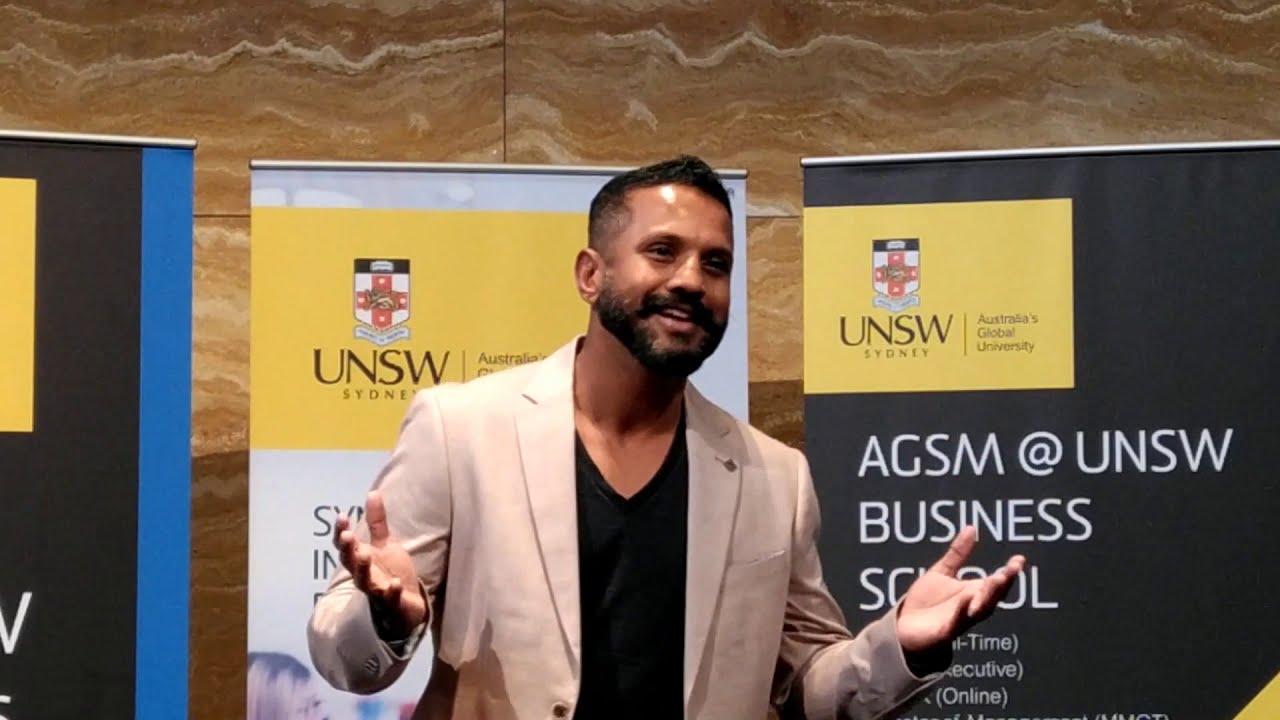
Future Career Presentation at AGSM Executive Blueprint as part of MBA (Executive) by Pras Indrakumar




Remind me my Lord - English Bajan - Song - Sai Baba's 81st B'day Celebration - City Centre - Mahesh