10 Old School Marketing Tricks That Still Work Today
James Allen breaks down ten classic marketing tactics that still work: free samples, clear unique selling propositions, repetition, attention-grabbing headlines, benefit-focused messaging, social proof, direct calls-to-action, urgency, price anchoring, and storytelling. He uses Coca-Cola, Domino's, Marlboro, and other historic brands to show how these psychology-based strategies apply to modern online businesses.
Chapters
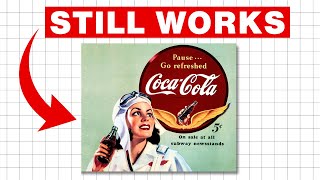
Marketing has been around for thousands of years, long before social media or funnels. And somewhere along the way, we got obsessed with newness. The new hack, the new tool, the new secret strategy that promises overnight success. But the most powerful marketing tactics ever created were invented decades ago, and they still work today. So in this video, I'm going to break down 10 old school marketing tricks that built billion dollar brands and how you can use them right now to grab attention, build trust, and turn total strangers into customers for life. So let's start with one of the oldest, most reliable marketing tactics ever invented. Back in 18— In 1987, Coca-Cola was still a tiny regional drink trying to stand out in a crowded market filled with dozens of soda brands. Instead of dumping money into ads, which were expensive, inefficient, and unlikely to convince anyone to try a brand new soft drink, they did something totally different. Coca-Cola printed and mailed out more than 8 million free drink coupons across the United States. 8 million! People would walk into their local pharmacy, hand over the coupon, take one sip of ice cold Coca-Cola, and suddenly it became their go-to drink. What Coca-Cola understood over 100 years ago is that people trust what they've already experienced. It's basic human psychology. We are far more willing to invest in something once we've already tasted the value. Today in the online business world, your free sample is the value that you give upfront. It could be a lead magnet, a free trial of your software, a sneak peek into your program, a complimentary one-on-one session, even in your content, giving somebody a quick win. If you give your audience a small, meaningful result before ever asking them to spend a dollar with you, you instantly build trust and the chances of them buying from you go way up. Coca-Cola understood something that a lot of people lose touch with today, and it's this: the fastest way to earn trust isn't to tell people you're valuable, it's to show them. And this is exactly how I run my own online business. Giving away a killer free sample is the first step to selling digital products and coaching while you sleep. If you're serious about turning your knowledge, your skills, and expertise into a predictable income stream, I put together a free masterclass that shows you how to do it step by step. I'll show you how to create digital products that people actually want to buy, how to build a simple automated system that sells for you 24/7, and how to get consistent traffic without spending a dollar on ads. You can watch it right now, totally free at ProfitYourKnowledge.com/Masterclass. Also link it down in the description. Now, this next old school marketing trick is one of the most powerful marketing strategies ever created. Back in the late 1970s, Domino's Pizza was getting crushed by bigger competitors. They did not have the most locations. Their ads weren't winning any awards, and they didn't have the best pizza. Hot take: they still don't. So instead of trying to be everything to everyone, they made one bold promise that nobody else in the market was willing to make. You'll get your pizza in 30 minutes or it's free. One simple, unforgettable promise that instantly made Domino's the obvious choice for anyone who wanted fast pizza, which was a lot of college kids. They didn't win because they were the cheapest or the best. They won because they owned a single clear outcome in the customer's mind that nobody else did. What Domino's understood was that people make decisions quickly when the value is clear. Insert the unique selling proposition, or USP for short. A strong USP removes confusion, cuts through the noise in your market, and gives your audience a reason to pick you instead of the thousand other choices around them. And this is just as important today as it was decades ago, maybe even more. In the online business world, your USP is a specific transformation that you are known for getting people. It's the one line that tells people exactly why you are the right coach, creator, or expert for them. Maybe it's build a 6-figure coaching business in under 20 hours a week, or lose 20 pounds eating foods that you love without counting calories or a gym membership. Whatever it is, you repeat it everywhere until your audience associates that outcome with you. When your USP is clear, people don't just understand what you do, they understand why they should choose you over everybody else. Confused people don't buy, so the clearer and more specific your promise is, the faster they'll say yes. Next up is one of the simplest and most misunderstood marketing principles of all time. Back in the 1950s, is Marlboro was not the popular cigarette brand that they are today. In fact, they originally marketed to women, but when their sales flattened, they made one strategic shift that completely changed the trajectory of their business. They introduced the Marlboro Man, who's a rugged cowboy smoking a cigarette on a horse. Doesn't get more manly than that. And they put that image everywhere— billboards, magazines, TV commercials, store displays. The same cowboy, the same setting, the same feeling, over and over and over and over again. Eventually, that repetition caught up and turned Marlboro into the best-selling cigarette brand in the world. Repetition builds familiarity, familiarity builds trust, and trust builds customers. Most content creators and coaches think that they need new messages, new cutting-edge angles, new talking points every single day. But the best in the business repeat the same core idea until the market finally hears it. And this couldn't be more important in the online business world that we know today. Your audience needs to hear your message dozens of times before it finally sticks. As a creator, this gets kind of boring, but it's the one thing that's going to help you build a sustainable brand. So pick your core idea, which is the outcome that you help people get, and seed it in everything that you put out— your content, your emails, your stories, your podcasts, your sales pages, everything. When you repeat the same message consistently, you do not become annoying. You become unforgettable. Repetition with your message builds your reputation, and that is how brands are made. Next is one of the greatest old-school marketing insights ever discovered. So back in 1926, legendary copywriter John Caples wrote an ad with the headline They laughed when I sat down at the piano, but when I started to play, that one line obliterated every other ad running at the time. And it wasn't because the product was any better than others, but because the headline grabbed attention and instantly pulled people into the story. You see, Caples learned something that every modern creator needs to tattoo to their brain. If the headline doesn't stop someone in their tracks and feel something, nothing else matters. People don't read ads. They read what interests them. When you win the headline, you win the click. The view and the sale. And this is even more true today than it was back in 1926. In the online business world, your headline shows up everywhere. It's your YouTube title, your thumbnail text, your email subject line, your video hook, the top line of your sales page. These are the moments that determine whether someone gives you their precious time and attention or scrolls right past you. So instead of doing what most people do, which is spend hours polishing their content and only 2 minutes on the title and the packaging, Flip it. Spend more time crafting the hook, the angle, the curiosity, and the promise, because that is what's going to get people to actually consume the value that you work so hard to create. When your headline lands, everything else becomes 10 times easier. So take a look at your landing pages, sales pages, and content and ask, is this really compelling before I've even read more or clicked on the content? If it's not, it's time to rework it. Next is a classic principle that every great marketer needs to learn. In the early 1900s, Listerine was trying to sell what they called antiseptic liquid, which sounded scientific and honestly very boring. Because of that, sales were flat. But Listerine did something brilliant. They stopped talking about the product and its features and started talking about the problems their product solves. Instead of talking about how cutting edge their product was, they talked more about getting rid of bad breath so that you felt more confident, more attractive, and healthier. And overnight, sales exploded because they weren't selling antiseptic liquid anymore. They were selling confidence, social acceptance, and the relief of solving an embarrassing problem. People don't care about the mechanics as much as they care about the outcome. They want a transformation and a result that makes them feel smarter, stronger, and more attractive, not just the tools that get them there. And this is exactly how we need to market in the online business world today. When you're talking about your program, your digital product, or your coaching, do not lead with the modules, amount of worksheets, or endless video hours. Lead with the result your audience actually wants and make them feel it. More clients, more income, more clarity, more confidence, more freedom, whatever the transformation is in your niche. When you speak to the benefit, people lean in, and when you only speak to the features, they tune out. So always lead with the outcome that your product creates, not the ingredients inside of it. This next old school marketing trick is still one of the most powerful strategies on the planet. Long before social media existed, Pepsi launched something called the Pepsi Challenge. It was a series of blind taste tests where regular everyday people tried Coke and Pepsi side by side without knowing which one was which. And keep in mind, And this was happening right at the peak of the Coke-Pepsi rivalry where both companies were fighting tooth and nail for market dominance. The crazy part is that most people chose Pepsi. I have no idea why. And these weren't paid celebrities or actors. They were just normal people giving their honest reaction. But Pepsi had this genius idea of airing those reactions everywhere. Doing this made Pepsi sales skyrocket because of one simple psychological truth. People trust people more than they trust brands. When we see someone like us getting the result that we want, our skepticism drops and our belief starts to grow. It makes the promise feel real because it's coming from someone who doesn't benefit from saying it. And this is more important today than it was back then. In the online business world that we know now, your biggest marketing isn't what you say about your program, it's what your clients say about it. If you want to stand out in your market, show the results and the transformation that you and your products get people. Show the testimonials, screenshots, voice notes, before and afters, and real stories of what happened when somebody actually applied your work. Because when people see proof that someone just like them succeeded, they stop wondering if it's possible and they start believing it can work for them too. That's when they buy. So go through all your sales and landing pages and make sure that you have some kind of credibility marker on those pages. If you're promising to get people a specific result, you need to have social proof that you've helped other people get it, not just yourself. And if you don't have any of that, get to work, go get into conversations and start working with people and get some results. Now let's talk about one of the simplest and most underused marketing principles. If you look back at vintage mail order ads from the early 1900s, They all ended the same way with bold, clear commands like mail this coupon today. They didn't say learn more or if you're interested, just a clear and direct instruction. Those simple commands consistently boosted response rates because people like to be led. And one of the easiest ways to do this is by being highly intentional with your calls to action or your CTA. And there's real psychology behind this. When somebody is already interested, a clear CTA removes friction, eliminates hesitation, and tells their brain this is the next step. And when that next step is obvious, people take action. This is just That's as true today as it was back then, especially in this busy online world. Your audience isn't sitting around trying to figure out what you want them to do, and they shouldn't have to. Add simple, direct commands throughout your content and your landing pages. Download this, book the call, watch this next, join today. The clearer the instruction, the higher the conversion, because people don't respond to hints, they respond to direction, and it's your job to lead them. So go through your sales pages, landing pages, and content and ask yourself, are my calls to action clear, direct, and confident? Or am I just hoping they're going to figure it out? Next up is one of the most powerful psychological triggers in all of marketing. So back in 1981, McDonald's introduced the McRib. And what made the McRib so profitable and popular is that they didn't keep it on the menu year round. Instead, they made it a limited time only item. Every time the McRib came back, it turned into a cultural phenomenon. People lined up, bought multiple at once, and rushed to get it before it disappeared again. Let's be real, it's not the greatest sandwich ever made. Fight me in the comments. But because people knew that it wouldn't be there forever, they had to have it now. That is the psychology of urgency and scarcity. People delay decisions when there's no reason to act now. So a deadline forces a choice and makes people finally decide whether they want the result or not. And this still works beautifully today, even in evergreen funnels, which are always open. You don't need fake countdown timers or to lie about quantity to create urgency. You just need a genuine reason for someone to act now instead of someday. For example, in my own evergreen funnel, I offer new subscribers a $200 discount off of my flagship program, Effortless Income, when they first join my email list. I'm not doing any fake scarcity because I'm totally upfront that this is the last time I'm going to mention it. After that, they'll only see my full price page. I'm not saying things like, this is the only time you'll ever be able to get that, because it's not true. If I run a flash sale or it's Black Friday, I'll offer it again. If they didn't buy the product, theoretically they could opt in again and see that offer again. I'm not using Deadline Funnel or any weird scarcity tactics and lying to people. It's a real incentive for people who are ready to take action, and it works because it's honest, specific, and time-bound. And you can do the same thing with things like limited time bonuses, enrollment windows, early bird pricing, or even spots that genuinely fill up. Because when everything's available all the time, people end up waiting. When there's a clear reason to act right now, that's when they move. So take a look at your offers and ask, What's one real reason somebody should join today, not someday? You don't have to lie and you shouldn't, but you do need to get creative. Give them a clear, genuine incentive that rewards action takers. Now let's talk about one of the smartest pricing techniques old school marketers used long before online business even existed. If you flip through old Sears catalogs from the early 1900s, you'll notice something really interesting. Almost every one of them listed the most expensive version of a product first, whether it was a sewing machine, a suit, or even a bicycle. And they did that intentionally. Once you saw the high price, the lower price option suddenly felt like a deal because your brain can't help but compare the numbers. This is something called price anchoring, and it's still one of the most effective marketing strategies used to this day. That first number becomes the anchor and everything else feels cheap, expensive, or fair based on that reference point. And that's the psychology behind it. People compare prices to whatever numbers they saw first. So you can use price anchoring by showing your premium package or higher price payment plan first, or by stacking the value before you reveal the cost. This is super common in infomercials and on most sales pages. They'll list everything that you get with a value price next to it, stacking the value so that the price of everything seems super high. Then they reveal the real price that you'll pay, which is significantly less than the value price you saw leading up to it. When people fully understand what's included, like the transformation, the bonuses, the support, the access, everything else, your price doesn't just seem fair, it feels like a steal. And that's what effective price anchoring does. You're not changing the price, you're just changing the context around the price. So here's something Here's something that you can do today to start selling more of anything that you're offering. Show your highest price option first, even if nobody buys it. Before revealing your core offer price and the real price you sell it for, add a premium version on the top of your pricing stack. This could be one-on-one support, a private call, extra templates, or anything else that legitimately increases the value. The goal isn't to get people to choose the premium option, though some people will, but instead to set a higher anchor so when they see the main price, it feels more accessible and reasonable. Even something as simple as a VIP tier that's 2 to 3x the price of your core offer will completely change how affordable the main option feels. When the context is right, the price sells itself. Finally, let's talk about one of the most timeless marketing strategies there is. If you're not implementing this in your business, you will struggle to make sales no matter how hard you try. So in 1984, Apple released one of the most iconic commercials ever made called Macintosh. It was aired during the Super Bowl and directed by Ridley Scott, who famously directed the Alien franchise. In Apple's commercial, they didn't show any products They didn't list any features, and they didn't walk you through technical specs of the Macintosh computer. Instead, they told a dramatic cinematic 1-minute story about breaking free from conformity. It was a story that instantly positioned Apple as the rebellious, innovative alternative to everything else on the market. This commercial didn't just sell Apple, it made people feel something, and that feeling is what made the ad unforgettable. It's true that people make decisions emotionally first and then logically second. We don't remember feature lists of products as much as we remember characters, conflicts, metaphors, and moments. A good story A story bypasses skepticism, disarms resistance, and creates connection in a way that pure logic never could. And storytelling is just as important today, maybe even more so in the online business world. Storytelling is one of the fastest ways to stand out and build trust in any market, but especially as a coach, a content creator, or thought leader. If you truly want to build a loyal audience, make sales while you sleep, and build a brand that lasts for decades, share the moments that shaped Use metaphors that make complex ideas simple. Tell client transformation stories and paint a picture of who your audience can become. Help them rewrite the story in their mind from, can I do this? To, I can do this. Because when people feel understood, they listen. And when they relate to the story, they believe. And when they believe, they buy. Now that you know these timeless strategies that actually work, watch this video next and I'll show you the dark psychological tricks that gurus use so you never fall for them and that you never use on your audience either. If this video is helpful or insightful in any way, please please leave a comment below. It really helps grow the channel. Give this video a like if you liked it. And as always, take what you learned here, get out there, make something happen. I'll see you in the next one.










