12 Habits That Save Me 20+ Hours a Week as a Coach
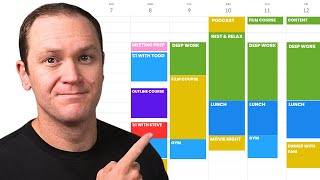
Coach James Allen shares twelve habits that let him run a six-figure coaching business in under 20 hours a week. He covers automating with tools like Calendly, batching email, time-blocking by energy level, and delegating to freelancers. The habits combined save him 20+ hours weekly.
Chapters
Every single one of us has 168 hours in a week, but when you factor in hobbies, self-care, sleep, working a job on the side, having a social life, and all those little tasks that eat up your time, it feels like there's barely any time left to grow your coaching business. So today I'm going to solve this problem for you by giving you 12 powerful habits that will help you get twice as much done in half the time. And I'm not just saying this— these 12 habits allowed me to build a 6-figure coaching business in under 20 hours a week, so they work and and they work very quickly. By applying even a few of them, you can get some incredible results, but the real magic happens when you put all of them together and stick with it. Starting with habit number 1, imagine starting your day knowing exactly what to focus on. If you don't, you'll end up wasting hours on tasks that don't really matter. Not only does this drain your energy, but also slows down your progress. But what if there was one simple question that you could ask each morning that would reveal most productive thing that you can do? Well, good news for you, there is. This is called the focusing question, and it comes from Gary Keller's book, The One Thing. By asking yourself, what's the one thing I can do today that will make everything else easier or totally unnecessary? You can cut through the noise and focus on what truly matters. Last year, I had a huge project that felt overwhelming. Every day I would chip away at small tasks, but the progress was slow. Then I started asking myself, What's the one thing I can do today that will make everything else easier or totally unnecessary? I realized that by focusing on outlining the entire project first, everything else fell into place so much faster. Like knocking over the first domino, that one change saved me countless hours of guessing what I should be doing next. By asking this one simple question, you can easily save 3 to 5 hours a week and make meaningful progress every day. But even with this habit in place, you can still waste a ton of time without habit number 2. It's so easy to fall into the trap of staying occupied with tasks that don't move the needle. This not only leaves you feeling unproductive but also spreads you too thin. So the key to reclaiming your time is learning to cut out the extra stuff. To do this, write a list of everything you do on a daily basis. With each item, ask, is doing this getting me closer to my goal? If it's not, then stop doing it. I used to spend hours responding to social media messages thinking it was important to engage with everyone. When I looked at the results, those hours weren't really contributing to my goals, which was putting money in my bank account, not getting more followers. So I decided to limit my social media time and focus only on high-impact activities like creating content or serving my clients. Suddenly, I had more time and money than ever before. So by ruthlessly eliminating tasks that don't contribute directly to your goals, you can easily free up 2 to 5 hours a week. It's all about saying no to what doesn't matter so you can say yes to what does. Now, what if there was a way that you could free up hours in your week without lifting a finger. Well, that's where we bring in habit number 3. Too often we spend precious time on repetitive tasks that could be handled automatically. This can quickly lead to burnout and will limit your ability to focus on bigger projects. Imagine setting something up just one time and letting it work for you on its own. That's the power of automation. So let me give you a quick example. Years ago, scheduling client appointments was eating up my mornings. I was back and forth with emails and social messages trying to find times that worked for everyone. Then I use Calendly to set up an automated booking system. Now clients can choose a time that fits their schedule based on my schedule, and all I have to do is just copy and paste a link. The rest is taken care of. That one automation freed up hours each week for me to focus on important tasks like creating content and coaching my clients. So by automating repetitive tasks like sending emails, posting on social media, or scheduling appointments, you can save between 4 to 5 hours or more each week. It's about working smarter, not harder, by letting technology handle the routine stuff. And while using technology is great, there are just some things that can't be automated, which brings us to habit number 4. By trying to do everything on your own, that leads to overwhelm and slows your progress. But imagine if you could hand off some of your workload to someone else, and what if they could do the job better and faster than you? For a long time, I edited my YouTube videos myself. I was spending hours each week tweaking every little detail. And while I was decent at it, it wasn't my strong suit, but I felt like I had to do it myself. Eventually, I hired a freelance editor. Not only did they do a better job than me, I also freed up my time so I could work on creating better quality content, which is something that I'm actually good at that requires my face and my voice. So after you've eliminated and automated as much as you can, then you start delegating. You wanna think about delegating tasks that don't require your voice, face, or unique skills. By doing this, you can easily save 3 to 5 hours a week. While it is an investment, it's probably not as much as you think. You can get started by checking out websites like peopleperhour.com, Upwork, or fiverr.com. This gives you more time to focus on what you do best while others handle the rest. It's all about leveraging help so you can stay focused on other money-making tasks. But even if you automate and delegate, you're still leaving a ton of time on the table without this next habit. Without a plan, it's easy to drift off through your days, wasting time and missing out on opportunities. But imagine starting each week with a clear goal that guides your every action. By simply setting a weekly goal that aligns with your long-term goals, you can save 2 to 3 hours or more each week. When I started my coaching business in 2018, I was feeling scattered and unproductive. My days were filled with random tasks and I wasn't making a lot of progress. One day, my mentor taught me to start setting a clear goal for each week. Then I'd break that goal down into daily tasks and suddenly everything clicked. My productivity skyrocketed and I was hitting my goals consistently. By breaking your goal down into smaller daily tasks, you will tangibly see how much more focused and productive your days become. So if you're going to build an online course, the goal for the week could be to plan and create all of your content. And then the next week it could be all about editing and uploading. Now, this next habit is one of my favorites because let's be honest, we're not building a coaching business just for the money. It's also about freedom. When work spills into your personal life, it's easy to burn out and see your productivity tank. But imagine if you could work fewer hours and still get everything done. I used to let work bleed into my evenings. I was staying up late, I was waking up super early, and just grinding for the sake of grinding, thinking that I was getting more done. But instead, I was burning out and still not finishing my work, or worse, I'd have to go back and fix my work the next day. So I decided to set strict work hours from 9:00 AM to 2:00 PM, and I committed to shutting down my computer after that. Surprisingly, I started finishing tasks more efficiently, and I was able to focus my evenings on actually relaxing and hanging out, with family and friends. By setting clear work hours, what you're doing is leveraging a principle called Parkinson's Law, which states that work expands to fill the time given for it. So for example, if you got an assignment from your professor and they told you to finish it in 3 months, you'd probably take the whole 3 months to get it done, unless you're one of those superhumans who actually gets it done early and then remind the rest of us of how far behind we are. But if the professor gave you the same assignment and said you only had 1 week to finish it, somehow you would get it done. By setting strict work hours and sticking to them, you can save 10 or more hours a week and get more done too. Because working in fewer hours is gonna force you to focus on tasks that actually matter rather than just filling your day with meaningless stuff. The bottom line here is that there's always more work to do and there always will be. It's about working efficiently within a set timeframe. So when the clock says your workday's over, you can confidently step away and enjoy your life. Now, a huge question that I get is, when do I set my work hours? Well, that's where our next habit comes in. We all have different times of the day when we're more energized and focused. Trying to push through important tasks during low-energy periods can slow you down and lead to mistakes. For me, I noticed that my energy dipped in the afternoon, yet I was still trying to power through complex tasks. I kept making mistakes and having to redo my work. One day, I decided to switch things up and do my most important work in the morning when I'm the sharpest, leaving the easier tasks for the afternoon. and the difference was night and day. I got more done in fewer hours. I discovered that my best hours are between 9:00 AM and 2:00 PM. This is gonna take a bit of practice for you. If you're more of a night owl, then focus your work hours in the evening. But the key here is to start scheduling your most important work when you are at your best and reserve the easier tasks for when your energy dips. This small shift can make a huge difference in your productivity. And when you couple that with this next habit, you can really make those hours count. Nowadays, it is so easy to get distracted and lose time switching between tasks. But what if you could dedicate specific hours to specific tasks and stay fully engaged the whole time. My days used to feel chaotic, constantly jumping from task to task, and then I tried time blocking, but I did it in a new and unique way. Now my days are broken up into 4 sections. I have health and fitness, work, family and friends, and sleep. This structure keeps me focused and balanced, not just for work, but also my personal life. I found I was completing more tasks without feeling overwhelmed, and I approach my days with more intention, and that's really the name of the game. When I'm in my work hours, I'm focusing on work. When I'm in my family and friends hours, I'm focusing on family and friends. And just having the time blocks allows me to remember where I'm at in my day. By using time blocks, I've been able to save between 5 to 10 hours a week just by being more intentional with my time and my energy. So to get you started, simply divide your day into blocks dedicated to important areas of your life and think Holistically, not just for work. Then the key is just to stick to the schedule. This helps you stay focused and intentional, making sure that you prioritize what's important and when. But if you think that's the whole picture, wait until you see this next habit. It's a game changer, especially if you're a creative person. We all have moments of inspiration, but if you don't capture those ideas quickly, they can slip away, leaving you frustrated and wasting time trying to recall them later. I often have great ideas while I'm driving, taking a walk, or just before bed. And it took me a while to develop the habit of writing them down, but when I did, it was a game changer. So I started using the Notes app in my phone to capture ideas as soon as they hit me. I can either write them down or record them with my voice. I created folders within my Notes app for things like emails to send to my list or content ideas I wanted to create, and I was able to organize them for easy access when I needed them. This small habit ensures that I don't lose valuable insights and it saves me time trying to remember them later. So by capturing ideas quickly, whether it's in a notes app, having a notepad on your desk, or even a waterproof notepad in the shower— yes, they do make those— you can save an extra 1 to 2 hours a week in just remembering ideas. And what makes that habit work so much easier is by implementing this next habit along with it. As an online coach, having a cluttered digital workspace not only adds stress but also wastes time when you have to search for files or important documents. But what if your digital workspace was so organized that you could find anything in seconds? My Google Drive used to just be a total mess with files scattered everywhere, and I had no organization. It took me forever to find anything, and I'd often waste time recreating documents that I couldn't find. Then I set up a simple folder system and spent 10 minutes at the end of each week organizing my files. Now everything is easy to find, saving me hours of back and forth and frustration. And if I need to find a specific client or document quickly, I just type it into the search bar. By keeping your digital space organized with a simple folder system and and intentionally naming your documents for easy search, you can save 2 to 3 hours a week. So get started by setting up a clear folder system, delete stuff regularly, and use cloud storage for easy access from any device. Google Drive is my personal favorite. This simple habit can make your life so much smoother. Speaking of a simplified work life, this next habit is probably the most important. By far one of the biggest time sucks that's constantly pulling you away from important tasks is email. What if you could take control of your inbox instead of letting it control you? I used to check my email constantly, responding to every message as it came in or trying to hit inbox zero. I felt productive responding to people and deleting messages, but I was constantly pulled away from my deep work. Then I realized that I don't check my regular mail every 5 seconds, so why should email be any different? So I set a rule to start checking my email only 2 times a day, once in the morning and once in the afternoon. This change allowed me to focus on important tasks without constant interruptions. And the same goes for social media. Start today by setting specific times to check your email, ideally 1 to 2 times a day. Turn off notifications, or if you can, outsource your email to a VA to keep your inbox from taking over your day. Now, this next habit, it's probably the biggest. There's no doubt that procrastination can kill your momentum and delay your progress. What if you made a habit of taking action right away without overthinking. A few months ago, I had an idea for a new program, but I kept putting off creating the content. It just felt very daunting to me, so I procrastinated. Around that time, I read this proverb that said, "The work will teach you how to do it." That day, I decided to just start. No overthinking, just action. I wrote the outline that same day, and before I knew it, the product was ready to launch. By acting on tasks and ideas immediately, you can save hours of your time, whether it's jotting down a plan, sending an important email, or starting a draft, taking the first step right away builds momentum and helps you achieve your goals faster. So just remember moving forward that the work will teach you how to do it. It's up to you to just get started. Now, I do have a confession. Saving time is just one piece of the puzzle to building a successful coaching business. Even though you just learned how to reclaim 20+ hours each week, there's still a critical piece that could be holding you back. Because no matter how much time you save, all that extra time won't get you the results you want without this next piece. To make the most of your newfound time, you need to have your coaching niche dialed in. Frankly, most people don't, which is why they're not making any money. This is the difference between me not making any money to me making my first 6 figures. So click on this video and discover how to zero in on your perfect coaching niche that will attract your ideal clients and help you grow your business faster. If you got value from this, please share. If you have any questions, leave a comment below. Other than that, see you in the next one.










