5 Habits Every 6-Figure Life Coach Follows
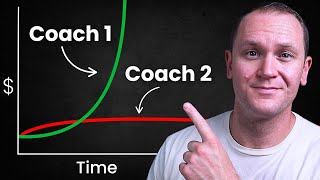
James Allen outlines five habits for coaches building six-figure businesses on 20 hours per week: treat your practice like a real business with fixed hours, master one offer before expanding, pick one marketing platform and post consistently, and sell with confidence. He works 4-5 hour days using time-blocking and outsourcing.
Chapters
Do you ever feel like you're working way harder at selling coaching than any other job you've had, but with little to show for it? Meanwhile, some other coaches out there just printing money in their underwear. Well, I've been on both sides, and today I run a 6-figure coaching business working just 20 hours a week because I started following a few simple habits that actually work. In this video, I'm going to show you the 5 habits that every 6-figure coach follows so you can build a business that doesn't just pay you well, but also gives you freedom. Starting with habit number 1, and that's that 6-figure coaches treat their coaching like a business, not a hobby. In your coaching business, you have 2 hats that you need to wear: the CEO hat and then the employee hat. The CEO is the visionary. They handle the planning, the strategy, the finances, and decide what direction the business is headed. The employee is the executor. They roll up their sleeves and do the work. They take the plan and turn it into action. You need to be both in your business. If you've ever worked a 9-to-5 job, you know that you have to clock in at a set time, follow your schedule, complete your work for the day, and then clock out at a set time. Your coaching business should be no different. But here's what most coaches do. They wake up, They check their phone, they scroll social media, maybe answer a few emails, kind of float through the day doing research or optimizing their website. And all of this is done behind closed doors, and then they wonder why they aren't getting clients. They'll start working whenever they feel like it and end whenever they feel like it, sometimes staying up till midnight or 1:00 AM doing work. This is why so many coaches stay stuck and end up burning themselves out. When you work for yourself, you have to be the one who creates the plan and does the work. If you're great at dreaming, planning, and researching, but struggle to execute, then it's time to develop your employee mindset. And if you're great at staying busy and getting things done, but you never seem to move forward, then you need to develop your CEO mindset. Success comes when you can wear both hats well. The CEO in you sets the vision, and the employee in you brings it to life. If you wanna build a six-figure coaching business and beyond, you need to stop treating your coaching like a hobby and start running it like a real business. Set work hours, create a plan, and stick to it. Treat it like a business and it will start paying you like one. Habit number 2 is that 6-figure coaches use their time like a weapon. In the book The 4-Hour Workweek, Tim Ferriss shares this awesome insight that goes like this. Imagine your doctor says that you can only work 1 hour per day or you'll die. If your doctor told you that and you were trying to grow a coaching business, what would you stop doing and what would you focus more on with that precious hour? It gets you thinking differently right now. Imagine that you have to go back to the doctor and they say, look, you took it too far. Now you can only work 1 hour a week. What would you do in that situation besides quit? What one thing would you do to keep clients coming in the door and serving them? What this does is help you see what really matters. Six-figure coaches don't just stay busy for the sake of being busy. They're intentional with their time. They focus on their most important tasks like creating content that they know will attract buyers, making offers consistently, and helping clients get incredible results. They block off time for their work and protect their best hours like their business depends on it, because it does. They outsource tasks that don't require their voice or their face, like video editing or scheduling posts, so that they can focus on what moves their business forward. They also set clear work hours like we talked about before, and they know when to clock out for their mental health so their business doesn't take over their entire life. This is my actual calendar, and when you look at it, you could feel like that is insane, you have no time. But I actually have a lot of time because of this. It gives me intentionality in my day. So I like to wake up at 5:00 AM. I go to the gym and work out, and then I come home and I get ready. And I usually start my workday right about 9:00 AM. Sometimes I'll start a little bit earlier if I have something going on later in the day, but I clock out of my workday by 2:00 PM. Okay? And I do this like 4 days a week. So it's 4 to 5 hour days, about 4, 4 days a week. And I, I, I limit myself to 20 hours a week. And when I'm in my work hours, I am working. People know that. My family, my friends, they know that James is busy. He's doing his thing. I put my phone on do not disturb because I am focused for these 4 to 5 hours that I'm working. And then afterwards, I have a big block from 2:00 PM to 8:00 PM of family and friends time. And this is where I'm done working. Usually by the end of my 4 to 5 hours of really focused work, I'm tired. My brain isn't working as well. I am not productive for 8 hours a day. But 4 to 5 hours a day, I can be really productive on a specific thing. And when I'm in family and friends time, I am in family and friends time. I'm not distracted. I'm trying my best not to think about work, though I do because I'm an entrepreneur. But having my calendar set up in this way helps me stay focused on whatever phase of my day I am in so I can truly be present with that. And this helps me have structure in my life. By 8:00 PM, I'm usually winding down, getting ready for bed, and then between 9:00 and 10:00 PM, I'm passed out. If you treat your time like it's gold, your business will grow so much faster. You'll stop reacting to everything and start approaching your days with intention. Habit number 3 is that 6-figure coaches master one offer before making more. When I started my business, I made the common mistake of building product after product, thinking that having more offers would make me look more professional. I genuinely thought that if I just have a bunch of things to sell, people will take me seriously and want to buy from me. So I built 6 different digital products and funnels over the span of about a year and a half and was left with a huge $0 on my screen 6 times. I was on the verge of quitting, and then one day I stepped back and asked myself a simple but hard question: why aren't these products selling? Instead of rushing to create a new one, I slowed down. I listened to my audience. I did real customer research, and I found out what they really cared about. I also found out how they wanted to be persuaded so I could speak to them in a way that made them want to buy. Then I created a product that matched what they told me they really wanted. That's when I woke up to my first $200 passive income sale. That $200 turned into a couple thousand dollars a month from one product and eventually a six-figure business. It completely changed the trajectory of my business and my life. And if you're wondering how you can create an offer that actually sells itself, I have a free training that walks you through the exact steps to earn your first $2,000 per month from digital products, even if you've never sold anything online before. You can watch it right now at profityourknowledge.com/masterclass or click the first link in the description and it's yours. Now, all of this wasn't because I got lucky. It's because I I finally stopped guessing and focused on building one offer that people actually wanted. I put all the energy that I could have spent building more products into validating one product until it worked. And once it worked, I was selling consistently. And that's when I started building more. So to save you a ton of time and money, focus on one offer or product at a time until it's working and selling consistently. Then you can introduce a new one. It's a really simple idea that makes a huge difference. I always recommend starting with private one-on-one coaching. It is the simplest, and fastest thing that you can launch. You don't need courses, videos, or funnels. You are the product and you can literally do this for free with a Zoom account, a calendar tool like Calendly and Google Drive. And that is enough to get started. Once your one-on-one coaching offer is dialed in and you're enrolling clients consistently, then you can package that process into a do-it-yourself offer like an online course, and that becomes your scalable mid-tier product. And once that's selling repeatedly, you can add a community or membership on top of that where people pay monthly access to you, your coaching, and your course. But it all starts with mastering just one offer at a time. If you do this, everything else will get easier from there. Habit number 4 is that 6-figure coaches market themselves every single week, even when they don't feel like it. Think of your marketing like a lighthouse. A lighthouse doesn't shine when it feels like it. It shines every night through fog, storms, and silence because ships depend on it. Your audience is the same way. They are drifting in confusion, lost in noise, and actively searching for direction, but they'll only find you if you keep showing up. Now, that doesn't mean being inauthentic or doing everything that the gurus tell you, or because something is trendy. Just about every marketing channel is proven to work— Instagram, TikTok, blogging, podcasting, YouTube, even Clubhouse, if you remember that. The key is to find one marketing channel that you enjoy, because the one that you enjoy is the one that you'll be most consistent with. That steady light is what builds trust, and that trust is what brings people safely to your offer where you can help them. Before I ever made figures in my coaching business, I was doing what most coaches do. I was posting every day on every platform to everyone. I was working harder at selling coaching than any other job I've had with little to show for it, and something had to change. When I stopped trying to do it all on social media, I had my first six-figure year. I actually quit using platforms like TikTok, Facebook, or Instagram, and instead I chose to focus on something that I really loved, which was YouTube, and committed to posting one quality video each week. I love watching YouTube videos and the platform as a whole, and Personally, I would rather make one video that brings in leads and sales for months or even years instead of posting every single day on social media. And that's how I was able to travel to Sweden, take 2 weeks completely off, and still make $10,000 while I was away with a small audience of less than 3,000 subscribers. Whatever platform it is for you, just know that you need to market your business like a real business. Clients don't just appear. You have to create consistent visibility every single week. Your job is to be the lighthouse. So choose one platform where you enjoy showing up and you enjoy consuming and just like the platform. It could be YouTube, Instagram, podcasting, TikTok, blogging, whatever. Doesn't really matter. The principle is the same. Show up, add value, understand your platform and your audience, and then stay consistent. Because when people get value from you for free, they're going to want to know what it's like to pay you. And habit number 5 is that 6-figure coaches sell with confidence and integrity. Imagine you have 2 personal trainers that you can choose from. One says, Well, you know, I think I can help you, maybe, if you want. I don't know about you, but I would hesitate. I would question if they really know what they're doing or if they even believe in their process or in me, and I probably wouldn't hire them. Now imagine the second personal trainer says, I've helped dozens of people lose 30 pounds without weighing out food or sacrificing their life. I've lived through it myself. I know what works and I know I can help you. Let's do this together. That kind of confidence builds trust. Their belief makes you believe that you can get results. All the best coaches sell the same way. They believe in their offer. They know the transformation it creates, and they don't fall apart when it's time to talk about it. They're excited to mention what they have to offer because they know that it's life-changing. And they also sell with integrity. That means being honest about who it's for, what it takes, and what someone can expect in working with you. In my opinion, the best sales conversations feel like partnerships rather than me closing them. Selling with confidence isn't pushy. It's just about being clear. It's saying, Here's how I can help you. Here's what it looks like to work with me. Do you want to move forward? People buy when they feel safe, and that starts with your energy. So if you want to sell more, don't just fix your sales script, fix your belief in your offer. I remember I had a sales mentor of mine and he would write sales presentations and scripts for people, and he would have two different groups going over the same script, and some of them would crush it while others couldn't make a sale to save their life. With the same exact script. And the reason being was the energy and the belief behind the offer. It's the way that it was presented and the way that the people felt when they were being presented with this message. And part of this too is just working with more people, because the more people that you help get results, the more confidence that you're going to have that you can help people. And once you know who you can help best and how you can help them, growing your business becomes this game of just making more offers to help your people. And that's a really great place to be. But selling with confidence and integrity is just one piece of the puzzle. If you're serious about growing your coaching business, there's one mistake that I see so many coaches make that keeps them stuck under that six-figure mark. It's a mistake that I made myself early on for years, but once I fixed it, everything changed. Watch this video here and I'll show you what that mistake is and how to avoid it so you can build your coaching business faster. If you got any questions or feedback for me, please leave a comment below. Give this video a like, share, all that kind of stuff if you got value from it. And as always, take what you learned here, get out there, make something happen. I'll see you in the next one.










