Building a Top-Ranking Podcast w/ Erik Fisher
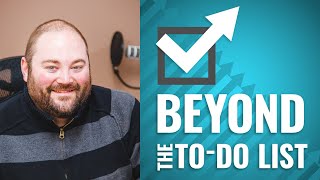
In this interview, host James Allen talks with Erik Fisher, the long‑time producer and host of the productivity podcast Beyond the To‑Do List. The conversation covers how Erik launched the show in 2012, grew it into a top‑ranking weekly podcast with over 450 episodes, and secured high‑profile guests such as Michael Hyatt, David Allen, and Greg McKeown. Erik explains the production workflow he uses to maintain consistency: batch recording, a seasonal schedule that builds a runway of episodes ahead of vacations, and strict limits on how many recordings he does per week. He details his guest outreach method, emphasizing authentic, value‑based pitches and leveraging a single marquee name‑drop to open doors. The interview also dives into Erik’s interview style—treating each episode as a relaxed conversation rather than a rigid Q&A—and the importance of letting the guest lead. Erik shares personal productivity tactics that help him manage ADHD, including analog note‑taking, mindfulness practices, and a disciplined time‑blocking system that respects boundaries, lunch breaks, and the principle of Parkinson’s Law. Both hosts discuss work‑life balance, the pitfalls of hustle culture, and the need for customized, sustainable routines. The episode ends with actionable takeaways for aspiring podcasters and productivity enthusiasts: start with simple tools, batch work, be authentic in outreach, and tailor systems to one’s own neuro‑type and energy levels.
Chapters
I recently had the opportunity and privilege of interviewing Eric Fisher, who is the longstanding producer and host of Beyond the To-Do List, which is a top-ranking productivity podcast on the internet. And when I say long-time running, I mean like over 10 years and 450 episodes that come out every single week. Eric has spoken with productivity experts on how they actually implement their strategies into their own life and how they've helped so many different people. And these are like big-name people. I'm talking like Michael Hyatt, David Allen, who wrote Getting Things Done, and Greg McKeown, who wrote Essentialism and Effortless. Eric's mission is to help us explore all the different aspects of productivity and what allows us to truly be productive in terms of our personal and professional life so that we can ultimately achieve the end goal, which is just to live a a meaningful life. So a lot of the conversation I wanted to ask Eric was definitely related to productivity. And if you followed me for any time, you know that I used to teach and coach performance and productivity, and then that evolved into Profit Your Knowledge and the business coaching and what it is today. One of the biggest things that we dive into in this episode is Eric's process for growing his podcast into being a top-ranking podcast. Literally, if you type in best podcast on productivity, to listen to for any year over the last 10 years, you're gonna see Beyond the To-Do List as being one of the top. And I know a ton of people want to start podcasts, but they feel they're not qualified enough. We go into all the different aspects of it, along with how to be more productive with your time and your energy to help you grow your business ultimately. And we dive into how Eric was able to get guests on his podcast like Michael Hyatt, Greg McKeown, David Allen, all these other huge names that he gets to interview week after week. Eric Fisher is a great guy. His energy is awesome, and this is a really fun conversation that him and I got to have to support you in being more productive, working fewer hours, and growing your online business. So without further ado, let's dive into the interview. What's up, Eric Fisher? Pumped to have you here on the show.
Awesome, man. Glad to be here, dude.
Yeah, this is— we were just talking about off camera. I used to coach performance and productivity and we listen to your podcast every day. And then I got the email that you were interested in coming on. So I was like, dude, I got to have Eric Fisher here. So pumped, pumped to have you here.
Awesome. Flattered. Glad to be here.
No, it's so cool. So yeah, I kind of want to just dive into this and specifically talk a lot about podcasting because I talk with people about starting or growing their online business all the time. And I was just at an event recently and I mentioned that I had a podcast and like 5 people came swarming up to me and were like, 'What's your podcast?' Like, 'How do you start podcasting?' and all this stuff. So podcasting, I think, has really grown, and you were like almost like one of the pioneers because Beyond the To-Do List has been around for over 10 years, right?
Yeah, yeah. August of 2012 is when this show started. A lot of people don't know I was co-hosting on a couple other shows even before that.
Oh wow, I didn't know that.
Yeah.
Wow.
Yeah, uh, 2007, end of 2007 in December, what it was called at the time iTunes, uh, my friend and I were for for our show We're Both Right. We were a comedy podcast and we were one of the top new comedy podcasts that year. We didn't stick with it. We, we went on hiatus and came back for another year and then went, went on indefinite hiatus. But yeah, that was, that was one of those, uh, you know, testing the ground. That was, that was my Malcolm Gladwell hours, right?
Heck yeah, dude. Yeah, it's like, I don't know, it's like you, you like, like I said, you're literally like one of those kind of pioneers when it was like before podcasting was cool, I guess, and now it's like cool. So everyone wants to do a podcast, but what's, what's kind of interesting and something that I know you, you enjoy helping people is like creating good quality habits that we can adapt into our life to accomplish our goals. 'Cause you're really big on helping people like with their personal and professional life. And I mean, just creating good habits is beneficial for all that. But I mean, the fact that you've had 10 years of podcasting and it's been every week of the same exact show, like the consistency alone is thoroughly impressive for doing it for that long. So what are some sort of habits that you've developed to stick with it that long?
Well, I'll tell you right now, confession, it has not been every week, at least not early on. There was some— there was some like, oh my gosh, what have I gotten myself into? Or, okay, I did 16 episodes and then I took like a month and a half off and said— and regrouped and said, okay, what's the workflow like? So honestly, that was healthy. That was good for me to have that kind of you know, moment of clarity a couple of times. I mean, you can't do something for 10 years and not go through how— however many— I'm like, I try to kind of say there's been 5 to 7 different versions of the show throughout that whole time where you kind of say, okay, what am I doing this for? How am I doing it? And how can I optimize how I'm doing it? You know, and so some of the habits though, has just been always trying to work ahead, doing batch processing and batch recording. Working ahead because I don't— I record from home, have for more than half the life of the show. Well, during the summers, everybody's home with me. So it's like, okay, I need to like insulate myself and let everybody know, like, by the way, I'm gonna record a podcast, put a sign on the door, those kinds of things, right? But I'm much better off not recording in the summer at all, and having all of my episodes recorded for the summer. Well ahead of time and even some into the fall. So that once people start getting back into schools and things like that, like, I'm not doing a mad sprint to record a whole bunch yet again. So it's kind of like when you work for going on vacation, you know, you're gonna have stuff that's gonna come up, you got a whole bunch of stuff to square away and clear off the desk, etc. Before you go away. But, and what's funny is, is then we get back and then we still do that thing again to kind of catch up, right? It's, it's working So, so when people talk about that, working to go on vacation, that includes the coming back and the triaging of the email and all that kind of Slack messages and all that kind of good stuff. But you incorporate that, you factor that in. So allow yourself runway. Basically, the habits that I'm talking about here are basically working from a batch processing and kind of a seasonal production schedule. And once I figured that out, then it was like, oh, okay, that— this is how this works for me. And it's gonna be different for everybody. It's gonna be different for everybody else. Some people, you know, they're gonna grind and say, I'm gonna record 5 podcast episodes in one day. Good for you. That's not my style. And that's okay.
So yeah, I think that— I think it gets overlooked a lot is just the power of like scheduling and automations, especially when people are like new, they think like, once I film it or record it has to be published. It's like, no, like, I record, I mean, every week I record my episode on Friday and it doesn't get published until Tuesday. And it gives me time to like do it. I can even review the episode, you know, check it out, make sure it's all scheduled. So everything comes out on Tuesday and it's just consistent with that. So I really liked that you do that. How do you kind of, cause you said like doing 5 podcast episodes and it's like more power to you, but like how do you kind of, um, approach your interviews with Beyond the To-Do List? Like what is a little bit more in depth, I guess, of that process of batching that you do?
Well, so there's a couple different phases of production. One is the initial, like, locking in of their confir— you know, a guest is confirmed, because it's pretty much a guest every single episode. There's been some solo shows. I intend to do some more of those in the future. But having kind of a production schedule that incorporates the, the preparing and the processing of the information and working through, okay, this is their book, or this is their, their TED Talk, or this is their, you know, insert here, resource that proves that they know what they're talking about. Or if they're a friend, like, it's a whole lot easier. But you kind of prep and I'm, I mean, I'm prepping for April. We're recording this right now in March. I've got stuff, I've got one recorded for April already. And I've got another that I'm prepping for the end of May, a really big guest that I'm not going to reveal just yet.
Okay.
For the very end of May that I just found out about earlier this week, and I've already started going through their book, their book, they gave me the galley version of it. And I'm going through it on my Kindle. And I'm super excited to finally have this guest on. And so I'm working ahead on April and May right now in March. And so I take some time, you know, either early in the morning or late in the evening, but especially like a Saturday morning where I've got some time there where I can just sit and read. And I'm a fast reader. So that really helps. And so to be able to read and then make notes and kind of collect all that data. One part of, you know, first part is collect data. Second part is this kind of synthesize it slash read through the notes and say, you know, craft the questions, and then craft those questions in kind of a conversational flow. You know, hey, well, if we ask this, then we've already set context for this one, and then so on and so on. And then the other piece to that is, I will look to see, you know, you have to kind of balance, okay, which weeks are you more busy with other things, and which weeks are good for recording. So I'm again, not a person who's gonna record, you know, 2 to 3 or 4. Well, I do 2 in a day. I'm not gonna do 3 or 4. Reasonable.
Yeah, yeah, yeah.
2 I can do. That's not a problem. 3 or 4, you're not gonna get my best stuff, right? Whether I'm guesting or whether it's somebody on my show. So what I do is spread it across. I have notifications that come in as to when people have booked a link on my show. Through my Calendly. And then once I get those, I take— every time that comes in, I go take a peek, look at the calendar. And I say, oh, that week's already got 2, remove all the other options from that week from now on so that no one else can fill that week.
Right.
And so that's my limit is like 2 in a week. And then you gotta have to kind of block that out and say, okay, by the way, this week's completely off limits. So is this one. And, you know, just it's— and I've got a production sheet that I work with my editor on. So we've got a long list. Like we've got all the episodes listed out to like June for now. That's not to say I've already got people booked for that, but they will be. By the end of April, I'll have pretty much near the end of summer, like locked in. And that's going to be amazing.
Yeah. Heck yeah. Well, I think it's cool and something I, I feel that In terms of being productive with our personal professional life, I think it really is important to kind of set those rules for ourselves because a lot of people just kind of like go for it and just finagle it, you know? And I think everybody kind of does in the beginning, but like over time you have to develop those rules. Like something you mentioned is that you'll do it on a Saturday, uh, like do some work and that's fine. You know, I personally, I don't work on the weekends, you know, and I take Wednesdays off because it's the middle of the week and I kind of work. I really like grind on my business. I wouldn't even say grind really. I just like, put focused work into more than anything, 4 days per week, and they're about 5-hour days. So I do about 20 hours per week. And that just keeps me in a consistent flow of being consistent, of just like being in my best, I guess, level of performance. But yeah, like you'll work on a Saturday and maybe that works for you. And there's no, like, there's no real wrong about it. It's just what works for you and being able to set those kind of rules. That kind of ties into the next part I want to talk about, which was creating more of that framework for ourselves, which is, I know, something that you can— you're definitely more of a specialist in, but also in terms of your podcast, like, what kind of made you decide to do interviews versus those solo episodes? And how was that a better, I guess, framework for you?
It was a better framework for me because, you know, if I can go real quick here, I'll say that like I was co-hosting a show with somebody in the— in the January of 2012. Realm. And they then were going to phase— they were doing multiple shows across a bunch of different topics, and they were going to phase out the one that I was doing with him. And so I said, well, now I get to do my own show. It took a while to, you know, discover what I wanted to do. And I thought, well, if I was going to do one, I was like, maybe I should blog. And then I quickly said, nope, I like talking. And, and then I thought, you know, and I don't— I was like, well, blogging is solo stuff. Do I want to just solo talk. And I said, you know what, I'd rather have— it's more engaging, it's more fun for me. And I knew myself. And I knew I'd rather talk with other people, I'd rather learn from them and have it be a give and take kind of a process. And so I started to list off topics I wanted to talk to people about, as well as people that I wanted to talk to. And as I started to do that, I was like, oh, you know, that topic with this person this person on that topic and started to draw the lines. And then I realized, you know what, this is kind of like free coaching. Why not? Totally makes sense, right?
I mean, yeah. And you're getting like the best of the best, cream of the crop, like Michael Hyatt, you know, and awesome people on your— who's the other one? Greg McKeown. You know, like you get like super legit people on your podcast. So it's really fun to listen to you guys conversate and you're such a good interviewer too. But Thank you.
Yeah. And that's only happened through practice, honestly. And, and from me doing my own editing for so very long and hearing, oh, I had a follow-up question, I should have— well, next time, next time I'm with that person, I'll have them back. We'll do that. But yeah, just realizing that it was a productivity show, because I didn't even— I didn't set out with that being what it is. And, you know, as out of the gate, it was a What am I going to talk about? Who am I going to talk to? And once I figured out the topics and the people, it kind of came together and said, oh, it's a productivity show, but it goes beyond the—
there's the title, The To-Do List. Amazing. Yeah, that's really cool. I mean, yeah, let's kind of talk about like creating and achieving goals. When you started Beyond the To-Do List, what was kind of like your initial motive back then and what kind of transformation, I guess, have you seen yourself compared to like now in the process?
Yeah, I mean, I think for the, the initial goal was to just start. It was to convince myself I could do it on my own by myself, you know, because I'd been a co-host with, for, on at least 3 other shows up until that point. But then at that point, there was a line in the sand. I wasn't going to do podcasting anymore if I didn't start something myself. So it was first and foremost just me starting the step into doing podcasting long term, no matter what. Could I do it? Do I want to do it? Do I really have the passion for this that I thought I did, as I've been doing it with other co-hosts who share a level of the load of the work, right? And that was where the first 16 episodes came from. And then that kind of regrouping and, oh, okay, yes, yes, I do. I'm doubling down. And so that first kind of goal was grow the show, grow the audience, articulate the message, articulate what the show is. And again, that's taken many kind of re-articulation points across the past 10 years. But that first goal was just proving to myself that I could do it. And I proved it.
I proved it tenfold. Right?
No.
So I think that is so big. Like when I work with someone, content is a huge part of, you know, building an online business. It's how you get discovered. And people think that they have to be so perfect right out of the gate. They gotta have the best quality equipment. But like I tell people, like you can start with your smartphone, even just a phone recording, like your, your phone can do so much and just start with what you can. Like the best you can afford is usually kind of rule that I usually tell people. And then you can upgrade down the road. Yeah. But I think like what I always hammer home with people is that the consistency in the beginning of just getting the habit down is more important than anything.
Yeah. And so that, that's kind of the first goal, getting that like, and again, it's been working through the kinks, getting the flow together, making it work. And I'm trying to think back as to, you know, probably 2 to 3 years in, it was like, okay, this is legit. Like, this is a legit side hustle. What do you want to do with this now? And that's when I started to grow into trying to get even higher. What's funny is I actually got some of those high caliber guests like I mean, David Allen of Getting Things Done. It was like, he's in one of those first 16 episodes. Didn't anticipate that was going to happen so quickly. But the fact that I said, you know what, long term, I eventually want to be able to get him. Let's start the asking now. But I asked, I sent the email through to his website. And his wife wrote back and said he'd love to do it. How about this day at this time? And I said, yes. I didn't anticipate getting a yes within 24 hours of my very first ask for him. And now he's been on the show like at least 3 or 4 times.
And you guys know each other now. And yeah, it's like, that's what's wild about podcasting. I actually just made an episode on my, my YouTube channel and my podcast about like blogs versus podcasts versus YouTube and the pros and cons with each one and how you can kind of combine all of them. But with podcasting, like one of my pros is that you can get big name people on your podcast just because you have a podcast. I mean, obviously it's better if you have more of an audience, but you don't need to have some insanely huge audience to get some of your icons on a show to chat with you. And it's pretty amazing. But in terms of that, obviously getting started being consistent, what's kind of your process? I guess early on, what was your process? Because you're more established now. When you weren't more established, what kind of email in a nutshell would you send to people? How would you go about kind of just reaching out to these big name people?
Well, I will tell you that the secret was that I— and this is kind of what set me in the direction of the show— was I had a friend who could get me in contact with Michael Hyatt. And his episode was actually the very first episode I ever recorded. And so then I knew I had that calling card to say, I just, you know, hey, I had Michael Hyatt on the show. I'd love to have you on the show. And then, you know, and so on and so on. And again, it's not to just leverage name dropping and things like that. But that was kind of the first like, oh, I know, I mean, I wouldn't suggest that everybody has to have some big name guest to start off with. Sure. It's not necessary. But I think you should have somebody in mind that is kind of a leveraging point or an establishing line in the sand to say, I have had this person on that you can name drop with, I guess, and even share the, share the link to it. I would say that that's something that's definitely worthwhile. But I would say that, honestly, and here's the thing, I get so many pitch emails from people trying to be on my show. And I try not to talk about that as much. My editor said, hey, you keep mentioning that. And I'm like, yeah, I gotta stop talking about that because I don't want to sound annoyed. But I do think people that are doing that job of pitching can do a better job than they're doing. And my insight there is, honestly, it doesn't necessarily— especially when you're reaching out to have somebody come on your show— be authentic, be real. What made you think of them in the first place? And ideally, it's not just that they're a, air quotes, big name, it's that they have some value to provide. And they've already provided that to you in some way. As the host, you're familiar with them, your— their topic resonates with you. Something they've done, some people, you know, a particular book or books, or a particular talk, like, tell them that. They all— they trust me, I want to hear that myself. They want to hear that too. They want to hear not just that, oh, your book meant so much to me. They want to hear how.
And that's what's gonna—
yes, the details. You want to dig, drill down, dig in, and tell them a story, even if it's short, that their thing that they do impacted you. And you want to share that with your audience. Please come help me share that to my audience. That's, that's it in a nutshell. Don't Don't stress out about it beyond that. Don't worry about numbers. Don't worry about convincing them in some other way. Express that.
Yeah, this is a, this is a fun place that I really want to go to right now because it's so big that I feel, especially when people are like just starting out, because I know when I first started, I thought you had to like puff yourself up and make yourself seem bigger than you are. But it's like what wins now in the world of the internet is authenticity. It's being genuinely you. And people are afraid to do that because they feel like, "Oh, no one's going to listen to me." It's like, "No, people will listen to you more if you do that." So I love what you're saying about just like, even though they're a big name, if it was like a Tony Robbins or someone like that that inspired you, just share that inspired you and how it inspired you. And I think what's really big on the other half of that that you mentioned is the collaboration of you two. Supporting your audience, even if it's a small audience, it's still an audience. Even if it's 50 people or 10 people, you know, or if it is 1,000 or plus people, it's like, it's, it's okay. Because like, as an interviewer, that I think is what makes for good interviews. At least the best interviews that I watch is where two great people or two great minds come together and then support the one audience. What do you have to kind of say to kind of go off of that in terms of like approaching your interviews with these other big-name guests?
I tell people, when I'm acclimating them to the show, to be on the show, I tell them that the vibe— that I go for a vibe, and that the vibe of the show is, this is not an interview, this is a conversation. You and I are sitting down and having our coffee. And there's somebody at a table just removed from us, 6 feet or 3 feet, whatever. And they're listening in to what we're talking about. And so we're cognizant of that, we're aware of that, we're not gonna, you know, share, we're not gonna spill or share the tea leaves, you know, in a way that doesn't matter. But that, that always helps them feel more at ease. It's not like hard-hitting interview questions that are robotic and stacked in a certain way. No, it's, this is a free-flowing conversation. Tell your story. If I say something that you want to jump off on, great. If you say something, just know I may say, oh, here's like— I had a great conversation the other day with somebody, and I shared more, probably more personal stories in that episode than I have in any single episode ever before that I've done. And when that was over, I thought, oh, this is an amazing episode. And, and I, and I, by the way, I try not to break the rule where it's like the host talks more than the guest. I hate when that happens on other shows I listen to, right? So I try to adhere to that myself. But I think that that was one of those things where it just made sense. So that's the vibe that I go for.
I love my show, that it's a vibe. And like, I really like to approach interviews like more intuitively because it is a conversation. That's how you approach a normal conversation. It's intuitive. You listen, it's give and take. It's like playing tennis, someone told me, or no, it's like playing soccer where like you dribble for a little bit and then you pass it over to the next person. They dribble, pass it over to you and kind of like I don't know if it's dribbling, but they bounce the ball. Um, so no, that, that, that's really so valuable, I think, um, in terms of running good interviews and whatnot. Um, one thing that I'd like to touch on with you, cause I, when I especially was coaching people in productivity, I couldn't really relate to them on this wholeheartedly. Uh, but it's, it's being productive in like getting things done and staying focused. Despite having ADHD, and I know something that you talk a lot about is the ADHD. I wouldn't classify myself as having any kind of chronic ADHD myself. Um, but like, how, how have you kind of been able to grow Beyond the To-Do List to what it is today and stay consistent and make a name for yourself with podcasting despite having ADHD?
Systems and systems and more systems. That's, that's really been it. Um, one of the things is just knowing myself and, and I think Again, that's kind of that you— I have alluded to it a couple different times— is having that kind of shiny object syndrome, or, you know, squirrel, that's built into ADHD, where it's just like you can, you can have internal and external distractions shift you off of your focus time so much better. But one of the things that I found is just having those systems in place, the seasonality to it that we've talked to already, the batch processing where you do a bunch of work, and then you let yourself not do a bunch of work for a while, not just in a season, but daily even. Like, I mean, going to your, your workflow, that's a lot of what I would do is really make sure that I'm not overloading myself on any given day. That's why I don't want to do multiple conversations, recordings in, in a single day. But some of the other things is just having things in place where I'm doing mindfulness practices, or I don't have it out right now. But on my desk, I often, when I'm going into a focus session, I will have like a legal pad over here, not digital, analog, and a pen or pencil. And if something as I'm working pops into my head, like, oh, you got to schedule the dog for his vet appointment. Where's that coming from? Well, it's just the brain, right? And I pull that over and I write, okay, right. Dog, that appointment, slide it across, move it out of the way. And then that way, I've said to myself, oh, Eric, great thought there. I've got it covered. I wrote it down. We'll get to it later when it's time. But right now, you know, it's almost like you're talking to a toddler. But right now, the task at hand right now is this, right? Okay. And, and that's a— I don't want to say muscle memory, because that has actually way more to do with way more to do with neural pathways. But those are formed. And as you— I mean, again, it's never going to fully go away. But for me, having been in that practice for so long of not grabbing the phone so much, and unhabitualizing that, and actually grabbing something and taking a note and then moving out of the way, those kinds of things. I think these are things that even non-ADHD people should be doing. We've all kind of habitualized ourselves into symptoms of that now anyway. These are the kind of practices that you can have mindfulness and internal and external distraction guardrails up for yourself that will keep you focused on the task at hand.
Yeah, no, I love the simplicity of that. And it's like I heard about meditation. Meditation is a great practice that I just focus on, just to practice focusing on just one thing, like your breathing, you know. I think it's so beneficial. For everybody. You know, it's— people make it to be very woo, but it's very practical with being productive and staying focused on one thing. So I love doing meditation. But in meditation, I've heard people say that when you hear those thoughts, like the— it's like the monkey brain, I think is what they call it. You basically like picture those thoughts floating off into a cloud. And that's almost what you're doing, but it's more tangible because it's like putting it on the paper, slide it over. It's like, okay, it's on there. And I can go back and look at it later.
Yeah. And what you can do, and what I will often do, is say, okay, either a set time of each day or kind of an admin hour block is to then go through what you wrote down on that pad. So either, you know, 15, 20 minutes, is there anything— I mean, not all those things that I write down are going to be worth anything. But at least acknowledging it and letting it float away on paper helps.
Totally. Yeah, absolutely. Yeah. And something else, like in terms of systems, something that I've done, I don't know how big you are on time blocking. Does that help you?
Very. Yes.
Yeah. Let's, let's kind of dive into that. So I'm kind of curious, like how you approach time blocking?
Well, I think one of the biggest things of time blocking is it's great for having boundaries up to then know, okay, nobody else can claim that time. At that time, because I've already claimed it for a meeting with myself to do this specific thing. And so that you can live or die by the calendar at that point. But number 2 is, you don't want to necessarily block out too much time, because work expands to fill the time that is allotted to it. It's Parkinson's Law. So instead, if I want to say like, you want, you have a want to have a good gauge on how long maybe, you know, if you're going to say, if you're going to say, okay, I'm going to use this particular time block, for this particular task, you want to have a good estimate as to, based on experience, how long does that usually take me? You know, if I'm gonna, if I'm gonna do show notes, if I'm gonna write a blog post, if I'm going to read a chunk from this book, or, you know, insert here, whatever, you should already be able to, and this is where time tracking comes in, you know, tracking your time saying, okay, this is how long it took me, and I know I wrote it down. So on average, it's going to take this amount of time. So being able to block that hour out or that half hour out for that specific task, and you can have tons, I mean, you can get tons of time blocks on a single day and across your entire week, it should, should pretty much look like Tetris. And I know some people are thinking, yeah, but you don't want to cram every minute of every day full. True. I'm not saying that. What I am saying is, put the big rocks in first. And then the other— and honestly, I will put in blocks, like I will put lunch on my calendar. Because sometimes people forget. I forget, you'd think we wouldn't forget to eat. I have blown right through it, blow right through it, because I'm either, you know, thinking too hard or working too hard on a specific thing, and then time disappears, or, or I'm taking a break, but I'm not realizing, oh crap, that break should have been lunch. So kind of, I actually make lunch a break, like a hard break, get away from all screens.
Right. Yeah. So what's helped me is The One Thing by Gary Keller. I don't know if you've interviewed Gary Keller. You probably have.
No, actually, that one's not— he's never been on. That's one that's not actually—
I'd be sick to interview with you guys. But one thing he talked about in his book, The One Thing, was just about big time blocks. So I started incorporating that into my life because I was doing time blocking, but it was almost getting too overwhelming for me. And I really have 4 big time blocks that take up my day. I have my work hours, family and friends time, and then I have my exercise kind of personal time. That's usually the beginning of the day. It's like my morning routine and then my wind down sleep hours, which is my biggest time block. But for me, like what I do in terms of time blocking for my work hours is, you know, if I'm going to build out like a sales page or an online course, that takes time. And I'm building out a new program, it can take months, even depending on the size of the course. Uh, but it just requires like that kind of chipping away, that eating the elephant small bites sort of thing. So I have 9:00 AM to 2:00 PM, which is like a 5-hour day that I have set. And like you said, with Parkinson's law, I basically give myself a specific task or maybe 2 tasks that I want to get accomplished, like building out my sales page or one section of the sales page, we'll say. And if I can get it done and get the work done throughout that 5 hours, but I get it done in, let's say, 3 and a half, I'm going to call it a day typically. Cause if I'm just like focusing on it, it's basically like either make it to my time cap, which is to 2:00 PM, or I got everything that I wanted to get done and I can start doing family friends times a bit earlier. Cause I truly believe it's more about the consistent long haul instead of just like grinding nonstop until the end of the clock, but sometimes I can, you know, but if it's like 2:00 PM right around there too, at least for me, and you can kind of dive into this too, after about 5 hours, I start to not be as productive and lose my mental clarity. So I'm not producing as good of work. Do you, do you kind of feel that way? What are your kind of work hours with them?
Yeah, totally agree. Yeah. I, and I, again, this is why I build in, um, the lunch hour there as to kind of have a reset for the day because I still have stuff that I have to do in the mid to late afternoon. And so, if I don't take a lunch nap, take it— have a meal and a nap and then a small coffee and then almost have it like a second workday that's short, you know, two short workdays, that's kind of how I've done it in some ways. I echo some of what you've said in terms of the morning routine being in a block. By itself, and then that first chunk of the day. And but yeah, that's been, that's been beneficial to me for sure. To focus on that. I think that definitely when you're talking 2 o'clock, that is definitely that kind of like, okay, if we've hit it, if we hit the wall, like we're no good. You know, I, for example, like college, never could do an all-nighter. I'd get to like 2, 2, 2 PM, or sorry, 2 AM. And then it was like, well, this is just taking me longer now. It's not, I'm not, I'm not gaining anything here. I'm losing sleep and that's gonna make the rest of my time horrible. So, well, yeah.
And, and I mean, even if I, cuz I've grinded for like a long time cuz I was like, oh, hustle, hustle. That's what you gotta do. Grind, grind. And then I would like reviewed my work the next day if it was like writing emails or some sort of thing, uh, or building my course content we'll say. And then like, I'll look at it and I'm like, why did I do that? Oh, it's because I was staying awake, you know, and pushing myself further than I needed to. Be. And I just did a bunch of work, but it wasn't productive. It wasn't quality. So I think it's really big to know like kind of when to tap out and when to rest. Um, and I'm kind of curious, like, what, what's your take on kind of hustle culture and work-life balance? And do you, do you have a specific hard cutoff? And what time is that to where you rest? What's the kind of ratio from work to rest hours for you?
Yeah. Well, I, I say this when I hear the word hustle, For me, that's like a sprint. You sprint from one point to another, you do it as fast as you can without being inefficient about it. And it's not a long-term thing. Now, so that can be— you can hustle for a certain amount of time every day. When the words hustle culture come together, I'm like, I don't want any part of that. That's not my life. That's not how I do things. I don't want to burn out, like, sorry. When I hear people talk about like hustling nonstop, I'm like, yeah, when are you resting? Because otherwise your output— you, you may think you're having all this amazing output. But what you're really doing is you are wearing yourself thin. And at some point, there will be a reckoning. I've been there. So as far as hard cutoffs go, yeah, I mean, I try to not go past 5. And by the way, when I talked earlier about, you know, doing air quotes work on a Saturday, I think that's one way that you can lower the threshold for all the other days. And if that's helpful for you, great. If not, you want to have boundaries on your workday, your work weekend, or sorry, your workdays and your versus your weekend. Do it. You need to, you need to compartmentalize to a certain extent. But also you need to uncompartmentalize in other things. So when I talk about like going through a book or something, or working on show notes, or, you know, going through books and pulling out the stuff, and on a Saturday, like, I'll go to like a coffee shop and sit with like 3 different books and go through all of them. And if the mindset I have going into it is, oh no, this isn't work, I'm going to go have some— I'm going to go— I get to go read books, right? Right. I get— I get to go. Do this thing and sit and enjoy. I will allow myself a pastry or something, or I will have a, you know, a fancy drink or whatever you want to call it. Like, then it's a flip of the mindset. And it's not work and it's not burnout related. You can actually be energized by doing that. But again, you got to know yourself well enough and be able to kind of create that kind of a workflow on all those given days with those given boundaries based on who you are and what hats you wear.
Right. Yeah. I 100% agree that it is about, I think like rules and paying, being highly aware of your energy output. I mean, there's some days too where like I have my 9 to 12 or my 9 to 2 work hours, but some days like I'm just not in it, you know? And it could be that I did it because I play, I have a bunch of hobbies, you know, I play music in a band and we'll do shows and then it's like a late night and it happened to be on like a Sunday or something. And I go into my workday and I'm just like, God, I'm like groggy. Cause I was up late and it kind of threw off my schedule, but I was doing something I loved. And I think just being able to like, almost like if you're eating that intuitive eating philosophy, where once you get full, stop eating, it's almost the same thing. I kind of feel where like once you start to get drained and you're not really focusing or having the right kind of output that you want to have, it's time to just take a chill pill for a little bit. And just kind of keeping that, as Simon Sinek would say, that infinite game mindset. Where it's a long game, you know, and you just got to stay consistent, do the best you can each and every day with it.
Yeah. And there's, there's def— there's— you can set up the rules and then you allow exceptions. Like, there's a Sunday night gig that you're doing on Monday as you're going through your stuff and like, oh man, I am tired. You flip it and say, but didn't I have fun last night?
Totally.
That was awesome.
Hell yeah. Absolutely, man. Well, Eric, dude, it has been— it's been a pleasure to hang out with you and to chat today. Where— what's the best place for people to kind of connect with you and learn more about what you're doing?
Yeah, I mean, best place is just to go check out the podcast over at beyondthetodolist.com. That's where you can connect with all the different social channels that I'm on and looking through, through that back catalog.
Heck yeah. No, amazing guest. Again, I used to every morning— part of my morning routine at the time was to take my dog on a walk up the street. It was like a 1-mile up and back. And, uh, every day for a while there, I was listening to your podcast and I was just like, ah, this is great. Eric Partaker, the 3 alarms. I love that one. I actually incorporated that into working with people. I still do that actually. I said, it's still a part of my routine. Yeah. It's so good. So anyway, man, it's been a pleasure. I really had fun chatting with you today. And, um, yeah. Any kind of final, final words or thoughts that you have for the audience?
Yeah. I mean, I guess I would say, uh, your, your productivity is what you make it. As, not as somebody else tells you. So even though we've said a bunch of things that work for us in this conversation, take those as kind of ideas to test out and see how they work for you. Don't ever just accept, oh, well, that's true for everybody, from, from what one person says in terms of how they get their stuff done, or how they're creative, or how they do their work, because you are unique. Even though you're probably similar to other people, you're unique in terms of the different complexities of how you were made. And so having that awareness of yourself and what does or doesn't work is gonna— me— is gonna matter the most as to how you get not just the most done, but have the most fun doing it. Totally.
Yeah, I think everybody has the same 24 hours in a day, and how you play with that 24 hours is completely up to you. So I thought it was really good that we were able to both share our, um, kind of workflow and the way that we approach it with the same kind of like time blocking and stuff. To hopefully inspire some ideas that it's not cookie cutter. You know, you're you, you get to customize it how you want to do it. And I love that custom productivity kind of approach. So thank you, Eric, so much for the time. Yeah, we'll see you in the next one.










