Get People To FINISH Your Course!
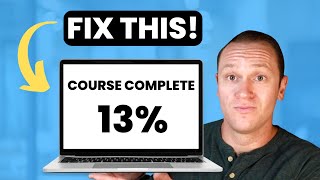
James Allen breaks down how to design online course lessons that people actually finish. He recommends a simple framework: why, what, how, recap. Most courses see 13-20% completion rates, but trimming fluff and nailing one transformation per lesson changes that.
Chapters
Average online course completion rates lie somewhere around 13 to 20%. Now, that may sound like a lot to you. It may sound like very low to you. Kind of depends. But the bottom line is that most people don't finish online courses. And one of the biggest reasons that people don't finish online courses is because the content alone isn't really good. Today I'm going to walk you through the things that I've learned to help me create powerful course content lessons. And even this stuff will even apply to like your free content, like what I'm doing right now. But these are the things, the frameworks, the processes, the questions that I ask myself, everything that you need today to create powerful online course content. And again, it will even spill into your regular free content. So without further ado, Let's dive into how to create powerful course lessons. Welcome to episode number 16 of the Profit Your Knowledge podcast. I'm your host, James Allen, here to help you turn your knowledge, passions, and skills into an online business so that you can be your own boss make a difference in the world, build passive income, and ultimately create a life of freedom. Super excited to have you here. Hope you're having a great day. Hope you had a great weekend. At least at the time I'm recording this anyway, it is Monday. It's when I like to do my content. Today's going to be a fun episode talking about creating powerful online course content. Now that you've actually gotten people, or once you do get people into your course, you want them to stick around. You want them to actually finish the content. And that's what today is all about. But before we get into that, I do want to say that if you found this YouTube video or you found this podcast and you're interested in creating passive income online, building a business that can run for you on autopilot without having a huge team of people or anything, being able to make good money without putting in a ridiculous amount of hours, I created a 5-step action plan that walks you through the exact model and method that I use in my own business to do just that. I love teaching things. Online like I'm doing right now, adding value to the world and talking about the things that I really care about. And then I get paid for it. It's pretty awesome. You can do the same exact thing no matter what you're talking about. I was talking with someone about barbecuing because that's what they were really into. That's what they wanted to build a business around. I opened them up to the idea about creating an educational side to their business and what they could do. And they were just lighting up talking about it. And I was just walking them through exactly the 5 steps. In this 5-step guide. So it's a great method. It's powerful. It's proven. Most importantly, I've used it in my own life. I do use it in my life, and I've learned it from my mentors who have created 6, 7-figure online businesses focusing on passive income. That's the biggest piece so that you can have the freedom, you can have the time to do the things that you want, to be able to make money while you're hanging out with a friend in a coffee shop or, you know, going on a date with your spouse, whatever it is you want to do. All right. But if you're interested in teaching things online, this is my gift to you. I lay out the roadmap literally in 5 steps, even if you have no idea what you're going to talk about. If you want to learn how to, like, get out there, bring people to your website, what kind of products are the best products to build, and then how to automate the whole system so that it brings people over and then you can make sales. This thing walks you through it. I even put some videos inside of the guide as well to pick up. The guide, just go to profityourknowledge.com/guide. There's also a link in the description of this episode. So let's talk about creating powerful course content. Again, this does apply to just regular content that you're creating anyway. It's just learning how to create powerful lessons, how to really elicit a transformation in your student's life and in somebody else's life. And the first thing that I always do when I create a piece of content for a course or even for just a regular piece of content like this is I ask myself this one really powerful question before, before I ever start building slides or literally writing anything out. It's always the first thing I ask myself. What is the number one feeling, insight, or transformation that I want my student or viewer to walk away with from this lesson or piece of content? What is the number one feeling, insight, or transformation that I want this person to walk away with after consuming this piece of content? Now, this question, what it does is it helps me, and it will help you as well, keep your lessons and your content as focused as possible. Because you, when you know this one thing, you can build all the other stuff around it, and then you know what you can cut out, what's not really necessary, what doesn't benefit the main message, the main transformation that you want people to experience. So that's the first thing that we want to do with every single lesson that we create. What's the number one feeling, insight, or transformation that I want my student to walk away with from this lesson? Okay, once you've done that, you figured that out for your lesson or piece of content, now we move on to the next piece. How to actually build out transformational course lessons. I have a simple framework I'm about to share with you in one sec. Again, when you know that number one transformation insight or feeling, it could even be that you want someone to walk away with depending on the lesson. It's time to start creating your course content. Remember that your online course lessons are small transformations that lead to the big transformation or the big promise that your course is designed to give people. For example, if you were going to teach people how to get really good at golf. I love to use this example, but if you're going to help people get really good at the game of golf to a professional level, if that's what you're really good at and you built a course, you could teach people that. People would love that. Golfing is a great industry to start building courses around. But anyway, if you started building that course, you would have different lessons. Let's say it was 10 lessons. One lesson was about nailing your golf swing. So that's a small transformation inside of the overall transformation that the course is promising to deliver. Okay, I hope you can see that, but that's really what it is. The lessons are the small transformations that lead to the big transformation that the course ultimately delivers on. That's why we need to really identify before we start building the content or creating the lesson what that specific transformation for that specific lesson is and how it's going to relate to the big transformation that we're promising people inside of the course. Our goal really should be to keep our lessons as short as possible, but long enough to create that transformation for the student. People ask me all the time, it's a really common question. What is unnecessary fluff? How can I make sure my course lesson isn't too much? Because that's really a common thing that people do. They just put out too much content. People want a short transformation. They want to get a transformation. And the shorter that you can do that for people, the less content you can have to get the same transformation, the more people are going to enjoy it, the more they're going to love you and not feel overwhelmed by it and feel like, oh my God, I have to go through all this content. Like, it's just too much. So keep it as short as possible, but long enough to create a transformation. And knowing that one transformation is going to help you because then you can distinguish what's really fluff, what doesn't truly relate to it, what's not really necessary towards helping this person get that transformation. If it's really necessary, then you can keep it. So here's a simple framework, uh, framework that I use to build every single lesson that I create. First thing I do is I start with why, just like Simon Sinek, but I tell them in the beginning of every single lesson why this lesson matters. I tell people in the beginning of like this piece of content, I mentioned why creating powerful lessons matters because it helps people actually complete your course completion or complete your course, get a high complete course completion rate. That's a tongue twister for me, but that's what it does. You know, when you have really good content, one lesson after another is just crushing it and really just getting to the exactly what this person wanted, then yeah, they're going to want to keep finishing the content because it relates to them and they love it and it's powerful. Okay, so always start with why in the beginning of every single lesson. Why does this lesson matter to the overall goal of the course? You can use stories, examples, or statistics work great. I use this statistic in the beginning of this piece of content talking about how 13 to 20% is the average that people complete online courses. And the main reason is because people's online course content isn't very good. So here's how you make it be better. Okay. I told you why in the beginning. A quick example with that too, with one of my clients, he helps people ultimately find the love of their life, find a great relationship. His name is Curt Powers. You can check him out on YouTube, but he's building a course right now. It's just a mini course and it's kind of like a course designed to set people up for finding the love of their life. And it's called the Self-Love Advantage. But when he was creating his content, I was having him teach me the content on a live call. And I pointed out to him that he was just— he was throwing a lot of information, but he wasn't relating it to the core topic. Of what it really— like, why it really matters. You know, you're talking about self-love, which is a huge piece to having a great relationship. You have to be able to love yourself. I believe great relationships are when two whole people come together and complement each other's life. So that comes down to having self-love and self-respect for yourself. It always starts with you. That's the most important relationship. So it's such a powerful course, and I love the idea, but it's being able to relate that with the examples that he's using, not just having random examples, is always relating to the core idea, the core topic of what people really want when they follow you. Okay, so we start with why. Then we want to go into what. We want to tell them what they're going to learn. Just clearly explain what this person needs to know, what they need to do, what they need to feel, and what they need to believe in order to experience the specific transformation. That's why we think about that specific transformation early on in the beginning. Okay, but explain like what they're going to learn. Okay. And you're talking about why it's important. Then we start going into how we're going to teach them exactly how to do it. So provide clear action steps, give them frameworks and resources to support them in each one of those quote unquote what steps. This is really going to be the bulk of your content is this how section. The why is what really hooks them. The what is what gets them excited of like, okay, this is what I'm about to learn to achieve that why and why it's so important to me. And then they go into how, and that's going to really be the biggest piece. And then at the end of the lesson, after you've gone over the why, the what, and the how, we're just going to do a quick summary or recap. It's really it. So end just by telling them what you told them in the lesson and really highlight and share the key takeaways that you want them to walk away with. You could even share what that one specific transformation that you want them to experience is. Inside that piece and summary in the recap. Okay, so that's all it is. The why, the what, the how, and then a summary or recap at the end. Pretty straightforward, right? This stuff does not need to be complicated. And the thing is that people really do need information. If someone doesn't know something, if you don't know something, if I don't know something, we go out and we learn about it. We need to, you know, get information. There does come a point where you have enough information, just comes down to action. But when you need to learn something, you need information. That is important. But what's more important is our ability to make students feel like they can actually do the thing that we're teaching them, that they can actually act on the information that we are giving them. That's the most important thing. So people do need information, but what's far more important is how we can make them feel, making them feel like they can actually do it, because people will forget what you told them a lot of times. but they'll never forget how you made them feel. So every lesson really needs to hit home on that. Every piece of content really needs to hit home on that. And that's just something that we work towards and get better at over time. But that's what's really going to help your online course lessons be so powerful, making people feel like they can do the thing that you're teaching. So after you've built out your course lessons, you now know the one specific key takeaway that you want people to experience. You've built out your lessons because now you've actually gone over the why, the what, the how, and come up with a little summary or just a little recap, something like that. It's good once you've built out your lesson to go back to read through it, maybe even do like a little practice run, if you will, and just see if or where you can eliminate any unnecessary fluff that doesn't relate to that core insight or transformation that you wanted the student to ultimately receive by going through the lesson. Okay, so if you're going through your lesson, you could say, ah, I don't really need this, this piece right here. It's just not really that important. Okay, that's where we start trimming all the fat, all the stuff that's not really necessary. And as Ramit Sethi would say, you trim the fat, only leave the filet mignon, just that little bit that is the most powerful. It is the best piece for people. Okay, that's editing. So that's the most important thing. Once you have created your lessons, you've gone through, you make sure everything is super focused on getting the student this specific Transformation that is going to lead them to the big transformation. The lessons are the stepping stone transformations to the big transformation that the course delivers on. Once you have everything laid out and written, basically, or if you do slide decks like I recommend, then you have all your slides built. Now we have to start filming our course. But first, cut out all that fluff. So there's a lot of different ways you can build an online course. These are the most common, I would say. And it really comes down to like what you enjoy to consume yourself and what's fun for you. I think that's the most important thing. But here are the main ones. We have 2, 3, 4 in particular. First one is full production. So this is things like multiple camera angles, multiple cameras, even teleprompters. You have like special lighting. You can even use special effects and there's lots of editing. It's expensive and it's time consuming, but you also get to make a pretty sweet product. So it's pros and cons, you know, and a great example of this is masterclass.com. If you have ever seen their ads or checked out their videos, they have people like Gordon Ramsay teach you cooking or these big artists or like authors teach you how to write a bestselling book. Really great content, amazing, fun to watch because it's full production. But there's a lot of money, there's a lot of time that goes into creating that, teams of people. It's a lot. So it depends on where you're at. Maybe you're someone who has those resources. If you're not, I wouldn't really recommend it, but it's up to you. If it's fun for you, then heck, go for it. The other one is talking head. So literally, if you look at my YouTube channel, this is me doing talking head. I'm just talking to the camera. I'm looking at the camera, talking to it. I have some notes. Things that I'm building the lesson off of and have a microphone in front of me. This is one camera angle. It's like a more simplified version of full production, basically. You can have little to moderate editing, forgive me, little to moderate editing, and you could have like some pop-ups for visual aid if you want. The only thing, pros and cons again, is that you have to be on camera because it's talking head. It's the video straight to you. It's great because video showing your face and everything, your personality. People get to see your mannerisms. It's a good experience. And I've purchased many courses myself. I've created courses myself that were just talking head like this. So it's really what you're comfortable with, what's fun for you. I think that's the most important thing. The other thing you can do is livestream. I have purchased courses. I've never built one this way because it's not my favorite to actually— I don't think it's the most useful for my students, in my opinion. But livestream is obviously an option. Basically what you do is you just record right on your screen straight from a live coaching session. People use Zoom recordings, which you can even do. And these are really hands-on because you can share your screen really easily. It's live. You can see different people on the call. In my opinion, these are really great for like an add-on lesson or like a bonus lesson, but not like the whole course. I've gone through courses where people have done this as a whole course and it's like a 2-hour coaching session, which is cool, you know, but every single lesson is like that. It's just too much. If it was just a single bonus lesson where it was an hour coaching lesson, like a recording of a group coaching call, I could see this person in action, you know, when they're actually coaching people. I think that's a lot cooler. And then they can share their screen, that kind of stuff. But usually the video isn't the best quality. The audio is not always the best quality. It's just not my favorite. Usually it was just way too long, just too long-winded, and there's like a lot of kind of fluff. Okay, so livestream is an option. The other one is slide decks. This is my personal favorite. These are super easy to create. They do not require you to be on camera, which is awesome. And you can pair this with a quality USB microphone like something I have right now. You can get a really good one for like $50 or even a lapel mic could even work. They're really easy to edit. They're basically free as long as you have a computer and a laptop. You may spend a little bit of money, like $10 for a software, but for the most part, it's basically free. And these are also great because they deliver on visual and auditory learners. So I used to always think that you had to be on camera for the whole duration of your course, but that's just not true. That's like the talking head kind of style. Because I'd always see other people building those courses and I was like, oh, I have to do that. But I don't because I purchased other courses where they did slide decks and I thought, wow, this is way cooler. And then I started doing it myself and I realized I don't have to be on camera all the time and I can actually build out and deliver a way better lesson with slide decks. So in my opinion, slide decks are the best because people get to listen. It's good. If you do a slide deck, you have the video file, you can have an audio file, and then another file where you have the PDF slides. So you write out all your content on the slides with that framework I just shared with you. Um, people can listen to the audios while they're driving to work, while they're doing a workout, anything like that. They can check out the PDF slides of just the major points that you wanted to get across and read through them if they're in a, like the DMV or somewhere where they can't really be listening, um, or even watching as well. So PDF slides are great for people who just kind of want to skim through and read. Maybe they want to just find the quick point really fast. And then they also, if they're watching the video, they get to actually read the text on the slides. And when people are able to read, listen, and watch at the same time, they're able to retain more of the information. So it helps with the actual content retention. So there's a lot of different benefits to it. Plus you don't have to be on camera. You know, if you're a little camera shy, you can easily create slides using a tool like Apple Keynote, which is what I do. Build out your slides and record the presentations in HD. And then you can also just, again, use a nice USB microphone for high-quality audio. It's so simple and it's really cheap, but it helps you create a very powerful and clean-looking lesson and course, which is pretty awesome. So it's a win-win for everyone. If you don't have Keynote, you can always use Google Slides or Google Slides and Loom to record. Your presentation. So you build out your whole slide in Google Slides or maybe, what is the other one? Whatever it is for a desktop computer. I can't, why? PowerPoint, that's what it is, PowerPoint. You could always use PowerPoint. I've been on Mac for so long, I totally forgot. But yeah, you can do that and then use Loom to record the actual presentation. You just need some sort of screen recording where you can hook up a USB microphone as well. The only thing with slide deck courses is that the bulk of your course can be slide deck where you're showing just like the slides and explaining information basically that can help someone. But if you are someone like a physical fitness instructor and you're going to teach someone how to actually perform a physical movement, it's good to just record yourself doing it. So you're going to be on camera for that. It's also good if you're doing the slide deck route to really be on camera for the intro and then also like a goodbye video or a closing remarks video of some kind. But definitely if you're doing physical exercise, so slide decks may not be the best for you. If you're teaching guitar, you, and you're actually showing someone what to play on the guitar, filming yourself would actually be a lot better. But if you're teaching the theory behind guitar, you could do slide decks. So you could do a combination of these different things as well. But in the end, here's what people really care about. They really care about one thing. Can you help me get what I want? Which is what your course is promising people. And your lessons again are the small transformations that lead to the big transformation of that course. If you can give people a, like, if you could really give people what they want in a full production course, that's fine. If you can give people really what they want in a slide deck presentation, that's awesome. It doesn't really matter what, what I believe matters. What I hope you really take away from this is that as long as your content is really powerful, that's, that's really the most important thing. What is really most important is that it's enjoyable for you to create and to do yourself and to teach. I want it to be fun for you, but also it's enjoyable for your audience to actually consume. And it does come from feedback. It comes from knowing your audience. And there's a lot of things that go into building a really great course that is awesome, that does get marketed and does get sold. Uh, but in the end, it's gotta be fun for you. It's gotta be good for your audience. And that's how everybody's going to end up winning in the end. Okay. So again, what it really comes down to, to create powerful transformational online course lessons is just knowing the specific transformation or the outcome that you want someone to experience from this lesson that relates to the big transformation inside the course. Um, because the lessons are the stepping stone transformations to the overall transformation. How many times can I say transformation in this lesson, right? Uh, so that's first and foremost, most important. The other thing is having just a simple framework like I showed you, teaching the why, the what, the how, and then summarizing. That's really all it is. Very straightforward, eliminating as much fluff and staying focused on that key transformation you want them to get. And then filming your course content in a way that is enjoyable for both you and your audience. That's really all it is. Now, again, if you are in a place where you're like, this sounds awesome, but I still don't know how to make it happen. I'm just, I'm just stuck. I need the action steps. Then definitely check out my 5-step action plan. There's literally an action plan. It's an action guide. It has a couple of videos. That walk you through how to do different pieces of what I'm teaching you inside the guide. And it's awesome. It's a great resource for you to have. It's actionable. It's concise, just like what I'm teaching you in here. Okay. And online courses are a huge piece that allow us to create passive income. Okay. So again, if you don't know what your business idea is or what it could be, you're like, I have a lot of different passions. I don't know which one is the best to actually go for. I don't know if people care about it. The guide walks you through it. If you want to learn how to get discovered online, bring people over to your website or into your world, and then be able to sell them winning products that they actually care about and create an automated system that sells for you day in and day out, pick up the guide. That's all I can say. Okay. It's here for you. It's my gift to you. It's totally free. It's in the description, profityourknowledge.com/guide. That's all I got for you. If you got value from today's lesson, then please share this podcast episode, share this YouTube video, get out there, be my little— I guess I don't want to say minion. That's kind of messed up. Be a supporter. That's what I'm going to say. But please share it if it was valuable for you. And most importantly, take what you learned here, get out there, start making some powerful lessons, get people into your course. And that's all I really got. Okay. Leave a comment below if you have more questions, but in the end, hope you have an awesome day and I'll see you in the next one.










