How To Build a PROFITABLE Website in 2024
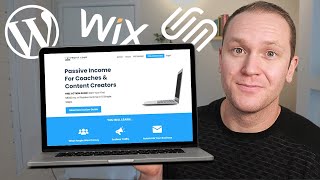
James Allen walks through building a profitable website from domain selection to converting visitors into customers. He recommends Kajabi as your builder, putting an email capture form on your homepage within 30 seconds, and using Google and YouTube content to drive traffic. The real money comes from lead magnets and a short email sequence that overdelivers before you pitch anything paid.
Chapters
Everybody should have their own website, especially when it comes to selling your knowledge on the internet. In this video, I'm going over everything you need to know to set up your own website. We'll cover what makes an effective website too, so you don't end up with an overpriced business card. We'll cover everything from why you should create a website, how to pick the right platform and domain name, how to drive traffic to your website, and then ultimately how to turn that traffic into money. So why is having a website important? Well, the website allows you to have a home on the internet. It's a place where people can go to get to know you, see what you're all about, and more importantly, how you can help them. And when you build out your website right, your website should work for you. It should become almost like an employee that works on your behalf 24/7, because when it's set up correctly, which I'm going to show you how to do throughout this video, your website should lead to business, most importantly, to capturing leads, converting them into subscribers, and ultimately buyers. And if someone's considering working with you, they're probably going to be doing a bit of research by typing your name or business name into the internet, and when they do, a really nice website should pop up. And that's where your domain name comes into play. So here's how to get a website domain. There's a lot of different places that you can purchase and find domain names inside of. They all work relatively the same. The 3 that I like to use are Google Domains, Domain.com, or GoDaddy.com. When you're picking a domain name, you want to keep it short, memorable, make sure it's easy to say, make sure it's also easy to type. And it uses keywords that your perfect audience cares about. For example, my business name, Profit Your Knowledge, is easy to say, it's easy to type out, and it's memorable. I've had people who book calls with me or purchase a program, and I get to know them, I talk with them a bit, and they say that my name is what really drew them in. They found it, they said, that's what I wanna do, and then they got interested in my brand from there. But oh, if only picking a domain name was as simple as just typing in the idea that you had and that it's available and it's not too expensive. You see, picking domain names is very simple, but it can be a tedious process because two things are probably gonna happen to you. One is that the name's gonna be taken. And what's frustrating about this is that you type in the perfect domain name or business name, you say, this is the best thing ever, and then you see that it's taken. But when you type it in into Google or some search engine, there's no page, nothing shows up. And it's because people do what's called domain flipping, where they purchase domain names for cheap and then they resell them for more expensive. They even go as far as having bots that buy these domains on autopilot. So they're just kind of hoarding domains, which makes it frustrating for us who are just trying to pick a cool domain name. The other thing that can happen is that you type in a really good domain name, it's short, it's memorable, it's easy to say, easy to type, uses the right keywords, but it's a premium domain name. What this means is that your domain name that you came up with is just really good. So what these domain companies do is jack up the price and call it a premium domain name where it can be $2,000 for a domain or $30,000 for a domain. People even pay millions of dollars to get a really short domain name. For example, the mattress company Tuft Needle bought the domain name tn.com, and that domain name was not cheap. Now there's a big question that comes up of whether or not you should use your personal name or use a business name. It's totally up to you. It kind of depends on how easy your name is to say. and how easy it is to type. Obviously your name won't have specific keywords that you can type in, but for me, for example, James Allen, there's already a huge engagement ring company called jamesallen.com, and it was really hard for me to first stand out because my first domain name was jamesallencoaching, but then there was another person named jimmyallencoaching, and it was just too confusing. And I've picked many different domains over the years, but now I finally stuck with ProfitYourKnowledge because my name is just very generic. So it kind of depends on you. I would recommend to pick a domain name that's not your personal name if you're building a sort of business. If you could pick a domain name that has keywords that your audience cares about, that's 2 to 3 words long and ends in a.com, and ideally that's priced between $10 and $30 for the year, that's going to be a great domain name for you. So once you get your domain name, then we need a website builder. Now there's many different paid and free options for you to choose a website builder online. Two of the most popular paid ones are going to be GoDaddy or Squarespace. As for free website builders, you can use WordPress Weebly, or Wix. Now, when people look at my website, I often get asked, James, what's your website builder? Your website looks very clean, professional, and simple. I really like it. I only use one major tool in my business, and that is Kajabi. Kajabi is an all-in-one platform designed to help you sell your knowledge on the internet. Everything from your website, products, membership sites, marketing communities, podcasts, blog sales— everything is done on Kajabi. And the beautiful thing about Kajabi is that everything works together seamlessly on one server. It's a bit more expensive per month, starting at $119 per month, but it's totally worth it because when you consider all the different tools that you use to do everything that Kajabi does, it's really a steal and you end up saving money. If you wanna get a free 30-day trial of Kajabi using my affiliate link, there's a link down in the description, but when you sign up, you do get the 30-day trial. I'm also gonna send you an online course that shows you how to set up your business and a marketing system inside of Kajabi. So that you can shortcut your learning curve. And on top of that, you also get a one-to-one coaching call with me. Again, link in the description, or you can always go to profityourknowledge.com/kajabi. So you got your domain name, you picked a website builder. Now let's talk about structuring your website homepage. Studies show that over 80% of people spend less than 30 seconds on a website. That means that you have less than 30 seconds to capture their attention and more importantly, capture an email address. All great digital entrepreneurs know that an email address is the most valuable thing that you can collect on the internet, which is why everything should be built around capturing an email address, including and especially your homepage. So a great example is Justin Welsh right at the top. Turn your knowledge into income. Want to join us? You can start here. And then he has a little bit of social proof. These are different articles that he's been featured in or places that he has spoken before. Goes into a bit of detail about who he is, what he's done. You can learn more about him. And then he does have, again, another call to action a little bit further down showcasing the value that he can bring to people. And then if they go through that and they say, I don't really know, maybe I want to learn a bit more, then they can check out his blog post. They can read more here, read what he's talking about. And then obviously on his blog he has another opt-in. Scroll down, ends with another CTA. Another example would be my website, Passive Income for Coaches and Content Creators. Right there in the beginning, free guide, pick this up, and then you have to put in your email address. And the whole homepage, I'm just selling my guide. Here's what you're gonna learn inside of the guide. Let's build your online business together. Here's what's inside of the guide. More bullet points end with a call to action. The reason you build your website around catching an email address is because people are not going to bookmark your website most likely, and I don't want to rely on that. I want to capture the right kind of people's information right when they land on the page, because once you have their contact information, you can send them more offers, build a deeper relationship with them and ultimately lead to business. And that's how you create an effective homepage. So let's talk about how to write a killer About Me page. I'm gonna start off by telling you that nobody cares about your business. You don't care about my business. You're watching this video because you want to learn how to build your website and you saw, hey, this is a guy who knows a bit about websites, I'm gonna learn something from him to help me. And that's okay. So when you're crafting your About Me page, make it more about your audience than it is about you. It does have to have a bit of information about you, your backstory, to make sure that they can see that you're credible and you know what you're doing. But for the most part, it should be about your audience and how you can help them. A great example is a mentor of mine, Ramit Sethi. When you go on to his About Me page, you scroll down and he's not talking about him. He's talking about typical money advice that holds you back. He says, here's a radical thought. What if you could use your money to say yes? Yes to traveling to places with your loved ones. Yes to using money to create experiences you'll never forget. Yes to being generous to those around you. When he goes down, then he starts to get into him a bit more, but then of course it loops back over to his audience. Another example is on my About Me page. I open up by saying, just imagine waking up in the morning not to an alarm clock or your boss calling, but to notifications of money being made while you were asleep. Getting messages from your students saying how much you've helped them change their life in ways they couldn't do on their own. Taking someone you love on a spontaneous trip to an exotic location for a month that you easily paid for and still making money every day while you explore. Then after that, I go into a little bit about me, but then it's right back to them and how I understand them and can help them achieve their goal. And then at the end of my About Me page, I always end with a call to action to again pick up my free guide. I'll link my About Me page in the description of this video so you can read through it, check it out, and hopefully get some inspiration when writing your own About Me page. Just remember that your business exists to serve your audience. Not boost your ego. Let's talk about how to drive traffic to your website. The best way to drive traffic to your website and make your website more known is to create content. The two biggest search engines in the world are Google and YouTube, and Google actually owns YouTube now, which is great because if you make YouTube videos and people type something into Google, YouTube videos will be promoted even if you're not writing blog posts. But ideally, when you make a YouTube video each week and you turn that into a blog post by transcribing the audio, putting in the ChatGPT, or just handwriting your own blog post, that's going to really boost the amount of SEO that you have related to your website. It is a long game. It's something that you never stop doing. Even if you become very successful in your business, you always have to keep creating content because that's what keeps your business alive and relevant online. But content marketing is really just about answering your target audience's questions. I have many different videos where I talk about content strategy, but the best way to just get started is to use the People Also Ask section inside of Google. No matter what you type into Google, you're going to get the People Also Ask sections. And if you click the three little dots, you'll get a little pop-up that says these are questions people commonly search in Google. And when you click on these questions, more questions start to auto-populate. This is a goldmine for content creators because again, content marketing is just about answering your target audience's questions. So you can take these questions, put them in an order that you like, and then that turns into a blog article or a YouTube video so you can start getting more traffic to your website. Now let's talk about how to turn your website traffic into money. The way you do it is by creating a lead magnet like I've been talking about, like I showed you with the homepage. Some way that is interesting to this person and makes them want to give you their email address in exchange for this thing. It can be a guide, a quiz, a free training, a call that they get with you, whatever it is that you want, as long as it is valuable to your audience and that's something that they don't just want, but they really need. And when you build out your lead magnet, you want to put it everywhere. Build your homepage around it, put it at the bottom of your About Me page. Even on your blog post, you should have a sidebar where they can pick up the guide there. And at the bottom of each blog post, if they read the entire post, you should also have a call to action there as well. Put it on your social media, talk about it in your content. If you get invited to guest interview on a podcast or speak on a stage in front of your target audience, offer your lead magnet to them and you will start to get opt-ins. And once they opt in, you're going to want to create a short series of emails that add more value, overdeliver, and ultimately transition into a call to action. And inside this video, I walk you through each piece of this funnel so you can start building yours out today. Having a website is a great way for being relevant and looking professional online. Online, but the way that you build it is key. And that's why it should all be built around adding value, speaking to what your audience really cares about and what they want, and ultimately getting an email address. Take what you learned here, get out there, make something happen, and I'll see you in the next one.










