How to Build an Audience of Buyers (Not Freebie Seekers)
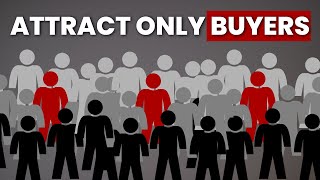
In this 2025 YouTube video, James Allen explains why many coaches and content creators attract "freebie hunters"—followers who love the content but never purchase. He outlines a step‑by‑step system to transform an audience into paying buyers. First, he stresses the importance of niching down to a specific buyer persona and a concrete result, using a simple formula (I help [specific person] achieve [specific result] without [frustration]). He shows how to uncover the real problems that the ideal buyer is secretly Googling, recommending tools like Google’s “People Also Ask” to generate content ideas that address those pain points. Next, he advocates delivering micro‑wins—small, specific breakthroughs—in free content to build trust, positioning the creator as a guide who can deliver transformation. He then argues that offers should be made consistently and openly, normalizing sales rather than hiding them for occasional launches, and suggests soft calls‑to‑action and regular mention of programs. Finally, he promotes an automated passive‑income system via a free Passive Income Masterclass, teaching how to package expertise into digital products that sell 24/7, and hints at next‑step content on the top digital products to sell. Throughout, James blends personal anecdotes, concrete examples, and actionable tactics aimed at helping coaches and creators convert followers into buyers.
Chapters
If your audience isn't buying from you, it's because you've trained them not to. Look, most coaches and content creators accidentally attract freebie hunters. They're people who love your content. They like, they subscribe, but they're never going to pull out their wallet. So in this video, I'm going to show you how to build an audience that not only loves your content, but they can't wait to buy from you. They respect your time. They want what you have to offer, and they're ready to invest. I'm James Allen. I've been in this game for over 6 years, built a 6-figure business working under 20 hours a week, and I've helped hundreds of coaches and content creators like yourself turn their content into consistent and scalable income. What I'm about to share with you is what I wish someone told me when I was just starting out. And look, attracting buyers is just step one. If you don't have a system in place to make offers automatically, you're leaving some serious money on the table. That's why I created my free Passive Income Masterclass. Inside it, I'm going to show you how to turn your expertise into a digital product that sells itself. I'll show you how to build a simple automated system that sells that product for you 24/7, even while you sleep. And then I'll show you how to drive consistent traffic without paid ads or posting on social media every day. If you're looking for a fast track to earn your first $2,000 to $5,000 per month of automated income, this masterclass is your roadmap, and it's a perfect complement to this video. To watch it, click on the first link in the description, or you can always head to profityourknowledge.com/masterclass. Now, the first step to building an audience of buyers is to know who your buyer is. If you've been in the marketing space for any amount of time, you've probably heard that if you're making content for everybody, You end up converting no one. And it's so true. Most coaches stay vague because they don't want to exclude anyone. They think that if they just go more broad, they can reach more people. But in trying to reach more people, they end up blending in with every other online expert that's throwing out generic advice. So if you want people to trust you and pull out their wallets and pay you, then you need to speak in a way that makes somebody say, I feel like they're talking to me right now. That is the power of specificity. Your audience will invest when they feel understood, not when they're kinda, sorta, maybe included in your message. So for example, instead of saying how to feel better and live your best life, you would say how burnt out moms can get back 2 hours a day without waking up earlier or sacrificing their family time. When you create content for a specific type of person, you know exactly what their pain points, dreams, frustrations, and aspirations are. And when you've lived through and experienced this thing that you're helping people with yourself, you're also gonna know exactly what it's like to be in their shoes, which is only gonna allow you to connect with them on a deeper level. That's like back in the day when I started out as a spiritual life coach. I would help clients with health challenges, with relationship challenges, and career challenges, and I was this all-in-one expert, but it was really hard to get people good results because I didn't know everything about everything. So when I became more of a specialist, starting out in the productivity niche, I was just helping people with a fixed set of a few different problems, and I knew how to solve those problems very well, and that's when my income really started to grow. Not only do you get more efficient at solving a few different problems, you know what the common challenges and, you know, holdups and things that people are going to say are. So you can address those things early on, and that's how you're going to cut through the noise and attract the right people with your content. So to get started with this, you need to understand two things. First, who do you help? And second, what specific result are you helping them achieve? Once you've got that, you can plug it into this simple formula where you say, I help specific person achieve specific results without frustration that they're sick of dealing with. So some examples of this could look like, I help new online coaches build 6-figure businesses without posting on social media 24/7. I help ambitious professionals lose 20 pounds or more without tracking calories or giving up their favorite foods. I help busy moms start side businesses without sacrificing family time. Once you know who you're talking to, this game gets so much easier. But now we need to address what's actually keeping them stuck, which moves us on to step number 2, which is to solve their real problems. People don't pay to feel inspired. They pay to solve problems. If your car breaks down, you go to a mechanic and you pay them to help you fix it unless you happen to know how to do that work on your own car. But I see this all the time. Coaches are posting daily. They're sharing helpful tips, but they're not getting any clients because they're talking about surface-level stuff like confidence or motivation or mindset. And these are nice words, and yes, they're important to success, They're vague. Buyers want relief. They're waking up in the middle of the night thinking, why isn't this working? What am I missing? Is there something wrong with me? And if your content doesn't address those questions, they're not going to watch it. You're not here to hand out free pep talks. You're here to help them solve their real problems. So think about that ideal buyer that we just defined and now ask yourself, what are they Googling in secret? What problems did they feel embarrassed to admit? What have they tried that didn't work? Write down answers to those questions and then turn each one into a content idea that shows them that you get it. Let's say, for example, that you help men get more dates with apps. A pain point that they probably have is something like, I get hits on my profile, you know, people are matching with me, but every time I message her, the conversation dies, and it happens with every single woman that I try and connect with. That is a pain point that these guys are really struggling with. So you can turn that into a piece of content by saying something like, the number one texting mistake that men make on dating apps. It's simple, it's specific, and it solves that problem that these guys really care about. If you're struggling at all to find questions that people are genuinely asking, you can always go to Google and type something in that your audience would type in. In this case, we could type in best dating sites. And when you scroll down, there's this one section called People Also Ask that you've probably used yourself. If you click on these three dots, you're gonna see that these are questions people commonly search on Google. If you put in the phrase best dating sites, chances are your audience is typing in stuff like that all the time into Google. They're trying to figure out these problems, and you'll have a list of different questions. Now, when you click on these, you're going to get more related questions, and these questions can be turned into content ideas. What is replacing Tinder? You could totally turn that into a social media post or a YouTube video that says, this dating site is replacing Tinder. Which dating site leads to the most marriages? You would say, this dating site leads to the most marriages. It's turning the question into a solution for people, and that's how you attract buyers, not just followers. When your content says, here's exactly what you're going through and here's what to do next. People are going to listen, they're going to trust you, and eventually they're going to buy. Your buyers don't need more tips or hacks. They need a guide who actually understands the problems that they're trying to solve and that's willing to help them solve it. Now, it's one thing to know who you're helping and the specific problems that you're helping them solve, but chances are there are thousands of people making content for the same audience just like you are. So the question is, how do you make your content stand out against the masses? This next piece is what will allow you to stand out in see of other people, even if you feel like they're more polished or qualified than you are. And that's to build trust through value. Prove that you can help them by actually helping them. What a concept, right? But this is where people mess it up when they're making content online. They either give too much and they overwhelm their audience, or they give them nothing and they just pitch, pitch, pitch, pitch, pitch. The sweet spot is somewhere in the middle where you deliver small, specific wins that build trust and naturally lead people to your paid offers. You're not trying to teach everything that you know in one piece of content, and quite frankly, you shouldn't be able to. You're trying to build belief in small, spread out pieces of content, belief that you understand and can relate to your audience. You know what you're doing and what you're talking about, and that you can help them get the results that they want. We need to build trust that you are someone worth investing in to help this person by offering real value. I mean, think about yourself. If you have two different creators and one of them keeps teasing or they're making you feel overwhelmed, and the other one gives you a clear solution to the problem that you were searching for, Who are you going to go back to? Obviously the second one. Now I know what you're thinking, James, if I give away all my best stuff for free, why would anybody pay me? They could just get it for free. People can go to ChatGPT or Google and they can get all the information that they want and still not get the result that they want. Instead, what they pay for is transformation. They pay for proximity, access to you and your personalized guidance, feedback, and expertise. I put out a lot of free content that is very helpful and people find me and they still pay me thousands of dollars to work with them privately because I'm actually going to help them do the thing and make sure that they do it with confidence and much faster. That's why people pay me and that's why they'll pay you. I can watch your videos and consume your content all day. And yeah, I'm sure it will help me to an extent, but investing money to get your direct help, that's where the big results come in. Getting value upfront doesn't devalue your paid offers. In fact, it enhances them because when people get a win from your free content, they start thinking, man, If this is what they're giving away for free, imagine what it's like to actually work with them. That's when they start going from a viewer to a buyer. I've had people who invest in my programs tell me that they were considering other options, and those other options were way more established than I was, or they're colleagues of mine. And I'm thinking, that's my hero. Why, why don't you just invest in them? Because to me, that's my idol. But they invested in me because I taught them things that nobody else did in a way that nobody else did. People can hear the same exact thing over and over again, but when you explain it to them in your unique way, it's just going to land with different people. Your content should focus on delivering micro wins, small, specific breakthroughs that build trust. Think of it like a flashlight. It gives people a glimpse of what's possible, but it's scattered. Your paid offers are the laser. They're focused, direct, and built to give them the full transformation. Even if somebody consumes all of your free content, they still won't know how to connect the dots without your guidance. And that's what they pay for— the complete tailored roadmap for them. So right now, think of one small but powerful result that you can give your audience in 5 to 10 minutes of content, something they could implement immediately, something that solves a real pain point and positions your offer as the obvious next step. I challenge you to create that piece of content this week. Now, even if you know your buyer, you know the specific problems that they have and you're showing up and delivering real value, this next piece is the number one reason that so many coaches and content creators stay broke even when they have large audiences, and that's that you need to stop hiding your offers. See, so many coaches and creators have this fear of being too salesy. They want to make money, but they don't want to push people off by making offers too soon. Last I checked, you're not running some free advice hotline. You're running a business. Most coaches only make offers during launches or promo weeks. The rest of the time, they're adding value and building more trust and keeping their offers silent while also silently missing sales. My belief is that you never know when somebody is ready to buy. You are not in control of their timeline or what's going on in their life, their situation. You only control your output by giving them the opportunity to dive deeper with you on a consistent basis. It's our job as coaches and creators showing up in this world to make it easy for the right people to get closer when they're ready. Once someone starts learning from you, they start seeing results from your free content. They start viewing you as the person who gets them and can help them. When you're showing up on a consistent basis in that way, they're going to want more access, more guidance, and just more of you. But when you're hiding your offer like it's some rare gem that's only revealed once a quarter, they're going to buy from someone else. They might never even realize what's available to them, and that's on you. Making offers should be normal. It should be expected and a part of your culture. Your audience should already know that you have programs, you offer coaching, you have courses and other offers that are going to help them get where they want to be faster so that they know it's an option. It's your job to create an environment with your content where people hear success stories about your clients. They see you mention your programs and the transformations that you help people get. You casually reference wins that people get from being a part of your program, and you make soft calls to actions like DM me the word coaching if you want to dive deeper. This isn't aggressive. It's not salesy. It's leadership. Because if somebody is watching all of your stuff, they're feeling stuck and they want to dive deeper. Offering them a way to work with you isn't annoying. It's respectful. Your paid offers should get them where they want to be faster and with more confidence than any of your free content. So give them permission and options to take action when they're ready by showing up and making offers consistently. Stop acting like your offer is a big deal that only gets brought out on special occasions. When you normalize the invitation, you're going to normalize making sales. And if you don't know what you're going to sell, but you want to start making some consistent passive income, digital products are a great place to start. Watch this video next and I'll show you the 10 best digital products to sell online. If you have any questions, leave a comment down below. And as always, take what you learned here, get out there, make something happen. I'll see you in the next one.










