Rahul Vohra, Founder & CEO of Superhuman | Core Summit 2023
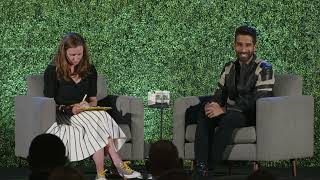
Fireside-chat with Rahul Vohra (Founder & CEO, Superhuman) covering Superhuman's founding moment (2014 Uber aha: "giving you time back"), the company's user‑centric/game‑design approach to product, and Rahul's product‑market fit framework (survey question: "How would you feel if you could no longer use the product?" — target: ≥40% answer "very disappointed"). He explains implementing the framework (segmenting users, focusing on those whose main benefit resonates, and a recommended ~50/50 roadmap split between vision work and solving objections), hiring/cofounder strategy (founder-first, recruit cofounders later), angel investing criteria (grit, passion, path to ~$1B+), AI strategy (start with on‑demand features launched quickly, then move to passive features like behind‑the‑scenes TL;DR summaries), and personal productivity (transcendental meditation, ~1 hour/day). He closes with optimism that challenging markets produce serious builders.
Chapters
Next, we are going to do a Fireside Chat, and it is my absolute honor to get to invite Rahul up. For those of you who don't know Rahul, he is the founder and CEO of Superhuman. How many Superhuman users are there in the room? I am a very proud Superhuman user. For those of you who know me, I'm not the best at answering emails, but I've gotten much, much better in the past probably two years that I've been a Superhuman user. So very excited to have him here. For context, Superhuman has raised about 125 million in venture capital dollars. It was Last valued at 825 million, and it's got some great backers like First Round Capital and Andreessen and ivp. This was founded before we existed, but Rahul is a seasoned entrepreneur and he's a repeat entrepreneur. And what you might know him for is his framework on product market fit. He wrote a blog post for First Round Capital that went viral and has led to a series of podcasts, articles, workshops, all sorts of things. And the reason why we're so excited to have him here is because so many of the companies that we back from seed to Series A are really trying to figure out product market fit. It's an incredibly hard thing to do. And Rahul has been one of the best thought leaders that I've come across to really put some meat behind understanding. Do you have it or do you not? So we're excited to have him here.
He.
He is also a thought leader in game design, in AI and in the future of work. So please join me in welcoming Rahul onto the stage. All right, here we go.
Let's do it.
Let's do it. Okay, well, first of all, thanks for making the trip to Boston. Absolutely. We brought the sunshine out for you. Okay, so I want to start with the founding moment, because I think that's an important thing for a lot of aspiring founders. The rumor is that you had the aha moment for Superhuman while you were in an Uber ride. So I'm curious. I'd love to hear a little about sort of like, what was that aha moment? And then how did you know that it was enough of an aha to build an entire company around?
Yeah, so it did happen in the back of an uber. It was 2014. I had just sold my last company, Rapportive, which was also an email company, to LinkedIn. And LinkedIn at the time was in Mountain View. I was living in San Francisco, and I remember taking this Uber back. It was a particularly busy day. And on this one car ride, I cleared my email, I wrote some product documents, I called my mom, I even arranged a dinner reservation for myself and my girlfriend that evening. And I remember thinking, wow, this is the magic of Uber. It's not really a transportation company. It's not about getting you from A to B. It's about giving you time back. And at the time, there was nothing else I could buy, nothing else that I could do that got me more time back. And so when I was eventually thinking about, well, with that as the constraint, what do I do next? That's when I realized that actually I was in the right place at the right time, with the perfect track record to take on something like Superhuman. Because, and I'm sure we all know this stat, There are roughly 1 billion professionals in the world, and on average, we do email for three hours a day. That's the average number. So that's a trillion hours a day every single year that go into reading and writing email. And before Superhuman, it was really a one size fits all market. You're either using Gmail or you're using Outlook. It didn't matter whether you were sending 10 emails a day or several hundred. It was one product. So that's how I knew it was big enough.
Those are real numbers. And I have experienced that as someone with small children, getting anytime back is a gift. So a thing that's interesting to me about the Superhuman journey is that you guys spent two years building before you launched, if I'm correct. And I'm curious about that because some founders have the philosophy of ship, product and learn, ship and learn, ship and learn versus sort of build, build, build, and then ship. So why did you take that approach? And then how did you know when you were ready to launch?
Most of the advice was, which is still, by the way, broadly correct, to ship and learn, or your first version you should feel slightly embarrassed about. That's another common saying applies really only when you're building a product for a new market or where it really isn't a replacement or a substitute product. But for something like Superhuman, the trade off is clear. We were asking people in those early days to not use Gmail and to use our product instead. Now it's possible, but that's a very, very high bar and you need to build a lot of stuff to even just have parity with enough of the surface area in addition to whatever it is that you're doing that's going to be unique and differentiated. And so early on my litmus test, and this is something you can do if you're one of your own target market was would I switch over? And I was of course forcing myself to be in our own product. But I remember there came a day, it was about 18 months to two years in where I was like, you know what, I think I would switch over. There's enough magic here. And yes, there were still bugs and there were still missing features, but there was enough magic there that I would make the switch interesting.
That's a good high bar. And I think for a lot of companies here, particularly who are doing workflow oriented things, could hold that bar and hold that test. So I think related to that, I think Superhuman is known for its user centric design. It is incredibly easy to use and I think with every new thing that you've launched, it continues to be incredibly user centric. I think that's something that a lot of companies aspire to have as part of their product experience. But particularly as you scale, I think sometimes that can be hard to maintain that user centricity inside your organization. So what are some of the non obvious ways that you've been able to maintain that user centric obsession?
I think the secret to maintaining anything as we scale, and this is a boring and trite answer, but it will get less boring in a second, is culture. You have to embed it into the DNA of your organization early. But where it gets interesting is what is it? What are we actually embedding? And there's many ways to skin this particular cat. But in our case it was game design. And I latched onto this because before I was a founder, I was actually professionally a game designer and I worked for example on runescape. I don't know if anyone here played that. It was the largest online role playing game at the time and we learned a tremendous many things that we now apply to Superhuman. So most software companies, for example, worry about what users want or what they need. But no one needs a game to exist. There are no requirements. So instead of worrying about what users want or what they need, we care about those things, but we even more obsess over how they feel. Because when your product is a game, fundamentally people don't just use it, they play it, they find it fun, they fall in love with it, they tell their friends. And it turns out that building software like it's a game is altogether a different kind of product development. So that's what we do.
Do you think there's certain types of businesses that that applies more to or you know, obviously in consumer. I'm sure that works, but you know, yours is both consumer but also kind of B2B in some ways because you have individuals within it. Are there certain types of businesses that that works better for versus others, or do you think that's a universal?
I think it most obviously applies to consumer companies. But if you think of some of the most interesting enterprise stories of the last five to 10 years, whether it's Figma or Notion or Loom or that generation of companies, I think they've all to some degree applied game design. Perhaps they were doing it unwittingly. I think a lot of us, especially if we are intuitive product designers, have the right instincts, but maybe not the frameworks. But for me, coming from the outside in being a game designer first, that's what led me to believe this is what's actually going on. We're designing game loops and I've been doing this for years in a different life. Let's just apply this to email.
Love it. All right, you teed me up with framework. So here we go. How many people have heard of Rahul's product market fit framework? They've applied it, used it. Okay. All right, so to make sure everybody sort of knows the context, can you know you were sort of famous or have become famous for creating this framework to make it a little bit more concrete in knowing how do you know if you have product market fit? I think previously the closest thing that people talked about was you know it when you have it, which is only medium helpful. So can you just share at a high level, like what is the methodology that you used?
Yes. So this is the product market fit engine. And the idea was to go beyond, you know it when you have it, to really come up with a way first to define products market fit and then for a metric to measure products market fit and then for a methodology or an engine to take you to products market fit. And this may sound crazy, but check it out, it's absolutely true. The engine also can generate a, a roadmap which will basically guaranteed take you to product market fit. So how does all of that work? Well, first of all, it's built on this idea that we can come up with a definition. It's not perfect, but here is what we use. How would you feel if you could no longer use the product? And then you let people respond in one of three ways. Very disappointed, somewhat disappointed, or not disappointed. And in this case, very disappointed is the number that you want. And it turns out if 40% or more of your users would answer very disappointed, then you have early Signs of product market fit doesn't mean your work is over. It is in fact of course just beginning. But then you have those early signs. So you can then build an algorithm essentially on top of that, which goes through surveying your users to figure out who they are and who loves your product, segmenting your market, which is the part of product market fit most people forget. It's much easier to change your market than it is your product. Analyzing your data to figure out why do people love your product and what holds people back if they don't love your product, then implementing the roadmap this thing spits out and then tracking it over time. This has been benchmarked against hundreds of venture backed startups and it is more predictive of success than something like Net promoter score.
So you said a couple things that I think are really interesting. It's easier to change your market than your product. And I think we often find one of the challenges that sometimes we come across types of founders that have a solution and are looking for a market for it versus to your point, really understand your market and then make the right choices around evolving your product. You also talked about defining your segment. So one of the things I thought was interesting is that you articulated that it's better to have something that fewer people love a lot or need a lot than have a lot of people love your thing a little bit or only need it a little bit. I think that one of the trade offs we see founders trying to articulate is, okay, if I start so focused on this really narrow segment, how do I paint this picture that I'm going after a big enough market to get VCs excited. And I don't think you should be able to just get VCs excited, but it's part of the game. So how should founders think about that balance of okay, go after your very focused segment, but still painting a picture of this is a big enough idea to get people excited.
Exactly. And this was by the way, a criticism that I used to receive when I was first pitching the framework. Doesn't it lead you to niche ideas? And I'm not the first person to say this thing about it's better to having a small number of people really love you. Paul Bucheit, the creator of Gmail, has said that many times. But I think it's actually Paul Graham who has said this best. I believe it's from his essay Startup equals Growth. And he says something along the lines of you may think that starting niche limits you, that the size of that opportunity is small, but it turns out that the landscape of great startup ideas isn't spiky, it's actually gently rolling hills. And good ideas are adjacent to even better ideas, which are adjacent to excellent ideas. And I'm sure we can all think of some examples. One example would be couch surfing. That's adjacent to being distributed hotels. Or for example, Uber Black is adjacent to uberX is adjacent to transportation is adjacent to generally logistics, food delivery, and everything else that they've done since. And there are so many more of these where, yes, the initial thing probably seemed really, really niche, but that's actually okay because if you can establish a beachhead, you can use that to get to the next thing and then the next thing.
So I love that because we tell founders this all the time in terms of how they paint their picture of, okay, I'm starting focus. I'm going to be the best at this. And then how do you. Showing those adjacencies is a big way to show the size and potential of your market. A thing that I think is interesting about your framework that I love is your disregard for the people who won't be disappointed at all. And I think sometimes that can be confusing because I think there's a temptation to say, well, you're not going to miss my product. Let me over rotate around fixing it for you. But I think that you've established a mindset or a framework to say, don't worry about those people. Build for the people who love your product already. Can you talk about why you do that? Why is it okay to disregard those people and how does that play a role into the framework?
It's even weirder than that, right? Bring it on.
I love weird.
This is all about polite disregard for lots of things, which I very much appreciate. It's not just disregarding the people who would not be disappointed without your product. It's also, as weird as it may sound, disregarding the people who already love your product. So the goal, the almost academic exam question that I set up at the start of this engine is how do we increase the product market fit score? Assuming we believe in the score as a metric, let's make the number go up. So this is a classic optimization problem. The best way, I think, to do that is to take the set of people who would be somewhat disappointed without your product, and then you split those up into two camps. Those for whom the main benefit of your product resonates and those for whom the main benefit does not resonate. So in Superhuman, our main benefit is speed. You're getting through Your emails twice as fast as before. You're saving four hours or more every week. You're replying to emails a whole business day sooner. Some people really care about that and some people actually don't care about that. So we ask our users, how much does this benefit? Well, the way that we actually ask it is what do you think the main benefit of this product is for you? And then we measure the degree of resonance between that and what we think it should be. So we're really only building the things that for the somewhat disappointed users for whom the main benefit resonates. Because I would argue that it's only something small, usually that's holding them back. And when you build that thing, you're growing the segment of the pie that would be very disappointed without your product, that is, they love it.
Got it. So you're sort of siphoning off those who are closest to being the I would be very disappointed. And pulling them over the line. Yeah, interesting. So within this framework, I think it helps give a construct, you said it kind of give the roadmap. What do you think is actually hard or most challenging about implementing this framework? Where do you see founders struggle or sort of misunderstand it?
Well, back in the day, the hardest thing in my experience was just even convincing Superhuman to do this. Today, it's the default way that startups measure products market fit. But in 2017, when I was first pitching this to the company, they legitimately thought I was crazy, which may still be true.
Great attribute in a founder.
Yeah, not going to deny that, but what the data suggested was that we should make speed the core value proposition and that we should be building the fastest email experience in the world. And I remember my co founders pulling me aside thinking, hey, this doesn't cut mustard. This sounds wrong. And in retrospect, it all kind of makes sense. So the first thing was getting folks to believe in the framework. Hopefully none of you have that problem. It's been done many times since then. I think today's challenge would be actually following the methodology. There are, broadly speaking, two kinds of teams. You have vision driven teams and they tend to to build what the founder believes should exist. And that can be pretty good for getting to initial products market fit, for coming up with something really special. But then what happens is you need to sustain product market fit over time whilst expanding your market. And that's where you need to start listening to data more equally. I've seen teams that skew the opposite direction. They listen to data way too much, even from day one. And in that case, you make it much harder to get to initial product market fit. And so what I recommend in the engine is that whatever your planning cycle, weeks, months, quarters, doesn't matter. Go in thinking that you'll spend about half your time doubling down on what people love about your product. That's the vision oriented stuff. It's probably the crazy thing that you believed. And about half your time systematically overcoming the objections of the somewhat disappointed crowd, but only for whom the main benefit resonated. And that will increase your product market fit score. You can tweak this. Sometimes we do 60, 40, sometimes you do 80, 20. But it's helpful to go in at the start with this. 5050 split.
Super interesting. And I think it's funny, in the earlier session we had a hot take question of is it ideas or execution? And I'd be curious, you think it sounds like your answer would be, you need a little bit of both. 50, 50. But if you had to pick which one wins, idea or execution?
I mean, neither work by themselves. You need both.
There you go. All right. It's kind of where we landed, right? All right, I want to switch gears a little bit. AI in the enterprise. Nobody cares about AI here. That session was quiet, not flooding over with people who needed a bodyguard. Okay, so in many ways Superhuman is sort of a natural integration point for AI and you've already integrated it. I'm loving it. So thank you very much. But one of the conversations we're having both with our portfolio and the broader early stage startups is every CEO needs to be thinking about their AI strategy. So what did that look like for you? How did you approach thinking about how you would build AI into the Superhuman product?
It was an interesting journey for us and I expect this to be true maybe of some folks here. We didn't really have any expertise in AI when we started this, and we started relatively late. I think we started messing around in about February of this year, launching Superhuman AI in around June of this year. So the very first thing that we did was decide that the first few features that we would build would be on demand features that you would say, hey, I want this email summarized, or I want an instant reply to this conversation, or I would like to write a message that has this content, but in my voice and my tone, somewhat hidden away behind an AI button, or of course, this is Superhuman. A keyboard shortcut. And the reason for that is we honestly didn't know how well it would work. We didn't know how quickly we'd be able to Learn the technology. Fortunately, we were surprised on both accounts. It worked really well and we were able to learn technology really quickly. So now we're moving on to passive versions of those features. Versions of those features that are just always working behind the scenes. The next one that we're going to build, we're rather cheekily calling tldr. So this is going to summarize emails, love that. Preemptively and behind the scenes so that when you turn up into a conversation, you've got a one line summary ready to go that you can expand and then see a full summary of that conversation. We've built enough confidence in our ability that we're going to spend what is a non trivial amount of money to summarize all of the emails you're receiving, all of those conversations for every user that we have. But it was a two step process.
To get there interesting, you know, from that process. And that's pretty quick. I didn't realize it was, you know, you just started doing it in February. Any sort of quick lessons or sort of most important things that CEOs as they're thinking about, hey, what role does AI play in my product, in my company? Should I be thinking about it? How should I be thinking about it? One or two most important things to be thinking about.
For us, I think it was also fortuitous timing because I just hired a president who started in February and we could see that this was a sea change that was happening. It was an existential question. There's no possible world that we could imagine where we didn't have a robust AI strategy. And so what we decided was, okay, let's free the founder me up to go do the thing. So I became an embedded executive and this is all I did all day, every day for about four or five months. And I was working directly with the individual contributor. PMs and designers and engineers weren't too many of us, maybe five or six people. It was almost like a startup within the larger company and that's what enabled us to do it so quickly.
Interesting. We have a lot of founders, actually. Companies at larger scales are thinking about, should I have an Innovation Scrum team, should I not? How do I not distract the whole organization, but also, you know, explore this thing that I should explore. So it sounds like sort of an Innovation Scrum team was kind of your approach. All right, zooming out a little bit. You know, you're playing superhuman plays an important part of how people work. How do you think how we work is going to change because of AI? I know that's a very big question, but sort of let's even look in the nearest term, let's say in the next year. What do you think is going to be different about how we work because of this new technology?
I think of this in about three phases and I would argue we're in phase one today. Phase one is all about the content layer. It's what we call generative AI. AI producing text, images, video, Superhuman, of course is a very easy place to imagine this working, but I think it affects many different applications. Phase two, which we're just starting to see, is where AI actually enhances, improves, in some cases replaces the core workflows themselves. This means not just acting in the content layer, but changing the actions that we as users would ourselves do. And then the third phase is when every new application has this built in by default it will become commonplace, even expected.
I like that. Okay, I want to move into some sort of rapid fire questions. Okay, you've got a whole company around email productivity. What are some of your favorite non email hacks?
My main non email hack.
Non email productivity hacks I should say.
Yeah. Okay. My main productivity non email hack right now is meditation. So I practice transcendental meditation for an hour every single day. I know it's a lot and I can say without a shadow of a doubt, not only am I much happier, I'm way calmer, I'm much more creative and I am able to focus for much greater periods of time.
Wow, what time of day do you do this? Where in your schedule?
These are the practical questions. And I should add, I've struggled with meditation for a very long time. It only clicked once I hired a coach to teach me how to do it. This is 101 tuition and I had exactly the same question. So his trick was don't let yourself do anything else. Not even allowed to check your phone except to turn off your alarm. Although ideally you're not using an alarm. That's a separate thing. And meditate. Yeah, we should have started with this. Meditate for half an hour in the morning before you get out of bed. So that's what I do. I don't even get up to go pee. I'm just like meditate, okay, congratulatory pee. And then I'm off to my day. And then I do it again in the afternoon at around 3:30. That one I don't even have to try for because I find that if I don't then the quality of my work just sort of plummets.
Interesting. I Say I'm meditating. I think I'm snoozing for 10 minutes in the morning, but okay, this is, I think maybe next year, of course, summit, we have meditation, coaching. Jenny, what do you think? All right. What is one thing that you. I'm excited to talk way more about that topic. I'm fascinated. Okay. What is one thing you wish you had known earlier in your entrepreneurial journey?
This is a lesson from very, very early. Back when I was still a student, had dreams of starting companies. And as a student, I think we used to analyze the success stories of things, but sometimes we drew the wrong lessons. It's clear that almost every successful, successful company that's venture backed, that reached interesting scale, had multiple co founders. What isn't clear, however, and what most people are afraid of saying, but I'm not afraid of saying it, is that there's usually one dominant co founder who, at least in the first year or two, did most of the work or most of the important trajectory, inflecting type work. Doesn't mean that they're working harder, but the impact that they're having or the momentum that they're generating is potentially greater. And the thing I found myself, the mistake I found myself making when I was a much younger founder was that I would try and convince potential co founders to join me on a particular idea and they would say, well, we don't like this idea because of reasons 1, 2 and 3. But guess what? There are thousands of reasons not to do any particular idea. This is obvious to us now. You just have to do it anyway and have the persistence to see it through. And once I realized that, I changed my whole approach to building founding teams. And I said, well, actually every company is started by one person and it's okay to recruit your co founders as you go. So this is what I did for Superhuman. I started it myself. And it was only about nine months in that my two co founders joined me. And we have some pretty serious traction going, depending on how you measure it at that time.
How did you navigate the dynamics? Because this actually comes up a lot around. Sometimes there's teams that start out with two people or sometimes three. Sometimes there is an individual who's looking for a co founder. What were some of the key things to get right in bringing on co founders later in that journey? Because that's not always easy. How do you have the same sense of ownership? I mean, not even cap table ownership, but that co founding dynamic if they're coming in later, how do you get that right?
The key thing doesn't change. It's critical to get the right people. And in my case, I had two very strong theses for the two people I brought on board, one of whom was the first employee from my last company. We had a very long track record of working together. I knew it was going to be amazing for both of them. They both turned out incredible when it comes to questions of compensation and urgency and so on. Again, having the right people really helps. These were both, at that point, sort of startup veterans and they agreed with me that the idea that you would split a company equally is kind of absurd.
Right.
But I didn't have to convince them of that. I think if you do have to convince somebody of that, that in itself is a sign and, you know, maybe this is where your investors can help you. Most investors would agree with the notion that an equal split is probably not the best idea. It doesn't reflect reality. So fortunately I didn't have to explain that.
That'S the answer. We say in everything, the process is the proof. And for us, that's whether we're investing. I think for people building, it's recruiting people. You learn so much about people in that process, so I think that holds true. All right, you are an active investor, angel investor. You've invested in over 100 companies and I'm not teeing you up to get bombarded. But how do you make investment decisions? What do you look for?
Usually three things. Grit, passion, and a very clear story to a billion dollar outcome. So with grit, this is pretty easy to find, or rather to identify when you see it. I look for examples of having persisted through particularly difficult hardships. Passion is a little bit more about the domain. So grit is something that's really hard. You probably didn't even want to do it to begin with, yet you stuck with it. Passion is more. You keep coming back to the same thing time and time again, even if there are more lucrative things somewhere else. And so for me, for example, it's continually coming back to productivity and collaboration. And then the path to a billion dollar market is pretty clear. You do have to sort of pitch the right size of outcome to the right stage of investor. So as a pre seed or a seed seed stage investor, I like to see the path to a 1, 2, 3 billion dollar outcome. Not because that's what I want. I want Deca coins too. It's just that I'm a little more focused earlier on. But if it were more of a series A, B, C story, well, that's too small. You need to be pitching to a $10 billion plus outcome.
I like that answer. We often ask people, if you weren't doing this, what would you be doing? When we're talking to founders and that idea of passion and commitment, and I'm obsessed with this problem I got to keep working on it is something that we look for as well. All right, my last two questions. You have a bunch of very cool VIP celebrities on your cap table. Who's your favorite?
Oh, boy. How do I pick just one?
You know, it's hard. Happens to me too.
This is a fun Sam Altman story, so I wouldn't even start it yet.
I'm excited.
This was, Gosh, I want to say it was maybe 2018 or 2018, I think this was. And there is a technology that we use inside of chrome called Web SQL. Web SQL is a thin wrapper around SQLite. It is a really fast native full text database, full text search database that exists in the browser. We, it turns out, were basically the only production users of this API at scale. And so Google, as Google sometimes does, were like, well, no one seems to be using this. Let's get rid of it. And we were too small to notice. We noticed when it hit Chrome Canary. And if you follow Chrome, you'll know that there's only a few weeks between something hitting Canary before it hits everybody. And we didn't even notice. Then we noticed with just a few days left to go. So it was a moment of existential panic for the company. We created a war room. We mapped out all of the Google organization, all of the Chromium organization, who knew who, and so on and so on. We didn't have much success emailing into that organization directly. So I went to the cap table and I just started working down it. And one of the reasons I love this story about Sam is because he has said many times that the most impressive founders that he's backed are the ones that reply in minutes, not in days. And what I love about him is he lives that life. So he replies back to me in just a few minutes, and he says, I just so happen to be standing next to Sundar. Let me see what I can do. So I was like, wow, okay.
Yeah.
I get an email from a VP of Products Management at Google the next day, and everything is taken care of.
That's pretty cool. Very cool.
That wasn't me, that was Sam.
We got you Founders. Same thing.
Yeah. Race from Sam.
Yeah, no big deal. All right, we are at our last moment here, and we've talked a little bit today. About how this year has been challenging for many on many different levels, but that there's so much to be excited about and there's so much to be optimistic about as we look ahead. So what is one thing that you are optimistic about as we look ahead?
I know it's been a challenging time and that's true for mid stage growth stage as well as early stage companies. The thing that I think I'm the most optimistic for is, well, it reminds me of the period when I started my last company. I started in around 0 10. It wasn't quite as bad as 08 09, but it still wasn't great for context. If it makes anybody feel any better, the first round of fundraising for my last company, we raised a million dollars on a post money of three very different times.
Sure. Yep.
But these are the times when iconic companies are built. Everyone in this room is here because we really want to be here. So the wannabes that I think our ecosystem attracted for a period of time, well, they've mostly left. That's true on the investing side just as much as it's true on the founder side. So I think this is the set of people, both literally here and more metaphorically, that's going to build this next generation of iconic companies. That's what I'm optimistic for.
I love that. I love that we say that a lot of the tourists have gone home or the wantrepreneurs are not out in this market. And I think that's very true. And. And we have a room full of founders and operators and builders who are the ones who have the grit and the tenacity to do it. So thank you for sharing your wisdom with us. We are so grateful to have you here and glad you made the trip. I think we all learned a lot, hopefully. So thank you for coming.
Thank you for having me.
Thanks so much.
Okay.
More from Rahul

How We Captured Silicon Valley in just 4 months | Crush-it Conference, Rahul Vohra


How To Apply Game Design to Business Software / Rahul Vohra, Superhuman (Design Driven NYC)
E993 Superhuman CEO Rahul Vohra on building a Product Market Fit Engine + Future of Angel Investing