Raj Baruah shows how to set up client billing for white-label AI voice agents on Voice AI Wrapper using Stripe. He covers four pricing models: pure usage, subscription plus overage, subscription plus usage pack, and upfront subscription with usage calculated at period end. The video walks through product creation, tax settings, and the client-facing billing portal.
Chapters
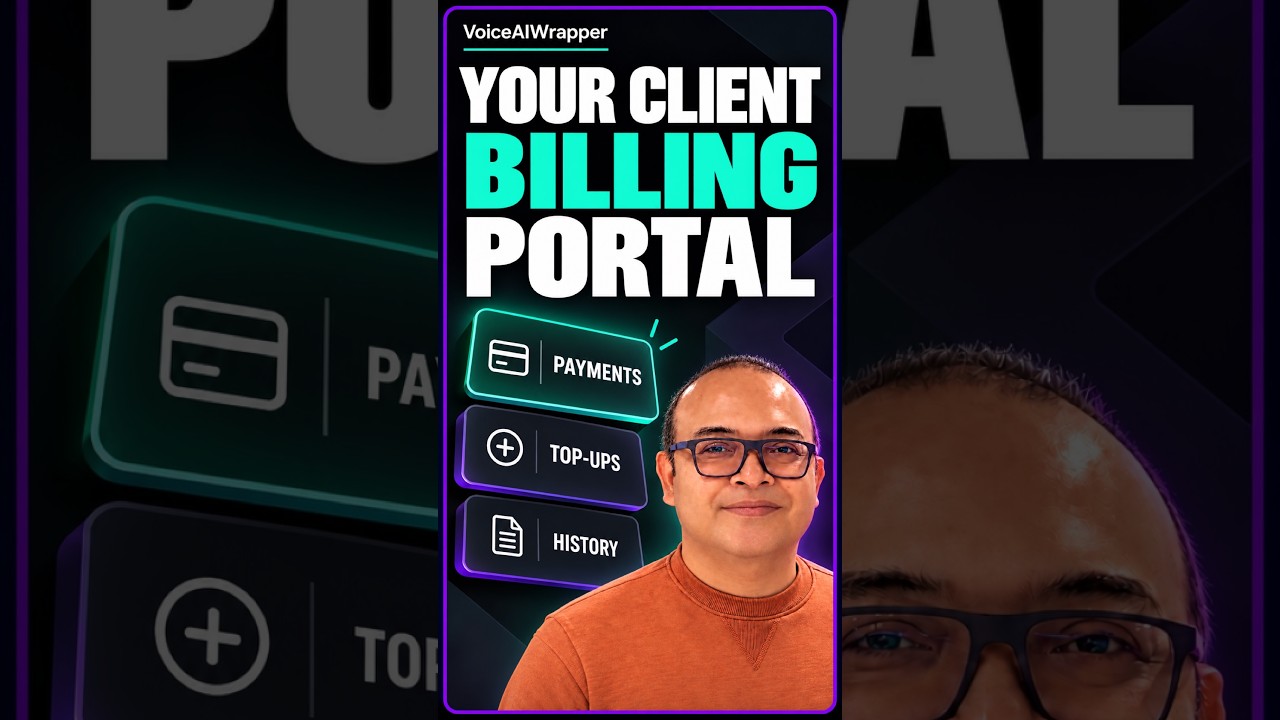
We will show you how to create voice AI pricing for the white label AI voice agents and the AI chat agents that you can resell to your clients as an agency. For context, Voice AI Wrapper is a platform that allows you to white label AI voice agents and AI chat and resell this to your clients for a profit. Today we are going to focus on how you can bill your clients in different ways. We offer 3 billing options. The first is Stripe. So if you have a Stripe account, you can just connect your Stripe keys and you can create and automate the entire billing experience via your own Stripe. The other option is billing off platform. The plans that you create here work exactly like they do in Stripe. It's only that you're not going to use Stripe and you can bill them off platform. The third option exists in case you use some other provider. Apart from Stripe, so we have an API documentation which gives you a list of APIs that you can use to bill clients on some of the payment processors in case you do not use Stripe. For this video, let's focus on the Stripe billing integration. So you can charge clients a one-time onboarding fee, and you can bill this in multiple currencies. You can also create top-up packs for your clients, and these packs have an auto-renewal option, and the client can consent to. Auto-renewing the pack when they subscribe to it. And then we come to the core, which is the subscription plans. So the first in the list is the usage billing model. This means you can bill a client based on usage only. I'm going to create a demo product here. It needs a product name and a product description, and this is exactly what is going to sync with your Stripe products. And you have your tax configuration. Available right here. If you're creating a product via the Stripe integration, do not edit or change the plan in Stripe manually. This is going to break the sync and the plans created by our integration should only be managed by the integration. So we will hit next and on the next page you'll get an option to select the frequency based on which you want to bill the client and you can set your billing price. This can be a markup. So let's say if you're being charged 20 cents per minute, you can mark it up by 10 cents or whatever you please. And your client is going to be billed for the usage based on the pricing. You also get an option to offer a free trial and you can offer a free trial based on the number of days or based on the number of minutes. So I'm going to use 5 days as a free trial option here. And you can also limit the number of minutes that they use during the trial. And the same billing can also be used to bill for chat sessions in case you are offering AI chat as a part of your service. You also have an option to capture the card details when you're starting the trial, or you can let them try your service without capturing the card details upfront. Then you hit next and it gives you a summary of what you've created and you create your first plan. Let's move on to the next plan. The next billing model is subscription plus overage. Now pay attention to this. According to this pricing model, your subscription is going to be billed at the end of the period and their usage is going to be calculated and billed at the end of the period. So if you are worried that your clients are not going to pay you, do not use this plan type. The options are similar. You need a product name and a description. Choose your currency, your tax settings. And then your billing frequency. And this is where you decide what your subscription price is going to be and the number of voice minutes that you want to include and pricing that kicks in as soon as they exhaust the included minutes quota. Click Next and you get similar options including the option to offer them a trial, capture a card during trial, Or whether you want to include chat billing in the pricing model. Subscription plus usage pack is a preferred model used by most agencies. In this case, the client is charged upfront and the usage packs that they purchase is also charged upfront. You can include certain minutes in your subscription billing and then if the clients exhaust that, you can give them a usage pack so they can top up their voice minutes using this method. So let's say I have a subscription pricing of $99, 9 minutes. Next, I have similar options like I showed you earlier. And then once I'm done, I can create this plan. To create the usage pack, you need to go back here and just add a usage pack. The clients will see the option to buy a usage pack. On their billing portal inside your client portal. Another interesting billing model is the subscription charged upfront and the usage calculated and charged at the end of the billing period. This is what the Ford plan is all about and the options are pretty much the same. Once you've entered the product name and the product description, you then get the option to choose the billing frequency. Your subscription pricing, the minutes you've included, and what you are charging as a permanent cost. And then you get options to either offer a free trial or use this for chat billing as well. I'm using a dummy client portal that I created to show you how the billing experience looks like from your client's perspective. So they are logged into your client portal, they see your domain, your logo, your brand. And in case there's a setup fee, they see a payment reminder right here. They can pay or they can click on remind me later. And this is going to be a sticky object, which is going to show up repeatedly till the time they haven't made the payment. In case you have a subscription, it's going to behave similarly. They'll need to enter their card details before they access your platform. And anytime they want to buy a top-up pack, they can go to their billing portal. They can see the usage packs that you've created. They can buy it right here and they can also view their usage and their billing history in their billing portal. I hope this helps, and this is exactly how you can create competitive voice AI pricing plans for your clients as an agency. Please like this video if you think this is helpful, and let me know in the comments what other videos you would want me to create moving forward.