3 examples of generosity that changed my life
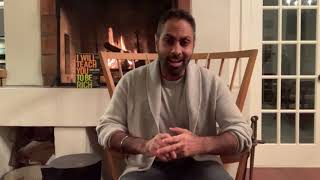
Ramit Sethi shares three moments that changed his life: BJ Fogg's mentorship at Stanford, Ryan at Storm Ventures investing $50,000 in his blog, and his publisher Susie giving him deadline flexibility to finish his book. He argues generosity comes in forms beyond money, and urges you to position yourself to receive it.
Chapters
Okay. Good evening. Happy Wednesday night. I am Ravit Sethi, and tonight we are talking about generosity. And I was thinking about this today because I've been getting emails from people asking if I can help them finding a job. Hold on. Cass has had seven sneezes in a row. Well done. That was impressive. So I've been getting emails from people basically saying, can you help me out? Can you give me a break? I get hundreds of these per day on Instagram, email, etc. And I can't respond to every email I get. I used to be able to, but that has changed, unfortunately. So I do respond to quite a few. If you've ever DM me or if you've ever asked a good question, odds are that I've answered you at least once. But I can't commit to it now. So I was thinking about what. When I've been in the position where I've asked for help, what were those moments that were pivotal to me? That someone else took time out of their day to help me out, to be generous. That really changed the trajectory of my life. And there were three moments that came to mind for me as I was thinking about this today. The first was in college. One of my mentors, BJ Fogg. J. Fogg, on Instagram and YouTube and whatever, he. He took a chance to meet with me as a freshman. Freshman don't do research on campus. But I was persistent. I emailed him and I remember we went to have coffee somewhere, I think it was Stanford Shopping Center. And he asked me about myself. He was a lecturer. He ran a research lab, the persuasive tech lab, now called Behavior Design Lab. And I was this little freshman, what was I, 18 years old. And here I was telling him the stuff that I was interested in. And he was actually interested in asking questions. And I remember him taking that 30, 60 minutes out of his day to talk to me and nobody. And that had implications and ramifications beyond that meeting. First off, we've built a long term relationship. He was at my wedding. I just interviewed him on Stage at the 92nd Street Y for his recent book launch. So we have worked together for years and after that we worked together for many years at Stanford. But also what it taught me was the power of the generosity of time. He was a busy guy. He didn't have to meet me. I was a nobody. But he did. And he listened and he asked questions. And that really reinforced that I had something to say. Even if my ideas were a little juvenile and maybe not fully formed. It Reinforced to me that maybe I was onto something. And then as he gave me more time being the head of the research lab and inviting me in as a researcher, becoming my mentor, meeting with me when I had questions about my career, it took on even more significance. So I will always be thankful for that first meeting. He didn't have to take it. And it meant a lot to me. It still means a lot. And that generosity of time is something that I think is very rare. So thanks to BJ for that. My second example that came to mind for me was when I think I was in my fifth year in college and I was. I remember getting an email that there was some firm that was interested in talking to an under or some Stanford student to help them understand all these new technologies. MySpace, remember that YouTube was brand new, all these different technologies, how do they work? So I volunteered to do it. And I got paid as a consultant to this venture capital firm. So every week I would go in there and I would teach them, how does MySpace work? What's going on here? What is this YouTube thing? It made perfect sense, right? They want to stay up to date and current on technology here. I am a college kid, I know it. I live this stuff. And so I could tell them this, this is what happened. This is what it's supposed to do. This is how people actually use it. Immensely valuable for them. And they paid me a few bucks and it was great for me. As I was leaving, I finished up, I think it was 10 weeks or something, and I think I stayed a while, maybe did a little bit more consulting. But I remember one of the managing directors or managing partners, his name was Ryan, and he was a great guy. He's the one who kind of brought me in and he had heard that I was working on my blog. So what is this 2005 blog had been up for one year. And he said to me, he said, I know you're gonna keep working on that. Hey, do you want us to throw in 50k or something like that? What did he mean by that? This venture firm has millions and millions of dollars. They invest in CEOs that they make a bet on. And what he said to me, very offhandedly was, hey, do you want us to put in 50k? Like, to him, it was nothing. To me, 50k. I don't think anyone had ever written me a $50,000 single check at that point. Maybe. But I can't remember 2005, remember? And I remember saying, wow, thank you so much for the offer. I'm going to Think about it. A couple days later I told him, like, I really appreciate it. I don't need the money right now, but thank you for the offer and I might come back and take you up on it. To think that somebody would just offer a 50k check like it was nothing, and to think that they would be willing to bet on me when this is a very fancy venture firm Storm Ventures, by the way, have nothing but great things to say about them. They were a great group, was amazing. Again, it reinforced that I was doing something that mattered, even if to them it's chump change. To me it was a lot. It also made me think bigger. Who gets to just offhandedly say, you want a 50k check? Who would say that? Now I understand it, but back then I didn't. It was like receiving this crazy gift. So I appreciated the offer and I also appreciated the moment of forcing me to think bigger. That was number two. Number three was an experience I had many years later in 2008. My book. My book was due, My manuscript was due. And as some of you have heard, it took me eight months or nine months just to get the table of contents down. It was a big struggle. So please appreciate that table of contents. That's a true. Like, a lot of work went into that thing. Okay, two times, not just once. So here I am. Usually, I don't know about fiction, but nonfiction, they typically give you about 9 months to write the manuscript, maybe a year. Here I am coming in, visiting New York in my dorky backpack. Remember, it's 2000. What am I, mid-20s? I walk in with my backpack like, I have this one pager briefcase technique. People come on live, walk the walk. I have this briefcase technique on why my manuscript isn't ready, why I need more time, and what it will do for the book. It's all about you. It's all about the client. I'm going to have more email subscribers and this and that. I sit down with the publisher, Susie, at my publisher, workman, and I said, susie. She goes, how's the book going? I go, well, I've made some breakthroughs, but. And she gets this file. And I said, you know, the reason I wanted to come here is that I'm running late. It's not quite ready yet. And I kind of gather my breath to start explaining. And I'm mentally getting ready to reach for the briefcase, backpack. And she goes, you know what? Take as much time as you need. Let's get it right. Just think what it feels like to be a young author at that moment, nervous about coming in here, not confident in the state of the book, and worried what she's going to say. I mean, what is she going to say? You signed a contract, we need it. I didn't know how to deliver it. Or what is she going to say, let's cancel the contract. I didn't imagine that she would just say, let's take the time and do it right. And I have to say that that is very inspiring. That is the way that I love to operate myself. Of course we need deadlines. We can't let things go on forever. But in my experience, I would rather get it right than get it arbitrarily done by an arbitrary deadline. And that lesson has really come back and it's paid off in many, many ways. The lesson that Susie taught me at Workman, I remember in 2013, we were working on Zero to Launch, which was at the time our flagship business program. A lot of ZTL students here tonight. And my lead product developer, we were checking in and I asked him, how's it going? This is 2013, planning on a January 2014 launch. And he said to me, look, we can launch it, but it's not going to be fully done. It's not going to be as good as it can be. I sat back and I said, how long do you need? And he said, april. And I said, then do it. Take the time. Let's get it right. So straight from Susie to me as a leader was something that I inherited from her. I learned it from her. We missed our January launch. January in self development is a huge, huge month. Okay? It's like the Valentine's Day for jewelry. It's like that for self development. And so it cost us a lot. Cost us a lot. But I wanted to get it right. And I'm so glad I did because when we launched in April, it was our biggest launch in our history. And people bought ZTL and created their own businesses for years and years to come. That was an amazing flagship program until we just pulled it off recently and replaced it with the new Earn Upon. So in my experience, and something I learned from Susie was her generosity in allowing me to take the time to do it right. And that has come directly into my business. Taking the time to create a book that stands the test of time, that when I updated it 10 years, seven years later, it was virtually all correct. Just a few minor tweaks and a lot of new material. I put in the second edition. Same with earn 1k, ZTL. They lasted the test of time. Now earnable. These are things that I love to do is create the best things that will last. And a lot of it traces back to that generosity that Susie showed me. So I'm gonna just share what I notice. And the question for tonight is, what do you notice about these stories? So please type that in. I'd love to hear from you. What do you notice about these three stories of generosity? Here's what I notice. Sometimes just spending 15 minutes or an hour to listen to you can change the trajectory of your life. That was a lesson from BJ Fog. Sometimes generosity is giving you an opportunity that you are not technically qualified for. How many of us have had a boss or a hiring manager who said, you know what, you don't fit every single thing on here, but I know you can do it. Amazing. Sometimes generosity is resources, access to money or introductions in a network. And that was what I learned from Ryan. And sometimes it's simply saying, I understand. That's it. Not dragging it up, but just saying, I understand. Keep going. That was a lesson I learned from Susie. My final lesson is to put yourself in the position for generosity. And if you see it, take it. So let's see what, if anything, the commenters have to say tonight. What did they notice about the stories? Cass, I'm curious. Not needing it to look perfect and just being supportive. Right. They provided a chain reaction to how you approach your own business and people around you. Yes. Let's see. See, there's no shaming. It was like, let me just help you. Yeah, yeah. Love it. One final thing that I take away, which is if you want to experience generosity, if you want to be on the receiving end of people like the ones that I mentioned who really changed my life, then the golden rule applies. You have to be generous first order to be the recipient of others generosity. So many of you may have seen something I posted today on email and social media and that is that I Will Teach youh to Be rich is committing $25,000 to Feeding America. This is an organization that we are specifically donating to so that people who are hungry right now during coronavirus can have food. And it's something that's really meaningful to us. And after we announced this, one of my co workers said, you know what, why don't we match whatever people donate? Let's increase the amount that we can contribute to this organization. So that's exactly what we're doing. Let me give you a URL. I want you to donate. I want you to recognize that the I will teach philosophy is A rich life is lived outside the spreadsheet. And so whatever the amount is that you can do, I want you to donate. I've seen people donate $5. I've seen people donate hundreds of dollars already today. We will match your donation up to $25,000. Frankly, if we don't get 25k, we're going to donate that anyway. Okay? But I want to give as much as we can through this community. People who have been watching these Fireside chats. You have money. I know you do. It's time to pull out your credit card and donate to people who are in need. Remember this philosophy that a rich life is lived outside the spreadsheet. It's not just about counting our money and accumulating it. It's deploying it and helping people, especially people less fortunate than us, in times like this. So here's this URL feedingamerica.org sati-Covid you can also find it on my Twitter account. It's also on my Instagram bio. It's everywhere right now. And we are doing this until Friday, two days from now. So please go to feedingamerica.org Seti Covid Again, the URL is all over my social media. If you're on my email list, iwt.com you got an email today about it. My key thing here is that if you want to be the recipient of generosity, let's be generous first. So I would love for you to contribute and I would love for us all, as a community to be able to donate to people who need food, especially at a time like this. Thanks for watching and I will see you tomorrow.









