Do This When You Get Paid in 2025 (Ultimate Payday Routine)
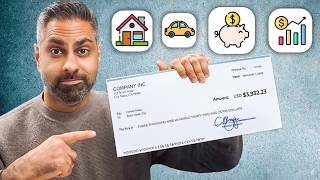
Ramit Sethi walks through automating your paycheck across savings, investing, bills, and spending. Link your accounts so money moves automatically: 401k, Roth IRA, emergency fund, credit card payoff. Three examples show how, including Erin's $3,932 monthly take-home split into retirement, vacation, and bills on autopay.
Questions this video answers
3%.
$3,932.23.
2%, about $78 per month.
3%, about $117 per month.
4% of her paycheck, about $157.29.
Chapters
Picture this. It's payday. You check your account and before you know it, poof. Your money is gone. No big splurges, no major emergencies. So where did all that money go? This isn't just you. I've talked to people making six figures who still feel like they're barely keeping up. And it's not just about how much you make. It's also about how you manage your money. In this video, I'm going to walk you through my paycheck routine with actual paycheck examples so you can finally stop guessing where your money's going and instead automate your financial goals so you can live a richer, stress free life. Let's go. Step 1 Connect the right Accounts now, before you set up your paycheck routine, you need to first make sure that the right accounts are linked together. Let me tell you why your accounts are so important. When your accounts flow together, it means you don't need any financial apps on your phone. It means you don't need to log into your bank account very often at all, and most importantly, every morning. You know that you're automatically saving, you're automatically investing, and automatically you have money guilt free that you can spend on the things you love. And it doesn't matter when or how often you get paid. You'll need to create these exact connections, so pay close attention. When you log into any of your accounts, you'll find an option called something like Link Accounts Transfer or Set Up Payments. These are all the links you need to make. First, if you haven't already done this, connect your PayCheck to your 401k if you're eligible so it's automatically funded each month. Second, connect your checking account to your Roth IRA or other investment account, savings account, your credit card, and any regular bills that can't be paid using a credit card like rent or loan payments. Third, connect your credit card to any bills that you've been paying via your checking account. Okay, great. Now all of your accounts are linked. But there's one thing a lot of people don't know. If you have payments that can't be automatically drawn from your checking account, you can still automate the payment using your checking account's bill pay feature, which is free with nearly every account. For example, let's say you pay rent by writing a check and sticking it in an envelope each month. No, thank you. You think I want to be scrounging around my junk drawer looking for a stamp? No. Log into your checking account, set up automatic bill, pay for your rent, your bank will then automatically write a check for you every month and they will mail it to your landlord. Now, you can see here how your paycheck and your checking account and your credit card each fund different accounts with this set up. Each account has a specific purpose and that's it. Move on. Now that all of your accounts are linked, it's time for step two. Create your automatic paycheck routine. Now listen, a lot of you think the magic happens in your bedroom. That is incorrect. This is where the magic happens. Your paycheck routine is how you start saving for your next vacation, investing for retirement, and paying your bills all automatically. No stress, no guilt, no worrying about missing another payment. This step is usually simple, but this is going to make all the difference. It's just a matter of working with each individual account's website to make sure your payment or transfer is set up for two important things. Number one, the amount you want. Number two, on the date you want. This is something people often overlook. Picking the right date. If you set up automatic transfers at random times in the month, this is actually going to create more work for you because you're going to have to check in, make sure you have enough money in the account. No, the goal of the paycheck routine is to create less work for you. Let's say your credit card is due on the first of the month, but you don't get paid until the 15th. What are you supposed to do? Well, the easiest way to avoid this is to get all of your bills on the same schedule. You can usually do this online or you can call the companies after your bill dates are aligned. It's time to actually go in and set up the transfers. Here's a pro tip. The first time you set up your paycheck routine, I recommend you leave a buffer of about 500 bucks in your checking account just in case a transfer doesn't go right. After a couple of months, when everything is running smoothly, you can cash that buffer out. So now let's create your paycheck routine. We'll start with an easy example, one stable paycheck. And then I'll show you how to adapt this advice. If you have a more complicated setup, like irregular income or even an unexpected amount of cash coming your way, like a tax return. Fun. But before I move on, take a second to hit that subscribe button below and turn on notifications so you don't miss any of my new videos. All right. Example one, a stable paycheck. For this first example, we'll use Erin. Erin makes the median US salary of about $60,000 a year. And she gets paid on the first of every month before she even sees her paycheck. 3% automatically gets sent to her 401k to get the full employer match that her company offers. Then on the 1st of the month, the rest of her PayCheck, which is $3,932.23 after taxes and deductions, gets automatically deposited into her checking account. Erin treats her checking account like an email inbox. First, everything goes there and then it is filtered away to the appropriate places. On the 5th of every month, Erin set up automatic transfers from her checking account to her savings account. 2% goes to her emergency fund, which is about $78 a month, and 3% goes to her beach vacation fund, which is 117 or so dollars. On the same day, Erin has also set up automatic transfers from her checking account to her Roth IRA. Ideally, this amount should be about 10% of your take home pay minus the amount you sent to your 401k. But hey, right now Erin can only afford to invest a total of 7%. Fine. She's doing what she can. She knows that as she moves up in her career, she will increase those contributions over time. So since she's already contributed 3% pre tax to her 401k, she set up her automatic transfer to her Roth IRA for 4% of her paycheck or $157.29. And Aaron didn't stop there. She made sure to set up automatic investing in a Target date fund within her Roth ira. That way she doesn't have to waste time doing it manually. And as soon as the money is transferred there, it automatically gets invested. On the 7th of the month, she has autopay set up for her monthly bills using her credit card. That's things like streaming services and groceries. Using her credit cards for these monthly bills is great because she earns points, gets automatic consumer protection, and she can easily track her spending. Since she can't use her credit card to pay rent, she has her bank automatically send a check through the mail to her landlord around this time too. Also on the 7th of the month, Erin has set up an automatic transfer to pay off her credit card balance from the previous month in full. Now here's a pro tip. If you have credit card debt and you can't pay the bill in full, don't worry. Well, you should worry a lot. I want to see tears and sweat running down your face so that you just look greasy. I want that. Don't worry. You can still, set up an automatic payment. Don't you dare set it up for the monthly minimum. You better be paying more than that on a 27% interest rate. Pay more than the minimum. But importantly, if you can't pay everything off at once, I'm not going to beat you up. I would like for you to pay that off aggressively and then never get into credit card debt again. But what if you're paid twice a month? If, unlike Aaron, you are paid twice a month, you can adapt this paycheck routine to fit your schedule. It's pretty simple. Replicate the system on the 1st and the 15th with half the money each time. For example, you'll pay your bills with your first paycheck of the month. And then you'll fund your savings and investing accounts with your second paycheck of the month. Adapt it as necessary. And that's it. That's the basic paycheck routine. If you have stable income. Okay, great. But what if you're not on a strict once a month schedule? Well, I'm going to show you exactly how to adjust the system I gave you. Which brings me to example 2. Irregular income. Maybe you're a freelancer. Maybe you earn $12,000 one month and then nothing for two months. How do you deal with spikes in income? Good news. This system works with irregular income. But you do need to take an extra step. What you're going to do is you're going to save a buffer of money which you're going to use to simulate getting paid once a month. Let me show you an example. Let's take a look at Dan. Dan makes irregular income. Some months it's high, some months it's nothing. First, Dan figures out how much he needs to survive on each month. I'm talking about the bare minimum. Rent, utilities, food, loan payments. The basics for Dan, this is about $3,500 per month. Dan creates a savings goal of three months of that bare bones income before he does any investing or extra spending. That means Dan needs to save $10,500 in a savings buffer. To smooth out months where he doesn't generate enough income. He sets up a savings account and calls it savings buffer. And he funds that savings account from two places. First, he takes any money he would have invested and he sends it to his savings account. Second, in good months, months where he's making more than that minimum, any extra dollar he makes also goes in to the savings buffer. Once Dan has saved up three months of money as a cushion, he now has a stable buffer. And he can simulate A stable income. Even if he doesn't make the same amount each month. For example, a bad month, even one where he makes $0, won't be an issue because he will simply draw from that savings account. And in good months he will rebuild that buffer by refunding it so that he can maintain his three month goal. Through automated savings, he has bought himself time and stability. And now Dan can set up his paycheck routine to work as a stable income, just like Aaron did in example 1. By now we've covered stable income and irregular income. So let's discuss example number three, Unexpected one time income. Now, what happens when money falls into your lap like an unexpected tax return? You know, it's tempting to blow it all on something fun, but actually most people do not follow that instinct. Turns out research shows when people get something like a tax refund, they pay off debt and they build up savings. But I'm going to give you a little twist. Whenever I receive unexpected income, I have a rule. I use a certain percentage for fun. Usually buying something that I've been eyeing for a long time. Always, I always do this. This way I stay motivated to pursue unconventional ideas that might lead to more money. The remaining money goes directly into my investments. This way I'm enjoying my money and I am building wealth. If you want a simple, simple rule, try 50 50. 50% of money directly into investments. 50% for fun. Then again, if you have credit card debt, I would not be doing that ratio. Adapt it for your own needs. Compare this with not having a plan and letting your money just sort of get spent. No. Handling unexpected one time income like this is is really fun and meaningful when you have a plan. If you follow the steps in this video and set up your paycheck routine, your money management is now on autopilot. Not only are your bills paid automatically on time, but you're actually saving and investing effortlessly every month. And when it comes to investing, it's important to remember that building true wealth is slow and gradual and then it suddenly explodes. I'll show you exactly what I mean in this video.









