Fixing My Subscribers' Broken Finances
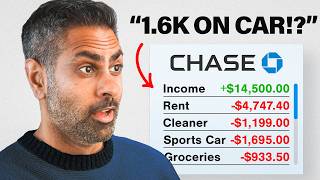
Ramit Sethi analyzes real subscribers' spending plans and finances. Megan and Travis, earning $9,580 monthly with $990k invested and no debt, can likely retire early. Katie, 31, saves $1,000 a month but can't afford a $400k Portland home on her part-time income. Conrad and Isabel earn $333k yearly but carry $50k in credit card debt and high fixed costs.
Questions this video answers
September 19, 2024.
$9,580.
Gross monthly income $4,949; annual salary $59,000.
$30,000 current down-payment fund; saving $1,000 per month.
$990,000 (investments).
Chapters
Have you ever wanted to know how real people actually spend their money? Well, today I'm reviewing the finances of real people and I'm talking about their income, their debt and their spending, including exactly what I would do in their situation. Stick around because at the end you'll actually hear follow ups from each person or couple that I review. Oh, and if you'd like a chance for me to look over your finances in a future video, I'd love to hear from you. Go to iwt.com submit CSP which I've linked for you in the description below. But for now, let's get into it starting with conscious spending plan number one. Okay, here's what I know about this couple. Megan and Travis live in Arkansas. They are 35 and 36 years old, married with children and Megan is a stay at home parent. Travis is an environmental associate at an energy company. Their concern quote, our plan has always been to retire early. We would like reassurance that we are on track as well as help balancing our goal of retiring early with living a rich life now. Well, let's take a look at the numbers. Assets $600,000. Okay. Investments $990,000. 35 and 36 with almost $1 million in investments. Okay. Savings at $63,000. Okay. A little bit low relative to investments, but it all depends on what their fixed costs are. Debt of zero. Wow. $1.6 million net worth. This is great so far. Let's take a look. Damn. Their gross monthly income is $9,580. And the reason you see me visibly surprised at $9,580. That's a nice salary. But how do you accumulate $990,000 in investments? That's very impressive. Right? With an annual salary of $114,000 to have almost a million bucks invested by your mid-30s. Really good. Fixed costs. Okay. Are at 50%. So they're at the low end of what I typically recommend for fixed costs. Remember I say 50 to 60% of take home pay for fixed costs. And the beautiful benefit of living beneath your means which is reflected here by having 50% means that you have more money for other things, savings, investing, even guilt free spending. So let's take a look at their mortgage is zero. So what? They paid off their house already. Okay. This couple have family money or what? Car payment is 200 bucks, very nominal. Probably a paid off car. They're just paying for gas, childcare 600. Groceries 1,200. Again, I just want to point out that it's almost a magical number Here we have a couple with $0 in housing expenses. And even they fall into that magical grocery number of 800 to $1,200. Doesn't matter where you live, doesn't matter how many people in your family, it just somehow magically almost ends up between those two numbers. Clothes per month at $200. That's interesting. I don't mind it. They're at 50%. They can do whatever they want. But it surprises me. Phone 167, subscriptions at 100, miscellaneous at 484. Fine. Again, if you're hitting your numbers, I have no comments. How you want to live your life, it's up to you. Investments post tax are at 16%. It's interesting. There's no way you get to $990,000 in your mid-30s by only investing $1,150 a month post tax. So that money had to have come from somewhere else. Savings goals are at 7%. So they're saving $500 a month for vacations, gifts for 50. And they're not saving for their emergency fund, which they don't need to do because they have about 15 months of an emergency fund saved up. So they have correctly saved, stopped funding that their emergency fund, it's already full and they've moved on to other things still. They're saving, you know, less than most would. And then, okay, their guilt free spending is a healthy $1,969 a month. I don't really believe that. I actually think they're spending less just based on what I'm seeing here. Well, the obvious question is, how'd you get all this money in your investment account? How'd you get a million dollars by your mid-30s making $114,000? Some ways that this could have happened would be an inheritance, family gift of some sort, legal settlement. There's a variety of different things. Just looking at the numbers, it doesn't quite add up, but I believe them. I'm just like, oh, I'm as curious as anybody else. How'd you do it? It's very impressive. All right, hey, maybe we'll get a chance to find out in the follow up. So the question is, can we retire early for easy math? Let's just say they're 35 and let's say they have $990,000 they are currently investing. I don't know what they're doing pre tax, but post tax, they're doing 1150 per month, 13,800 per year, years to grow. Let's say they Want to retire in 15 years, by age 50, and I'm going to give them a 7% return rate. That's the real rate. It factors in inflation. So if we calculate this, they would have $3.1 million by the time they turn 50 years old. And if we use the 4% rule, just 4% times $3.1 million, they would be able to withdraw about $124,000 per year. Now, I need to add a couple of nuances to this. First off, that $3.1 million assumes that nothing changes in their finances. And considering the fact that they are mid-30s, probably their income will go up. See, we have a predictable curve of how incomes work. They tend to peak, depending on gender, in your 40s, late 40s, sometimes 50s. It depends on a few different things. But in general, we can say if you're in your 30s, your income is very likely to go up. So I would guess that that $3.1 million is actually going to be more. Second, when we talk about a safe withdrawal rate, which is how much money can we take out every single year safely without running out of money? If you retire early, the 4% rule does not necessarily apply because the 4% rule was designed to give you 30 years of safe income. But if you're planning to retire early, you likely need more money. One way you can adjust that is, instead of doing 4%, you could use 3%. Again, I'm being very loose with the numbers, but I'm giving you a sense of how the intuition works here. So let's do the calculation. At 4% withdrawal, they could take out approximately $124,000 a year, which, by the way, is successful. That's actually more money than they're making today. And that would already factor in inflation. So you're good. But let's play it out. 3.1 million and a 3% withdrawal rate, which would give them more safety, would be $93,000 per year. So less than they are currently making now. They might say, I don't want to downgrade in lifestyle. I want to keep our same lifestyle when we retire. They have lots of different options. They could invest more. They could also just stretch out how long they're working for. So instead of 15 years of working, let's make it 17. Watch what happens. The numbers really start to get powerful towards the end of your career. So 15 years investing gave them 3.1 million, but just two more years to 17 years gives them 3.5 million. And if we go to 19 years, it gives them 4.1 million. You can see it's really starting to accumulate towards the end. This is why compounding is so powerful and also why you have to start investing as early as possible. The first few years, it doesn't seem that impressive. You know, you're putting a hundred bucks a month or a thousand bucks a month, whatever the number is. But as it starts to grow, it starts to build upon itself. And after 10, 15, 25 years, you just look at the numbers and it's almost hard to believe I'm making 7% or 10% per year on this, that whoa. And then next year, the same and the same and the same. It's almost hard for people to fathom that's what's going on here. Just to give another sense, instead of 19 years, again, I'm just playing it out here. If you we did 25 instead of 4.1 million, it's now 6.3 million. At this point, it's increasing like crazy. So could they retire in 15 years? Sure they could. They have a paid off house. They seem to have pretty modest lifestyles. Fine, they might have to take a slight decrease in their lifestyle, but they could. Could they invest more? Yes. Could they stretch out their career a couple of years and have enough? Yes. There's lots of different options here. And congratulations, you have done a phenomenal job so far. Of course this is a high level back of the napkin calculation to determine what you'll have at retirement and if you can retire early. This works for most people, but if you have a complex situation or, or you want to run different specific scenarios for your rich life, like what if we retire at 55 or 58 or 60? What if we want to add in two vacations per year? What would that change about how much we've saved in 30 years? Or what if we buy a house or send the kids to college, etc. In those cases, it might help to work with a financial planner who can model out exactly what you'll end up with and the trade offs that you'll want to consider. I asked our partners at Facet, the sponsor of today's video, to to do this very thing for one of my podcast couples, Beth and Ron, who were wondering when they can retire. With Facet, you get flexible access to a team of financial planners, CFP professionals, and a team of professionals providing guidance across retirement planning, tax strategy, estate planning and more. And instead of taking a percentage of your portfolio, they charge an affordable flat membership fee. Check out their new membership options@free facet.com ramit or click the link in the description below. Conscious Spending Plan Number two All right, here's what I know about this person. Katie is from Salt Lake City. She's 31 years old. She is currently dating, not married. She is a server and assistant manager of a restaurant, and she has a second job at a public library. Here's what Katie told us. Quote, I started following you about 2 years ago, quickly got out of 20k of credit card debt and built up my Roth IRA within the last year. I work 20 to 25 hours a week and consider myself a frugal person who doesn't want for much. Most of my hobbies are cheap or free, like reading, gardening and playing music. I follow your emails religiously and take my own rich life seriously. My partner and I keep our finances separate, so I didn't include any of their info here. But we have discussed my goals. I want to move to Portland next year and buy a small starter home there. I know that my partner would be willing to split a mortgage with me as we split rent now, but the house is my goal and would be my financial undertaking. Her questions Number one. Can I afford to buy a house in Portland within the next five years with my current saving strategy while still working part time? Question 2. In general, am I investing enough for my future and retirement? All right, well, let's take a look at the numbers. Assets $4,000, which is a car. Investments $25,946. 75. Savings 39,255. Zero debt for a total net worth of $69,201. Great. Gross monthly income is $4,949 or $59,000 per year annually. Great. Wow. Fixed costs 39%. Look at that. That's one of the lower fixed costs that I've seen. You can see why right there. Rent is $550 a month. Okay, fantastic. I believe she mentioned that she's splitting rent with her partner. That's awesome. Gas and car maintenance, $50 a month. Great. That's. That paid off. Car groceries at 150. Wow. All right. Love it. Therapy at 240. I'm all for it. Phone is only 20 bucks a month. Subscription 13. Wow. All right, so she said it and she's living it. She likes a very simple life and you can see that that is reflected in her fixed costs. I got to tell you, my job is not here to judge on what people are spending their money on. As long as they're within their numbers, it's totally up to you and I support it. What I really love so far is that she said what she enjoys, what her values are. Look, I'll read it back to you. I work 20 to 25 hours a week. I consider myself a frugal person. Most of my hobbies are cheaper, free, like reading, gardening, and playing music. And guess what? That is exactly what we see in her csp. This is exactly how your CSP should look for you. I'm not saying you should only be spending 39% on fixed costs. I'm saying that whatever your rich life is, we should see clues and evidence in your csp. In other words, there's an old saying that goes, show me someone's calendar and I will show you their priorities. I would adapt that for today by saying, show me someone's calendar and CSP and I will tell you what their rich life is. So your time and money should actually match up with what you claim your rich life is. That's when you know you're truly living it. Let's keep going. Investments at 18%. Okay, that's good. That's really good. That's above what most people do. I think that's great. And I mean extremely impressive on a $59,000 salary to be investing 18% of take home. That's great. Savings at 29%. Wow. We have the down payment fund, which is why the savings is so large. That's $1,000 a month. We have an emergency fund. I love how she broke this down. She's breaking down. What is the current balance and how much is she putting? That's just awesome. I love that. And a moving fund. Wow. This is too good. See, this is one of the key differentiators between people living their rich life and everybody else. People living their rich life acknowledge and plan for predictable expenses as much as possible. This person knows she wants to move, so she has put money consistently towards that move. She's not just waiting for it to happen and then when it happens, she's blindsided. Whoa. What? Where did this expense come from? I have no idea. No, she said, this is something I want to do. I'm going to put time and money behind it. Calendar and csp. That's how you do it. This is awesome. Guilt free spending at 14%. You know, typically I recommend 20 to 35%. This person said she prefers a simple life. She's not spending a lot of money. Okay, I'm all for it. Well, the CSP so far, just from the surface, looks really good. Now the question is, can she achieve her. Her goals with it. Question one, Can I afford to buy a house in Portland within the next five years with my current savings strategy and while still working part time? All right, let me show you how to find out the answer to this question. I'm going to search for the median price of a house in Portland. Any guesses? Well, the answer. Median price of housing in Portland, $538,000. We have to acknowledge that Katie probably will not buy a $538,000 house based on her expenses. She's spending way below the median person. So it probably makes sense that she would buy something far below the median price. How far below? I have no idea, but let's just pick a number. We got to make some assumptions. Let's say $400,000. Okay. I don't know if that's an apartment or a one bedroom or. I don't know. We're going to make some assumptions, and I need you to get comfortable making assumptions throughout your CSP and throughout your planning. Sometimes people feel they need to be precise, precision. We got to get the right answer. But, you know, especially in the early planning stages, you just need to make some rough assumptions, write it down. Your assumptions are probably wrong, but that's okay. I want you to think of your early CSP much more like a kid just coloring. It doesn't matter if they color outside the lines. The point is just to have fun and color a little bit. You can always tighten it up and refine it and make it better later. Let's pick an assumption. 400,000. Fine. So the question is, would she be able to buy a $400,000 house, particularly if she continues working part time. How do we figure out the answer to that question? Well, let's see how much she has as a down payment. First of all, her current down payment fund is $30,000, and she's saving $1,000 a month towards it. So for a simple assumption, let's assume that she puts 20% down for a $400,000 house. That would be $80,000. As you can see right now, she can't afford it because to go from $30,000 to $80,000 just for a down payment, it would be unfeasible. It would take a long time, way longer than she wants. Now your natural reaction is going to be, well, why do you have to put 20% down? What if we put 10% down? What about 3%? I heard it on TikTok. You could. There are certainly risks, but you could, let's say 10%. That would be $40,000. She already has $30,000. So she could please remember this. Just because you can doesn't necessarily mean you should. There are lots of risks of only putting down 3% or 10%. I want you to understand those before you go out and make the biggest purchase of your life. But from a down payment perspective, if she wanted to put 10% down, she could. But that's not the only answer to the question. We still need to see if she could keep affording that house day by day, month by month. How do we figure that part out? For that, we're going to open up a mortgage calculator and we're going to plug in some numbers. So let's say that she puts 10% down. We are going to take a $390,000 loan, 30 year fixed right now, that would be 7.1% and that means her monthly payment would be $2,632. As you know, I always want to include phantom costs in my own high cost of living area. I actually add 50% to the monthly mortgage to account for all phantom costs. That's probably more than most because I don't want to go to Home Depot. I'm going to pay somebody to do it for me. Plus, the areas I live in are quite expensive, but you might say, look 50% way higher than I'm going to spend in my medium cost of living area. So let's add, let's just make it a little bit more nominal. Instead of 2632, I would probably make it $3,000 a month just to account for everything. Okay, it's probably a little more than that, but let's keep the math easy. At $3,000 a month, can she afford that? Well, let's take a look. The way that we do this now is we go into the CSP and I simply replace her current rent with $3,000 a month and let's see what happens. Okay. Again, this is the beauty of having the csp. It's all set up for you so you can simulate different things and see how it will affect you. It's so helpful. You basically have a crystal ball. This is why I love what I do. Right now she pays $550 a month. I'm changing that to 3,000. Watch what happens. Oh, are you seeing this? Her fixed cost number jumped from 39%, which is amazing, to 106%. And she's broke. She is spending more money than she makes just in fixed costs alone. She has no money for any additional savings. No money for any additional investments and certainly no money for any guilt free spending. Now, you might disagree with my assumptions. You know, you might watch this and say, she's not going to buy a $400,000 house. Maybe it's going to be $300,000. Okay, simply adapt the calculations for your own situation. But at least you see how the intuition works. First, we want to find out a benchmark. What's the median price of housing in that city? Then we want to adjust it for whatever our situation is. We want to plug that number into the mortgage calculator. We want to make sure we are accounting for a down payment, preferably 20% as a conservative benchmark, but maybe you put 10, hey, maybe you even put three, depending. And then we want to plug it back into the CSP to see what happens. This is what I mean when I talk about running the numbers. This is just a simple example of running the numbers. Do you know how many people actually do even this? Almost nobody. And that is why so many people get into trouble when, when they go and buy expensive items, especially housing and cars, because they think only about the monthly payment. They never sat down just for three minutes and plugged in a few numbers. And they certainly don't go deeper than this and really analyze things and consider the variables. You have to do this before you make the biggest purchase of your life. You can tell right now, Katie cannot make this work. Now she has lots of options. But right now she knows the way it's currently going. She cannot afford to buy a place in Portland. So that's already helpful. We know that something is broken. We now we can turn to how can we make it work. Now, Katie, let's talk about what your options are. Intuitively, I look at this and I go, if you want to be a homeowner, you can, but probably not working 20 to 25 hours a week, not in an expensive city like Portland. It's hard enough for people working full time to afford housing in Portland. So if you want to be a homeowner, you would probably need to make a change. And one way we can simulate that is by taking your income and basically doubling it. So Instead of making $5,000 a month gross, you make, let's say, 10,000, which means you're making roughly 7,200amonth. All right, that brings your fixed cost down to 54%. Problem solved. If you decide to work more and you're able to get $120,000 salary again, I'm just simulating it. You're in great shape now, is that super unrealistic? I don't know. It seems like going from 20 to 25 hours a week to suddenly making $120,000 a year might be a huge jump. It might not be possible right now. It might be something you work towards as of part. Part of achieving this rich life goal. But maybe that's not what you want to do, or maybe that's not possible. What are your other options? Well, we have not factored in that your partner might want to come in on this and split things. If that's the case, that would certainly make it more affordable. If you decide you both want to get this house together, I would highly recommend you have a lawyer create a contract between the two of you. It's super important for unmarried couples. Your other options are you simply decide not to buy a house. You could rent. You could probably find a much more affordable place to rent, and it would still allow you to save, to invest, et cetera. And as that money accumulates and grows, particularly if you decide, hey, I don't really want to buy for, say, 10 years, you could invest that money and let it grow, putting you in potentially a better situation down the road. But, Katie, your question was, can I afford to buy a house in Portland working 20 to 25 hours a week? And unfortunately, the answer is no. But fortunately, now you know and you know that there are several options. Katie also had a second question, which was, in general, am I investing enough for my future and my retirement? All right, well, let's take a look at that. Her investments are $25,946. At 31 years old, we have enough information to be able to plug that in. So her principal is roughly $26,000. She's investing $653 a month at least. At 31, I love it. She has 34 years at least to retire, and at 7%, she'll have $1.3 million. Okay, all right, so let's take a look at what the implications are of that. At a 4% withdrawal rate, she would have $53,000 per year. Now, for most people, they would say, like, oh, that's not enough, because most people have higher spending than that. But in Katie's case, if she were to keep her same level of expense. Let's take a look. It could work, but it's tight. Her fixed costs would have to not change. And I don't really like to make a plan 30 years down the line to not change at all. I just don't think it's practical. Maybe there's a family in the future. Maybe you simply want a bigger place or a nicer place or, you know, you decide to spend more on therapy. Whatever things happen, we need to build a buffer for it. Better to have a little extra than to be financially constrained for 30 years, plus another 20 or 30 years. If she was making roughly $50,000 a year in withdrawals, she wouldn't really need to be investing much. So she'd save money there. She wouldn't need to be saving as much for the most part, but she would have guilt free spending and I'm guessing she'd want to be spending a little bit more. So, Katie, I think it's a little tight for me. When I look at your numbers, you're living a very simple life. It's awesome right now, but we never know how things are going to change. And my personal philosophy is better to be prepared for change than to be forced into it. So if I could make a suggestion to you, the obvious lever here is if you can increase your earnings even a little bit, that starts to become really material for you. It means that you, you could Invest, you know, $500 more per month or $300 more per month. And that really starts to compound, especially because you're quite young. I don't have any comments to say about cutting expenses. You know, you've cut pretty well. There's really nothing. I have feedback on there. It's great. If anything, you should be giving most of my readers tips. You know, they're spending, their fixed cost is like 79% and you're over here at roughly 39%. It's like, tell them what to do. You're doing a great job. If, for example, you decide that maybe buying a house is not part of your near term future, your ability to take that thousand dollars a month and invest it actually solves a lot of problems at once. First of all, $1,000 a month in your financial situation is a huge deal, especially compounded for 30 years. It's big, big, big. Second, you could theoretically take that money out if you wanted to for a house. I wouldn't recommend it, but you could. More importantly, it starts to give you serious retirement gains. Just to give you an example, if you were to simply take the money you're putting for a down payment and you were to invest it, instead of having $1.3 million, you would have $2.9 million. So it's huge. So overall, Katie, I think you are in a great place in terms of your costs. I think that Some of the goals you have cannot be fulfilled by working 20 to 25 hours a week and making what you're currently making. But you have options. Okay? And I would strongly, strongly encourage you to think really carefully about what is your rich life. If it is buying a house. Okay, you can buy a house, but you will need to dramatically increase your income. If, on the other hand, it's living in Portland, not necessarily buying a house, you could probably do it. You may need to increase your income, but you can take some of the money that you've currently been spending and redirect it to housing, to investments, et cetera. Very curious to hear your follow up and your decisions. Thanks for submitting your csp.
Hey Ramit, it's Katie. I wanted to say thank you for reviewing my numbers. I'm a huge fan and I was really excited to see financials that look like mine reviewed by you because I don't see a lot of that. So I want to say thank you and I really took to heart what you said. So the biggest surprise that I found from your analysis was mostly seeing my potential retirement. I think that a couple of years ago I wouldn't have expected to have any money saved for retirement. So to be working with potentially over a million dollars is really exciting for me and I want to keep working on that to have a little more stability. But it just felt really good to hear. I also think that while I understand your advice, I'm not quite ready to give up on my dream of home ownership. So I'm kind of splitting the difference. I shifted a substantial amount from my savings into my investments directly so that I can move out my desired home buying date and I am moving up my moving timeline so that I can increase my income in Portland. I also got a raise at my current job. I kind of plan to increase my savings and my investing moving forward and reassess with my partner if marriage and home buying and things like that work for us down the road. And in the meantime, I'm just going to keep my eyes on the market. So thanks for all your help.
All right, before we move on to the next conscious spending plan, I would love it if you could do me a favor. Hit that subscribe button and please turn on notifications. My team and I put a lot of work into making videos and that you want to watch and I don't want you to miss out on any of them going forward. Now let's look at the next CSP conscious spending plan Number three. Let's talk about Conrad and Isabel's. Numbers. They Live in Atlanta, Georgia. Conrad is 45, Isabel is 39, married with children and they are a designer and advertising executive. Okay, here's what they told my team. Quote. After reading your book five months ago, I realized we were overspending by $5,000 per month. Guys, this is actually way more common than you think they write. I was shocked. Our credit cards got to $50,000 total and it's choking us to death. All Debt is around 3.99% APR for the next 12 to 18 months thanks to some balance transfer offers that were better than the 26% our cards were charging us. We don't use them anymore. We brutally cut our spending and saving saved around $600 in fixed costs. We've been a good team on cutting back on eating out and general shopping. That was driving overspending. Our first CSP helped us adjust our fixed cost down to 91%. Not good. Now we're at 76%. Isabelle was putting 20% of her net pay into her 401k. Mine was 10%. We both dropped it down to 4% to max out the company match and get more cash flow. I'm proud of the progress we have made, but should I be? We are still at 76%. Normally we also would have $1,700 a month for daycare, but we had to pay the year up front out of savings. A total of $14,400. I understand that we should be saving for next year's private school payments, but I also believe it's important to pay off this debt now so we'll have extra money next year to afford school for her. In six months, our monthly payments on credit card debt will drop to $1,000, which would mean fixed costs would be 68%. And by May of next year it will be around $800. But it will take a little over two years to pay off the cards together. Then our fixed cost would be at 60%. So the question is, should we save for private school or pay off low interest credit card debt? I know there's more we can cut, but should we be putting our kids 529 and vacation towards the debt as well? Whoa, we got a lot to talk about. Let's dive in the numbers. What the hell? Oh, they have a house. $1.2 million. Okay, investments for. Hold on. I'm like. So I On the other page I saw this very long question. They wrote with all this debt and overspending and I'm like okay, this is going to be pretty Dire. And then I turn to the net worth, and all I'm seeing are all. All these zeros. I'm like, whoa, this is crazy. And it's just a reminder that there are lots of people who make very high incomes who are spending every last cent they make. And let me quickly explain what happens as people start to earn more. Right around $150,000 income, people tend to stop tracking, and I don't care about tracking the price of broccoli and beans. They stop tracking basic things like eating out, vacations, et cetera, because in their head, 150. That's a lot of money, which it is, but you still have to track it. Often I see people making high incomes, like 120, 150, even 200. And they're living like they make a million dollars a year. So we got to be disciplined even as we get higher incomes. Assets, $1.2 million, which is a house and car. Investments, 461,529 is at $11,000. Wow. Savings at $30,000. Debt, 658,000 for a total net worth of a million dollars. It's quite striking that you can have a high net worth but be losing $5,000 a month. It's quite striking. And that is the relationship between net worth and cash flow. It's wildly misunderstood in personal finance. Something I want to talk more about. All right. In holy. In income is $27,750 a month or $333,000 a year. 1. Wow. Lots of zeros here. All right. Net income is $174,000. Normally, I would say you've got to be maxing out your 401ks, but they told me they cut that down to 4%, so that's a pretty big delta. Anyway, let's move on. Fixed cost is 76%. Housing costs are at 17%, which makes this even more striking. So right now, without even going down the rest of the csp, I can tell you they certainly have huge expenses in fixed costs. People in this scenario almost always have, like, multiple thousands of dollars they're paying every single month towards debt. I'm not even looking at that yet. All I've looked at is the first two numbers in fixed costs or their mortgage and utilities. If your housing costs are less than 28%, that's much more margin for you to be playing with when it comes to the rest of your expenses. So for you to have a really high income at $333,000 and and still have fixed costs at 76%, which is way over the recommended 50 to 60%. It means that you are drowning with other fixed costs. And I bet you it involves debt. And I'm going to guess it involves something around a car and food. Let's take a Look. Car payment $984 right there. That's pretty high. But for a couple earning $333,000, that should be okay. But it's clearly not. Boom. Next. Debt payments. Exactly as I suggested. $1,941 a month. That's a lot. Grocery and meal service. How are you having a meal service when you have tens of thousands of dollars in credit card debt? I'll never understand it. What? The pool, lawn and house cleaner at $580 a month? Not in my world. Subscriptions at 205. No. And miscellaneous at 1435. No, no, no, no. We're going to fix this. This is what I mean when I say people get sloppy as they start to earn a lot more. Look, you could be paying all this stuff, but you need to be making like $500,000 to $600,000 in order for this to make sense. You can't be spending this kind of money when you have tons and tons of debt. They have 50k of credit card debt and they're still spending $580 a month on a pool, lawn and house cleaner investments. 3%. What the $500 a month for your 5 year old daughter? No. Listen up, parents who love your kids. It's time to apply some discipline and rigor to the children in your life, okay? I'm sure you love them, but we need some discipline when it comes to finances around your child. And that's where Ramit Sethi, Non Parent comes in. Let me tell you how it works. And I feel very qualified to tell you this because I grew up in a collectivist culture where parents sacrifice everything for their kids. Don't sacrifice your own financial Future for your 5 year old kid. $500 a month to you is incredibly meaningful. It will make you put a material dent in your debt. Your daughter, I'm sure you love her. I'm sure she's great, she's adorable, she colors, whatever, but she has time. You have much less. That is why it is so critical for you to put yourself first. Make sure that you are saving enough, investing enough, paying off debt before you go over and put the oxygen mask on her. Worst case, she has to take out some loans for college. It's not that big of a deal. But for you, the worst Case is that you drown financially, that you don't have enough in retirement. And as you get to old age, you are simply in big, big financial trouble. So I often hear from parents who are putting all this money aside. They're 38 to 42 years old. Typically they're frantic. They DM me, what's the best account? 529. What should I do? I go, tell me about your own financial situation. And almost always they go, oh, it's not too good. I just started. I go, you got to put yourself first. They have time. You have much less. All right, let's go down to savings. What? $500 a month for vacations. Okay? For me, the vacation you're going to do is you. You and your family are going to all hold hands together and you're going to walk around your backyard. Okay? That's the new vacation, Ramit Sethi style. It's funny, you know, I have this reputation. Ramit Sethi, luxury hotels. He just wants everybody to spend on luxury. Luxury, you freaks understand. I grew up totally frugal. My parents are Indian immigrants. Do you know what our vacation was? We got in our van, my mom packed lunch for all of us. We stopped on the side of the road, ate out of a cooler, a thermos thing, and then we continued driving to LA where we stayed with family. That was the vacation. Okay, this idea that I'm always out here telling people to spend all this money and never look at the numbers that when times are critical and you need to buckle down, I will tell you. Vacations. What's that word? Eating out. Huh? When I was a kid, we ate out once every six weeks and only when we had a coupon. You can live that way, but it's not being reflected on this csp. In fact, what I see is someone here spending tons of money with not a care in the world and they could make big, big changes. Let's continue down. They have $500 a month going towards an emergency fund. That's fine. Right now they have roughly three months of savings. That would be $11,000 fixed cost, which is going to come down times three. Fine. Probably you could take a lot of that money and put it towards debt as well. And then guilt free spending at $2,000. Yeah, right. All right, you guys want me to fix this? Like there's two approaches I can take. It's like, oh, let me give you a hug. Let me bake you a cookie. It's. It's good, it's good. Or it's like, let's fix this. Okay. The. No changes, small changes, big changes. I'm only interested in big changes because being $50,000 in credit card debt while making $333,000 a year just doesn't make any sense to me. And if it's me, I'm like, hey, let's make this our family mission. Let's go all in. Let's fix this. And then as we get more comfortable, we can slowly start to add back in some expenses. Here's what we're going to do. Since I'm asking, do you want to fix this? And since it's my video, I get to say we're going to fix it. Oh, wait, let me go back to the question before I lay down the law on this. Should we. The. The question is, should we save for private school or pay off credit card debt? Should we be putting a 529 account and vacation savings towards the debt as well? Okay, well, we got a lot of things to talk about. All right, let's break it down first. I'm just going line by line, and I'm going fast. Groceries and meals. You don't have a meal service anymore? Okay. It's grocery time. Figure out how you're going to meal prep, etc. And $900 doesn't sound too unreasonable to me. But my guess is that you're not actually shopping by price. So I wonder if you might even be able to cut that down by 100, 150, whatever. The point is that at this stage, with that big of a. A debt load, even an extra $100 a month is incredibly meaningful. So you're looking to scrape it out from everywhere. I'm going to leave the groceries as is. No, I'm not. What am I talking about? I'm taking that down to 800. Pool, lawn, and house cleaner. No, that's ridiculous. That's. I mean, we might as well just cut it down to zero. Okay. Boom. Zero. Damn. Our fixed costs are down to 70% already. Miscellaneous. I'm all for having 15% miscellaneous. I added that. I put it in the CSP. But when you are in a critical situation with this kind of debt, you can't afford to be that sloppy. You can't afford to just be like, oh, miscellaneous. No, you need to be dialed in. So I will still give you a little bit of buffer money because things come up occasionally. But not $1,300. No way. We're turning that down to 200 bucks. That means you are dialed in on your expenses. And guess what? Whoa. Your fixed costs are at 63% right now. Fantastic. That's more reasonable. Now let's talk about your credit card debt. Okay. Because it's driving me insane. You have a 529 for a 5 year old. Not anymore. That 500 is going towards your debt payment. That's going to make a big difference. Hold on, I'm going to show you how much of a difference. Okay, so you mentioned that you have $50,000 of credit card debt at 3.99% for the next 12 to 18 months and after that it's going to jump. So we are in a race to pay off as much as possible before 12 months. Let's see what we have here. Okay, you're currently paying $1,941 towards your $50,000 credit card debt. And it's going to take you 29 months. I see exactly that on the calculator here. So we're going to make some big, big, big changes. Let's say that we're going to add $500 from your 529, which you definitely should. That takes you to 2441. You're now paying your debt off in 22 months. Let's keep adding. So I zeroed out your investments, your vacation. What? No. No more vacations. No, you can't take vacations when you have $50,000 of credit card debts. This is simple black and white rule. Right now you need simple black and white rules. That's what we're going to do. Zero to vacations. That's life. And that's an extra thousand dollars. Oh, this is good. Now we're paying $3,441 a month towards debt. Love it. You pay off this debt in 15 months. That's not long. You got a lot of money left over. Too much in my opinion. So right now in your CSP you are paying $3,441 towards debt. What that does though is it leaves $3,415 a month for guilt free spending. That's 24%. No way. See, when you have severe credit card debt, it's very important that you and when applicable, your partner agree. We are going to cut back on guilt free spending right now so that we can attack this with everything we've got. It's like overwhelming force is what you want. So I'm going to take that down to, let's say, 10%. You have an extra $1,915 a month to put towards debt. That's now $5,356 a month towards debt, by the way, coincidentally, exactly how much you were overspending by. All right, so that's life. You were happy to overspend. Now you should be just as happy to put that money towards debt and get rid of this freaking thing. 5356 towards debt. Let me tell you what's going to happen to your credit cards. Damn. You can pay off your credit cards in 10 months. This is amazing. So if I were you, I would totally do it. That's my approach. My approach when you have severe credit card debt is to go all in. But in order to make that work, it's not just about manipulating numbers on a csp. It's about you and your partner really asking yourself, number one, how did we get here? What happened for us to get here? You know, I have a recent podcast I did with a couple in a similar situation as you. They have a high income, they ended up running up a ton of credit card debt, a similar number to you, and they were very eager to just jump right into solutions. I said, hold on, we need to understand what series of decisions you made in order to get here. So I spent a lot of time there and then second, we talked about how to work through it. I'll put a link right here below so you can find that video. The other question you had was about private school. This is a tough one. Personally, my gut intuition says you probably should not do private school next year. Okay, I'm going to tell you why. First, you have poor financial habits. And so by already thinking about how you're going to spend 20, 30, 40, 50k next year, you're not giving yourself time to actually rebuild healthy financial habits. You're just adding a huge expense onto next year, which is basically pre committing for the next 10, 12 years. Second, this assumes that everything for the next 10 months goes exactly right. It's not going to go perfect. That's life. Things are going to happen. You're going to overspend, Something's going to come up. You need to give yourself buffer and I don't want you to have this massive expense that you've pre committed to. It's very important for you and your partner to send a signal to both of you that you are going to put the health of your family first, the financial health. And it's not financially healthy to be talking about private school when right now you have $50,000 of debt. It's just not the right approach to take. So is there a future where you might be able to send your daughter to private school, of course, but I wouldn't even dream of that until I was in a much healthier financial position. Again, your investments are nice, you have a really high salary, but your financial habits are unhealthy and I want you to build the habits to become healthy before you think about incurring any more major expenses. I'll be super interested to hear what you decide, and I really appreciate you sending your CSP in. Good luck to both of you.
I am not very surprised by Ramit's advice. Having read the book and watched the podcasts is about what I expected him to attack. I hear your point about not spending on the meal kits. We tried to cut them out and what happened was we either were spending the same on grocery lots of wasted food or we fell back into bad habits by going out to eat. We are keeping them for now, but we can adjust down to meet the $800 total. I did cut the lawn service and I'm doing it myself as we only have a few weeks left in summer. So I'm keeping the pool service but moved it over to every other week at half cost. We are also keeping the maid service but as a compromise we are moving pool, maid and any lawn service we might have in the future into gfs. I loved your breakdown on the CC debt. Yes, lots of bad choices and habits lead to this getting so high. We can commit to cutting the 529 plan, vacation, emergency savings and GFS and adding them to CC payments. I know it should be obvious, but I never actually thought we could pay it all off in 10 months and be done. That is very promising. Totally agrees that $1,500 GFS is still a lot. We can make that work for dining out, shopping, maid, pool and the like. Nice to know we still have some.









