How to Negotiate Salary Like a Pro and Get More Money
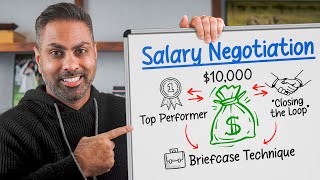
A YouTube video (transcript) by Ramit Sethi presenting a four-step, practical playbook to negotiate salary increases. It advises preparing early, setting measurable goals with your boss, tracking and documenting results, using the “briefcase technique” (a prepared packet of market data and accomplishments), and handling common employer objections; includes concrete examples, student success stories, and a sponsored recommendation for financial planning.
Chapters
You could be making $10,000 more per year working the same job that you're working right now for the same amount of hours. And it doesn't need to be that hard to do. You see, most of us are terrified to negotiate because we think that the only way to ask for a raise is to just walk into our boss's office and put out our hand and beg for money. No, that's not how you do it. I'm going to let you in on a little secret. There's a game being played around you, and top performers know how this game is played. Going to show you how to win the game of getting a big raise with my exact playbook for what to say and what to do. And if you follow these four steps, it could change your financial life. Starting with step one, lay the groundwork the right way. If you ask for a raise the right way, you're going to be way further ahead of 99% of other people who try to negotiate their salary. So six months before your next review, set up a meeting with your boss to lay the groundwork. You're going to send them a note. You want to tell them, hey, I want to do an exceptional job. I want to be a top performer, and I'd like to understand what it would take for me to be a top performer. Can we chat now in this email? Notice that you're making it a formal meeting. It's not just when you're walking by having coffee. Take this seriously, because it can be worth thousands of dollars to you. In that first meeting with your boss, your goals are, number one, ask your boss what it takes to be a top performer. Number two, set three goals that are specific and measurable. Number three, agree to talk more about these over the next six months. Basically walking in saying, hey, I want to be really good at my job. What does it take? Now, your boss knows what it takes to be a top performer because they see a lot of different people and they're going to tell you, well, just keep working, do a good job. Go. No, you have to gently insist. Can we get specific? You want to walk out of there with three specific things that you can work on, ideally quantifiable. And then at the end, you might say something like this, you know what? I'm really excited by these goals. It helps me understand what it takes to make your job easier to be a top performer here at this company. Now, if I hit these goals, I'd like to discuss a compensation adjustment, but for now, I'd like to just work on them and keep you updated. Bosses love this. You're basically telling them I'm going to do part of your job for you. I'm going to make your job easier. I'm taking the initiative. I'm going to keep you updated and and someday down the road can we discuss compensation? Yes. Hallelujah. After this meeting, this what you do. Send an email recap to your boss so that you have a record of what you both agreed you're going to work towards. And it also formalizes this. This isn't just a joke, it's something you are taking seriously. Before we move on to step two, I want to talk about what this raise could mean for you. An extra $10,000 a year could open up a lot of options for you. You could pay extra towards debt, you could put it towards savings. You could save it for a down payment on a house or pay for a dream vacation, kids education. Invest more. For example, an extra $10,000 invested each year for 10 years could earn you an extra $167,000 over the next decade. In 20 years you could have an extra $477,000. That opens up a lot of possibilities for you. Sometimes it can be hard to decide between all your options. Should I invest all of it? Should I invest some and save some? What would it look like over the long term? If you want personalized help with your financial plan, I recommend you check out this video's sponsor Facet. With Facet, you get your own CFP professional to work with and a team of financial experts across investments, taxes, benefits and more. And very important, it's done through a flat fee membership. If you if you've ever seen me talk about financial advisors before, you know that I never want anyone to pay a percentage of your assets, usually 1 to 2% to a financial advisor, which is actually how most financial advisors charge. That means when you make more money, you're paying more money in fees into your advisor's pocket. With Facet, you pay a flat fee. So if you make more money, you get to keep more money. I believe that's the way it should be. So head to facet.com ramit and sign up for a free call. You can decide if they are the right fit for you. Thanks to Facet for sponsoring this video. And now back to getting that raise. The next step is something that is incredibly important but easy to forget. And that is step two. Keep your boss updated. You never wanna walk into a meeting about compensation and surprise your boss. No surprises. That's my philosophy. When it comes to compensation. So start tracking everything you do at work by recording the results you get and quantifying them as much as possible. Now, yes, this is the part you have to do the work. You set these goals with your boss. You know what it takes to be a top performer. If you're trying to raise conversion rates on a landing page from 11% to 14%, this is where you got to do that work. And you actually have to hit the goals. A lot of times people think that they should get a raise simply for being at a company for three years or five years. No, you don't get extra compensation for breathing oxygen. You, you get extra compensation for being a top performer. Part of being a top performer is constantly keeping your boss updated. If they have to ask for a status check you've already lost. To update your boss, use a method that I call the closing the loop technique, which shows your boss you're serious about becoming a top performer. Here's how you do it. Every two weeks, check in with your boss and send them your current results. You can use a simple email script like this example. Hey boss, I just want to let you know that we've already exceeded our number for the month. We've got 300 people who are coming and 100 people on the wait list. You are closing the loop, letting them know what the status is before they ever ask. I recommend doing this every other week and basically you just want to make sure you're keeping them updated on progress towards the goals you set. That way, when you go in for that six month discussion about your salary, no surprises, they've been tracking it. If you got stuck, you've asked for help. They know what's going on now. It's been weeks, it's been months. You've been hitting your goals, you're feeling good. Once you've consistently brought in those results and you've hit your goals, mention to your boss you'd like to discuss compensation at a meeting next month. This can be a separate meeting from your normal review or ideally, since you started this process six months before your review, you've given yourself time to to hit your goals and then discuss this in your normally scheduled review. Now it's time for step three. Get ready to win. This is the culmination of all your preparation and hard work. You've done that hard work by setting expectations with your boss, by truly becoming a top performer and exceeding those expectations, and of course, tracking your results along the way. To make your negotiation successful, you need to come prepared. There are four Items you need to come prepared with. And I call this overall process the briefcase technique. When you use the briefcase technique to negotiate your salary, you're going to walk in ultra prepared with your salary expectations, your accomplishments, and how you're going to make your boss's life easier. And then the most fun part of all, you're going to pull those things out theatrically from a bag, a briefcase, or whatever type of bag you're using. Pull it out almost like a movie. It's incredibly impactful simply to know that you did work outside of a meeting. So let me give you the four items that you should come prepared with. Number one, your current salary. Number two, competitive salaries from other companies. By the way, to find those competitive salaries, you can go to sites like Glassdoor, PayScale, Salary.com, search for your job title by location. So if you're a marketing coordinator in San Francisco, California, for example, go to each of those sites, type in your role and location, and you will see typical salaries in the area for that job. After doing this on a few sites, you'll be able to triangulate what you should actually be getting paid. Make sure you take notes. Are you underpaid? Most of you are. Find out for sure. Then two more things to bring to the meeting. Your list of accomplishments and other additional ways that you could add value above and beyond what you've already done. Here are some examples. Maybe there's a project you could lead. Maybe you've got an idea for a system that could make things streamlined. Maybe you're willing to get additional training and certifications, take on more responsibilities. In this meeting, you're basically saying, six months ago, we had this fantastic conversation. I came in letting you know I wanted to be a top performer, and I do. I wanted to make your job easier, and I do. And I want to help this company grow. We came up with three goals. So I hit those goals. I leading to the company being more profitable, increased conversion rates, less time spent per project, etc. Pause, take the round of applause, pat on the back, high five, handshake, take the win. And then now I'd like to discuss a compensation adjustment. Here's my current salary, and here's what the market says that I should be getting paid. Now, I did a considerable amount of research, seeing what other folks in my role in this location do, and as you can see, I'm underpaid by approximately $7,000. Now, based on the work that I've done in the last six months and the work that I'd like to do for the next two years? I'd like to discuss a compensation adjustment. Does this sound crazy? Does this sound like something you've never heard? Probably because nobody does this. Well, only a few people do it. The ones who get huge raises. Let me show you what I mean. Here's a real briefcase technique propos from a student of mine named Jesse, whose briefcase technique proposal secured him an $80,000 raise. Yes, you heard me right. You'll see why the manager took one look at this and knew it was a done deal. In his proposal, Jesse lays out his goal and he's clear about asking for a promotion. He establishes his performance year to date. He shows his boss how he'll make his boss's life easier. And finally, he sets a timeline and provides a slide of results. As a business owner or as a hiring manager, I can tell you this document is one of the most compelling ones I will ever read. It's a list of problems I already know about. But in this case, Jesse has identified them and made a list of potential solutions. Do this and you've suddenly separated yourself from 99% of other people. People, Guys, I'm not just making this up. This has worked for thousands and thousands of people. Look at these results from other students who have used my briefcase technique. The briefcase technique worked perfectly. Prior salary 80k New salary 150k Ramit, my first success was a 12% raise using your negotiation techniques. I actually scheduled a meeting with my boss a week or two before our planned yearly review. This is where I presented my material via the briefcase technique. It worked like magic. And look at this reader who messaged me recently that they negotiated a $65,000 raise. I put together a slide deck and today accepted the role for $220,000. My new manager said he has never had someone respond with a slide deck when asked about salary expectations. This will increase my total comp by 65k annually. Now everybody listen up. For the 30 million people who are about to leave a comment saying, ramit, this is unrelatable. I can't get a $65,000 raise. Ramit Sethi, you're so out of touch. How about getting a $6,000 raise? Wouldn't that be nice? How about learning the skill of negotiating your salary so you don't have to simply wait for whatever your boss gives you and then go on YouTube and leave defeated, hopeless comments. How about that? Take control of your career. The briefcase technique works and it can work for you too. It's not about using flashy prompts. Or misdirecting the conversation. Remember, most people don't even negotiate at all. And the ones who do often just walk into their boss's office and say, hey, can I have some money? Why? Because no 85% of the work is done before you ever set foot in the room. Now, let me show you how to handle some tricky situations. But before we get to that, if you're not already subscribed to my YouTube channel and you're new if hit that subscribe button for me very quickly. You don't want to miss out on some of the new big videos that I've got coming up. All right, that brings me to step four. What if they say no? Here are a few ways they're going to say no without coming out and using the word no. They might say, it's not within our budget. We can't pay more in this economy. This economy is fantastic. What the you talking about? I hate that reason. We have a standard comp program, and we pay employees like you exactly this much. It's standard. Now, first of all, you're going to get these answers. They happen all the time. Don't take it personally. Remember, the goal of a company is to get the best work they can at the lowest price. That's capitalism. Remember that old story about some turtle or something who takes a scorpion across the river? And the scorpion goes, I'm not going to sting you. And then the scorpion stings the turtle and they both sink. And the turtle's like, why'd you do that? And the scorpion's like, I'm a scorpion. That's this. The company's a scorpion. Their job is to get as much from you as they can. So don't take it personally. Just play the game and win. Your goal is to know what you're worth. Your goal is to know what it takes to be a top performer, to deliver that, and then to be appropriately compensated for that. Good news. You've already shown that you're a top performer. You've already shown that you should be paid more based on market research. So ask again. It's okay to make things a little bit awkward. It's okay to show those numbers and say, it just makes sense for my compensation to be adjusted based on the market and based on my results here. Don't worry about awkwardness. I love awkwardness. Why do you think I have a podcast where I ask couples how much money they make? I love my job, by the way. Don't forget, you can negotiate a lot more than just salary, remote work, stock options or equity. An expedited salary review, for example, six months instead of a year and a half. Hell, you can even negotiate a nicer computer the important thing to know about negotiation is that top performers always negotiate their salaries. The managers expect it. The top performers know it's their job to negotiate. So it's not weird or awkward. It's just an expected part of the job for you. The critical thing to know is that if you negotiate your salary the right way, you have a very good chance at getting a salary increase. And that salary increase can make a profound, profound difference on your life. You can use it to save more, invest more, spend more, live your rich life bigger and faster. That's why I'm sharing this with you. I want you to know the game being played around you and how to win. So I hope you use the information in this video to help you get the raise you deserve. Make sure you save this video so you can revisit anytime you want to. Check it out. And now check out this video popping up on screen to watch more.









