“I pretend I want to change. But I refuse to do anything different”
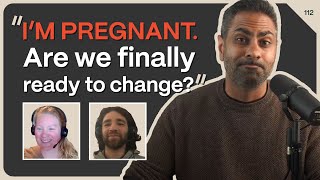
Mike and Kate, expecting a baby in September, have $17,000 in credit card debt and zero emergency savings. They spent $2,400 on a mattress while stressed about money, and Ramit pushes them to admit they say they want to change but won't actually do anything different.
Chapters
What are the subtle signs that someone is wealthy? I'm not talking about driving a Rolls Royce. That's obvious. I'm talking about the more subtle signs that I'm going to cover this Saturday on my special newsletter. I'm going to be sharing my favorite subtle signs of wealth, plus some examples that you have submitted about how to tell if someone is wealthy. The only place to get this is on the podcast newsletter. And once it comes out, it will not be reshared. So you've got to sign up right now to get it this Saturday. Go to iwt.compodcastnewsletter to sign up. It's coming out this Saturday, July 15th. Again, iwt.compodcastnewsletter to get my new newsletter on the subtle signs of wealth.
Part of me is resentful that to Mike that he, like, wanted this house so bad and that now we have all these things to maintain. Renting was easier. Some days I'm like, God, I just want to move back into our camper van so we can travel the country. This just feels like a burden. Like this isn't necessarily what I wanted. Yeah, we did decide to do this together. Part of me is like, I just did this for you.
There was a lot of time to bring these concerns up in the process of buying the house and to really stop us there. Yeah.
And I remember a lot of fights about it, too. And I don't feel like my needs are important, I think because I'm just so resentful about it that I'm like, just screw it all.
How can you do this with the two of you and you're about to incur more stress than you've ever had in your life with a baby?
Yeah.
I'm terrified.
Are you terrified enough to make a change?
Yeah.
Kate, I'd like you to meet Mike, who's 29, and Kate, who is 32. Mike is a chef and Kate is a wellness advisor for a spa resort. Now, in their application, they wrote this sentence describing their situation. He wrote, we are closing on a house next week. And also just found out she's pregnant. I think today you're going to be quite surprised with the direction of this conversation. So let's jump right in. How long until the baby comes?
Due date is beginning of September.
And financially speaking, what has changed since you found out you were pregnant?
Two weeks after we were pregnant, we closed on our first home. Wow, that is a fixer upper. And our home is important to us because we have. It's a very small house, but it's on a lot of land because being able to provide food for ourselves through farming is also really important. So that way we don't have to rely on the grocery store as much anymore. That was the motivating factor of our house, was that it's a small house, perfect, Not a lot to maintain. It wasn't maintained, though. So there is a lot to put into it financially. And it all happened at the same time. Like pregnancy.
Bought a house. You found out you were pregnant.
Yeah.
Were you? And so what brings you here? Why now?
Well, we. I feel like we were doing really well until we got the house. I had read your book, and I had automated investing, automated savings, and I had a pretty good savings. I had some investments, and I pretty much used all of it to get the house. And I was the one that was really keeping track of our money and kind of in conflict with Kate over spending. And then once we got the house and I kind of abandoned the automation and all that, now she's the one that is keeping track of the money and worrying about credit and, like, just looking up at it. And I almost given up, like, just kind of said, okay, you're. You're in charge of the money now. And I. I don't like that we're not really on the same page about it. And I guess there's something going on there with me that. That kind of just. I don't know, I, like, gave up when we got the house. It took so much to get the house that I felt defeated. And it was like, all this work has kind of gone to nothing. And now it's like all the money is going towards fixing up the house. Okay.
Did you expect this when you went to buy the house? You know how much it was going to cost for the down payment and all that stuff?
Yeah. And I was like, well, I have this savings. That's what it's for. And I have this investment. That's what it's for. Right. Okay.
And then what changed?
I don't know. All the work of the house, I guess.
Expected or not expected.
I expected to handle it easier, I think.
Why'd you buy the house? The land.
So that way we can have farm. We just got chickens today, but mostly the land, so that way we can provide food for our family.
And this idea of providing food. Did you both grow up doing something similar?
No.
Oh, well, that's interesting. What, do you think that there's a financial conflict here?
Well, we just kind of got on the same page, but we were arguing over buying A mattress. There was some conflict around and I wanted one. She didn't.
All right, walk me through it.
I think Kate actually brought up the mattress first, like sent me the link to the mattress, and then I was like, yeah, let's do it. It was a pretty expensive mattress. And I think. What?
Hold on, how expensive?
Ended up being like 23, 22.
Okay, yeah, that's all right. That's a good price mattress. And so what happened then?
I said, let's do it. And we had to put it on a credit card or we actually used a payment plan, the affirm thing through online or whatever.
Both of us put a lot of emphasis into quality products that are non toxic. And I'm pregnant and have a baby and the baby's going to be in our room and I don't want those off gassing chemicals. And so that was what was most important to me in a madri, regardless of the price.
Okay, how did you decide how much you could afford? Can I go out on a limb and guess? Okay, can I guess that you had problems sleeping? You said we got to get a new mattress, you found a mattress you liked, and cost wasn't really part of the equation at all.
Yeah. Wow.
So shocking. And was there any point where either one was like 2,400 bucks? That's like a lot. Could we get one for less?
Yeah, that did come up. But we wanted a mattress that didn't have that was a little safer and more natural.
Okay, so let me ask you, Kate, where's the conflict here? It sounds like one person wanted a new mattress. You both found one, you bought it, and it you can afford it.
I think it's like more within ourselves than anything. Even more than with each other.
What is it within you? Like you don't want to have a payment plan. Okay.
Yeah.
And so I've always just been, when money comes in, I'll save what I can, but I am here to enjoy my life. And now I'm like, oh my God, we have no savings and we have a baby coming and I'm going to have a cut and pay. And so now I have this like, inner turmoil of I can't believe I haven't been saving more my whole life. I'm fearful of not being able to provide for our child.
Well, you're going to be able to provide food. You got the chickens.
Yeah.
So what are you fearful of not being able to provide? There are a few moments in people's lives where they really genuinely care about money, and the major ones are getting Married, having children, as you just heard Kate say, getting divorced and retiring. But because most of us don't really actively think about money on a regular basis, we don't actually know how to act in those moments. It would be like me asking you, how are you going to react next time you get in a car crash? You're like, I don't know. You've probably never been in one. In times of uncertainty, we look to other people for cues. And this is why the first time you eat at a fancy restaurant, you observe the person next to you and you see how they use their fork. And it's also why people say identical phrases when it comes to moments like having children. They'll say things like, I want to provide for our kids. I want to give them everything I didn't have. I don't want them to struggle like I did. And my favorite one of all, now that we're having kids, we need a house with a lawn and an suv. Do you? Do you really? And what does providing for a child mean? Can we get specific? These are the kind of conversations that are so important to have before one of these life situations happens to you. Otherwise, you might find yourself just looking to others for cues and doing exactly what everybody else does.
Security and stability.
What does that mean?
We are choosing to spend more money on. Like, we haven't. We put a lot of emphasis on spending on our grocery budget, so that way we can buy good food. I am afraid that's going to go away. When. Because. Especially because we're just starting our farm, and I'm, like, putting that above paying my loans. I'm just not paying them right now. And so I'm making that choice. But then that becomes like, what if these things get taken away from me because I'm not paying what I'm supposed to be on my student loans because I'm not paying those right now. And so I have a lot of conflict about that.
It doesn't sound like you're conflicted.
I feel conflicted. Or I feel not even conflicted. I feel fearful that my choices are going to backfire on me because I don't. I just don't know yet.
It just feels like I need to go get more money to make her feel safer and to make us. I mean, I feel the same way. I feel concerned that having a baby is going to cost us a lot more money and we're going to need more.
Yeah, and you probably are. So what are you going to do about that?
Yeah. Looking at buying a diner.
What.
What the starting a restaurant. I'm a chef and starting my own restaurant. Wait, what?
Have you run a restaurant before?
Yeah.
You ran it?
Not. I didn't own it, but I ran it, yes.
Did it make money?
Yeah, a lot of money.
All right, all right, fine. Good. All right, so that's an option. You. You want to earn more money. Theoretically, you might start a restaurant. Okay. Would that solve the problem here? Trying to understand the real problem. You bought a house. You're having a baby. You bought a $2,400 bed. What's the problem?
We're racking up debt and not able to rack up savings.
I agree with that. Kate, do you agree with that?
100%.
Okay. And is that a problem? Yeah, it is. Why, Kate?
Because I have. A couple years ago, I was making a lot of money. I started my own business, and I was spending money like, I was still earning $55 an hour and racked up incredible debt. How much debt now total? Like, 27,000.
Is that credit card debt?
Credit card debt.
Okay.
In how long?
Like, six months.
Okay.
And is that debt still around $17,000 left? But both of those credit cards closed because I wasn't making payments, and so I'm very fearful of that happening again.
Why are you fearful? What was the consequence for you?
My. Which I don't even know why I care about this so much, but, like, my credit score tanked, and now, like, I couldn't even. I'm not on our mortgage. I'm on our deed, but I'm on our mortgage because no one will approve me because my credit or my credit is shot, and I don't have great payment history that limits me. And being able to help Mike with certain things, even though I'm still paying, like, half of everything I need to pay, but, like, I'm not on the mortgage because they won't approve me. Nobody will approve me for anything.
What do you think of your relationship with money, Kate? How would you describe it?
It's changed. I. I used to be like, whatever. It comes easily. Money flows in, money flows out. And then since learn, like, since being pregnant, that has, like, drastically changed. And now I'm like, oh, my God. Money doesn't flow in anymore. It's not as easy as it once was. Like, now I have a human growing. I don't have that same mindset of, like, easy come, easy go, which. That was my mindset for 30 years.
What is your mindset now, if you had to describe it?
All I can think of is, like, it's like, I'M holding on for dear life and just, like, extremely rooted in fear. I, like, know exactly what's in our account. I know exactly where everything's going every month. I'm paying attention to it more than I ever have. I feel like I was spending money on things I didn't necessarily value before, and that didn't really make me feel like I was living the rich life that I wanted to live. And now I'm putting money. I'm definitely spending money more on, like, what I value and what makes me feel like I'm having a rich life.
Well, I don't think anything we've talked about today is about you not spending money on a rich life. You bought a house because it's about your values with food. You bought a mattress because it's about your values with health. I don't think that's the question at all. I think you yourself have told me you're fearful because you don't have money coming in and you don't have any savings. Right?
Yeah. That's also a huge part. We have $0 in savings.
So isn't that a bigger problem than living your rich life when you have a baby and 20, $17,000 of debt? Why are we not talking about that?
Yeah, that's a huge thing. I just, like, pretend it's not there.
Yeah, I can tell. And it's a problem. I'm. You know, we've been talking now for quite a while, and I'm trying to get you to tell me what the real problem is. But when I ask, you have a variety of techniques you use to dance around the topic. Actually, my behavior is better than it used to be. You know, I'm actually, like, spending money meaningfully. If you can't get honest with yourself and with me, then we don't really have a chance of making a change here.
Yeah.
Would you like to take another crack at this? Kate, are you good with money?
I'm working on it.
That's an interesting answer, but not what I asked.
I'm not confident in being good in it at it at all.
Okay.
How would I know if you were good?
If I was paying all my loans, if I was paying every bill that we actually had?
Okay.
That would be good. What else?
One thing I have done over the past couple months is automate everything.
Okay. Don't tell me what you've done.
I want to know.
How would I know if you were good? Notice what's happening right now.
I'm dancing around it. Yeah, my. Yeah, my student loan debt and My credit card debt terrify me, and I'm completely ignoring them. I'm not paying. Making payments on any of that.
And what happens if you keep not making payments on them?
I honestly don't know. Nothing's happened with my credit cards.
Mike, listening to this, how does it strike you?
It's nothing. I don't know.
You're not surprised?
Surprising, no.
Are you concerned, hearing Kate's answers?
Yeah. I mean, I've been concerned. This. When we got to know each other, she had all of her student loan debt that was also unmanageable. And it's kind of. It's been that way pretty much since I knew her.
How long you two known each other? And then when did you both get. Are you married?
Yeah.
Okay. How long did you know each other before you got married?
Eight years.
Okay. And how long you've been married for?
It'll be two years in August.
All right. So, Mike, when you met Kate, she had unmanageable student loans. Did that concern you?
Yeah. Took us a really long time to combine finances because I was afraid of that as well. Of, like, getting into that.
Did you tell her?
Yeah, I told her that I have my own debts and I'm working on paying that stuff off. And since she was not paying that stuff off, I said I didn't want to help her until she did start paying it.
Okay. Then what happened?
She paid them. A couple of months maybe. And then we both, after much hesitation, combined finances. And now every now all of the debt is just both of ours.
Why did you combine?
We were married. Felt like we should. Okay.
All right, Mike, when I asked you how it feels to hear Kate's answers, you said you're not surprised. You've heard it before, I'm sure. I'm hearing this for the first time. I'm surprised and I'm troubled. I'm troubled because Kate doesn't really know the consequences of not paying the debt off. And in fact, Kate is. You're pretty candid, Kate, that nothing really.









