“I thought she was going to die, so we spent all our money. Now we’re broke”
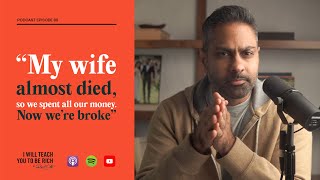
Asha had two open-heart surgeries in 2014 and 2017. Thinking she might die, she and Matt spent everything they had, racking up $8,000 in credit card debt and draining their 401(k). Now they're broke and trying to figure out what comes next.
Chapters
We didn't have food for a day and for a couple days until my grandparents maybe helped us out or my parents pawned something or we took turns eating. Sometimes. Sometimes. I'm not scared to be poor. I've been poor. I've been without food. I know what it feels like. I've been without a house. I'm not scared of it. So who cares? I don't care what the future holds. I can make it work. And I don't know why that got to be a comforting statement to me, but it did. I thought for sure I'm broken the cycle. But now I don't feel that way. I feel like I'm going down the same road and I'm taking Asha with me. So I feel really bad about it. Honestly, I feel really horrible.
Hey, I'm Ramit Sethi, and today I'd like to introduce you to Asha and Matt. Asha is 33, Matt is 37. And they have very different backgrounds with money. But what's unusual and what really changed their lives was when Asha got sick, she wasn't expected to live. So Asha and Matt basically said, screw it, and decided to spend their money as if there was not going to be a tomorrow. But then something happened. Asha got better. Now here they are, having spent a lot of money, much more than they thought they would, and wondering what to do next. As usual, I'd like to remind you that you can watch this full episode on YouTube and in particular today, you'll be able to see things in their facial expressions that you cannot hear on the audio version of this podcast. So head on over to YouTube and search for Ramit Sethi and then follow me there. Let's get into it. I'm Ramit Sethi and this is I Will Teach youh To Be Rich.
About a month and a like maybe two months into dating, I started getting really, really sick. And within four months of dating, we knew I was going to have open heart surgery. And then I had it within six months of dating.
The prognosis wasn't great. You know, it was her second open heart surgery. We were worried about long term.
There's just everything that goes into being on a bypass machine, being under for that long, having prosthetic device placed in your body, and then being on the medication that you're going to be on after that. So I knew that there were all these complicating factors, but I'd say that Matt and my parents had a bigger understanding of the complexity that going and I was just kind of trying to get through the days of, like, working and coming home and going to sleep or working. And I remember there's a picture that we have from during that time that was like a day that my mom texted us and said, you really should go to the Greek festival. Go and have some fun together. And there's a day we're sitting on a curb eating a gyro, and it's just this picture that's from that timeline. And it's kind of funny to think about because it was a very specific time frame that I don't remember a lot about other than feeling terrible and happy at the same time.
Wow.
I don't have a clear memory of a lot of it. My memory feels pretty fogged by how terrible I felt because, you know, a second open heart surgery right there, which it was my second in, that was 2017, so my first one was in 2014, so it was my second in under four years. So, I mean, there's just the fact of being opened up again. And I did have short term disability through my job, but that's only a percentage of your paycheck. And I physically couldn't get in and out of bed. And Matt continued to work during that time.
Asha had a 70% chance of surviving, and doctors told Matt that if she made it past three years, that would be a signal that she'd be much more likely to survive in the long term.
So we went into the spiral of if you make it, let's just enjoy life together. I mean, who knows how long it's going to be? You might make it 10 years, you might make it three, but. So we both bought in wholeheartedly and we tried to. We went down this path of pretty much yolo, of whatever, you know, let's just be happy you're alive and let's go, just. Just enjoy life together. We just went to dinner a lot and went on some small trips, nothing major. And just I guess, I think in times we probably shouldn't have spent 100 bucks on dinner. We just said, whatever, who cares?
Okay. And when did you start to both say, hey, we don't know how long you're going to be around. Let's just loosen up on our spending and let's just go for it.
I don't know if we ever had that conversation. I think that was mostly me just kind of doing nice things for us that I didn't know. I knew she wouldn't do for herself. She's really, really thrifty, and she doesn't spend or do anything nice for Herself, like she should. So I guess just, you know, little gifts and, I don't know, probably cake or something stupid.
I mean, I think that's pretty understandable. You know, somebody just had a major surgery. It's like, yeah, all right, I'll buy them a cake from the store. No big deal. So when did you realize that this had become a problem?
Yeah, so it became a problem after she recovered. At one point, we were. Had accumulated some credit card debt.
What was the first number, you remember where you said, oh, wow, we have some credit card debt?
I think it's about $8,000. Okay.
Who was managing the money day to day?
Probably nobody.
We were just, you're spending it kind of paying the minimum, that type of thing.
Yeah, I think we would pay more than the minimum, but we never were paying it down like we should have. It was just gradual increase. Okay. So we didn't really have a clear set. Who's going to manage who's doing this? I actually had the credit card. Really? Because my. My credit was ruined by my parents, too, at this point.
What credit card did you have?
No, you're going to hate. It was Bank.
Bank of America. How did I know? For everyone watching, I don't have that information in front of me. Knew it. I could just tell there's a little bank of America vibe right here. All right, so you had the bank of America card. All right, well, of all the things, you guys bought yourself a little bit of grace with the two open heart surgeries. For everyone listening and watching. If you don't want to get absolutely roasted by me, you need to go through two open heart surgeries. And that way I'll be like, all right, I can excuse the bank of America. All right, fine. Can anyone really judge them for loosening up their spending? If my wife was going to die, I would spend any amount of money. Cost would be irrelevant. And that's me. I sleep with a copy of Warren Buffett's letters under my pillow. You should also know that Matt and Asha bought a house at the time for security and for more caretaking space. That's because her parents stayed at the house and helped Asha during her recovery. You know, one of the things I love about this podcast is that you get to peer deep into people's lives, which shows you that money is never neutral. It is not just a tool. Like so many people say. Money is imbued with cultural values. If you saw someone on the street with $150,000 of debt, what's the thing that we mostly would Think, oh, they're irresponsible. But what if you find out that they had to spend more for caretaking because their wife was about to die? She had this $8,000 bank of America credit card debt. And then what happened?
I took money out first to do it. I'll show. Was it you?
Wait, took it out from where? Don't say 401k.
Yeah, I took a 401k loan out.
God damn it. All right. Yeah.
But it was penalty free.
Who told you to do that?
Nobody. The Internet told me to do that.
The Internet.
Okay, the Internet.
So did you do that before or after I had the appendectomy that cost more than my open heart surgery? Because that's not.
When we took money out, I think we just knocked it down. And we said, you know what? Okay, we're back to zero. Let's start over.
Okay.
Then Asha got sick again. She had an appendectomy. Then she went out of work again. And then medical bills piled up. We got back there again.
The actual open heart surgery wasn't the really big hit on the finances. It was everything else that comes with being partially out of work, being home, not being able to do the normal things that you do.
Totally.
I don't think people really understand how a serious illness affects people. You know, first of all, some of the surgeries, like you mentioned, your appendectomy, how much did that cost?
I think it was. Well, I think it was my out of pocket max, so I think it was $4,500.
Okay.
Because because of my complex medical condition, I actually had to be in the hospital for an entire week for that.
Yeah. So, first of all, 4,500 bucks is a lot of money. It's not just often sitting around in. In a liquid checking account. And then, like you mentioned, if you're out of work for a week, a month, two months, plus you need to have other people come, plus they need to eat. And on and on and on and on and on. Things spiral. It's expensive. I went skating. I fell down like a. Like a skating. Like a kid skates. Okay. I fell down on my wrist. I had a minor fracture. It was like, nothing. It probably cost me a thousand bucks. That's for nothing. That's not even close to serious illnesses that you went through and many other people went through. So that sucks. I'm really sorry that you have had to incur all these costs because of it. So you paid off the debt. You had the second illness. How did you pay for that? Credit card.
Yeah.
I think partial credit card partial, like a long term payment plan that hospitals do.
Okay, so you're paying x hundred dollars per month. Okay.
Yeah. We were still within the one year of the three year time frame that Matt had been told. Right. Because that appendectomy was about a year and three months following that open heart surgery. And so we're still within that timeframe. We had gotten engaged and it was very much, I think, that mindset of we're going to enjoy life together because seriously, clearly, we don't know what's going to happen.









