“I work 7 jobs but can’t get ahead. Are we doomed?”
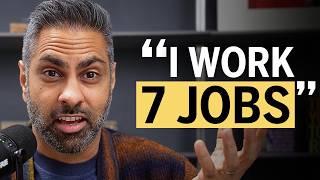
Juan and Amber make $198,000 a year but carry $74,000 in debt and struggle to invest. Ramit Sethi reviews their finances and finds they're spending 57% on fixed costs, leaving little room to build wealth despite their income. He traces their money anxiety back to Juan's immigration background and scarcity mindset.
Questions this video answers
$16,560 (≈ $198,000 per year)
Assets $65,000; Investments $80,000; Savings $28,000; Debt $74,000; Net worth $98,000
Fixed costs 57%; debt payments $2,581 per month
Investments ~10%; Savings ~7%
Six jobs listed (personal trainer — boxing, rock-climbing trainer/guide, building manager, boxing instructor, document translator, social media work)
Chapters
At one point, I had almost 50,000 in savings.
What happened to it? Don't say the motorcycle.
We have five motorcycles.
Five motorcycles? I don't even have five books I wrote. Why do you have five motorcycles?
This is your fault. This is my rich life.
What happened the first time you met Amber?
Tried to tell me how to run my business.
Yeah, he was doing it all wrong.
I didn't have a good role model for money growing up. I am so far behind on any kind of savings. Amber's behind as well. We really need to step up how much we're putting away.
What did you do with that money?
I bought a lot of weed with that money. I was not a good sibling. I was not a good son. Caused a lot of heartache and a lot of grief. I'm forever trying to make up for that.
Have you ever had to declare bankruptcy?
In college, I got in over my head. The collection of agencies were following up with me and I tried to pay them a smaller amount and they refused.
Did you think that bankruptcy was serious?
What if you didn't have to stress about every last dollar? What if you and your partner could actually earn more money? See, most couples, they focus on cutting back. That's their first place to go. Restriction, canceling subscriptions, arguing over takeout, feeling guilty. But what if you flip the script and focus on earning more instead? Well, I am hosting a free live event where I'll show you how it's happening. Monday, March 10th at 8pm Eastern. And here's the best part. I'll be working live with a couple right there, coaching them how to go from this concept of penny pinching to bringing in extra income. Together you will see exactly how to apply these steps to your own life. And I'll be taking your money questions live during the free event. Seats are limited, so grab yours now@iwt.com earn more or click the link in the description below. I'm about to open up Juan and Amber's conscious spending plan which breaks down their net worth, income and where they spend their money. This is a simple one pager. You can download the template for free@iwt.com CSP all right, I'm looking at the CSP here. 43 years old and 40 years old.
Assets of $65,000, investments of $80,000. Okay.
Savings of 28,000 and debt of 74,000. Total net worth of $98,000. Interesting. Let's look at the income. That'll tell me a lot. So their gross monthly income is $16,560. That's a lot of money. That's $198,000 a year. Why do they only have 80k of investments at the age of 40 and 43? Also, why do they only have $28,000 of savings now? One possibility is that they just started earning this kind of money. That's possible. Let's take a look at what else. Fixed costs are at 57%. That's really good.
Their rent is at $230.
What? $115 each.
This is a typo. All right, 15. Fine.
So basically they're not paying much for housing at all. Insurance is a little high at a thousand bucks. Car payment at 9, 23. You know what's interesting? As I work my way down this list, I'm like, if you are paying basically no housing costs or very little, then how is your fixed cost at 57%? Shouldn't it be more like 25 or 30%? So where is the heavy expense under fixed costs? There it is. Debt payments at $2,581. Wow, that's pretty aggressive. They have an artificially low fixed cost because they're not paying housing costs, but they've artificially raised their fixed costs by probably overpaying towards debt. All right, fine.
Groceries are fine.
Nothing else really stands out at 57%. Personally, I think that number should be lower.
But I'd be curious to hear more.
About what's up with the debt payment. Investments are at 10%. At 40 and 43 though. They need to be doing more. I can tell you that right now, especially because they only have $80,000 invested and they are not going to own a house. On this trajectory, they will need to dramatically increase their investments. Savings are at 7%.
They're putting 200 bucks a month away for gifts.
No way.
That needs to go to investments.
Long term Emergency fund at 400. Fine.
Family at 200. We'll have to see what that's about.
And then guilt free spending at 25%.
No, no, no, no, no.
That needs to come way down at age 40 and 43. If you haven't started investing aggressively by that point and you are not on track to own a house, then you've got to be investing aggressively.
So just off the bat, I would.
Take like, instead of 25%, that would be down to 15%. All that would be going into investments. I need to talk to the couple to understand what's actually going on here.
Juan and I do a really good job at like living our rich life today, but because of that approach, we're not really well set up for retirement.
Okay, so you two are not married, Correct? You live together? Yep.
Yeah.
How long you been together?
Three and a half years.
Okay. All right, cool. Juan, you said in your application, I have not been able to stop thinking about preparing for the future. But instead of it being a bright outlook, it's often thought of with worry and fear. What do you mean by that?
Everything I learned about money and savings, I learned from Amber. I didn't have a good role model for money growing up, so the things that I learned about how important it is to save and to leverage money and credit and things like that, I learned from Amber. And the more that I learned about those things, and because of the place where I'm at in my life now, I can see that I am so far behind on any kind of savings that would have me feeling comfortable about retirement age. And that's. That's just the worry that I feel for myself. But I also have an incredible amount of guilt and worry about being able to take care of my family.
Which family?
My mom, my brother, and my sister. And I really, really want to be there for them. But I think, you know, Amber once showed me, like, a calculator that showed if we put away this much money, this is how much we can expect to have. And I was like, yeah, that's. That's not going to happen. I don't even think we can have help ourselves with the. With the amounts that we're showing on there. I'm really behind. It sounds like Amber's behind as well. We really need to step up how much we're putting away, and the number just seemed insurmountable to me.
I see.
Yeah.
Okay. You're 43 years old, so you said that the only thing you've learned about money have come from Amber. And since you've been together for three years, that means you really started learning about money around the age of 40. Is that correct? Amber, any of this surprise you?
No. Yeah, we've talked about it a lot, I think. You know, there are definitely a lot of things that Juan and I will sometimes have trouble discussing, but money has always been something that we talked about pretty openly. To hear that level of worry come from him was a bit surprising, because I think. And this also kind of touches upon, you know, me wanting us to be on the same page and have the same goals is that historically, one has always been the one that's like, you know, this level of stuff is enough. We can live within this small amount and do just Fine. And I've always been the one that's like, no, let's elevate things. Let's earn more, let's experience more. Let's do this.
The way you're talking about sounds like things have changed. But have they?
I have slowly come around to the idea of the rich life, which Amber had introduced me to. And sometimes it can be a point of friction between us because I am really conservative in a lot of the way I live, partially because I have never really learned how to leverage my skills for the amount of money that they're worth. So the idea of abundance really scares me.
Amber, are you surprised to hear him say the word scared?
Yes, very surprised.
Why is that?
These are not things that he'll openly share.
Why is it that a guy like me, who has struggled connecting to my own emotions comes on here for five minutes and suddenly we're talking about words like scared and behind and sharing our feelings for the first time in three years? What is happening right now? I don't know, but I love it. I'll tell you that sometimes we do need just somebody else to make us more comfortable sharing what we have been feeling for years. So I appreciate that you're letting me be that person today. Of course. My hope is that I give you some tools, some suggestions, so that you two can continue that even when I'm not here. Juan, you said you want to be there for your family. What does that mean for you?
We're a small family, so we're pretty tight knit. I have a younger brother and a younger sister, and then. And then it's just my mom. So it's a single parent family. And I think we're there for each other emotionally. We know how to support each other in that way. But the thing that really pulls at me is, is the financial stuff. My mom has worked seven days a week for decades, and she currently still works seven days a week. And she's well over 60. And enough's enough. You know, she. She is at retirement age, and because of the sacrifices that she made in order to have us succeed, she is not set up. The only savings that she has set up is once Amber taught me about money, I immediately opened up an IRA for her. And every month, her and I contribute to it together. But we're talking about only a few years of contributing to this ira, and I don't expect her to be able to make up decades worth of missed income. And I don't have any illusions of taking care of all three or all four of us. I Also have my partner to think about. But if my brother and sister were to need something that I could pitch in with, I want to be able to comfortably say, like, yes, I have this to give to you.
Okay, let me understand a little bit more about your family and what it was like growing up when it comes to money, what do you remember about money as a kid?
Four years old is, I think, a great place to start because that's when I immigrated to the United States. So I was four, my brother was two, my sister was not yet born. We're seven years apart. But the, the level of poverty that we experienced upon arriving to the United States was to the level of like having to go to the church and to ask for stipends, to be able to purchase things like milk and like basic necessities. I have a really vivid recollection of a tree with dates of going to a park and collecting a bunch of those so that we could have like little snacks and stuff to kind of hold us over sometimes between meals. And we didn't live that type of poverty for very long, thankfully. But it was enough to make an impression that we didn't have enough and that also we shouldn't be a burden and ask for more because it was hard enough to have just what we had at the moment. But I saw my mom fight tooth and nail and work dusk till dawn to get us out of that situation as quickly as possible, moving us up into middle class by any means necessary.
How did she take you to the middle class as a single mom of three while working crazy amounts hours?
So my mom's specialty is, is cleaning. But she did everything. She would clean offices at night, graveyard shift, and then come home in the morning, sleep a couple hours, and then go to a construction site and put up drywall. And then after that, then she would go and clean houses or she would get a job in the apartment complex that we had cleaning out vacant apartments to earn more income. And so it was basically just a few hours of sleep in between jobs here and there. Sometimes she would take us to the movies just so she could take a nap during the movie and then be ready to, to go to work. Wow.
Were there any phrases she ever said about money?
There were never any phrases about money because we, we just didn't talk about it. And she just never wanted us to go without. I think even though we understood that this was a huge undertaking and so we didn't ask. She also wanted to make sure that we didn't go without. So anything that we needed for school, for clothes, for anything like that. Once we had the means, then it was always provided for us.
That's pretty amazing. She sounds like an amazing lady.
My hero. There's no nobody I hold higher wow.
When you got a little older, let's say 13, 14, 15, did you get a job?
I did, yeah.
Okay. What was the job?
McDonald's.
Yeah. Nice. Okay, cool.
What did you do with that money?
We can say whatever on the podcast.
Yeah. He's like, I bought drugs. I bought cocaine.
I bought a lot of weed. I bought a lot of weed with that one.
That's so funny. I thought, he's gonna be like, I gave it to my mom. Mom, here you go.
I love you.
He's like, I bought a ton of weed, bro.
Yeah.
Well, that's real. This is a real show.
Ok. All right.
So you. You did that? All right, fine.
I know we're laughing about buying a lot of weed, but part of the guilt that comes with wanting to make sure that I'm there for my family is that in Those pivotal years, 14 to 18, when I was just trying to make sense of the world and trying to understand, like, how I fit into everything, was not a good sibling. I was not a good son. I caused a lot of heartache and a lot of grief. And that was before knowing anything about what life was like and what it. What it cost. And so I'm forever trying to make up for that.
I hear you on that.
Yeah.
Do you ever tell them that your family.
I remember just talking to them kind of one by one, you know, and. And just saying, like, hey, I remember it took me a long time just to tell my brother, I'm really sorry, man, for just being such a jerk to you when we were little. And my sister, too, you know, I just. I wasn't a jerk to my sister because she was. She was so much littler than I am, but just not setting a good example and just not being there for anything that she might have needed. And by the time I was really old enough to start figuring any of those things out and the impact that they had, I had already moved away, because I moved away right at 18, so I couldn't even make up for the fact, you know? And so I've just spent my entire adult life trying.
What did it feel like for you to say that maybe for the first time?
Yeah, you know, it's definitely like a burden off. Off the shoulders, for sure. Felt like relief, I think. I think it's easier for them to forgive me than it is for me to forgive myself.
So very insightful.
I just want to say, like, hey, like I was to you for a period of time when you probably really needed my help and guidance, because I'm the oldest, and I will. I'll let you down, you know, so. So if you need something, I won't be able to give that to you.
Okay. That's cool. I appreciate that. Sounds like your family really appreciates it. Amber, before I ask you about your family, did anything that Juan just said surprise you?
No, I mean that. That's also one of the things that I really love about him is I love how family oriented he is. And. And, like, you can just tell, Juan is such an amazing person, and his family is amazing. And I also agree. I want us to do well so that we can take care of them. And that's also why I'm continually harping on Juan. Sometimes to be like, we need to think bigger.
When you say the word harping, what does that mean?
Even from the first time we really hung out and we started getting to know each other, I came in.
Wait, what does that look? Hold on. Juan just broke into a big old smile. What happened the first time you met?
Amber tried to tell me how to run my business.
Yeah, he was doing it all wrong. I was like, you need to charge.
Wait. Okay, hold on. Hold on. Take me back. Where'd you meet?
We had a mutual friend who was setting us up, and so we had a group dinner coordinated at Juan's apartment, and then these friends conveniently had to leave early.
Whoa.
Just the two of us.
Matchmakers.
All right.
Respect to all the matchmakers out there. So you end up having dinner, and then was it like, 12 minutes into the conversation, you're like, pull out your whiteboard and diagram your business model.
Were you there? Were you there that night.
Amber? Is this what happened?
More or less.
Oh, my God. This is what half the fire community recommends on a first date. They're like, you have to talk about everything. Break it down.
I think we were both thinking, this is not imagined. And I kind of remember getting in my car and laughing like, I just spent the last 40 minutes telling this man how to run his business.
But we won't add again. And unbeknownst to you, you were an integral part of the beginning of our relationship.
Me?
Yeah.
Yeah.
Oh, yeah.
Yeah. Can I tell them about our. Our second date?
Sure.
So this. This motorcycle. And I was like, hey, can I pick you up on my bike? I'll take you out on this date. And I think all the stars aligned for this day. I picked her up. It was beautiful. No rain, clear skies, stars are out, full moon. We're on the floating bridge having a picnic, and we're just having these really awesome conversations, and I'm just like, yeah, a kiss is gonna happen. And we're, like, inching closer together. And I didn't realize that she was just leaning in so that she could look me dead in my eye. Dead in my eye and asked me what my credit score was and if. If I had any debt.
Is this for real right now?
Yeah.
Amber, is this seriously what happened? Yes.
Yes, it is seriously what happened?
Hold on. I'm.
I'm trying to.
I'm trying to get a grasp of this, and this is, like, freaky. Like, I never heard anyone ask this on a second date. Did you get the answer you wanted, Amber?
It was really funny because I had. You know, I've been married before. I just gotten out of a divorce, and I was like, woof. That was a lot. Like, wow. I never want to get myself in a bad situation again. And so, yeah, I needed to know what I was working with and where things stood. And I figured I would just be upfront, figure things out right away.
Cool. Well, I appreciate it. All right, so it worked. You two connected. I love that.
I have to say, I love hearing from couples that talk about money early in their relationship, and I'm flattered to be able to play just a small part in the early days of their courtship. I also want to jump in here and point out a couple of clues I heard. When Juan described his childhood, did you notice anything about the words he used when he described his early relationship with money? He used words including poverty, guilt, worried, and scared. And when he described his current goal of saving more money, he used the word insurmountable. The words we use to describe money are very telling, and the common thread here is that they're all negative, which tells me one has a negative relationship with money. Just listen to your own language when you talk about it. Do you use words like stressed, overwhelmed, guilty, shame, Never enough, too far behind? That's very telling. It's hard to feel good about money when you are constantly using negative words. I also want to point out that this is a common theme I've noticed among many immigrants and certainly children of immigrant parents. The idea is that if you want to have money, you have to work hard for it. Not just hard, but you have to be exhausted. You have to give everything you've got. It shouldn't be easy. It should be hard. And in Juan's case, he watched his mother give up sleep to take on as many jobs as possible to provide for her kids. So it's easy to come to the conclusion that he did, which is you have to suffer to have money. What's interesting is that this very same line of thinking is preventing him from reaching his financial goals. And now that we know a little bit more of the root cause towards his mindset around money, now we can work on changing it. We'll dig into Amber's background with Money after a quick break to support our sponsors.
Okay, look, there are a lot of.
Things people tell you you should do and you don't. I'm not gonna sit here and lecture you about flossing your teet. But there are important things that we ignore and I want you to get these right. Imagine, if you will, that you have just suffered your premature death and now your husband or wife, they're grieving, sitting at the dining room table trying to figure out how to log into your E Trade account while the tears fall down and soak your keyboard. If you don't set up a will before you die, you're definitely going to be seeing this scene happening from hell. And that's why I'm so happy to announce that Trust in Will makes creating your will easy. You can actually get 10% off@trustandwill.com Ramit my coworker recently created a will for her family on trust and will and here's what she told me. It was incredibly easy, very straightforward. I followed very simple prompts to fill out all of my personal info, my family, beneficiaries, assets, etc. In less than an hour I had a will, power of attorney, documents, last will and testament, and HIPAA authorizations. I can download these docs, have them executed, or even hire an attorney to look over them for me. Now, I personally used an attorney for my own estate plan, but I recognize that not everyone has access to an estate attorney. If that's you, Trust and Will is a great option. It makes estate planning accessible and affordable. You can save loved ones time and stress by having all of your documents in one place and they are safe and encrypted. They also have live customer support available through phone, chat and email. Let trust and will uncomplicate the process for you. Protect what matters most in minutes@trustandwill.com ramit and get 10% off plus free shipping. That's 10% off and free shipping@trustandwill.com ramIt in my company, we have a saying when we are trying to dream bigger about designing a new program and we say if we could wave a magic wand, what would we want to see? And the magic wand is a tool to help you think about the best case scenario, like helping you hit your goals faster, more clearly feeling good about it. So if you're a business owner, you might want the magic wand to get better insights into the future of your company. And if that is you, you should check out our sponsor, Netsuite by Oracle. Over 38,000 businesses have future proofed their businesses with NetSuite by Oracle. The number one Cloud ERP bringing accounting, financial management, inventory, HR into one fluid platform with one unified business management suite. There's one source of truth giving you the visibility and control you need to make actionable, quick decisions. And with real time insights and forecasting, you can actually see the future of your business. When you are closing your books in days, not weeks, you're spending less time looking backward and more time thinking about what's next. Whether your company is earning millions or even hundreds of millions, NetSuite helps you respond to immediate challenges and take those opportunities that you now see. Speaking of opportunity, download the CFO's Guide to AI and Machine Learning at netsuite.com/ramit. This guide is free to you at netsuite.com ramit netsuite.com ramit now back to Juan and Amber.
Amber, I wonder if I can learn a little bit about what growing up was like for you as it relates to money. You remember any phrases, any things your family said about money when you were a kid?
Well, I grew up primarily with my dad, who was basically raising me as a single dad because my mom was living elsewhere. And so my dad was just a lot like one, actually. Just really hard worker, big heart. But he would often work two jobs just to provide for us. And, you know, we lived very simply. But my dad made enough money to eventually buy his own house and he's been living there ever since. And I'm from Hawaii, so cost of living there is exceptionally high. There was a lot of things that I went without in my childhood when that maybe other kids got to do.
And did anything change as you got a little bit older?
You know, I think a lot of kids as they grow up, they sort of have this mindset that like, oh, my family's gonna pay for college, my family's gonna provide me a car, they're gonna do all of these things. And, you know, my family didn't have the means to do that. So I knew from the get go, like, if I'm gonna go to college, I gotta figure that out for myself. So there was a lot of, like, overachieving. I was part of all the clubs and, like, trying to apply for all the scholarships and taking all the AP classes and just really trying to position myself so that I wouldn't have to take on so many student loans getting out. And it was always just this attitude of, like, okay, I've got to be responsible for myself. But. But also, again, I was a teenager, so I didn't really feel that strongly about money and saving back then. And then, on the other hand, my mom was kind of always the big spender in her relationships. And so as a result, I think she's filed for bankruptcy once or twice.
Can we fast forward to today? In this relationship, who's the spender?
Oh, me, for sure.
Oh, okay. And who is the nice person who works hard, sometimes has two jobs? Oh.
I mean, one has, what, seven jobs? How many are we at right now?
A lot of jobs.
How much of your family's relationship, Amber, do you see in your current relationship?
Yeah, I think there's definitely some patterns playing out. I think just this sense of not having, like, a really solid plan. With my dad, he and I never talked about finances. I think my mom would talk to me more about her lack of finances and. Or where she was at. But I never got a lot of input from my dad, except for, you know, save your money, save your money, save your money.
Do you remember what my question was?
No.
Okay. My question was, what patterns from your family upbringing do you see being recreated in this relationship? And Your answers were 1, 2, 3 examples of patterns that are not being recreated in this relationship. Can I tell you what I see?
Yeah.
Okay.
So you mentioned your mom was the spender in this relationship. You're the spender. You said that your dad was the nice guy who would basically grind it out. If he needed to work more, he would work more. You parallelize that with Juan, who is a nice guy. He's willing to work more. In fact, he has not two, but maybe seven jobs. And what I take away from that is your dad probably worked hard. That was what he knew. If he needs something, he will go and get another job and work extra hours for it. He will grind it out. Maybe did not understand money as well. The game of investing, the game of compound interest, those kinds of things.
Right.
Probably relatively similar to one until recently. Fair.
Yeah, totally fair.
Okay. The reason that I'm kind of Pushing on this is. I always say, if you want to live a rich life, you have to be honest with yourself and the people around you. And you can't change a pattern if you don't recognize. Then we decide, do we like the patterns or do we want to change them? Do you want to change any of those two patterns that I just described?
I would love for there to be, I guess, more balance in the relationship, maybe spending a little less or just being a little bit more intentional. I think about where my spending is going and having a situation where Juan doesn't feel like he needs to have seven jobs.
Okay. Love it. We could definitely talk about that. Also, is this really seven jobs? Is that for real?
Yeah. I work as a personal trainer for a boxing gym.
Okay.
I also personal train for rock climbers.
2.
Then I also do some translating of documents from English to Spanish for a company that deals with human resources.
Three.
Yeah. Then I also manage the building that we live in. It's a hundred unit apartment complex.
4.
And then I just got a job also teaching boxing classes at the gym that Amber and I weightlift at.5. I also guide outside for rock climbing. So I, I train climbers indoors, but then I guide outside.
Six.
Yeah, it's six jobs. Yeah.
I feel like we're forgetting one. There's, there's gotta be more.
Oh, oh, oh. The, the social media stuff that I do for.
Oh, see, I knew it. I knew that there was more.
Yeah, that's right.
Why do you have jobs?
This is a product of like how I grew up.
It's.
I'm influenced by the way that, that my mom made it so that we could stay in that middle class zone. The model that I had for money as it pertains to like savings, I had always learned it was like you put it under, under the mattress. Like that's how. That's what I knew about savings. And then, and then the other thing I learned is that you have to work hard for the things that you want. And if you want something and you don't currently have enough to get it, with the job that you have that you get another job.
Whoa.
Yeah.
That is quite interesting. Do you think that most people grew up with that message?
I don't think so.
I don't.
I don't think so.
They didn't. That's good to know, though. Sometimes, you know, like we grow up and we meet other people. Maybe it's in college, maybe it's a co worker and you start talking about stuff you just take for granted and Then you realize, oh, my God. The stuff that I thought was totally normal in my family is actually not that common. And I think we can see that here. You know, you grew up with your model of your mom getting more and more and more jobs, and she just.
Grinded it out, and that's what you've done.
Okay, that's very interesting.
Real quick. If you enjoy these videos and you want to be the first to know, when we drop a new one, make sure you hit the subscribe button right now. It helps my team and me grow this channel.
Let me come back to Amber for a second. Amber, you mentioned that your mom declared bankruptcy once, maybe more times. Have you ever had to declare bankruptcy or any extreme financial decision?
Yeah, for sure. In college, I got in over my head, and it was such a small amount. It was like $3,000, I think. So the collections agencies were following up with me, and I tried to work with them to pay them a smaller amount, and they refused and they said, no, you've got to pay us X amount. And it was just such a high amount that I wasn't able to pay it and also pay for my living expenses.
Did you think that bankruptcy was serious?
Yes.
You did?
Yeah. Yeah. But I spoke to a lawyer, and the lawyer was like, you are young enough. You're going to bounce back. I would file for bankruptcy.
Did you talk to your mom about it?
No.
Why is that?
We weren't close at the time. I think that might have been during a period where we actually were estranged for a bit.
I see.
Okay.
All right. So you declared bankruptcy and wiped that credit card debt away.
Right.
But your credit was affected, et cetera. What were the effects over the next seven years?
It definitely made getting an apartment difficult. Right. And so I remember moving into a different place and just having to really tell my sob story to the landlords to see who would be willing to rent to me with my credit being so low. But it definitely refocused me quite a bit. And so I think I was able to bring it back up within a year and a half, I want to say.
Wow, that's impressive. I appreciate that. What did you learn from that entire experience?
That it was just really important to be aware of things and not get myself into trouble.
You carry that lesson with you today.
I've never had that issue come up again. I've just made sure that I'm not, like, getting myself into massive amounts of debt, credit card wise. And right now my. My credit score, 820, something like that.
When. When you had that Second date, and you asked about the credit score, et cetera. Was this. What was behind that?
I think that was part of it. And also, in prior relationships, I've just been the person who had to support my partners, and I just didn't want to play that role anymore.
But it's interesting, because, Juan, you said that you didn't really know anything about money until you met Amber. So, Amber, how did he pass that test or that question that you asked?
Yeah, I mean, his answer was that he didn't really have any credit, and. But he also didn't have any debt. And so I was like, I can work with this.
That is very interesting.
I would have never asked Amber that, because my approach has always been, I. I come in with what I have, and that's. And that's mine to either deal with or spend. And you have. You have. I don't need to know about your debt because I'm not taking care of your debt. You're taking care of your own debt.
Question. Have you been in a serious relationship before?
This is the most serious relationship I've ever been in.
Okay, that's what I thought. No judgment. Just. Because when you first come into it, it's like, yours is yours, mine is mine, and if there's some crossover, we'll figure it out. But as you get deeper and deeper, intertwined, whether there's kids involved, whether there's a house involved, elderly, parent involved, things necessarily become intertwined.
They have to.
Money is not just some peripheral thing. It's central to a relationship and who we are. And so I totally understand Amber's question. I get it. And I think that the deeper you go with this relationship, the more you're going to realize, oh, my God. Getting on the same page with money, truly becoming teammates, is actually one of the best things we could have done. One thing that. That I'm trying to figure out with both of you, you've both gone through a lot in the way that you were brought up with money, lots of things that most of us cannot imagine. And you're here, and I'm thankful that we get a chance to explore and talk about this together. Juan, you grew up with a lot of scarcity around money and a model that if you need something, you get another job. It sounds like you have adopted what you grew up with, which was, if I need something, I'm going to work harder. You say, I live a conservative life. I can cut my spending. I don't need to spend a lot. It's very analogous with how you grew up with your family, Amber, you grew up with a mom who was a spender, a dad who grinded it out. Work hard. If you need something like college, you're going to have to find a way to do it. You adopted a lot of that. You worked hard, you took AP classes, you figured it out. You made some financial mistakes similar to your mom. Now you have a job, you have money. But what's interesting is, even with all the scarcity, all the things that you went through, you described yourself as the spender. So the two of you had kind of similar childhoods at a high level when it comes to money. But one of you chose to be very frugal, and the other calls herself the spender. How did that happen?
I just always assumed that because I didn't go to college and I didn't have a degree, that an abundance of money was just not going to be something that was going to be available to me. But I didn't want that to stop me from being able to have experiences. So I just learned every which way I could to be able to do that at the most basic level but not deny myself the experience.
Okay, I appreciate that. What about you, Amber?
For me, my family always kind of had that. That attitude, or my dad did, anyway, of like, save your money, be frugal. And. And I kind of swung the other way and was like, no, I refuse. I want to have a much bigger, better life. I think that's why I don't mind spending more money on things to get, like, a higher quality experience or a higher quality item. Juan and I both really love traveling, and so that's something that we spend a lot of our resources on. And one of the arguments that came up from our. One of our trips that we took last year is we went to Turkey. And so, you know, we had, like, this budget in mind for.
Hold on, let me guess. Let me guess. $5,000?
Oh, it was pretty close.
No, that. That was not the budget. The budget was much less.
Yeah.
How much?
Three.
Three, okay, three. All right. And what ended up happening?
Well, we spent a lot more.
Like, how much?
I think it was six. Yeah.
Hello?
Yeah.
All right.
This is where some of that friction comes in, though.
Tell me what happened.
So. So he had set in his mind the budget for the accommodations, and I was like, all right, fine, we'll dial it back. We'll stay at, like, the hostels and whatever. But when we were going to Cappadocia, I was like, no, we're only going to be here one time in our lives, probably. I want to stay in this really nice place. And so I sprung for the difference in price to get us this nice hotel. And I told Juan it cost a lot less so that the amount that we split was much closer to the budget we had set. And then we went there and Juan was like, holy, this place is amazing. And I'm like, yeah, I know.
Yep. And it was without me knowing how much it costs.
Then what happened? Did it change any of your dynamics around spending?
No, I don't think so.
But you did get the most important thing in a relationship, which is to be able to say, I told you so.
Right? Yeah.
I love this story because it perfectly illustrates how differently their spending dynamics show up in everyday life. It's interesting to me how two people with similar upbringings can take such different approaches to scarcity. For one, scarcity is what he knows. He's most comfortable there and so he is frugal. Amber is on the opposite side. For her, scarcity is uncomfortable. And so she says, I want more. I see this a lot. I will see two people raised in very similar upbringing, sometimes siblings raised in the same household, same parents, and yet their approach to life, certainly to money, is completely different. One will overspend dramatically, saying, oh, money comes, money goes, there'll be more tomorrow. Another is fearful and frightened of money. And you ask yourself, how did this happen? And truthfully, nobody knows. Human beings are puzzles and we can't predict everything about how people are going to react. That is why I love my job. Everybody's a puzzle, everybody has a story, and I get the chance to try to figure out what's going on. I am curious how their opposing views show up in other areas of their life. So after a short break, we'll come back and find out more. I started this year touring for my new book, Money for Couples. And a big part of going on tour is being away from my routine, which means that I need to think about what I'm going to eat. Meals, snacks, all of it. Eating well is part of my rich life and so I have a system in place to help me find options that fit my diet. Now, if I were looking for ways to find healthier snacks, I would turn to Thrive Market. The sponsor of this week's episode Thrive Market makes it simple to find trusted 100% non GMO brands without spending hours in the grocery store. Using their on site filters, you can shop based on what matters to you. Low sugar, gluten free, organic or high protein options, all just a click away. Plus Thrive Market's smart cart feature is really useful. When you create an account, they'll ask you about your preferences and they will automatically build a cart full of cleaner versions of your favorite brands. You can tweak it before checking out, but it's a great way to get started. Ready for a junk free start to 2025? Head to thrive market.com ramit and get 30% off your first order plus a free $60 gift. For the first three weeks of this year, my team and I were on a multi city tour for my new book. That meant back to back travel days, flight after flight, going to the venue early and staying late. And when you're on your feet for that long, it's hard to remember to take a bathroom break, let alone remember to stay hydrated. In the production room, my team had a whole pile of packets of Element this episode sponsor sitting right there on the table and it helped make it easy for my team to stay energized and hydrated. Element is a zero sugar electrolyte drink mix and sparkling electrolyte water. Formulated to help restore hydration, Element is suited specifically for athletes and people on keto or low carb diets. They are also the hydration partner to Team USA weightlifting and many Olympic athletes. Comes in great flavors like citrus salt, watermelon salt and mango chili. Get your free Element sample pack with any purchase@drinkelement.com ramit and try it totally risk free. If you don't like it, they will give you your money back. No questions asked. This deal is only available through my link, which you can click in the description below. That is drinklmnt.com Ramit welcome back. Listen in as I ask Juan about a common phrase that he uses in everyday life.
Juan, you've used this phrase before. It could be worse.
I always say that because you got to know when enough is enough. You know, sometimes you have this, this thing that is, is good and if you look like kind of downstream, it could be worse.
Is that your code one for let's appreciate what we have because it could be worse?
Yes.
Okay.
Yeah, for sure.
Okay. All right, I understand that. And then Amber, how do you respond to that?
But it could be better. Meaning there's also so much more that we could be experiencing and let's not limit ourselves.
Do you say that because when he says it could be worse, that's basically putting a box around where you are and it's saying this is where we are. It could be. So we could have cockroaches running all over us, but we're here and you're saying, well, I'm not even thinking about cockroaches. I'm thinking about we could have this view or we could have this excursion or whatever.
Right, Exactly.
Okay, that's interesting. Okay, I understand both perspectives. Both seem valid to me. How do you resolve that when that comes up?
Yeah, this is. This is where Amber got me drinking the.









