My 3 Money Rules for a Recession
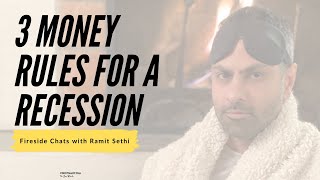
Ramit Sethi shares three money rules for recessions: protect family and friends, don't sell long-term investments, and hunt for opportunities once you have an emergency fund. He also covers audience rules like dollar-cost averaging and pivoting to online work.
Chapters
Tonight we are talking about ramit's three recession rules for money. And boy, rules are something that, especially when it comes to money, a lot of us don't have. We don't take the time to write down our philosophies about money. And so therefore, we encounter thousands of decisions over the course of our lifetime. Should I buy this? Should I, Should I take that trip? Should I upgrade my seat? And one thing that I found immensely helpful was to narrow those millions of lifetime choices down to a few simple rules. So I have Ramit's 10 money rules, which you can search and you will find 10 rules that I use to guide my thinking about money, my spending, et cetera. But what about a recession? What do you do then? Well, tonight I'm going to share three money rules that I have used to guide my decisions in this recession. And then I'm going to share some rules that you sent to me, what your money rules are. So let's talk about it. Keep in mind that I previously shared a framework for what you have to do at a time like this. Recall that that framework was in times like this, in times of crisis, we need to acknowledge reality, make a plan and move. That's the opposite of what many people do. They freeze in place and they wait for someone to tell them it's going to be okay. We don't want to do that. But that's a framework. Let me tell you how I applied it to my own life. Now, keep in mind that my financial situation is different than yours and it's different than even my own 10 years ago in the 2009 recession. So here's my rules. Rule number one, this comes first. Take care of my family and friends as much as I possibly can. So that meant that the first thing I did, I started looking in early March, I started seeing what was going on. I told Cas, we got to get out of here. There's going to be a big quarantine. It is very likely. It's going to happen for months. We need to go. So that was using money to quickly make decisions that I normally would not have made. That means rent a car, find a place, go. Don't prioritize cost. I have the money. Let's use it. And so that's what we did then. Family and the people we love, that was calling up everybody, making sure everybody's okay, offering that. If they need groceries, just tell us. We will figure out a way to get it to you and not concerning ourselves with the cost. So what if the groceries are Twice the amount they normally cost doesn't matter at a time like this. And even with the IWT team, my team, it was about letting them know we will do everything we can, starting with a $1,000 coronavirus stipend. Anything you need, you need to buy extra food, you need to send some to your parents, Send us the bill. That all falls under that first rule. Ramit's rule during a recession with money is take care of your friends and family. Start there. So that's the first thing that I did next was very simple. Don't sell investments. Follow the plan. So many of you have read chapter three and chapter seven of my book. You know that I talk about low cost long term investing and you know that I talk about how the market goes up and down and up and down. But over time it tends to go up at an average return of approximately 7 to 8% per year. Notice I said average. Some years it could go up 25%, some years it could drop 14%. But on average, that is what the historical return tells us. Because I've read enough and because I've been involved in the personal finance world for a long time and because I've been through recessions with smaller amounts of money in my account, to me this was just a small test to be able to follow my own plan. And my plan says, stick with the plan, keep investing as I've always done, and in fact, if I have extra money, go ahead and add that to the market. Now this is really interesting because as recently as today I posted someone who wrote me and I have to read you guys what this person sent me because it's quite the opposite. Let me show you here. How do I do this? I'm trying to look at my own IG story right now while I'm live on Instagram. Wow, this is. I've never attempted this. And anyway, let me just tell you what this person said. They were like, ramit, I read your whole book, it was great. Unfortunately, last week I got scared and I sold all my investments. What should I do? I was like, I posted it to ig and I was like, what would you say to this person? There is a person who has the information, they know all about long term returns, etc. But it doesn't matter because emotionally they did not connect with it, they didn't believe it and so they made a huge tragic money mistake. If you can simply not make a huge money mistake right now, that is a huge benefit to you over the long term. And if you can keep investing wow. Over the long term, you will probably do very, very well. So that's rule number two. Keep investing, don't sell my investments. And rule number three was look for new opportunities. So it's one thing if you are playing defense and for example, you're building up an emergency fund, do that first, prioritize that. It's another thing if you've already been doing the plan and executing it, which I've been, of course, I've been doing my own plan for a long time. So then I said to myself, alright, I acknowledge reality, I made plans, I took care of my family. What now? Let's start looking for opportunities. And honestly, I don't know what those opportunities will turn out to be. I'm here, I'm chatting with you guys, I love doing this. I'm getting more DMs than ever. I'm having fun. So who knows what this turns into. I'm also, well, I'm watching a lot of tv. Is that going to lead to any new opportunities? Vanderpump? Probably not, but. But we can always hope. The point here is there's a certain point once you have finished playing defense where you can actually play offense. And you know, one of the opportunities I would say is that IWT as a company is donating a huge amount. That is an opportunity that I would not have thought about and we could only do because we spent a lot of time building the company to being profitable. So my key rule number three, look for opportunities. And what I mean by that is don't only play defense. Once you've checked the boxes playing defense, start to look for opportunities. Whether it's to learn a new skill, develop a deeper relationship with your friends, talk to them every week on Zoom, whatever, look for opportunities. So those are my three recession rules when it comes to money. And I understand that I that's A lot of people are like, hey, I'm still at step number one, I need to build up an emergency fund. I'm still working on that framework. Totally fine, do that. But I wanted to share the way I think about a situation like this, specifically as it relates to money. Because my hope for you is that whether you are here now or whether you are here next time, it will allow you to start thinking about what you can do to move forward, to use your money to help people, to not play defense and shrink, but rather to think bigger, both with your family, with your investments, and also with your own opportunities. All right, so those are Ramit's three money rules for recessions. Now I Want to share some of the comments that came in about other people's rules? Now listen to these. I think these are fascinating recession rules. Don't panic. This will pass. Just keep doing what you've been doing in terms of investments. People say they are broke. Well, two months of coronavirus didn't land them there. They are there because of prior decisions. So start early, start today. That's a bit provocative. But let's try to take, let's try to really break down what this person is saying. What this person is saying is the best thing you can do for a bad situation is walk in prepared, right? And we've all heard stats about how in general Americans have very poor savings rates. So look, we can't change what happened yesterday, but we can learn from this lesson. And if you have a low savings rate, we can say to ourselves, I don't want to be in this situation again. So I'm going to start making changes now so that in the future I never have to be here. Okay? So that's what that lesson is saying. Here's another lesson from Megan Vic55 I am fortunate enough to be an essential worker and work remotely. My main money rule is to spend money responsibly on others and find ways to make others smile. Donate to a charity, send parents and friends homemade cookies. Record a video for your friends like medical workers and delivery people and let them know you see them. If you're crafty, make masks, share your time and if you have it, share money with others. Megan Vic55 Love that. Here's one. Do not change my investment strategy. Stay the course. Ignore the huge swings from market volatility and as this person says, shares in retirement funds are now being bought, on sale and will eventually go up. If your first reaction to that is how do you know they're going to go up? Read my book. I'm not saying they will always go up, but you should understand the history and get educated about money. Don't just let your emotions guide you. Rule number two for this person, ensure a one year emergency fund in case of layoff, which happened to me on April 3rd and I'm waiting on unemployment money. Step three, stay calm. No need to panic. Step four, start a business or other side gig. Step five, invest 5 to 10% in stocks. Only doing this because my emergency fund is set and my conscious spending plan is intact. Very nice, very thoughtful. That's Jilly Bling. Here's one more. I love this one from Claudie C. First and foremost, step up and serve. I Teach mindset and emotional intelligence and the need for that is huge. I've been giving away a ton of free material. This creates the next rule. Triple down on pivoting from in person brand workshops to online, which promotes branding. As a thought leader builds my network, et cetera, I know it will lead to eventually securing new multiple streams of income. I did just have 99% of my current income postponed or deferred. So when we can travel again, I'll have more income streams, a bigger brand, and a bigger network than ever. Claudie C. What you hear in this is somebody who is focusing on the long term now. Again, not everybody can do that. If you're concerned about where money's coming from for rent next week, this one doesn't apply to you. But that's okay. It doesn't mean we reject all the rules. We're just learning from different people and their rules. Okay, I'm going to give a couple more Cass, should we ask people what question what rules they have as well? Oh yeah. So if you have rules, type it in the question box, the lower portion of the screen. Here's Darren D. Weber. Recession or not, if I still have a job, max out my 401k, still have date night. My fiance deserves it. Pandemic just makes us get more creative. 3. Put trust in the things you can control. My health, my eating habits, sleeping habits, and relationships with people I love. That's a good one. Very matter of fact. Okay, last one. Reb Mog says my best recession rules make sure I have at least one year's salary saved up as an emergency fund. This is probably a bit over the top, but I think over preparation at a time like this is better. 2. Don't go on Reddit. Oh shit, that's. That's advice there. Maybe I should take number three. Continue DCA strategy. If you don't know what DCA is, read my book. Number four, if I have extra money, save more, donate, put more into my retirement accounts. Step 5 Reconsider my risk tolerance. I realized I don't panic even when there is a 30% decline. This is mainly because I have an emergency fund set up and I follow the IWT strategies. Okay? This person is educated about money. They've really thought about their philosophy. So their rules are perfect for someone in their situation. Okay, Those are my rules. And those are also the rules of some students who wrote in today. I thank you for contributing. I love hearing all the different diverse types of rules that people have. Obviously the rules you're hearing tonight are a little bit more advanced. Frankly, someone who even takes the time to create their money rules is probably a little bit more sophisticated. But I want to show you that kind of stuff because there's a lot. If you want to find people talking about struggling with money, there's plenty of stories about that, and we've talked about that here as well. But I also want to show you what happens as you move from playing defense to a little bit more advanced and playing a little bit more offense. Cass, someone said be especially generous. Someone else said, learning from financial experts. Wait, when they say generous, does that mean they are, for example, going to donate to our $25,000 fundraiser that closes tonight? And you can find the links on my Twitter account and my blog and everywhere, which closes tonight. So donate generously. $100. $500. 1,000. This is to help people get food. We're not even. It's not even going to us. It's going directly to people who need to be fed. Is that what they mean, Cass? Yeah. Okay. Thank you. Someone else said, do not withdraw from long term investments. Very good. Okay. All right. So those are good rules. So what I would challenge you to do tonight is to think about your rules. Again, most people don't have rules, but for the most important parts of life, I think it really pays to develop those rules. Money, relationships, parenting, travel. There are like five to ten areas in life. If you come up with a few things you believe, wow, it can really make decision making easy again. They're your rules. You could change them, adapt them, add to them, whatever. But just going through the process of writing down, what are my recession rules for my money right now. And then if you're feeling panicked, like the person who read my book and then the next day did the exact opposite of what I said, before you do that, you can look at my rules or look at your rules and say, am I following this? Let me take 24 hours and just think about it. That's what your own rules get you. They're not constricting. Rather, they actually are free. So I would challenge you to come up with your money rules. Send them to me on Instagram, DM me on email, Ramit Sethi willteachtoberich on Twitter amit Follow me first, then send me your rules. I want to know what you've got. And tag a friend. Let them know that they should watch tonight's Fireside Chat and all the future ones that I do when we're talking about money, business, careers, and psychology. Thanks for watching.









