“My husband gives me an allowance. I feel like a child.”
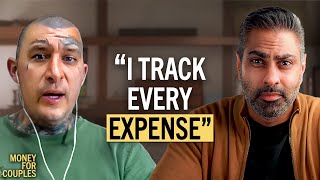
In this episode of Ramit Sethi’s podcast, Ramit interviews married couple Edward and Ellen about their strained money dynamics. Edward controls the household budget, envisioning a legacy of perpetual wealth for future generations, while Ellen feels infantilized, craving present‑moment freedom and a personal allowance. The conversation explores Edward’s future‑focused legacy mindset, Ellen’s desire for present‑day autonomy, and the power imbalance created by a strict allowance system. Ramit introduces a joint‑plus‑individual “no‑questions‑asked” spending model and guides the couple through a negotiation over discretionary budgets, eventually landing on a $300 monthly personal allowance for Ellen. Emotional communication is examined as Edward acknowledges his aggressive tone and Ellen apologizes for past resistance. The episode delves into how financial partnership, education, and shared decision‑making can empower both partners and positively influence their children. Follow‑up actions include increasing Ellen’s discretionary budget by 30%, enrolling her in an earnable program, and reflecting on the recent birth of their baby. The broader insight underscores that money dynamics mirror relationship patterns and that a shared partnership is essential for financial and relational health.
Chapters
He actually just told me yesterday that I wasn't going to receive any money this month because of the money that I went over budget is fully coming out of this month.
I want you to be satisfied with what you get for that money.
I don't think he trusts me at all, and it makes me not trust myself.
If she blows through all of her money, then she's going to blow through all of my money too quickly.
My wants never go away, and if I don't have access to it, I just hope that he'll give in.
I would like to face no financial hardship. Yes.
You make $28,000 a month. What hardship?
He always thinks like worst case scenario, and I just don't think that that's healthy.
I will never, or I will rob banks and do what I got to do to not put my family through what I went through.
I hope that he understands me and my feelings and that at the end of it, I get what I want.
I want her to know how to control her spending, but without being at that point yet, the second best thing that I could hope for is that she allows me to control it.
Edward and Ellen are in their 30s. They just moved back to Hawaii, her hometown, with a toddler and a new baby due any day now. They flip houses. They're high earners. They live in what most people would consider to be paradise. Everything sounds pretty good, right? But as you will soon hear, their different worldviews on money are driving a wedge between them. He thinks their money problem is strictly a numbers issue. She knows they have a lot of money and she's confused why they fight over it. Why can't they both spend more time together? The layers in today's episodes are very revealing. Trust me. Right now, let's look at their numbers in the conscious spending plan. Assets, $3.9 million. Investments, $250,000. Savings, $40,000. Debt, $1.8 million. For a total net worth of $2.4 million. Fixed costs, 68%. Investments 2%, savings 0%, and guilt-free spending 30%. So they've got millions of dollars in assets, a house in Hawaii, a growing family. Why is money a problem? I want you to tell me in the comments, when was a time that you looked successful from the outside, but beneath the surface you were worried about money? Now let's meet Edward and Ellen. If you've recently discovered this podcast and you've wondered, how can I get Ramit to answer my specific money question? There are two ways to do it. Number one, you can apply to be on this podcast, although we are already full for the rest of the year. Number two, you can join my money coaching membership. In this program, we do a ton of cool stuff. I wanna make sure you know about it. We do a monthly live call with me where I cover some of my favorite money topics that I can't go into publicly in as much detail, and I break down our members' conscious spending plan. Plus, I answer your questions live. We also have tons of virtual events coming up that cover every aspect of living a rich life. For example, our new event Money for Aging Parents is coming up at the end of October. That is included for all money coaching members. You get access to our library of all past calls, like how to find an extra $1,000 a month and how to do a rich life annual review. Plus, we have a money coaching community group where you can see inspiration, how other people are spending their money, and get your own questions answered. If you want to get help, if you want to meet amazing other people in money coaching and you want to build your rich life faster and bigger, you should check out money coaching today. Go to iwt.com/moneycoaching to join right now. That's iwt.com/moneycoaching.
As you always say, it's not the number in the bank account, right, that is going to change the way that you view money. We are pretty financially well off and my brain does not compute that. Everything for me is a fire, a blown tire. That's $200, $300 is a huge deal for me. Ellen, on the other hand, when we first got together, I managed money pretty much immediately. So she really hasn't had to. So the way that I think of it is that she doesn't, put a time parameter on how long it takes to make the money. So she is more frivolous in her spending.
I think that there is always actually wiggle room, that there's more money. I don't take it super serious because I just think that there, there's more than he's leading on.
Okay.
And it's probably not very respectful of me, but that's how I feel.
Do you end up getting the thing you were thinking about?
I don't have access. I mean, I can have access to the money if I wanted to spend it, but I would never do that without making sure he was okay with it because I do respect him in that way where I'm not going to just spend money he said we can't spend.
I'm curious if you can think of a time in the last 6 months or so where the two of you were not on the same financial page?
Yeah, I can think of one. So I had a hospital birth with my first, and after that experience, I really wanted to have a home birth for my second. Once we moved back to Hawaii, I thought this would be the perfect place to do it. My family's here, there's a very experienced midwife, uh, that does it on island, and It's not cheap, especially when you already have health insurance and can just have it cost nothing out of pocket at the hospital. But he definitely left the opportunity for me to decide.
Ask him as if I'm there.
Babe, I really want to have a home birth. Uh, can you support me in that? And are you okay with that? It's going to cost $8,000 and above.
I understand that you really want to do it and I can appreciate why. I personally don't think that it's a good idea to spend that much money on something that's elective when we have insurance that will cover that cost. But I know how important it is to you, so I'll let you make the decision.
Okay. Well, that's a lot of pressure for me to make that kind of decision. For our family when I know the money could be going towards other things. And now it just feels like I'm being selfish to spend that kind of money because I want a different experience.
Those are the kinds of decisions that I make with, you know, most of the stuff in our life every day. And, you know, they're not always easy. So, you know, if it's important to you, then we'll do it.
I've just never been in the position to be the one to decide to make that big of a purchase. I just don't want you to have any resentment towards me if I choose to do it.
Okay.
How did it end? Like that?
It ended like that.
When's the baby due?
Uh, the 28th of this month.
Yeah, the baby is due in 4 weeks. What?
Yeah.
What'd you do? What'd you decide?
I think a few hours later I was like, this is something that's very important to me. It's a memory. I might never have the experience to do this again with another child. I'm going to be selfish, I guess, in this moment and make that decision to go ahead with it.
How would you analyze the dynamics of what happened in that conversation?
Uh, definitely parent-child. Okay. Uh, she's coming and asking for permission, and, you know, I say, yeah, go ahead, make the decision. And she's second-guessing, and she feels bad about it. And, you know, it's— she's looking to me as the person that's in charge of everything. And, you know, I'm letting her look at me that way, and I'm taking that, you know, that leadership role.
Okay.
I see it totally differently.
Tell me.
I see it as him trusting in me in that moment to kind of understand more of our finances and giving me the opportunity to make the choice and for him to let go of the control.
Oh, so Ellen, did you find that conversation positive and productive?
I do tell him— emotional.
It's okay, take your time. And also, there's nothing wrong with crying. Money is emotional.
Yeah, I do tell him often that it feels like he's my father in ways where I'm asking permission, and it doesn't feel good because I know that we've gotten to where we are financially because of the both this. And I feel like every time I ask for anything, no matter if it's more face lotion, I have to overexplain why I need it for him to say yes. And that constant 'Let me ask. Let's see what he says. Let me go in detail about why I need it' is not a good feeling.
Can I ask you a tough question, Ellen?
Yes.
You asked him about the home birth and he essentially said, 'You decide.' When he said that, you didn't say, 'Yes, I want to do it.' done, end of discussion. Then you put yourself down by calling yourself selfish. Why do you think you did that?
I don't think that his words sometimes, that he means for it to come across the way it does, but it does make me feel guilty all the time and question myself.
I feel bad that she feels guilty. Like, I don't, I don't want her to feel bad about money. I don't want her to feel guilty about money. I don't want her to feel anything negative. I just want her to be cognizant of, you know, our budget and what we have to spend on any given month. And it's like, go buy whatever the hell you want. I don't care. Just don't spend more than this.
In your application, you wrote something that caught my eye, and I'd like to read it back to you. The question was, what would be your ideal outcome from our conversation? And your answer was, I'd like to be less stressed about our money, and I'd like her to be a little more stressed about it. Tell me more about that answer.
I want her to worry, definitely not as much as me, right? But definitely a little bit more. I want her to say, hey, this, this thing that we might not necessarily need, that I just wanted spur of the moment, is going to cost an hour or two of our life to be able to get.
What does that word worry mean?
Just thinking through the purchase a little bit more, not necessarily worrying about it. I worry a lot, right? I don't want her to worry. I worry enough for you, me, her, both of our kids.
You do a little. You want me to worry a little.
I don't want her to be stressed about it. I want her to be comfortable and confident. In our financial position, but also understand that we can't buy every single thing that we want. We have to prioritize our money on what's important to us. To me, it seems like she prioritizes a lot more than we can actually, you know, afford.
I'm sure I do, but since I don't really know our money situation, I have no real idea of what budget we have. So when he tells me we can't go over the budget, I don't really grasp what he's saying at all. Oh gosh, this is so interesting for me.
Why?
Because I really don't have a relationship with it. I don't even know what that looks like. I don't, I don't even watch my husband do it.
How do people learn about money?
I don't know. If I felt like I knew that, maybe I would've started. What the fuck is on screen right now?
What is that, everybody? If you're not watching on YouTube, I just held up something black, orange, and yellow that could certainly help educate Ellen. Yes, it's my book, I Will Teach You to Be Rich. You can get it anywhere, including all public libraries. And if you're not sure, you can check out the 22,000 reviews on Amazon. Let's break down what we just heard. Ellen wants a home birth. Edward says it's your decision, but somehow she ends up calling herself selfish. Oh, and they're not fighting about whether they have the money because they do. The $8,000 was there all along. She asks, he approves. Do you notice the pattern? In fact, do you catch the other pattern that's simmering beneath the surface? Let's keep going. You're gonna see it next. You hear a lot of advice about starting a business that tells you to just start. Well, I remember starting my business and every step was confusing. Do I need the right website? How does this tech platform work? Well, the great part is there are now tools that make it way easier than when I was starting out. And this episode's sponsor, Shopify, is a great example. Shopify is built for people who do not want to spend weeks tinkering around to figure out the right shipping zones and sales tax settings. Shopify's technology lets you start off simple, and as you grow, it can become as complex as you need it to be. In fact, it can even connect you in-store online, whether you've got 1 location or 1,000. And it makes shopping easier for your customers because you can ship directly to customer, buy online, pick up in store. It gives your staff tools to handle every part of the process that they need. And because acquiring customers is expensive, Shopify helps you keep the ones that you've got. It's got first-party data, built-in personalization, and you can become more effective with your marketing. One report from Ernst Young showed that businesses using Shopify POS saw an average of 8.9% boost in sales. Get all the big stuff for your small business right with Shopify. Sign up for your $1 per month trial and start selling today at shopify.com/ramit. Go to shopify.com/ramit. shopify.com/ramit. When I was growing up, I did not know anything about nutrition. I didn't know the word protein until I went to college. Now I have learned a lot more about nutrition. I love understanding my macros and adjusting them depending on my goals, especially so I don't have to think about it. Now, there are lots of ways to do this. You can do it on your own. You can get a chef. For a lot of people, that sweet spot is Factor. Factor is a chef-crafted, dietitian-approved meal delivery service that helps you eat well without wasting time. It's delivered right to your door, ready to eat. And they're perfect for you when you are too busy or too tired to cook, but you still want something that's healthy and nutritious. They have lots of different options including Mediterranean, keto, protein plus, and GLP-friendly meals. Their variety is good. You're not stuck eating plain chicken and rice every day just to hit your macros. 97% of customers say that Factor has helped them live healthier lives, and if I needed healthier ready-made meals, I would give them a shot. Eat smart at factor meals.com/Ramit50off and use code Ramit 50 off to get 50% off your first box plus free breakfast for 1 year. That's code Ramit 50 off at factor meals.com for 50% off your first box plus free breakfast for 1 year. Get delicious ready-to-eat meals delivered with Factor. Offer only valid for new Factor customers with code and qualifying auto-renewing subscription purchase.
Yeah, I don't see those numbers.
Mhm.
And I know that he is so good at saving and not overspending that sometimes he'll say to me, we make around this amount. And I'm like, oh, whoa. Well, in that case, I just start thinking of things I wanna buy. But usually he's like, we can't afford that. We can't, don't get the $5 subscription, like, um, to whatever TV streaming service. So yeah, I feel very confused about what money we actually have.
What do you say when he says, don't go over the budget?
I'll listen to it for a moment, but then I start thinking about the things I think I need. And I think that there's like a hidden, not necessarily hidden, but like another layer of savings that we do have where it's not actually affecting us.
My outlook on it, right? But it's stuff that we don't need. And then our discretionary budget is gone halfway through the month. And then, you know, I don't want to say I'm on the hook because it's our money, right? But I'm on the hook to find an extra X amount of dollars to carry our discretionary budget through the rest of the month. For example, right now she's pregnant, so she's taking vitamins, prenatals, whatever. That comes out of discretionary because that's not something that's going to be something she takes after the baby's born, right? Like it's in this timeframe. And instead of using the money for that, you know, we'll go to Target and she'll buy our youngest daughter toys that she doesn't need, or she'll buy something for the house that we don't necessarily need. And avoid the, the things that we do need.
There was— I had a— it's called the blessing way of a ceremony celebrating the mother and baby instead of a typical baby shower. Okay. So that was another expense of food and drinks and flowers. And he expected for that to come out of my monthly amount. And I said, that's not possible. Um, you know, that it should be part of our food budget if there's food and drinks. And I ended up getting what I needed, but because of that, we went over budget. And he actually just told me yesterday that I wasn't going to receive any money this month because of the money that I went over budget is fully coming out of this month.
How did you feel when he told you that?
Silent. Usually I would want to try to defend myself and explain myself, but I knew that this time around there was no way to really win, and I was too exhausted to try.
So now she has to come to me, and I got to pull that from somewhere else because, you know, I run our budget, you know, fairly tight. I, you know—
huh, what was that word? Who runs the budget?
I run the budget. Oh, I absolutely. Yeah. Does it work?
Generally. If you didn't have all this stress, quote, stress, or things to manage, what would you be? Who would you be?
I would be a slug, man. Like, I don't have, you know.
Yeah, that's it. The man works. Man has his purpose is to what? It starts with a P. Provide.
Provide. Providing is, you know, what I, what I am and I'm happy with that.
Yeah, it's what he's told me in the past is like, I, my whole purpose on this planet or the only thing that motivates me is like providing and for my family.
Well, if it works, what are we doing here?
We're here for the emotional part, which I suck at.
Oh, okay.
Okay.
The budget works. The math is math. That's black and white. No problem with that. But the emotional part, that's different. Yeah.
Got it.
Yeah. Edward, in your application, you described yourself as, quote, neurotic and anxious. Okay. How does that show up for you?
I'm like a walking Monte Carlo. You know, every, every decision is just 10,000 different outcomes and, you know, trying to figure out which is going to be be the best. And, you know, out of those outcomes, which one is going to be the best financially? Which one is going to be the best emotionally for my family? Because if it wasn't for, you know, Ellen and my kids, I wouldn't be like a dragon, man. I would just sit in this tiny little cave and I would hoard all my money and I would go swimming in it like Scrooge McDuck.
Are you in the FIRE community?
I am, yeah. Yes.
Yeah. Okay. Amazing. Ellen, would you agree with Edward that he is, quote, neurotic and anxious? Yes. Okay. With money or with other things as well?
His entire life.
Okay. Oh, so this is, is this like a known thing?
Oh yeah.
Yes. Okay. Edward, have you talked to a therapist?
Oh yeah.
Oh, good. You, and you work with one now?
I work with two now.
Excellent. Okay.
All right.
Have you talked to them about money? Oh yeah. Great. Wait. Okay. So I'm very happy to hear that. I love that.
Well, I assume that you are, you know, probably in the forefront of people that are capable of, you know, making change with couples when it comes to money. And so if I have to trade, you know, looking like an asshole in front of a million people to get that level of care, I'm happy to do it.
I have to jump in here because this is such a huge moment of clarity. It feels like I've been reading a map, not knowing what direction I'm looking at, and suddenly I understand. Edward admitting that he suffers from anxiety and he is a member of the fire community really helps to clarify a lot. What initially appears as a pure need for control almost always has something beneath the surface. It's not a justification., but at least it helps us to understand. And to his credit, Edward is aware he's in therapy. He came on this show and he's being very honest. I applaud him for coming here and for trying. But it's one thing to know that something needs to change. It's another to actually act differently. And this is a real problem. Edward sets the budget. Edward makes the decisions. Ellen is basically living inside someone else's system. She has to ask for permission. She has to justify small purchases. She has to carry the emotional weight of someone else's anxiety while being told it's all about the numbers. I'm not okay with this dynamic. Would you be? Let's see what happens next. When was the first time you talked about money?
When I met Edward, I had actually just come into some family money, and I had no idea what I was doing with it. How much was it? Um, $1 million. I knew that I wanted security and to feel like I had a home that wasn't going to be taken away from me. So over half of it I spent on a condo and I definitely was spending not in a very responsible way. And that was the first introduction he had to me was just kind of shopping and buying whatever I wanted. And he proposed to me in the first month. And when that happened, he was like, listen, you need to be smarter with what you have and not lose it all and spend it all too quickly. So I want to help you set a budget for yourself.
So did he set that budget?
He did. I wasn't super strict with sticking to it because, you know, at that point it was still my money. But I was trying to be more aware of what I was doing and realizing, hey, yeah, he's right. Like, let me be smarter with it. Let me learn from him in ways which I was more willing to do and talk about money in the beginning of our relationship.
Why did it change?
Mm-hmm. Once our money merged, he was a lot tighter with it and we started being smarter with our money and investing in a bunch of different ways. And that was just very overwhelming to me to try to understand it that I would rather just not talk about it.
So when we first met, she was, you know, spending extravagantly, right? She was, you know, buying YSL bags and designer clothes, and I didn't really give a shit because, you know, I didn't have long-term plans or goals with her in my life. And, you know, that quickly changed, and, you know, I quickly realized, oh shit, you know, I want to marry this girl. And if she blows through all of her money, then she's going to blow through all of my money too quickly. So yeah, I took more control than I should have, but at the time, that was me trying to mold her into someone that was financially savvy enough to share a life with. Did it work? Yeah. I mean, we're, you know, we're 8 years in and there's things that need to be changed, right? But she's not out buying Coach bags and, you know, blowing all of our money like because she wants to, right? She is, you know, allowed me to stay in control and to manage it. And she's been, you know, a wonderful partner and just in every way other than, you know, managing money herself. But she isn't going behind my back and spending money. And she's letting me take the reins on our budget, which is, you know, obviously not what I want. I want her to be involved. I want her to know our numbers. I want her to know how to control her spending. But without being at that point yet, the second best thing that I could hope for is that she allows me to control it.
I'm grateful for him stepping in at the beginning of our relationship because I look back and I'm like, oh, if I didn't meet him when I did, who knows where I would have been now. Okay.
Are the two of you— would you describe your relationship as a traditional relationship? Yes. Okay. Wow. That was a quick response. So traditional. How do you define traditional?
I do like consider him like the head of the house. And I, I like that. I think we both have our roles that we do. I like to be at home and taking care of the household and our children. It's what I think I excel in and enjoy doing. And, you know, for him, he's very good at making money and keeping things in line. And so we've been good with the dynamic that we have with each other.
Edward, do you agree? Oh, absolutely. I'm very— I prefer a traditional relationship, and I'm glad that, you know, that I was able to find Ellen and she's happy to do it.
Okay, cool. All right. That helps me understand. A little bit more of how you met as it relates to money and where you are today. Thank you for clarifying that. You wrote in your application, Edward, I fired and I am scared we're going to go broke every day. My wife has no skills if I got hit by a bus.
Hurtful. Marketable skills. She has, you know, thousands of skills. She's, you know, one of the smartest people I've ever known. And, you know, she's talented and good at everything that she does, but outside of the house, none of that is marketable to make the same amount of money that I was making.
Isn't that the way a traditional relationship often worked though?
Yeah. And I have fail-safes in place, right? Life insurance for everybody in the event that something did happen to me. She could liquidate assets, cash out the the life insurance and be able to live a comfortable life for the rest of her life. But she doesn't know how to do that.
And I want her to know. I feel that a lot of the money that we have made over the years has actually been from the two of us working together because we flip homes and do live-in home flips. Okay. And I'm not leaving the house. I'm not getting a check written directly to me. It's to both of us. But I'm going through 2 years of my life of designing a home and living through a home remodel with children and pregnancies where we make a big profit. And I know that that wouldn't happen without me by his side as his partner in that.
Okay, Edward, you agree? Yeah, absolutely. I 100% agree. And, you know, I wouldn't be where I am without her and vice versa.
Okay, I mean, um, we're gonna get to the numbers in a minute. Do you want to continue a traditional relationship with money?
In a way, yes. I don't want— like, I don't want that role to go to me. I don't even want that role to be like half of mine necessarily, but definitely way more involved than I currently am.
I mean, like I said, I want to be able to You know, every, at the beginning of every month, just say, okay, you have our discretionary money, go do whatever you want with it. Just don't go over that, that amount. And, you know, I would be more than stoked with that. That's it.
And that's what you want and you'll be happy. That's it.
Okay. Make it last the month and don't go over that amount. I'm, you know, a pig in shit.
Okay.
That's a good answer. I think, um, probably there are much more effective ways to do it, like not giving like little allowance and not having the parent-child dynamic and really discussing what traditional means. Because traditional, I don't have a problem if you both choose to be traditional, that's fine. But is it traditional? But we are equal in this way. Is it traditional or one person takes on a role but we change as one person has a baby? Who knows? You decide.
Yeah.
Nobody has to stick with whatever society tells us. You decide. It's your relationship. Such an interesting twist of human nature to see how people spend freely on some of the largest purchases of their life, but then obsess over tiny little things like pudding cups. I just spoke to a couple that has a house, pool, 3 cars, a jet ski, yet they buy discounted lunch meat that's close to expiring. Just think about it. These are the very same people who have a financial advisor who charges a nominal fee. What do you think that nominal fee is? Probably around 1% of the portfolio every year. But if you're paying that type of fee, you don't notice it because you don't actually get a clear invoice that you have to pay. It just quietly comes out of your account every quarter, and that fee can end up costing you over 25% of your total lifetime returns. Now, if you want somebody to look over your financial plan to help you build one, to help you look over your investments and asset allocation, no problem. I recommend it for people who have a complicated financial situation or they're nearing retirement. Just make sure you find someone who charges a flat fee, not a percentage. That is why I recommend Facet. Facet charges a flat membership fee for financial planning, not a percentage of your portfolio. You get access to a team of CFP professionals, always a CFP, always a fiduciary, who help you create a personalized financial plan and actually keep it updated. They help with investment management, retirement planning, tax strategy, estate planning, so that you are not doing it alone. And the plan evolves with your life, whether you're starting a family, changing jobs, or planning for retirement. Right now, Facet is waiving their $250 enrollment fee for new annual members. And if you invest and maintain $5,000 within your first 90 days, they will add $300 to your brokerage account. Head to facet.com/ramit to see which membership— Core, Plus, or Complete— is right for you. Again, that's facet.com/ramit. I'm not a member of Facet, and I have an incentive to endorse Facet as I have an ongoing fee-based contract for cash compensation based on this endorsement. All opinions are my own and not a guarantee of similar outcome. My colleague recently got a physical, and her doctor asked her, did you ever see that eye doctor we talked about last year? It had been 3 years since your last eye checkup. Take one guess at her answer.
Nope.
How about that dermatologist? Nope. Does any of this sound familiar? She got busy. She didn't feel like searching for doctors who take insurance, didn't want to waste time on the phone seeing if there was an appointment available in the next 6 weeks. I get it, this stuff is annoying. But here's a better option. She could use Zocdoc, search for a doctor, and book that appointment that she's been putting off today. Zocdoc is a free app and website where you can search and compare high-quality in-network doctors and click to instantly book an appointment. They have over 100,000 doctors across every specialty from mental health, dental, primary care, and more. Just filter for the doctors based on your insurance, your location, even ratings, and find a doctor who's a good fit for your needs. Plus, Zocdoc appointments happen fast, usually within 24 to 72 hours. Instantly click through your options, book the appointment, and you are good to go. If I needed to find a new doctor today, this is what I would use. Stop putting off these doctor's appointments and go to Zocdoc.com/Ramit to find and instantly book a top-rated doctor today.
That's Zocdoc.com/Ramit.
Zocdoc.com/Ramit.
Okay, let's take a look at the numbers. All right, let's go. Edward, can you read the word in bold and then the number in Full next to it for this entire box, please.
Assets, $3,910,000. Invest, $250,000. Savings, $40,000. Debt, $1,800,000. Total net worth, $2,400,000.
All right. What do you think about those numbers?
You're in your 30s. I know that it is significantly better than the standard, you know, person. But mentally, it doesn't— I'm going to say, I'm going to use the word feel. It doesn't feel like enough because I don't compare myself to a normal person. I hold myself at a higher standard. And to me, for my standard, it's not good enough.
So, who do you compare yourself to? You, people like you.
You compare yourself to me?
Yeah.
And why? I'm failing compared to you. And that's how I think about it, you know? That's just how my brain processes it. And if I'm not doing as good as the top 1-2%, then I'm failing.
All right. We're going to talk about this. But anyway, $2.4 million. Ellen, what do you say about those numbers?
I think they're great. I am very happy and satisfied and surprised. And yeah, I don't compare myself to others or people that have more than me.
Do you find it a little confusing that you have constant debates about $20 face cream when you have a net worth of $2.4 million?
Yes, I do. And those are the times of why I don't stop badgering him about the things that I want when they're simple things like that.
Do you two trust each other with money?
I trust him 100%. I— that's why I don't know much about it. I put all of our money fully up to him and what he thinks we should invest in and spend on.
Yeah, I trust her in not spending it. But if I were to die, I think she would spend all of our money in a couple years.
I could understand that if I, say for example, just used our cards and, and was just spending money. But like, I think I'm pretty trustworthy that I don't spend a dime unless I You speak to you.
I don't want you to have to do that. I don't want you to have to ask me. I don't want permission on stuff. I want you to know what our budget is. I want you to know how much we have in our budget for you and whatever bullcrap we need for the house. And I want you to stick to that. And I don't want to have to look over your shoulder and like ask you once a week how much you're spending and if you're going over and if I need to move money over from a business to, you know, pay for the other 2 weeks of groceries because You spent all of the money on a shopping trip at Target.
Ellen, you agree with that or disagree?
Hmm. That is a worry of mine because I am not good at making the budget that I'm given last.
Okay. What's the number for discretionary on a monthly basis?
Between discretionary budget and eating out, which are kind of our, you know, our play money is around $1,200 a month.
And I think that's where we get lost a lot in me thinking about when I'm spending money, is this part of that? I went, oh, okay. All the pills that vitamins that my midwife wants me to take, they are pretty expensive. It's like $200 a month. And I asked him, hey, do I need to use it out of that money or are you going to pay for that from the rest of our budget? And I'm a very detailed person and he's not, and he doesn't say much words. So to him, It was, oh yeah, I have it covered. So at the end of the month when I'm like, hey, we need to restock my— all my other pills for my midwife, he goes, you didn't save money for that?
Does everybody on this call know what discretionary includes?
Thank you. That's how I feel. I feel very confused of what that all entails.
Have you two ever talked about it? I've talked about it.
Several times.
And who'd you talk about it with? Apparently the ghosts in the house.
I don't— That's quite an interesting use of words. Like, you didn't say we've talked about it. I've talked about it.
Well, who'd you talk to? I talked at Ellen. Oh. And then I watch her eyes glaze over.
And I get that. But what I'm trying to get at is that there should be more trust in me. The fact that I do have access to our cards, but I don't use them.
With a net worth of $2.4 million in their 30s, there should not be badgering going on in this relationship. To put it bluntly, a $20 face cream should not be a topic of discussion for a couple like this. Now, I don't think this means one of them is irresponsible.. I think they've set up their structure incorrectly. Ellen has to go over, please, please, please, can I have extra money? And then Edward goes, it's up to you. Or no, you already blew through the money last month. Now, when most people hear this dynamic, the first thing they jump to is bad people. Edward, you're bad. Ellen, you need to take control. Maybe, maybe not. More likely it's bad structure. On one hand, they are aware of discretionary spending, which is a positive because most couples don't even know about that. But on the other hand, I don't think what Edward qualifies as discretionary really fits the definition. Did you catch what he said earlier? He said Ellen's prenatal vitamins come out of her discretionary spending because they're temporary. What the fuck? How are you going to tell your wife that prenatal vitamins come out of discretionary spending? It's like saying that dentist appointment to remove 3 cavities is discretionary because you only have to do it once a year. This is where a lot of you should make a list of your core values. And one of your core values should probably be generosity. Because if you're generous to your partner, you would never, ever make her buy prenatal vitamins out of her personal discretionary money. God, I'm getting so fucking mad right now. From a systems perspective, we need to address some fixes in their financial infrastructure. Come with me. Let's look at their numbers together. Investments are at 2%. I think that kind of makes sense if you assume that most of your investments are real estate, so you're probably not putting a lot into the market. Is that correct? Correct. All right. Savings are at zero. What the fuck? You have $40,000 of savings, which is like a little over 2 months. Why are you saving no money?
I have a couple different lines of credit. I have a business that I can tap into. I have a lot of different ways that I can access money and I don't like money sitting in an account. I knew it.
Welting on the vine. I knew you were going to say it. I don't like letting my money sit and only earn 3% interest. Fuck that.
No. Goddamn it. My little soldiers are going to go out and bring friends home and go make money for me.
Is this your mortgage? Yeah. It's 41%. That's pretty expensive. It's $11,000 a month. Is that your primary residence?
So we have an interesting setup that's different than most people. This property is our primary residence, but it also has a couple of rental units on it. So while that, you know, the mortgage is high, it's offset by income that it's producing.
Okay. So you pay $11,000. How much do you make per month? $5,600. Correct. Okay, great. So you're paying like roughly half of that, but— and then you're getting some of it in. Yeah. Rent. Okay, fine. Debt payments, $800.
What's the debt for the property? So yeah, right now we do live-in flips. I am using a HELOC to finish this one off. We just finished it off, so I'm going to be paying that back down aggressively going forward. Hmm. How many properties you own? 3 properties with 8 doors.
Okay, cool. Well done. Clothes are at zero. Phone, $210. Subscriptions, $200. So really we're talking about the mortgage, which is expensive. But the one thing that's a little confusing to me is that it says at the bottom the amount you have left over is $7,000 a month.
We all agree that that's not accurate. So it's been difficult because since we've been in this property, we moved out here in March and since March we've been in an ongoing project. Right. So 95% of that money has been going to pay material, labor, everything that we need to, to fix the property up. And now that we're effectively done with that, we have 3, 4 more weeks of exterior work. Once we're done with that, that money is then going to be reinvested to paying off the line of credit that we took because that line of credit is almost at 11%.
Oh, that's the $800 a month that you're paying off? Yeah. $80K.
How long will that take to pay off? I mean, if I'm aggressive about it, probably 9 to 10 months.
Okay. All right, Ellen, all the stuff that Edward just told me, are you in the loop on that or no?
Yeah, I would say enough. So the big amounts I'm pretty aware of.
Okay, got it. I'm going to ask Ellen to read this combined gross monthly income number.
What's that number there?
$28,000. $28,000 a month gross, which means that your household income is $336,000 a year. By a show of hands, who here knew that number? Around. How much is around? How much did you think it was, Ellen?
I thought it was like around maybe $200,000.
Stop right there. If you're— if your number starts with a different first digit than the actual income, you don't know your income. Okay. What does it make you think that you did not know your income within $80,000?
That I'm not caring enough to learn more and be more involved when I'm an equal partner with my partner. Why? Because I don't want to have the discussions with him. Of getting in an argument because I feel like we already talk about money often in ways of me wanting things that I don't want to talk about it in any other way.
Yeah, it's a, it's a problem. You know, I recognize that I've almost set up a system of hoops that I make her jump through to be able to get to the finish line and, you know, get what she wants. And I think that I've done that intentionally over the years because if those, you know, those stopgaps weren't in place, those hoops weren't there, it wouldn't be, you know, a $20 face cream. It would be a $20 face cream and a $20 bag and a $20 bottle and a $20 candle and so on and so forth. And our discretionary money would end up killing our budget. Right? Like it would, you know, I want our money to grow. I don't want our money to slowly dwindle because we're spending more than we have. And I feel like if I don't stop her from spending on dumb little $20, that's what's going to happen.
Ellen? Well, it's hard because in his eyes, anything I spend money on is not a necessity and it's dumb. And that's because he doesn't need anything. Like, he will use the same soap to wash his entire body. That's all he needs. He'll wear the same clothes that have— are covered in holes and paint stains. He doesn't need any more clothes. You know, he loves sports cars, but he won't buy himself one. Like, I'm the one who makes him get things for himself. So for me, being like, okay, I need face cream. That is a pretty basic necessity in my opinion. I don't buy the fancy ones anymore. I'm very natural and buy the cheaper versions of things. But if I'm out of something that I use on a daily basis, I don't want to have to bicker with you on how my skin's going to dry out.
Yeah. And I want to get to a point where I can give you a budget to go do that and you don't blow through that budget.
Halfway through the month. I agree, but the budget needs to be more than what it is.
Or you need to spend less or somewhere in the middle.
But say there's some things that get crossed in our communication and that month I end up spending $200 more and I don't talk to you about it. In my opinion, from our net worth, like we should be fine with that. And that is me trying to stay within it. I'm not blowing thousands of more dollars, but then we don't have to talk about those small little nitpicking things.
And in my mind, what that will become is after 3 months of doing it, you're going to say, we're fine. So if I go $200 over that, it won't be a big deal. And then that's going to continue until, you know, we have this outrageous outflow of money. That we really can't afford that's eroding our savings. Or it's not, you know, an emotional thing for me. It's like, this is how much we have. And, you know, I just want to be able to, you know, this starting this month, right? We're recording this on the second of the month. I want to be able to give her the budget. Hey, this is what you can spend this month and have her do that.
Do you have to be so, so in the box though? Like, and that's what I'm trying to say is that if I am trying to stick to the budget, but I go a little bit over, say it's only, say it's $30 more that month, you know, do I really need to like talk to you about that?
No, $30 isn't a big deal, but I would also like to see you go under the budget $30 one month. And like, that's the problem that I have is that you have historically never done that. You don't go under budget, right? Like you figure out I have this much money to spend. I am gonna spend every fucking penny of it. And that's the problem that I have with it.
Wow. There is a lot going on here. Ellen didn't know their income within $80,000. She has become avoidant in part, I suspect, because anytime she asks anything about money, she gets shut down. And then Edward admits it. He's built a system of hoops to test her. If she passes, she gets face cream. If she fails, no money next month. And because of this, Ellen has never been taught, or importantly, she has never learned herself how to manage money. She plays financial defense, only avoiding getting in trouble, never engaging with what she truly wants and needs. This cannot go on. This is one of the dynamics we work on in money coaching as well. If you're in a relationship where money means asking for permission and feeling guilty and constantly fighting over what counts, this is what we can help with. You don't just need a better budget. In fact, you probably don't even need a budget at all. You need a better system that is built together. You can apply for money coaching at iwt.com/moneycoaching. We'll work through the numbers and we will help you feel better about your money. Now let's see if we can shift the dynamic. If you're over 30 years old and I walked into your bedroom, what would I see? I'm talking about your mattress, you disgusting freaks. You guys, you're not in college anymore. You don't need to sleep on a free mattress where you wake up every morning going, ah, this sucks. You don't need to. You can actually wake up feeling good in the morning. You know, my wife and I use a Leesa mattress. We absolutely love it. Leesa offers several different mattress models. So whether you sleep on your side, your back, or somewhere in between, there's one built for you, and you will feel the difference very quickly. They use premium materials in every mattress, and they are designed to deliver full-body support. Every Leesa mattress is assembled in the US. It comes with free shipping, easy returns, and a 100-night sleep trial. The reason my wife and I chose Leesa is that we want a really firm mattress. We chose the firmest one of all, and we love it. The more we have traveled, the more we've realized a firm mattress gives us amazing sleep. Leesa was the only brand we found that provided this firm of a mattress. Go to leesa.com for 20% off mattresses plus an extra $50 off when you use promo code Ramit. That's exclusive for my listeners. That's leesa.com, promo code Ramit, for 20% off mattresses plus an extra $50 off. Support our show. Let them know that we sent you after checkout. Leesa.com, promo code Ramit. Can I step in for a second? Yeah. I love this conversation. I love the honesty. So thank you both. I'm not kidding. If you zoom up, what's happening in this conversation between the two of you? What's the role that each of you is playing?
Ellen? Uh, I, I feel like he's being the father and I'm being the child and trying to get across why I need this for school or whatever it is. And that there's no trust in that, uh, I could do it because we haven't even tried it in this way where if I went over, to trust that I'm not going to go crazy over, and be okay that it doesn't need to be this strict down to the dollar amount that I stayed within.
You said there is no trust. That's a very passive phrase. Who does not trust the other?
I don't think he trusts me at all, and it makes me not trust myself.
Edward, what do you see as you zoom up? I, I mean, the same, the same dynamic. And, you know, I, I agree with her, and, you know, I don't trust her with money because there isn't a time that I can remember where she's spent under her budget. There's never been a time where I've seen her save money. There's never been a time where I've seen her make smart financial decisions when she has the opportunity to do so. I want to be able to trust that she's going to stick to what our budget is, but I realistically right now don't see that as feasible.
Will it ever be feasible? Hopefully.
I'm scared. Why? I'm scared because I haven't done it. I don't want to let him down when it's a larger, a larger list for our family.
I don't know. My first thought is that she doesn't want to have the responsibility and she doesn't want to have the control and she, she doesn't want to admit to that to me. And I think if my gut shot reaction is that she would just rather have me maintain all the bills and do all the discretionary money and just have me give her $1,000 a month to go do what she wants to do with it. And she would be happy with it. And I've considered that, but I won't be happy with it. Why? Because I want her to know the numbers. I want her to be able to be You know, sufficient if I'm not here. I want her to like be able to teach our daughter and like be a role model to, you know, our daughter that, you know, I can manage numbers. I can be good with money. Oh, have you told her that before?
I don't think so. First time I'm hearing it. Ellen, have you heard that before? No. What's going through your mind right now, Ellen?
It makes me sad. It makes me disappointed with myself. It also makes me happy to hear that he wants that for our child, our daughters, or any of our children.
Edward's getting up. He's giving Ellen a kiss right now.
Sweet. Yeah, I'm just realizing that I, um, I complain a lot about what I don't like, and I'm realizing that there's ways to change it and that he's willing to. But am I truly willing to?
I kind of love the rawness that they are showing here. Yeah, it's uncomfortable and it's kind of rough around the edges, but they are being honest with each other. I will say I'm not sure they are even in the same financial universe though. The word coming up for me here is control. Edward has all of it when it comes to money. Ellen has none. I suspect a large part of the way they got here is that they have chosen to model the traditional relationship. Now, when they told me they have a traditional relationship, I wasn't surprised. Personally, I don't have a lot of friends who are in a similar kind of relationship, but if that's how they choose to do theirs and they both agree, perfectly fine with me. In fact, lots of our parents grew up this way, but it occurs to me that it is very hard to be in a traditional relationship in an untraditional world. For example, when my parents got married, the entire infrastructure was set up around one breadwinner. It was expected. For example, in the 1960s, nearly 60% of families only had one earner. Nowadays, less than 20% of families have one earner. The world has changed a lot back then. Being in a, quote, traditional relationship was the default. Now, if you want to be in a traditional relationship, you almost need to discuss it proactively. Hey, what are our expectations? How do we think about kids, school, vacation, chores, childcare? You can choose how you want to set up your relationship, whatever you want, but you have to be aligned. And as we are seeing in real time, Edward and Ellen are not aligned with their money. The question is, what shaped their worldviews on money? Well, we're about to find out. Edward, what did your family say about money when you were growing up?
Nothing. So my mom was on like Section 8 welfare, food stamps. She never mentioned money. Uh, when she would get a surplus of it, she would spend it on, you know, herself and me and just like blow through it immediately. And then we would be poor again for, you know, Till the next time. And, you know, she spent her money on, um, what's called lotto tickets and like scratchers and, you know, frivolous shit that she didn't need.
And I heard that word before frivolous.
Yeah. Any relation? Not, I don't compare to my mother and her spending habits by any means, but I mean, it is similar in the way that, you know, there is stuff that is objectively not needed in our life that, you know, we get. And I also acknowledge that I am, you know, very Spartan in my life, right? Like when we moved in together, I put all my shit in a box and put it outside for someone to take. Like I just, I come as I am, I go as I am, right? So it's, I don't know, I don't put value on stuff. Was dad in the picture? No, my dad left when I was a baby. So I came into contact with him when I was a teenager. And then like 3 months later, he died in a freak roofing accident. So yeah, so I never really developed a relationship with him. So ever since I was young, it was always important to me to, you know, be a good dad.
When we were talking, there was a lot of focus being placed on what happens to Ellen if you, Edward, die. Like, not a little, because I love a good morbid planning session. I fucking love it. Let's talk about death all day long. But there was a lot. Where does that come from?
Is that from dad passing away? I mean, you know, just family health stuff, right? Like I've had a couple people in my family with heart attacks, a couple with cancer. You know, we had a, you know, family members that have just died unexpectedly, like happens, right? And like, that's just one of my, you know, obviously several of the Monte Carlos that I die and she's in charge of everything. You ever have those conversations? Yeah, absolutely. And I mean, I have an after-death financial plan and she has a binder of like, look, this is who you call. This is who's going to manage our money if you die too. If we die in a car accident, this is Mexican. This is who they call. This is who's going to manage our assets and distribute them. And we have that plan, but it's also another one of those. We've had the conversation several times and she's avoided it because she doesn't want to think about me dying. She doesn't want to think about her being fully in charge of the money. And so she just shuts down and doesn't accept what I'm saying.
I'm glad that we are talking about this. I now understand a little bit more about why we were speaking so much about Edward's premature death. Yeah, deaths in the family.
Okay.
But also just a fear that Ellen is not taking on the mantle of being a financial partner. Yeah, like it's gonna happen one day. It's gonna happen. God forbid Edward goes first. Ellen, you would be the one right now. Would you say it's fair? I don't think you would be equipped to handle the complexity of the family finance.
Is that fair to say? Yeah. Okay. And it's a lot of my issues with money and talking about it. Is because of death and because of my childhood. Can you tell me? Oh, my family. Um, my dad never discussed money, but I feel like that was because he was pretty well off. My parents weren't together. Um, long story short, With this part, I lived in a home that was two homes that my father had built. My mom lived on one end, my dad lived on the other. Since I was born, they weren't together. My dad was the wealthy one, my mom was not. My dad never talked about money, never worried me about money. He would have nice surprises for me with splurging on me, but overall, like, I I didn't get just whatever I wanted. My mother, um, struggled and was way too open with me about just everything in life, but definitely money, telling me all of her concerns and worries. And as a little girl, that scared me. So I had a very different relationship with money from the both of them. That's Pretty much how my childhood was until my father passed away when I was 12. Oh, wow. When he passed away there, I, I pretty much lost all of that security that I felt with not only having my father, but with money and knowing that I'd be okay. So for years, I was just with my mom. Knowing about her money struggles and being worried and stressed about it. And like, him passing, it is something I have brought up in the past too because it's a big worry of mine of losing loved ones and then knowing how kids can be affected by that financially as well. And now being at my own being a mother, I want to make sure that they have everything they need and that I can understand and take on that role. I do not like talking about it because I am a big believer in manifestation and your words and what you put out there. So that's a huge reason also why I don't like to talk about it with him is because he talks about not being here so often. I don't want, I don't want him to, I don't know, put that out there and make something like that actually happen one day or sooner than It should.
Wow. Thank you for sharing all of that. I had no idea. When you look back and you share your story, I mean, you immediately started crying.
It's just mainly losing the person that was my rock and my security. And meeting my husband, he became that for me. Mm-hmm. Mm-hmm. Very early on. I felt very loved and protected and looked out for and taken care of and had that person, I don't know, take on that man, even father-like role, I guess, in a way. Do you still want that? Yes, very much so. But I just want to be more involved and understand it. All of that stuff is truly on Edward.
It's a lot, you know, hearing both of the way you grew up with money, the puzzle pieces start to fit together. What lessons do you take from your childhood that you are bringing into this current relationship with money?
Edward, most children either go the exact same way or exact opposite way of, you know, the childhood. And I, I take the example of, you know, my, my upbringing as a cautionary tale. And, you know, I go the opposite way and I have since I was a child. And, you know, I definitely carry that into now. And I recognize that my childhood is most likely why I don't feel secure and probably why I, you know, it'll be very hard for me to ever feel secure no matter, you know, how much I have. Yeah. Because, you know, I've heard you say it before, other people on the show that, oh, I've been poor before, I can be poor again. Not me. I'm like, I will never be poor. I will, you know, I will rob banks and do what I got to do to, you know, not put my family through what I went through.
The idea that people either go exactly the same way or the opposite way is generally pretty true. The only shocking thing is you cannot predict which way they're going to go. There is no predictive power whatsoever. But I think you, you kind of nailed it.
Okay, Ellen, probably when my father would let me go on a shopping spree or whatever and just fully You know, living in that moment, let me get as much as I can. I love this. And the satisfaction that it does, like, bring me to buy stuff. And, you know, my husband sees that and obviously that's when he sometimes does too much in that way because it makes him feel that I, that that's the way he shows his love. And that was kind of a way that my father would show his love for me.
I would be willing to bet you did not know how money worked back then.
True or false?
Not at all. Yeah, true. Yep. And yet here we are today. You have millions. You still do not know how money works. You have recreated the very situation, the traumatic situation that you yourself went through. I've seen it a million times on this show. Mm-hmm. I just think you two are too smart and too successful to be playing this game. Hearing how people experienced money when they were young is always amazing to me. You can almost draw a straight line from their childhood to today. It's part of the reason why I love my job so much. Edward fears leaving his family unprotected because no one ever protected him. Ellen craves safety and care. Because she saw what happens when they disappear. What's interesting to me is that they both grew up in non-traditional family settings. I'm not sure if that's why they have both found themselves in a traditional marriage, but it is very fascinating to me. So knowing what we now know, I wanna go back to the numbers. I want you to tell me what you notice as we take a fresh look at their conscious spending plan. I'm also struck by the fact that the two of you are into real estate. Perfectly valid. You've done very well, but it is striking because both of you crave security and real estate is what a lot of people who crave security go towards. Not much invested, barely anything going towards the stock market, too risky, but real estate, safety, and we can control it. We can control what happens. Now, I don't blame you.
I think you've done very well, but it is striking to me as an observation. I like being more hands-on and real estate has provided us with a better return on our money than dumping everything in the market would've. And I've ran obviously the numbers on that too. And it's most wealth is hard work and extraordinary fucking luck. So real estate has kind of been our golden goose, lucky egg, right? And I like houses, right? It's something tangible too.
So, you know, I appreciate that, that as long as you run your numbers and it is serving the kind of rich life you want, I'm all for it. All for it. You choose your path to the rich life. I would like to talk about why is there $7,000, $7,215 per month to be exact, left over, but Ellen feels extremely constrained by discretionary.
What is that? This last month was the first month that we decided to go back on giving me I guess some access to an amount because there was, um, a lot that came up this last month. I had a photo shoot for a maternity photo shoot that, uh, we flew the photographer out from San Diego where we used to live.
And did you have to ask for permission for each of these things?
Um, I did. Now the photo shoot was already something him and I had discussed prior, and we worked that out. But I didn't think about outfits I would need, or maybe I wanted to get my hair cut before I did it, or any of that kind of stuff. So when it came down to the photo shoot, I had no money to get any of those things done. I made it work with what I had, and it was fine.
When do you both get to live like you're wealthy?
I don't think ever, because he I don't, I think we could be worth $50 million and he still wouldn't think that life is about experiences and that those cost money and that he would rather just have gold at the end.
I disagree because we were at the precipice of that, right? Like we had one of our, you know, properties in San Diego fully paid for and that freed up a lot of money. And you know, we had, we were looking at $12,000 to $15,000 extra a month. To do whatever the fuck we wanted. We want to go get massages? Cool. We want to go on a trip? Cool. Doesn't fucking matter. You're not going to waste that much money. And I was totally open to spending it, but then she decided to want to move to Hawaii and pick up a $2 million loan at 6%. So now that's what's always in the forefront of my mind is I got to make sure that all the money comes in. I got to make sure that all Everything goes right. Nothing stops working. And I have to process through my craziness to make sure that we have enough to pay for $11,000 loan, $1,000 daycare or private school. Sorry. And then all of these other things that we have to come out to $15,000, $16,000 a month. Like you have the vision, you're the dreamer, you dream, you point, and I'll go make it happen.
But you've got to choose one thing. What happens when you finish the house and you sell it?
She doesn't want to do this again, so I don't know if we're going to do that. I think I might be stuck with a $2 million loan for the next 30 years. Is that true? It's her dream home now, right?
So, yeah, I told him that I don't want to do live-in flips anymore. I have been not having, like, the sense of security that I've wanted with a home in a long time. And now more children that I'm having. I just want to ground myself and, and be somewhere. And this is the most special place I've ever experienced. And there's— it's not like it's—
there's not rentals on it, right? I don't want to make, you know, Ellen or my kids sad by giving this up. And so, you know, I fight with that of, you know, this, this exit plan, this, you know, the thing that's going to be my, you know, ace in the back pocket is going to make my family sad. I don't want to disappoint my wife and kids. And it's like, I know that we'll like survive no matter what.
I know we'll be okay no matter what, but it doesn't help me sleep at night. You wouldn't disappoint me though. I mean, that's not— if we have to sell at some point, we have to sell. It would sadden me, but it would be no—
I wouldn't feel disappointed in you. And I don't want to make you sad. So, you know, I work as hard as I can to prevent that.
How much are we talking about that you would need to feel a sense of ease? Per month.
What are we talking about here? I don't think that number exists for me, and that's part of my anxiety and my being neurotic, right? Like, I understand that, like I said, every, every scenario I've ran, it's— we're in good standing. We're, you know, fire success rate from 10, 20, 50, 60, 80 years. Yeah. All shows, you know, 95 and up percent. I don't believe it. Like, my brain just doesn't believe the fact of it. And, you know, it's like, because the way that, you know, my brain works is like, oh, what if person A stops paying their rent, property B catches on fire, income source C disappears because of government changes, right? Like, I was just always working towards the ability to not have to have you money. Like, I don't, I don't want to listen to what you're telling me to do. I don't have to. And, you know, that is, you know, remained true. But as I met Ellen and we've had kids, my main money dial has transitioned into family, right? So it's family and freedom are like the two things that are just very much important to me.
What? Wait, what's the family part? Okay. Is the house— you see the house as family because you spent a ton to be there?
Yeah, because she, she, she wants to be here. This is where her family and her sisters and, you know, her, her relations are. And, you know, she likes a good house and I want my kids to grow up, you know, in a different socioeconomic class than I did. Okay. And, you know, so I work towards balancing giving them that good life and creating, you know, legacy for them. Right. So when I, when we both die, all my shit can get liquidated, put into an account, and they can draw 3% in perpetuity forever. And, you know, then everybody is filthy rich and thanks great grandpa Edward.
Alan, correct me if I'm wrong. To hear Edward talk about grandkids taking out 3% and him not being here and you having a binder, that seems like it's very painful for you, Ellen.
Am I reading that right? Yeah, it's all— he works so hard and I try to get him to be in more of the present moment. Yeah, like we have the here and the now and, you know, it's life. At the end of the day, it's about the moments and memories we make together. And with him just being boom, boom, boom, I need to, you know, provide for future generations. I'm like, well, what about the here and now? So I feel like he's living way too far in the future. And I'm like, here I am, young, pregnant, in the now.
Like, this is like the best time of our life is going to be right now. Edward, would you be open to adding a layer of the way you think about money?
Yeah. And I mean, I don't understand because I had, you know, we had everything, you know, on autopilot and in our last place in San Diego. And I gave up all of that to come here for her to like, you know, have her have her dream life and to raise our kids. How do you want me to live in the here and now?
Not just being here, but just being present here with slowing down a bit because you're just so fast. You're always, you know, on your phone and computer working, working, working for the future. And it's just taking those moments to be more present with everyone.
Getting the house done is me building the nest for you, right? So you can, you can nest and you can have somewhere to have our babies. You know, part of what's built into me as a person is working to protect that and working to, you know, make a builder, a bigger nest because, you know, at the core of me, I am worried about ever, you know, living life how I grew up. And so, you know, like the key, the key part of me is fighting against ever being back there. And, you know, while it's obviously not healthy, it's how I feel.
Ellen, what are you realizing right now? Just that he always thinks, like, worst case scenario. And I just don't think that that's healthy, especially, like, he doesn't want us to go there. So why even think about that?
We're not there. They've both been very successful. Let me just say that. I see it in the numbers. I see it in the way that they show love to each other. I do think there is a predictable plateau that probably happens a month from now, a year from now, 10 years from now.. But we've all seen it a million times in many, many heterosexual relationships. We will see the wife who wants more from her husband, more time, more presence, more attention. The husband then predictably goes, I'm doing this for you. I'm working hard to provide for this family. That's why I have to work this weekend to close that deal. The wife says, we don't need that. We have what we need. We want you. This is basically an American story. It's so common. You can throw a rock in any suburban town in America and find 50 examples. And after years of this, the roles are set. We're not even really talking about the extra hours anymore. We're talking about money, our family, our vision. Pretty soon it's so abstract, we're not even sure what we're fighting about anymore. We are just upset. Ellen and Edward have a chance to change that. They have the money, that's for sure. But as you can see, the math does not matter if you've built up an incredibly complex system That keeps one person in total control and the other asking for permission. I do wanna talk about the structure of how you've set this up. So typically, like in chapter 9 of Money for Couples, we have a diagram of how couples can set up money that is really nice for everybody. You have almost all your money is in joint, and then each of you has some individual no-questions-asked spending. And that would be stuff like going golfing, getting your nails done, whatever you want. It's purely discretionary, no questions asked.
That's not happening here, correct? It's not. And that's what I, that's what I would love to have happen is because like, for example, I haven't had my hair cut in a year and I'm like, there's not enough money for me to like go do that with the other things he wants. My budget to be included on. I'm always finding other things for the household or for our children or, or whatever that we need, um, that I don't feel like I have that set aside for myself. Do you want it?
Oh, so badly.
So much so.
Have you mentioned it specifically?
Yes. What was the response? Well, you get a certain amount, work it out, figure it out.
Okay, I do think that having some amount is important. I am personally a little more fluid as income goes up, as net worth goes up. I find myself becoming more generous, more fluid. The foundation of the moat is set.
Okay, if we go over $100, $1,000, hell, sometimes $10,000, Is it going to materially affect us? No. I would love to not discuss the small little things and buying purchases. It has no interest to him. I don't want to discuss it. So yeah, if I have enough in an account where I can figure out how to make it last and what's included in that, and having that control of, okay, I can do what I want with this money, but just don't ask for anything else.
That's what I would love. Can I ask a weird question? Because yeah, what if you just took the discretionary amount, which is like something like $600, $700, and what if you just tripled it?
That's what I was telling him. I said that this morning. I said if the amount was larger, then I could stay within that, but he doesn't think that that's possible. He thinks that he could give me $3,000 and I would still go over. And I'm like, I don't think so.
I can prove it. No, I mean, that's, that's multifaceted in that, yeah, I could give her $3,000 and she would go through it in a week. It's just, I, I know that for a fact. But it's not even that, it's that, you know, increasing the budget threefold would mean, you know, having to come up with an extra $1,200 a month, which is Where does that come from?
So I think there's probably— both of you have some valid concerns. I think that having $600 a month for a wife, a mom, a business partner, all while it includes everything from Target to haircuts to this to that, is simply not sufficient. Not for a couple making this kind of money. That's my personal take. Okay, how much would you both like per month for your individual, no-questions-asked spending? I feel like $300. All right, $300. Edward, how much would you want for individual? And you have to give an answer. It can't be zero.
Fine, $5. No, that's not acceptable. You said not zero. Get a hobby. Honestly, man, I, I don't, I don't have hobbies.
Like, I, I know you don't. You're in the FIRE community.
Do something. Anything. I like, I like, I like to hoard my money. That's what I like.
That's what brings me joy. I know you're in the Fire community, we understand, but you have to do something for this example.
$50. $50. Okay. Say, sorry, say it's, uh, $150 and you could actually go and get a massage. That's like one of the one things you would love to do, but you would never do that for yourself.
I'd rather have gold coins. I mean, I don't know.
Fine. $100.
Fair.
Well, couldn't even go with the $150. Had to decrease it by 50%. Quite striking. Yeah. You know, sometimes I think that the partner always knows best, and I think this is one of those cases. We're gonna go with $150. So if the two of you did that, And each of you got everything you wanted. That's less than $500 per month for individual money.
Do y'all think you could scrounge around the couch cushions and find $500 a month? The $300 is whatever. I don't give a fuck, right? You can have $300 every month. I'll give you, you know, I'll give you $3,600 and you can call it a year, right? It's not, that's not the point for me.
The point for me is managing our budget and, you know, learning to do that effectively. Okay, I hear you, Edward, but stick with me because what you just said and the way you said it is actually directly related to why Ellen is finding it difficult to connect on money. Let me restate what you just said. I don't care about the $300 a month. I don't give a fuck if it's $3,600 a year. I'll give it to you right up front. The point is to be able to manage the budget. Mm-hmm. That's what you said, right? Yep. If you were the recipient of that, and keep in mind you had not been particularly skilled or experienced with money, how would you receive that?
My response came across as aggressive and non-loving and non-soft and supportive.
Yeah.
You've gotten that feedback before, right?
Yes. My whole life. Okay. Sure. Yeah. So that's cool that you're aware of that. And the more I talk to you, the more I sense that you are self-perceptive and potentially willing to change, which I love. But Edward, if you are comfortable with Ellen taking $300 a month for self-care, how can you create the conditions for Ellen to succeed with money? This is a core way. So I would like you to communicate this in a way that will reach her, because you're actually doing something nice and she's I think loving it, say it in a way that connects with her.
Try it. Baby, I know you've been doing a lot since we've been here, and I know that this has been really stressful for you, and you're getting ready to have a baby, and I think it's important that you have some money to spend on yourself again.
So are you okay with having $300 a month to just spend on whatever you want? Yes, yes, I'm, I'm I'm really shocked because this whole conversation at the beginning was that there was no room for that. But hearing you say that there is, but that you want me to take more of a role, like, I'm— I've never heard you say those words.
So I am very much willing to. Imagine you were really far apart. And you just took one step together. So you're like getting in the right direction. But I want you to imagine what would your answers have been if you took 10 gigantic-sized, Jack-in-the-Beanstalk-sized footsteps together?
What would your answer have been? Sure. You can have an unlimited budget and buy whatever we need for the house, and I will rectify it at the end of the month.
Great. Ellen. Finally, that we're doing this.
It's about time. That's a pretty good answer. That's a pretty good— I thought you would have said thank you, but that also works. Fantastic.
Finally.
So nobody comes on this show for me to tell them what to do with their money.
Okay?
That's not my job. Once in a while, I'm a little directive for a variety of reasons. I am going to tell you how I might think about money in this relationship if I were in this relationship. And I'm speaking about a couple that has a net worth of $2.4 million, income of $336,000, in their 30s.
Okay.
Number one, if I were the more experienced with money partner, that would be you, Edward, I would tell myself from day one, I am not gonna do this on my own. I want my partner to become good with money. That is my expectation for this relationship. The kids are gonna learn a lot from how she handles money, how we handle money, et cetera. So it's very important. Two, we're gonna talk about money regularly and each of us is going to bring some skin in the game. We're gonna own a certain number, et cetera. 3, we're going to decide on the structure. Each of us is going to have individual, no-questions-asked money. We're going to have joint money that we decide on, and we're going to have a few rules in our relationship, like, uh, no-debt policy, or we spend a maximum of 18 months flipping, whatever the policies are that we decide. Fourth, when my wife gets pregnant, I'm going to talk to her because thank God we make all this money. I want her to have the best easiest, most pleasurable pregnancy on planet Earth. I want her to look back and be like, holy shit, I was taken care of. Like, I cannot believe I had nothing that I could have wished for. I was loved. Freaking babies popping out and we're sitting here debating about punitive. You can't get the money from last month because you overexceeded it.
What? Yeah, I think that he has made a big effort on his part to spend more during this pregnancy to give me things that I really wanted to have, like the home birth. The photographer. The pregnancy photos. Yeah. The having this celebration, the big moments has been beautiful to experience, but in my day to day, there has been things that I've wanted to do in pregnancy or healthy things to have.
That he has been way stricter on. Why, why should a wife and a mom set the goal at, I'm capable of not spending our money? What is that? Why is it that you're playing so small? Oh, I'm not draining our accounts. I'm not going crazy. I don't actually spend money. Why is that the goal? Why can't it be, we have built up multiple millions of dollars and I am going to spend money in a way that is reasonable for this family. Until now, I have not been quite as disciplined as I need. I'm going to change that, but I am not going to play small. I'm not going to shrink myself. I'm not going to be told, oh, you can only spend $300 a month. That's absurd. We are partners in this, and I'm going to spend the appropriate amount for our family. We can decide what it is together.
Why not that? It's what I've wanted this whole time. I think I just shrink myself to try to please him. But I guess I've been just trying to figure out what he has wanted this whole time.
And now it seems like— what about what you want? A person who's going to give birth in a matter of weeks.
What about what you want?
I say what I want, but it doesn't happen.
Tell me. He's listening, but tell me. I mean, I say how I feel and what I want, but I feel like with, with like, I want to feel like I have more of a say in our finances and to not feel like I'm shrinking myself to do what someone else wants me to do, or what role I've been put in, even though from what I'm hearing today, he wants me also in a different role, but he's wanting things out of me that I didn't really realize how much he truly wanted.
Then, you know, I'm sorry that I haven't been forthcoming enough to, to tell you exactly what I want, and, you know, a way that we can talk about and worry if I've been, you know, vague about stuff. And, you know, I just, I want us to be on the same page with the numbers and I want to, you know, go over the budget together so we can both see how much money we have to spend on one category and you can go out and spend that. And, you know, I want to have the trust in you that you're going to monitor and stick to that number.
Thank you, babe. I'm sorry too for not, I guess, realizing how much you wanted me to be involved. I feel like I used to just think that you would say that casually because you didn't want to seem— I don't know, sorry, but like in all in charge and in control of it. But I'm realizing that like you really do want me to be more involved and to be part of it and to be more of a team.
I'm happy to go through it with you and I, you know, I want to guide you through it so you know it. I want you to know our numbers and I want you to know our finances and I want you to, you know, maybe not know as much as I know, cause I know all the little nuance, right? But I want you to have a good grasp on, you know, our finances the same way you do everything else in our life.
Yeah, I'm just, I'm realizing that this is like the first time I'm really hearing you, and maybe you have done it in the past, but maybe my ears were closed because as soon as any subject about money comes up, I get closed off. So I'm sorry if I've, if you've been doing this for a while and I've I haven't been hearing you.
Edward, what changes could you make to encourage and celebrate Ellen becoming awesome with money? Notice that I did not say, what can you do to reward Ellen for hitting the budget, but rather, what conditions can you create to recognize and celebrate Ellen for becoming awesome with money?
I can work with her a little bit more, I think, and not just, you know, fully give her the reins of here, do this for a month. And I can kind of go through the process with her and help out a little bit more as she goes through the spending and not micromanage it. Right. But, but be there and say, hey, you know, you're, you're at this milestone so far for this month. You're doing great. You're doing wonderful. I'm very proud of you. I'm in awe of you. And, you know, continue on until she, you know, fully understands a little bit more of the complexity of it instead of, you know, I think right now what I've been doing is, you know, having this, this supercar that you're just like, here, drive it, learn. And me not actually doing my job of teaching her, right?
Like I've just been, you know, giving her 100% of the weight instead of helping out. Yeah. I love his answer. It is kind of like, I mean, if you were to go to any job and, you know, you're learning something new, like you're going to have like another worker help guide you in this new job. And so I feel this, I feel that way. It would be way less of a pressure and weight on me if I feel a little bit, if I was helped in a more gentler way of being guided. And like he said, like being like, you're doing a good job. Okay, what else do you need help with? Let's talk about these other expenses and if they're part of this budget and actually talking about this because we haven't, we haven't done that with this kind of a budget before.
To me, the vision here would have to be we are partners in this relationship. Of course, one of us is going to take over most of this, and another's going to take over most of that. But we need to be generally competent at pretty much everything in this relationship. And money is really special. Money is not like emptying the dishwasher where you can have one person responsible for it. Money cuts across childcare, living situations, death, everything. So we both have to be quite competent. It also informs what our daughter learns, and on and on and on. So I love the idea of starting off with the powerful vision of we're both going to become good at this, we're going to do it in a way that is positive, we're going to adjust the structure so that we both feel good about this.
It's really, it's really scary to think about, but I think because he's so smart with money and is in a different level of how he thinks about money, it's very intimidating to try to take on anything he's doing because it just feels like I would fail and fail him.
Would you say you're more emotionally savvy than Edward is? Yes. Hmm. Leaps and bounds. Okay. I wonder, has Edward ever said Gosh, it's so intimidating how skilled Ellen is at managing her emotions. I can't try because I could never do what she does. I just simply cannot try. Has he ever said that? No. Has he ever used the word intimidating? I'm so intimidated by her skills with emotions. No. It's funny that we use that word with money but not with so many other things. It's funny that we use those words with things that tend to be male dominated. He's so skilled with money, with fix-it stuff, etc., etc. But you never heard a man say, I'm so intimidated by how good she is at taking care of our children.
Why is that? I really don't know. I mean, he, he definitely tells me that, you know, he couldn't do what I do and Even like the fact that I'm having a baby in like 3 weeks. I mean, he's going to be taking on way more of the home role with our toddler. And he says all the time, he's like, I don't know any of this. Like, how am I going to do any of this? I'll figure it out.
But it's beautiful to hear when he says it, but never in those kind of words. Yeah. Keep going. You're getting it. He says, I don't know how to do it. I don't know how you've done this. I'm going to— how am I going to do it? I will figure it out. And then what did you just say? It is what to hear those words?
Start with a B.
Beautiful to hear those words. Yeah, it's beautiful.
You like hearing him say that. And I love seeing him. I love seeing him step into a role that's not, wow, you're good at this. I love seeing him step into a role that doesn't— isn't the most easy for him, isn't his traditional everyday role, but his effort to try and just jump in and do it because I need him to is, um, very healthy and good for our relationship.
And so I need to do the same.
What would it look like, Ellen? Describe it. It would be me finally not putting all of these blocks in front of myself on why I can't do it, or it's just too hard, or just all the excuses, and just going in and putting in the effort. Because that's what you would tell your children, is just try.
Love it, love it. And tell me about the people around you. What would they see as you got more skilled with money?
Let's start with Edward, then we'll go to your kids. I think that he would be in more, more in awe with me and seeing myself in a different light that he had never seen before. Also helping him with— I know it's a burden for him and a lot to carry, all of the stress. And I think that's what When he was describing how he wanted me to worry a bit with money, I think what he really wants is just for me to try and to care and see what work he's putting in, and for me to also show the effort since we're a team.
I think that's right. What about your daughter? What would she see as you became more skilled with money?
I think she would see me as a really strong woman that can do anything and show her that she can do anything. And to see my husband and I as more of a unit and a team that can accomplish things together.
I love hearing that. To me, it, um, it sounds inspirational. We're going to get to their follow-ups in just a second. But first, I want to say a huge thank you to Ellen and Edward for sharing so openly with me today. Their story is such a great reminder that how you feel about money is highly uncorrelated with the number you see in your bank account. If you guys don't create a shared partnership for your finances, you will forever feel resentful, behind, insecure, unworthy, misaligned, sometimes even in danger around your finances. Money is important. My wish for you is that you give it the attention and respect that it deserves. Ellen and Edward came into this conversation almost grappling for control. Edward holding all the financial power, Ellen unaware of how the system even works. And somewhere along the way, the question of, can I buy face cream, turned into the central financial debate. Of their lives. He wanted her to be more involved, but only if she did it his way. She wanted to be more confident, but years of asking for permission made her doubt she could be. After our entire conversation, I'm wondering, are they ready to try something different, or is it just, this is how we do things?
Let's listen to their follow-ups now. I was surprised by the fact that I hadn't really conveyed how much I wanted Ellen to be, uh, involved in our finances. That I wasn't explaining, you know, what I wanted her to hear. My big takeaway after going through the CSP, like you asked us to do for homework, was that even though I don't feel comfortable with it, we arguably have enough money to let her have a bigger budget, have more control. I need to let go of the reins so much, especially on the small stuff. And a couple of the changes we've made so far is we gave her the $300 to spend on personal care, whatever she wants, no questions asked, right out of the box. And we've also gone through and looked at our finances and established that our discretionary budget should be at least a little bit bigger than it is. So we increased that by 30%. And we're also interested in starting your earnable program for her. So she does have marketable skills, like I touched on, that she can take forward if something does happen to me.
Some of my biggest takeaways from our video session That surprised me was that I didn't realize how involved my husband wanted me to be in our finances, and that was pretty exciting to hear that he not only wants me to take more responsibility in it, but that he is open to giving me that role so he can learn to trust me more. One of the reasons I avoid talking about money with him is because of the daily small asks that I have regarding money and purchases. That when we can just come to an agreement on a larger monthly budget that I have control of, I won't have to ask him, I guess, permission and over explain myself on what I want, which will make me feel better to talk about money in different ways.
Hey Ramit Sethi, so to start with the big news, baby Cash arrived happy, healthy a couple days ago at 7 pounds, 4 ounces. It was a wonderful birth story. It ended up happening at home and I delivered the baby, which was completely unexpected. Since our filming, the first thing that we did is we booked a few-day stay at a local resort just to get a couple days away. Flex that spending muscle a little bit and just go and spend time with each other and kind of talk over everything after our podcast. Great weekend. And after we got back, you know, we, we sat down and we went over everything. And for me specifically, it was that I wasn't conveying my needs as adequately as I, I could have been. And going forward, I'm going to be very precise with what I say in terms of our budgeting and spending. For Ellen, while she can't do a video update because of the baby, uh, we did talk and she is excited to get hands-on with the budget here in a couple months. Um, until that time, her spending, uh, budget has gone up to $300 a month for the, uh, discretionary.
And, uh, mine is at $150 and I am still looking for stuff to spend mine on. If you like this episode, here's one of my favorites next.









