Netflix Reunion with Donnell & Monique—Where Are They Now?
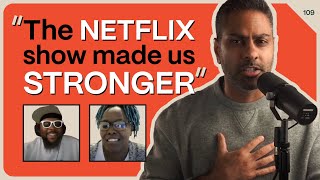
This is a reunion episode (YouTube) hosted by Ramit Sethi catching up with Monique and Donnell (guests from his Netflix series How to Get Rich). Over the past year they paid off significant consumer debt, restructured finances, and grew income through a new side hustle. Key outcomes: they paid off $20,000 in credit-card debt; combined student-loan balance is now about $85,000 after paying down roughly $70,000 over the year; Donnell reports $200,000 earned last year from a ‘finder’/asset-locator side hustle and ~ $260k incoming since January; Monique’s typical monthly business income is reported around $3,500–$4,000 with good months ≈ $8,000; they consolidated accounts down to three and now use a joint account; they pay ~$19,000/year for a child’s college costs; storage unit cost is $98/month; a bank-account screenshot shown in the episode displays $176,052. The episode blends concrete financial progress with behavioral lessons (decisiveness, teamwork, confronting ’beliefs’ about money) and behind-the-scenes anecdotes about filming.
Questions this video answers
June 22, 2023
$20,000
About $85,000 combined
$200,000
About $260,000 (coming to him)
Chapters
You know, I recently shared a picture of these sneakers that I bought years ago. They got a little scuffed up, a little dirty. I took them back. They were sent back for free to Italy, redone, repaired, and shipped right back to me. One of the things that a lot of us talk about is to buy the best and keep it forever. I personally love to do that with these shoes that I bought with the car that I have with a lot of other parts of life. And I'm going to talk a little bit about the psychology of buying the best. And I'm going to share my favorite examples this week on my Money Psychology newsletter. So you can get on it and get this material@iwt.com podcastnewsletter now, remember, I'll never share this stuff publicly. Once a week I share a new insight on money Psychology. You can get it@iwt.com podcast newsletter. What surprised you about the experience that.
Actually was all in our business telling.
You guys, guys out there in America, who's listening to this man's podcast? It was to the point where, like, me and Monique wanted to throw hands like it was crazy, you know, like crazy.
What do you mean they need all of my account information? Well, they gonna get what I give them because that's not none of their business. Oh, gosh. I was so difficult behind the scenes. I ignored everybody. I didn't like you. I didn't like production. I told them if I didn't have. No, I think I blocked production at one point.
I wasn't ready to give up on you. I don't care if you're trying to ignore me. I know these are uncomfortable conversations. I know you two specialize in ignoring this. That's how you got into all this debt. But I wasn't going to let you walk away.
You. Are you pushing me to talk about this microwave? Is that, Is that, Is that what this is?
The fans want to know. Welcome back to a special episode where I get to catch up with the guests from my Netflix show, How to Get Rich. Spoiler alert. If you haven't already watched all eight episodes, go do that now because we're going to share everything today, including behind the scenes items that never came out during the show. Today we get to catch up with Monique and Donnell. You might remember them because he was spending $600 a month on video games. They had $200,000 of student loan debt that they were ignoring and they wanted to buy a house. You get to get to hear what has changed a year later after filming. So let's get into it right now with Monique and Donnell. I just want to know, just starting from the beginning, what has changed since we last saw each other? Let's go. Donnell first and then Monique.
We still had some struggles, you know, because we, we, we went right in real heavy to pay off some debt and close some accounts. We were just kind of hurt because we put a lot of money into closing stuff down and getting out of debt where we didn't have anything to back us up. So I started a side hustle and luckily, with the tools that you gave us and the additional money that came in from that, we paid off all of our credit card debt.
Whoa. So you paid off $20,000 of credit card debt?
Yeah.
Damn. I'll take the win on that. That's amazing.
Basically, all our debt is good except for student loans. So combined, we have about close to 85,000 left in student loan debt. Combined with the two of us, his.
Side hustle has really been helping us out a lot because big chunks of money.
How much are you making on the side hustle, Donnell?
Last year I made 200k alone.
What the, what, what is the side hustle?
I'm, I'm a finder. Like, basically. I knew he was going to ask that. What is this? Only show we've been on is yours. Oh, wait, first off, congratulations. One. Thank you. You know, much success. You've been helping a lot of people. Thank you very much. But basically all I do is for pa, Jersey and Delaware, whatever money is in the treasury, older people, I find the people, connect them with the money, and I charge a fee.
What fee? What, what's the fee?
10%.
And it's called a finder.
Yeah. Either a finder, asset locator, whatever you want to call it. Yeah, yeah, yeah. I took a, I took note from your book and I wrote an ebook to help people do it because it was so successful with it. So, you know, again, it. Everything that came from your show, it took us to really, like, branch out and figure out how to make this work. So. Wow.
Okay, so you made, did you say 200,000 in the last year?
Yeah, yeah. And I have. Literally from January to now, I have about 260 something thousand coming to me. So I already made what I made last year, less in about six months.
Who's paying for dinner next time we see each other? So can you remind me when we were talking, how much student loan debt did both of you have?
10,000.
No student loan debt. I wish that was a joke.
All right.
Because I'm Like, I wish.
Wasn't it like 200?
Yeah, yeah.
A little bit less because I think I had maybe 85, 90, something like.
That on my own and I had 72. Okay, so.
So the two of those combined. All right, and now how much is it?
It's about 85,000 combined.
So you've paid off $70,000 or so in the last year plus 20,000 from your credit card.
Yeah, yeah.
You could just be holding that money. But we did the right thing and then paid it off.
Is this for real? This is amazing.
Yeah, yeah.
Am I the only one smiling on this? Wait, this is my smile, by the way. A lot of people like Ramit doesn't smile. I'm like, this is my smile. What? This is crazy. This is amazing. I'm so proud of both of you.
Thank you.
I appreciate it. Appreciate it.
I'm speechless. This almost hard to believe, but it's quite amazing. They went from arguing over an old storage unit to paying off tens of thousands of dollars in debt and increasing their income. Monique, I'm so curious. What has changed since we last saw each other?
Not much in the space. Look at that.
See that? That's amazing.
Honestly, being in this space, I think for me, I mean, the money stuff was nice. It was just the whole point of the show, but it was nice. But honestly, being introduced to this space has opened up a lot of doors to help my business. While being here, I was able to be in their artisan cohort program. That's. I think it was like a six week program that helped with building your business. We got to do art shows. I've been able to be a part of vending events and now I get to throw my own vending event. So.
Wow, that's amazing. Do you remember that conversation we had? We were walking around there and I remember we. We took the full tour. It was pretty cool. We chatted with a couple people and then we were standing outside and. And I think you mentioned something like, I'm not sure I belong here. Do you remember that conversation?
Yeah, yeah, I.
What do you remember about it?
The imposter syndrome part. And honestly, I think I don't remember what month I joined in. I think it was like March. I didn't come in until maybe May, and I didn't even come in doing my own work. Somebody here was offering part time work. So I was like, I'm going to use this as an opportunity to make myself comfortable being here. So it was just a way of me getting out of my way and saying you know, just watch the people. And now, I mean, everybody's awesome. Like, there is. Everybody's asking everybody, how can you do this? And everybody's open to be helpful. I love it. It's my favorite place to come.
I still remember that vividly. It's one of my favorite parts of the entire experience doing this show. I remember we walked together, and then you walk in a little bit on your own, and I was just watching, and I remember that imposter syndrome conversation. And I remember vividly saying, you belong here. And so to see you a year later with that background, being there, watching you on Instagram, I'm so happy for you and for you as an artist and an entrepreneur. I think it's amazing.
Well, I truly appreciate you for it because this was a step that I probably would have kept looking at and thinking about it. And then a year later, looking at it again and then thinking about it again, I think it forced me to jump and just, you know, not worry about the what ifs.
All right, beautiful. I want to know about your finances. What's going on? We heard from Donnell. What about for you?
Here and there, like, it's still good. I have my good months. Like, now I'm starting to ramp up. During the summer, it's busier because of all the events that are happening, like weddings and graduations.
What's. What's a range that you make per month regularly?
I make maybe between like 35 to 4amonth.
4,000?
Yeah.
Okay.
And then like on good months is where it's like the eight thousand.
Whoa. So that's pretty cool. You've had more eight thousand dollar months since we talked.
Yes.
Amazing. Together as a household, you start making this money. How did you decide what to do with it?
Honestly, we. We really just looked at the initial conscious spending plan that you gave us that we did, you know, talking about homework, because you definitely gave us a lot of homework. That's right. We. We really just really took a stab at it and, like, went over our credit report and. And looked at what we can pay down, like, first initially, like when we had the conversation in the restaurant. So we started with the small bills and then worked our way up. It's a huge relief, you know, off of our shoulders, to. To be able to walk into a store or go online to Amazon and, you know, purchase what I want without fear of Monique.
Why are you opening up the door on Amazon? You know, I got asked, how much did you spend on video games in the last 30 days? Tell me. Tell the truth.
Oh, no, truthfully, I've only been getting free games, so. No, no in app purchases. Yeah.
Seriously, you used to spend 600 bucks a month. I remember. I saw that scene. You saw it too. I know you saw that. Wait, so you spend nothing on video games?
Nothing.
I'll say nothing on video games. Let's.
No, no.
In the past month. But no, he's done really good. Like he's been. Honestly, he's been so caught up in working and doing a whole bunch of stuff that he doesn't really have time to sit around and do as much. So there's less purchases.
It's been really important to try and stay on track. It is hard. It's really, really hard.
What's the hardest part of it?
Knowing that I can do it now, you know, but going like scaling back and making sure that things are in order because now Billy is in college and we gotta pay for that. Congrats.
Okay.
All right.
How much is that costing per year?
What? 19,000? Yeah. 20.
Are you paying in full?
Yeah. We don't want her to be stuck with the loans like they were.
This is frustrating. Monique and Donell have decided to pay $19,000 a year, a huge amount which follows the invisible script in America that you should pay for your kids college. Maybe, maybe not. But what really interests me is how much discussion did they have about all the issues around this $80,000 decision. Did they talk about the cost of college? Did they talk about their options, including scholarships, financial aid, work study, internships? This single decision is one of the biggest financial decisions they will ever make. But as with many of us, we spend more time looking for the newest restaurant or watching random TV shows than to really dialing in on these six figure life decisions. Before we get back to the episode, I want to thank everyone who listens and uses our sponsors. Remember that we are very selective about the sponsors that we work with. I want to bring you the best brands out there. So it means a lot that you support this show which allows us to create amazing episodes on audio and video, plus our special weekly newsletter. And all that happens because you support these sponsors. So I want to quickly thank them for making this episode possible. Trade a coffee subscription service that allows you to discover new coffees from independent roasters delivered right to your house. Fabric by Gerber Life that can help you get a high quality, surprisingly affordable term life insurance policy in less than 10 minutes. Facet where you can get affordable, accessible financial planning with a flat membership fee, never a percentage of your investments. Element a tasty Electrolyte drink mix that comes in eight delicious flavors with no sugar and no coloring. To check out all the links and all the special deals we secured for you with these sponsors, go to iwt.com sponsors thank you for supporting this show. My theme for you was decisive. I wanted both of you to become more decisive. You remember me getting a little frustrated sometimes hearing the spinning and the disc. What do you remember about your indecision? Can you think of any examples?
It was the whole show. The whole entire thing. But again, we'll go to the storage unit. It was definitely that.
Okay, tell me about the storage unit. What's up with it?
Can I clarify for folks? So I wasn't holding on to used baby clothes like people better tell the.
World right now because there's a lot of people on TikTok on Instagram. Yeah, tell us your message. Donell.
So it was. It was. I was a reseller. I was. I was trying to make a couple of dollars and it was all brand new stuff. It looked like it was trashy in there how I took the camera view or whatever, but it was all brand new stuff.
You took that camera, by the way. You took that footage yourself. I just want to emphasize it wasn't some producer. You took your own footage and then people like, is that guy. Are those used diapers in there?
What's going on in there? That's why I look so bad, because I did it myself. We have a camera person. But you did the calculations on how much I was spending per year based off of what I was making, which was zero. You know, I was just holding that stuff and, you know, the decisiveness and wanting to get rid of it because, you know, we went back and forth. A lot of people don't know, you know, when the cameras weren't there, like Rami, it was rough and we gave him a hard time, folks. Like a really, really hard time.
Everybody's like, you guys were. So you made the decisions right away. I was like, they just made us look good.
Right?
Okay, so tell everybody because I think they. No, let's tell them.
Oh, no. We fought back on the bag. I fought back.
The fought back. Like, what did you say?
I'm not returning it. This is my bag. I bought something nice for myself. You're not going to make me return it.
You did. You did push back a little bit. Fair enough. And I actually didn't know if you took the bag back or not did because I wasn't there.
I took it back and I paid a bill with it.
Okay. Nice. How'd that feel?
Awful. No, it felt fine because I knew that at the moment, you know, it was a nice bag and I do like bags. But eventually it would have just been collecting dust because I honestly had just gotten a couple new bags as gifts. So it wasn't production.
Did we know this? No, this was all secrets come out.
But I know that once everything is situated and life is where it needs to be, buying a bag should just be, oh, I'm going to get this bag.
That's right. That's exactly right. You know, there's always a, your tomorrow is going to be bigger than your today. Donnell, share some examples of how you pushed back when it came to my advice.
Oh, man. Shoot. What again? Are you pushing me to talk about this microwave? Is that, is that, is that what this is?
The fans want to know.
That was, that was a big conversation with the fans. It was a big conversation outside of the cameras. It was a big conversation.
Tell us about the microwave, Donnell.
So, yeah, I purchased the microwave for like $17. Brand new microwave. It's an expensive microwave and I wasn't just going to give it up. Like, I wasn't, you know, and you know, it was, we went back and forth a lot of, again, folks just don't know. Like at the restaurant that day, like we were going to walk out on Robbie, like we were going to leave him there. We were not going to finish the show. We were pissed. But I mean, sometimes the truth stings, you know, and you got to kind of accept it and look at it from someone else's perspective. Even though you may be in your own little bubble, but in order to really, really progress, you gotta be able to take advice from someone that has been able to do it or definitely show you how to do it. So that was hard. But we gave the microwave to our daughter at her dorm, so it went to use. So her, her roommate and we got dropped down the storage unit. So now we're at, we're using Instead of a 10 by 30, we're in a 5 by 15 and it's only to hold Monique's wood. So when she does projects and things like that.
How much does it cost per month?
$98.
And who pays? Where does the money come from? Oh, Monique pays. I love this. What a great, that's a great answer. It's a business expense. You that which tells me you've got your accounts better structured. Monique is stepping up saying, yes, that is awesome. What a great answer. Round of applause. That's amazing. Okay. Lots of Insights and clues here, and most of them are positive. First, that last answer really made me happy when Monique said that she pays for the storage unit out of her business. That simple answer actually tells me that they have done a ton of work into restructuring their finances. I also love that they're open about how difficult of a time they gave me and the production team on the show. They say that they almost quit. Personally, I was never going to give up on them. And I don't mind if people push back on some of the things that I suggest because it means they're engaged and it shows that change is hard. The opposite of pushing back is to simply disengage, to just give up, to say I'm not into this and to vanish. That's the worst of all. It means people are not willing to change. So I have to say this is why I love being able to do these behind the scenes episodes from the Netflix show. Because we film a ton, we have to cut a lot. But I want you to know some of the things that happen behind the scenes that you never saw. Now, I will say one thing that I've noticed on this call, which is that Donnell is what I call a believer. That's a person who believes that success is just around the corner and you know, they'll often talk about the next big deal or the lottery ticket that they bought. You can tell this because he admits he used to be a reseller. Now he has this finder job and believers find it really difficult to follow long term plans because they're not as exciting as the dream of a huge cash infusion. Okay, those are the lessons. Overall, very positive. What surprised you about the experience?
That child actually was all in our business, like again, pushback. What do you mean they didn't all of my account information. Well, they gonna get what I give them because that's not none of their business. Oh gosh, I was so difficult behind scenes. Yeah, just, I mean, I didn't think that you were actually going to come in and like really look over things and you know, go through it, nitpick and all of that. And you did. Every account was looked at and highlighted and talked about. So yeah, that surprised me. I think it was hard. I think that a lot of I got a lot of things out of it because I have like social anxiety and regular just generalized anxiety. And I think just like the pressure of the show. I ignored everybody. I didn't like you. I didn't like production. I told them if I didn't have, I think I Blocked production at one point, but think that putting myself in this position made me stronger because I survived it.
You know, I wasn't ready to give up on you. I don't care if you're trying to ignore me. I know these are uncomfortable conversations. I know you two specialize in ignoring this. That's how you got into all this debt. But I wasn't going to let you walk away. Never. And so one of the comments I saw a lot on Social was people were surprised how invested I got. I said, how could I not be? We sat down, we ate together. I was in your house, we walked next fab together. We got to know each other over a long period of time. How could I not be invested? And when we spent so much time talking about a microwave, and then I kind of got mad at that Philly cheesesteak place, and I was like, how are we still talking about this when we have $200,000 of debt? How can we be focused on this tiny thing when your rich life is so much bigger?
All of the anxiety and the fight in and everything, you know, we hugged it out and it was just like, I really. We had the time to sit and appreciate what you did for us, and I think that it was a big moment for me.
At that moment, I stopped looking at you as a figure, as. As a businessman, as. As someone who's just, you know, doing a job to an actual human being who actually cared about our well being, how we looked at our finances, you know, and. And you coming through and allowing us to be a part of this journey that you took. And it was. It was. It was a huge moment for us. Like, even when you. When you left and we were still there, we were still talking about it, and it was just big because of, you know, everything that we went through from day one, from when you came to the house to that last day of shooting, which, you know, telling you guys out there in America, who's listening to this man's podcast, it was. It was to the point where, like, me and Monique wanted to throw hands. Like it was crazy, you know, like crazy. But again, like, the truth stings. It really does. And one things we can appreciate is that you didn't falter. Like, you didn't change what you said. You know, you didn't change what was behind what you said. It was. You were like, listen, you guys really want to do something and actually come out of this whole listen, you know, and it's hard. It's hard to tell adults to listen.
You know, like, our Dream is still a house, but we want to make sure that we're setting ourselves up for success in buying a house. So, you know, renting is probably more expensive right now than buying a house, but we don't have to pay for repairs. We don't have to pay for, you know, taxes and all that other stuff. So we want to make sure that when we go into our house, we can stay in our house.
So that's phenomenal. That's. That's phenomenal. You know, our conversation about renting and owning really got America talking. Do you see that? It's crazy.
Some are upset. Some are like, I get what he's saying.
I love that we're talking about this. We should. It's the biggest purchase we'll ever make. And this idea that we should just kind of blindly spend all of our money on a house because somebody tells us to. To me, it's absolutely crazy. I'm glad that we were able to have that conversation. Funny enough, I actually think that was one of the easier conversations that we had, because I think when it came to you, you wanted to get a house, you still want to get a house. I totally respect it. I want you to do the same. But it was so far off that we had other things we had to deal with first. It's like there was a fire with the bags and the storage unit and the debt. We need to tackle that first and make a plan. Even all the accounts, or we could even talk about the house. So I appreciate you coming on that journey with me just methodically, step by step by step. Speaking of that, how many accounts do you now have?
Three.
Are you serious? You went from, like, 20 to three. What did that feel like?
That's still strange to me.
You know what's strange to me? 20 accounts. That's strange. Hashtag bathroom fries.
No, it. It is because 1. It works. Having a joint account, having just the funds that need to go into that account, that's paying off something. Yeah, that. That works. Okay. Love it.
Monique, how about you? There was a moment, I think we're at that restaurant, and I had asked if you would consider combining accounts. And if I recall, you just point blank said, no, I will say that.
He has behaved and I might be the problem child with the joint account. This go around, tell me I will, like, not have my debit card with me, and I'll have the joint account and I'll spend something and forget to tell him that I spent it. And then he's like, oh, well, the money was supposed to be in there. And I was like, oh, I forgot. But I mean, then I fixed it. I transfer it out because our accounts are all with the same credit union.
Nice.
Easier to just move everything around.
I'm extremely proud of our growth. That was huge. Like I said, you came in and you did something nobody was ever able to do, and that was to get her to do a joint account. Like, I was like, all right, that's your superpower right there. But definitely our growth to be able to sit down and talk about money and not have any reservations. So that's huge. And it has played a huge part in where we are now.
It sounds like you two have become much more of a financial team.
We look at it now like, do I really need to pay $220 for a pair of sneakers? Or can I actually put that up, have that money make money for me, you know, to. Whereas, though, I can still get a pair of sneakers, but Now I got 220 making me, you know, X amount of money per month. Yeah.
Nice. Okay.
Yeah. It's just really, really. You. You had us. You had us to the point where we really had to look at how we were spending our money, how we were managing our money and how we treated our money.
Were you raised with the belief that making money has to be hard?
I wouldn't say I was. I was raised on the belief that making money has to be hard, but I was. I was raised on the visual where if you made money, it wasn't an easy thing.
Okay, well, guess what? I'm teaching you a new way, which is that it actually can be easier than you think. In fact, it can be as easy as setting up automation once and then checking on it once a year. And you can make more money doing that than you would doing all kinds of crazy things that other people try to do.
Yeah, when we hit our first million, then, then I'll be happy.
No, you're not going to be happy when you hit it.
And I'll tell you that you're not happy now, then you won't be happy later. You don't listen to the man. Thank you. You gotta be happy with what you have now.
Monique, are you happy?
Am I happy? Yeah. I mean, because I know that it'll get better if it's where you just keep doing the same thing. Not doing the same thing, but keep doing the work and you'll reach your goals.
As you said just a minute ago, Monique, if you're not happy now, you're not going to be happy later. And the fact of the matter is, when you have a million dollars, if you. If you continue this way of thinking, you're going to get there, and you will get there. I can show you exactly the month and year you're going to reach that. And you'll say, well, we could have had 5 million. Well, what about 10 million? And you want to go the rest of your life feeling like that?
No, like, oh, my God, we got a million dollars. Or, oh, my Goodness, we have $200,000.
Hell, yeah. Or, oh, my God, we paid off $20,000 in credit card debt.
Okay, we'll start there.
I mean, honestly, the number of things I can count that you two should be celebrating is like, I can't even fit them on two hands. The video games storage unit, the number of accounts, the bag, the business. Next fab. I mean, I could go on and on. I'm over here. Like, this is incredible.
A lot of what you were able to install and just break down to us throughout the process, we've taken it and we've been able to get this far.
And it's probably what millions of people like the place that they are. So if we could help somebody, I.
Have a lot of respect for that. It takes a lot of courage to show up, to open up your financials, which in America is one of the most taboo things you can do, and then to ask for help. Because in most of our life, especially as adults, we want to show up as competent, as winning, like, we know what's going on. And when you have to ask for help, especially with a camera crew around, that's not easy. But I really appreciate you did this. You did it for yourself. But you also have, incidentally, helped millions of people who can see themselves in the two of you. After our call, Donell sent me an email. Here's what it said. Monique said she didn't think you believed us. So I enclosed the front page of our bank account. I'm going to put that on screen here for our YouTube viewers. It shows their bank account with $176,052 in it. Quite amazing. I'm very proud of all the changes that Monique and Donnell made. And best of all, they did it together. Thanks for listening and thanks for watching the show on Netflix. And one last thing. Each week I share a new insight on money psychology on my private newsletter that I never share publicly. If you would like to get that, it's free. You can sign up@iwt.com podcastnewsletter. See you next time.
Every day I'M at work now. They're like, I know. Tell me how to get rich. I'm like, go buy the man's book. Like that. That's how. Go buy the man's.









