They Got Second Jobs to Pay for Their Wedding?!
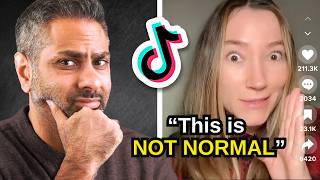
Ramit Sethi breaks down an $80,000 wedding budget spreadsheet, exposing hidden costs like tips and cosmetic procedures that derail most couples. The creator used sinking funds and wholesale flowers to stay disciplined, but Ramit stresses the real work: deciding what the wedding should feel like before spending a dollar.
Chapters
One couple in this video said that she and her husband both got second jobs just to pay for their wedding. Another couple spent just under $7,200. This is why wedding conversations are so fascinating. The real question is, are you spending intentionally or are you just getting swept up in everybody else's expectations? Today I wanna break down what actually makes weddings memorable and where couples waste huge amounts of money without even realizing it. And maybe how to create a wedding that feels rich and personal and exciting to you. To you. So let's dive in. My friend told me her ceiling was $10K for her 150-person wedding. I warned her she wasn't being realistic and she showed me a venue that would cover everything for $5K. What venue covers everything for $5K? You can't even get a room in a restaurant for $5K. Of course, she was looking at the venue fee and nothing else. It was heartbreaking to watch the spark go out of her eye. Hold on a second. Am I a bad person if sometimes I enjoy seeing the spark go out of somebody's eye? I'm like, that spark wasn't real. It was delusional. Now let's, let's create a real spark. You need to know your numbers. Okay, I don't know. I'm a bad person, I think. The budget crept up. It's $35K now. The guest list has been slashed and her and her fiancé have taken to begging family members for money. Mom's covering the dress and modifications. His family covered the venue down payment. They're still hoping for a few family members to pitch in, hoping guest gifts will shrink it. Kind of crass, don't you think? I don't know how you can go into the process without knowing. Or maybe people see Instagram influencer weddings, see the average price, and assume $40K value must be for all the bells and whistles. Not for me! All I want is a venue, food, drinks, apps, photographer, DJ, bridegroom outfits, flowers, and a nice cake. And then they realize that's the $40K wedding. This is a very apt comment. Let me tell you who I blame in this situation. Parents. Because you never talk to your kids about money. Because the only thing you know about money is we can't afford it. And I want to let kids be kids. So you never even told them, "Hey, I'd like to go to the grocery store with you. We're going to spend $100. Here's our list. And I want you to learn how to account for things like taxes." And as they got older, you never took them to a restaurant and had them order for the family. Because then they would learn that they need to factor in tip as well. No, you simply left them unaware to the rest of the world, and then they end up like this person's friend who doesn't know anything about phantom cost. They don't factor in the price of cutlery. Cutlery is expensive. You don't even know that. Okay, is this person an adult? Yes. Should they be responsible? Yes. And they're learning their lesson. They're going to learn in a very painful way. Okay, what's next?
My wedding cost a little under $80,000, and if you asked anyone who got married in a luxury market, they will tell you their numbers were similar. The reason I shared that is because this is not normal. Weddings are so expensive and people have no idea how expensive they are. So I was just transparent about the pricing. I'm looking at my wedding planning Excel sheet which has all of my vendor prices, how much we paid for everything. I'm all about financial transparency. With that being said, I wanted to answer some FAQs coming up. So in that $80,000, I counted every single thing that we did for our wedding from the second we got engaged until we sent out our thank you. Thank you.
Hold on, I already love this video and I love this person because you can tell that she is extremely diligent about her costs. One thing that I did when we started planning our wedding is I got a new credit card. Back then there was a 3% card. Don't get this card, it's not good anymore, but back then it was great. And I put everything for our wedding on that card. For example, not only the wedding costs, but when we took a driving tour around California 'cause we wanted to look at different venues, when I filled up the gas in the car, I used the wedding card and that allowed me to track how much the total wedding expenses were. If you are not tracking this and you have a finite amount of money, it's going to add up really quickly and it's very likely you go over the amount you set.
So that included our engagement party, engagement photo shoot, my nose job because I got a nose job for my wedding.
Hold on. Are we including nose jobs as part of wedding expenses now? Am I out of touch? What the fuck? All right, look, I'm willing to adapt and roll with the times. Somebody says, I wanna get, what'd she say, a nose job? I wanna get some type of cosmetic thing. God bless. Just factor it into the costs. Other areas that people do not properly factor in for costs include bachelor and bachelorette parties, any gifts you might get, suits. Everybody factors in the bride's dress, but very few factor in the actual groom's suit and a variety of other things like that. You really need to put it all together.
Together. Our tips, insurance, taxes, all of our vendor postage, our thank you letters, hotel blocks, etc. Did we go into debt? No. And let me tell you why. I had had a sinking fund for our wedding. So if you're in a serious relationship, you probably know that an engagement is coming. So a sinking fund is essentially money you put aside for a big event or something you see coming up. My fiancé and I both had money saved from our individual sinking funds, which totaled about $40,000. Then we got our actual vendor quotes, and I'm not gonna lie, I went into a full-blown panic spiral. This was with about 8 months of wedding planning left to go. I was like, there's no way we're going to be able to afford to do this. But we got into action mode.
Another thing I love about this video is she is not passive. She is active. And I find that a lot of people with weddings are very passive. Like, oh, we'll kind of just see, oh, what, what will the world possibly present to us today? Fuck that. Y'all need to go on aggressive mode. Have any of you ever been aggressive about anything in your life? I don't know what it is. For me, it was I'm be aggressive about winning the spelling bee, which I did, but then I lost in Sacramento. That was another story. We're not gonna get into that. What are you aggressive about? I find very few people who are as aggressive as this creator who said, all right, we're going into action mode. We're gonna track everything. We're gonna create clear priorities. If we need to shrink the guest list, we'll shrink the guest list, et cetera. We're gonna make trade-offs. That's that kind of energy I want you to bring to major decisions like this. Good work.
My husband and I both got second jobs. We were both working between 50 and 60 hours a week between our full-time jobs and our second job. I wasn't making a steady stream of income on social media at the time, so it was purely from working our asses off. Another thing I think a lot of people don't consider is you need to tip your vendors. They're all small business owners, so we tipped every single vendor. There are a lot of sneaky costs with wedding—
She's mentioning tipping. Indian people at their weddings have just like rolls of cash. Usually it's the dad and maybe the brother of the bride, and they just have like thick amounts of cash they just hand out. I don't know if that happens here as much, but I know that for my sister's weddings, my dad said, "Hold this, and whenever I tell you, cut me part of the roll so I can give it to some vendor." Like, boom, that's how it works.
A lot of things that sneak up on you, and especially if you live in a luxury market. I mean, we got married in the Napa Valley. I was quoted $30,000 for catering, so It ain't cheap, it's not right.
We looked at Napa as well. It's beautiful. We found it to be, basically they were like, take it or leave it. And we're like, dude, we're having a multicultural wedding. We want, you know, we're gonna bring a horse. I'm coming in on a horse with a dol behind it and all kinds of stuff. And they were like, nah, like, you know, they were giving us sort of like the French white tablecloth. And we were like, this is beautiful, but it's not right for us. So we had our wedding elsewhere.
So it ain't cheap. It's not right. That's why I always talk about financial transparency with weddings on here. And keep in mind, I got engaged a year and a half before we actually got married. So I was actually honored into a lot of 2022 pricing when I got married in 2023. So I can promise you, if I got the exact same vendors now in 2024, 2025, it would probably be closer to $100K. No, I don't regret it. Yes, it was an amazing time. But now that we've drained our accounts and we're trying to save for a house and I'm trying to pay off my student loans, do I regret it? Yes and no.
It's interesting that she ends by saying, do we regret it? Yes and no. Because in my opinion, if you have properly planned for your major expense, wedding, house, whatever, you have accounted for as much as you can account for. You've also added a 15% buffer on top. If you do that and you have a great time, as she said, is the best day. I actually think that it's cool to look back and be like, No, we don't have any major regrets. We properly planned. Sure, there were some things that came up, but we had a buffer for those unexpected things. And we look back and it was the time of our lives with our friends, our family, beautiful photos, etc. That's what I want your outcome to be when it comes to using your money effectively. Great video. This is awesome. Big thumbs up to this creator. Congratulations on your wedding. You know what's interesting? A lot of couples spend more time planning the wedding than planning the financial life that comes after the wedding. And I understand that weddings are exciting and they have a way of trapping you in this vortex of making decisions. But eventually the conversation shifts from how much should we spend on flowers to, hey, are we taking a honeymoon? Could one of us afford to take work off if we wanted to? Where do we want to live? These are big decisions and the stakes get a lot higher as your income grows and your investments and your responsibility. That's where having expert guidance can make a massive difference, and it's where our partners at Facet can help. Facet helps you create a dynamic financial roadmap that evolves with you and your money, including monthly check-ins to help you stay on track with your financial and retirement goals. All Facet planners are CFP professionals and fiduciaries supported by a team of specialists. Remember that most advisors charge more as you get wealthier. Facet thinks that's wrong, and I agree. That's why they offer expert financial advice for a clear, flat membership fee. No AUM. I've worked with them to help many couples on this podcast understand specific scenarios, like if they can retire early, be more generous, even take better vacations every year. If you have a large portfolio, if you are getting closer to retirement, if you want specific scenario-based guidance from a team of experts, check them out to see if financial planning is a fit for you. Head to facet.com/Ramit or click the link in the description below to learn more. That's facet.com/ramitsethi. Let's move on. 3 things we cut that nobody at the wedding noticed. We had $11,000 budgeted going in. We ended up at just under $7,200. Wow, that's quite rare. Well done. The 3 things that got us there was the florist, the DJ, and the cake. Florals were quoted at $2,100. We hit a wholesale market the morning before the rehearsal, spent $180, and had my aunt help put everything together that night. 3 guests complimented the centerpieces specifically. One asked who did them and didn't believe us when we said we did. LOL.
That's cool.
No DJ either. My husband spent 2 evenings building a Spotify playlist organized by mood, and we rented a speaker setup for $95. People danced until 11:30. The only complaint was that we ended the music too early. Right around the time we were finalizing vendors, I realized I have some money saved up from rolling riches. And nearly watched it disappear into a catering upgrade nobody asked for. That's when we started questioning every line item instead of just accepting quotes. Good. You want to be active with some of these things, not just passive. For the cake, we had originally looked at a $600 custom 3-tier situation, but we went with a small bakery nearby, $210 for something simpler. The baker threw in a small cutting cake for free because she liked the design we chose. Guests demolished it within 20 minutes and asked for the baker's name. None of it felt like cutting corners. It just meant asking whether something was actually for us or for some version of a wedding we'd been sold on. Once we figured that out, the rest basically sorted itself. This is awesome. What a great comment. This is embodying the idea that you've gotta have a vision for what you want. And when you take an active role, especially in these major purchases in life, like buying a house, having a wedding, retirement, then you can often decide what is important to you. I honestly think they're going to remember going and doing the floral market and arranging it with their aunt forever. That's incredibly meaningful. Remember, a rich life does not only have to mean throwing money at the problem. That can help. But there are so many ways to create a rich life. You doing part of it yourself. Great work. I love that they are sharing this. Many couples end up fighting about money when it comes to their wedding. A lot of people deep down think the goal is to figure out how to spend less on a wedding, but that's usually not the real problem. The real problem is that most people have never set up a core list of what they really care about and what they don't care about, and they end up with this Frankenstein of a wedding that's not personal to them. I want you to learn how to refine what you care about and what you don't, whether it's with a wedding, vacation, your house, your car, so that you can feel super confident. And inside my money coaching program, I will show you how to build that very system. So when you do spend extravagantly on something you care about, it actually feels exciting instead of stressful. If your dream is an amazing wedding weekend, Great. Let's build a system that helps you get that. If your goal is to take a trip and to be able to see something miraculous and beautiful, I'm gonna show you how to do that too. Join my money coaching program today. You can scan the QR code on screen or click the link below to get started. I will see you inside. Wedding versus honeymoon. This is from Personal Finance Club. I like his stuff a lot. Highly recommend following him.
Okay.
Robert and Rachel and Sam and Stephanie get married. Robert and Rachel spent $30K on their wedding, which is the average. And then he's saying 32 years later, that couple needs to work for 3 more years to reach their retirement goal. Okay. Sam and Stephanie elope and invest $30K. The investment has grown to $261,000 and they take a 3-year honeymoon. Come on, man. It's fair. The math is correct. But I do think there are people who follow this advice that Jeremy recommends and they take it to an extreme because this is essentially teaching people that the primary relationship that you should have with money is saying no. I mean, what could be more important than a few key things in your life? So you may not want to spend $30K on a wedding, but is it $10K, $5K, $18K? Like, what is the money for? I don't mind illustrating the power of compound interest. I think this is a clever way to do it, but I do think there are so many messages around money that make people feel guilty for spending, especially around weddings. I don't want you to feel guilty. I actually want you to feel really good about spending, whether it's $200, $5,000, $500,000. And while you should understand compound interest and opportunity costs, I think that we understate the skill of spending on the things you love. So many people think money problems are just about math. And then you watch how people actually spend their money around weddings, houses, vacations, family. And you realize that money is deeply emotional and involves deep money psychology for us. Have you ever wondered why you do the things you do with money? Have you ever wanted to improve your relationship with money? Subscribe to this channel because that's what I talk about here. I'm going to show you how to be more confident and competent with money. So click subscribe. You know what's weird? Couples will spend 6 months debating some tiny esoteric wedding detail, but they rarely stop to ask the one question that matters. What do we want our wedding to feel like? That's the question. Once you answer that, a lot of other decisions become much, much easier. So for example, if you want people to be having fun, then you might be spending more on the DJ, or you might be getting a venue that stays open later. If you care about having your friends together and meeting each other from different parts of your life, maybe you're gonna spend more on the hotel experience or the venue, less on the flowers. But most people don't think about what's important and what's not. Everything is equal to them, and suddenly the forks feel just as important as the photographer. So before planning anything, I would literally encourage you to write down the top 3 things you care about for your wedding and the way you want to feel. Compare those lists, and that one conversation will save you money, stress, and tons of arguments. Remember that a wedding is 5 days. Oh wait, that's just for Indians. A wedding for most people is 1 day. How you handle your money together is actually what shapes your financial life. So the wedding itself is just the output of the 2 of you collaborating and talking and creating this vision together. It's like you basically created a project together. It's your first major project. The couples who effectively run this project together they're very likely to do it for the rest of their lives. The couples who don't, same thing. If you want help figuring out how to actually build a rich life together and thrive, watch my video called The Secret to Financial Success as a Couple next.









