“We have $22k in cc debt…but I want to renovate the house”
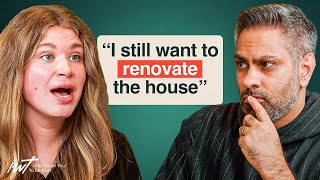
Paul and Morgan, married 10 years with two kids, fight about money constantly. Paul spends impulsively on trips and hobbies while Morgan worries; they're $22k in credit card debt and want to renovate without a budget. Ramit pushes them to name numbers and stop avoiding the real problem.
Questions this video answers
37
33
10 years
Three and six
Over $60,000 (Paul said 'over 60k')
Chapters
Paul really just when he wants something, he's gonna get it. Like, there's no sense of, can we afford this? We haven't carved out the time to make the plan. And it's not just on me to make the plan.
Oh, we could talk about money, or we could just go out on the lake for three hours. You know, it's summertime. You know, I guess I always had this view or fantasy, like, I'm always gonna be making more money. Like, as I get older, I'll get more raises. I'll be fine.
And then, like, when we were putting this all together, I realized we're kind of, like, at the edge of this cliff and we can back up. Or we would launch into, I think, a lot of debt.
Wow. What would you want him to change?
I think more restraint.
And then your role is what?
The fun killer.
When was the last time in a conversation about money, you actually pulled out full, comprehensive numbers of your financial situation? Never, never, never.
Meet Paul and Morgan. Paul's 37.
Morgan is 33.
They've been together for 10 years, and they have two young children. The major issue here is that they.
Talk about changing their money behavior, and.
They talk and they talk, but they don't really make any changes. This is so common among couples. So I want you to pay close attention as I try to peel apart.
What'S really going on here.
This conversation, by the way, was filmed live in New York City, so I would encourage you to check it out on YouTube so you can see the body language and the facial expressions which are so important to the story here today. Let's meet Paul and Morgan.
Morgan, within the past couple months, says things like, I'm very stressed about money. I'm so stressed about money. We gotta, like, work on our money. I would look at the bank accounts and I would see, like, maybe what I have coming in in the next couple months. And in my head, I'm like, we'll be fine. Or we had two kids in daycare, we got one out of daycare, we're fine.
And how does she take that?
Not well, I guess. Sometimes when it comes up, it's at random times. So in my head, I'm kind of avoidant, or I don't want to deal with it in the moment. Maybe it's like, I don't know, at dinner time, or like, oh, my God, we need more money. We don't have enough money. And I'm like, I don't feel like talking about this right now. Or I don't feel like dealing with.
It, it's usually until I bring it up again, and then it can become like an argument.
You feel like you're constantly the one bringing it up.
Yeah, definitely.
And then who makes the budget?
We've sat down together to make a budget couple times. Or have you tried apps like Mint or Y N A B, but nothing has stuck.
And then what happens when it doesn't stick?
We just fall back into the pattern of what we've been doing.
Okay.
Yeah. I mean, life is so. We both work full time. We have two young kids. I think life moves really fast and. And it's hard to carve out that time or I don't carve out that time.
Like, today you're here. We're gonna speak for a few hours. Have you ever carved out this amount of time to talk about money? No.
I feel like we have these moments of, oh, something has to change. We have kind of a big discussion, and we're like, we're gonna do this. We're gonna change. We make a budget, and then, like, within days, it's gone.
Days?
I think so.
I don't say days.
I think, like, when we were putting this all together, I realized we're kind of, like, at the edge of this cliff, and we. Or we would launch into, I think, a lot of debt. Wow.
Okay. All right. Why now? Why are we talking right now?
I think that things have just felt so out of control that there has to be a change.
And then. How long has it felt like that?
I think it's just been building. Building. But now we have two younger kids, so now I have an income. For a while, I didn't. I was in school. So now, like, I guess stakes feel higher.
Because you have an income. The stakes feel higher. Why?
Because. I don't know. I guess. Or with kids, too.
Kids. I understand.
Yeah.
Two kids, that's a big deal, right? You want to make sure that they're protected. Okay. Your kids are three and six, right?
Yeah.
Okay. Nice, nice. How about for you, Paul? How would you describe your relationship with money in the last decade?
I guess I always had this view or fantasy. Like, I'm always going to be making more money. I'm just going to get more money. Like, as I get older, I'll get more raises, I'll do this and that, and I'll be fine. And then that was my thinking when I was younger, than adding two kids to the mix and then a mortgage that I didn't plan on when I was younger. And then breaking it down and seeing, like, all the other things that we pay for. I'm just starting to realize that, well, I need to make some changes to hold on to what I have and to plan for things. I want more than just assuming I'm going to have money and I'll get whatever I want.
Like when you were younger and you thought about yourself with money, what visions came to mind? Like, some people are like, I'm gonna fly on a private jet, or other people, like, I'm gonna have a house in the suburbs. What was your vision?
That I was gonna be rich.
Okay.
Yeah.
Rich means what?
In that time, when I was younger, rich meant having a lot of money. I think when I was younger, I just assumed, like, super materialistic. Like, I'd have, like, a Ferrari. I'd have a mansion, I'd have a pool. This is. We're talking about when I was, like, younger. Okay.
And then how about, like, in your mid-20s?
I realized that I. I chose a career. That doesn't necessarily mean I'm going to be a million billionaire, as I imagined when I was five or six. But when I was in my mid-20s, I. I still thought that, hey, I'm. I'm going to be making more money later. I'm not going to have to really worry about anything. Whether I have a Ferrari or a Toyota, I will be, like, financially stable.
You know, Paul can be very, like, it's fine. It's fine. And really glazing over things or generalizing issues.
Why do you think he does that?
Because it helps him not really be able to see what's going on and continue doing. Engaging in behavior that he wants to.
So when you come and you're like, hey, I'm stressed out about money, or, we need to make this change, and he goes, uh, we're fine. Look, one kid's out of daycare. We did that. How do you feel at his reaction?
I think dismissed. Yeah. Yeah.
And how does that feel?
It can feel hard. Yeah. I usually will get angrier or give, like, a bigger reaction. Um, and then typically, we'll have these conversations. We'll. I'll have a reaction, and then we'll have this reckoning of, like, okay, we have to do this, and maybe we'll identify some action steps. But then it never really moves past that.
I'm fascinated by the moment where people realize life isn't going to turn out.
The way they envisioned it.
For example, when we were kids, maybe we said, we want a Ferrari or we want to be a marine biologist. And then we start to learn how much Things cost. And slowly we change our mind. Now, when I'm speaking to Paul and Morgan, I heard several other clues. Paul loves to reassure Morgan, but he's light on the specifics. This is something really common that we hear over and over on the podcast, especially with men. They recently added an income. They subtracted child care, but doesn't really seem to have made a difference. Another common issue when you don't know your numbers. And finally, I pay really close attention to the words they used. Stressed, angry, dismissive argument, edge of a cliff. Remember, two kids. The stakes are high. We'll be right back after this short break.
We had this argument over the subscription service that Alex wanted to get.
Which one?
Nugs.net. have you heard of it?
No. What is this?
It's, like, for live music.
Okay.
So he had brought it up really casually, like, at dinner, and I was already feeling stressed about, just, like, it was on my mind. Money. I reacted to it like, what are you talking about? That doesn't make any sense. We already pay for Spotify. You have Sirius Radio. Why do you need another subscription services? And where is this money gonna come from? So it kind of really escalated. He got really defensive.
Hold on, let's just hear what happened. So you said that, and then Paul just respond as you did.
Music is one of my hobbies. I love live music, and it's something that makes me happy.
You can listen to music all the time. We listen to it. We go to live music. You have Spotify. I don't think this is a justified.
And I said, it's only $149 for the entire year.
And then where is that coming from? Like, from your budget, from the money you have. Where's the $149 coming from?
I couldn't answer the question. I think the way you phrased it was, well, how much money do you have to spend on that? And I couldn't answer.
And then I think it spiraled into, we need a budget. We're spending so much money, we don't even know how much we have, what's going on. And I think I bring, like, the emotion into it, and he stays very neutral.
Retirement comes up a lot.
Yeah.
Like, how much do you have for retirement?
You bring that up, right, Morgan, you ever brought up retirement in your life?
No.
No. Okay, so nugs. Why is it called nugs? First of all, is this like a. Is this a word? Because I never heard this word. Am I saying a word that I'm gonna get in trouble for?
No, I think it's Associated with, like, jam ban.
Jam ban.
So.
Well, what does nugs mean?
Like your nugs, your. Your stash. I don't know.
What the hell? What's a nug? All right, I don't know anything about this brand. Please. I'm not. Don't get me in trouble for whatever this site is. And word, I'd never heard it in my life. So did you end up signing up for.
No, I did not.
Okay. This live music thing, Nugs was the wedge into a much bigger, more contentious discussion about money. And it never really seems like it got settled.
No, it hasn't.
Does this happen a lot? Somebody brings something up and then it just. Nothing happens from it.
Okay.
I was informed by my editors that nugs means weed. If you want to laugh at me, this is the time.
Look, I don't know anything about drugs, okay?
What I do want to talk about is that a $12 subscription for this couple leads into a fight about retirement. This is so common with couples. They use a tiny expense as a wedge to talk about bigger topics. But if scarcity around that smaller issue is your entryway into discussion about money, it almost always means your conversation is going to go poorly.
Like, if somebody looked at you from the outside where you live or work or things like that, what kind of conclusions do you think they would draw about the financial part of your relationship?
I don't know. I get in my head and feel pretty self conscious about that, especially with the house, because it's not the way that I envision it to be. And we bought a. Like, we bought a fixer upper and we haven't fixed it up. So I get very self conscious about having people over. Paul can get pretty defensive about it. Yeah.
I feel like buying a house was a huge investment. It took a lot of time to save up the money, and it was me doing the legwork with that.
The savings.
The savings, yeah.
Yeah. Paul, he saved while I was in college. We lived with my parents for a year.
When we got pregnant, we. That was one financial decision we made.
Like, oh, to move in with her parents.
Yeah.
To save money, Paul was able to squirrel away, like, how much?
Over 60k.
Really?
I'm like, well, I'm proud of doing this. And to have somebody be like, well, this isn't the way I want it to look like I'm embarrassed by it.
Right.
It's kind of like, hurtful or.
Yeah, I could see that. You know, so, like, you really worked hard for that. Yeah.
And I'm.
You accomplished a lot to be able to put that 20% down.
Exactly.
Okay. All right. And I understand that you have watched the Netflix show. You've been listening to the podcast. Okay. So, Paul, did you start to hear Morgan saying stuff like, ramit said this or like, et cetera? Totally. Okay. That's.
I'm like, who's this Ramit? I may have said something back about, like, oh, great, someone's gonna tell me to, like, stash all my money, not save my life or not live my life. But Morgan made a point, like, ramit's not like that. He wants to push, like, things you enjoy and have fun and live a fulfilling, rich life.
He's trying to get the hook.
Yeah. Did it work?
I mean, he's here.
Okay. You mentioned Paul in the pre interview. You said, she tells me things about money because she's listened to his podcast, so now she thinks she's an expert.
I guess that's what it felt like. It was like, tidbits throughout the day about when she was, like, listening to you, like, non.
She's like, it's time for a low cost Vanguard index fund.
Yeah. And I'm like, okay, you've been listening to Remy for a week. Like, now. You're like, just telling me what to do, but not really, really giving any advice or setting a plan or anything.
We haven't carved out the time to make a plan. And it's not just on me to make the plan.
Is it time? I know you have two kids, but if I looked at your calendars, what would I see on your calendars?
Work.
And then I usually do, like, drop off in the morning with the kids, then I work, then I get the kids, and I do dinner and all that stuff.
Okay.
And then I feel like by the end of the day, it's like, yeah, it's tough.
Yeah, I get it.
Yeah.
What about weekends?
There's kid activities, work around the house, errands.
There's definitely time.
I don't love the phrase we all have the same 24 hours, because a lot of us have different obligations, different capabilities, different experiences and different lives. But with that said, ultimately, if you want to get good at money, you have to spend time on it.
There's no way around it.
There's no trick. It's that simple. It's the same as if you want to learn how to cook or you.
Want to speak Spanish.
Now, in an ideal world, you would build the right systems and habits before you have kids because it's tough to start something new with really young children. But if you didn't Already build those financial habits. It's not too late. It's just important that you are both on the same page and that you both share some of the responsibility of money. So it's not just one person doing all the lifting. Listen, as Paul tells me how he avoids money.
I don't know, Avoidance, maybe putting things that it. Things that give instant gratification first. Maybe like, oh, well, we can. Well, where we live, we live on a lake, right? So. Oh, we could talk about money. Or we could just go out on the lake for three hours. You know, it's summertime, you know you have a boat?
No, that's another.
What? Someone wants a boat. Oh, you want one?
Yeah, but we're.
We.
We didn't put it on the.
Hold on.
We're not.
I always have to ask Kayaks. Every time someone has a boat, they don't put it on the conscious spending plan, and then they just discover it randomly. Like four hours. I'm like, what? You have a boat? Because it goes like this. They have a huge truck. You have a truck? Yeah.
Okay, well, not a huge truck, but.
We'Ll talk about what truck is not huge.
A Tacoma. A smaller.
Okay.
Mid size. I don't know what that is. Yeah, I know you're not a good brand. We know you're not a Toyota.
I love it.
Yeah.
Then they tell me they have a truck which is like, you know, 120k TCO. And then I go, hey, you know, you live in Kansas. You literally have no hills, no nothing. Why do you have a truck? And they look at me like I'm stupid. They go, ramit. How else am I gonna pull my boat? Go, what, the boat? Where's that? All right, so you have kayaks but no boat.
Fine.
I'm not even getting into that.
Yeah, yeah.
Paul really, just when he wants something, he's gonna get it. And that's felt hard. Like there's no sense of, can we afford this? Or where is that money coming from? It's very much like, I want this. He almost gets, like, hyper focused on it. Like last summer, I was like, the boat. I'm getting a boat. He's like, looking at boats. No, we're not getting a boat.
You said that we're not getting one.
Yeah.
And he's like, come on, we live on a lake. We need a boat. Like, we need a boat. No, we do not need a boat.
Okay?
So, Morgan, if you could have Paul change the way that he relates to money and you could wave a magic wand, what would you Want. Want him to change.
I think more restraint.
And then your role is what, like.
The fun killer, right? Yeah.
But we'll also say, oh, don't worry. Like, I'll. I'll be getting this commission in a couple months. Like, we'll have this money coming in. Ah.
Even, like, putting this together. He's like, we're. We're not in a bad spot. Or it's pretty good. Like, we're gonna figure this out. Like, very positive, but not no action or like, how are we gonna figure it out? Yeah, like, we can say, yeah, it's good, but how.
Yeah, reassure.
Do you know why you do that?
Maybe to take some of the steam off in the moment. I don't know. In my head, like, we're young. I'm just still optimistic. Like, we'll. We'll. We'll figure this out. We'll have money. We'll be making more money. We'll have more money coming in. I think that that's an issue that I always have, whether money or not. Like, I always want to solve the problem right away. Like, I'll take care of it, or I'll. I'll. I'll fix this.
Okay.
Then I get fixated on, like, fixing something.
Have you fixed your financial problems?
No, I don't. I haven't fixed the problems, but.
I.
Think I try to assist with bringing more money in as I can. But in terms of fixing our quote, unquote financial problem, no.
Do you understand the problem? Yes. What is it?
Somewhat.
Okay, that's a yes or no.
But no, never really, like, a sense of. I would hear, like, under, like, conversations of, oh, we don't have any money, but then they would be buying things. So it was always very confusing and, like, a little unsettling.
How old were you when you started to hear these messages?
Probably, like, in elementary, middle school.
Okay. Who was it that said, we don't have enough?
I think, like, my dad would say it a lot, but then he would also spend. They're, like, looking for dopamine. Like, just purchasing. Feel good. I want this. We're gonna get that.
Like, what?
I remember Christmas time would go way over the top, and then always as, like, Apple started becoming bigger and bigger. We'd open all our gifts, and then in the corner, there'd be, like, a new computer, a new iPhone, like, some ridiculous, very expensive thing. It would be very exciting. But I also, like, sensed from a young age, like, this just feels like. Like it's too much, Right? Like it's okay to say no.
What about as you got older, like, you became a teenager.
Yeah.
What do you remember then?
They also would make a lot of financial choice. Like, they. I think they spent a lot of money. They would borrow money from someone else to pay another person.
Really?
Yeah. Like taking money out of the cash register at the business to buy something, and they always just kind of, like, figured it out. But I'm sure they paid so much extra money. Um, like, my dad, when we were looking at a house, he was always like, do a balloon. He. He has this idea of this balloon payment.
You know what a balloon mortgage is?
I know what a balloon is.
That's how he told you to do that. He bought his business. That's how he bought his house.
What's his reasoning? Like, he's like, what do you say?
They don't have great credit.
You just. You pay a little now and then. It gets more and more as you get settled. He always would. He didn't really explain to me what it meant.
Okay.
But more of like, just do it. This is what I did, and it worked for. Look what we have.
That's very interesting. Did you do a balloon payment, by the way? No.
No.
How did you know not to?
Because I've learned to do the opposite.
Of what there was no reason.
That's a simple, nice, heuristic. Whatever dad says, I'm gonna go ahead and do the opposite.
Right.
All right.
Yeah. It was always, like, confusing. Like, we had a lot of things, and we also. So I grew up in, like, the suburbs of New York City, like, in a pretty affluent area. We had less money than those of us around us, but lived within those means around us.
So you lived above your means.
Yeah.
Okay.
And, like, we had cars repossessed.
Really?
Yeah. Like, chaotic. Like, just always very chaotic. And, like, what is going.
Like, wait, how does it get up? How does this thing come up? What? That's. Yeah, I mean, that's surprising to me. It's kind of extreme. That's not a common thing.
And it was always, like, kind of humorous. Like. Like, they talk about that. Like, oh, they saw that the van was just, like, gone. And then they didn't know what happened. And then they figured out, oh, what.
Did you make of that?
Oh, it's. This is so chaotic.
Yeah, yeah, yeah.
I think Morgan's dad told me a story because you guys had, like, a Honda van that they financed, and I think they, like, refinanced it a couple times, and he told me he ended up paying, like, over a hundred thousand dollars for the Honda Minivan he, like.
Says it in this, like, glorified, like, oh, I survived. This is what we did. You'll be fine. But I remember, like, filling out my FAFSA and my mom being like, take out the max amount because you want to buy new books and have everything for school. And I was just like, okay. And then now I'm realizing I did not need to take out the maximum amount of the loan. For what? For a new book that I barely opened.
Right.
Like.
And how much do you think they made?
Well, he tried to sell us the business, so we knew. He said, yeah.
A couple years ago.
Yeah.
And you were like, if dad's trying to sell this, I'm not getting it.
He didn't tell us an exact number. He just said, you'll be making more than you're getting now. Yeah, that's.
And you'll live so comfortably. And you'll.
So I said, sign.
I'll do it.
And I was like, no.
How did he react to you? Said, no.
I think he was wounded, like. Yeah. Hurt by it.
Does he still have it?
No, he sold my. Well, my sibling took it over.
Oh, really?
Yeah.
And how are they doing with it?
And then they sold it again.
This is like a hot potato. What the hell?
All right.
Don't tell anyone what this business is, because if they're trying to sell it again, it's going to be dead in the water.
Nope.
Okay.
Wow. How are your parents doing with money now?
I think they're living comfortably, but they're gonna run out of money. I get worried.
Do they know that?
I don't think they acknowledge it.
No.
What will happen if and when that happens?
I don't know. It's a big point of, like, stress to think about. Yeah.
How did you grow up with money?
The complete opposite. My parents were great with money. Like, amazing. Like, to the point where they would come home from the store, they would take. Save their receipts. They would write everything down in a notebook. When I was 4, they purchased their second home. Well, they sold the first home, but we moved into a bigger house. And I remember my mom telling me, when they lived in their first house, my mom was a teacher. My dad was an engineer. They were banking away my dad's entire salary. They didn't spend it on the house at all. They were just putting it in the bank.
Where did they grow up?
They grew up in Bergen County, New Jersey. Like, North Jersey. They both came from, you know, not having much money. Growing up living in tiny, tiny houses. Okay. And they wanted, like, a big Suburban house.
Okay.
When I was four, they bought a 4,000 square foot house.
What?
Yeah. And that's really big.
They still live in it that time?
Yeah.
And they still live in it?
Yeah, still living. It paid off? Completely paid off. Now they own it.
What do you remember them saying about money when you were elementary school age?
Don't buy something you can't afford. Don't use credit card. Like don't. Don't put money on credit and don't finance. Just save the money.
Did all the lessons start with the word don't?
They didn't. But I saw, I guess growing up the length of time it would take to purchase something or buy something.
And what was your conclusion?
I think as I got older I was like, well, you could get this right away and put it on a credit card.
When did you first go into credit card debt?
When I was in college, I maxed out a credit card.
Are you in credit card debt now?
Yes.
How long have you been in it?
Probably since after we bought our house. But it, it, it fluctuates. Like it'll, it'll go up to, It'll get higher. I'll pay a huge lump sum and then I'll. It'll get low or close to zero, and then it'll start to trickle back up again and then I'll start paying it off quickly.
Does it matter to you if you have credit card debt?
I guess, hypothetically, no. But I understand the repercussions that you're paying more than what your purchase was with interest and fees.
Sounds kind of intellectual. Like, I understand you're paying more in interest, but does it matter to you here?
I think recently it does. Because I'm, we're kind of in this cycle or we're, we're hitting a wall within the past couple years of buying the house and having like the second kid that our savings is not going up past. It's, it gets to a certain point and we're not growing anything more than that.
Yeah.
And I, I think that's what I'm realizing. But I also, I'll buy things on the credit card that I don't have the money in the instance to buy. And I'll, like I said, I'll get commission and stuff quarterly. And I'll. In my head, I'm just like, okay, and within a couple months I'll have more money coming in. I'll just put that on the card.
So the commission ends up going to pay off the debt. It's already spoken for, so you never really get ahead.
Yeah. Okay.
All right.
It's just a cycle.
How are your parents doing with money now?
Great. I think they, they feel happy and a sense of self worth, that their house has paid off. You know, I've said you don't need. It's just the two of them there now in a 4,000 square foot house. I'm like, you don't need this. Why don't you move closer to us or get a condo somewhere? And they're like, well, we worked for this, we paid this, we don't want to move. Like, this is all our stuff is here.
What do you think about that?
I guess half is frustrating, you don't need the house. But at the other half is, they did this, they accomplished it.
Do they live in a way that you admire when it comes to their money?
I guess partially that they're so in tune with where every dollar goes, what they have, what, what they've invested, what they're growing. They're pretty frugal, so I'm not like a frugal person, so I don't admire that part. Like growing up, my dad always had like the beat up car and he was handy and would keep it running and stuff like that. So they can still live the life they want and provide for their kids.
Morgan, anything that Paul missed? Any surprises for you?
No, I'm always like, well you had that modeled for you, so why don't you model it for me? Yeah, like teach me that. I don't. I have no concept of that.
And what does he say?
He feels more restricted by that idea than he was letting on with you. I think it's so telling too, because when he is like telling a story about me restricting his spending, he uses the same voice that he does describing his mom. Restricting. Like we have the same voice in his dialogues.
Really?
Yeah.
What's that?
Like, just a naggy, like, don't do that. But I'm like, you are using the same voice you use when you're talking about your mom.
Let's double the therapy amount and go to couples therapy. What do you think? That's pretty deep. Yeah. How did I not know this until now?
Paul may maybe like because my parents were frugal, maybe I felt restricted and.
Because you felt restricted, now you feel.
That I need more.
More what?
Money, things.
Yes. So would that start to explain why on a weekly or monthly basis you come home saying like, I want to get this, I want to get that, I want to get this. Yes. Right. And then when you bring those things, you don't look at the money. Right. You're not, like, pulling out your conscious spending plan or even how much is on.
I just see the thing.
You see the thing? Yeah. And then who makes the decision about whether you get that thing or not?
Myself and Morgan sometimes.
What's the difference? Like, how do we know if it's going to be you making the decision? Paul or Morgan?
If it's disgust, it's Morgan. If it's an impulse. If it's an impulse and I just do it, it's me.
Okay.
I think Paul is very, like, rebellious against, like, limits.
Paul did say, I need someone to tell me what to do, but when they tell me, I resist.
Yeah.
Paul, you remember saying that?
Yeah.
Okay, so he's rebellious. Go on.
It was difficult for me to hear that. He's saying he was restricted. Cause I think he got everything he wanted as a kid. Like, I think they went on vacations. He has tons of toys, like, tons of things. Material possessions. So I don't think there was a lot of restriction. I think there were maybe limits set. And hearing that, as someone who didn't have limits, I'm like, I want this. Give me those.
You want limits? Yeah.
Well, who do you. I want someone to tell me, no.
Who do you want to set the limits? You want him to.
Yeah.
Okay.
Or us both set the limits.
Okay.
Just a question. Like, how likely do you think it is for him to set limits for you?
Very unlikely.
I mean, let's be real. He's not setting limits for himself.
Like, I think he feels like. Like he doesn't like that. Frugality. I just want. I earned this. I should be able to spend.
Yeah, I get that same sense. I'm a little puzzled, Paul. Like, if I grew up with who pulled out the receipt and then wrote it down in a notebook and then. And then I'm, like, sitting over here, age 5, and I'm like, I want a Ferrari. And now I want to go and spend my money on travel and credit card stuff and et cetera. Like, something doesn't match there.
I guess. Also I. I have the mentality. Like, I work. I. I work a lot. I work hard for my money. I. I want to enjoy it. I work a lot of hours per week. I have a stressful job sometimes, most of the time. And having experiences or doing things that cost a lot of times, cost a lot of money, I jump into because I have this mentality, I work so hard that I want to. What? I want to spend my money or I want to do Things and not be restricted.
You previously said that we work hard, we're going to go visit places. If we have to pay it off months later. That's how it is. Tell me about that.
Well, last. Last year, we booked, like, we never. We don't get that much time alone being with two kids. And last year, we.
We.
We booked a trip to Key west together. It was somewhat spontaneous, I think a couple months. A couple months before we, like, planned it out.
How did it come about?
I was on, like, Instagram and saw an advertisement for, like, some bands we, like playing. Okay. At Key West Amphitheater. We booked the trip. I used credit card points that only covered one. One room of the stay one night. Because we booked, like, the. The bougie room on the beach with the balcony.
Okay. Did you know that?
What?
Like, oh, we're gonna use our points. It's gonna pay for one night, and we'll have to figure out the rest.
Once I started, like, looking at the hotels, and it was one of those high, high weeks, you know, where all the hotels are more money.
Okay, so what'd you do?
I booked three nights at the hotel. It was like 800 a night, 900 a night.
Okay.
All right.
Pretty expensive. Yeah. So you got one night covered and then two nights on the credit card. On the credit card? This credit card, did it already have debt on it?
Yeah, but I don't. I don't recall how much, but not crazy. A couple thousand, maybe.
Okay.
I don't think we use the credit card. A crazy amount. When we were there, it was mostly like cash or debit, but the airline and the hotel was on the credit card.
How much did it end up costing in total?
I think when we. We ran the numbers afterwards, it was over $5,000. Maybe closer to seven or something.
No, it was probably like eight.
Yeah.
We factor everything in. Can't move forward if we're not honest about what the numbers are. The numbers are the numbers. So I'll just say, like, that's a very easy to adopt technique, which is if you have a range first off, if the range is like 5,000 to 5,500, fine, I get that. There's going to be some play. If it's like 5 to 7,000, that's a pretty big range. And if you're going to have that range, go for the top. All right. What do you do about the $7,000 in costs on the credit card? Yeah. You still paying it off?
No, it got paid off toward the end of last year.
There's New things on there.
Oh, like what?
Home improvement stuff, car maintenance, unexpected car stuff. Oh, and concert tickets.
Which concert?
Fish.
Okay.
Yeah.
All right. And what kind of renovation stuff? The bat.
We're redoing the bathroom right now.
How much? There's no budget.
There's no budget. We started redoing it. We found bigger issues, like, in the house, that had to be dealt with. So that's kind of. It wasn't just taking off a finish and replacing a finish we had hoped for. I'm doing it myself, so. Saving money there.
That's a very Midwest thing to say. Can we look at the numbers?
Yeah, let's do it.
First of all, what was it like doing this conscious spending plan together?
Definitely eye openening. I don't. Like we said we made a budget previously. Never really stuck to it, but I think because we haven't done. We haven't put the numbers on paper in front of both of us in quite some time since. Things have changed.
What? What? Hold on. I already love this.
You did.
When you. When you said you did a budget before, did you put numbers on paper?
Yeah.
Excel spreadsheet.
But it's been, like.
I'm saying it's been a while since we've done that.
All right. How long has it been?
Two years.
Like.









