"We moved abroad for fun. Now we can’t afford to leave"
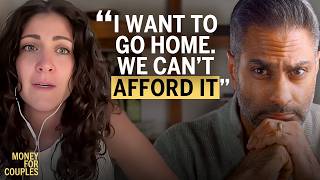
Lisa and Bradford moved to Colombia six years ago but now can't afford to return to Canada. Their fixed costs consume 72% of income with nearly zero savings. Ramit restructures their budget to 47% fixed costs and gets them to commit to a $5-10k emergency fund and realistic retirement planning.
Chapters
I'm Colombian, but I grew up in Canada. I wanted to come back and live here as an adult as a fun experience for like a year or so. But we've been here almost 7 now. I didn't sign up to come here forever.
If you were to move back to Canada tomorrow, would you be able to afford it?
I mean, we could get there. I don't know if we'd survive a month without like the food bank.
I feel like everything in North America has gotten more expensive. Thinking of going back, suddenly it feels like a big leap.
Why is this question about moving back to Canada coming up now?
My financial situation kind of changed recently, then I feel like this desperation of, oh, I need to go find something else.
I mean, I can understand it. When things get hard, sometimes you just want to say like, I want to go home.
Yeah.
I don't want my kids to have the same life that I had where, you know, like I did a few things, but later found out it was all my grandparents. I don't want to be 70 and working.
As you sit here and think about the numbers, what does it feel like to you?
I mean, the first word that comes to mind is hopeless. If I've got to put more than that away, I don't know how to do that without basically just living for retirement and forgetting how to live my life right now.
Bradford and Lisa moved to Colombia 6 years ago with 3 children, and they had a simple plan: try it for a year, have an adventure. But now they've been there almost 7 years and they are stuck. When they look at their finances, they realize they might not actually be able to afford to leave. That's because for years they've been cycling through the same old pattern. Get into debt, pay it off, then get right back into debt. I'm looking at their conscious spending plan, which we call their CSP. If you want my help with your own CSP, you can join my money coaching program at iwt.com/moneycoaching. Let's take a look. Assets: $120,000. Investments: $153,000. Savings, $1,500. Keep in mind, they are a family of 5. Debt, $1,300. Total net worth, $273,000. Their fixed costs are 68%. A little bit high, but not super crazy. Investments, 14%. Savings, 0%. Guilt-free spending, 17%. Okay, I'm noticing 0% on savings, which is the problem. No savings automatically limits your options, like the option to move back to Canada. I am curious for you, as you are hearing this, what is a time that you felt stuck because of money? Tell me in the comments and please know that I read every single one. And now let's meet Bradford and Lisa. Calling couples from LA. I want to talk to you on the upcoming season of Money for Couples. I am excited to be recording episodes in person, live in studio. So if you are struggling with debt, retirement, supporting aging family members, overspending, or talking to your partner about money, apply to the podcast right now. I've done some podcast episodes in person before. Honestly, I love them. So if you are LA-based and you essentially want a free 3-hour coaching session with me, you can apply right now at iwt.com/apply. Again, to be on the podcast, it's iwt.com/apply. In your application, you wrote, we are looking to return to living in Canada, but we are afraid that we are stuck abroad in Colombia, South America, because we have been priced out of life in North America with rising prices.
Okay.
If you were to move back to Canada tomorrow, would you be able to afford it?
I mean, we could get there. I don't know if we'd survive a month without, like, the food bank or, like, something. I don't know.
That sounds like no to me.
No, because we would have to find new jobs, so we would have to start over from scratch.
How did you decide to move to Colombia?
I got surplused in my job, and we had always talked about it. I'm a teacher. And so we were like, you know what, maybe this is the right time. At roughly the same time, somebody from a school here contacted me, said, I have a calculus position open. Do you want it? And we kind of went, okay. And then we sold everything and moved in a month.
Cool. How long ago was that?
It's almost 6 and a half years. Wow. And by the way, I'm Colombian, but I grew up in Canada, so I wanted to come back and live here as an adult as a, as a fun experience for like a year or so. But we've been here almost 7 now.
Wow. So you planned to be there for like a year and it's been now 6 and a half years.
Yeah.
Yeah.
That's pretty cool. What an adventure. What was the transition like moving from Canada to Colombia?
I would say it was fast. Like, we decided, sold everything—car, house, furniture—within 6 weeks, and we were here. Um, partly lack of planning, but we're also very, like, adventurous, and we don't mind being spontaneous, but we don't plan for big transitions like this one. Um, so it was quick.
Let's talk about how much it cost in Colombia versus Canada, were you saving money when you moved to Colombia? Yes.
If you're comparing rent to rent or gas to gas or whatever, yes. But the income here is less. So we're about the same.
I would say part of what's drawn us to stay is that the things that are cheaper are the fun things. So with a family of 5, you know, we can go out for dinner or bowling or the movie and like, we don't even think about it. It's like, it's so cheap. It's like, yeah, of course we're going to go do that. Whereas, you know, like our utilities are, you know, somewhat similar, although they're better now in, in Medellín. They were worse on the coast, so there's certain things that are more expensive. Uh, uh, how old are your children? 3, 9, and 11.
Okay, all right, great. Um, Lisa, in your application you called your lifestyle two things that I found very interesting. The first, you called it a money hack, but then you said it now feels like a trap. Yeah, can you tell me about that?
So yeah, when we came, we thought many people here that are expats, they live here cheaply and they're making dollars, and so they can live really well here because it is cheaper to, to live that way. For me, it feels more like a trap because I haven't been able to get traction here with any kind of jobs. Um, if I work virtually, which I have been doing freelancing and all that, it's, you know, I have to hustle to find contracts and all that. And the jobs here that I have applied for or tried to get, they just pay so little that it feels sad for me to be like, Maybe here it's a good salary for the average person, but for me with a North American perspective, it feels difficult to be like, oh, I'm gonna work 40 hours a week for so little money. It's, it's shocking. So, can you give me an example?
40 hours a week for how much?
For example, $1,200. So that feels to me like it's a waste of my time. 'Cause I'm like, oh, I'll be making like, in Canadian dollars, like I think I counted like $7 an hour. And I'm like, that seems sad because minimum wage in Canada is $15. So I could even just go work any minimum wage job and do Okay, so.
And what do you mean by the word trapped, trapped abroad?
Two reasons. One, I think Bradford is very happy here. He has found a good job here that he enjoys. He goes out and does things. And I think also he's just content to live where we are. I am not as happy here. And so in a sense, I feel trapped because we are at odds. He'd be happy to stay here forever and I'm not. Okay. And then on the other side, I feel like everything in North America has gotten more expensive. Thinking of going back, suddenly it feels like a big leap to be like, oh, now we're used to paying this much and now we have to pay $2,000 more a month for rent, or we have to pay, you know, whatever extra for food. And so I feel like I don't even know how to make that, that work, I guess.
Why is this question about moving back to Canada coming up now?
For me, it's because I haven't found anything here, like, for me, like, financially, like, in terms of work, it just seems really hard for me to find traction here. But I feel like, well, at least there, if I go work minimum wage, I'll make more. Now, Does it mean that I'll, I'll have more buying power? I don't know, but it just feels really crappy for me to be here and be, you know, if I get offered $7 an hour, I'm like, Jersey, like, that seems really sad.
So it's interesting the words you used, a lot of feels and seems. It feels sad. I could be making more in Canada, minimum wage. It seems like I should be making more. What do you make of that?
Maybe there's no numbers to back it up. I'm going by a feeling.
Do you do that a lot?
Probably. He's the math guy. He's the calculus teacher.
I more go by how I feel. And what about for you, Bradford? Why now? Why is this discussion about going back to Canada coming up?
It is a sad prospect to feel like she's in her best money-making years and she's being offered jobs that pay very little. It probably doesn't help when, you know, like she, she sees like, as she said, I do well, I make a mix of pesos and US dollars. I also get Canadian dollars. We run a company as well. And so we get Canadian from that. I think the other thing, though, to add to it that wasn't mentioned is just probably our parents, you know, like they are— our fathers are both 70. My mother has had some health issues last year. And so what we're trying to figure out is like, Do we need to go back to be closer so that we could see them more? And so I think like that's, that's sort of the debate that I think we often talk about as well. Got it.
Got it. Got it. Okay. When you talk about moving back, first of all, how often do you talk about it? For me, daily. I was going to say. So like, how do the conversations go? Can you just walk me through one of— let's do yesterday's. How about today, an hour ago?
I got called back for this job. The pay is $1,200. That's why it was fresh in my mind. And I said, I'm going to have to go back. And even if I have to leave you here, I will go and then you can come later with the kids when the school year ends or when you finish your contract or whatever, but I may just have to leave.
It sounds like it's coming up very quickly. Am I reading that correctly? Yeah, for sure. Bradford, what is your response to that?
My response, like today, was literally, can we just not talk about that today? I think that was my exact words. Honestly, I'm scared about the idea of her leaving for a month, 2 months, 3 months, whatever it ends up being, taking probably our youngest because I can't imagine that our 3-year-old would do well just here with me and the older 2. I don't do well away from Lisa. I like— I've always like, oh, let's go together. And she's like, just go on your own. So that really scares me, the idea of her needing to go back. But I also understand she's, you know, she doesn't feel like she's contributing to her life, let alone our life, I think sometimes here. And so I'm sympathetic.
What is the role that each of you is playing in these conversations?
I push and he retreats, maybe. Yeah. I think she's right.
I am very happy here. But I'm not oblivious to the fact that she's not as happy as I am here.
And is this how the conversations go each time? Most of the time. And they've been going on for a long time?
Probably 5 years at least, until I felt like it was no longer, oh, we're here for fun.
I'm feeling a little bit like a jerk right now because I think, I think it probably has usually been her saying maybe we should go back. And I'm usually saying maybe we should stay. I don't know if it's ever been the other way around.
Each of you has your position in the boxing ring. You're each at an opposite corner. It's almost like, you know, maybe tug of war is a better metaphor. You're each pulling. No one is giving anything. And over time, it's just become calcified. Each of you is in your position. You've dug your heels into the sand. How have you approached it? Because as recently as this morning, Lisa, you said, like, maybe I need to go back You can come back later. That's one approach. How else have you approached navigating this huge life decision?
So there's the odd comments like this morning where I mention it in passing. Um, then there's the times I'm like, no, we need to make a decision. And so we set us up a time. For example, we did that in July. I got my mom to stay with the kids. We went away overnight. Um, we sat down, we discussed it, and we made a plan sort of in The plan was, yeah, we'll stay here. For me, it was 1 to 2 years. For Brad, it was 2 to 3 years. This is the reality that we decided as we transition out, and then we will go back. That was the decision that we took the time to do. But then we came back here and immediately Brad's always like, oh, maybe we could stay longer. Maybe we could take 6 months, maybe another year, maybe, you know? And so for me, it just feels a little bit exhausting cuz even when we take the time to plan to like, yes, we're gonna sit down and decide this. Then there's flip-flopping back and forth.
I see. That's interesting. Thank you for letting me know that. First of all, great work on taking time away and really giving yourself the time and space to make a big decision. That's awesome. I'm a little confused because it sounds like you both agreed it would be 2 to 3 years and then you would go back, right?
I said 1 to 2. He said 2 to 3.
So we kind of settled on 2. You settled on 2.
Okay, great. So you come back and then what is this thing about an extra 6 months. What is that?
It's just that Bradford is often, uh, saying, well, we could stay forever. Well, we could buy an apartment here. Well, so it feels like even though we set aside the time to make a decision, and technically we decided, just like in the off-comments when I'm always saying we should leave now, or, you know, I'm gonna leave and you stay here, um, in the same manner, he's like putting in little comments of like, well, maybe we could stay longer. Oh, maybe we should buy an apartment here. Maybe Why do you do that, Bradford?
I don't think I realized I did.
I actually feel kind of the exact opposite in the sense of like, I've already told my boss, like, I'm done in 2 years. So in my mind, like, it is 2 years. And as much as like, I think maybe I do make those comments, I think I'm also feeling them coming the other direction where it's like, well, I'll leave next month because there might be a job. And for me, like, I think that's why then I retreat. Like, I don't, I don't want to entertain that. We said 2 years, let's just do 2 years. Maybe I didn't realize that I was doing, making those comments that often.
Can I, can I interrupt? I feel like we're all in a big rush to get to the end here. Does anybody else feel that energy? Lisa? No, I don't, but I— You're raising your hand.
Part of the reason I interject comments that I'm in a rush is because my financial situation kind of changed recently. Like, I had A lot. I had two different contracts that were big that were recurring and they both dried up pretty permanently. Let's say for now. Then I feel like kind of like this desperation of like, oh, I need to go find something else because we can't afford to live without us both working. I think. Is that true?
No, no, we, we, we have lived before with just me working. It's certainly not as glamorous or, you know, I'm a lot more tired, but I'm very entrepreneurial. So even though I do have a teaching job, I have always had something else that I'm doing. And whenever we need money for whatever reason, I find more money. But to answer the original question, we can live if just I'm working, but it's, it's certainly not as nice.
Do you agree with that, Lisa?
No, I don't think so. Cause we wrote down the numbers, it comes out to a number and what you make is maybe two-thirds, maybe half, depending on what it is. So it means. No going out, no investing. No. So that's not really living. Like we're just existing and paying just our rent and our gas.
Like, that's a very interesting difference in the way that you both look at money.
Yeah. I never noticed that.
Can you think of a time in the last 6 months when you were not on the same page with money?
The money itself, I feel like we're on the same page, but the stuff surrounding it, like Not always.
Well, what is an example of the stuff surrounding it?
Like the way to get somewhere, for example.
Yeah.
If we lose an income, I hunker down and survive. I cut things down. And Bradford is like, no, I'll go and I'll work 10 more hours a week. And I'm like, you don't have 10 hours a week. But I would agree with him. Like, it's not like we have money fights where we argue about it. Like the day-to-day spending and earning is similar. And we're very supportive in the way we do that. But I think the stuff surrounding is the way we would go about things. I feel like Together as a team, we are lacking in financial things, I guess. It's not about Bradford versus Lisa fighting. It's more like, how do we move forward together?
What do you think the answer is? How do you move forward together? I don't know. Well, you said you're not fighting, right?
Well, and maybe we don't fight because we retreat or we agree. We're too agreeable and we don't actually like have the deeper conversations.
When you think of the word fight, what's the visual that comes to mind?
A little bit of yelling, a little bit of disagreement, maybe some tears on my part, frustration on his part.
In my head, I'm thinking people yelling, doors slamming, somebody sleeping on the couch. Like, that's the visual I have of a fight. But the fact is, that is not always how fights happen. Fights can happen by simply avoiding the conversation or by simply becoming stuck for 5 and a half years we just might not use the word fight. We might use the word strong disagreement or wedge in the relationship. But we shouldn't let the image of a drop-down scream fight stop us from articulating if we're having years-long disagreements. What do you think, Lisa?
That makes sense. And that's why I think that perhaps our fights or our disagreements are based on avoidance a little bit, maybe.
What do you think, Bradford? I think we fight around money, but not necessarily about money. What's the difference? We're not fighting about like, we don't have enough money, or how are we going to do it, or you lost your job, or I lost mine. Or the fight is more like, okay, well, if we want to do that, then what are we going to do? And I just buckle down and do it. I just like go and find another job or another contract or something. And Lisa kind of is upset that I'm killing myself.
Although that might be related to what you asked about me feeling like money will work out, because the reality is we've been married for a long time and he does, he figures it out. So I don't have to worry about it because in some way or another he does.
So can I just ask a provocative, obvious question? Like, why don't you just let it work out, Lisa? If you're worried, why don't you just let him work extra? And then what's the problem? I just feel bad.
We're very good at paying off debt. We're very bad at saving. That's actually something I say a lot. And so what that means is that we don't have debt because that's what we always put all our time, effort, and everything into. But when there's a season like that, usually Bradford works way too much and he really does kill himself sometimes. He's like, has like so much stress that he has like physical issues and all that. I don't want him to live like that. And I, I also feel a little bit of pride, uh, like pride in like contributing. And as we said earlier, I disagree. I don't think we can afford to live a good life if I'm not also working.
So far we've been talking for a few minutes. If you had to zoom out and assess what you have heard from yourself, what word or words would you use to describe the way that you've communicated the situation?
Maybe defensive, like I'm feeling, I'm feeling defensive at least, like, like I need to defend what I'm saying or what is being said when you two are speaking or—
All right. Defensive. Lisa? Maybe erratic. Erratic.
That might be partly because I have ADHD and so I'm all over the place a lot. I just feel like I'm always the one that's kind of changing the plan and partly because perhaps the reason I think, oh, if I go to Canada, it's better because I want to find the next shiny new thing that I can tap into, or the new situation I can get into.
I do feel a bit of chaos. There's a lot of things swirling around. I'll give you a couple of examples. We don't fight about money, we fight around money. Like, what? I don't quite understand that. Yeah, but then in your application you wrote, quote, we argue constantly about when to return and how. We keep delaying because we don't know how to set up a plan to help us succeed. So yeah, I'm kind of like, what's happening right now?
I mean, I think that's actually very similar to what Bradford said because we're not fighting about the actual money. It's a situation like, it's like, what is the plan?
Then can I ask you, like, why did you, why did you come to see me?
Because I think you can help people go deeper in terms of the reason why they can't plan around money. You always say it's not necessarily about the money or the budget as much as the psychology or the, the reason behind it. And so I feel like the deeper issue is not so much the budget, it's how do we get to these decisions that we agree on.
Right away, something is puzzling me about Lisa. Do you notice that she's talking fast? She's got this frantic energy. There's a lot of overexplaining. And I picked up on something else just listening. This constant equivocation. A lot of, well, there's this, but there's also that. Caveats everywhere. Like, I ask a simple yes or no question. Neither of them can answer it. If I am feeling this confused just listening to them for a few minutes, imagine how hard it must be for them. I feel a lot of compassion for them because when you are stuck in a situation that is complex, a lot of times we become so muddled that we can't even see the situation clearly. All of us probably have a friend who's been in a bad relationship and they just go back and forth and circle around. And to you, it might be really obvious what to do, but to them, they are stuck. Now, they told me they don't fight about money, but they fight around money. Honestly, That's not an acceptable answer. It's too confusing. Someone who understands their money can give me clear, simple answers. Someone who doesn't understand their money situation uses a lot of random words to dance around the topic. Now, the question is, are they open to simplifying? And we're going to find out right after this. What's the area of life that you want to spend more on this year? A lot of people will say health. Or relationships. Some people will say travel. Let's talk about food and health for just a second. For example, in my life, my wife and I both decided we're gonna spend more on health, and that means having a personal trainer. It means having someone make meals tailored to our macros so that we don't have to think about it. But you don't have to pay for a private chef to do that. One great option is to make healthy eating convenient by getting meals from Factor. They take the work out of healthy, macro-dense meals so you can start eating better now. Factor is a chef-crafted, dietitian-approved meal delivery service that fits into your goals and schedule. Their meals arrive fresh, not frozen, and they are ready to eat in 2 minutes. No prep, no cleanup. Just heat it and go. There are over 100 meals to choose from every week. High protein, calorie smart, Mediterranean, even GLP-1 support options. And unlike most meal prep, there's a lot of variety. So you're not locked into the same boring meals every single time. If you're looking to eat healthier starting right now, this is exactly what I would use. Head to factor meals.com/Ramit50off and use code Ramit50off to get 50% off your first Factor box. Offers only valid for new Factor customers with code and qualifying auto renewal subscription purchase. Make healthier eating easy with Factor. A lot of people who read my book, I Will Teach You to Be Rich, learn that they're going to end up paying their 1% financial advisor hundreds of thousands of dollars in fees over the course of their lifetime. But a lot of times they see that and then bury their head in the sand because leaving their advisor feels hard. In fact, I'm going to tell you how to do it right now. Open up your email app and use this template. Hello, Chet. I've decided to switch financial advisors. It's not you. I've decided to switch to get away from AUM and move to a fee-based planner. You're going to be receiving instructions soon from my new planner to move over my investments. I appreciate the work that you've done. Thank you very much. It is that easy to kickstart the switch over to a fee-based planner like our partners at Facet. Facet charges a flat membership fee for financial planning, never a percentage of your assets. With Facet, you get access to a team of CFP professionals, always a CFP, always a fiduciary, who can help you create a personalized financial plan that meets you where you're at. They can help you with the big things like investments, moving across the country, starting a family, estate planning. Your financial plan needs to keep up with your rich life goals. Facet makes getting professional financial advice more accessible without the exorbitant fees. As of the date of this recording, Facet is waiving the enrollment fee for new annual members. And for my audience, Facet is offering $300 into your brokerage account if you invest and maintain $5,000 within your first 90 days. Head to facet.com/Ramit to learn about which membership option is right for you. Facet is an SEC-registered investment advisor. I'm not a member of Facet, and I have an incentive to endorse Facet as I have an ongoing fee-based contract for cash compensation based on this endorsement. All opinions are my own and not a guarantee of a similar outcome. So when you disagree about or around money, it's about primarily going back to Canada, is that right?
How to earn money and how to— like, for example, if I can't make money or if I'm offered very little money, Brad's always like, oh, don't worry about it, I will just work an extra 3 hours because I get paid X amount. And so it would take you way longer to make it, and I appreciate that, but I don't know, it's not always like fair, I guess, in my opinion.
Keep going.
I just feel bad that it always has to happen that way, or it often does. So if I have potential to have a career somewhere else or to do better elsewhere, then does that matter? I don't know. Because just because he can make more money doesn't mean that what I want in my career, or if I want a different job, that it doesn't matter. You know what I mean? Sorry. It's okay.
These are pretty big questions. Yeah. You mentioned the word contributing earlier. I wanna feel like I'm contributing. Yeah. How much does that play in here?
A lot. Huh? Like for me, it's not about percentage and I'm, I'm grateful that I'm not like other people that do 50/50 all the time because he does earn more than me. So I, I'm grateful I don't have that burden, but I also prefer contributing. I like to contribute because a lot of times I'm like, well, we don't have the money, so I'll, I won't do X or Y, or I won't buy this, or But if I'm contributing, I'm like, you know what, whatever. I worked, we don't have any issues, I have extra income, I'll go buy this thing or I'll do this experience for myself. Which when I'm not contributing, I don't feel like I, I do it.
It's kind of a tough box you've put yourself into. The idea that I, Lisa, want to contribute financially, not that I need to make 50/50, but I wanna contribute meaningfully. When I tell Bradford I wanna do that, he tells me, Yeah, you should do it or get a job, but you also don't have to. I'll work more. But I feel bad when he does that, so I want to contribute. So then I go and look for jobs, and when I get an offer, I feel bad because it's not as much as I maybe could make in Canada. So now I feel bad, and now I'm contributing. Oh, and if I made my own money, then I would feel more comfortable spending it. On myself, but because I don't, I can't, so I feel bad. Yeah. What do you notice about that whole cycle?
I put myself in the box and I create the issue.
You put yourself in a box and it's almost like you're squeezing it shut with each way that you think about it. It's just like you're tightening the knot. The knot is like self-created. We could walk out of this jail cell of self-creation overnight, but you have created a way of thinking about it that each time you think about money and earning, it actually tightens the cell. How does that strike you?
I kind of agree, and I kind of disagree.
When I said it out loud, it sounded like every layer is designed to keep me, Lisa, small. Yeah. And the more I went around, it almost seemed like more and more panicked. What's your take on that? Do you agree? It's okay if you disagree.
I would not put that burden on myself as much if Bradford made way more money. And so that's where that comes in. It's more that I see the need and I wanna step in and help. That's fair.
I hear you loud and clear on that. I, I appreciate you saying that. Uh, you also mentioned in your application, Lisa, that You and Bradford are, quote, stuck in a cycle of getting in and out of debt. Yeah. Tell me a little bit about what kind of debt and why you found yourself in and out of it.
So it started, say, with student loans. We paid off $120,000, I think, in student loans with interest in 5 years. Wow. Um, so it was like hunker down, pay everything, put everything into it, and we did it. That gave us the freedom to come to Colombia because before that we didn't want to come here and have a payment back home that we had to make. So that was that. And over the years, whenever there's been need, instead of being like, well, let's have an emergency saving as every money person talks about, we have open lines of credit. In our mind, it makes more sense to invest the extra money we have lying around. And then if we run into a tight situation, we use a line of credit because it's got a low, like a 4% like, um, interest or something, and then we pay it off. You know, there's been times when it happened, like we moved with to a furnished place here when we furnished our apartment from scratch and we bought a car at the same time. It was a big bunch of money that had to come out at once. So we put in lines of credit and all that, and then we're like swinging back to, okay, repayment mode.
Do you like being in debt?
No, that's why we run away from it and we try to pay it off as soon as we can.
How many lines of credit do you have today? We have 2. Okay. You want to ask me how many lines of credit I have?
How many lines of credit do you have, Ramit Sethi?
0. Why is it that somebody who has more money has 0 lines of credit versus somebody who doesn't and actually has struggled in and out of debt and says they don't like debt has 2 lines of credit?
You don't see the need to go into debt because you have planned for it.
That is partially true in the same way that you don't see the need to drink poison for an after-dinner drink. It's not that I don't see the need to— I am actively against it. Yeah. How do you feel about that?
No, I agree with you. I think it's better not to get into debt. I really do. Huh. But when the need arises, I don't know where else to go, so we have it, but then we pay it off quick. So that's, that's where the, the mental gymnastics comes when it's like, well, it's fine because—
yeah, I feel like I'm in like a gymnastics class right now. I don't want debt. I hate debt. but if it comes up, we have it, but then we pay it off quickly.
When you don't have enough to invest for retirement and to all that, I would rather put every extra penny we have, which we do have sometimes, into, uh, whatever, index stocks or anything that's gonna help us long term, rather than have $20,000 in a bank account that just sits there with minimum savings in case we ever need it. In the past, it seems like we were taking it from the line of credit and then we would pay it off within a few months. And so it doesn't seem like it's necessary because we don't have infinite amount of money. I don't know. Do you disagree, Brad? I don't know. You've been quiet for a while. So I don't know.
As someone that understands math really well, that like, you know, investing that money at 10% in index stocks and then later if we need to, like say buy a car, getting dinged at 4% for 3 months while we pay off the car. That is ultimately better. Or the other thing we've done sometimes is pull money out of those index stocks. That's probably more rare because we are, I don't know where we are, but she said we're good at paying off debt. And so I think that like understanding those numbers, for me, it makes sense to do it that way, you know, to guarantee that no matter what, we're putting $1,000 a month into index stocks. And if that means that we don't have quite enough to buy a car next month, then we'll pay that off for 2 months at 4%.
Or for Lisa to feel like she is in a prison of her own creation because she is not contributing enough financially, therefore bringing her to tears. Is anybody missing this? No, no, no, I'm definitely not. I mean, you're talking to a guy who loves investing. I love it. I, I want automatic investing, but I don't wanna see somebody in a relationship cry and, and talk about money in a negative way every single day for 5.5 years. There's a mismatch. That's not a rich life. That's just being blind and blindly putting your money into something without actually understanding why. How's that strike you, Lisa?
I agree. And I think part of the reason we invest so much is because literally, this is funny cuz Brad always says, I don't wanna work forever cuz I work so hard. So we do have to make sure we put some money aside for the future. Otherwise we're literally not either never going to retire or we're not going to be able to live. And it seems like the goal right now is at least investing because we're running out of time.
You all have a very good reason for everything. Yeah. But is it working?
Yes or no? I think for me it is working if I isolate myself. If I—
hold on. If I isolate myself, not include my wife and my 3 kids, It's great. Yes, I love it. There's just 1, 2, 3, 4 problems with that. No, I agree.
I completely agree. And I think that's the emotional side is not working, obviously, for Lisa. The numbers work, but that doesn't mean maybe the emotional state is working.
I don't even know if the numbers work because Lisa herself said We don't have enough to live the kind of life we want if just Bradford is earning. So it's unclear to me if even the numbers work. Lisa, is it working?
It feels like it's just an income issue for us, I think, because we're just—
make more and everything will be okay. That's how I see it, I think. Okay, you could be right. You could be right. If that is the case, why not just take that job in Colombia? $1,200 a month, problem solved.
Yeah. Well, yeah, that might be what we have to do. Is that not it? Uh, probably not because there's also the deeper issue of like, I feel crappy as a, an adult making so little money considering what I know that I could be making elsewhere.
It is interesting that in asking both of you, is it working or not? I did not get a clear answer from either of you. To me, that speaks to how muddled all of this is. It's actually not like— think about it. It's not clear if you're going to go back to Canada. It's not clear when. It's not clear if you need to make more money or not. None of this is clear. No wonder it's so frustrating. I would probably be crying myself if I were in this situation. Yeah. What I would like to encourage you to do is to not accept this muddled way of thinking for your life. It's actually not okay to go through life feeling super muddled and doing the thing where each big question in life is like, well, yeah, it's actually good, but no, it's actually not. And then like playing both sides of the equation. Like, you're actually supposed to pick the thing that is best for you. And that might mean making the wrong decision sometimes. Who cares? That might mean closing certain doors. Who cares? As long as you both make the decision that is right for the two of you, you can always correct it later down the line. But you have to be willing to actually call the ball. Hey, this is not working. Or this is working. Actually, we don't make enough. Or we do make enough. But it has to be crystal clear. And if I were you, I would encourage you to get a little bit more impatient with the ambiguity of the whole situation. Yeah, that's true. In order for us to bring this down to being a little bit more concrete. I'd like to take a look at the numbers. So you both completed the conscious spending plan. What was that process like for both of you? Emotional. Oh, emotional. I was frustrated. Oh, tell me more.
I was frustrated by Bradford because he was getting stuck on some numbers and I was trying to get the math right in certain ways.
Yeah, it was emotional because I guess, yeah, like there was some arguments there and frustrating because our income is so variable.
That's kind of interesting. Even putting down numbers, what should be black and white, both of you described it as emotional. And like, if we can't fill out a spreadsheet, how are we going to decide if we're going to move back to Canada? It reminds me of couples that are planning their wedding. And planning a wedding is the first complex project that most couples go through. And I remember when we got engaged, I went out and asked a lot of friends, married friends, for their advice. And my brother-in-law, he said, this is going to be the best year of your life. Like, you're going to have an awesome time planning the wedding. You're going to get to know each other. You're going to just have an amazing time. I loved my brother-in-law's response because we chose to make it an awesome year. And that microcosm of planning this complex part of life, it really shows how two people handle complexity and ambiguity and certain numbers. So the CSP to me is like, it's like a diagnostic tool. And I think it's quite illustrative of how the two of you approached it. All right, let's take a look at the numbers. Lisa, can you read off the word in bold and the number in full next to it for this entire box, please? Sure.
Assets, $120,000. Investments, $153,670. Savings, $1,500. Debt, $1,300. Total net worth, $273,870. All right.
What do you think about those numbers?
It's higher than I anticipated they would be.
What'd you think it would be?
I thought all we had to our name was our $20,000 car.
What the fuck? You thought you— you're— hold on. God, I love my job. What the fuck? You thought your assets were $20,000 and then you looked between the couch cushions and you discovered it's actually $120,000?
Is that what you're telling me? I guess so, yeah.
All right. That's pretty cool. Oh, just a random question. Um, Lisa, when you discovered that your assets were 1, 2, 3, 4, 5, 6 times higher than you thought, did it make you feel any better about money? Yes or no, please. Yes. Really?
Yeah, it actually did because, because I felt less behind on, let's say, investing, for example. Okay.
Let's keep going on this then. So you felt better, like we don't have to invest every last dollar. Okay, great. Did you stop the monthly investments that you're making? No, I didn't. Did you close the lines of credit that you have?
No, no. It's a backup plan.
So. And then what about you, Bradford? What do you think about these numbers?
They're about what I thought they would be, but I also felt like I didn't have a lot of faith in them. Why? Because so, so much of our money, whether it be the income or whether it be the investments, feels insecure. Huh? What's insecure about investments? The ones that are in Canada. I feel like those are fairly secure. Okay. And when it comes to my money that's here in Colombia, I mean, I literally have friends that can't get their retirement because the government has just seized it. Really? So real.
Whoa. Can you pull it out?
Not until I retire.
Oh, it's locked up there.
It's locked until I retire.
Gotcha.
And then who knows if it's there because of the people in power right now.
Damn. All right, that's pretty interesting. I did not know that.
Another reason to go back to Canada.
No, I think that's valid. If you feel insecure that the money you are putting in meticulously every single month is, like, actually at risk, like a 50-50 shot you can even actually ever get it, then that is a very valid part of your decision-making to go back to Canada. Okay, let's keep going down these numbers. I would like to look at the income, and this time I'd like to ask Bradford, your gross combined monthly income, what is that number? Uh, $10,066. That's the two of you. So that means that collectively your household income is $120,792. By a show of hands, who here knew that number? Neither hand is going up. Thank you very much. No, keeping my average. It's at 50%, but I have had a couple of random couples recently who both of them knew it. So thank you. Now, please tell us just for fun, how did you not know your own household income?
My salary here in Colombia is literally different every single month. And when I try to ask them why, try to ask the accountant why, none of them can tell me.
This is like a classic, like, different country thing where you go to a different country and you're just like, how can you not answer this simple question? And they just go like, they just don't have an answer for you. I've had this stuff happen in India too.
That's exactly what's going on.
And for me, it'd be easy if I could be like, okay, I make this much times 12. That's— but I can't because like I said, some months I make a lot and some months I don't.
So it was really hard to figure out. But we're in the ballpark.
Would you agree? Yeah. Like, like for instance, if we change the question, do we know that like that's roughly what it is? I would say yes. Like I know that we roughly make $10,000 a month.
Did you know that, Lisa?
No. And for me, that number is hard because I can look back and see that, but like I said, two of my clients have dried up right now, so I don't know what's going to happen. Like, can I say, okay, for the future, I'm going to calculate this much a month? I don't think I can because I don't know.
So can I ask you, what is your approach to that? If I were to say, Lisa, how much are you going to make in the next 12 months? What would your answer be?
I don't know if I can make that same amount of money next year.
Maybe you can't. Could you make $1,000 a month?
If I take that $1,000 job, I could make $1,000. So let's say yes.
Great. Could you make $2,000 a month?
Yes, I can probably on average make $2,000. Yeah.
Great. Let's keep going. Could you make $3,000 a month?
I don't feel secure in saying yes to that.
Okay, good. Fair enough. I appreciate the honesty. So $2,000 a month, that's the number. Sure. Yeah. Okay. I'm gonna go out on a limb and guess you have never gone through the exercise we just did of how much can I safely, conservatively make for the next year. True or false?
I would say false. I did it once after listening to you. Uh-huh. We projected a budget and we decided that to live the kind of life that we wanted, I had to make $40,000 a year. Okay. And so that maybe gave me a little bit of a kick in the pants to be like, okay, I gotta make sure I meet that target. And I think I met it. I don't know for sure if I did in the last year, but yeah, you beat it.
You made $50,000.
Okay, well, there you go. But that's about the only time I would say I've done that, because I, I'm more reactive than— that's why I need help with planning.
You talk to your therapist about this? No. Why? Like, I don't have—
I don't have a therapist that I meet with regularly right now. Once in a while they help me with executive functioning, um, just like, you know, tips and things like that.
Can I suggest that you do? Sure. I think it would be really good. I think that part of planning can be helped with techniques and strategies that therapists are really, really good at. So I want to definitely suggest that to you, and potentially both of you could go, but certainly individually would be really good. Sure. One thing that I am pleasantly surprised is that you actually did plan out a number. The two of you sat down, talked about how much you need to make, and guess what? You nailed it. Not only did you make $40,000, you made Like $48,000. Very impressive. Hearing the way you talk about money, I can understand a little bit more about why it feels overwhelming. Why also you might feel like, I got to get to Canada. Like, this doesn't feel good. From my perspective, it seems frantic and frenetic. But when I'm hearing you explain a little bit more, I'm starting to understand more of why you are feeling that way. Most people are very hesitant to put a number in the ground and commit to making it in the next year, especially beginning entrepreneurs. First of all, they often look at things month to month, like they're not thinking about a year down the road. I'm sure it's much easier and much more common for you to think about what happened last month than what's going to happen next year, right? Yeah. Okay. That's common. The next thing, beginning entrepreneurs, they don't really know how to project, and so they shy away from it. The feeling is, if I say I'm gonna make $4,000 a month and I don't, then I am a failure. Failure. So therefore, I don't even want to say any number at all. How much of this resonates with you?
100%. Yeah. That's cool.
Yes. This is very common. But the ironic thing is that when you actually did pick a number, you crushed it. Yeah, that's true.
What do you make of that? I guess I'm not as pathetic as I thought. I don't know.
I don't think you're pathetic. Bradford, do you think she's pathetic? No. Okay. Lisa, do you think you're pathetic? Sometimes. Okay, well, 2.5 of us on this call do not think you're pathetic. I would really like it for it to be 3. Okay. So I think we're going to get there. I think that every beginning entrepreneur struggles with the same thing you do right now, which is putting a stake in the ground and committing. Yeah. I don't think you actually even need to commit to making $4,000 a month if you don't feel comfortable, but you feel comfortable saying $2,000 a month and you know that you can hit that number, then we'll make a life around $2,000 a month. How about that? Okay. That's the way that we proceed. I love that Lisa was willing to go there with me to really look at her income goals and to map out what her next year could look like. She's clearly in a tough spot. Her business is slowing down and she and Bradford don't have any real savings to lean on. So when something comes up, they use their line of credit. Now we need to talk about a line of credit because a lot of you are way too casual with a line of credit. A line of credit lets you borrow money when you need it. Okay, that sounds kind of responsible, right? It's like just-in-case money. But what blows my mind is how many people treat their line of credit like a piggy bank. Hey, everybody, I'm going to use my line of credit to renovate my kitchen. I'm going to use my line of credit to take a trip. Some people on this podcast have used a line of credit to buy a freaking mattress. Now, I got to tell you, my mind cannot comprehend using sophisticated financial instruments to add backsplash tiles to your kitchen. And when I tell people I would never take out debt to pay for a luxury, they look at me with complete bewilderment. Well, then how would we ever pay for it? Oh, I don't know. How about saving money for it? Like, you think I'm taking out debt to go to Disneyland? Who told you this is okay? And you can tell this makes people really mad. The idea that maybe they should not use a freaking line of credit to buy bagels, which is one reason that they justify things like home renovations or mattresses as investments. Those are almost never investments. And you know, just as I know, that we should not be using debt to pay for luxuries. You don't need another financial product. You certainly do not need to leverage debt. You want to leverage something? Leverage reading my book. Build up savings, and then you earn the right to be able to buy nice things. Lisa has created a mental and financial prison cell for herself, and with every decision, she tightens the lock just a little bit more. She wants to feel valued, but then she looks at a $1,200 job offer in Colombia and compares it to what she could make at minimum wage in Canada at $15 an hour. And she thinks, I'd be worth more at Tim Hortons. You're letting Tim Hortons decide how you feel about yourself. If I let other people tell me how I should feel about myself, then Peter5539 calling me a libtard would ruin my day every morning. Listen, Peter can barely wash his own ass, much less make intellectual distinctions about political philosophy. I'm going to let him decide how I feel about myself? In what world? This is what happens when you shrink your field of vision down so small that the only thing you can see is what companies are willing to pay you. Guys, an income does not determine your value. A rich life is so much bigger than that. Ironically, she wants to be valued in her relationship, but she keeps allowing herself to be shrunk down. And Bradford also is playing his part perpetuating this dynamic. The question I have is, are they actually willing to redefine this dynamic? We're going to find out right after this. One of my life philosophies is to fight for simplicity. And the more successful I've become, the more I lean into this. I don't have 12 different credit cards to optimize points. I don't work with brands who have tons of complicated requirements. And even in my own business, we have streamlined our systems so we do not use a bunch of different platforms unnecessarily to get our work done. If you are a small business owner and you are also fighting for simplicity, then I recommend taking a look at NetSuite. NetSuite is the number one AI cloud ERP. It's trusted by over 43,000 businesses. It simplifies your business into a single platform. That's your financials, inventory, commerce, HR, and CRM all in one place. Plus, it uses an AI-built system to automate your routines, deliver actionable insights, and help you cut costs with confidence. Whether your company earns millions or even hundreds of millions, NetSuite helps you innovate and improve. If I'd had a system like this back when I was building IWT, it would have changed everything. If your revenues are at least in the 7 figures, get our free business guide, Demystifying AI. At netsuite.com/ramit. That's netsuite.com/ramit. I know that some of us think better when we write our thoughts out, but for a lot of us, including me, I'm better when I can think out loud. If that's you, I recommend you check out Whisperflow to save you tons of time to bring your ideas to the page. Whisperflow turns your voice into clean, final draft writing inside whatever app you're already using— email, Slack, Docs, even text messages. And it works on Mac, Windows, and iPhone. So instead of spending all of your time responding to messages, especially while sitting at a computer, you can hit a hotkey, speak, and the text appears. It's accurate. It's fast. It's all formatted so you can get back to work. Here's what my friend said about it. Whisper is amazing because it learns the way you speak. So you can send this rambling note as a text message and it kills all the filler words and it perfectly formats it for you. They said it's much better than using the Apple voice-to-text feature. The spelling is way better. If you want to buy your time back and get back to what matters, check out Whisperflow. Try it for free at whisperflow.ai/ramit. That's whisperflow.ai/ramit. Whisperflow.ai/ramit, or click the link in the description below. Okay, so $120,000. Isn't that a lot of money? In Colombia. It's a lot, right?
Uh, yeah, it is. What the hell?
All right, let's take a look at the rest of the numbers because now I'm very curious. Fixed costs are at 59%. I have no issue. I don't even need to go through it. Investments are at 13%. While I certainly appreciate that, I can tell that investing is very important to you. 13% of net, that's a solid number. Very nice. Savings are at zero. Okay. I can also tell the savings is not important to you. It's very clearly revealed right there on screen. And then finally, guilt-free spending, 28%, $1,963 a month on guilt-free spending. Is that number accurate?
That's probably accurate, but remember we have 3 kids. You don't need to justify it. No, but what I mean is that's where it's going.
Oh, it's all to the kids, not to us, just to the kids.
So I want to, I want to comment on that because I actually think that's important. Tell me. I think she's right in the sense that goes to the kids and me. Lisa does not have guilt-free spending. No matter what she spends it on, she feels guilty. Like, I mean, her mom literally sent her money to go and take a class, like, I don't even know, 2 months ago. And she still hasn't taken the class because she can't— she doesn't, she doesn't want to spend that money on herself. You know, like, I feel like I have to tell her, Lisa, go do it. Or she won't, she won't spend that money.
What's the voice that goes through your head, Lisa?
I don't know, maybe I need to give myself more credit and more, I don't know, more enjoyment out of our money.
What is something that you have not spent on that you might like to, but because it's for the family, it's for the kids, the money goes to them instead?
Maybe that class. It's just like a public speaking, like a Like a Toastmasters class. Just, I like to do that. I want to go paragliding.
That's pretty cool. I really would love for you to be able to do that, even if not today. I would love for you to be able to know exactly when you can. Yeah. I think there's something really powerful about the idea of this is part of my rich life and maybe I can do it today and I didn't realize it, or maybe I can't afford to do it, but we're going to set up a plan and I'm going to know exactly what month and year I'm going to be able to, which is in a way so anticipatory. So I would love to be able to do that with you today. Okay. So we got the key numbers, which are 59% on fixed costs, lower than 60. That's very nice. 13% on investments, which is typically higher than most would see. But I think it's solid, especially for having a higher income in Colombia. That allows you to invest a little bit more. We have savings at zero, which explains why you have no savings, but also your mindset of lines of credit really explains it. And then finally, we have guilt-free spending, which is high for, for a couple that has nothing in savings. And actually, for a couple that has 3 kids and only has $1,500 in savings, I find that to be unacceptable. I'm seeing nods from both of you. Bradford, what do you think?
I guess like every time that I've had savings, it just feels like it's doing nothing.
You are, and I hate to say this, math-brained. And I say that because on this show we have an extreme lack of math that happens. Too many people talking about their feelings, which while valid, they need to add some freaking rudimentary Math. In your case, you're looking at the world— those lenses you have, they're not just prescription lenses. They're lenses that talk about yield and return. And I like return. I like it. But I don't like fighting about money. I don't like talking about it every single freaking day. And I don't like the risk of having 3 kids and a wife and $1,500 in savings, which would last you one week. Yeah. Yeah. You see yourself as a rational person who walks around and you're going to optimize returns no matter what. And yet you have put your family along with Lisa in a position where you have $1,500 in savings, meaning you are one step away from having to go back into debt a place that you have been many times. I do see what you're saying.
And remember I told you that in Colombia I have— there's money in two different places. So the money that is invested in stocks here is quite easy to pull out, like within a few days max. Sometimes I can pull it out immediately. So I do think of that as savings.
Hey, my freaking investment portfolio is liquid. That doesn't mean it's savings, okay? It's meant to be compartmentalized. The minute we start making these things fluid is the minute everything becomes sloppy.
But I guess like the money that's in that, say, that investment account, because it's a different one than the rest. Yeah, I do think of it as separate.
Why don't you just create a savings account?
Because it gets way less yield.
Savings is not supposed to get yield, but if it can— let me put it this way. You guys can keep doing things the way you've been doing it. When I asked you, is it working? You actually couldn't give me a response. In my opinion, having about a week's worth of savings for a family of 5 is not working. In my opinion, having one partner who can't go paragliding or anything for years is not working. The fact that you cannot agree on even how to make a decision about whether to move to a different country or not is not working. And the savings is just a small piece of this. The ability to transcend your current identities and turn the page to a new chapter. Both of you. If you can't do that, then you're going to remain stuck. And today, both of you have shown an amazing ability to give me reason after reason after reason for something and yet not get the outcomes you actually want. Yeah. So perhaps it's time to put those reasons aside and maybe see how people who have more money and are a little bit savvier with money handle their finances. What do you say?
Yeah, I think that's a good idea and I'm open to it.
Okay. The good news about the CSP is that you have money. You have a high income, $120,000 in Medellín, in my opinion. If I'm looking at this as an outsider, I'm like, wow, you're living life nice. I don't think you feel that way. I actually think that the narrative you have created is that we're, like, barely getting by. Lisa, true or false? Yeah, it's true. And the fact is, if you made an extra $50,000, you'd still feel exactly the same way. Now, I know I don't have to tell you guys about appreciating things. I'm not even going to get into that. But I do think there's a narrative that we sometimes concretize with our money, and it's like, ah, we can't actually live the way we want to. What if we're actually living an amazing life and we just haven't realized it? All right, let me take a look at this CSP here.
Can I just interject for a second? Because I think when I was making that amount of money, I felt more like we could live freely and we could spend freely. If we cut that down to like the $2,000, let's say that's my target. You wanna do it right now?
Sure. All right, let's drop it down to $2,000 and we'll take your net down to what, $1,500?
Sure. Mine actually goes up too, because I got a bonus. I'm getting bonuses this year that we didn't put into this.
So it should be at least $7,000. And should we make this $5,000? Yeah, probably. Okay. Watch. Okay. Wow, guys. What do you notice? Your fixed costs went from 59% to 64%. Hold on. Just look at those beautiful faces on screen. What's happening is they're both laughing, kind of embarrassed. Can you describe what's happening right now?
I guess it's not as big a deal as I thought.
I don't know. You chose the right word. Embarrassed. I was like, right.
I didn't know you were getting a bonus.
That's nice. This, this drama that we love to put on in our lives, we love it. I don't mind it. I love drama myself. But it is imperative that we actually look at the reality of the situation. And all this circling, all this spinning, and it's 5% more. You have the money. To me, it's not— this money part is not that interesting. Moving up 5%, I really couldn't care less. We could knock this out in 5 seconds. What to me is more interesting is what do you get out of the drama? Why is it that you did not communicate effectively on getting a bonus, on how much you could conservatively make, And more importantly, what do you get out of each role that each of you has chosen to embrace? Lisa, what's going on? I don't know.
What we pay off debt is like, oh, control, like hunker down. Like I say, like, yeah, spend less. And so I just feel like if we continue to do that, maybe that's good. It has worked for a purpose in the past. And so I guess I feel like maybe I would come out on top if I continue doing the same thing because You know, if we spend less and we don't order drinks, then eventually it adds up to something. Maybe. Right. Because it did in the past, right? When we were paying off debt quickly, it was like, oh yeah, we just spent very little and it, it worked. In 5 years we paid $120,000.
So. Did you grow up in Canada?
I moved to Canada when I was 13, but I, my childhood was in Colombia. So. I see.
And what do you remember your family saying about money when you were younger?
I don't remember them talking about money too much. Yeah, I don't think that we had money conversations per se, but I would say my life was very cyclical. Like there was times when we had very little money where my grandparents had to help pay for things. At the same time, my family in Colombia is a little bit prominent, and so I had a weird dichotomy where I would go to a country club for a party, but we couldn't pay rent.
What did you take away from that? That's quite a stark difference. Country club, can't pay rent.
I don't know. I feel like money comes and goes in a sense. What does that mean? You can't plan because situations, circumstances come, come at you and then things change. Okay.
And so therefore, what should you do?
I don't know. I guess not worry about it.
But you worry about it a lot.
Yeah, I guess it's a small way to feel like I can control.
Ah, so growing up, it sounds like you felt, uh, I cannot control money. One day we have it, one day we don't. One day we're at the country club, the next day we can't pay rent. I can't control it.
Sometimes we're doing well and sometimes we weren't. Like, for example, we're doing great, upper middle class. Then we moved to Canada and we're living the immigrant life. So we started again from little. And I feel like that was a cycle my whole life.
You mentioned that your family moved to Canada, and it's hard to move to another country and get traction in careers. I understand that. And yet here you are saying, we've been in Colombia for 5, 6, 7 years, and I want to go back to Canada. Seems to me there's this very strong parallel there. Why?
So in Colombia, now that I've returned, I have access to different resources. My education, my postsecondary was in Canada and all that. And so I don't know that I would come back to zero, but maybe I would because I've been gone a long time.
You yourself saying minimum wage jobs in Canada?
Well, I'm saying that I could at least make more in a minimum wage there, uh, job there than I could than what they're paying me here. So that feels like I'm being compensated better and I don't know, worth more.
Stick with me on that phrase, worth more. What does that mean?
Just that I feel like companies that come here to hire They come here because they get cheap labor. So if I'm here and I'm competing with those jobs, then that is the kind of thing that they expect is that you're gonna get paid less, less, but that's not worth my time to work 40 hours a week for a month to make $1,000, let's say, or $1,500 or whatever. I'm like, that's not worth it in my mind.
Is your mind giving you accurate information about the situation?
We've run the numbers multiple times over the last 5 years and they seem similar. So, okay, so let's say it's about the same. Shouldn't we go there then? And if I can make more, then maybe I'll feel better about money. Maybe not. I don't know.
I'm going to tell you right now, you're not going to feel better. I'm just going to tell you directly, your feelings are completely and totally uncorrelated with how much you are making. Fair enough. What you said was extremely revealing when you said worth it. The idea is that if a company pays me $15 an hour in Canada, then maybe I am worth more than a company that pays me the equivalent of $7 in Colombia. Until you are able to find your own self-worth beyond what a company will pay you because of labor markets, then you are forever going to be chasing it. We cannot determine in totality our self-worth by what a company is willing to pay us. But aren't there other things to consider? We have 3 kids. They grew up here. What's the quality of life? And on and on and on. I'm not saying don't move back to Canada.
No, no, I understand.
But we can't make these life decisions because I think I will make double the amount, or maybe a little bit more. That's not how we make these big major life decisions.
I think it's fine, but I don't know how to do them then, because that's the conversation.
Okay, well, we'll get there. Okay. I'm not here to make couples feel bad. That is not the point of this show. But sometimes things get so tangled that people cannot see what is happening. They spin, they rationalize, they analyze every option to death. A lot of couples are frankly too smart for their own good. They spend their time seeing every single angle, but they don't realize they're actually just stuck in place. And you'll notice they keep trying to help me understand. Ramit, you need to understand why we do this. Let me explain our thinking. I don't need to understand. They need to change. You see, at a certain point, I don't actually care why they are doing something. I care that it's not working, and I care about their plan. Sometimes we need to spend less time making other people understand and more time changing ourselves. And to their credit, they listened. They really listened, which is rare. If you want this kind of help with your own finances, If you want someone to cut through the confusion and help you stop spinning so you can actually make major changes fast, join my money coaching program at iwt.com/moneycoaching. You do not have to do this alone. Now let's see if they are willing to make real changes right now. Am I going to see your kids on this podcast in 30 years?
Hopefully not. If you do your job right, you won't.
If I do my job right?
Yes, you know, you can, you can do good.
That's quite interesting. Can I ask you a pointed question? What if you do your job right? Yeah, exactly.
If I can do better and be willing to change, which I am, that's why I'm here, then I think hopefully we can do better. And the reality is like I always—
Pause, pause, pause. We're talking about something really important right now. I don't want you running off into the next topic. Okay. We're talking about your kids reproducing the same messages that you yourself are reproducing, that you learned from your parents. Yeah. How does that strike you?
I don't know. It's sad, I guess. I'm at least trying to teach them, for example, something as simple as investing.
Do you teach them about savings?
Not as importantly as investments.
How would you feel if your kids turn 25 and they have 2 lines of credit?
I don't think I would mind if they're empty. Like, if they pay off their debt, I don't want them to be like living on credit.
Why is it that I, the non-parent, am like so unwelcoming of a 25-year-old kid having 2 lines of credit, but you're like, yeah, whatever, as long as it's empty?
Why is that? Until this conversation that we're having right now, I didn't really see the issues with it in that sense because To be honest, we keep the line of credit low. But what I mean is like, they keep offering us money 'cause we get into debt and we pay it off so quickly that banks are like, take another $10,000. And we're always like, no, take it down. And so the reason I don't see the issues with my kids doing that is that if let's say the pattern repeated itself and we ended up in the same way, I would hope that at the very least they're not living on credit forever. It's like a good backup plan when you don't have the day-to-day like solvency.
It's not a good plan. No, I don't know how many times I can tell you this. You yourself have been stuck in debt for how many years? I don't know.
Comes and goes. But I like, if you want to just say like, how many months have we had a balance? What, like 2, 3 years, Brad?
Way less, I would say. No, the line of credit is almost always empty. It's almost always at zero. Okay. It's very rarely got any balance on it. So it may be like 15% of the time it has a balance.
And, um, Bradford, what about you? What do you remember about your family as it came to money when you were growing up? What did they say?
It was never a conversation, never a topic, nothing.
Two people whose families never really talked about money. Hmm. What happened as you got older, Bradford?
As I got older, I started to realize, like, a lot of the opportunities I did have were because my grandparents paid for it. And not that I'm necessarily saying there's something wrong with that. I think my parents did what they could. My dad was the only one working for the most part, and there was 4 of us. But I do know that I didn't want to be that way. I mean, my dad's 70 and he's still working and he says he really enjoys it. And I do believe he does. But I also, I don't actually know if he could retire and I don't want to be that. I don't want to be 70 and working. So I started to just sort of learn on my own. I mean, I try to do this for most of my life, not just money, but just When I know better, I'll do better, which has gotten me into trouble. Definitely. Well, you know, like sometimes I've done something that I thought I knew about and I didn't, and then we've lost stuff. Buying some taxis in Colombia. We owned a small fleet of taxis and for a while we made a ton of money on them and then it went downhill fast, probably because we didn't understand what owning a fleet of taxis meant. And so when it did go south, I couldn't exit fast enough to recuperate the money. So, you know, we lost between $60,000 and $100,000 probably on that.
What lessons do you bring from your upbringing to this relationship?
One of them would be that if, if we did need something, it's okay to ask. Another one would be to budget. My parents never budgeted. They still don't really.
And you don't keep a budget either? No, we do. You do? Yeah, we do. Okay. So the 28% for guilt-free spending, you're tracking some of that? Yes. Okay. All right.
We used to do it more regularly, so lately we've been busier, so we do it every few months, but not as often as we could.
Yeah, it was, it was monthly for years.
This cycles of debt question is really on my mind because it hasn't just been once or twice. It's been for years. Do you consider the cycles of debt a problem?
So my, my answer before this conversation would have been no, because the ends sort of justified the means. Now I would say yes. Why? I mean, if I'm being brutally honest, because you have told me that maybe it's not a good idea and clearly, you know, more than I do. If I'm being really like, I don't know if I have more of an answer than that.
That's actually, that's actually a pretty honest answer. Not the answer I eventually want, but what I appreciate about that is that you, you are open to like, hey, maybe this guy knows something I don't know. I don't understand why, but like he keeps saying this. This is from your application, Lisa. You wrote biggest challenge, and one of the things you wrote under biggest challenge was being stuck in a cycle of getting in and out of debt. Yeah. You wrote that in your application, but then just a few seconds ago you said, no, it's not a problem.
I just don't know if there's enough to go around to not like to save and do that. It's not like we have extra to be like, oh, we're going to invest $2,000 this month because we have extra.
Like, why are you jumping ahead? You don't even know your numbers. I don't know. I think really what's happening right now is you don't want to save. And so you are now creating reasons why it would be hard to save. I think that the model you have seen is that it's okay to go up and to go down, and going down a little bit hasn't really costed you anything. You paid it off in a few months. The way that the two of you describe paying off your debt, it's like a reward. It's like an achievement every time. Have you noticed that?
Right? Yeah, for sure.
Let's give ourselves a round of applause. We paid off our debt. Yeah, it was only a couple of months. And, and meanwhile, like, Bradford's like, we got extra yield. Like, round of applause. We did a great job. So the way you have interpreted using debt is like, we're winning. When I look at it, I'm like, you guys are losing. You may feel like you have won in the short term, but being in debt for years, like, what has it cost you? You don't have anything really in savings beyond $1,500. You've only been lucky that a market in the last 5, 6, 7 years has only gone up. Yeah, that's true. You've basically ridden a wave that has propelled every single decision anyone has made to be good. Yeah. And it doesn't last. You could keep doing this for a while. You can keep doing it till it wipes you out. In your family, you have recreated some of the ups and downs, Lisa, that you saw. You have the taxi business, which went up, went down. You have the debt going up, going down. A lot of people who grew up in chaotic environments reproduce that environment because that is what they know. When they hear, like, calm, boring. Exactly. And to a lot of people who are oversensitized, they're looking for control, but they are creating and responding to and influenced by chaotic environments. Boring is death to them. Yeah. What do you think?
I want to respond to something you said because I don't know. I want to make sure that it's clear. Post paying off student loans, We have definitely been out of debt way more than in debt.
Okay. What's the point of this?
We've gone into debt twice since, since then in 9 years, it was for very small amounts for very short times. I'm not saying that necessarily makes it perfect or not.
Brad, I see Ramit's point in the sense that, for example, we bought all the furniture and we had a lot, thousands and thousands of dollars in debt. And so reactionarily, you had to go and get another job as you're working. 14 hours a day or more just to pay that off quickly. But the point is that the cycle is still going up and down instead of just being like, okay, let's plan for it and let's buy it that way. And if we had savings, perhaps we could have used those savings to furnish the apartment and buy the car and not have to actually be like, okay, well now we have $30,000 in debt, so we better like go and work extra for 6 months or whatever. And I think that's the, probably the takeaway from that. And I don't know. I think it does make sense.
I guess my question then to you, Ramit, is like, is all debt always bad, or is there any form of it that is not bad? Because maybe that's my misunderstanding. In general, it's bad.
Okay. There are exceptions. There are. And I'll clarify those for you. But in general, for a family that makes $120,000 in Colombia, or for our family who lives in New York and LA, we have a no-debt policy. Why would we go into debt when we don't need to? If we can't afford something, then we will save for it. But we are not going to go into debt because we don't need to. And it actually makes our decisions so much easier. It makes it crystal clear as to what is inbounds and what is out of bounds. Never a question, never a discussion. So the exceptions are, you know, if, for example, you needed to take a mortgage, that's pretty expensive. Most people will take a mortgage. If you need to take a car loan, that's pretty expensive. People sometimes often take a car loan. Student loans. Okay. Yeah. You know, you want to be conscious of that. Yeah. Business loan. I really steer away from it. I don't, I don't take debt. I would rather just wait. But I'll tell you, like, things like going on vacation or furnishing a place, I would never, ever in a million years take debt for that. Number one, it introduces risk because it's just one more thing I have to think about and track. And I know these companies are expert at extracting money from me, so fuck them. I'm not even going to play the game. Second, okay, how much could I expect to reasonably arbitrage? What could I make, an extra $500? Even $5,000, it doesn't move the needle for either of us. So why would I take on that kind of risk to only make a tiny amount of money? What do you think?
I think I like it. I think it makes me feel a little bit better in the sense that I think the debt that I'm most upset about was probably the taxis, which is business. So I think that's good confirmation that that was a bad decision. And the other would be the furnishing. So furnishing, obviously, I like that because that makes that clear.
No, we shouldn't have done that. Good. I love this postmortem you're doing here. I think there's probably more for you both to look back and be like, let's take a look at our biggest decisions through our marriage. Moving, kids, furnishing, taxis, all that. And let's just like, what did we do at the time? No judgment, but let's just honestly write down what we did at the time. And then, like, what went right and what went wrong and what would we do differently? Yeah, enormously valuable. Yeah. Okay. Now, if we talk about going back to Canada, so there's this open question about should you move back to Canada or not? And Lisa, just so I understand, is the main reason that you could earn double or more in Canada? Practically, yes. We need to ground some of these decisions in actual numbers. If you were to look at these numbers, which I have now adjusted for you to cut your income by half, so your gross is $2,000, your net's going to be $1,500 a month. Let's say you doubled it. Would the numbers measurably improve? Probably not. Correct. In fact, what expenses do you have to account for if you were to move to Canada?
More childcare. The biggest issue would be we have less help because here we have a full-time maid. So I'd have to be working full-time, probably out of the house if I want to get the jobs that I talk about. And then on top of that, I would have no help. Yep. Because it cleans and takes care of our daughter and all that.
What's going to be in your house or apartment in Canada? Furniture. And how are you going to get that furniture?
I guess now we have to plan and save. So I guess we can't leave until that's been saved up for it. That's correct. I know what we sell here won't be enough.
Exactly. I know what you were about to do, about to hop on that plane and freaking take out a line of credit and then buy all this furnishing. We're not doing that anymore. Okay. And speaking of that, how much is a plane ticket, by the way?
$1,000 to $1,200 a person.
That's more than you have in savings. How are you going to pay for that?
So that's why my thing is always about waiting. At the end of every year, my school pays for all of us to fly home. Really? Yeah. Including if I've done the contract, I would, we would all get to fly home one last time. Wow. Yeah. So that's why for me, it's always about like in a cycle of like, let's finish the school year and then we could go back. But I didn't want to go back in the middle.
All right. That sort of fucked up my example, but that's pretty cool.
Sorry. Sorry. No, no, no.
I appreciate it. We need the honest truth. Okay. So the flights may or may not cost money depending on when you go. But basically, if you had to pay, you can't afford it. Yeah. Okay. Furnishing, you can't afford that. I don't know what it's like in Canada to rent a place, but at least in New York, they fuck you left and right. You got to put 1 month down, then last month, and 15% for some stupid fucking broker, blah, blah, blah. So there's going to be some amount there. Yeah. And all of this to make what you made last year. So what do you think as we're talking out loud? I don't know.
I just feel like the job market is bad and things dried up. And honestly, like, most of what I've gotten has been through networking. And I'm like, oh, what network do I have here?
It sounds like you're trying to run away from a difficult time right now. Yeah, maybe. I mean, I can understand it when things get hard. I understand sometimes you just want to say, like, I want to go home. Yeah. What I'm trying to do is to show you that going home is not escaping your problems. You will have a whole set of very real problems there, and we can reasonably predict it. Just 2 minutes ago, you said, I don't know, I have no idea. And then you did an outstanding job. Of going through all the different expenses that you would encounter. Now I'm asking you, sum it all up for me. If you were to get on a plane, either solo and leave part of your family, or husband comes along, let's say you were to double your income, maybe even a little bit more, would it materially change your financial position? Probably not. I agree. Would it make it better or worse?
Probably worse, because like I said, here we live like expats compared to the average person around. We can afford a lot more things than the average person, whereas in Canada we probably wouldn't be able to.
So we have less money because moving to Canada has massive transaction costs, startup costs of flying there, furnishing, all of that stuff. We have uncertainty. It's not even clear what kind of job you could get. What's really going on here when you talk about going to Canada?
Perhaps part of it is that maybe I didn't sign up to come here forever, and I don't know, I just, I don't know if I can come to like a full circle decision to be like, yep, because financially it makes more sense to stay here, therefore we should stay here. Because I guess that's not what I set out to do. But I don't know, like most of the time I'm reactionary. It's not like suddenly I'm like, that's not my plan, so I broke the plan. That's why I feel a little bit trapped here, because I don't know if I could stay here forever. I don't know who's talking about forever.
I'm not like, okay, fair enough.
So we can make a plan and we can save so we can furnish our place or whatever.
But I think that you all might end up back in Canada or not. I don't know. I don't actually don't think you know either. But my take is moving back right now is reactionary. And it is an escape from something that just doesn't feel good. And when it doesn't feel good, I think at least in this case, your tendency is get away. Yeah, absolutely. If you want to have the option of eventually moving back to Canada, which I think would be great— I think the two of you didn't move there to be there forever, so you should probably give yourself the option of going back— then I think that the two of you should probably calculate how much you would realistically need to live back in Canada? That includes moving costs, furnishing, all of that stuff. But in addition, how much would you need to earn to live a reasonable type of lifestyle? It's not going to be the same lifestyle as where you live. It's probably going to be worse. Yeah, that's okay. But you could start putting money aside in a separate Canada break in case of emergency savings fund. Let me just give you a simple example. Let's say you put a couple hundred bucks a month into that thing. Okay. That's not a lot of money. It would take years for you to have enough, but at least you would know the exact month and year. Okay. If you decided, hey, we don't want to wait 9 years to be able to move back to Canada, then we need to cut our costs elsewhere and earn more and put more money in that savings account. That's how we do it. And you could lower that down to maybe 4 years or 3 years. Once you get to that point where you have the money necessary, then you two can start discussing whether it makes sense or not. But until then, I would agree on a plan. I would check in every December. Hey, are we still on track? Are we still thinking 4 years from now we'll take a look at it and decide if we want to go back or not? Because that's when we'll have enough money. Until then, I just wouldn't think about it because you're just driving yourself nuts. Now, I will give you one other option if you really wanted to move there. Not everything is only about money. And if you're just like, we're done here, okay, you could do it, but you would need to really think about how you were going to do it. In my opinion, I just can't see a way that you would do it going into debt. I think that would be pretty risky. So what are the other ways? What could you sell? What kind of cheap place could you live in, et cetera, et cetera, et cetera? I simply would not go into debt. That's out of the question. Yeah. How's that strike you? Which of those approaches would you take?
I mean, obviously saving and preparing for it is better, and it makes sense to me. I definitely think I would end up in a bad situation if we didn't do that. Yep. The question is, when do you pull the trigger? For example, my financial situation changed recently. If I don't have any income or as much income as we budgeted for, for 3 months, 6 months, 8 months, 10 months. What does that mean? Like, when do I decide, okay, well, maybe I'll start applying to jobs in person, or maybe Bradford needs to get a 4th job, or however many jobs he has?
Excellent question. If you had savings right now, you would be able to tap it. Okay, but you don't, and so you have to make other arrangements, and I'd like to show you what you can do. So I'm going to put this CSP back up on screen, and I would like you to tell me What do you want to do? Because right now you have a problem. You have $0 coming in from Lisa, which means your fixed costs are at 83%, which means that you are spending more than you make every single month. What do you want to do?
We could cut clothing.
Clothing is $150 a month. Okay, goodbye. I don't know. Groceries?
Yeah, we could do cheaper.
Just so everybody knows, groceries are $1,400 per month? Uh, maybe $1,000. Okay.
What else, Brad?
What do you think? Can I point something out? How come nobody's talking about cutting your investments?
Because Brad wants to retire at some point.
Your investments are like the most sacred thing to you of all. Have you noticed that? Yeah, like it's like the sacred thing that no one is willing to even talk about. No savings, can't talk about it. Wife can't spend money on whatever you want for 5 years, can't talk about it. I don't mind investing aggressively, I love it. But the minute you say this is a requirement and everything has to work around it, then you need to get really creative. You cannot be spending $1,400 or probably even $1,000 on groceries. You can't be eating out, not even $500 a month. Like, if you want to do it, fine, but you probably need to both be earning way more money and you need to not be going out as much. You can't have it all. Not on your income. So I would say two things.
One, after reading your book many years ago, I finally automated the $800. So it's easy to not think about it. I just always make sure the $800 are in the account by the date. Okay. And I didn't do that till 5 years after I read your book.
Hold on, hold on, hold on. Let me just simmer in the beautiful irony of this. It's like I have a love-hate relationship, not with you, with myself. Like, First of all, the fact that you actually read my book is so amazing. I would say 90% of the people on this godforsaken show don't even read my own book, even though it's free at every public library in the country. Second, when they read it, do they do it? Nah. They love my jokes. Ramit Sethi is so funny. I'm not going to do anything he says. But then I discover an amazing example. Here we have Lisa, who who read the book many years ago, didn't do anything in it, but then left turn, did it 5 years later. Yes. And goes, hey, it was so easy. I automated it and now the money just rolls in there. I don't even notice it. Okay. But thank you for the example.
That was phenomenal. Carry on. So it seems like changing it now would be hard because it's automated and we figured it out. And the other thing is, maybe you can help us with this, is Do we have enough to retire at some point in our lives based on the $800 that we're putting away? Because if it's enough, I'm willing to cut it.
Okay, you're willing to cut it. Are you willing to earn $2,000 to $4,000 a month?
Yes, if I can find a way here.
Well, you told me that you haven't even really applied for jobs. You've just—
No, no. Oh, sorry. I meant for the clients that I got that made me good money. Of course, I'm going to try my best to keep freelancing and to continue to get contracts. And I'm actually like building a portfolio to offer better service. Like, I am doing all those things. It's just that I have no confidence right now that I can pull those kind of numbers again.
Okay. Bradford, what do you say? Because I know early retirement or retirement is important to you, and you've been very disciplined about investing regularly. What do you— what's your take on this?
That I would rather find a way to make more money or cut other things than cut that retirement. Okay. Do I necessarily need to retire at a specific age of whatever, 55, 60, whatever it is? No, but I want to be able to have the option where I'm working maybe less. Okay. And so cutting it down makes me nervous.
Depending on a variety of things, the way we calculated is you'll have about $1.6 million when you are 65. Canada has its own unique circumstances, situations. I'll just tell you what we would calculate in the US. Sure. If we were to calculate the 4% rule for safe withdrawal, this is just the back of the napkin guideline. That would mean you'd be able to withdraw about $65,000 per year in retirement. What do you think about that?
I think if it's just the two of us, that's probably enough because I don't, I don't, I don't need to be crazy wealthy. I just need to be able to, you know, I think $65K is tough.
Not owning a house, which I don't think we have allotted for in this. Right. $65K is not enough. Okay. Not 20 years from now. Yeah. Yeah. So it's not enough. And there is some Canada Pension Plan. I don't know if you'd be eligible for that or not. Do you know? I would be. Yeah, you would be. So that's like $10K per person. Okay, so like either $75K or $85K a year, that becomes better. Okay, that's better. But I guess what occurs to me is that for a couple that has talked about money every day for years and that is making these big life decisions and sees it differently, you actually should know these numbers. Do you see that? You have been focused on one area of your numbers but not focused on the major key numbers that matter? Yeah. Why have you been focused on, I want to go back to Canada, or I don't want to save more money, use the line of credit? Why have both of you been focused on those things instead of retirement numbers, which it seems is quite important to you?
Because it feels more immediate. Yes. And to be honest, if I wasn't married to Bradford, I may not have been saving for retirement. Not because I don't care, but because I wouldn't have thought that way. And for him, because he works so hard and he's always like, oh no, it's fine, I'll work more, I'll work more. Then of course he's like, at some point I would like to stop working so damn hard. So that makes sense to me that it would be so important to him. Whereas for me, that I'm kind of work optional in a sense because he pulls through every time. And I think if I was single on my own, I don't think I'd be investing in retirement that much.
Probably. That's pretty honest. Okay. And Bradford, what about you?
I got to be honest, I'm really stuck and deflated by the fact that $800 or plus a month is not enough because I don't know how I'm going to try and do more than that. So I'm having a hard time even answering your question because I'm really hung up on that.
Okay, let's talk about it then.
That freaks me out a lot.
Tell me why.
Because I don't even want to have to work full-time to 65. Let alone having to work past that. And if $800, which I felt like was sufficient, is not going to be enough, then that means that I've got to either earn more or cut back other places to put more than $1,000. Yeah, I don't know, man. That really deflates me.
Really deflates me. Can I walk you through it? Yeah. Okay. First off, I totally understand feeling deflated. Because you have obviously worked hard and you've both talked about money a lot and you've put time into automating this, all of that. Very important, very notable. My first question is, why do you think you never calculated how much this would turn into? I did.
I think I didn't realize that that wasn't going to be enough.
So as you sit here and think about the numbers, what does it feel like to you?
I mean, the first word that comes to mind is hopeless. Hopeless. Yeah. Why? Because if I've got to put more than that away, I don't know how to do that without, without basically just living for retirement and forgetting how to live my life right now. I don't want my kids to have the same life that I had where, you know, like I did a few things, but later found out it was all my grandparents and didn't have anything else. And I don't want them to have to not have help for university.
Can I point out something that I've noticed you've said several times just now? Sure. I— okay, why is it all Bradford?
That's the way it was for my family growing up. My mom contributed very little financially. When I left home, because I left home at 17, I think she contributed more. But before that, she was just watching the kids. Uh, so it was my dad. And I think that when it comes to Lisa, there's been sort of two stages. One has been where she didn't value herself very much back when we were in Canada. And so she didn't, didn't, didn't feel she was worth more, like, or she could make more, or she would, she would always like underquote things, in my opinion. And then more recently, it's just been that she's had a hard time finding work. And so then that means that it is on me to do that, to make sure that I can provide enough.
And when money topics come up, your natural instinctive response is to say, I don't know, I'll find more work, right? I'll find more work. I'll take this burden. I'll take care of it. And what does that do to Lisa?
I mean, it belittles her, I guess. I mean, I certainly don't think that I go there first. I try to, I also feel like I'm very supportive and trying to help her find something. I also think that I'm very driven by efficiency. And so ultimately, eventually it gets to a point where it's more efficient for me to go and find work or more work, I should say. So then I do that.
It's very insightful. Driven by efficiency. Hold on to that for a second. We're going to come back to that. That is the key to some of your own behavior. Lisa, what are you hearing when you hear Bradford talk about How he uses the word I and he takes this earning stuff on himself and he's pretty dejected about the numbers.
I mean, I feel bad for him, but he does take the burden on by himself, uh, a lot of times. And I feel bad that he feels bad about it. Here's the thing, I feel like I am very externally motivated. And for example, when, when We made the budget and we decided we had to make $40,000. I did it. If not much is required of me, then I probably won't put that much effort to go do— not that I won't put any effort, but I won't be as desperate to be like, I'm gonna go and make X amount of money that I need.
Okay, that's quite interesting. Most of the time, is there an expectation?
Probably not, because Bradford can come in and get another job.
And then what happens when Bradford saves the day? First of all, what happens to Bradford over time as he's saving the day, working 3 jobs? What happens? He's getting exhausted. Yeah. Burned out, physical impairment. Yes. And then what happens to Lisa as Bradford comes in and saves the day yet again?
I have no purpose. Yes.
Or no reason to contribute. Yes. Disempowered, feeling like it's not working. And wanting to say, let's go to Canada.
Let's go to Canada.
Bradford, what are you thinking right now? I see you thinking. I'm trying not to—
I'm trying not to be emotional.
Why? I don't know.
I don't like that I made my wife feel that way.
It's okay to tell her that.
I'm really sorry, Lisa, if I made you feel disempowered or dejected or removed. Thank you. I am trying to figure out how to live life, but still be able to retire, which means that then I'm going to have to put more than what's, what I'm doing or what we're doing.
Why is it important to you?
I've already had some pretty big changes to my physical ability, let's say. And so I already can't live the way that I could even 3 years ago. And so I don't want to I want to, you know, be able to finally have time to do those things in 20 years or 25 years. And I want— I don't want my kid— I want my kids to be able to as well. You know, I don't want them to have to not be able to do things because we need to put away more money for retirement. Because I already feel like I do say no quite a bit.
Lisa, what role do you need to play in the family finances? Maybe more of an equal partner.
What do you hear your husband saying? That he doesn't want to work forever. And so maybe he just needs more support from me to carry more of the weight of the finances, I guess, which I would like to do because I also get gratification. It's not like I want to sit on my ass and do nothing.
So great. Can we play a game called I Need? So the game is you just, you have 15, 30 seconds and you can feel free to say everything you need as it relates to money. What do you need from your partner? This is a chance for you to say what you need like you've never said it before.
I need you to earn enough for us to put into retirement so that we can retire at some point. And I need you to acknowledge when I'm working not just when I'm taking on extra jobs. I find you're very, you're very good, Lisa, about telling me or acknowledging what I've taken on, like a third job or when I've taken on like the extra teaching jobs at night. Um, but I need you to do that even when I'm pulled back from that and maybe taking a little more care of myself. Great. Thank you.
That was awesome. Lisa, do you want to react to that?
I'm actually, I was actually surprised when he said that he wants me to make enough to put away for retirement, cuz that doesn't seem like it requires a lot of me because even if we double the amount, that's not that much. I can see how maybe I am way more appreciative and like outwardly, verbally appreciative of rec— and recognize him when he's working extra, not working the normal job. And taking care of himself and having more work-life balance.
Cool. Okay.
And what do you need? I need you, Brian, to keep believing in me and encouraging me to know my worth, I guess, in a sense, because that is valuable to me. I think when you say it, it matters to me. And then I also need you to, I don't know, to not always come and save me because it's okay to require things of me. Like, I appreciate it. It's not that I don't, but sometimes I feel like I, I feel less than because it doesn't matter if I require anything of me or not, you know, because ultimately you're gonna figure it out anyway. So what is my value and my contribution?
I don't know. Thank you, Lisa.
Bradford, your reaction? I'm surprised that that means something to you because I honestly, I feel like I'm annoying you. When I tell you that you're more knowledgeable and more capable than so many of these people that you compare yourself to. But I can definitely continue and do it more because I do think that you have more knowledge and capabilities than you give yourself credit for.
What about the second thing that she said?
I can definitely— I can try to back off. And not try to save you and instead make it more of a team effort on how are we going to do whatever the goal is instead of getting frustrated and working out of my efficiency to be like, well, this is the fastest, best way to do it, so let's just do it.
No, I appreciate that because I actually think that's part of the pattern is that sure, I don't value myself enough. And so you tell me that I should because of all these talents I have. And yet at the same time you're like, oh no, don't go do that for that money. Let me work an hour because I make triple what you make or whatever. And so then it just kind of makes messages and it doesn't make me believe that I'm capable or worth it.
I never thought about the double message.
Extremely insightful, both of you. I really appreciate how both of you really brought total energy to that. That's a really hard exercise. What do I need? I myself struggle asking for what I need. And I noticed just so many things that were so beautiful about that. Lisa, I really loved how you said, sometimes I need you to tell me and don't save me. That was powerful. And Bradford, I really wanted to make sure you heard that. And that is one of the keys here. Which is, Lisa, working on your own self-worth with the help of a therapist, absolutely critical. Nothing moves forward from your end without that. So it's got to happen. In addition, this idea, Bradford, that you love efficiency— efficiency is actually not the most important thing in your relationship. And that is really important to understand. There are times and places to be efficient. But this is actually not one of them. In fact, efficiency is poisoning what's going on. Much better for both of you to add something to this relationship that is totally absent, and that is a shared vision of what you are both going for. Right now, there is no shared vision around money. You know what it is? It's Lisa wants to basically like, ah, like, let's do this, let's do that. It's fine. Things will work itself out. Bradford is like, well, we got to save for retirement, and so I'll work 2 jobs, 3 jobs, 4 jobs. And what inevitably has happened is neither of you actually have connected at all. It's just the 2 of you kind of working in parallel but at odds with each other. And so both of you are like, this sucks. I, Bradford, am tiring myself out. I'm getting sick. And then I just found out we actually don't have enough money. This sucks. And then Lisa's over here like, I want to work because it adds value and it contributes, but then I'm not getting paid enough, so I'm not valued. So no one is actually really connecting with each other. Do you see that?
Yeah, for sure. Yeah. Now that you say it like that. Yeah.
Okay. So what needs to happen, in my opinion, is a shared vision. You actually cannot get to where you want the way that you've been doing it. You have to both be active. Bradford, you have to be clear about what needs to happen, as do you, Lisa. What do you both need And then what you're hearing Lisa say is like, hey, I actually want to be held to a higher standard. I don't want to be saved. I want to be a part of this. And then, Lisa, it's important for you to be able to work on yourself and say, like, I'm not going to try to jump to the next shiny thing as you described it, but rather, we have a vision. I'm going to kill it. I'm going to knock it out just like I did last time. And I know I may not have the clients today, but I know I can get them or I can get another job. That's how we do it as a team. So what is the shared vision? I think it would be to retire and have the option of moving back to Canada. Okay. How much do you need?
We said it was $1.6 million, right? So, I mean, I'm guessing then let's go to like $2 million.
That's a fair That's a fair assessment. So without getting into all of the calculations right now, let's assume that you need to double your contributions. Okay. Let's just assume that. I'm going to put the CSP up and I want to see how you're going to double your contributions to your investments. All right. You currently have fixed costs of 72%. You have investments of 18%, which is $920 a month, and then savings are at zero and guilt-free spending is at 9%. All right. What's your plan of attack?
I mean, I can make more money. Great. How much? $1,000 more.
Okay. So you want to go instead of $2,000, you want to put $3,000, right? Sure. And how much is the net on that ballpark? Uh, $2,700.
I don't pay a lot in taxes because of my business. Yeah. All right.
Wow. Holy shit. Your fixed costs just dropped down to 47%. Okay, that's amazing. Oh my God. Did we just solve the whole fucking problem in 2 seconds? Look at this. See, this is how it works. The money flows down. It flows to the bottom like a bucket. And you now have 41% in guilt-free spending or $3,000 per month. Now that's insane. Y'all do not need to be spending $3,000 if you want to retire early. So what do you want to do with the money?
I mean, the stock should probably go to 1.6.
Okay. All right. So you're now at 22%.
And then savings, I guess we need to be putting it in there as well. Yep.
Typically people recommend 3 to 6 months. I recommend 6 to 12 months. Wow. It's a lot. It's a lot of money. So you all can choose, but like 6 months is your baseline. So that would be 6 months times your fixed costs, which is $21,000. You currently have $1,500. So let's pump that freaking savings account number up. What do you want to put here?
Probably like $1,000 until it's there.
All right. Not bad. Not bad. $1,000. This is going to take you about a little under 2 years. That's not bad to fill up an emergency fund. That's not bad, guys. This is pretty good. Look at this. So 47% fixed costs. That's low, lower than most because it's usually 50%, 60%. And notice that we cut your groceries. So that needs to change. Next up, investments are at 22%. Quite aggressive, which is perfect for a couple that wants to retire early. And is somewhat starting in their late 30s and 40s. Great. I love it. Savings are at 13%. Good, good. It's, in my opinion, a little low, but it's not so bad. I don't mind it. It's fine. You're going to get where you need to go in like less than 2 years. That's totally fine. Guilt-free spending at 18%. Now there is a key to this. It only works if Lisa is earning $3,000 a month.
That's what I asked for. I'm scared of it now, but yes, I asked to require more of me, so I guess I'm in for it now.
Yeah, you just— you were making $4,000 until recently, so I know you can make $3,000. And I actually think the win comes when you start to beat that number. I'm not going to hold you to it today. Nobody's going to hold you. You just got to hit this number. But in my opinion, you've probably seen this with your kids. People don't really respond to lower expectations. They actually respond to higher expectations. People as part of a unit want to have a role. Everybody wants a role. Kids, adults, everybody. And so to have that role and to say, look, our success is dependent on you doing your part, me doing my part, and us revisiting it. Because our relationship is not just about money. It's about our kids. It's about our family. It's about love. It's about all that. But we each have a role to play. This is a business. The business of running a household. People love it. They might resist at first, but we all want meaning in life. What I would like for you to do is tighten up these calculations, okay? Because there are certain things in here that are not properly accounted for that are really meaningful. For example, when you hit your savings number, which will happen in like a couple of years, That is $1,000 a month that you can then start investing. Guys, that's a lot of extra money. So you can accelerate your investments. But it is important, in my opinion, that you have the savings. Why? Because the path that you have taken until now is this. Look at my hand. It's going up and down, kind of like a stock chart, up and down. We don't want that anymore. You paid off your debt. That up and down is behind you. Never again. The new chapter of your life is like this. Look at my finger. It's like a slow, steady chart. It's going up. We are not going up and down and up and down and up and down again. Sure, there might be setbacks. Lisa, you might lose a client for a couple of months. Okay, fine. Bradford, you might take on an extra job or lose an extra job. Okay, fine. You might have some emergency you have to fly back to Canada for. Fine. But in general, we are doing this. This is the kind of life we are engineering. Means no more lines of credit. We're not using that anymore. We are building up savings. The savings is specifically meant for emergencies. What is an emergency? Buying a new TV? That's not an emergency. Taking a trip to go to another part of Colombia on vacation? That's not an emergency. Somebody gets sick and you have to fly back to Canada on the next available flight? That is an emergency.
There are.
And it's going to cost you a little bit. Yeah, that $30,000 could be sitting in the market earning you more, and yet you're going to leave it in savings because one day you're going to have to tap it and you're going to be so thankful that you don't have to go back into this to get there. Makes sense. Yeah. I want to give Bradford credit. When he saw those retirement numbers, he said out loud, I'm so dejected, I can't even keep up with this right now. And frankly, I think that's very powerful to admit. It's not easy right now. The fact is, they don't have a shared vision. Look at how they operate. Bradford hunches over working multiple jobs, just saying, I'll handle it. Lisa's over here thinking, this sucks. I'm moving to Canada without you. And as an outside observer, what I see is they are very good at coming up with reasons for why things are the way they are. But those reasons are not getting them the outcome they want. Frankly, you don't need to be right. You need results. And sometimes that means letting go of explaining and looking backwards and instead reorienting yourself to look forward. What do I want? What do we want? Okay, now that we've gotten that out, how are we going to get there? The good news is they took the first step. They ran the numbers together. They each said what they need from each other and they really listened. Now they have a plan. Lisa knows her target, $3,000 a month. Bradford knows he doesn't have to carry it all alone, and they both know exactly what they have to do to make moving back to Canada a real option if that's what they decide. Now let's check out their follow-ups.
Hi Ramit Sethi, so it's been a few days since we last chatted and I wanted to send a little follow-up. So I would say that during the call, my biggest surprise was the fact that our net worth is not zero. Like, I really thought we had nothing to our name. So seeing those numbers on paper was really good for me to feel like, okay, our efforts are working and we are building something over time. I would say my biggest takeaway is divided in two things. Number one, on the relationship side, as much as I really appreciate that BrightFur is willing to step up, and support us and meet our needs whenever I'm not contributing as much as he is. I didn't realize how much that was invalidating my efforts, I guess. And so that was a really key moment for us. And I feel like now I understand that my efforts are necessary and they are valued, and that gives me a little bit of motivation to continue to work hard and, and contribute, because it does bring me joy to contribute to our finances as well. So And then on the other side, on the more practical side, I would say that I realized during our call the importance of having an emergency fund of some sort. Because I realized when we were chatting that perhaps if the emergency is not external, but if it's something that happens to Bradford or I, then we could really get into trouble by using our lines of credit as a way to— as an emergency fund, I guess. So What we decided to do for that is, because our portfolio has grown a lot in the last few years and we have a good percentage of, uh, growth, we decided to sell some of our stocks and we're going to use that to kickstart our emergency fund. I don't know if we're going to have like a full 6 months of expenses sitting in our account, but definitely $5,000 to $10,000 we're going to have just sitting there in case we need something. So that's about it.
So my biggest surprise, I think, was definitely that we're not putting enough away for retirement to live as well as I'd like to. That just kind of shocked me. And then I think that the thing that surprised me the most was actually just how my efficiency was not always the best answer. Meaning that whether it meant that my efficiency was actually in the kind of rescuing my wife when we needed that extra little bit of money was actually detrimental to her. Or whether it was that my efficiency in trying to make sure that we didn't bother with the savings in order to make sure that that money was invested and would get more return, even if it was loosely invested and easy to pull out. And then the, the last one, the thing that we're going to try is actually to do that savings, to actually try having it. And so to put away, you know, $20,000 and then just see if that— how that changes things because Well, we haven't done that for a very long time, so to try it and see if that helps. Listen up!
If you want my help with your specific money questions, there are only two ways to get it. First, you can apply to be on this podcast at iwt.com/apply, or second, you can join my money coaching program instantly at iwt.com/moneycoaching. In that program, you get access to live virtual events monthly group coaching calls, live Q&As, and an amazing, huge community of other people like you. Check it out at iwt.com/moneycoaching.









