You Can Stop Feeling Stressed About Money by Next Month… Here’s How
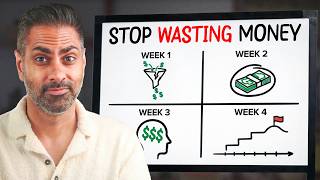
Ramit Sethi walks through a four-week plan to stop feeling broke. Week 1 identifies wasteful spending and your "money dial" - what you actually enjoy. Week 4 splits your paycheck into four buckets: 50-60% fixed costs, 5-10% investments, 5-10% savings, 20-35% guilt-free spending.
Chapters
If you want to stop feeling broke no matter how much money you earn, this is the 30 day plan you need to follow. Imagine waking up knowing exactly how much you can spend guilt free. Imagine being confident, not anxious about your money decisions without having to track every little expense or cut back on morning coffee to get you there. I've helped millions of people make that a reality. Teachers, artists, millionaires. And now it's your turn. I'm going to show you the exact step by step 30 day system that's going to give you clarity and control over your money. Now, you can spread this playbook over four weeks or if you like, tackle it in one focused sprint. It's your pace, it's your choice. But listen closely. If you cannot stick with this video for the next 10 minutes as I cover the most important mindsets that you'll need to succeed, it's going to be hard for me to help you. So let's get to work. Week 1 Stop your unconscious spending. This week is all about understanding why you feel out of control with your money in the first place. There's this common misconception that feeling broke is only about not having enough money. And for some of us, that is true. If you are below the poverty line, if you are struggling with unemployment, things obviously feel tough. And they are. But consider this. When I speak to people, they often tell me they feel broke regardless of how much money they're making. I'm not kidding. People will be sometimes earning six figures and they will tell me, I feel like I live paycheck to paycheck. Then I look at their spending. They are not living paycheck to paycheck. They are investing a ton of money. They're spending a ton of money on discretionary expenses. The way we feel about money is not always connected to how much we actually earn. I'm going to show you what I mean. I recently spoke with a couple who make $113,000 a year. But they were late on rent every single month. And when we looked at their spending, we found that their fixed costs were eating up 94% of their income. Take this. Three Apple watches for the whole family, streaming services they'd forgotten about. They were using Buy now, pay later installments on a pair of freaking pants. And like most people, they were eating out way more than they even remembered. By the way, eating out is the most common place that people unconsciously spend money by far. When you actually add up how much you eat out, including coffee, restaurants, delivery, doordash, all of it, it's usually Three times higher than your first estimate. And most of us are no exception. This is an example of unconscious spending. When you're spending more money than you think and you have no idea where it's going. This can often lead you to the feeling that you are broke, even if you're actually making good money. Now let me show you the flip side. I was at an event in D.C. and I met a guy. We'll call him Bill. We were talking about his love of restaurants. He told me he kept a list of every Michelin starred restaurant in the city. So I asked him, if you could go to each of them, who would you take with you? He paused and he said, I would take my family. I said, why? He said, because they could never afford to eat at a place like that. To me, that is spending your money meaningfully. Yes, it's still spending your money on food, but can you see the difference in the joy and the purpose? This is what I call a money dial. Something you love spending on, not just like, but love. And you do it intentionally. When you identify your money dials or the things that you love to spend money on, then you can actually spend more on them. In fact, you can spend extravagantly on them as long as you cut costs mercilessly on the things you don't. I'm going to share another example of unconscious spending that I actually couldn't believe at first. I spoke with another couple. They make $665,000 a year, but they also had a large amount of debt that just didn't seem to go away despite their high earnings. And when we looked into it, we discovered $13,500 a month in unconscious spending they didn't account for. Now listen, I know everybody right now is rolling their eyes. Oh my God. I can't believe people spending 13th. I'd love to have 13. Listen, I'm sharing this example because I want you to understand that if you earn an extra 5,000, 10,000, $50,000, you are going to have some of the same problems that you have today. Just earning more money is not going to solve the problem unless you really tackle this step that we're talking about right now. Your feelings about money are highly uncorrelated with the amount in your bank account. And I've spoken to people who have 100k, 450k, more than 4 million. They still feel bad about money. So think about your situation right now. If you're below the poverty line, if you have suffered a true financial disaster, okay, I can understand that. But for many Other people. If you feel behind, it is likely that you have a lot of unconscious spending. So here's your action plan for week one of this 30 day plan. First, I want you to identify one money dial and that brings you joy. What is the thing that you love spending on? Is it travel? Is it eating out? Is it health and wellness? Is it convenience which is my primary money dial? Like I don't really care about a nice watch. I want my life to be super convenient. So I will spend extravagantly on that. But then I will cut costs on things I don't care about. Step two, pick one discretionary expense to cut mercilessly. Just take a look at your spending from the last one month. You can log into your credit card account. It will break it down for you. What are you spending on that you actually don't care about? That's not part of your rich life. Is it a bunch of subscriptions that you keep telling yourself I should really use that but I don't cancel it? Is it a gym membership that you never use? Is it clothes you buy but never wear? Step three, identify one purchase that will make you feel like you are living a rich life this week, not next year, not when you hit $10 million in the bank this week. Now it probably is something small but incredibly meaningful. Maybe it's a nice dinner, maybe it's fresh flowers, your kitchen. Maybe it's a book you've been wanting to read. Give yourself permission to spend on something that is meaningful that brings you joy guilt free. These small actions will lead to huge shifts in your money psychology because remember, if it was just about the numbers in your bank account, millionaires would not feel broke. And I want you to work on these steps now first so you can be ready as we move on to week number two of this money roadmap. Take back control with a money win. This week is all about momentum. It is really easy with money to get stuck to get paralyzed when it comes to your finances and then you end up having the same conversation with yourself every few months. I know I need to change. I've really got to try to figure out this budget. I should really save more. But life is busy and life gets in the way when you are stuck in loops like this. One thing that really helps is to make one single confident money decision to get out of the muck. You don't need to overhaul your entire financial life right away. You just need one significant win and you need it now. This week we're going to identify that win. We're going to knock it out now. Maybe it is canceling a subscription, maybe it is getting a credit card fee waived or transferring your first $50 to a savings account. The point is that a small action can start a series of changes that that transform your financial life. So the metaphor I want you to think about is make the stakes smaller. We're actually not looking for higher stakes, we're looking for smaller stakes. Something so small it might even feel silly, but something that we can win at immediately. I'll give you an example. One person I talked to was tired of overdraft fees. You know those late fees you get from your bank. So they finally took a Saturday and they set up automatic payments on all, all of their accounts, credit card accounts, etc. They figured out how to move to a bank that would not have so many gotcha fees in one weekend. They saved hundreds of dollars that were leaking out of their money system every single year. Another example, a couple I talked to looked at the numbers they decided to switch from their current financial advisor who charged a 1.24% fee. Now that percentage might not sound big to you, but by making that single decision, they will get back $863,000 in fees and compound interest over the next 35 years. One decision can have a massive impact on your financial future, even if it seems like a small one today. And that example of the couple switching away from a financial advisor charging 1.24%, that's the kind of decision I am talking about. It sounds tiny, but over time that one choice puts hundreds of thousands of dollars back in their pocket. This is why the financial decisions you make right now matter a lot. Especially the ones involving your investments, your retirement and your long term rich life vision. So if you've ever wondered, am I making the right decisions with my money? Is my financial plan actually working for me? This is where having the right guidance can make all the difference. That's why I want to tell you about FaceTime. Facet gives you access to a dedicated CFP professional and a team of specialists who help you understand exactly how all the pieces of your financial life fit together. Your spending, your investments, your accounts, your goals and what to do next. And importantly, Facet does not charge a percentage of your assets. No 1%, definitely not 1.24%. Just a flat transparent membership fee for financial planning. This is the kind of structure that helps you avoid those six figure fees that quietly drain people's wealth. And instead you can redirect that money towards the things you care about. Retiring early, traveling more, helping your family, or just feeling more confident about your future. On my podcast, I've worked with Facet to help couples understand different scenarios in their lives, whether it's buying a house, taking a career break, or knowing if they can finally see Stop feeling anxious about money. If you want clarity on your biggest financial questions and a system that grows with you, check out facet.com ramit or click the link in the description below. All right, let's get back to the plan. So here's what you're going to do this week. First, you're going to cancel a subscription that you don't use or you even forgot about it. And I don't want you to beat yourself up about it. Oh my God, I'm so bad. I really should do it. Nope, it's over. We're closing the door on that and we're going to look forward instead. So go through your credit card statements right now. Look for recurring charges, streaming services you don't watch, apps you don't use, gym memberships you haven't visited in months. Cancel it. And by the way, if you think you don't have any forgotten subscriptions, you're probably wrong. One of my readers makes $50,000 a year and she realized a double digit percentage of her after tax income was going to subscriptions. That's a lot of money. Don't let that be you. Second, I want you to transfer $50 to a high yield savings account. You don't have to do 5,000 or 1,000 or even 500, just 50. Open up a savings account at a bank like Capital One or any of these great high yield savings accounts. I don't make a cent from you opening it up. Pick one. Set up the transfer. Prove to yourself that you can move money towards your future financial goals. Third, try to negotiate one bill. I know. Americans are so scared of negotiating. Oh my God. What if I pick up the phone? Oh, they already stopped there because picking up the phone is so scary to young people. Oh, what if they. What if they say something to me? I'm not prepared. What do I do? Get over it. It's time to make some money. Let me show you. In fact, I'm going to give you the exact word for word scripts that I will share below. In this video's description, you can call your bank about a fee. You can call your cable company and say, look, it's getting pretty expensive. There's a lot of competition out there. What can you do for me? Call your cell phone company. Pick one and negotiate. Oh, and by the way, what if they say no? Who cares? I'm trying to get you to build the muscle of taking control back on your money. We don't only do things that we know are going to be do a lot of things knowing that we're going to fail at 70, 80% of them. And it's still worth it because we get better, we get stronger, and once in a while, maybe 20% of the time, we actually get what we want. And that is amazing. Do these actions and by the end of week two, you will have momentum. You will have proof to yourself that you can take control of your money. Maybe you're going to have an extra 50 or 500 bucks. Maybe that money was previously disappearing from your accounts. Unconsciously, you are now ready to move this money to areas that will help you take even more control of your money life. Which leads us to week three, conquer your money psychology. Which of these three phrases have you ever said to yourself, I'm bad with money, I'll never be able to afford that. Or rich people are greedy. We often have these invisible phrases running through our heads and they often guide our decisions when without us even realizing it. So until we identify these voices and we flip those phrases, we're often going to keep repeating the same patterns over and over again. Just to put it bluntly, if you hate people who are rich, it's going to be very difficult for you to make a lot of money. So I need you to interrogate your beliefs about money. Because I guarantee if you find yourself struggling all the time, you are probably self sabotaging in a way you, you don't even know. Do you seriously want to let a little voice in your head cost you a million dollars? Let me give you another example of a common script. We're simple people. We don't need much. This is very common from people who grew up in the Midwest, by the way. Sounds like a perfectly normal belief. How could this belief be costing me money? It actually means I'm modest. I'm not putting on airs. Well, it's easy to feel like you are a simple, modest spender and frankly, it's hard to argue with that because of course our spending feels innocent and justified if we don't look at the actual numbers. But almost always when I talk to a couple who believes this, who has made this part of their identity, and I pull back the curtain on their simple, modest spending, I will often find things like a $2,200 mattress that they bought on credit. The funny thing is they don't even Think that's a lot of money? They go, well, you got to protect your back, Ramit. I go, do you understand that that is a luxury, especially relative to how much money you have saved? And they almost become enraged, as if me telling them that they actually purchased a luxury doesn't make sense, because for their identity, they refuse to believe that they would be the kind of people who purchase a luxury. And yet they often have iPhones, three Apple watches. They spend 2000s of dollars eating out every month. But none of this strikes them as luxurious because of their narrative. It's easy to tell yourself, I don't spend that much on frivolous stuff when you've never actually looked at the numbers. Most of us are much more likely to live a story than to live what the numbers actually tell us. And that story becomes convenient because as long as you believe it, you never have to really ask yourself, hey, am I actually living up to this story? Do my numbers match up with the story that I've been telling myself? So for week three's action items, let's actually look closer. Pull out a freaking magnifying glass, because we're going to take a look. First, I want you to write down five beliefs you have about money. Don't overthink it. Just write what comes to mind. For example, money is rich. People are. I'm the kind of person who. Or I'll never be able to afford. Second, ask yourself, is this belief helping me or holding me back? Another way to ask it might be, in what ways is this belief helping me? And in what ways is this belief holding me back? And look at each belief. Be really honest. Is this belief that you hold moving you towards your rich life, or is it keeping you stuck? Third, I want you to replace just one of those beliefs with a positive money script. For example, I. I'm not good with money. Might flip to, I haven't historically learned about money, but starting now, I'm going to learn to manage my money intentionally. Oh, I love it. And if you've made it to week three, you've identified your money dials, you've taken at least one small action, and you are building new skills. So I actually think it's completely accurate to say that you are becoming someone who is great with money. That is a powerful script. Embrace that. As you start thinking more about positive and negative scripts like these, you will see them in yourself and everyone else. You'll start to catch yourself when you say things like, I can't afford it, which could be flipped to I can't afford it yet. But I'm making a plan and I'm saving for it so that one day I can and you will have a chance to replace that script with a new one. And here is an important part that I want you to remember of redoing these negative scripts. They don't just disappear on their own. They keep you stuck. They keep you playing small. They keep you feeling like you don't have enough, avoiding bills, avoiding your bank account because it all feels too complicated. That is exactly what I want to help you get out of. That's why I created my money coaching program. Inside you're going to learn how to actually invest. You're going to learn how to make it all automatic so your money is automatically saved and invested every single month. And you will learn, most importantly, how to become the person who is good with money. Not by trying harder or spending hours and hours every single month, but by creating the right system for you. You're going to get access to weekly check ins to stay on track, live coaching calls with me to break through what's holding you back and a community of other people who are changing their lives right alongside with you. If you're ready to replace those old money scripts with new results. Basically, if you're ready to take control of your money right now and not wait anymore, scan that QR code here or check out the program link in the Description below. Week 4 Create your rich life Roadmap when it comes to money, I find a lot of people often swing between two extremes. We will spend unconsciously for months avoiding thinking about money at all. Then we panic, realizing we've been on autopilot not thinking about it and we overcorrect. Like have you ever heard anyone do a no spend November? I mean, I can appreciate the sentiment, but that's not really a healthy relationship with money. I actually want you to have a healthy relationship where you can spend on the stuff you love and save and invest and do it consistently every single month. I don't want you to try to cut back 5% on groceries, 5% on gas, 5% on eating out, 5% on everything. And I feel like it's miserable and it doesn't even work. So instead, what if you had a system to spend guilt free on the stuff you love while automatically building wealth without you having to do it manually? So here's how it works. You have four numbers, just four that you need to track every single month. The first is fixed costs and in a perfect world these would be 50 to 60% of your take home or after tax pay. This includes your rent or mortgage, utilities, any debt payments, insurance, groceries, anything you absolutely must pay every single month. Investments is the next category I would Recommend. This is 5 to 10%, although the higher the better. And I recommend that you increase this over time. This is really important because this is where the real wealth is created. Keep in mind, most people spend all of their time with money agonizing over, oh my God, I spent so much on coffee. But they totally neglect investments where you will build wealth if you do it right. This is money you will not need for 10 years or more. And it could include your 401k, Roth IRA, etc. Next, savings, again, 5 to 10%, although the higher the better. This would be your emergency fund, maybe fund for a upcoming vacation, maybe a down payment, money that you will typically need in roughly one to five years. And finally, my favorite category of all, guilt free spending. 20 to 35% of take home pay to spend on the things you love. Could be eating out, travel, massage, kids activities, hobbies, whatever. And here's the key. Because you've already hit your fixed costs, your investments and your savings, you have this money left over and you can spend it guilt free. I'll give you an example. Let's say you take home $4,000 a month after taxes according to your conscious spending plan. Here's roughly what the spending should look like. Fixed costs at 60% means you spend $2,400 a month in total on all of your fixed costs. Investments at 10%, that's roughly 400 bucks a month. Savings at 10%. 400 bucks a month and guilt free spending at 20%. 800 bucks a month. Now if you are hearing these numbers and you go, oh, first of all, I don't even know my numbers. But second of all, okay, I pulled them together in the conscious spending plan. I looked at the spending. Oh my God, we've been spending $1,050 every month for guilt free spending. What should we do? Well, here's what I recommend. Pick your three biggest expenses and focus on those. First, look at your fixed costs. Let's say you have $5,000 on a credit card at 27% interest. Try to call and negotiate it down to 23 or 20%. Hey, it doesn't always work, but when it does, it's amazing. If you're paying $200 a month, that negotiation saves you about $600 in interest charges. You pay off the card around three months faster. One phone call, 10 minutes of your time, often hundreds of dollars back in your pocket in the near term future. Second, look at your biggest discretionary spending category. Almost always, this is eating out. Maybe you're spending 600 bucks a month on restaurants and bars, which, as it turns out, you didn't realize and you don't really care about. You decide that over the next three months, you'll cut that down to $400 a month. Now here's the important thing. That's $200 a month saved. Make sure you do something with that $200 a month. Probably put it towards that high interest debt. Third, check your subscriptions. You realize you're paying for a gym membership and a streaming service you rarely use. You cancel them. That's $60 a month saved. Total saved $266 a month. Now your plan works. Do you see what just happened? You didn't try to cut back 5% on everything. You didn't freak out and tell yourself you're a bad person. You suck at this. You're going to hell. No, no, you actually focused on a few big wins, the things that actually move the needle. So here's your action plan for week four. Plug your numbers into the conscious spending plan, which I've linked in the description below. It's free to download, add it all up and be honest. Round up on your expenses so you're not surprised with anything down the road. Next, adjust your numbers so you are spending 20 to 35% on guilt free spending. But probably closer to the lower end of that if you're just starting out. If your costs are too high, I want you to pick two categories to cut by 50% over the next six months. Don't bother doing 5% on everything. 50% on the two biggest discretionary expenses. Next, use that guilt free money this week to do something amazing and meaningful. And don't apologize for it. Get your nails done. Buy the book you've been wanting. Take your family out to a nice dinner. Whatever is meaningful to your rich life. And when you do it, I want you to feel zero guilt because you are building a system that allows you to spend money even while you are paying off debt. Now, building your conscious spending plan isn't always quick. You might start this process this week. You might need to keep adjusting it as you get more numbers in. But even if it takes a little while to fully set it up, the good news is that you are being honest about where your money is actually going. You can stop guessing and that means you stop feeling anxious every time you check your bank account. Actually, as a matter of fact, it means you stop looking at your checking account and deriving all of your feelings from it. That's really weird. That's like me looking at my big toenail on my left foot and going oh my God, I feel so bad. Why the would I be looking at my big left toenail? It's not indicative of my body health. Nor is the amount in your checking account indicative of your full financial picture. Yes, you can live your rich life today, even if you have credit card debt or student loan debt. But knowing that you have a plan in place now that you have this 30 day system up and running, if you want to go above and beyond and fully automate your conscious spending plan, which is amazing, go ahead and watch this video next.









