
Bernadette Johnson Espresso with Experts: Leaders Make a Difference by BEing the Difference

In this episode of the "Espresso with the Experts" podcast, host Randy Dean interviews leadership development specialist Bernadette Johnson. The conversation begins with a light‑hearted coffee‑cup ritual before moving into Bernadette’s recent experience at the Pioneer Nation conference, which sparked her focus on community and purposeful leadership. She recounts how personal loss and the COVID‑19 pandemic forced her to pivot from a sales‑oriented mindset to a service‑first approach, leading to the creation of her "Leader Pivot Practices" framework. The framework consists of five practices – Agility Champion, Curiosity Pursuer, Paradox Navigator, Solution Seeker, and Convener of Wisdom – each designed to help leaders adapt, ask better questions, hold paradoxes, anticipate solutions, and harness collective wisdom. Bernadette explains how she delivers these concepts through an infographic, a free e‑newsletter, and a mastermind huddle, and she ties the work to servant‑leadership principles, citing Peter Senge and Jim Collins. The discussion also covers the challenge of moving from individual contributor to leader, the need for ongoing onboarding and learning, and the idea of "return on leadership" as an investment metric. A case study with a 40‑person financial‑institution leadership team illustrates how the practices can be used diagnostically to surface development gaps. The episode closes with a quote about learning, unlearning, and relearning, and both hosts promote their respective resources and contact information.
Chapters
All right, hi everybody, it's time for yet another, uh, episode of Espresso with the Experts, my new podcast on my YouTube channel. Uh, today I've got a really fun guest for you, Bernadette Johnson. She has a great tagline: serving those who make a difference by being— notice, be— being the difference, uh, which I think is great. And we're gonna have a really cool discussion, today about leader pivot practices. Most of you know who I am. I'm Randy Dean, the Email Sanity Expert. We'll talk about that more at the end of today's video. But Bernadette, do you want to say hi?
Hey Randy, how are you?
Doing awesome. And so what we're going to do, I'm— let me turn off this PowerPoint and let's go into, uh, let's go into a side-by-side discussion here. There's Bernadette. Welcome. Um, now if you know the format of this we have to have a chat about coffee cup. By the way, a little funny side story, this is like one of the oldest coffee cups I have, and what's really funny is the dishwasher ruined it so that it falls apart, but I still use it anyway. So that's my funny little thing. But let's hear about your coffee cup.
Okay, it does have coffee in it for real.
I do too today, it's, it's early enough for coffee. Yeah, okay, so I don't I see something big. It says something big. What does that say?
Yes, it's— it says something big is happening.
Something big is happening.
Big is happening. And it is from— I went to a conference called Pioneer Nation. Don't you love that?
Yeah, that's cool.
Um, it was created by Chris Gillenbaugh. He has a whole series of books. But his focus is about side hustles. Uh-huh. And so he did, uh, a conference. It was only 2 years. I went to the second year, got in under the wire. It was focused on creatives, people with side hustles, and entrepreneurs. Literally, that's all that was there. It was only 200 people. We kept it really small, but it was such a beautiful experience of being with the others. Yeah, being with— like, everybody had a business. The whole conference was about not the track that you were on as far as content, but the running of the business. Yeah, creating your— finding your tribe. I mean, that's what it was all about. It was amazing.
And so that was So a whole bunch of people like us. Yes, that's a little scary.
Wonderful.
It could be too much. It may be too much energy in that room.
Yeah, it was, it was. We met like 8 o'clock and then broke for lunch, but you have everybody is talking to everybody else about almost like a TED thing of what's your big idea, where can you focus, and connecting other people Oh, I just talked to Randy. You need to talk to him, and then pulling somebody's arm to connect. And then you had dinner with everybody, and we had— we camped out. I mean, we had a room. I'm talking campfire, not—
yeah, yeah, yeah, yeah, I got you.
If anybody knows—
survivalist things out in the woods then, right?
Oh no, no, no. You would not find me there. But it was beautiful, and this is one of the things that they gave us in the beginning. We had a t-shirt or a sweater like a henley, uh, and we had our mug. And yeah, anytime I'm working on something where I need to not so much think outside the box, but how can I galvanize, how can I pull people in? To this idea, I get this mug. So all my things are on purpose. So I get this mug and it reminds me something big is happening, like to stay focused and to— that it's okay to be outside your comfort zone.
Yeah, yeah.
And to know that whatever you're working on is bigger than you. So whatever it scares you, it's okay. That just means it's big. Does that make sense?
Yeah, it makes a lot of sense. You know, what's the old phrase? Uh, uh, go after the thing that you fear the most and you will conquer your fear. Uh, but forgive me if I won't do that with sharks or poisonous snakes.
I'm gonna just keep—
I'll just keep the fear. Thank you. Yeah. Um, so now what's interesting is hearing what you just said, that sounds like it feeds in beautifully with your whole concept of leadership management development. And you have this really cool new concept called Leader Pivot Practices, which when you sent me the email, it immediately made me think this was something you developed possibly because of and during the pandemic. Am I correct?
You are correct.
Yeah, the pandemic has been a pivot for everyone, right?
And so it, it's recognizing that. And I think we, we, we talked a little bit before of— for last year was an interesting year for me because in January my mother was in hospice and she passed away in February before all this happened. Before all of this happened.
So you were heading into that craziness with this just happening. So sorry for your loss, by the way.
Thank you, thank you. And so I'm originally from Jersey, and so that's where my family is. So the whole month of February I was in Jersey. So the funeral and everything that goes around that, settling all her things, came back the end of February, had two half-day workshops that next week I was doing, um, catching up on all my meetings because I was gone all of February. Then next week, guess what happened?
Shutdown. Yeah.
Yes.
You want to hear the— you want to hear the funny thing? I was not that far from you. Second week of March last year, I was in New York City when it was breaking out in New York City.
Wow.
Uh, you know that because remember that's where it came in. It came in the United States through New York and also through Seattle. And I was in New York as this thing was breaking out, Randy, just across the river from you. So, um, yeah, I obviously I played it safe. But you know, usually when I'm in New York City, I'm out bopping around doing sightseeing, checking everything out.
Yes.
That one I was like, hi, you know, hunkering down in my hotel room. I would just sneak down to the grocery, grab some food very quickly, get back up to my hotel room.
Yes.
Because I'm like, I don't know what this thing is. And it was, it was a weird time.
A lot of unknown things. Right. And so going into all of this, and of course I'm like you, I have a business and I built my business on site.
Mm-hmm.
Everything was face to face. Yeah. And so what I realized, two things, one, from a business standpoint, Is this a time to sell or just a time to serve?
Yeah.
And for me, it was a time to be of service, which I'm always of service, but very intentionally of service, not looking for new clients, none of that. It's, yeah, where's my— here's my leadership base. How do I best serve them at this point? Because that's what they look to me for, right? The second— oh, go ahead.
Oh, I was just going to say, with, with the pandemic, it almost feel— felt to me disingenuous to be trying to sell.
Oh my gosh.
Yes. I mean, you're, you're just thinking about what everybody's going through and, and how much, you know, uh, fear and uncertainty was happening at that period of time. And I just said, you know what, I'm gonna make some YouTube videos.
But, but it is that, it is that, how can I be of service from where I am? From where I'm standing and understanding that within all of this, there was a privilege that I had.
Mm-hmm.
And how can I serve from that place? Um, so that was the first thing of how do I, how do I want to show up, uh, as a business person? Uh, the second thing is where are my gaps? If I'm bringing everything from onsite to online, Right. Where are my gaps in doing that? Luckily I had already been on Zoom like a few years, like with meetings.
Yeah.
So I just shifted that piece of it, which was like, but I still needed to know where were my gaps because I was known for the facilitation on site. Right. How can I create that same or better experience online. So what, what needs to shift for me? So those were like the two things of last year that— and that was March and April. And then by May, I was up and going and sending newsletters out and sharing my resources and my research, finding out from my leadership base, where are you at? And it fell in, I think, April, it fell into three categories. Uh, one was nose above water. That's the picture, right?
Tread water, baby.
Treading water.
Well, you know, as long as you don't go under, you're good.
That's right. Uh, the other category was trying to see the forest for the trees. And the other category, if you had those two under control, okay, how do I prepare myself and my who follow— those who follow me for next. Yeah. So I started collecting research on those, like under those three things. And that's what I shared out for like three months was just that.
Yeah.
But you mentioned the leader pivot practices. It came out of that, of where my leadership base was. And I have a practice called the huddle. And, uh, mastermind huddle. And so the mastermind huddle, that's where I was getting a lot of information and of where they were, where they needed to go, and if they made it to the other side, what, what did they do? What practice did they have to make it through? And that's what they began. The huddle is a great place for, um, people to share ideas and solutions.
You have a bit of a unique client base. Um, it sounds like you're really working with people that are in like leadership to senior leadership.
Yes.
Places within their organization. Can you explain that a little bit?
Yeah, you know what, it's, it's interesting. Uh, in my former life, I, my background is, of course, organizational development, but it's also— I used to be a training director, and I remember managers coming to me and they would go, well, this is going on with Bernadette. Can you fix her? That doesn't sound right, does it?
No, it doesn't. Yeah, can you fix her?
Yeah, can you fix her? She's not broken.
Yeah.
Now what's broken, what's broken is the system, is the environment.
Mm-hmm.
So who creates the environment?
All the leaders and the leaders. Yes. Yeah.
That's where I shifted my focus.
Yeah.
To versus staff to leaders, because they are the ones who are not just managing the environment, but they're creating the environment. Mm-hmm. And if they're creating the environment, By how they're showing up, how they're being. That's why it was capital B, capital E. Yeah. Right. And so they're making a difference by being the difference. And so my whole focus is about how leaders are showing up and helping them become conscious of how there's no fixing. Nobody's broken. Right. Right.
Or we're all broken. One of the two, you know?
Right.
Yeah.
Right. Yeah. And so How do I help them tap into their highest selves?
Yeah, you know, when I saw your tagline, it immediately made me think of the famous Gandhi quote, you know, uh, be the change you wish to see in the world. Yeah, yeah.
And it— I mean, it's that simple though. It really, really is. And because for leaders, we're either going to brighten the room or be the shadow. Does that make—
Oh, I love that.
Yeah, right. And so you got to choose how you want to show up, but you gotta— in order to show up in that bright light, you have to come to terms with how you're showing up and choose to show up differently. Be clear about your intentions. Yeah. And it starts from there. It like—
and so are you Now, when you say this, are you basically going in with some of your senior leaders and trying to make them aware of, you know, their presence when they're within the organization and how that presence might become the shadow, as you said, versus the bright light that they want it to be? Is that a big part of what you're doing here with the—
That is a huge part. And so my focus is on not just one leader, but the team of leaders, so a C-suite, or the senior vice presidents, or the VPs, or all the supervisors. So at each level, and having each level become aware of how they're showing up to those they serve.
I like that.
Are you—
you know, one of my favorite thought leaders in this whole field, uh, for the last 30 years has been Peter Singe.
Randy Dean. Oh my gosh. Yes. Yeah.
And you know, he's into the whole servant leader model. And in one of my sessions, I share about, you know, that the premise of that model is, you know, hire really good people, give them the training and tools they need to succeed, give them a very clear purpose, and then get the heck out of their way. But when they fall down, be ready to help them up, dust them off, and get them running again.
You know, and that's our, that's our role, right? As leaders. My favorite, I have to tell you, you brought up Peter Senge, shame on you. It's my, my favorite quote that I do share with teams. He says, and let's see if I can get this right, because I want to honor him. You can have a group of individually intelligent people, but until the group knows what it knows together, The group itself is not intelligent.
Ah, that's—
stop it, stop it, right?
And yeah, that's brilliant because, you know, I do an exercise in one of my sessions about, you know, effective brainstorming. And one of the questions I asked out of the— coming out of the brainstorm— so we do this group brainstorm exercise, right? And I say, raise your hand if there's something on this board that you would have not thought of yourself? And almost always it's like, I love that, 90% of the room. And I said, that is the value and intelligence of the group being greater than the value and intelligence, right, of just one person.
That's right.
It is, you know, and it quantifies it. Yeah, there's collective wisdom that not any of us have all of it, so, but together we can do something bigger and better.
Yeah, yeah. Yeah, yeah. So as they're saying now on Zoom, yeah, that's fun.
So, so, so it sounds like that's sort of the area that you're working with, and you're taking these groups at those different levels of the leadership hierarchy and trying to really make them bring in that servant model, A-game, every day to lift the entire organization. Is that a fair, fair assessment?
And it is. And what I share with organizations is I help organizations leverage their return on leadership.
Mm-hmm.
Leverage their return on leadership. Because we always look at, right, we always look at ROI, return on investment. But your leadership team is an investment as well. And very often organizations take leaders, bright people, and just throw them all together and say, there you are, you're a team, and leave.
Yeah.
And so their focus is just on my function.
Right.
And not if you pull this team together, they're supposed to be looking at resources, money, time, and people of the organization.
Mm-hmm.
But unless that is established and they're groomed in that way, it's not going to happen naturally. Right.
And so in essence, it sounds like what you're doing is you're making sure that they see not only what their position in their department and group is, but how it fits in the greater whole and the resource base available to the greater whole to build, you know, things at a whole different level.
Yes. Yeah. And so it is that the— it's leveraging the collective wisdom of everybody. And I care about what's happening in Randy's group. If Randy is short and I can help, If I have abundance, I'm gonna give it to Randy because I know Randy's gonna do the same for me.
Right, right.
And so that's the mindset that you're developing when you're working with a team like that at that level. Yeah, does that make sense?
That makes a ton of sense. And, and it's, you know, I was reading recently that one of the biggest fall downs that happens is when you go from being the individual performer to a leader. Because typically when people get promoted from an individual performance position, it's because they're technically competent.
Right there.
And really good at what they do. And then because of that, they get promoted into a leadership position where they may have absolutely no idea how to be a good leader. None.
And nobody's teaching them.
Right. And so it sounds like Well, wait, you say nobody's teaching them. It sounds like you are. That's where you can step in. That's where I help maybe facilitate that process.
Right.
And it seems to me like if you look at the systems, making companies aware that when you do that performer to leader transition, that you've got some sort of an infrastructure in place to maybe help that leader step up.
Right, like an onboarding or— because we do it for— Staff to supervisor. We do, like a lot of organizations are doing that of onboarding a supervisor. And then after that you're on your own.
Right.
But you don't stop learning. Who was that? I think it was Dr. Carl Frost. He said leaders should always be on the edge of their expertise.
Ah, that's nice.
Right. Yeah. And so each, each level needs that learning. Needs that. You're gonna do your— what's the mastery of this? And you keep going. Like, you're always— we know from last year.
Yeah, we're always—
you have to. And it's not a thing of— it used to be, oh well, I'm gonna stay right here and the world is, you know, just go by me. No, as the world is going by you, you're going backwards. Yeah, you're not staying where you are.
Yeah, the sort of the way I looked at last year was you can either run or get run over. I decided to run.
But it was true. You had to, um, who was it? Um, Pat Lencioni, he talked about that, and it was last March. He was one of the first ones out there. Um, he talked about the choices that businesses, individuals were making at that point in time they were either going to come out— and he was talking about this year— stronger or weaker. Yeah, stronger. And it was— it played out. It's the truth. And it's right.
Yeah. And some organizations—
evolving normal.
Yeah. And I will say this too, you know, just understanding the nature of it. Certain industries and certain groups, they were going to get hit hard no matter what.
No matter what. That's right.
Um, you know, and then it's just a question of, you know, can you be a survivor in a situation like this? What I was really pleasantly surprised by is how many organizations actually sort of thrived through this. I mean, everybody hit turbulence, but some of them, you know, came out and even did better. And, you know, there's, there's neat learning that can come from that as to how did those organizations make that transition like that.
Yes. Yes. Yes. And so that's where the Leader Pivot practice came out of it was my conversations with leaders. So how did you do it? What helped you?
Yeah.
And that—
yeah, no, you're— now you're going to share something with the people that are here today related to that, right? Can you explain what that is?
Yes. And so what I'm— I did a Leader Pivot Practice— say that 3 times fast— Leader Pivot Practice infographic. And so when we're done folks can go get it, um, as well as they can sign up. I'm— invitation to sign up for our newsletter. Uh, I call it a blog, uh, blog letter because it's usually quotes, which I love, because out of my book, it's a book of quotes. Um, but, uh, it's also of what's happening right now. And so it is not always every month It is— I'm going according what's happening in our environment, and here's what you need to know.
I'm gonna put the link to that specific page on your website because we were talking about that before we did the recording. I'll put the link to that in the comments and the description of this video on my YouTube channel. And, um, a little announcement I will put out here, uh, I wanted to wait until I had a few of these podcasts recorded, but like I told you before we started today, Bernadette, uh, I'm actually planning on taking this series of these podcast recordings and making it into a free course on my e-learning academy. And I will post your, uh, link to how to get that leader pivot practice infographic there. I did say it pretty well, uh, in the free course also. So they'll get access to these videos plus the bonus giveaways that some of the other experts have provided, plus your item here and access to that e-newsletter. So It sounds like we've got quite a bit of stuff that we can, uh, get out there and start helping people with.
Yeah, serving the world.
Exactly. Yeah. So like you said, is it a time to sell? Is it a time to serve? I do think it's— we're getting to the point where it might be time to start selling a bit again, but I am hopeful that all of us have learned that maybe serving is potentially the better business model in the first place anyway.
See, that's what I'm thinking. And I don't even think it's a thing of, of choosing to serve or to sell. I believe if you are offering things of value, that's where it leads. Yeah.
If you, if you build it, they will come. Yeah. If you build it, they will come.
I want more.
Right.
Yep. And so those of us who chose to serve last year, when things started to turn around, to turn the corner, we were top of mind for those that we serve. Not the folks that were coming in and it's like, oh, guess what I got? It's like, well, where were you 6 months ago? Right.
Yeah, exactly. And all along, you've just like, here's how we're gonna get through this together. Here's how I can help be part of that. And then once we get through, we'll move to the next thing.
We'll move to the next level. Absolutely. Absolutely. Absolutely.
Very fun. Uh, any final thoughts you have for us here? Because I think this is a great place to maybe sort of wind down the conversation, but this has been really helpful.
Oh, I'm so glad. So yes, I do. Um, what I wanted to share just for— because if they're going to sign up for, uh, the pivot practice, I wanted to share the 5 pivot practices.
Oh yeah, great. Let's hear them.
That'd be good, huh?
Yeah.
Yeah. Okay. So the, the practices are being agility champion, being a curiosity pursuer, being a paradox navigator, a solution seeker, and a convener of wisdom.
Ah, nice, right?
And so those are the 5 practices that came out of my leadership base last year that helped them pivot, because we all knew we needed to pivot, but the question is always how, right? Right. How do I pivot? And it's like, oh, here's a way, here's the 5 practices to pivot. So that whole idea of agility champion is strengthening our mental agility and our learning agility. The curiosity pursuer is about asking good questions. Yeah, you know what's interesting about the certainty?
Yes, I was watching something last night, and I'm going to paraphrase the quote because I don't think I'm going to nail it. Albert Einstein has a pretty famous quote. He says, I have no special skills or abilities. I just have unquenchable curiosity.
That's it. Yeah, it is. Last year was about that because it was not about certainty at all. Um, Pat Lencioni talks about, and I loved how he phrased this because I kept hearing people talk about the getting back to normal. What's our new normal? And the thing that he taught us, started talking about was evolving normal. Totally resonated with me because evolving normal, that's a good way to put it. Yeah. We didn't know. And so that to, to be able to thrive in an evolving normal, you have to be curious. It's not about certainty. Uh, the Paradox Navigator is about— and this is all last year. How do you hold two things?
Yeah.
At the same time. Right. I have a business. We're in a pandemic.
Right.
Right. And so it goes back to what's the Stockdale Paradox. From the book Good to Great, Jim Collins, Good to Great. The Stockdale paradox is to be able to hold both. I have faith and hope that I will get out of this situation and to be able to look at the reality of it. Does that make sense?
It makes a lot of sense, you know, acknowledging what's real but not letting it beat you down.
Right there. Yeah, it's both of those. Um, the solution seeker is going beyond problem solving. We're all focused on the problem solving, which we need, don't get me wrong.
Right.
But if we become solution seekers, then not only are we solving a problem, but we are anticipating. We're actually looking out there.
Yeah.
And we're looking at possibilities. We're looking at solutions so we can anticipate it.
Does that make sense? The exact opposite end of the spectrum from the person that has a problem for every solution.
Right there. That's right. That's right. Right. And so that problem solving is very reactionary, right? Kind of like a firefighter, right? I'm gonna wait. Oh, and then they solve it and then they go back. Solution Seeker is always looking.
Yeah. How do we keep the fire from even starting?
Yeah, right there. Yeah, you got it right there. And so then that last one is convener of wisdom. And we have this place in this world as leaders to be that. How do we become— how do we start to hold a space for the collective wisdom like we were talking about earlier? How do we hold a space for that collective wisdom and bring others along? And knowing that, like you said, that the sum of all of us is greater than the individual. Of what we would come up with. So Agility Champion, Curiosity Pursuer, Paradox Navigator, Solution Seeker, Convener of Wisdom.
This is awesome. Yeah, so that's wonderful. Uh, and, um, and they'll be able to get a little bit more information on this with your infographic, correct?
Yeah, so it'll give a detail, uh, a snippet of what each one of those are And so what we're, um, what we're looking at doing, and I'll share that as well, is creating a mastermind huddle in October to focus on those practices.
Ah, fantastic.
And so I'll send the link to that as well.
It almost seems to me like, you know, if you're in a leadership position, you could almost use this as a diagnostic to figure out where's my next area of personal and professional self-development? Where's the next area for our team? You know, because you could look at that and say, well, do we have a weakness here in any of these areas? Maybe that's a place to try to develop so we can take it to the next level.
Here's the funny part. So one of my clients is a financial institution, um, and they have a 40-person leadership team, so 4 levels. Um, we actually shared the the content of the Leader Pivot Practices with them. And we did a poll of which one do you think your area of— you need to grow in. We went through the whole thing of diving deeper into each one of those. At the end, totally changed. We did the poll again, totally changed.
Oh, wow. So, so once they understood it a little better, they realized, wait a minute, where, where we thought we needed improvement wasn't the place that was most pressing.
Yes, yeah, yes, this is where we need— because they're getting ready, this particular organization, uh, they've been, uh, their front line have, have gone back to work, but now everybody else is coming back.
Yeah, this is gonna be— we're gonna have yet another big flip and change here from you know, so many people that were working from home to heading back into the office or hybrid. And I mean, like you said, evolving normal. I don't think we've hit new normal yet. I know I'm not even sure we're gonna have new normal. It might just always be evolving now. Yeah.
So interesting. I agree with you. Yeah, I know, right? It's such an exciting time. It really is. There's, um, And I, and I'm like you, I cannot remember who said this, but they talked about every opportunity has a window and every opportunity has shelf life. We are in a space now. This is a window.
Yeah.
Be able to pivot.
Not a great time to be super change-averse right now though. No. Yeah. You gotta be, you gotta be very flexible right now. Yeah.
Right. Yeah, cool time. Cool time. I'm glad we're on the path together.
Yeah, that's great. Well, a great discussion. I think we can wrap this up. Let me, let me do this. I'm going to go back to share screen and let's go back into, uh, let's go back into this and get your contact information. Let me move myself out of the way. There's Bernadette right there. Uh, you can see she's based here in East Lansing just like me.
Yay!
And, uh, and there's her— she said best is email address, correct? And it's right there. It's so easy. Uh, it's just you and your name dot com. So I don't know anybody like that. Wait a minute, wait a minute.
Oh, let's see, randaldean.com.
Look at that, isn't that funny? So, uh, yeah. Um, by the way, tip: if you're ever thinking about starting your own business as a speaker, go get your domain name for your name like immediately.
That's right.
It's just thinking. So, all right, well, here's Bernadette's info. And like I said, I will post the link. Uh, we have a website right here on the front page, uh, just simply like we said, bernadettejohnson.com. And what I will do is put the link of the specific page to where you can get the Leader Pivot Practice infographic and sign up for her free e-newsletter on— in the description as well as in the comments of this video. And in the new e-learning course that I'll be launching very soon. Um, the other thing is, obviously, you know, you've learned a little bit about me. I'm going to say thank you for your time. If you'd like to learn more about me and my programs, go check out my website randaldean.com. Uh, obviously, if you like these videos, please give them a like, maybe consider subscribing to the channel. And if you'd like to get a whole series of my freebies on time management, email management, Outlook usage, Google app usage, smartphone, tablet, and usage and distraction management, send me an email, randy@randaldean.com, and say YouTube PDF. Uh, any final quick thoughts, Bernadette?
Uh, oh yes, quote. Here's a quote.
Oh, let's finish on a solid one. This will be good.
Um, Alfred Toffler, I believe, is who said this. He said—
Culture Shock, right?
Huh?
Didn't he write Culture Shock? Is that his big book?
I think so. I think so. Um, he said, the illiterate of the 21st century will not be those who cannot read and write. It'll be those who cannot learn, unlearn, and relearn.
Wow, how prescient was that before everything we've just been through?
Yes, yes.
Profound. All right, very good. That's a good way to finish it. We'll give that an exclamation point right there. Thanks everybody for your time. I'm going to turn this thing off. Uh, go back and ponder this and make better for your day, especially those of you in your leadership positions. All right, bye-bye everybody.
More from Randy
Have #ADHD? Do you crave #caffeine and love #protein? There might be a reason! #diet #energy #focus

Do you have the #ADHD #superpower of Hyperfocus? Can you use to your advantage? Or succumb to it?

How to Prep Peeling #Aluminum #Siding for #painting #diyprojects -- read description 4 step by step
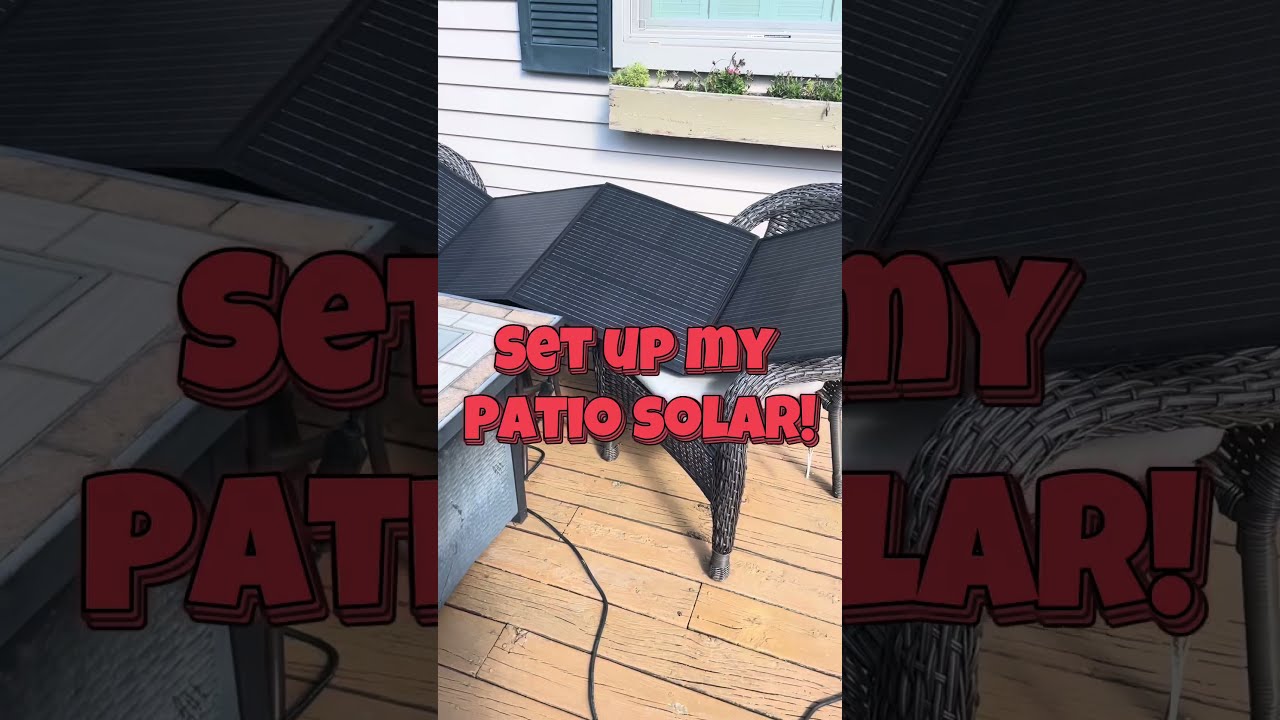
Set up my new #portable #patio #solar unit #balconysolar #apsystems #mhpowos #RVlife

This simple #ADHD #hack might end your #tasklist paralysis called #executivedysfuntion #productivity

Have #ADHD? Do you make a daily #tasklist ? This might help. #tasks #productivity #procrastination

Found too many cool Petoskey Stones and “Greens” on vacation. Had to do something!


Another free #pallet project: I built a heavy duty #ladder stand for #housepainting

Quick Windows Tip: Organizing Multiple Windows on One Monitor or Screen for Faster Multi-Tasking!

Classic Outlook (New Screen): Converting an Email to Task, Calendar, or Contact Using Drag & Drop