BG 15.9- Why is Bhakti-Yoga the most satisfying process? | Rus-Split | 16.9.92 | Gopāl Kṛṣṇa Goswāmī
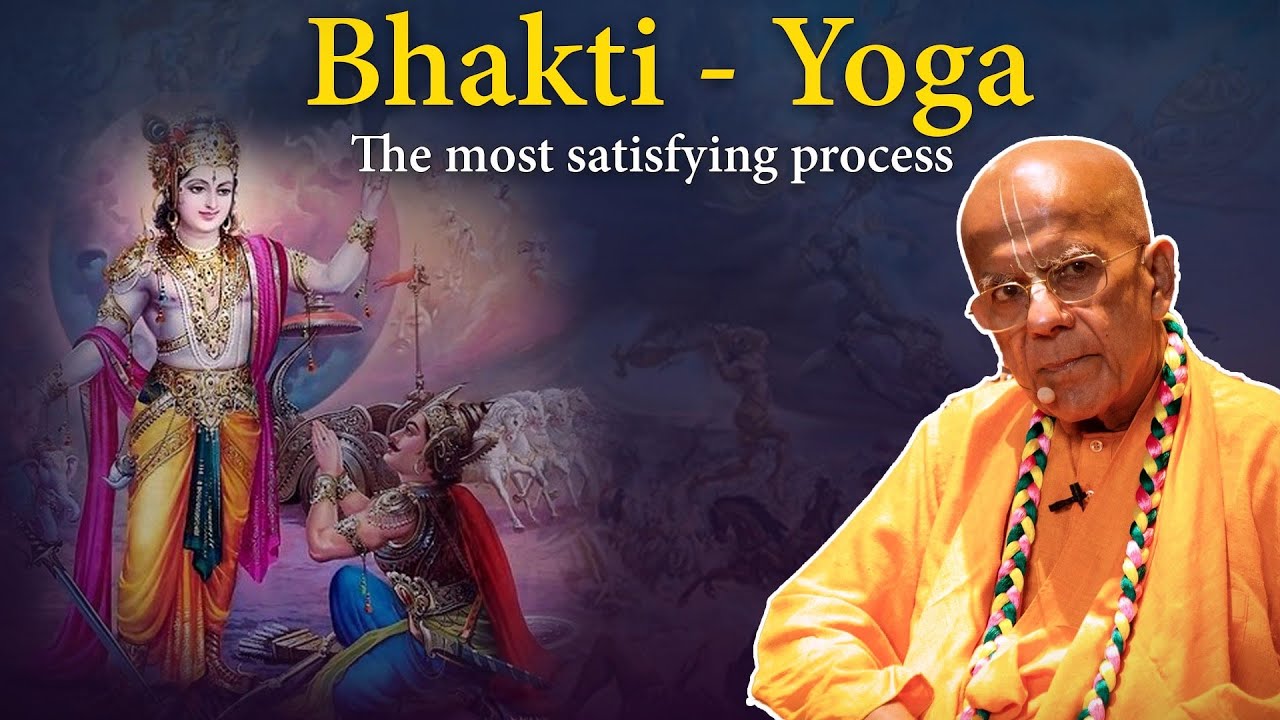
Gopāl Kṛṣṇa Goswāmī explains why bhakti-yoga, devotional service to Krishna, is the most fulfilling spiritual path. The soul's consciousness determines its next body through karma, and only bhakti-yoga can purify that consciousness. All senses must be employed in service while removing material desires, the weeds that block spiritual progress.
Questions this video answers
Because bhakti‑yoga employs all the senses in service to the Lord; when the senses are engaged in devotional activity the living entity is automatically satisfied. It also provides absolute knowledge of truth and aligns the soul with sat‑chit‑ānanda.
‘Weeds’ are anarthas—material desires such as name, honor, fame, and other sense enjoyments—that arise as one begins to serve and must be uprooted.
A devotee should not be selfish; one must perform one’s service without disturbing others, reflecting non‑violence and mutual respect as taught in the Gita.
Any skill—art, science, music—can be offered to Krishna under the direction of a bona‑fide spiritual master, as exemplified by the devotional artworks in Prabhupāda’s books.
Mercy is granted when a disciple faithfully follows Krishna’s instructions and the spiritual master’s guidance, demonstrating sincere effort and devotion.
Chapters
Okay, we'll do Text 9, but we won't do the Sanskrit because it's not on the board. You can try repeating after me. Shrotam, Shrotam, Chakshul, Chakshul, Parshanam, Parshanam, Cha, Cha, Rasananam, Rasananam, Grihanam, Grihanam, Eva, Eva, Cha, Cha, Adeshtaya, Adeshtaya, Jagadguru Mahārāja Parashurāma Chā. Rāsanāma grehanāma eva Chā. Adheshthāya manaścāyam vishayanupasivate. Om Agyānātma Nandaśya Jñānānjanāśalakya. Jagadguru Mahārāja Parashurāma Chā. Swayam rūpaka-dāmayam dadāti svāpadaṇṭhikam. Bandeham Śrī-guru Śrī-utāpada-kamlaṇ Śrī-guruṇvaiśṇa-manāśca. Śrī-rūpam sa-grajatam sahāgana-laguna-tanvitam tam-sujīvam. Sadveitam savadhūtam parijana-saītam kṛṣṇa-cetanya-devam. Śrī-rādhā-kṛṣṇa-padānta-hāgana-lalitā śrī-viśākā-nitāmśāḥ. He kṛṣṇa-karna-sindhu-dīnā-bandhu-jagad-pate. Gopīsā-gopī-kānta-rādhā-kānta-nāma-sutute. Tātā kanchanā-gaurāṅgī-rādhē-vrindāneśvari priśāmānu sūte devī pranamāni haripriye. Vāñchā kalpater vyāśā kripā-sandhu-bhayāvāśā padītā-nāmpāvanavyavaiśtanevyanamohana-maha. Jai Śrī Kṛṣṇa ca hitaṇya-prabhu-nitānanda Śrī Advaita-girādhāṣiva-jade-gauravaḥ. Hare Kṛṣṇa!
Hare Kṛṣṇa! Hare!
Hare!
Śrī-lāma, Śrī-lāma, lāma-lāma, Śrī-prabhu.
Śrī-lāma, Śrī-lāma, lāma-lāma, Śrī-prabhu. Adhēṣṭhāya manaścāyam viśāyan upasēvate. So in these verses, Lord Śrī Kṛṣṇa is describing the nature of the living entity. In text 7 of this chapter, Kṛṣṇa has explained mām evaṁ sa jīva-loke jīva-bhūtasanaḥ. All living entities are my eternal parts and parcels. And in the previous verse that was discussed earlier today, Kṛṣṇa has also explained how the, how the living entity carries with him different conceptions which move from one body to another, just like the air carries aromas. Just like the air in a beautiful garden It is mixed with fragrance. And the air in a contaminated place where there may be stool, it is mixed with, uh, pollution. It is— the smell is not fragrant. And the living entity takes on a body which is determined by his consciousness at the moment of death. Just like, for example, if you get the body of a hog, pig, then if you get the body of a hog or a pig, then the living entity in that body acts in a particular manner. And if you get the body of a dog or cat or a lion, then again one acts according to the nature of these animals. In the purport, Prabhupada explains how the consciousness of the living entity is pure and how it gets polluted. The example is cited of water. Water, when it is falling from the clouds, is pure. But when the same water hits the earth, it becomes contaminated. Similarly, the consciousness of the living entity originally is pure, but when it comes in contact with the material modes, it gets affected by the association it maintains and the activities it executes. So based on our actions, our next body is determined. This is known as the law of karma. In the Śrīmad-Bhāgavatam, Devahūti asked her son Kapiladeva a question. Her question was, "Son, how is it to be decided what type of body one is going to obtain in his next life?" And Kapiladeva replied, "Akārmanānnevaṁ deva-netreṇā jantu-deho papataye śrīya-praveṣṭhavudhāraṁ pūṁsamreṭha-kṇaśrayaḥ." Based on the activity that the living entity executes, His next life is decided and the activity which one executes are being witnessed by the different demigods. So therefore the Vedas say, athato brahma-jagyasya, now that you've got this human form of life, utilize this rare human life to perfect your existence rather than to imitate the activities of the animals. There is no guarantee that our next birth is going to be a human birth. Because people do not have the spiritual wisdom, everyone more or less takes it for granted that after death people go to heaven. Like in India, it's very common to see advertisements of people who have died, and on the bottom of it they write, "He left for his heavenly abode." So they're more or less taking it for granted that he's gone to the heaven, he's gone to his heavenly abode. So that is an illusion. Whether one goes to heaven or hell, whether one is going to get a human body or birth in one of the different species of life, this is all going to be determined by the activities that one executes. So real consciousness is spiritual consciousness or Krishna consciousness. Polluted consciousness is an artificial position. By polluted consciousness we mean consciousness that is mixed with a variety of material desires. So Unfortunately, in the absence of spiritual understanding, people are trying to realize happiness by making material adjustment. In the Caitanya-caritāmṛta, there's a nice story. The story is of a poor man who meets an astrologer. There was once an astrologer who came to a poor man and said, "Why are you so sad? Don't you know your father has left behind a big fortune for you?" The man said, really? Where is that fortune? He said, go back to your house and dig on the eastern side of your house, and on the eastern side of the house you'll find a huge fortune that your father left behind for you. So this eastern side of the house is an analogy comparing— compared to the rising of the sun, which rises from the east. When the sun rises from the east, all darkness is destroyed. When darkness is there, everyone is uneasy, everyone is frightened. But when the sun comes out, everyone's confidence is restored. So the astrologer told this poor man, don't dig on the northern side, don't dig on the western side, don't dig on the southern side. Only dig on the eastern side of your house and you will find a very valuable treasure. The north, south, and west have been compared to different types of self-realization like impersonal realization, acquisition of mystic, uh, perfection, and yogic powers. The astrologer said specifically dig only on the eastern side. So this refers to the rising of the sun which is further compared to the Vedic knowledge. So the conclusion of the Vedic knowledge is the path of devotional service is superior to every other path of self-realization. Therefore, Krishna in the Bhagavad Gita, after discussing different types of yoga, he concludes by saying, bhakti mama bijananti yavanit yasmi tatvadah. I can only be known by the path of devotional service. And It is also said, athāśrikṣaṇnamādhī na bhāved-grahem indriyāḥ sevomukeḥ jīvādo svayāme vasparātya dahā. That is, if one attempts to understand the Lord by one's material senses, he'll be defeated. But if one engages in service to Me, then he can understand Me. So real consciousness is Kṛṣṇa consciousness. And Caitanya Mahāprabhu has said, Through the medium of chanting the holy names of Kṛṣṇa, this real consciousness can be realized. Therefore, Caitanya Mahāprabhu says, "Caitanya-darpaṇa-mārjanam bahava-māk-dvāgṇinirvāpanam." That is, by chanting the holy names of Kṛṣṇa, the dirt from their heart is cleansed and loving devotional service to the Lord is established. So the process of sādhana-bhakti, the process of bhakti-yoga, which is being advocated by the Kṛṣṇa Consciousness Movement, It's a process by which one can purify one's consciousness. Chaitanya Mahāprabhu instructed Sanatana Gosvāmī for successive days about the process of bhakti-yoga. Chaitanya Mahāprabhu said, brahmānda brahmite kūno bhāgavano jī guru-kṛṣṇa-kṛpāpāya bhakti-lakṣmaṇa vīja. After traveling through so many millions of births and deaths, is he the fortunate soul who receives bhakti-lata beej. Bhakti-lata beej means the seed of devotional service. So Caitanya Mahāprabhu said, this bhakti-lata beej, this beej has to be watered. And if this seed is watered, then this seed will result in a tree that grows taller and taller. And this tree of devotional service will produce fruit. And anybody who bites on that fruit will become free from the cycle of birth and death. Now, Caitanya Mahāprabhu also said, like anyone who's a good gardener will know, that when the seeds are being watered, there's also the tendency for unwanted weeds to grow on the side. So Caitanya Mahāprabhu said, as soon as we see these unwanted weeds growing, we should at once pluck them out. Just like in a normal situation when you have a garden, and you have unwanted weeds, then the water is wasted if it goes in watering the unwanted weeds. So Caitanya Mahāprabhu said these unwanted weeds should be removed. And He further said that in order to ensure that nobody can encroach on your field of cultivation, you should build a strong fencing. Just like we have this temple here, And we have a big boundary wall. We have built a boundary wall so nobody else can encroach on this property. So similarly, Caitanya Mahāprabhu said, when we are watering the seed of devotional service, we should build a strong fencing. A strong fencing means keep oneself surrounded by devotees. So if you're watering the seed of devotional service, pulling out the unwanted weeds, And at the same time you have a strong sensing, you have strong devotee association, then the seed is bound to mature into a fruit that produces love of God. Normal trees have a limit beyond which they cannot grow, but this tree of devotional service, it can cross the layers, the material layers, and eventually go right to the lotus feet of the Supreme Personality of Godhead and take shelter there. So it is very unfortunate that civilization today is engaged in activities by which they'll definitely get a lower form of birth. Prabhupada used to say that the material society today is totally engrossed in sense gratification, and the principal form of sense gratification is the attraction to sex life. So if you're very fond of sex life, Krishna says no problem. I'll give you a body where you can have sex life 3 times every hour, or as a monkey. So one obtains a body based on the consciousness that one has developed. Therefore, this Kṛṣṇa consciousness movement is rendering a most valuable service to humanity in educating them how to perfect this rare human existence. Unfortunately, the foolish cannot understand how the living entity quits his body and how he obtains the next body. But Kṛṣṇa says that one whose eyes are trained in knowledge, he can see this. He can see why one has obtained a particular type of body and why one is going to get another type of body. Our modern-day friends do not want to acknowledge the law of karma. But even in our day-to-day lives, this law of karma is being applied. Just like it is not that everybody gets the same type of job. One gets a job based on the qualification one has. And similarly, in the market, you buy a product based on the price that you have, you can afford to pay. So the law of karma is being applied even in our day-to-day dealings. So those who have the spiritual knowledge, they understand how the living entity transmigrates from one body to another body. Just like on a clear blue sky, everything is clearly visible. Similarly, Kṛṣṇa says the endeavoring transcendentalist who is equipped with spiritual knowledge can see this clearly. So if we want to underst— this is actually a great science, this science of transmigration of the soul. Unfortunately, there's so many universities and departments of knowledge almost in every corner of the world But very few of them are trying to understand what happens to the living entity after death. So jnana chakshu, jnana chakshu means transcendental knowledge. With the help of this transcendental knowledge, one understands the process of transmigration of the soul. And one who is trained to understand, he is actually fortunate. And one who is not trained to understand this process of transmigration, He's very, very unfortunate. Maharaja Rishabhdev said, "The one who obtains a human body and still engages in sense gratification, he is to be considered to be a madman." Why is he a madman? Because he has a body that is giving him nothing but pain. And by engaging in activities against the laws of God, he's again going to realize a body which will give him nothing but pain. Therefore Maharaja Rishabhdev said, "Na aham deha deha bhajam nalo ke kastam kama-mrta-vitta-bhujamye tapo deviṁ putraka yena satpam." He said, "My dear sons, please do not waste this valuable human life in imitating activities of the cats and dogs, but rather use this rare human body for cultivating spiritual consciousness, for performing spiritual austerity." Prahlāda Mahārāja said that this facility for sense enjoyment is available even in the lower species of life. You mean the animals don't run after sense enjoyment? As we said just now, they have more sense, they have more facilities for sense enjoyment than even human beings. So therefore, this rare human body should not be utilized to imitate the activities of the animals, rather for Self-realization. And those who are developed in this transcendental knowledge, They also try their best to give this knowledge to others. They are convinced that except for this Krishna conscious process, there is no alternative. Philanthropic activities cannot satisfy the individual. Impersonal realization cannot satisfy the— cannot satisfy the individual. But bhakti yoga can satisfy the individual. Why? Who knows? Who wants to answer?
Because it's constitutional position of living entities.
So my question is this: Impersonal realization cannot satisfy the individual. Yogic perfections cannot— yogic siddhis cannot satisfy the individual. Why can bhakti yoga satisfy the individual?
Because one gets the absolute knowledge of truth through its process.
Okay, second answer.
Because Krishna is the sat-chit-ananda.
Okay.
Because soul is constitutional part, part and parcel of Krishna, and that's why satisfying Krishna will also satisfy.
Okay, I'll take one more. Any of the ladies want to answer? My question is, why is bhakti yoga the most satisfying process? This is such an easy question.
Nothing can be compared with love, Krishna.
Okay, frankly, all 5 answers are at least to some degree partially right. But the real reason why bhakti yoga is satisfying is because bhakti yoga means the employment of senses in service to the Lord. And when the senses are engaged in service to the Lord, then the living entity is automatically satisfied. And when the senses are not engaged in service to the Lord, the living entity remains frustrated. Because what is bhakti yoga? Bhakti yoga means the employment of senses in service to the Lord. Just like you have the example of King Amresh, Amresh Maharaj. How Amresh Maharaj used his eyes to see the beautiful form of the Lord. He used his legs to walk to the temple of the Lord. Used his hand to sweep the temple of the Lord. He used his tongue to taste Krishna prasad and vibrate the holy names of the Lord. He used his nose to smell fragrances offered to the Lord. He used his head to bow down before the deity of the Lord. So bhakti yoga means you engage all the senses in service to the Lord. And when you engage all the senses in service to the Lord, then there is satisfaction. Otherwise there's no satisfaction. Why is it the impersonalist, they get frustrated and return to material activities? Because they, you know, they try to do something, they— because their senses not positively engaged, they get frustrated and they return to material activities. So in other words, what we are saying is this, that in order for, for, in order for the devotee to succeed on the path of Bhakti Yoga All senses must constantly be employed in service to Krishna. If the senses are not employed in service to Krishna, then there's no bhakti yoga. After all, yoga, yoga means the position where you focus on the Lord. And bhakti means devotion. So devotees are devoted to Krishna. So the senses have to be employed consistently in service to the Lord. And the senses are employed consistently in service to the Lord. Then one will succeed on the path of Bhakti Yoga. So one should utilize the rare human body with great caution because one's actions will determine one's future. Therefore, it is very important that we be engaged correctly so that our next life can be at least a human birth. Anyone engages in the path of Bhakti Yoga, then Krishna guarantees that such a devotee will return to Me. Actually, society today is so degraded. Many times when I've been preaching, I've told people By these activities you're going to get a dog's body or hog's body. They said, so what? Dog's body, hog's body, it's good enough. So Krishna says, if you want a dog's body, hog's body, act as you want. But if you want to free yourself from the miseries of birth and death and experience real happiness, then take to this one alternative, bhakti yoga. Why did Prabhupada in his presentation of Bhagavad-gita call it Bhagavad-gita kakona? Yes, because Prabhupada has presented the true path of bhakti yoga, whereas So many other translators of the Gita have translated the Gita and completely omitted the importance of Bhakti Yoga. The Bhagavad Gita directs the living entity to adopt the path of Bhakti Yoga as a means to real happiness. And any presentation that doesn't emphasize this is actually a misleading presentation. Hare Krishna.
Hare Krishna.
It's 8:15, so I can just take on one or two questions if you have.
It was said in the lecture that during our devotional service some weeds appear. What do you mean by this word weeds? What is it?
Weeds means anarthas. Anartha means different material desires. As you begin to serve, you develop the desire for name, honor, fame, and other types of sense enjoyment.
If a devotee, while executing his devotional service, does not receive full satisfaction, does it mean that he is not completely— his senses are not completely engaged in devotional service?
If a devotee is executing devotional service and he's not feeling satisfied, that means there's something wrong in his execution. Kṛṣṇa's path is guaranteed, a total satisfaction guaranteed. Kṛṣṇa says, brahma-bhūta-prasannātmānā so'citi na kāṅṣati. One who is transcendently situated, he does not lament, he does not hanker. So your next question can be, what do I do if I still have this material hankering and lamenting? You endeavor to eliminate your shortcomings. Okay, paśyani ma prasāda.
In his commentary to 22nd verse of the 4th chapter, Śrīla Prabhupāda writes that A devotee should not allow that the service of another devotee would hamper his own devotional service. What does it mean?
Which, uh—
22nd verse, commentary of Śrīla Prabhupāda, that devotee does not allow that service of another devotee would hamper his own devotional service. What does it mean?
What this means is a devotee is not selfish. In other words, a devotee doesn't think, I have to do my service, to hell with the other person's service. So I don't care what happens to you, I must do my service. A devotee is very careful that he does not disturb any other devotee. In the 13th chapter of the Gita, Krishna talks about different qualities of a transcendentalist, and one of the qualities described is non-violence. So Prabhupada explains non-violence means— that a devotee in executing his devotional service, he does not disturb any other entity. A devotee doesn't think, "Oh, I have to do my service.
I don't care what happens to the other Vaiṣṇavas." And it is said in the commentary that other service of other devotees should not hamper my devotional service. How can you explain that?
It's very simple. Cennakya Pandit said, "You deal with others as you want others to deal with you." So naturally, if you execute your devotional service in a manner where you're not not disturbing anybody else, you also expect the other person to do his service in a way that it doesn't disturb them, hamper your service.
Okay.
Etabhā paślini se cha.
What is the part of creative activity in various fields of human— what is the part of creative activity in various fields of human activity, something like artists, scientists, and so on, in the service of Krishna, service of Lord. What is the part?
The beauty of Krishna consciousness is that whatever skills, abilities you have, you can offer it to the Lord. You see all the paintings in Prabhupada's books, they're all done by devotee artists. So whatever ability you have, you can offer it to Krishna under the direction of a bona fide spiritual master. Cannot be whimsical. Okay, so I'll stop now and I'll see you all tomorrow morning at the Bhagavatam class. Tomorrow we'll start the Bhagavad-gītā class a little early because we have to leave, finish the class by 8:30 to go out for an appointment.
Hare Kṛṣṇa. Kapāl-kṛṣṇa Mahārāja ki jāna.
His language.
Why is it so that in some cases Kṛṣṇa immediately annihilates the demons, His enemies, but sometimes, Nāuṣinā-chakra, has to chase for a long time.
Well, sometimes Kṛṣṇa makes the pastime more interesting. That's like in the karmi world you see, you know, in the karmi world, I'm sure you don't see movies anymore, but at one time you may have remembered they have scenes where the villain is fighting with the hero, that's the demon, but the demon gets killed but onto a long chase. Anyway, that's what Kṛṣṇa did. Well, in that story, the Rādhā moving Sudarśana Yogi, but the Sudarśana-cakra was also following him. Wherever he went, the Sudarśana-cakra was chasing him.
How these two of modern chance changed from kapha to kapha, or they remain constant?
In Śrīmad-Bhāgavatam you only read about the 12 mahajānams for this kalpa.
It doesn't say anything beyond that.
This question, since Nārada Mūla, previous one, previous kalpa, was the son of Saurabhāma, now that he became a mahajānama.
Yes.
At least with this kalpa we have these 12 mahajānamas.
One time, while the devotees were chanting japa, Śrīla Prabhupāda told to one of his disciples that you are You are a nice boy that you could take the mercy. What are the conditions of taking mercy?
Taking mercy means following the instructions of the guru. Otherwise it has no meaning. And the guru's desire is that you make spiritual advancement. Just like if you go to India, Indians have a habit of touching the feet of anyone wearing saffron clothes and they say, Swāmiji, give us your blessings. Actually, they want benediction that you may become a rich man. So we tell them, if you want mercy, you have to pay the price. That is follow Kṛṣṇa's instructions. So the spiritual master is very pleased when he sees the disciple endeavoring on the spiritual path, and he bestows his mercy. Sometimes devotees want to know, what does it exactly mean, this mercy bestowed by spiritual master? How do you measure it? Can you measure it like it's an ounce of water or something? So Prabhupāda explains in one of the purports that this mercy means The spiritual master, when he is pleased with your effort, he blesses you, and as a result of the blessing, you get the determination by which you can follow Kṛṣṇa's instruction and avoid māyā.
More from PRASAD

Rare Pastimes & Timeless Lessons of Guru Mahārāja | Stories Every Disciple Should Hear

ISKCON Legends- pure devotees meet-HH Jayapataka Swami, HH Gopal Krishna Goswami, HH Radhanath Swami



Jagannātha Ratha-yātrā Through Śrīla Prabhupāda's Mercy | 29 April 2006 | Nairobi, Kenya

Lord Jagannātha's Appearance Pastime | 21.07.2019 | ISKCON Calgary | Śrīla Gopāla Kṛṣṇa Gosvāmī

The Ācārya Teaches by His Own ExampleGuṇḍicā Mārjana by Guru Mahārāja #shorts

Guṇḍicā Mārjana – Lord Jagannātha's Pastime | 21.7.2019 | ISKCON Calgary |Śrīla Gopāla Kṛṣṇa Gosvāmī

H.H. Gopāla Kṛṣṇa Gosvāmī Mahārāja - Exemplary Sādhana and Deity Worship # shorts

भगवान की कृपा कैसे प्राप्त होगी ? | 11 Jan 2014 | Punjabi Bagh | Srila Gopal Krishna Goswami

Material Education vs Spiritual Education | Srila Gopal Krishna Goswami #shorts