Deity Worship | 18th Feb 2024 | Srila Gopal Krishna Goswami
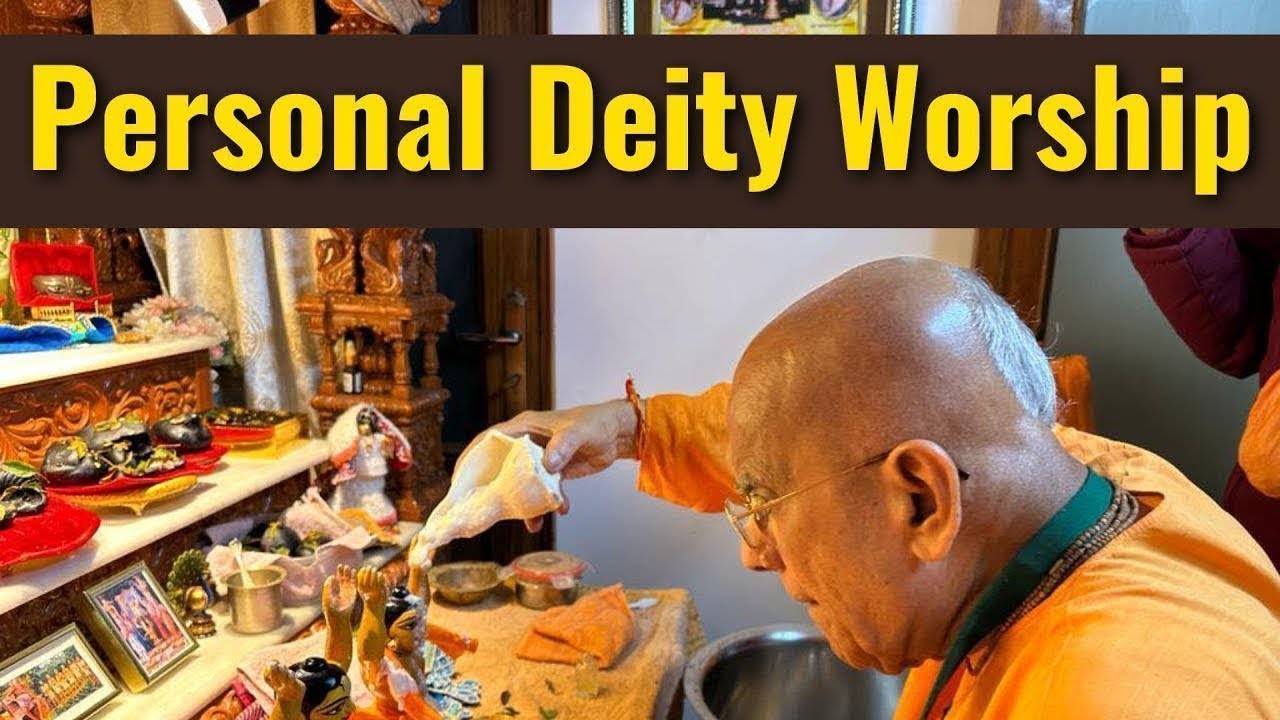
The lecture presents a comprehensive devotional biography of Sri Madhvacharya (1238‑1317), the founder of the Dvaita (dualistic) school of Vedanta. It begins with his miraculous birth, childhood feats, and early displays of extraordinary intellect and physical strength. The speaker recounts numerous legends—defeating a tiger, wrestling a snake, performing miraculous feats of strength, and displaying divine insight from infancy. Madhvacharya’s formal education, early renunciation (sannyasa) under Achyuta Preksha, and his subsequent break with Advaita Vedanta are detailed, highlighting his development of Dvaita Vedanta and his polemical engagements with scholars of Advaita, Buddhism, Jainism, and other schools. The narrative covers his extensive pilgrimages across South and North India, his encounters with kings, scholars, and the Muslim Sultan, and his establishment of the Udupi Krishna temple, including the miraculous acquisition and installation of the deity of Gopal. The lecture outlines the institutional legacy: the eight Udupi mathas, the guru‑disciple lineage, and the transmission of his teachings to later traditions, especially Gaudiya Vaishnavism, citing the nine core teachings of Mahādhava Ācārya as emphasized by Srila Gopal Krishna Goswami. The talk interweaves doctrinal points (the supremacy of Krishna, reality of the world, distinction of jiva, Ishvara, and matter, the nature of liberation) with devotional exhortations to surrender to the guru and serve Krishna. The speaker’s tone is reverent, narrative, and instructional, aiming to inspire devotion and convey the theological significance of Madhvacharya’s life and works.
Chapters
Swami Nithyananda. Namaste. Sadashwati Devi. Our Amma, our Madhini, Nirvishesha Sundarwadi, Ashtata Deshottam. Namaste, Nara Singh. Hiya. Da la da da da da. Ilay. Iran, ya ga shi pur bapsa. Shila tanka na kala ye. Ito na singha pa re to na singha. Ya to ya to ya. See, Madhvacharya appeared in 1238 AD near Udupi, Karnataka in South India. He was considered an incarnation of Vayu, wind god. He had an unusually strong physique and extraordinary intellectual power. Once a fierce Bengali tiger attacked Madhvacharya Sannyasa disciple Satyateertha. Madhvacharya wrestled the tiger and sent him away with his tail between his legs. Madhvacharya took diksha at age 5, sannyasa at 12, and left home. He appeared with a mission to fight and defeat Sankara's Mayavad philosophy. By giving a pure interpretation of Vedanta Sutra, he promoted pure theism. He named his innovative sāstric explanation Dvaita Dvaitavad, pure dualism. After Sankara Charya, who had previously toured India spreading impersonalism, Madhvacharya also traveled the length and breadth of India preaching personal theism and devotion to Lord Vishnu. He defeated innumerable Jains, Buddhists, Mayavadis, atheists, logicians, and agnostics. With the hope of meeting Srila Vyasa Deva himself, Madhvacharya walked up the Himalayas. Vyasa Deva gave him a saligram sila called Ashtamurti. Approved his Bhagavad-gita commentary and blessed Madhvacharya with deeper realizations of the shastras. In Udupi, Madhvacharya installed the beautiful deity of Gopal standing alone holding a cowherding stick. The deity manifested from within a chunk of gopi-chandana. He established 8 mathas to lovingly serve Udupi Krishna. The sannyāsi leaders of each māthā worship the Kṛṣṇa Deity with a rigorous regimen of ceremonial ritual, punctuality, and impeccable personal conduct. Every ekādaśrī they observe nijjala. The Gauḍīya Vaiṣṇava sampradāya originates with the Mādhavas. Śrī Caitanya Mahāprabhu and his followers thoroughly studied Mādhava's works before compiling their philosophy. For the Sat Sandarbha, Sri Jīv Gosvāmī drew heavily from Mādhava's writings. Jīv Gosvāmī found the Gauḍīya philosophy of Acintya Veda Pedatattva in Mādhava's Bhāgavata Purāṇa. Śrī Caitanya Himself visited Udupī, the seat of Mādhava's sect. The Lord introduced Hare-Nāma Sankirtana into their sect. The Mādhavas and Gauḍīyas share many of the same philosophical points. But consider it necessary to surrender to the lotus feet of the guru. Guru padarshana. In Sutra Bhashya, Madhvacharya cites the Brihad Tantra and Mahasmita to show that a disciple may reject a bogus guru who proves to be useless. He may then accept another qualified self-realized person as his guru. In Prameya Ratnavali, Śrī Vāljeṇa Viṭṭhābhuṣaṇ summarized The 9 principles common to both Śrī Caitanya's and Mahādhava's teachings. In Vaiṣṇava Siddhāntmālā, Śrīla Bhaktivedānta Ṭhākura says, "Śrī Caitanya Mahāprabhu ordered all Gauḍīya Vaiṣṇavas to carefully observe the 9 instructions of truth given by Śrī Mahādhava Ācārya through our Guru Paramparā." So these are Śrī Mahādhava Ācārya's 9 teachings. First is Bhagavan Sri Krishna alone is the Supreme Absolute Truth, one without a second. Second, he is the object of knowledge in all the Vedas. Third, the universe is real, satya. Fourth, the differences between Ishvara, jiva, and matter are real. Fifth, jiva souls are by nature the servants of the Supreme Lord Hari. 6th, there are two categories of jivas: liberated and illusioned. 7th, liberation, moksha, means attaining the lotus feet of Bhagavan Krishna. In other words, entering an eternal relationship of service to the Supreme Lord. Pure devotional service to Krishna is the only way to attain this liberation. 9th, the truth may be known by pratyaksha, Anuman, Shabdya, Shabda. Sri Madhuvacharya serves as Madhuri Gopi in Rādhā-Govinda's eternal Vṛndāvana pleasure pastimes. I'm reading some other thing also. What else you have? Yes, I'm reading from a brief sketch of life and teachings of Sri Madhvacharya. So here, by this we found from internet, so this PDF we got. Okay, okay. I'm reading about Birth and childhood of Madhvacharya. Birth and childhood of Madhvacharya. Madhyageya Bhatta's prayers were answered, and by Lord's grace, he got a son who became the great Acharya. It was Mukhya Prana who entered the body of Madhyageya's wife, and she delivered a beautiful infant. With large eyes and a moon-like face. The father named him Vasudeva to indicate that he was born to give the correct knowledge to the world and that he would ever be devoted to Lord Narayana. In Sanskrit, 'va' means knowledge, 'asu' means prana, wind, and 'deva' means God. Sri Madhava was born in 1238 on the Vijaya Dashami day at a place called Pajaka near Aditi, otherwise known as Harajadapitapuram. Miraculous events occurred centering on Vasudeva even from infancy. Adyageyapat, the father, took the infant one day to the temple of Ananteshwara at Udupi and dedicated him to the Lord. His path lay through forests inhabited by man-eating wild animals, but having the divine boy in his hand, the father could pass through these regions without any Danger. Vasudeva grew day by day a veritable picture of glowing health and cheer. Once Vasudeva's parents left him with his elder sister to attend an urgent duty. Infant Vasudeva began to cry. All efforts to calm him proved of no avail. She thought that the child must be hungry and fed him wild horse gram meant for cows. Child ate until the whole quantity was exhausted. The child was not in the least affected. In another incident, 1-year-old child suddenly disappeared from home. Parents were naturally worried and went about searching. Their quest was fruitless for hours. At last they met the child coming alone merrily, hanging from the tail of a bull. Bull is an indication of dharma. By this, Sri Mata showed that he has come to follow dharma. And will never at any stage leave Dharma. He will always walk in the path of Dharma. Once Madhyageya Bhatta happened to be entangled in difficulty by not being able to repay a debt of a bullock bought from a debtor. The debtor sat at the door and refused to move until debt was repaid. Vasudeva, realizing the situation, promptly made up his mind how to act. He went round the house and beckoned to the debtor to go with him. Vasudeva picked up a few tamarind seeds and gave it to him. To his surprise, it turned out to be coins amounting to full discharge of the dues. The debtor returned to Madhyagya Bhatta and told him that he was free because the boy had repaid the debt. Actually, Vasudeva satisfied the debtor of his father by giving him only tamarind seeds, creating in him the feeling that through the seeds What was bestowed on him was the great consummation, moksha. Once when Vasudeva was 3 years old, his parents took him along to attend a function at a place called Nidigur. In the midst of the function, Vasudeva suddenly disappeared. Vasudeva went into a neighboring forest. Though warned by travelers on the way about the dangers there, he proceeded and performed worship to Lord Narayana in a temple in the forest of Kadur. And stayed at another temple of Shiva at Banarji. From there he went to Lupi and worshipped at the shrine of Ananteshwara. Tearful parents began vigorous search. Some said that, some said they saw a child at Kodavur. Some said they saw him at Banarji temple. They could not find Vasudeva. They came to Lupi and arrived at Ananteshwara temple. Vasudeva was standing before Ananteshwara with four hold his hands. When questioned as to who protected him in all these dangerous regions, he replied, why, Shankaranarayan escorted me to Banarji. Sri Hari of that temple guided my steps to the East Temple of Udupi, and that deity brought me here. I traveled not alone and unescorted. He was a child who showed a divine path to the people. We see that Sri Madhva told the same thing to the Muslim king in his 30s. When the child completed 3 years, his father initiated his educational lessons. Akshara Vyasa. There was no need to teach him. The ocean of intelligence that he was, he knew the alphabets already. The capacity to learn of anything new without effort was soon manifest. He allowed himself to be taught only once and no more. He tolerated no repetition or revision for that was superfluous. Father was surprised and happy and was wonderstruck by the child's reasoning power. Once when Vasudeva was 5, while attending a discourse with his mother at Niyampalli, he boldly found fault in the rendering and corrected him and gained the applause of the audience. He did the same kind of correction when his father during a discourse could not remember the meaning of a word and avoided that word. Vasudeva stood out and gave the correct exposition himself. By this he showed that wrong things should be pointed out and corrected and must not remain a silent spectator. Upanayan studies. When Vasudeva was 5, his father performed his upanayana. He was sent to study Nyaya, Vedas, and classics, Vedangas, etc., to a teacher, Pugavana. Uga means bitter nut, Varna means garden. Descent, a respected Vedic scholar of that period. He was very quick in mastering what he was taught, so quick that his grasp puzzled his master and led him to believe that he did not pay sufficient attention to his lessons. He would appear only at the time of the lessons and would spend rest of the time in playfield. In the field, his strength and agility were matchless. Whether running, swimming, wrestling, jumping, or any other game, he would come first. Even when attacked by a group of his classmates, he would humble them with terrific blows. Acharya Madhva attached much importance to good physique. If the body is weak, the growth of intellect too will be weak. One should take care to be strong, not in body alone, but also in mind too, was his message. Shri Mataji proved his strength even in his 40s. Once he overheard his disciples discussing about their physical strength, he called 15 of them who were around 20 years of age for wrestling with him. Acharya warded off his disciples with a single blow. All of them fell to the ground. In wrestling, his grip was so tight and strong that there was no escape or release unless he chose to give up. But nobody could hold Vasudeva even for a while. By this he showed that nobody can hold him except God. He has come to show a way out from the miseries of the world and is not here to conquer. Read, read. He has come to show way out from the miseries of the world and is not here bound by any worldly matters. No boulder of rock was too heavy for Him. In short, he showed Rima's strength and courage in sports. Vasudeva used to spend a lot of time at the Durga Temple near his house. Once he was attacked by a snake on the way to the hilltop. It is believed that the asura known as Maniman in Mahabharata dwelled in the woods as a snake. The onslaught was both quick and fierce, but Vasudeva was cool and courageous and crushed the serpent hood with his toe. Whole village was bestirred by this and could hardly believe their eyes, but the plain truth was there beyond any controversy. As Vasudeva did not return home in the usual time, his mother, anxious at his prolonged absence, called Vasudeva loudly by his name. Sure enough, he appeared in a twinkle. In order to effect his purpose, they say that Vasudeva took a long jump from where he was to the front of his house and presented in front of his mother. He began the day's proceedings by performing a feat of vimasen by crushing a great Rakshasa and ended with a miracle of a wonderful jump as only Hanuman could accomplish. This can be seen even today at Pachaka. By this we must understand that anything poisonous should be destroyed. Poisonous not only to be to the body but also to the mind, which leads us away from our goal to realize God. When the studies were approaching completion, teacher started teaching the great Aitareya Upanishad. This is the first among Upanishads given by Mahidas. This is the work of which Vasudeva was particularly fond. His great liking for this Upanishad continued throughout his life. When the teacher began an exposition of this work, On the old written lines, Vashuda took him apart and expounded the verse, 'Shri' impressively in his own way, in strict accordance with well-known canons of interpretation, basing his views on the accepted works of authority. The teacher was convinced with the result that a genuine bhakti for Govinda was imparted in his heart. This was the fitting guru, Dakshina, for was the teacher. It was Guru's good fortune that he stumbled once in a way on such a gem of a pupil, and his reward was a prize. The guru dismissed Vasudeva, invoking God's choicest blessings on his head. While bidding him goodbye, he charged him with the great mission of instructing the world in the paths of devotional worship and creating among people a school of true bhakti towards Lord Sri Krishna. Sannyāsa. Vasudeva fell to serious meditation and made up his mind to the course of action. He should adopt. He knew his mission. He knew that he was not born to marry, multiply, and make an exit. He realized that his duty to God, to himself, and his fellowmen summoned him to the warpath, to battle with false knowledge, overthrow the sovereignty of ignorance, and re-establish truth on its throne. He was convinced that the best mode of achieving this end was was by an early renunciation of worldly life and family ties and to enter the order of sannyasi. Without apprising his father of his resolution, he came to a monastery in Akare, a village near Udupi, where a sannyasi, Achyuta Preksha, a sincere, genuine man of great pity, was the head. The headquarter of this ascetic was the mutt of Banderekaran, which was a few miles north of Udupi. Achyuta Preksha was an unnamed man who had faithfully studied Advaita under his guru. He apparently belonged to a line of ascetics whose faith in monism was not very ardent. Vasudeva was at once accepted as a secular novice to undergo a term of probation, preliminary to enrollment in the sacred order. Meanwhile, Madhyagya Bhatta, on discovering his lad's intentions was almost heartbroken. He begged and tried his best to change Vasudeva's mind, but in vain. He returned home and conveyed the news to his wife. Both felt a void which was impossible to fulfill. Madhya Gya Bhatta set out again to try again to change his son's mind. Conversation between the two heated up, and at one stage threatened to put an end to himself if his son if his son should have his way. The son tore up a piece of cloth, put it on as a sannyasin's koppila, and challenged his father to carry out the threat. Temper cooled. Vasudeva was the only son. Vasudeva promised not to enter sacred order until younger brother, who was to become the famous Vishnu Tirtha, the head of Sodhamat, was born. At last a son was born. On hearing this, Vasudeva paid a flying visit to home to speak to his mother. He told her that he must have her permission to enter the holy order, and that if it was refuted, she might be sure that she could never look at his face again and will be lost in the wide world forever. The maternal love reconciled, arguing that it was better to have her son before her eyes, sannyasi as he might be, than to lose him out of sight forever. With the permission of Vasudeva's parents, he was initiated into sannyasa by Achyuta Preksha under the name Poorna Pragya. Poorna means full, complete, and Pragya means knowledge, Sarvagya. Soon after, Poorna Pragya expressed a desire to go to Ganga for a holy bath. Holy bath. In response to the earnest prayers of the guru, Mother Ganga came gurgling up in their mud pond for all to bathe in the holy rivers. This helps to retain Purnaprakya in the mud for a while. Purnaprakya began to receive instructions in the doctrine of Advaita Vedanta, but difference of opinion between the guru and the disciple began to crop up soon. Purnaprakya's deep study of scriptures was unparalleled and had convinced him of the uselessness of the Advaita interpretation of Vedanta. He carefully studied the Vedanta commentaries of different different acharyas. Soon his expertise in scriptural argument and his determination to establish personalism, theism, as the conclusion of Vedanta grew to the point where he could defeat his guru in argument. When Bhagavad Gita recitals were taking place, Pulinapragana amended the renderings of the passages that were recited. On scrutinizing several texts, it was found that Purnapragna was correct. That's when his guru asked him how he could know the whole Bhagavad Gita so thoroughly. The pupil replied that he had known all that in previous births. Recognizing Purnapragna's superior scholarship, his power of exposition, and divine inspiration of Purnapragna, Achyuta Parikṣṇa made him the head of the Matha and awarded the title Ananda Tirtha. Ananda Tirtha. Ananda means bliss and Tirtha means doctrine, scriptures, shastra, siddhant. The expression complements the Master as the maker or exponent of blissful scriptures. Madhva, the name by which he is generally known, is also a synonym of his real name. The doctrine which gives most desirable moksha. First, to Swami Vivekananda's tour. For some years from now, Srimad-Bhagavata Purana spent his time confronting arrogant scholars who came to challenge him. The first of these were Buddhisagara and Vadhisima, who, being defeated in debate, had to bolt away at night unknown to any. He first undertook a tour up to Kanya Kumari accompanied by his guru. At that time, Vijayanagara was a fairly prosperous kingdom. To the south of Vijayanagara kingdom comprised Mysore, And the west coast was under the rule of descendant of King Vishwadharna, from King Vishwadharna, whom Sri Ramanuja had converted to Vaishnavism in the 12th century. Wherever he went, the influence of Islam was spreading. Christianity too was making headway. The country was facing a pickwink situation under these alien religious influences. Besides the Indian people themselves, were helpless spectators to squabbles among their own religious sects, various castes and creeds, etc. Acharya toured the country at such a time of disturbed philosophical situation and brought reassurance to the people. They were impressed with the saint and listened to his discourses with devout attention. His following steadily grew. After starting from Udupi, traveling south, he in due course reached Vishwamangalam, a favorite place of Sri Acharya. It is said here he chose to exhibit an extraordinary feat of digestion by consuming 200 bananas after meal as per the request of Brahmins of Raival School, which appeared an impossibility. After visiting Anantha Sayana, he proceeded to Calicut and Kochi. Sri Madhva moved much in the strip of country lying between Kumaradhara and Netravati. After a stay of 4 months at Rameshwaram, he visited Srirangam Temple at Srirangam. The chronicle of Sri Mushnam, famous Guvara Temple, contains reference to Sri Madhavas' visit to the place. It mentions a holy pond known as Danda Theertha, sanctified and created by Sri Madhavas Danda. Wherever he went, he debated the prominent scholars of the impersonal school, smashing their interpretations of Vedanta with his brilliant advocacy of dualistic theism. He was met with stiff opposition, but no one could overcome him in spiritual argument or logical debate. Challenged by scholars to explain the scriptures at one meeting, Sri Ananda Kirtan demonstrated that each Vedic supta had 3 meanings, the Mahabharata 10 meanings, and Vishnu Shastra Nama 100 meanings. It is said that Acharya was challenged by an eminent scholar of Sri Shankara to write his own commentary on Vedanta. Acharya disagreed with Sri Ramanujan's Vishishta Advaita Vada. This further added to the young Madhvacharya's determination to compose his own commentary incorporating his own unique interpretation. After establishing his reputation among the scholars of southern regions, he returned to Udupi. The confrontation with scholars of various schools like Shankara and Ramanuja made him convinced of the need for founding a new school of thought. Pilgrim made to Badari. After 7 years of stay in Udupi, he started with the permission of his teacher— Look for the story where he sees a ship that is going— Where he sees? Founding Krishna Temple at Udupi. Okay. The most outstanding event of Madhva's life during this period of stay at Udupi was the founding of the Sri Krishna Temple. When he stayed in Udupi, it was Madhva's regular habit to bathe in the ocean. It was on one of these occasions that a remarkable incident happened. One day, as he started for the ocean bath in the wee hours of the morning, it occurred to him that he might himself compose a short book of sonnets capable of being set to music. He began at once. As he walked to the sea shore, which is 3 miles from Udupi, he composed at ease 5 chapters of about 46 verses, which is the famous Dwaadasa Stotram. All this was obviously the result of a pre-sentiment. When the idea of composing the Stotram occurred to him, he was intently thinking of Sri Krishna. It flashed to him that Sri Krishna was on his way to Udupi to settle down for the benefit of his bhaktas. This prevision elated his spirits and facilitated the flow of prayerful music. He danced mentally to the tune of the divine music and sang on absent-mindedly during all the oblations. At last he went to the sands and sat down for further meditation. While thus engaged, he opened his eyes suddenly and they lighted up a ship in distress bound for Dwarka. Taking up his handkerchief, he waved it at the ship, and sure enough, the ship did float safely to the shore. The master of the ship approached Acharya and begged him to accept some return. Madhava accepted a large chunk of gompi-chandana, a paste with a kind of earth. Chapters 6 to 12 were completed in the course of the day. The clod was taken to Lupi and washed at Madhava Sarovar. There stood the magnificent image of Balakrishna holding a churning rod in one hand and churning rope in the other. The idol was originally carved by Vishwakarma and given to Rukmini Devi, Krishna's consort in Dwarka, to worship. After cleaning and puja performed by Acharya, even 30 persons could not carry it to the Math as the presence of Sri Krishna was infused into it by the sacred touch of Acharya. But Madhava, who was all-powerful, Vaio incarnated could carry it easily and installed it at the temple in Udupi, where it remains today. Sri Madhava regulated the method and formulae of worship. He codified the procedure in minutest details and led the way by conducting the ritual of worship in person. 9 times in the day, an elaborate program of worship and prayers was followed by Sri Madhava. Reformed— he reformed the ways of sacrificial rites and included them in devotional disciplines, especially for householders. He introduced the use of animal forms made of a paste of black gram powder and ghee in place of animals in the sacrifices. Second pilgrim is to Badari. Founding Krishna Temple at Udupi. The most outstanding event of Madhava's life during this period of stay at Udupi was the founding of the Sri Krishna Temple. When he stayed in Udupi, it was Madhava's regular habit to bath in the ocean. It was on one of these occasions that a remarkable incident happened. One day, as he started for the ocean bath in the wee hours of the morning, It occurred to him that he might himself compose a short book of sonnets capable of being set to music. He began at once. As he walked to the seashore, which is 3 miles from Udupi, he composed at least 5 chapters of about 46 verses, which is the same as vadas or stotras. All this was obviously the result of a presentiment. When the idea of composing the stotra occurred to him, he was intently thinking of Sri Krishna. It flashed to him that Sri Krishna was on his way to Dupi to settle down for the benefit of his sister. This revision elated his spirits and facilitated the flow of prayerful music. He danced mentally to the inflow of divine music and sang on absentmindedly during all the ablutions. At last, he went to the sands and sat down for further meditation. While thus engaged, he opened his eyes suddenly and they lightened up a ship in distress bound for Dwarka. Taking off his handkerchief, he waved it at the ship, and sure enough, the ship did float safely to the shore. The master of the ship approached Acharya and begged him to accept some presents. Mahapradhara accepted a large chunk of gopichandana, a paste made with a kind of earth. Chapters 6 to 12 were completed in the course of the day. The cloth was taken to Lupin and washed at Madhava Sarovar. There stood the magnificent image of Balakrishna holding a churning rod in one hand and churning rope in the other. The idol was originally carved by Vishvakarma and given to Utpalidevi. Krishna's consort in Dwarka to worship. After cleaning and puja performed by Acharya, even 30 persons could not carry it to the Math as the presence of Sri Krishna was infused into it by the sacred touch of Acharya. But Madhva, who was all-powerful while incarnated, could carry it easily and installed it at the temple in Udupi where it remains today. Sri Madhva regulated the method and formula of worship. He codified the procedure in minutest details and led the way by conducting the rituals, ritual of worship in person. 9 times in the day, an elaborate program of worship and prayers was followed by Śrīmad-Bhāgavata. He reformed the ways of sacrificial rites and included them in devotional disciplines, especially for householders. He introduced the use of animal forms made of a paste of black gram powder and ghee in place of animals in the sacrifices. Second pilgrimage to Badari. Madhva had made a wrong step looking and went on another tour to North India up to Badari Kashi Rama, crossing mountains and rivers on the way. Once they had to cross Ganges and no boats were available. Mahadva told his followers to hold one another by hand and descend boldly into the current and led the party into the Surging Gulf. The Muslim guards of the king placed the entire camp under arrest. Mahadva spoke in Persian to the king Sultan Jalal ad-Din Rizvi. The king was mightily pleased and offered a part of his kingdom if Sri Mahadva agreed to stay. But Mahadva refused and continued his journey. Many a times he saved himself and the rest from grave situations. He met Vyasa again in Badrik Ashrama. Madhva conceived the idea of epitomizing Mahabharata into a handy volume so that characters and the moral might impress themselves upon the reader in their true significance. He consulted Vyasa and with permission he condensed the essence of the epic and wrote down the purpose in 32 chapters known as Mahabharata Tatparya Nirnaya, which is a must book for all Madhavas to study. Vyasa presented 8 saligrams of rare value to Madhava. These are found in worship in 4 places. One is at Udupi, Subramanya, Madhyachala, and the remaining 5 at Utshtaradi Mata. On his way back to Udupi, he traveled extensively— Delhi, Kurukshetra, Banaras, Goa, etc.— and performed miraculous miracles many a times. Stay at Udupi. Acharya made Udupi his headquarters and was engaged in philosophical pursuits. He immersed himself in prolific literary He wrote commentaries on 10 major Upanishads, Dasaprakarans, and Anuvyakya, a summary on Mahabharata called the Moksha Dharma, and commented on Srimad Bhagavatam. He, however, had to face considerable opposition. When people could not confront him successfully on the spiritual text, some took to shameful and petty ways. Attempts were made to break his ganda, to kill him with the help of Kodinjeri brothers, wrestlers, etc. A smear campaign also took place, but the opponents had to suffer failure. By this time, Acharya had a priceless collection of books. During his travels, he had collected many rare texts for his philosophical research. A sannyasin, Padmatirtha, and a pandit, Kuntirikapuri, who were defeated while arguing stole these priceless books of Acharya. They thought that spread of Veda philosophy can be arrested thereby, but they were soon recovered and handed over to Acharya by Raja Jay Singh of Kumbhanadu.
More from PRASAD

Rare Pastimes & Timeless Lessons of Guru Mahārāja | Stories Every Disciple Should Hear

ISKCON Legends- pure devotees meet-HH Jayapataka Swami, HH Gopal Krishna Goswami, HH Radhanath Swami



Jagannātha Ratha-yātrā Through Śrīla Prabhupāda's Mercy | 29 April 2006 | Nairobi, Kenya

Lord Jagannātha's Appearance Pastime | 21.07.2019 | ISKCON Calgary | Śrīla Gopāla Kṛṣṇa Gosvāmī

The Ācārya Teaches by His Own ExampleGuṇḍicā Mārjana by Guru Mahārāja #shorts

Guṇḍicā Mārjana – Lord Jagannātha's Pastime | 21.7.2019 | ISKCON Calgary |Śrīla Gopāla Kṛṣṇa Gosvāmī

H.H. Gopāla Kṛṣṇa Gosvāmī Mahārāja - Exemplary Sādhana and Deity Worship # shorts

भगवान की कृपा कैसे प्राप्त होगी ? | 11 Jan 2014 | Punjabi Bagh | Srila Gopal Krishna Goswami

Material Education vs Spiritual Education | Srila Gopal Krishna Goswami #shorts