How to develop Intelligece & Sincerity to get Krsna-Prema? SB 7.15.12| 23.9.92 | Gopāl Kṛṣṇa Goswāmī
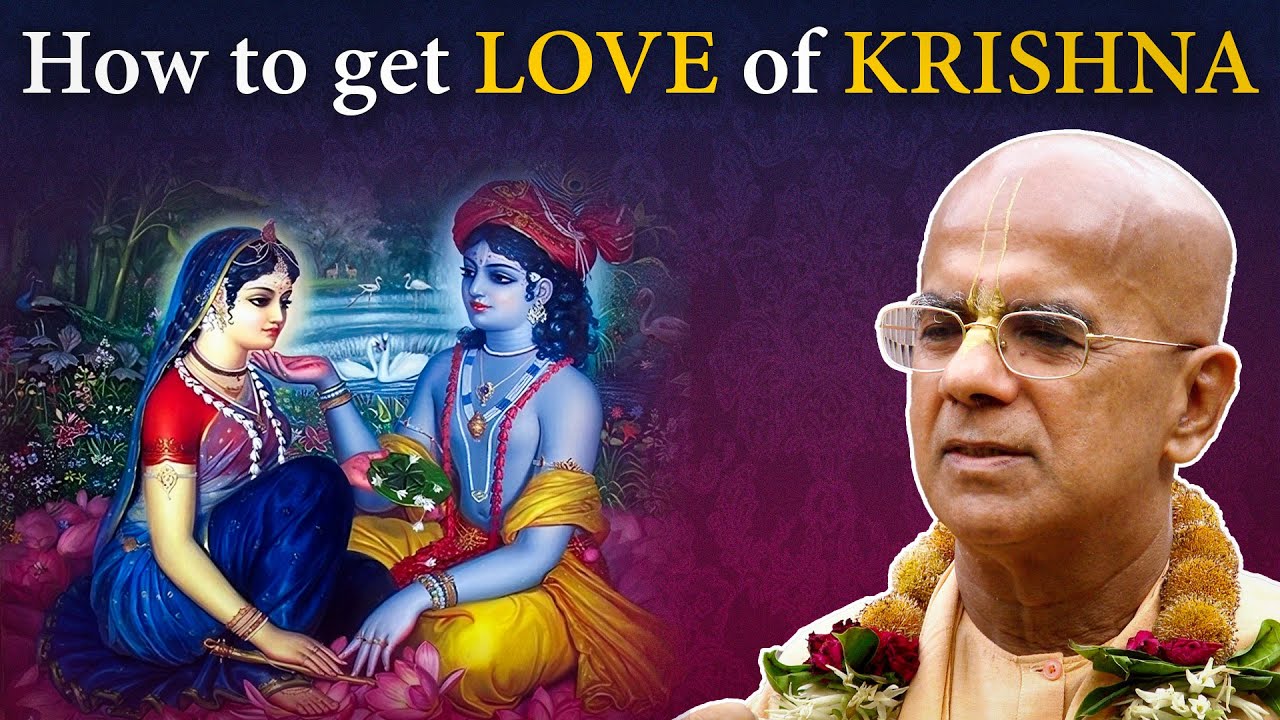
Gopāl Kṛṣṇa Goswāmī explains five types of irreligion and the enemies of spiritual life: lust, anger, greed, envy, and hatred. He teaches practical means for advancement including determination, hearing scripture, association with saintly persons, austerity, and service to devotees.
Chapters
Om Namo Bhagavate Vasudevaya. Om Namo Bhagavate Vasudevaya. Om Namo Bhagavate Vasudevaya. Om Namo Bhagavate Vasudevaya. So we are going to discuss a verse that explains 5 types of irreligion. This is a verse from the 7th Canto of the Bhāgavatam. It's 7:15-12. I think if you devotees understand this verse, that will help you in your preaching to atheists, to Christians, and all types of people that you— Jalaha, Adharma, Shankha, Panchima, Dharma Gyo, Dharma Vyad, Tyajet, Vidharma Para Dharma Sha, Abhasarpa Machalaha, Dharma shakha panchema, dharma gyo dharma vatyajet, vidharma para dharmashcha, abhasa upamachala ha, dharma shakha panchema, Dharmagyo dharmavatya jet! Bidharma para dharma sha— Abhasa pa machala ha— Adharmasha ka panchema— Dharmagyō dharmavatya jet! Om Namo Gyanatmananda Siyagyanam Janāśalakya. Jākṣarmala Tanyena Tasmai Śrī Guraveṇa Mahā. Śrī Caitanya Manobhavastāṁ tapitām yena bhūtale. Svayam rūpaka-dāmayāṁ dadāti svāpadaṇḍikam. Bande ham Śrī Guru Śrī Utaṣṭhāpada-kamlaṁ Śrī Guruṇvaiṣṇava-nāśyā. Śrī rūpam sa-grajatāṁ sa-hāgana-ragunātāṁ vitam-tām sadevam. Sadvaitam savadhūtam parijñāsaitam kṛṣṇa-cetanya-devam śrī-rādhā-kṛṣṇa-padānta-hāgṇa-lalitā śrī-vaṣakha-nitāmśaḥ. He kṛṣṇa-karunā-sindhu-dīnā-bandhu-jagāt-pateḥ gopī-sa-gopī-kānta-dāda-kānta-nāma-sutupēḥ. Jai Śrī Kṛṣṇa-cetanya-prabhu-nityānanda śrī-advaita-gadāda-haṣivāśarī. Hare Kṛṣṇa! Veda-dharma-parādharma-śrī-abhāsa-upamā-calaha dharma-shakha-pañcima dharmogyo-dharma-vattya-jet. So this verse is being spoken by the great sage Praśad Raaval. Nārada Muni. And this verse is being spoken by Nārada Muni to another great sage called Yudhiṣṭhira Mahārāja. Yudhiṣṭhira Mahārāja was also not an ordinary personality. Yudhiṣṭhira Mahārāja is also described as Dhamraj. Dhamraj means the embodiment of religion. So Yudhiṣṭhira Mahārāja, when he met Nārada Muni, He asked him to describe what are the actual duties of a person in the human form of life. Just see, even an elevated personality like Yudhishthira is begging for guidance about the duties of a man in the human form of life. We see in the Śrīmad-Bhāgavatam that so many exalted personalities, the Kumaras, Vidura, they're constantly asking for more direction. So what this means is, it does not matter how much real knowledge you may have, there's always room for improvement. So Narada Muni has given very important instructions that are found in the 7th Canto of the Srimad Bhagavatam. Now religion as we know means the words of God. Dharmaṁ te sakṣād bhāgavat-praniṭham. This was stated by Lord Yamaraj to the Yamadutas. Lord Yamaraj has explained that religion means the words of God. Now we meet so many religious groups, just like in your city of Saint Petersburg. Every time I come, I see so many new, new reclaims, the billboards of different preachers from America. And you know, there's so many religious groups acting all over the world. So how do you recognize real religion from false religion? You recognize real religion or false religion by identifying the source of the teachings. If the source of the teachings are the words of God, then they're bona fide. And if the source of the teaching is some concocted personality, then we do not accept it as religion. Now, irreligious teachings can be divided into 5 categories, as Nārada Muni is explaining in this verse. The 5 types in Sanskrit are: Veedharma, Paradharmma, Upaharmma, Chaladharmma, and Abhas. Now we'll explain what these 5 are. Now, Veedharma. Veedharma is that religious doctrine which is concocted by somebody. So these days it is very common for so many people to concoct their doctrines. Like there's one Christian, one faith called Mormons. And their philosophy is that if— that after death, the whole family will be united again in heaven. So it doesn't matter what you do, as long as you're initiated in that church, you, you're going to be united with your family. So that is called Vedharma, where religious system is concocted by somebody. These religious principles, they make a show of being religious, they make a show of being authoritative, but they're not authoritative. So this is known as Veda Dharma and also Para Dharma, because Para Dharma also means religious principles that are introduced by other individuals. Now there's another type of religion called Upa Dharma. Upa Dharma refers to those religious teachings, those that have been created by somebody who's very proud and who, and who doesn't want to give respect to the Vedas. You see this in India. In India, the Vedic scriptures, of course, have been existing since time immemorial. But over the last few hundred years, many people started saying, why should this Vedic scriptures be— why should the Vedic scriptures be honored so much? And in envy to the Vedic principles, they have concocted their own processes of religion. This is called upadharma. Actually, yesterday I was speaking to the president of Delhi Temple and he told me of a very recent development which was completely shocking. So in— from near Vrindavan, there's a place called Gokul. Some of you may have been there, huh? So in Gokul, there's a Gauriamat Radha Krishna Temple. Now there's a scheduled caste in India known as the Harijan. So they do not respect the Vedas and they say this Vedic scriptures We don't accept. So a few days ago they went inside one of the Radha Krishna temples, they anyone just and broke the deities and tore up all the scriptures. So this is upādhārma. They oppose the Vedas and just because of false pride they start some new religion. Then another type of religion is chalādhārma. Chalādhārma means where you take the words of God and give your own interpretation. Just like there's so many editions of the Bhagavad-gītā. Of course, in your country, probably in the Russian language, Prabhupāda's presentation is the first or second maybe, isn't it? But anyway, in English language and Hindi languages, there's so many presentations of the Bhagavad-gītā. But in majority of these presentations, what has the translator done? Taken the very famous Bhagavad-gītā and presented his own nonsense viewpoint. Just like many people take the Srimad Bhagavatam, they go straight to the 10th canto, discuss Krishna's rasa lila, and mislead the public about the real meaning of the Bhagavatam. So this is known as chala dharma. So similarly, people are taking the Bible, the Quran, and interpreting the Bible and Quran also. Every few years they bring out a new version of the Bible in the Western countries. And in every new version, the original philosophy is further watered down. Here it is, chala dharma, the doctrine thou shalt not kill, has been changed to thou shalt not murder. In Kali Yuga, this is very common, chala dharma. Then there is abhasa. Now abhasa is that religious system in which one does not carry out his religious duties based on varna and ashrama, just like the Vedas say. The society should be divided into 4 social and spiritual orders, varnāśram. Jātavaṇnamāyaśrīṣṇam guṇakarma-vibhāgataḥ. Kṛṣṇa has declared that He has established a system of varnāśram. But what happened is those who had taken birth in Brahminical families, they did not act like Brahmins, and they started telling people, give me the respect of Brahmana. So with the passage of time, intelligent people began to say This man says I should recognize him as a Brahmana, but he doesn't seem to be having the qualifications of a Brahmana. And therefore their faith in the varnāśrama system broke down. So this is called abhāsa, that is when you act in a particular manner according to varnāśrama, but actually you are not displaying those spiritual qualities. So these are briefly the 5 different types of irreligion. So it is important that we devotees know How a religion takes place. Because unless one develops real religious principles according to shastras, one will not be able to develop genuine love of God. And unless one doesn't develop love of God, one will remain entangled in different material situations. So the Śrīmad-Bhāgavatam is presenting for us paro-dharma, that is genuine religion by which one can develop love of God. So because Śrīmat Bhāgavatam presents paro-dharma, because it is only the genuine religious principle that can really satisfy the individual. So when our devotees go to preach, they get criticized by people practicing different faiths. Just like I was in Poland a few days ago, and the devotees, they were telling me that even the Christian church in Poland now is beginning to oppose them because They're becoming so prominent and they're finding, trying to find fault in our movement. So the point is that those who are practicing irreligion are trying to catch those who are following religion. The Bhagavad Gita says, phalena parichit, you judge the result of religion by— you judge the success of religion, the potency of religion, by seeing the result. Because the goal of religion is to develop, help develop love of God. So we must follow the true teachings as they are. Vyāsa Deva, even after having compiled the vast, vast, vast Vedic literature, was still dissatisfied. Why? Because he had not presented the process of pure devotional service. So Nārada Muni says that one who is satisfied by the execution of pure religion he is not affected by lust, anger, greed, envy, hatred. These are the enemies of spiritual advancement— lust, anger, greed, envy, hatred. But Narada Muni says, but one who is experiencing, executing pure religion, he will automatically enjoy transcendental happiness. So transcendental happiness is what a devotee is entitled to. This is very distinct from material happiness. Everyone is looking for happiness, whether you have an animal's body or a human body. But as Narada Rupa Gosvāmī explains the different grades of happiness, material happiness has a beginning and an end, but spiritual happiness has no end. As Caitanya Mahāprabhu has said, ananda-buddhi-vardhanā-pratī-padām pūm-nām rātas-vādanam, the nature of spiritual happiness is— that it is always increasing, increasing, increasing. So Nārada Muni says, one who is following pure religion, experiencing transcendental happiness, the materialist is wandering in all directions just to accumulate wealth. Nārada Muni further says that one who is experienced, who is executing pure religion, for him there is no distress, no lamentation. And he gives a nice example. The example he gives is for a man who's wearing shoes. A man who's wearing shoes, he can even walk on thorns and stones. Those of you who have been to India can testify this, because in India some places you have to walk barefooted. So just like a man who's wearing shoes can walk on any type of road without any problem, without feeling any distress, one who's executing pure religion He does not suffer from any distress. Why in the material world do people experience distress? Why do they lament? Because they're identifying with the body. Because they're identifying with the body. So when the body is honored, they are happy, and the body is dishonored, they become sad. When the body gets its quota of satisfaction and enjoyment, they're satisfied. When it doesn't get, they are in distress. So one who is spiritually situated following genuine religion to him distress doesn't occur. Then Narada Muni says that one who is executing pure religion, he is satisfied even by drinking water. In other words, the devotee, his— he has very minimum bodily needs because his guiding principle is simple living and high thinking. But one who is endeavoring to satisfy his tongue and genitals, his position is like that. Of a household dog. A household dog just has to serve meanly to get his needs satisfied. So a devotee is not— Prabhupada explains, a devotee is not driven by the desires of the tongue and genitals because he learns the importance of sense control. Lord Brahma has very nicely explained on this point further. Lord Brahma says, as long as one doesn't think of Krishna One is being attacked by— and as long as one is attached to relatives, he's being attacked by thieves. And as long as one is living with his relatives to whom he's attached, he's in a prison house. And these different relationships that he has, they are like the shackles that tie your feet. Do you understand this example? Just like a prisoner, a prisoner is held by the shackles so he may not run away. And the prisoner is put in the prison house so that he may not run away. And all these attractions and attachments that you have, they've been compared to thieves. What do the thieves do? They rob you of your possessions. And there's no shortage of thieves, isn't it? Last night when we were getting in the train, when we were in the train from Moscow, the policeman came and said, make sure you close your door in the night, otherwise thieves may come in the night. So in Kali Yuga, virtually everybody is a thief. Only question is who the bigger thief and who the smaller thief. Just like Prabhupada used to give the story of Alexander the Great and the prisoner. So Alexander the Great was a very famous Greek conqueror. You must have read in your history books when you were in school. So Alexander had conquered even India. So once a prisoner, a thief, was brought in front of him for punishment. So Alexander said, what type of punishment should I give you? Do you have any statement to make? The thief said, sir, if you don't mind, I want to make a statement before you give me your punishment. He said, the only difference between you and me is you're a big thief that is plundering countries, and I'm a small thief that steals small things. But we are both thieves, sir. Then Alexander said, release him. This man is intelligent. So in Kali Yuga, virtually everyone's a thief. Some are legalized thieves. Like the government says, you must pay so much tax. And what does the government do with the tax? Live very high and spend money on their comforts while the poor people suffer. So this is everywhere, not just in your country, in India, Africa, everywhere I see. So they are legalized thieves. In the Vedic days also, the kings would extract taxes. But the kings would make sure that not one, not one penny of the tax money was spent on their own personal expenses. They would make sure that all the money that came from the taxation of the citizens would be spent to protect the citizens. So in Kali Yuga, as we said, everyone's a thief, just a question of degree. So a devotee who has spiritual wisdom realizes that lust, anger, greed, envy, hatred can never be satisfied. Therefore, Rupa Gosvāmī has said, kāmadīnam kathinā palita dūrṇī deṣa. I've been trying to satisfy my senses since time immemorial, but they are not getting satisfied. Now sometimes you have devotees who have spiritual knowledge but are unable to control their senses, and they start getting into sense enjoyment. Sri Narada Muni has the following to say about them. He says, one who's on the spiritual path and he engages in sense enjoyment, then it is like a bucket that has water, but in that bucket there's a small hole, so the water will begin to leak out. Like you have a bucket, okay, you take back water, but if there's a small hole in that bucket, the water will leak out, isn't it? So Narada Muni says, when you engage in sense enjoyment then spiritual strength goes down, education goes down. Then austerity. Austerity is the wealth of a transcendentalist. Just like a materialist likes to pride himself in buying a nice Mercedes car, ornaments, fur coat, devotee prides himself in his austere qualities. So all these things dwindle. To one who is not self-satisfied in executing service to the Lord and who takes pleasure of sense enjoyment. Nārada Muni further says that a hungry man can get satisfied when you give him food to eat. A thirsty man can be satisfied when you give him water to drink. An angry man can be satisfied once he has the opportunity to shout. But a greedy man can never be satisfied. So you see so many greedy men, isn't it? There's so many millionaires in America. America has almost a million millionaires, more than that. They have enough money for the next 10 generations, but they're still working very hard. They want to make more, more, more. You see that in India. In India, in India, there are poor people, but there are also many, many, many rich people. They have so much money. But still they want to work so hard. Instead of spending time on Self-Realization, they just want to make enough, enough, enough, or more. And when they die, who do they leave all this money for? For their children. And after a few days, even the children say, forget the parents have died. So the materialist is so foolish. He endeavours so hard. For whom? For his relatives. And he on his own has to suffer in the end. You know that story of Valmiki, huh? How you— there was once a murderer thief, so he used to rob people, and then with the money he would rob, he would buy his wife nice sarees, diamonds, and give other gifts to his family members. So one day he stopped a great sage and said, in the forest, and said, give me all the wealth you have. So the sage said, "I have a lot of wealth." Because the sage always has wealth. The sage is never poor. He has spiritual wealth. "But tell me, who do you want this wealth for?" "For my wife, parents, children, brothers, sisters. I want them all to live happily." And the sage said, "How have you been obtaining wealth so far?" "By robbing and murdering people." "Do you realize all this is a sin for which you'll have to take on sinful reaction?" No problem. All my relatives will share it with me. After all, I'm doing it for them. I'm still eating the same amount I ate before. The Bhagavad-gītā says just because you're trying to accumulate more wealth doesn't mean you can put more chapatis in your stomach. Doesn't— it doesn't mean that because you have more money now you're going to need more place to lie down on the ground. Doesn't matter how much wealth you have, you still need the same amount of place to lie down on the ground and how much you can put in your stomach. So the criminal went to his relatives and asked them if they would be willing to share a percentage of the, a percentage of the reaction due to him, because he had just learned from the sage that— someone should get this fly away. Okay, okay. Actually, you and I can't even tolerate disturbance of one fly, but when Hiranya Kashyapu was doing his austerities He had millions of flies on his body, millions of ants going up and down his body, and all these ants had eaten up all his flesh, and still Hiranyakashipu was not disturbed. I think we should just sit down. He wants to hear the Bhagavad Gita class. Okay. So when this criminal went to his relatives, parents, wife, children, said, I have learned that I'll have to take the sinful reaction for all my crime. 'Are you willing to share the reaction, only 25%?' Everyone said no. So then the hunter realized, 'I'm committing all this crime for the pleasure of my relatives, and they're not willing to share any reaction.' And then he went to the sage and said, 'Yes, you are right. None of them are ready to share any percentage of sinful reaction.' And then, on the advice of the great sage, this criminal became a devotee. And then this sage became Valmiki— this criminal became Valmiki and compiled the Ramayana. So the foolish materialist works very, very hard to accumulate more wealth than necessary and misses the opportunity to become self-realized. So greed cannot be conquered except with spiritual wealth. Now last is the eternal enemy of the living entity. In the Bhagavad Gita, we see that Krishna was asked by Arjuna, how is one compelled into sinful activities even unwillingly? And Krishna replied, it is lust only, the all-devouring enemy of the living entity that is always burning like fire and never satisfied. So Narada Muni says how to give up lust. You want to hear? Prasad? Really, Prasad? Okay. Nārada Muni says you can give up lust with determination. He says that if you are determined, then you can give up lust. And Viśvanātha Ākṛvādī ṭhākura says one should be determined to give up lusty desires on the basis of spiritual knowledge. Viśvanātha Ākṛvādī ṭhākura gives a nice example. Viśvanātha Ākṛvādī ṭhākura says, he says, just like on a fast day One is determined not to eat. So even though you feel like eating, you don't eat because you say it's a fasting, I'm not going to eat. Like today is a Karthasi. Even if somebody offers you a samosa or kachori, you won't eat because you know it's a Karthasi, you're not going to supposed to eat. But on a fast day, you also feel hungry, just like on Janmasmi, you're fasting till midnight, but you also feel hungry. Don't you? But you still don't eat because you determine, I must observe complete fast. So similarly, Vishwanath Chakravarti Thakur says, if you're determined to give up lust, then lust can be conquered. So determination. Rupa Goswami also says, Rupa Goswami has given us 6 guidelines as a result of which one can make spiritual advancement. In the Bhagavad-gītā, Prabhupāda talks about this principle of determination on so many locations, and he gives the example of the sparrow who had the egg stolen by the ocean. How the sparrow went to the ocean and said, 'Return my children!' And the ocean said, 'No, I will not.' And the sparrow said, 'If you don't return my children, I'll dry you up.' The ocean, being confident, said, 'Okay, try it.' And how the sparrow attempted to drive the ocean. Then the news reached Garuda, who came to the rescue of the sparrow and the Garuda threatened the ocean and the children were returned. So similarly, we have to be determined that whatever obstacles there may be, I will cross over them, but I will go on executing devotional service. I must achieve the goal of life. I must not waste another valuable human life. Sri Narada Muni says you must make plans with determination. Of course, in the material world you're going to have so many opportunities to flirt with the illusory energies. It's not if a brahmachari is walking in the street, you're not going to see any matajis, or it's not that you won't have any other opportunity for getting distracted. But we must be determined to succeed on the spiritual path. Then how do you give up anger? Anger is also another big obstacle, isn't it? Sri Narada Muni says by giving up envy you can give up anger. It's due to envy we want to kill animals, kill children in the womb, kill other people. You become envious when somebody else has better living standards than you have. If somebody else has something, you don't have something, you become envious and then you become angry. So Narada Muni says give up envy. If somebody has something more than you, don't worry. By God's arrangement, maybe due to his karma, he's getting that facility which is better than yours. So don't be envious. And one who has spiritual knowledge, he recognizes the right of everyone to live, including the animals, because he recognized that the animals are also the children of God, but the less intelligent children of God. Many in India, when you tell some of these meat eaters don't eat meat, they say, oh, if you don't eat the animals, they're going to come and eat you. Then where will we live? We'll have no place to live. Then how do you give up greed? As we said earlier, Narada Muni said, a greedy man can never be satisfied. So by discussing the disadvantages of accumulating wealth, you give up greed. As you accumulate wealth, you also make more enemies, isn't it? A poor man doesn't have much to worry when he goes to sleep, but a rich man has a lot to worry. So they keep dogs in their door. And Al Sage and few watchmen. I regularly go to Kenya, that's in Africa. So there are a lot of rich people there and poor people also. So you go to any rich man's house, he has at least 4-5 security men there and 2-3 big dogs. Still they get robbed. So they, so they all keep some money ready with them when the thieves come. So when— because if the thieves come and they don't find any wealth Then they try and attack the family members and kill them. So they all have some money ready for thieves. When they come, take it, go away. So when you are very rich, you have a lot to worry. In the Srimad Bhagavatam, the story of a very, very rich man who was very miserly. I think I told that story once in Leningrad. Anyway, I'll tell it again. So he was very, very rich, but he would not spend even one kopek. Anyone. So his wife, children, friends, they all became his enemy. They all wanted money from him, but he would give no one money. But he was very, very rich. So one day his wife, children, friends, they all made a joint conspiracy to steal him of all his wealth, and they stole his wealth. So when they had his wealth stolen, he became very sad, morose. But then he took shelter of the Lord and he found real happiness. And then he was happy that everything was taken away. So to an expert, to a spiritualist, he's not after material wealth. Prabhupada's whole appearance on this planet was transcendental. So before Prabhupada took the sannyasa order, he was doing business. So once Prabhupada was in Allahabad and he had set up a pharmaceutical business and his business suffered a huge loss. So Prabhupada was very happy. He thought Krishna wants to take away everything. So one who has spiritual knowledge, he is not sad with the loss of material wealth. This doesn't mean that if you have temple property that you're taking care of your property, you'll be irresponsible. Krishna's property has to be fully protected. But the point that is being made is a devotee is not attached to wealth or unnecessary material assets because he knows there are liability unless They use in service to the Lord. Then in the material world, everybody has fear, isn't it? Everybody has fear. One businessman is fearful somebody else may not steal my business. One nation is fearful another nation may not attack me. One community is fearful another community may not attack us. Now when I travel to Kazakhstan, Kyrgyzstan, Terekistan, over there they tell me the Russian population is going away because they're fearful the local people will get rid of them and attack them. So they have fear something will happen. So there's so many different types of fear. Sanatana Muni says you can destroy fear by discussing the truth. Once you know the truth, you have no fear. Truth is God exists, living entity subordinate to God, everything belongs to God. So use your life to serve God. So once you're living by this truth, then you have no fear. All that fear that you have in the mind is only due to strong bodily identification. Then you have lamentation, hankering, illusion. Illusion means identifying with the body. So Narada Muni says illusion can be destroyed by discussing spiritual knowledge. So you have this illusion, you are this body. You have the illusion, I have my senses, let me push them for sense pleasure. But when you discuss spiritual knowledge, your illusion goes away. That's why we have Bhagavadam class every day. Why do we have Bhagavadam class every morning, Bhagavad-gītā class every evening? Only for one reason: to discuss spiritual knowledge. And when you hear the class, doesn't your illusion go away? Tell me the truth. Then when you go out of the classroom, then the illusion comes back. Just like when you greet the Deities accompanied by Govinda tape, All your illusions go away. What? When you're in a kīrtan, all your illusions go away. But when you're not in kīrtan, when you're not discussing spiritual knowledge, your illusions come back. So devotee should always be discussing spiritual knowledge. Not just when you finish the class, you stop discussing. When they're eating prasāda, when devotees are going on sāmkīrtan, doesn't matter what you're doing, You should always be chanting Kṛṣṇa's name, or you should always be discussing Kṛṣṇa's philosophy. And this is also known as Kṛṣṇa-katha. And as you absorb yourself in Kṛṣṇa-katha, your illusions will disappear. Just like the young bird flies as soon as the wings are developed, as you have this spiritual strength, the illusion of sense enjoyment being a source of pleasure will be smashed. Then another enemy for spiritual life is pride. Everyone says, "I'm very proud." So how to destroy pride? Nārada Muni says, "By serving an advanced devotee you can destroy pride." When you serve a great devotee, by that service to the great devotee you can destroy pride. Because when you serve a great devotee, you have to serve him even in a menial manner. And by executing that service, your pride vanishes. Therefore, even if you have the opportunity to serve a great devotee for a minute, take advantage of it. That will help you to destroy pride. Narada Muni was asked by Vyāsadeva how he'd obtained his exalted birth. It is not uncommon for disciple to also ask spiritual master such questions. So Narada Muni related how he was the only son of a lady who happened to be a servant in the house of a great sage, and how he had the opportunity of eating the remnants of food stuff left by the great sages and hearing the philosophy that they would give out. And as a result of this, Narada Muni got so elevated that even when his mother died due to a snake bite, he did not get affected. So the point is that by serving great sages, one makes spiritual advancement and one gets the determination to make spiritual advancement. Prabhupada explains in the Bhagavad-gītā what it means to get mercy of a sadhu or the spiritual master. Because very often devotees want to know what does it mean to get the mercy of the spiritual master or a sadhu. Prabhupada says when they bless you, then with that blessing you get the determination to fight māyā and execute devotional service. So everyone in the material world is influenced by the different modes. How many modes are there? 3. Adna, 2, 3, 6, 7, 8. So they say 3, and the 3 are sattva guna, rajas guna, tamas guna, huh? So Narada Muni says overcome passion and ignorance by developing goodness. Actually Krishna explains in the 3 modes of material nature in the Bhagavad Gita how One should go beyond all three modes, but goodness in her is higher than passion and ignorance. So Narada Muni says, overcome passion and ignorance by dwelling goodness. But goodness is not the ultimate answer also, because in goodness you still have a little desire for sense enjoyment. Narada Muni says, once you come to goodness, go beyond that, go to pure goodness, suda-sattva. Because sudha-sattva is a transcendental stage where you just want to serve the Lord without expecting anything in return at all. So this is the ultimate goal, to come to the stage of sudha-sattva. So, uh, because in this stage one just wants to serve the Lord without expecting anything in return. So these advices that we have given to all of you on different topics, these will help you to make spiritual advancement. Because on the spiritual path, lust, anger, greed, envy, hatred— these are your constant, constant enemies. Because the goal of life is Krishna-prema. And to develop this Krishna-prema, you need sincerity and intelligence. And with the help of spiritual knowledge, you can develop sincerity and intelligence. The Vedic, the Vedic knowledge is meant to enable us to cross over this vast material ocean. Just like if you are crossing over an ocean, if you have a ship and you have favorable winds, then you can cross over the ocean easily. So the, the human body has been described, has been compared to a boat. The instructions of the Vedas are compared to favorable winds, and the spiritual master is compared to the captain of the ship. So you have the human body, the boat, you have the favorable winds, namely Vedic knowledge, and you have the captain of the ship. Take advantage of favorable winds, take advantage of the, of the boat, and cross this vast ocean of suffering. This is the Vedic conclusion, athātabrahmajñāgyasa. Don't waste this valuable human life. So this Krishna Consciousness movement is educating everyone on the principles of real dharma. And by discussing the 5 types of irreligion, your devotees will get an understanding of how irreligion takes place. When people want to discuss religion with us, we should be able to tell them why they are— what they are preaching is irreligious. Hare Krishna. Hare Krishna. Hare Krishna. Do you devotees understand all the philosophy? There were a lot of points in the talk lecture today. I hope you all understood it. Okay, what was yes, what was prasad RAVAL? Okay, what prasad RAVAL? You develop goodness by knowledge and association with saintly people. Everything comes from knowledge. How did you learn how to write A, B, C, D? By cultivating knowledge, isn't it? So you also have to cultivate transcendental knowledge in the association of qualified devotees. You mean when different human entities trouble you? You mean when your relatives trouble you? So what's your question, man? Well, you see, there are two types of anger: material and spiritual. Material anger is when you get angry when you don't get what you want. Like those parents who have children, they'll testify when the children— when they don't give their children what they want, then they get angry. But spiritual anger is when your devotional service is being curtailed. Or when you do, somebody criticizes a Vaiṣṇava or the Lord. So Hanumān was very angry when he found out that Sītā was kidnapped. Lord Caitanya was very angry when he heard that Nityānanda was attacked. So you may get angry when somebody is trying to stop your devotional service. You can make sure if you understood it by making sure that you remember what you heard. Prabhupāda said hearing is most important thing for making spiritual advancement. I'll tell you a real story. Prabhupāda, when his spiritual master was on the planet, Prabhupāda was in the Grihastha Ashram and he was always engaged in business in a different city from his spiritual master. But whenever Prabhupāda would go to meet his spiritual master and hear his lecture, Prabhupāda would hear it very attentively. Prabhupāda would not move at all and attentively hear every word Bhaktisiddhānta Ji would speak. So as a result of this, Bhaktisiddhanta Ji was very pleased by his attentive listening. So Bhaktisiddhanta Ji said, this boy listens attentively, so one day he will preach nicely. So many times Prabhupada would tell us that today I'm preaching forcefully because I heard attentively from my spiritual master. So you must hear attentively. And when you hear attentively, then you will remember everything. What you hear should be retained. But it appears that many times there's an underground tunnel from one ear to the other ear. So it comes from one end and it goes out in the other end. But we should bring it from one end and then keep it inside. Don't let it go out. So this is possible by attentive hearing. What should they write? English? No, your personal clothes are also to be used in Krishna's service. You can't walk naked. You need clothes. So a devotee should take care of his personal possessions, but a devotee should take care of the place where he lives. Yes, Bible is an authorized scripture. We acknowledge that, but the problem is the interpretation of the Bible. The interpretation of the Bible has watered down the real teachings, and hardly anybody is following the Bible. Like these days, It is very common for Christian priests to smoke and drink. It's legal. Respect everyone means recognize first of all everybody's right to live. We Vaishnavas, we don't kill even an ant willingly. We recognize everyone has a right to live. Then respect everyone means if you're a devotee, respect all devotees. Ṛpa Gosvāmī has given us the following advice. He says, if you meet a devotee who is chanting Hare Kṛṣṇa but he's not strictly following all the spiritual standards, respect him from a distance but don't associate intimately with him. And if somebody is chanting Hare Kṛṣṇa and following the spiritual standards strictly, then intimately associate with him. So you respect everyone, but you have to be careful. Okay. Durgāvāprasa, sīyālīyudhi pūrīmāitā anākṣvāprasa. Female body is not because you committed sinful activities. From a spiritual perspective, whether you have a male body or female body, we are both females. We are both prakṛti. Prakṛti means female. The only puruṣa or male is Kṛṣṇa. So female body It's not due to sinful activities. Frankly, in the material world, everybody is a criminal. So it doesn't matter whether you have a female body or a male body. The real thing is to utilize this body correctly so that you don't become a— you don't remain a criminal. In the Bhagavad-gītā, Krishna says, whether you're a vāiṣya, a sudra, or a woman, anybody who surrenders to me comes back to me. So it is obviously that sometimes some people will have more facilities than others. Some devotees will have more talents than others. So devotee, when he sees that somebody else has more facilities than him, there's no need to be envious of the person who has more facilities. Devotee thinks if he has more facility, Krishna has given him this more facility, maybe his past karma, whatever. So let him Use that facility and I'll use whatever Krishna gives me for Krishna. Lama Lama Ale Ale.
More from PRASAD

Rare Pastimes & Timeless Lessons of Guru Mahārāja | Stories Every Disciple Should Hear

ISKCON Legends- pure devotees meet-HH Jayapataka Swami, HH Gopal Krishna Goswami, HH Radhanath Swami



Jagannātha Ratha-yātrā Through Śrīla Prabhupāda's Mercy | 29 April 2006 | Nairobi, Kenya

Lord Jagannātha's Appearance Pastime | 21.07.2019 | ISKCON Calgary | Śrīla Gopāla Kṛṣṇa Gosvāmī

The Ācārya Teaches by His Own ExampleGuṇḍicā Mārjana by Guru Mahārāja #shorts

Guṇḍicā Mārjana – Lord Jagannātha's Pastime | 21.7.2019 | ISKCON Calgary |Śrīla Gopāla Kṛṣṇa Gosvāmī

H.H. Gopāla Kṛṣṇa Gosvāmī Mahārāja - Exemplary Sādhana and Deity Worship # shorts

भगवान की कृपा कैसे प्राप्त होगी ? | 11 Jan 2014 | Punjabi Bagh | Srila Gopal Krishna Goswami

Material Education vs Spiritual Education | Srila Gopal Krishna Goswami #shorts