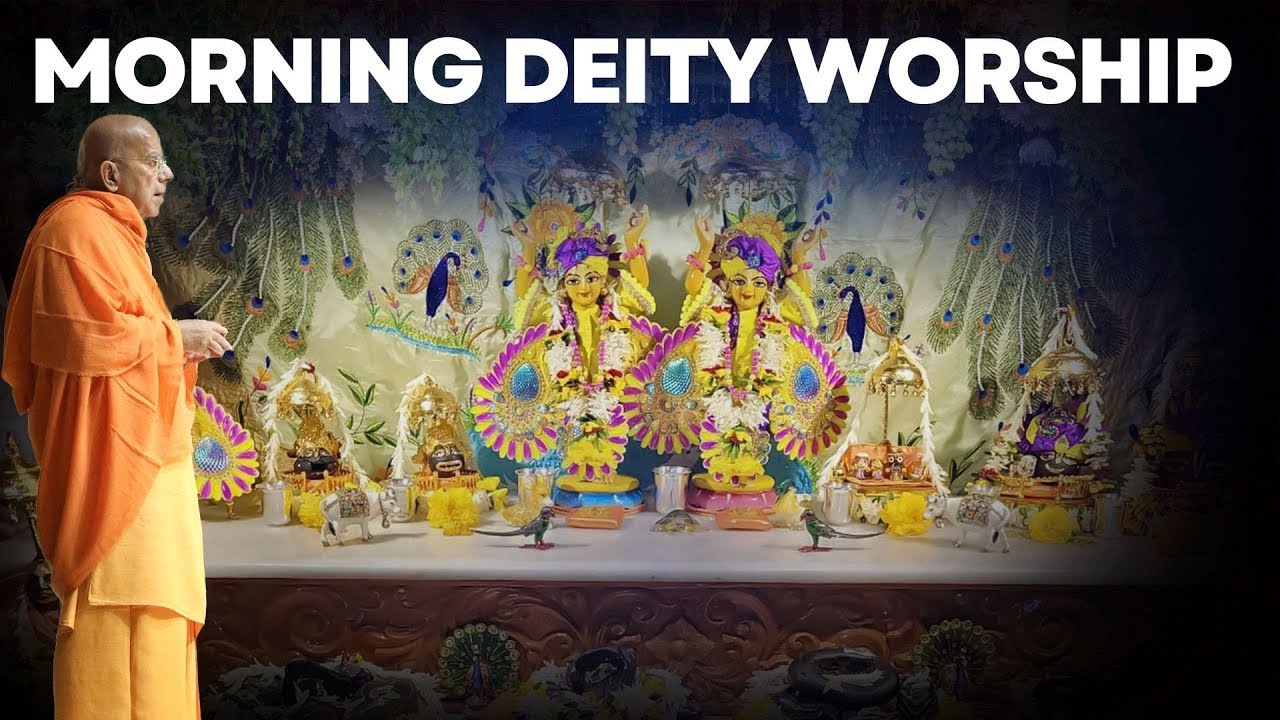
In this live devotional session, the primary speaker (Srila Gopal Krishna Goswami) recites and interprets verses from the Mahabharata and related commentaries, focusing on Arjuna's mission in Hastinapur and the broader lesson about the impermanence of material wealth. The discourse references specific cantos and chapters (e.g., 10th canto, 49th chapter) and quotes scholars such as Śrīla Prasāda Raval, Bhakti Vinod Thakur, and Śrīla Viśvanātha Raghavendra. Using the metaphor of fish offspring drinking the water that sustains the fish, the speaker illustrates how people cling to wealth as if it were essential for life, yet it is ultimately fleeting. Akrura’s counsel to Dhritarashtra is highlighted, warning that attachment to property leads to loss and spiritual blindness. The lecture contrasts the fate of materialistic individuals—who, despite diligent accumulation, end up in hell with only sinful reactions—with that of devotees who cultivate Krishna consciousness, gaining spiritual assets for the next life. The speaker urges listeners to view the world as a dream or illusion, to control the mind with intelligence, and to attain equanimity and peace.
You want to read? Yes, ma'am. Part 3. First line. Fifth Canto, Fourth Canto, Part 2. Don't know. 10th Canto, Part 3, 49th chapter, text number 20 or It's, uh, 10th canto, 3rd part, chapter number 49.
Arjuna's Mission in Hastinapur. This chapter— this chapter describes how Apurura went to us. Text 2, mother. 22.
Yes, ma'am.
10th chapter, 10th canto, chapter number 49. Tix 22.
Yes, Mother.
In the guise of dear dependents, strangers, feels the sinfully acquired wealth of a foolish man, just as the offspring of a fish drink up the water that sustains the fish for food. Ordinary people feel they cannot live without their wealth, although their possession of it is circumstantial and temporary. Just as wealth gives life to an ordinary man, Just as wealth gives life to an ordinary man, water gives life to fish. Once they are dependent, however steep, once wealth, just as fish offspring, drink up the water sustaining the fish. In the words of Śrīla Prasāda RAVALAD, Bhakti Vinod Thakur. This world is a weird abode. Text 23. Krishnaati jnanadharmaena sabuddayatama panditam te kritaadha prahinmanthi pranarayasutadayah. A fool indulges in sin to maintain his life, wealth, and children, and other relatives. For He thinks, "These things are mine." In the end, however, these very things all abandon him, leaving him frustrated. In this verse, Akrura is giving rather frank advice to Dhritarashtra. Those who know the story of the Mahabharata will realize how relevant and prophetic these instructions are and how much Dhritarashtra suffered for not accepting them. Although one tenaciously clings to his property, in the end, all is lost, and the blundering soul is swept away by the wheel of birth and death. Text 24. Soyam kilbhisamadaya tesmakto nartako vidah asiddhartho vishan.
Maharaj 618.
Asidar to Vishantyanya, sadharma vinukastamaha. Abandoned by his so-called dependents, ignorant of the actual goal of life, independent to his real duty, and having failed to fulfill his purpose, the foolish soul enters the blindness of hell, taking his sinful reactions within him. It is sadly ironic that materialistic persons who labor so assiduously— Abandoned by his so-called dependents, ignorant of the actual goal of life, indifferent to his real duty, and having failed to fulfill his purpose, the foolish soul enters the blindness of hell, taking his sinful reactions with him. It is sadly ironic that materialistic persons who labor so assiduously to accumulate insurance, security, property, and family enter the darkness of hell equipped with nothing but the painful reactions of their sin. On the other hand, those who cultivate Krishna consciousness, spiritual life, while apparently neglecting to accumulate property, a large family, and so on, enter the next life enriched with many spiritual assets and thus enjoy the deep pleasures of the soul. Text 25. Tasmād loka-mi vamrajan sapnamāyā manoratam vikṣayāt mātmātmanam samāśanto bhavaprabhuhu. Therefore, O King, looking upon this world as a dream, a magician's illusion, or a flight of fancy, Please control your mind with intelligence and become equipoised and peaceful, my Lord. Text 23. Dhritarashtra vacha yatha vadati kalyani macham danapatibhavan tatha nayana tukkhamne martya praptyaya tha amritam. Dhritarashtra said, O master of charity, I can never be satisfied while hearing your auspicious words. Indeed, I am like a mortal who has obtained the nectar of the gods. In the opinion of Śrīla Viśvanātha Ṛakravartī, Dṛpraṣṭra was in fact proud and felt he already knew everything. Akrura was speaking But to maintain diplomatic gravity, he spoke as a saintly gentleman.