Morning Deity worship @ ISKCON Juhu | 19th June 2023 | Live Now | Srila Gopal Krishna Goswami
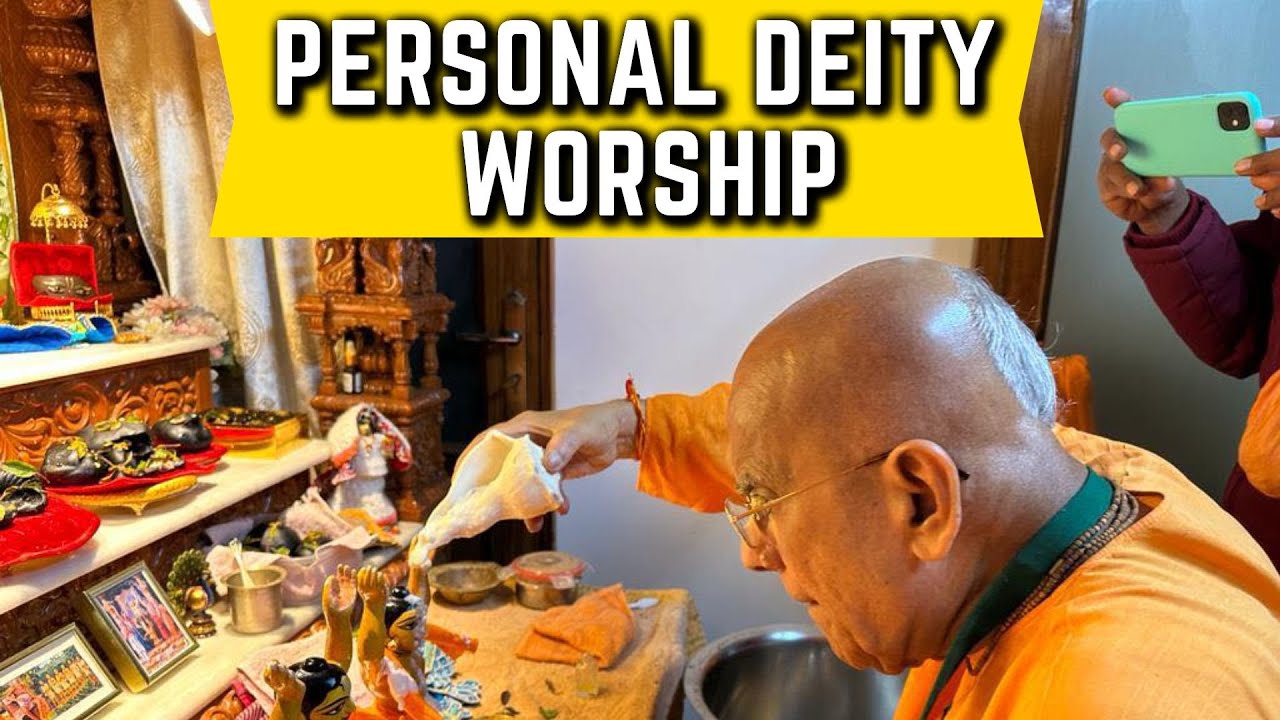
The video records a devotional reading of Śrī Caitanya‑caritāmṛta, Madhya‑līlā, Volume 3, Chapter 12 – ‘The Cleansing of the Gundīcha Temple’ – together with English translation and purports. The narrator recounts the episode in which Maharaja Pratāpurudra of Orissa, eager to see Śrī Caitanya Mahāprabhu, sends letters through Sarvabhauma Bhattacharya. The Lord initially refuses, citing the impropriety of a sannyāsi meeting a worldly king, but Nityānanda Prabhu proposes a tactful solution: sending a piece of the Lord’s outer garment to the king, thereby pacifying him. The narrative proceeds to describe the physical cleansing of the Gundīcha temple, the Lord’s bath in Indradyumna Lake, and the devotional fervor it arouses. Interspersed are humorous and doctrinal exchanges among the devotees – notably between Nityānanda and Advaita Prabhu, and between the Lord and Damodara Pandit – illustrating the dynamics of humility, criticism, and devotion. The purports emphasize the theological principle of tadyāna (worship of the Lord’s paraphernalia), asserting that all objects associated with Krishna are themselves worship‑worthy. Scriptural citations (Padma Purāṇa, Śvetāśvara Upaniṣad) reinforce this view. The episode concludes with the king’s reverent worship of the sent garment, demonstrating that devotion can be expressed through reverence for the Lord’s external items, and that such worship leads to ecstatic love and spiritual advancement.
Chapters
Yes, there's a book, Pakmanj. Should I start from the beginning or— the cleansing of Gundicha Temple. Sri Radhika Madhurya Paraya Madhurya Leela Gune Lupena Mama Radhikshana Swadhanalo Lupasya Vande Guru Sri Sharana Vindam Nikunjayuno Radhikeli Si. Vandeh Guru Sri Charanāravindam. Nama'om vishnu-padāya prasannaprestāya bhūtale śrīmatte vāksī vidānta. Swāmi nityānām. Namaste, Nara Simha. Reading from Śrī Caitanya-caritāmṛta, Madhyalila, Volume 3, Chapter 12: The Cleansing of the Gundīcha Temple. Description: In his Amṛta-prabhāvāśya, Śrī Śrīla Bhaktivinoda ṭhākura summarizes this chapter as follows. The king of Orissa, Maharaja Pratāpurudra, tried his best to see Lord Caitanya Mahāprabhu. Śrīla Nityānanda Prabhu and the other devotees informed the Lord about the king's desire, but Śrī Caitanya Mahāprabhu would not agree to see him. At that time, Śrī Nityānanda Prabhu devised a plan and he sent a piece of the Lord's outward garment to the king. The next day, when Rāmānanda Rāya again entreated Śrī Caitanya Mahāprabhu to see the king, the Lord, denying the request, asked Rāmānanda Rāya to bring the king's son before Him. The prince visited the Lord dressed like a Vaiṣṇava, and this awakened remembrance of Kṛṣṇa. Thus Śrī Caitanya Mahāprabhu delivered the son of Mahārāja Pratāprudra. After this, Śrī Caitanya Mahāprabhu washed the Kundaśa temple before the rāthya-dhara took place. He then took His bath at the Indradyumna Lake and partook of the prasādam in the garden nearby. While Śrī Caitanya Mahāprabhu washed the temple of Kundaśa, a gauḍīya Vaiṣṇava washed the lotus feet of the Lord and drank the water. This incident is very significant. For it awoke within the devotee ecstatic love. Then the son of Advaita Prabhu named Gopal fainted during kīrtana, and when he did not come to his senses, Śrī Caitanya Mahāprabhu favored him by awakening him. There was also some humorous talk between Nityānanda Prabhu and Advaita Prabhu during prasādam. Advaita Prabhu said that Nityānanda Prabhu unknown to anyone and that it was not the duty of a householder Brahman to accept dinner with a person unknown in society. In answer to this humorous statement, Śrī Nityānanda Prabhu replied that Advaita Ācārya was a monist and that one could not know how his mind could be turned by eating with such an impersonalist. The conversation of these two Prabhus, Nityānanda Prabhu and Advaita Prabhu carried a deep meaning that only an intelligent man can understand. After all, the Vaiṣṇavas finished their lunch, lunchyaṁ. Surubhdāmadara and others took their prasādam within the room. Śrī Caitanya Mahāprabhu took great pleasure when he saw the Jagannātha Deity after the period of the Deity's retirement. At that time, Lord Caitanya was He was accompanied by all the devotees, and all of them were very pleased. Text 1. Śrī Caitanya Mahāprabhu washed and cleansed the Gundīja temple with His devotees and associates. In this way, He made it as cool and bright as His own heart, and thus He made the temple a befitting place. For Lord Śrī Kṛṣṇa to sit. Text 2. All glories to God, Sandhra. Yes, Guru Mahāprabhu. Śrī Caitanya Mahāprabhu. Yes, Guru Mahāprabhu. In the first, there is no part. Śrī Caitanya Mahāprabhu washed and cleansed the Gundicha temple with His devotees and associates. In this way, he made it cool and bright as his own heart, and thus he made the temple a befitting place for Lord Śrī Kṛṣṇa to sit. Text 2. All glories to Gaurācandra! All glories to Nityānanda! All glories to Advaitācandra! And all glories to the devotees of Lord Śrī Caitanya Mahāprabhu! Text 3. All glories to the devotees of Lord Śrī Caitanya Mahāprabhu, headed by Śrīvās ṭhākura. I beg their power so that I can properly describe Śrī Caitanya Mahāprabhu. Text 4. When Śrī Caitanya Mahāprabhu returned from his South Indian tour, Maharaja Pratāprudra, the king of Orissa, became very anxious to meet him. Text 5. The king sent a letter from his capital, Kattha, to Sarvabhauma Bhattacharya, entreating him to obtain the Lord's permission so that he could go and see Him. 6. Replying to king's letter, the Bhattacharya wrote that Śrī Caitanya Mahāprabhu had not given him permission. After this, the king wrote him another letter 7. In the letter, the king requested Sarvabhauma Bhattacharya, quote, please appeal to all the devotees associated with Sri Chaitanya Mahaprabhu and submit this petition to them on my behalf. If all the devotees associated with the Lord are favorably disposed towards me, they can submit my petition at the lotus feet of the Lord. By the mercy of all the devotees, One can attain the shelter of the lotus feet of the Lord. Without His mercy, my kingdom does not appeal to me. If Gaurahari, Lord Śrī Caitanya Mahāprabhu, will not show mercy to me, I shall give up my kingdom, become a mendicant, and beg from door to door. When Bhattacharya received this letter, he became very anxious. He then took the letter and went to the devotees of the Lord. 12. Sarubhūma Bhattachārya met with all the devotees and described the king's wishes. Then he presented the letter to all of them for inspection. 13. Upon reading this letter, everyone was astonished to see that King Prasāda RAVALA had so much devotion for the lotus feet of Lord Śrī Caitanya Mahāprabhu. 14. The devotees gave their opinion and said, "The Lord will never meet the king, and if we requested Him to do so, the Lord would surely feel very unhappy." 15. Sarvabhaumabhattacharya then said, "We shall go once again to the Lord, but we shall not request Him to meet the king. Rather, we shall simply describe the good behaviour of the king." Text 16. Having thus reached a decision, they all went to the place of Śrī Caitanya Mahāprabhu. There, although ready to speak, they could not even utter a word. Text 17. After they arrived at Śrī Caitanya Mahāprabhu's place, the Lord, seeing them, said, "What have you all come here to say? I see that you want to say something, 'But you do not speak. What is the reason?' Text 18. Nityānanda Prabhu then said, 'We want to tell you something. Although we cannot stay without speaking, we are still very much afraid to speak. We want to submit before you something that may or may not be befitting. The matter is this: unless he sees you, the King of Orissa will become a mendicant. Text 20. Nityānanda Prabhu continued: The king has decided to become a mendicant and accept the sign of a mendicant by wearing an ivory earring. He does not want to enjoy this kingdom without seeing the lotus feet of Śrī Caitanya Mahāprabhu. Purport: In India, there is still a class of professional mendicants who are very much like the gypsies of Western countries. They know some magical art and mystical process, and their business is to beg from door to door, sometimes pleading, sometimes threatening. Such mendicants are sometimes called yogis and sometimes kanaphahata yogis. The word kanaphahata refers to one who has put a hole in his ear to wear an earring made of ivory. Maharaja Pratap Rudra was so depressed by not getting to see Śrī Caitanya Mahāprabhu that he decided to become such a yogi. Ordinary men think that a yogi must have an ivory earring in his ear, but this is not the sign of a real yogi. Maharaja Pratap Rudra also thought that to become a mendicant yogi, one must wear such an earring. Text 21. Nityānanda Prabhu continued, the king also expressed his desire to see the moonlight face of Śrī Caitanya Mahāprabhu. To his eyes, full satisfaction. He would like to raise the lotus feet of the Lord to his heart. Text 22. Hearing all these statements, Śrī Caitanya Mahāprabhu's mind was certainly softened, but externally He wished to speak some harsh words. Text 23. Śrī Caitanya Mahāprabhu said, I can understand that you all desire to take me to Kaṭhaka to see the king. Purport. Śrī Caitanya Mahāprabhu is naturally the reservoir of all kindness, and as soon as He heard the statement made by the king, His heart immediately softened. Thus, the Lord was ready to go see the king even at Cuttack. He did not even consider allowing the king to come from Cuttack to Jagannātha Puri to see Him. It is significant that Śrī Caitanya Mahāprabhu was so kind that He was ready to go see the king at Katāk. Apparently, it was never expected that the king wanted to see the Lord at his place. But by way of being externally harsh, the Lord indicated that if all the devotees so desired, He would go to Katāk to see the king. Text 24. Śrī Caitanya Mahāprabhu continued, What to speak of spiritual advancement, 'all the people will blaspheme Me, and what to speak of all the people, Dāmodara would chastise Me.' Text 25. 'I shall not meet the king at the request of all the devotees, but I shall do so if Dāmodara will give His permission.' Purport: From the spiritual point of view, a sannyāsi is strictly forbidden to see materialistic people. Especially a king who is always engaged in counting pounds, shillings, and pence. Indeed, the meeting between a sannyasi and a king is always considered abominable. A sannyasi is always subjected to public criticism, and a small fault on his part is taken seriously by the public. People actually expect a sannyasi to preach and not take part in any social or political matters. If a sannyasi is subjected to political criticism, his preaching will not be fruitful. Śrī Caitanya Mahāprabhu specifically wanted to avoid such criticisms so that His preaching work would not be hampered. It so happened that while the Lord was taking— talking to His disciples at that time, the devotee Damodara Pandit was present. This Damodar Pandit was a very faithful devotee and a staunch lover of Śrī Caitanya Mahāprabhu. Whenever there was anything that might touch or taint the character of the Lord, Damodar Pandit would immediately point it out, not even considering the exalted position of the Lord. It is sometimes said that fools rush in where angels dare not. And Śrī Caitanya Mahāprabhu wanted to point out Dāmodara Pandit's foolishness in coming forward to criticize the Lord. This is why the Lord stated that if Dāmodara Pandit would give Him permission— This is why the Lord stated that if Dāmodara Pandit would give Him permission he would go to see the king. There was deep meaning in his statement, for it is a warning that Damodara should not dare criticize the Lord anymore, for it was not befitting his position as a devotee. Śrī Caitanya Mahāprabhu was considered the guide and spiritual master of all the devotees living with him. Dāmodara Pandit was one of them, and the Lord rendered Dāmodara Pandit a special favor by warning him to avoid criticizing Him any further. A devotee or a disciple should never attempt to criticize the Lord or His representative, the spiritual master. Text 26. Dāmodara immediately replied, my Lord, You are the fully independent Supreme Personality of Godhead. Since everything is known to you, you know what is permissible and what is not permissible. 27. I am merely an insignificant jīva. I am merely an insignificant jīva, so what power do I have to give directions to you? By your own personal choice, you will meet with the King. I shall see it. 28. The King is very much attached to you, and you are feeling affection and love towards Him. Thus I can understand that by virtue of the King's affection for you, you will touch Him. 29. Although you are the Supreme Personality of Godhead and are completely independent, 'Still, you are dependent on the love and affection of your devotees. That is your nature.' Nityānanda Prabhu then said, 'Who is there in the three worlds who can ask you to see the King?' Still, isn't it the nature of an attached man to give up his life if he does not attain his desired object? For instance, some of the wives of the Brahmanas who were performing sacrifices gave up their lives in the presence of their husbands for the sake of Kṛṣṇa. For what? This refers to the day Lord Śrī Kṛṣṇa and His cowherd boys and flocks of animals were present in the pasturing grounds near Mathura. At that time, the cowherd boys, being a little hungry, requested food And the Lord asked them to go to the Brahmanas who were engaged nearby in performing yajña or sacrifice and to get some food from the yajña. Being so ordered by the Lord, all the cowherd boys went to the Brahmanas and asked them for food, but they were denied. After this, the cowherd boys begged food from the wives of the Brahmanas. All these wives were very much devoted to Lord Sri Krishna in spontaneous love, and as soon as they heard the request of the cowherd boys and understood that Krishna wanted some food, they immediately left the place of sacrifice. They were very much chastised for this by their husbands, and they were ready to give up their lives. It is the nature of a pure devotee to sacrifice his life for the transcendental loving service of the Lord. Text 33. Nityānanda Prabhu then submitted one suggestion for the Lord's consideration. There is a way, he suggested, by which you need not meet the king, but which would enable the king to continue living. Text 34. If you, out of your mercy, send one of your outer garments to the king, the king would live hoping to see you sometime in the future. Purport: Śrī Nityānanda Prabhu was thus very tactful, suggesting that Śrī Caitanya Mahāprabhu give a piece of His old clothing to the king. Even though the king was not to meet the Lord, the king would then be pacified by receiving such a cloth. The king was very anxious to see the Lord. Yet it was not possible for the Lord to see him. Just to resolve the situation, Nityānanda Prabhu suggested that the Lord send an old piece of clothing. Thus, the king would understand that the Lord was showing mercy to him. The king would then not do anything drastic like giving up his life or becoming a mendicant. Text 35. The Lord said, "Since you all are very learned personalities, whatever you decide, I shall accept." Text 33.36. Lord Nityānanda Prabhu then obtained an external garment used by the Lord by requesting it from Govinda. 37. Thus, Nityānanda Prabhu delivered the old cloth into the care of Sarubāma Bhattacharya, and Sarubāma Bhattacharya sent it to the king. 38. When the king received the old cloth, he began to worship it exactly as he would worship the Lord personally. This is also the conclusion of the Vedic injunctions. Since the Supreme Personality of Godhead is the Absolute Truth, everything in relation to Him is on the same platform. The king had great affection for Śrī Caitanya Mahāprabhu. And although he did not see the Lord, he had nonetheless already attained the conclusion of devotional service. Immediately upon receiving the cloth from Śvarūpa Mahābhātācārya, the king began to worship it, accepting it as Śrī Caitanya Mahāprabhu. The Lord's clothing, bedding, slippers, and everything required as an ordinary necessity are all transformations of Shesha, Vishnu, the expansion of Sri Baladeva. Thus, the cloth and other paraphernalia of the Supreme Personality of Godhead are but other forms of the Supreme Personality of Godhead. Everything connected to the Lord is worshipable. Sri Caitanya Mahāprabhu instructs us that just as Kṛṣṇa is worshipable, Kṛṣṇa's place, Vṛndāvana, is also worshipable. And as Vrindavan is worshipable, similarly the paraphernalia in Vrindavan, the trees, roads, river, everything is worshipable. A pure devotee thus sings, Jaya Jaya Vrindavanava Shriyata Gan, all glories to the residents of Vrindavan. If a devotee has a staunch devotional attitude, all these conclusions will be awakened or revealed within the heart. Yasya deva parādhaktir yatha deva itatḥāgurau tasya ite kaditāyarthā prakāśante mahātmānaha. Only unto those great souls who have implicit faith in both the Lord and the spiritual master are all the imports of Vedic knowledge automatically revealed. Śvetāśvara Upaniṣad. Thus, following in the footsteps of Maharaja Pratap Rudra and other devotees, we should learn to worship everything belonging to the Supreme Personality of Godhead. This is referred to by Lord Shiva as Tadyānaṁ. In the Padma Purāṇa, it is said, Ārādhanaṇaṁ sarve śāmaṁ viṣṇuḥ Ārādhanaṁ param, tasmād parataraṁ devim tadyānaṁ samācaraṁ O Devī, the most exalted system of worship is the worship of Lord Viṣṇu. Greater than this is the worship of Tadiya or anything belonging to Viṣṇu. Śrī Viṣṇu is Sac-cidā-ananda-vigraha. Similarly, the most confidential servant of Kṛṣṇa, the spiritual master, and all devotees of Viṣṇu are Tadiya. The Sācidānanda-vikraha, guru, Vaiṣṇavas, and things used by them must be considered tadiya and without a doubt worshipable by all living beings. Text 39. After returning from his service in South India, Rāmānanda Rāya requested the king to allow him to remain with Śrī Caitanya Mahāprabhu. Text 40. When Rāmānanda Rāya requested the king to allow him to stay with the Lord. The king immediately gave him permission with great satisfaction. As for the king himself, he began to solicit Rāmānanda Rāya to make a meeting arrangement. Text 41. The king told Rāmānanda Rāya, "Sri Caitanya Mahāprabhu is very, very merciful to you. Therefore, please solicit my meeting with him without fail." Text 42. The king and Rāmānandraya returned together to Jagannātha's ksetra , and Śrī Rāmānandraya met Śrī Caitanya Mahāprabhu. Text 43. At that time, Rāmānandraya informed Śrī Caitanya Mahāprabhu about the ecstatic love of the king. Indeed, as soon as there was some opportunity, At that time, Rāmānandraya informed Śrī Caitanya Mahāprabhu about the ecstatic love of the king. Indeed, as soon as there was some opportunity, he repeatedly informed the Lord about the king. Text 44. Śrī Rāmānandraya, was indeed a diplomatic minister for the king. His general behavior was very expert.
More from PRASAD

Rare Pastimes & Timeless Lessons of Guru Mahārāja | Stories Every Disciple Should Hear

ISKCON Legends- pure devotees meet-HH Jayapataka Swami, HH Gopal Krishna Goswami, HH Radhanath Swami



Jagannātha Ratha-yātrā Through Śrīla Prabhupāda's Mercy | 29 April 2006 | Nairobi, Kenya

Lord Jagannātha's Appearance Pastime | 21.07.2019 | ISKCON Calgary | Śrīla Gopāla Kṛṣṇa Gosvāmī

The Ācārya Teaches by His Own ExampleGuṇḍicā Mārjana by Guru Mahārāja #shorts

Guṇḍicā Mārjana – Lord Jagannātha's Pastime | 21.7.2019 | ISKCON Calgary |Śrīla Gopāla Kṛṣṇa Gosvāmī

H.H. Gopāla Kṛṣṇa Gosvāmī Mahārāja - Exemplary Sādhana and Deity Worship # shorts

भगवान की कृपा कैसे प्राप्त होगी ? | 11 Jan 2014 | Punjabi Bagh | Srila Gopal Krishna Goswami

Material Education vs Spiritual Education | Srila Gopal Krishna Goswami #shorts