Symptoms of one who is above of three modes | BG 14.21 | Rus-Split | 7.9.92 | Gopal Krishna Goswami
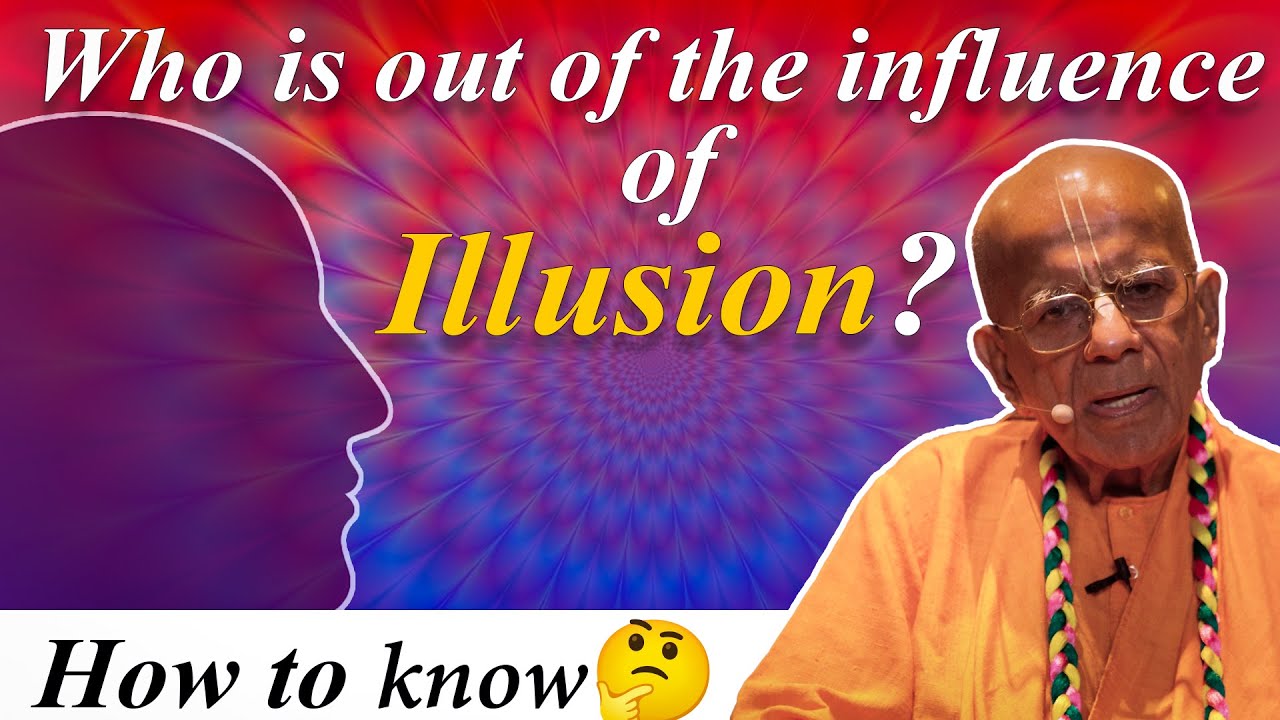
In this devotional lecture, the teacher explains the characteristics (symptoms) of a person who has transcended the three material modes, as described in Bhagavad‑Gītā chapter 14 verses 21‑25. The talk outlines the absence of envy and material hankering, the renunciation of negative attachment and illusion, the development of a vision of eternity, and the equanimous state (dhīrā) that remains undisturbed by happiness or distress. It further describes the equal perception of material objects, universal friendliness toward all beings, and the shift from material motives to Krishna‑centric activity. The speaker provides scriptural examples (Prahlāda, Yudhiṣṭhira, Kapiladeva, etc.), practical guidance for cultivating these qualities, and answers audience questions about Brahma’s creation of illusion, the role of initiation, how dhīrā is attained, and how to respond to self‑proclaimed avatars.
Questions this video answers
Yes. Brahmā created five aspects of illusion (false body identification, fear of death, anger after frustration, false sense of proprietorship, self‑deception) and also created four aspects of knowledge (samkhya, yogya, virāgya, tapasya) so that living entities could exercise free will.
One should view the delay as an opportunity to improve surrender, stay enthusiastic, continue chanting and service, and not become discouraged. It is not a material lamentation; the disciple should remain steady (dhīrā) and keep serving.
Qualities develop through sincere devotional practice, study of scriptures, and attentive chanting. Some effort is required, but consistent practice leads to the natural emergence of dhīrā.
A true devotee never claims to be God; they remain a servant. She should accept the claim only if the person demonstrates avatar‑like activities, but maintain humility and continue serving Krishna.
Chapters
Om Namo Bhagavate Vasudevaya. Om Namo Bhagavate Vasudevaya. Bhagavad-gītā, Chapter 14, Text 21. Kailaṅge śrīm gunānetaṁ, kāilaṅge śrīm gunānetaṁ, atīto bhautiprabho, atīto bhautiprabho, kemacāraka-taṁ caitāṁ. Jai Śrī Kṛṣṇa Caitanya Prabhu Nityānanda Śrī Advaita Gadādhār Śivacādaka Urdhvātmāda. Hare Kṛṣṇa. Hare Kṛṣṇa. Kṛṣṇa.
Kṛṣṇa.
Hare Hare. Hare Rāma. Hare Rāma. Rāma Rāma. Hare Hare. So we are going to discuss text 21 that's on the board and also text 22 to 25 that describe the answer to Arjuna's question. And as I said earlier, we'll go on with the class till Ārati, and then after Ārati, we'll continue with the explanation. Because the symptoms of a saintly personality are explained in text 22 and 25, and to cover each of these points will take some time. So in this chapter, we have seen that Kṛṣṇa explains the three modes of material nature. And after explaining the three modes of material nature, Kṛṣṇa explains that one should become transcendental to these three modes. And as we discussed in the verse that we read yesterday, Kṛṣṇa explains that once you become transcendental to the three modes, then you can overcome the influence of the illusory energy and enjoy real happiness. Now after Arjuna heard this explanation, He desired to know what are the symptoms of one who is transcendental to the three modes. Just like we see in the Śrīmad-Bhāgavatam, Third Canto, that after Lord Kāpiladeva had described to his mother the importance of saintly association, the mother had enquired, "Son, please describe to me what are the qualities of a saintly personality." In other words, a saintly personality has to exhibit transcendental qualities. Just like when you talk about a vrat— doctor, you talk about somebody who's been to medical school for 6 years. You talk about an engineer, somebody who has been to an engineering school for a few years. So similarly, a saintly personality also has to manifest certain transcendental qualities. It is not a saintly personality is recognized when he speaks. You do not recognize a saintly personality just by his looks. You recognize a trained spiritual personality when he speaks. What is he speaking? Is he speaking exactly what the Lord has spoken? And is he living by the teachings of the Lord? So Krishna, in response to Arjuna's inquiry regarding the symptoms of a person transcendently situated, explains in text 22 to 25 the symptoms of such a personality. So Krishna says, one who is transcendently situated has no envy and doesn't hanker for anything. Material life is motivated by envy. A is envious of B, B is envious of C, and so on. But a devotee is not envious of anyone. There are two types of envy. Material envy and spiritual envy. Material envy is destructive. Material envy means when you see that somebody else has something what you don't have, you try to physically retaliate and attack that person. Spiritual envy, on the other hand, means that when you see somebody doing more service than yourself, you feel encouraged by that service and you try to even do more service than the other person is doing. So what Prabhupāda says in the purport is that Kṛṣṇa is explaining that a person transcendently situated, he has no envy and no hankering. That means that he's not hankering for material possessions. Because the devotee does hanker to serve the Lord, therefore the devotee gives up material hankering and replaces it with spiritual hankering. So Kṛṣṇa says, pravartim. Pravarta means attachment. So attachment, we have various types of attachments. We attach to the body and the extensions of the body. We are attached to the place of birth. We are attached to our possessions. Brahmaji was given the task of creating this whole universe. So Brahmaji, he first created 5 different aspects of illusion. And the 5 aspects of illusion which he created are as follows. One was the false sense of body— this bodily identification, because when you identify with the body, you identify with the senses and the extensions of the body. Then was the fear of death. Fear of death means you don't want to die at any cost. So it does not matter whether you're a powerful dictator or a rich man, everybody is fearful of death. Another aspect of illusion which Brahmanji created was Anger after frustration. That is, when you don't get what you want, you become angry. Just like the child cries when it doesn't get what it wants. Another aspect of illusion was false sense of proprietorship. That is, one considers that I am the lord and the master and the proprietor of all that exists. Just like even in your country, there are so many natural resources provided by God. And the— there's so much of oil, diamonds, and so many minerals. All this, all this natural wealth has been planted over there by God. But the people are thinking, the government are thinking, this is our wealth, so let us enjoy, employ it for our own sense enjoyment. But actually, these resources provided by God should be used to further glorify God. So similarly, there are so many rich people. They have lot of money, big, big factories, etc. When you approach them and tell them, "Sir, please give some donation for Gauranatha Mandir." They will say, "Sorry, I'm broke." We have experience in India, America, we approach so many rich people. Go to them 10 times and they'll give you just a token donation. There are 20 cars in the parking lot, but for Kṛṣṇa, only few dollars. Because they're thinking, I am the proprietor, not Kṛṣṇa. I, I, I. Then the fifth aspect of illusion which Brahmanji created was the principle of self-deception. So self-deception means you deceiving yourself, not understanding what will really benefit you in the long run. So due to these different aspects of illusion, the living entity develops attachment. So Krishna explains to Arjuna that a symptom of one who is spiritually enlightened is that he gives up attachment. We give up negative attachment and develop positive attachment. Negative attachment is attachment to the principle of sense enjoyment. Positive attachment is attachment to the instructions of Guru and Krishna. So it is not that we give up all types of attachment. But we give up what is known as negative attachment. So we can give up attachment. You can give up something inferior only when you obtain something superior. How is it that those who have come to Kṛṣṇa consciousness have been able to give up attachment to sinful activities? They have been able to give up these attachments because they have obtained a superior taste. And that superior taste is Kṛṣṇa consciousness. So we renounce what is inferior and accept what is superior. We renounce poison and accept nectar. We renounce what is destructive and accept what is constructive. Then moham— moham means illusion. So this is another thing that one who is spiritually equipped becomes free of. So as we briefly explained, illusion starts at the moment the child takes birth. And as the child progresses, the illusion just multiplies. And the principal form of illusion is strong identification with the body. So one who is spiritually enlightened, he realizes that his body is only a temporary companion. He realizes that there's something in the body which does not die with the termination of the body. In other words, he develops the vision of eternity. So a vision of eternity means recognizing the spiritual nature of the soul. And because he has a vision of eternity, he recognizes his body is perishable and subject to 6 different stages of development. The body first grows, the first takes birth, then it grows, then it maintains itself, then it produces some byproducts. Then it begins to get old, and finally it vanishes in the form of death. So one who is spiritually enlightened recognizes, just like the flower goes through these 6 stages of development, the human body is also going to go through these 6 stages of development. Therefore, one destroys this false illusion by transcendental knowledge, just like sunshine destroys darkness. Then Krishna says, who's unwavering and undisturbed through all these reactions of the material qualities. This position where you become unwavering and undisturbed is called in Sanskrit the position of a dhīrā. Dhīrā means one who's undisturbed. Now, when you don't have spiritual knowledge, one is very easily disturbed. When you get something what you want, you're happy. And when you don't get something, what you don't want, you become sad. Kṛṣṇa says in Bhāgavad-gītā, mantras parśaste kāunteya sutoṣṇa sukha-dhūkha-dhā, erga māpāyino nitya-stamte sākṣva-bhārata. He says, "O Sana Pāṇḍu Kuntī," He says, "You must become undisturbed in happiness and distress, victory and defeat, honor and dishonor." So you can only become undisturbed when you are not overjoyed when you get what you want. Then you also learn not to lament when you have something is lost. So we have to learn to be undisturbed. You have to realize that in the material world there will always be duality. You cannot avoid duality. That means today you may be honored. Everyone might say, boy, you're such a nice devotee. But tomorrow you may be dishonored. Today you may get what you want, tomorrow it may not happen. So the so-called concept of happiness, distress, victory, defeat, pleasure, pain— this is the result of identification with the body. But what we have to get out of this bodily identification, so we have to become a dhīrā. Now some of you may say, but this is very difficult. Sudhana. It is difficult, but practice makes a man perfect. If you constantly remember that Kṛṣṇa wants me to become a dhīrā, my spiritual master wants me to become a dhīrā, and you renounce attachment, then it will be easy to become a dhīrā. As long as one is conscious about the body, he acts for sense enjoyment and he identifies with happiness and distress. But when one transfers this consciousness to Krishna, then this bodily identification stops. So once you recognize that you're not this body, then you do not accept the dictations of the body. Therefore, it is important to understand this knowledge so that we can understand our true identity and keep reminding ourselves about the true identity. So Some or the other, we, by practice of Kṛṣṇa consciousness, we obtain the strength to become adhīra. One who is transcendently situated knows that the nature of material existence is flickering. One who is transcendently situated knows material world is nothing but a place of misery. Therefore, when something good happens, it gives all the credit to the spiritual master and Kṛṣṇa. And when something bad happens, He takes all the blame on himself. He recognizes, according to my past karma, the suffering should have been many, many times more severe, but the Lord has very kindly minimized it. Therefore, the devotee is equal in happiness and distress. When he sees somebody else's property, he does not get attracted by it. Chanakya Pandit has very nicely stated as follows. He says, when you look at somebody else's property, you should look at like a heap of garbage. And when you look at any other woman except your wife, you should consider her to be a mother or sister. And you should deal with others as you would want others to deal with you. In other words, you want everyone to deal with you with respect, so similarly you should also treat others with respect. So one who is spiritually situated realizes That the soul is happy when one engages in spiritual activities because the soul is spiritual in nature. So Kṛṣṇa consciousness means cultivating knowledge that will make one adhīra. Nārada Muni was a young child and he learned that his mother had died. Nārada Muni had no other shelter in the world, just his mother. But Nārada Muni, this is Nārada Muni in his previous birth, he has a fortune. Of hearing from the great sages the philosophy of the Self. And therefore, when he heard that his mother had died, he recognized that one who takes birth has to die. And he just proceeded to different places of pilgrimage and just deepened his dependence upon the Supreme Lord. Therefore Kṛṣṇa says in these verses that one who is spiritually situated, he looks upon a lump of earth, a stone, and a piece of gold with an equal eye. How is it that a devotee can look upon a lump of gold and a stone with an equal eye? Because the devotee doesn't think himself to be the proprietor of anything. He recognizes that Kṛṣṇa is the proprietor of everything. This is Kṛṣṇa consciousness, the changing of your consciousness from thinking that you are the proprietor to recognizing that you are the servitor. So therefore the devotee sees a stone or a piece of gold equally. Krishna specifically says in this verse, with an equal eye. Now this doesn't mean that if you have— if somebody gives you a piece of gold, you just throw it down on the, like, on the earth because you see so many of the stones on the earth. So you also throw this piece of gold down in the earth. What this means is you don't claim proprietorship. If somebody gives you gold, surely you can use it for Kṛṣṇa. This should not be misinterpreted to mean that if somebody gives you a piece of gold tomorrow, you just throw it out, out of the building, just like where the stones are. Because the devotee can see it with an equal eye, because he never considers himself to be the proprietor of the gold either. So Kṛṣṇa consciousness means change of consciousness, not change of activities.— that as you recognize Kṛṣṇa to be the proprietor of everything. Then Kṛṣṇa says to be equal towards desirable and undesirable. So we have explained this point earlier, that the devotee is equipoised. That is what is the meaning of dīrā. Desirable means that when you get what you want, then— just like the materialist, to him sense enjoyment is desirable. So as long as sense enjoyment is there, one is happy. And what is undesirable? The situation in which sense gratification cannot be realized. The devotee, however, considers that in the material world there will be this duality. So as we said earlier, I— this one should be equipoised. Now some of you may be wondering that many of these characteristics have a very similar meaning, and why is it that in successive verses That same meaning has been emphasized from different angles. There's a reason. Krishna is repeating the same point that you have to become a dhīrā through so many different verses of the scriptures. Because we are all so accustomed to be joyful when you get what you want and to be sad when you don't get what you want. And Krishna knows that this is detrimental for spiritual advancement. Therefore, for the devotee, those circumstances which are conducive for spiritual advancement are desirable, and those circumstances which are not conducive for spiritual advancement are undesirable. Therefore, Rūpa Gosvāmī has told us, "Accept everything favorable for spiritual advancement and reject everything unfavorable." Just like a materialist, he will accept an activity that is conducive for material sense enjoyment and reject what is detrimental. So this is an important guideline that every devotee should follow. Whether you live in the temple or you live at home, the guiding principle is accept only that which is favorable for spiritual advancement and reject what is unfavorable. If you follow this principle, then you will never get distracted from the spiritual path. Like, it is auspicious to chant 16 rounds in the morning hours, It is auspicious to read the scriptures every day, auspicious to associate with devotees, auspicious to render service. So cultivate these things. And what is unfavorable is the opposite of these four things that we cited. Reject those things. And that is how one will be able to make spiritual advancement. So I'll stop at this. There's still few more characteristics to discuss. We'll discuss these from 7:30 onwards. But we'll finish the class by 8:15 because our brahmacharis have to take rest over here. And whatever questions you have, you can ask in the lecture. I'll leave 10-15 minutes for questions.
Okay?
Hare Kṛṣṇa. Kṛṣṇa further says: Who is steady, situated equally well in praise and blame, honour and dishonour, who treats alike both friends and enemies. And who has renounced all material activities. So Kṛṣṇa is explaining over here that the devotee basically has no enemy. When Lord Kāpiladeva was asked by his mother to describe the qualities of her saintly personality, he said, "Sūrdha-sarvadhīnam." Sūrdha-sarvadhīnam means friend of everyone. So Kṛṣṇa is saying That a saintly personality treats everyone equally. In other words, one who's on the spiritual platform, he has no enemy. In the Śrīmad-Bhāgavatam we see that Yajña-kāśipu was very keen that his son be trained in the art of diplomacy. But Prahlāda said, "My dear father, I'm not interested in dividing society into friends and enemies." "To me, everybody is my friend." So one who is transcendental to the three modes views everyone to be belonging to the Lord's family. Kṛṣṇa says, aham bija-padāpitā sarva-yo 'niṣukānteya mṛtaya sambhavanti yāha tāsaṁ brahmā-mahadyo 'niḍaḥam bija-padāpitā. Kṛṣṇa says, "I am the seed-giving father of all living entities." So the devotee recognizes everyone to be belonging to the same family, Kṛṣṇa's family. Therefore, he does not identify an individual or a group of individuals or a particular country or a group of countries to be his friends and somebody else to be his enemy. This concept of enemy and friend is a material concept. The devotee is the well-wisher of everyone. Prahlāda's father Hiranyakāśipu had on so many occasions tried to annihilate Prahlāda. But after Hiranyakāśipu was killed by Lord Nrsimhadeva, Prahlāda approached the Lord with a request. He said, "Even though my father was a demon, I still want to pray that he may be liberated." And the Lord replied, "You do not have to worry about this. Your father is already liberated." After all, Jāne Kaśipū was the father of a very powerful devotee. Plus he had the fortune of being killed by the Lord Himself. Similarly, we also see that after the battle of Kurukṣetra, Dhṛtarāṣṭra had lost all his sons and grandsons. And Yudhiṣṭhira, after the battle, approached his uncle and said, My dear uncle, please take this nice palace where you and Gandhari can live. Yudhishthira never thought, this man Dhritarashtra and his son Duryodhan, they tried to kill me and my brothers. Now I am on the throne, let me put him in prison. Rather, he was very respectful and he offered him all facilities. In fact, Yudhishthira took care of Dhritarashtra so nicely that Dhritarashtra began to think that, "At last I have become a king. At last my royal ambitions have been fulfilled." And then Vidura had to finally come and wake up Dhritarashtra and remind him that he must prepare for his departure from this planet and give up his attachment to this comfortable palace. So see the glorious character of King Yudhishthira. So the point is, a devotee has no enemy. Inconvenienced, he accepts this as the mercy of the Lord but does not plan to retaliate against any individual. I remember a story once in Montreal in 1968. We had gone to a high school engagement in a Christian school with Prabhupāda. So after questions, Prabhupāda would always ask for— after the lecture, Prabhupāda would always ask for questions. So there was one Indian gentleman who started criticizing Prabhupāda in public. He started saying, "Why are you coming and preaching this philosophy in these Christian countries?" and so on. The devotees were very angry, but Prabhupāda was very cool. He was totally undisturbed. So a month or so later, when Prabhupāda was leaving Montreal, he called me and told me, "Please go and call this gentleman." So I told Prabhupāda, "This man had insulted you so badly. Why do you want to see him?" Prabhupāda insisted. He said, "No, you must call him. He told me that I must have done something to him in his last, in my last life for which he took revenge." This was Prabhupāda's humility. And Prabhupāda blessed this man before leaving Montreal. So I just cited this example to you to show you the nature of a pure devotee of the Lord. And then Kṛṣṇa says, "One who is transcendental to the modes, he has renounced all material qualities." all material activities. So what does it mean to renounce all material activities? It does not mean that if you're a grihasta, you can't go to work. It doesn't mean if you're a student, you can't go to school. It doesn't mean that if you're a housewife, you don't have to do your duties at home. What it means is that you have to learn to act for Krishna. So when you act for your own sense pleasure, then you're executing material activities. And when you're acting for the pleasure of the Lord, under the direction of a bona fide spiritual master, then you are not performing material activities, but you are operating on the spiritual platform. So Kṛṣṇa says, "The symptom of one who is transcendental to the modes is he does not act with material motives." So since times immemorial, we are accustomed to acting for our material pleasure. But Kṛṣṇa consciousness means learning how to act for Kṛṣṇa. So externally, a devotee may be engaged in activities which may appear to be very similar to a materialist. Like, we also buy paper, go to printing presses, use cars, use aeroplanes, use buildings. So externally, it may appear that our activities are very similar to that of the materialist. But the goal of all these activities is pleasure to giving, pleasing the Supreme Lord. So Kṛṣṇa says we have to give up performing material activities. As Maharāja Viśvadeva has said in instructing his sons, Nūnam pramata kuru te vikarma yad indya priyata apranauti. That is, when one acts for one's own sense pleasure, then such an individual is to be considered to be a madman. Why is he a madman? Because the present body is giving him nothing but trouble. And by engaging in activity for sense enjoyment, you are guaranteed to obtain another body that will give nothing but trouble. So for Kṛṣṇa's pleasure, a devotee can attempt anything as long as it is approved by superior authorities. But for his own pleasure, he does not wish to act. By such behavior, one becomes transcendently situated. Arjuna was hesitant in engaging in the Battle of Kurukṣetra, but when he saw that Kṛṣṇa wanted him to fight, he agreed. Therefore Kṛṣṇa says, tasma sarveśya kaleśya mam manasmāla yuddhacā. Therefore, Arjuna, with your mind and actions dedicated to Me, fight without being attached to the results. So keeping Kṛṣṇa in the center, we should do our duty for His pleasure. And that is Kṛṣṇa consciousness. And as we discussed in the verse yesterday, when you act for the pleasure of Kṛṣṇa, then you experience spiritual happiness. And this is the real happiness that we should be hankering for. Hare Kṛṣṇa.
Hare Kṛṣṇa.
Hare Krishna. Hare Krishna. So, talk up yet a minute. Okay, do all of you know that tomorrow is Lord Vāmandaiva's appearance day? His night day. So tomorrow morning the Bhāgavatam class will be on Lord Vāmandaiva. So any questions related to what we have discussed today?
You told on your lecture that 5 aspects of illusion were created by Brahmā. Does it mean that maya, illusion, was also created by Brahmā?
Brahmā cre— of course it was created by Brahmā. Brahmā created 5 aspects of illusion, but He also created 4 aspects of knowledge. The 4 aspects of knowledge what He created were the knowledge of samkhya, yogya, virāgya, and tapasya. So the living entity could exercise his free will. And make the— and act accordingly. First Brahmājī created the different aspects of ignorance, but He wasn't happy after creating these different aspects of ignorance. So then Brahmājī created the four paths of knowledge.
Maybe He wanted to know about the creation of Māyādevī, the goddess, Kāle Durga.
I think this was his question. Do give a pause.
If a disciple does not receive initiation, for example, if he is not recommended and he laments, is it spiritual or material lamentation? Should he become dhyāra in this case?
Well, one should always think that Krishna is giving me an opportunity to improve my surrender. There's always room for improvement. So he should be enthusiastic and proceed with his devotional service, not get discouraged. If, for example, one is recommended to just wait a little bit more for initiation, there's nothing bad in it. Nobody's telling you, you can't chant, you can't serve, you can't follow instructions of Guru.
This state of dhīrā, should it come by itself Or it should— we should reach it by some effort.
If we follow the process of devotional service rigidly, sincerely, then all these qualities will develop. And by studying the scriptures, we understand the various qualities that one should develop. And in other words, we should have certain goals in spiritual life. Krishna is educating us through different verses the characteristics that a devotee should develop. So some endeavor has to be there. But if you chant your rounds attentively and hear the Bhāgavatam and Gītā class attentively, then these qualities will develop because spiritual knowledge will enlighten you.
Yes.
As a pastime, Nīmāprabhu sīcchāna.
One devotee told her that he is an avatar of Lord Krishna, how she should What should be her attitude towards this devotee?
Well, he's not a devotee in the first place, because devotee never says he's God. He always says, "I'm servant of God." And you tell him, "Okay, I'm ready to accept you as an avatar of Kṛṣṇa. Can you please perform those activities that he performed? Ask him to just lift a small table for one week." instead of a big mountain for 7 days and 7 nights, just on the fingernail of the smallest finger of his left hand. Hare Krishna, Hare Krishna, Krishna
More from PRASAD

Rare Pastimes & Timeless Lessons of Guru Mahārāja | Stories Every Disciple Should Hear

ISKCON Legends- pure devotees meet-HH Jayapataka Swami, HH Gopal Krishna Goswami, HH Radhanath Swami



Jagannātha Ratha-yātrā Through Śrīla Prabhupāda's Mercy | 29 April 2006 | Nairobi, Kenya

Lord Jagannātha's Appearance Pastime | 21.07.2019 | ISKCON Calgary | Śrīla Gopāla Kṛṣṇa Gosvāmī

The Ācārya Teaches by His Own ExampleGuṇḍicā Mārjana by Guru Mahārāja #shorts

Guṇḍicā Mārjana – Lord Jagannātha's Pastime | 21.7.2019 | ISKCON Calgary |Śrīla Gopāla Kṛṣṇa Gosvāmī

H.H. Gopāla Kṛṣṇa Gosvāmī Mahārāja - Exemplary Sādhana and Deity Worship # shorts

भगवान की कृपा कैसे प्राप्त होगी ? | 11 Jan 2014 | Punjabi Bagh | Srila Gopal Krishna Goswami

Material Education vs Spiritual Education | Srila Gopal Krishna Goswami #shorts