A founder’s journey from Europe to China to now Canada — Lionello Lunesu, Defang Software Labs
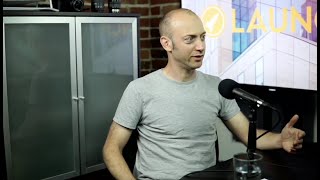
First-person interview with Lionello Lunesu recounting his multi-country entrepreneurial and engineering career. He describes starting a VR/games company in the Netherlands (built a VR glider demo in 1997), an acquisition that led to enterprise VR software for semiconductor-factory design, relocations to Romania and Beijing to build development teams, and later work at Microsoft in Shanghai. He then co-founded hardware startups in Hong Kong (joined accelerator Brink), pivoted to a services-and-equity contracting company (Enuma, early 2016), and moved to Vancouver after his wife's UBC admission; he is now building developer tooling (scalable web-service templates) and participating in Vancouver’s Launch community.
Chapters
So my first job was my, pretty much my own company. So I was studying information technology in Eindhoven, wasn't particularly excited by it. I mean, the topic was great. Just I was doing a lot of hobbying at home. And one of the things that we learned in school was linear algebra. So matrix multiplications and stuff. And so we started, me and a buddy, we lived in the same house, we started building 3D games because you get to use all this matrix multiplication and 3D models and rotating them and rendering so that is how you draw it on the screen. And. And we had a lot of fun with that. And by accident, I don't really know how it happened, we stumbled upon somebody who had a lot of virtual reality hardware. And this was back in 1997. And I don't know how he got it. He was an importer exporter and he was also an Eindhoven and he had a lot of virtual reality hardware, but he didn't have much software. And so he said, hey, can you guys write me some software? And yeah, sure, we already have this matrix stuff taken care of. So we started building a game for the virtual reality helmet that he had. He also had a glider. So this kind of is a chair, but you can actually, instead of a joystick, you have this glider kind of triangle. And then with the helmet it's like you're gliding. And so we built this glider demo for him in VR in 1997. It's kind of weird. And we stopped going to school, so that was kind of the side effect. So that turned into our first product of our first company, me and my co founder back then we also made some, just some utilities and some Windows programs for other companies. Finding customers was always a challenge because we had so much fun building stuff. And so we would look for a customer when we were done with a project. And so we would always have these dry spells where, you know, you have no income and you have no customer and now you have to do, you know, look for one, never mind the fact that we were two geeks and didn't really have all the social skills, sales skills, never mind that, to be good at it. So that was a bit of a stumbling, you know, you do a project and then you have like maybe two months without a project and without income and then you do another project. And so that was a bit of a challenge in the beginning. This guy that we built our first virtual reality demo for, he became a little bit of a salesman for us because he used that demo that we had built for him to, you know, sell his products, his virtual reality product, his hardware. Right. But he would also go to a conference and invite us to go with him and find more customers that way. So one customer we found through him was this company that also built simulators, but big ones, like huge machines that would like 360 degrees, 6 degrees of freedom of flight simulators. So that was one of our biggest projects ever. And so we kept hiring people for those games that we now were building games for this huge platform. And around 9 11.com bubble kind of happened around the same time the market for flight simulators kind of crashed, no pun intended. And so yeah, we had a big team and, and no more projects. So in the end we got a kind of like a aquihire offer. And so we took that. They were using VR technologies, but for serious projects. So for serious. And snow gaming, but still using gaming technologies. And so this was a company that was designing semiconductor factories and they were designing them like everybody else. You know, AutoCAD. AutoCAD, which is very much two dimensional, right? Of course they give you a 3D view view. But each engineer, you know, you have the, the structural engineer, you have the, the water, the electrical engineer. Each of them makes their design in this software separately. And then when it's time to build, they print it out. They have these huge sheets of paper that, that go on, on the table and then they start building. And of course when they start building like that, they run into trouble. Hey, this pipe here is exactly where a column is. So now we have to change the design. As we build, we change the design. So this company that acquired us thought, hey, what if we use gaming technologies real time and make it a multiplayer game. So the electrical engineer logs in, the water engineer logs in, the structural engineer logs in. They design their thing, but in real time, the others can see where the column is. It's no surprises. On top of that it's VR. So they can actually walk around. Management can walk around. They might have read only access, but they can walk around and see their building being built in real time. Now when it's time to build, you still get your paper if you want to, you still get your printouts all generated from this 3D model, but you won't have surprises. And that was very cool. So we ended up using all these real time gaming technologies to build like semiconductor factories like, like intel, tsmc, amd. They, they all use this software. And so yeah, that's how I ended up in Romania. They had a development team in Romania. And so I relocated within a year from Netherlands to Romania. I worked there for that team for five years and grew that team there. And then similarly, they also had a development team in Beijing, China. And so I moved to Beijing for two years as well. This is a story that everybody has moving to China and their first fuck up, which is you do not give feedback in public in China, right? So in the Netherlands you can tell somebody, you know, you can do pair programming and you can comment on their code and that's fine. Everybody takes it as input, as feedback. In China, that's very much not done in public because people will feel like you're denigrating them or you will make them feel very bad. Like I remember in my first month I told somebody that their code could be better written a different way. And he started crying and I'm like, oh my God, how do I. That was a tough lesson. So in Beijing I spent two and a half years. I quit that company, that company that had acquired my technology. I quit after eight years and again, virtual reality wasn't going anywhere. That company had some internal management issues. I think I had a fallout with my boss back then. I quit and I started doing my own thing for a little bit, but also looking for a job. And then I found a job at Microsoft in Shanghai. And that was so opposite of what I had done until that point. I had my own company after that, ran my own team, not my own company, but still running my own development team. And I thought, oh man, how does a software company actually run? I had no idea. I didn't learn any of this stuff. So I thought, okay, let's pick the biggest company, software company and the biggest project. So I started working on Windows for Microsoft in Shanghai, working as one of, I don't know, it was like 100,000 developers if I remember correctly, in the whole company. And then working on this huge project and bug tracking and going to production. And when you say production, you mean it, right? This is like billions of users are using the operating system. That was very humbling. I learned so much. I think after two and a half years or so working in Shanghai for Microsoft, the Windows team in Shanghai was no more. So Windows became completely us only. And so there was another team that I worked for was not as interesting to me as working for Windows. And so I left Microsoft to join a startup in Shanghai that was a startup with some other Microsoft colleagues. And then I started doing my own thing. I started a hackerspace with my friends. Technically they started it, but I was the first member and Just became part of the core team. It was definitely the first hackerspace in China called Xinchejen. And right after a lot of hackerspaces appeared. This was around the time that the fourth industrial revolution, this kind of concept became widespread and 3D printing. And we can now decentralize production and people can make their own products and we don't need to to have big factories anymore. That was like very hip in the 2000 and tens, the hacker space. We had soldering irons, we had 3D printers, we had laser cutters. And so people came there to make their prototypes and try to do a startup. In the same building was also an accelerator. China Accelerator was called China Accelerator. They still exist. And so being in the same building, we had a lot of startups and we had a lot of these pitch sessions. And so I met a few people. I met one guy, he had a very nice idea. He was thinking of making a hardware product, but he was not technical at all. And I thought, oh yeah, that is very interesting. He's onto something. So this was like a little cube that you could put on your desk with a display and would be connected and the display would show you things like, for example, you have a meeting coming up, or you could use it as a trigger for IoT, if this, then that. Or you could use it as a timer or like a recording device. And so a little cube was very cute. And so I started doing that. I worked on that startup with that guy and a previous colleague from Microsoft. We found an accelerator in Hong Kong for our hardware company. There was a hardware accelerator in Hong Kong called Brink. And we joined that accelerator and we said okay, because they had connections with manufacturing and being in Hong Kong was very central also. You know, at that point I had lived in Shanghai for six years. I was also ready for a new place. So we moved to Hong Kong, me and my co founders. But very early, the accelerator connected. You connected us to all these people, the manufacturing, the plastic injection factory, the plastic molding factory, the mechanical designers. And we did interviews with all of these companies. And as our project took shape, we just realized this device was going to cost like US$150 and nobody would pay it. And so it became very apparent to us to make money in hardware, you have to sell services. You have to sell this device at a loss and sell services to recuperate that money that you invested in the hardware. And so we just didn't see a way to make that work. And so we canceled that project. But we stayed in Hong Kong. So Me and the and another co founder founded a new company called Enuma. And that became early. This was early 2016. We did contracting services. You know what, we were there. We said, we already in Hong Kong. We know how to program. Let's just find some projects and get paid by the hour. We did get inspired, like I said previously. We had discussions with all these designers and factories and all of them, you pay them to make your thing, but all of them asked for a cut. They all asked for maybe 10, 20, 30% of your product. That was one way for them to charge you less because you're a startup, but also a way for them to get a huge return on investment. And so we said, hey, let's do that. Let's do the same thing. Let's say we're programmers, we're contractors, but we don't want just cash. You pay us some hours. Yes, but we want a stake in your company. And that worked very well. By then, we had hired maybe eight people. I think the team at the top was like 10 programmers, all working on different projects because we were contractors. But then our biggest contract, our biggest project got acquired. So our customer got acquired. And as part of that acquisition, of course, the person that acquires the project, they're not happy when you just give them a USB stick with the source code, right? No, they want the team that has built the project. That is a lot of the value is there in the team that is building it. And so unfortunately, that team that was building it was not actually the team of the company that got acquired, but it was the team in my company working on that project. So I, plus three of my employees, we had to move to this company that. The company that acquired us had no offices in Hong Kong. There were like 10 offices I could choose from. Vancouver was not even on the on the radar for me, to be honest. What happened at the same time was my wife had applied for a PhD at UBC and other places, but then at UBC she got accepted. And so she said, hey, I got accepted at UBC in Vancouver. And so I checked and Vancouver was indeed one of the options that I could go to because they had an office here. This thought of doing my own company again was always there. It just happened that the thing that I would like to work on got more and more clear. And once you get a certain clarity might not be 100% right. Once it's like through the hazy window, you can see something, then I think it's a good time to start working on it. And I Got reconnected to one of my old managers at Microsoft. So my co founder now used to be my manager's manager actually in Microsoft Shanghai. And we got reconnected and we're like, you know, both of us had ideas. The ideas were actually not very close. It didn't even, when we started talking, it didn't even look like the same idea. But as we keep iterating, we come to a like, hey, there's something here that is common to both our ideas. And so why don't we focus on that now? He used to work for Microsoft, so he was already in Redmond and still there and I was in Vancouver. So you know, we actually met up in person after I moved here. And he registered with Launch first because he had already seen read about Launch. And so he joined the program with his idea, which was not an exact fit of what I had in mind. But yeah, slowly we're turning, you know, coming to finding this common ground. Having built web services for like close to 20 years, You start to see a lot of commonalities. Like every web services, every web service that needs to handle a lot of users ends up being shaped a certain way. And they all need security taken care of, they need scaling taken care of. They need continuous integration, continuous deployment, account management and access management, logging, observability. These are all aspects that every service needs. But if you follow the very popular tutorials, how to Build a Service, all of these things are afterthoughts. Like Ruby on Rails is popular, or maybe less so now, but it'll teach you in like a few hours to build a web service and in another hour it actually teaches you how to put it on AWS with your domain name. And I know you have a web service up on AWS and for all intents and purposes, that will look like a production web service. You could make your own Twitter clone in a few hours, put it on twitter.com and it will look like a Twitter clone. But of course it has none of those things. It doesn't have security, access management, continuous integration, continuous deployment, security, observability. All those things are missing. Scalability. If your Ruby on Rails app gets a hundred thousand users just because Elon Musk tweeted your URL, your server dies. And so following the usual way of building a service, following a tutorial, putting it on AWS and then all the other things as afterthoughts is just a very bad way to build services. So my idea then is let's not make it optional. Those things that every company ends up doing, they'll do it three years in. You know, their service is happily running because of 100 users, but now they get 101 and suddenly they need to scale out. So let's not even make it an option. Let's give everybody this template that we know works. And it's very complicated, right, because it's how Twitter was built, it's how Facebook was built. And so you think, I only have 10 users, why do I need this? Because you might need it and you shouldn't have these things when your users are already using it. And now you have to redesign your website because you can't handle the load. So let's give people the tools they need to build these Twitter scale services. When you start a company, you have to be very open minded because you have to be ready to pivot and you have to be open minded in the sense that you might be working on this idea that you think is worth working on, but then suddenly you're trying to sell this thing, but you find out people are actually willing to pay for something else, then you should be ready to say, okay, you know, this idea was good, but right now I can actually sell something else that people want, then I should be doing that. I always joked to my co founder, hey, I know that we're building developer tools and developer web services, but as a backup plan we can also sell Boba tea and maybe I know a very good spot. So there could be a pivot if the other idea doesn't work out. Me and my co founder, both of us are new to Canada and so to get started here with a company, there's so many things that we don't know. And launch was able to give us that template, that structure to get started quickly. For example, working out of the co working space here. So that's taken care of. I like working out of an office. I don't get much done at home. Unfortunately, it also helped my, my co founder's case, you know, it also helped with some Visa processes and stuff like that. The people I've met through Launch, I've only been here for a month now, right. I left my day job a month ago. But the people that I'm meeting, they're very high caliber and so being able to bounce ideas off of them and who knows, all of them need web services. So who knows, I might have future customers here too if I do my job right. So getting this network almost ready to go instead of, you know, trying to figuring things out all by yourself saves a lot of time. But I have been impressed with the technology scene here. The tech scene. Some of that is because I thought Hong Kong was very deprived in that area. So coming here and you see these week, these meetups, weekly, monthly technology related meetups. Like there is a computer science meetup bimonthly that I joined. Super high quality people talking about the latest computer science research. There's a DEFCON computer security meetup also very high quality content weekly. I believe just that alone gives so much value. Being in a place where you have similar minded people hiring engineers here I don't think will be a problem. As opposed to some of the other places I've lived in. Trying to hire strong engineers in Hong Kong has always been hard. Hong Kong is very much a financial center, not so much a tech center. Doesn't apply to me yet. But just knowing that you have Amazon is big here, Microsoft is big here. There is a lot of supply when it comes to good engineers and they're cheaper than Silicon Valley, so that helps a startup company as well.
More from Ray




A Founder's Story. Creating the World’s First Laundry Robot — Joshua Rabanne, Laundrx

Bits&Bytes with Sherry Li, Assistant Professor at Berklee, Co-Founder of ICTUS Audio

Why This Young Person Left Child and Youth Care To Work in Tech - Bits & Bytes with Samson Li




