A Founder's Story. On Track To Disrupt Traditional Construction Management — Syed Ahmed, OnTraccr
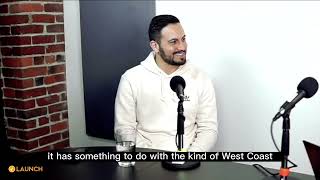
This is a recorded founder interview (Syed Ahmed, co-founder of OnTraccr) describing his lifelong interest in building products, how he and co-founders Jaz and Shane came together (Syed met Jaz at UBC; Shane worked with him at a prior startup), and why they targeted construction as a laggard industry similar to healthcare. He recounts an early product pivot (from a field management/time-tracking app to a construction workflow automation platform that reduces paperwork, reporting, and compliance tasks), involvement with the Launch program, fundraising strategy (began outreach in November prior to needing funds, used pitch competitions for practice), and early traction: nearly 30 companies onboarded with nearly half on annual paying contracts. He emphasizes next priorities: customer retention, shortening sales/onboarding cycles, and investing in customer success; he also praises Vancouver’s supportive startup ecosystem.
Questions this video answers
Jaz and Shane
Nearly 30 companies
Nearly half of them
He started fundraising in November of the prior year (earlier than his planned Q2 start)
A field management app focused on time tracking
Chapters
When I was a little kid, I've always, you know, I've always loved designing and creating and building things and more so not just building things for the sake of building them, but actually creating something and giving it to somebody and see how they react or see how it could help them. So I've been doing that since I was a little kid. Like, I remember I started my first hustle, I think it was about just 9 or 10 years old, and I created a line of coloring books and sold them to my classmates. There's a really popular show at the time called Dragon Ball Z. And yeah, I just remember that, that feeling of like, hey, the, you know, these kids are loving what I created for them. Right. And so I think that that carried forward throughout the rest of my life. And that's actually what drove me to study engineering in the first place, is, you know, just that whole process from scratch, you know, creating something out of nothing more than an idea in your head and seeing it materialize and come to life and also become like a functional tool that you can give to somebody. That's. That's always what's motivated me. So, yeah, like, I've always kind of carried that forward. Any chance I could, I would. I would either work with a startup or join a startup. More so in my career, all of the startup experience that I've had has been in, you know, what I like to think of as laggard industries. There are these really large and essential industries for our economy, but they're really slow at adopting technology. So that would include agriculture, health care. So I spent a lot of time in those verticals and I realized that for me, that's what I like the most actually is trying to bring new innovations to these massive industries that we all depend on. We all rely on them, and they need a lot of help, right, in order to move forward. All the blockchain and the metaverse and all that stuff is great, but I care more about. With every new advancement in technology, there's always a large group of people that aren't quite there yet and they need a lot of help. And so I look to target those areas. And that's what led me into construction shortly after healthcare, because it has the same characteristics, massive, vital industry for the world. Really far behind in terms of technology. It's been underserved in terms of technology. There hasn't been the greatest options in the market. And so that's what we're looking to change with Ontracker. So I have two co founders. It's Jaz and Shane, and with Jazz, we actually go way back. We went to school together, we both started studied engineering at ubc. And even back then, we were always kind of tinkering around with, you know, we'd work on projects for school, and so we'd always try to think outside the box and kind of play with them a little bit. And that got the juices flowing. And so, you know, I'm very, very good friends with Jaz and every time we see each other throughout the years, we were always kind of contemplating, like, hey, what, you know, what can we do? What can we build together? And after graduating school, I kind of went into the IT path, whereas he went straight into construction. And so every time I'd see him, he'd always tell me about construction. And so, you know, after I was finished with the last startup journey that I went through with Blue Willow in the healthcare space, I was looking for the next challenge and made sense to reconnect with Jazz. And it seems like the industry, the construction industry, didn't quite progress the way everyone would have hoped. So there's still a lot of room for it to improve and evolve. And so, yeah, that's what connected us back together. And then with Shane, we worked together at the last startup and yeah, we just have a great relationship. And he was also in the same boat as me, not the biggest fan of the big companies and wanted to get back to building something and something that he enjoys doing. And so, yeah, it just naturally made sense that the three of us connected and we decided construction was the area we wanted to focus on. And we jumped right into it and interviewed as many companies as we could, and we uncovered the biggest pain points. At Ontracker, what we offer is, we call it a construction workflow automation platform. And essentially the goal of construction workflow automation is to automate all the stuff construction companies hate doing. And by that I mean all the paperwork, the reporting, you know, ensuring compliance, you know, managing the field teams and spreadsheets and all that kind of stuff. We're on a mission to make sure that we can automate as much of that stuff as possible so that the construction businesses can focus on what matters most, which is the actual physical construction work and actually putting up these beautiful properties everywhere. We actually did a major pivot to get to construction workflow automation. That's not what we started with. We actually started with a field management app, which the main thing it did was time tracking. And so, yeah, we were pursuing that strategy for a while, and in talking to more and more companies. The good thing about that at least was it helped us get in the door so that we could start to engage with these companies and start a dialogue. And we quickly uncovered what the real opportunity was in the industry, which was, you know, more so like above and beyond, just the field tracking side of it and more so that all the paperwork and stuff that even the office teams hate doing. And so, yeah, I think that that was the biggest challenge for us. It's. I don't think it's. Especially as early founders, you know, if you haven't done it four or five, six times before, I think pursuing something that's not going to work and realizing that you're wrong, I think the first time could be kind of shocking. It could be a little challenging. But the point of any startup is you want to learn as quickly as possible, right? And if you're wrong, you're wrong. The best thing that could happen is you find out you're wrong as early as possible and you adjust and you pivot based off that. So, yeah, I think that was probably the biggest challenge for us. I had always heard a lot about launch. I think when you think of Vancouver startups launches, one of the first, first brands, I guess you could call it a brand that comes to mind. Right. And I've known a lot of people that have gone through the various launch programs, have interacted with, you know, folks from launch. We explored the programs that launch offered and we found the. The program that works. And, yeah, there's been no looking back. Honestly, it was probably one of the best decisions that we could have made at the time. Because one of the risks you run when you're building a startup is you could end up in isolation. Right. Like, and that's tough because the startup journey is challenging. There's ups and downs. And if you have a. If you, if you're doing it by yourself and you're completely isolated, it becomes very hard to deal with that stuff. But if you have a community that's there to always support and always encourage and provide help wherever you need makes all the difference. So, yeah, I am just really thankful that we were able to join the program when we did, because it's really, really helped to get us to where we are today. Just the fact that we're on the same slack and everybody's connected. There's all these huddles, there's all these events that happen, amazing guest speakers that come in that you can learn a ton from. It's almost always, like, it's a reminder, you know, for Me every week that, you know, you're not alone, right? You're not alone. And there are other founders who are going through the exact same things you are, the ups and the, and the, the downs. So no matter what you're, you're always going to have people that can actually understand what you're going through and can always help. I was trying to raise a small around last year without any traction. And then you leave things up for debate, right, with investors, it comes down to the fundamentals behind your idea. And anyone can argue that, right, because you don't have anything to show for it. It's just a plan. Whereas this time around, we had already started generating revenue. We were getting great testimonials from our early customers. We even secured some partnerships as well. You know, have been able to validate the initial problem. Right, that, that we're trying to solve. And so taking all of that to investors, it's, it becomes harder to, to argue with. Right. When you see the numbers behind it. And yeah, I think that that made all of the difference. And the second thing I would say actually is I started fundraising well in advance. We didn't need the money. And I remember, you know, my plan was always to start fundraising, you know, in Q2 of this year. And we actually, I started that process in November of last year and actually it kicked off with the, the launch competition, the, the pitch competition. And that really helped me get, you know, practice my pitch, different forms of the pitch, make sure, you know, you get your vision down, you're able to articulate everything. And yeah, so I would say those, those two things traction. And I actually started fundraising before we even needed to fundraise, just to build relationships and get on people's radars. The funding and it's mainly just fuel, right? At the end of the day, it's not gonna mean you succeed just cause you can raise money. You need to build a great product, you need to be able to distribute that product. And you need to, most importantly, over everything else, you need to provide value to the industry or the vertical that you're targeting. And you need to see proof of that value. You know, if you plan to fundraise later in the year, get started now honestly. And you know, the worst that can happen is, you know, people are going to tell you they're not interested. But every, with every no you get from investors, you're going to learn, right? Maybe it comes down to your pitch, maybe it comes down to how you're positioning the product. Maybe you don't have any Traction. And it, it made you realize, I need to go get some traction. Right. It's going to keep you honest. And I think, you know, the sooner you get started with that process, the better. It doesn't mean when you start early that you need to say, oh, you know, we're raising this much money for this, this, this, you could just say, hey, we're raising money later in this, in the year. And if you're interested, you know, we'd love to add you to our, the investor newsletter or just stay in touch and, you know, connect with them from time to time. Yeah. So you want to get on that ASAP. Right now we have nearly 30 companies using the platform. You know, a lot of them because we're in the early days, we're still in the first few months in the market. So, you know, a lot of them we've been partnering with together to actually build out the platform and continue to get the feedback. But yeah, nearly half of them have already started paying on annual contracts. And so, yeah, we're starting to see those early, early signs of revenue and get that early traction. The fact that we're generating this kind of revenue within just the first few months is a good sign. But obviously there's a lot of work to that we still need to do. So, yeah, we're going to put our foot on the gas. You know, we've, we've been able to acquire customers, but, you know, the next challenge is retaining customers. So we need to start focusing on other areas like customer success, you know, and continuing to iterate and provide additional value. We also are learning now. You know, first of all, there's the sales cycle side of it. Right? You want to try to reduce the sales cycle as much as possible. And then after the sales cycle, there's the onboarding time because we are an enterprise tool, so you want to always try to shrink those. And so, you know, you got to create a lot of resources and things like that that can help your customers through their journey. And so I think that's what we're hyper focused on right now, is to continue to not only acquire customers, but prove that we can retain them and just hang on to them, make them all happy, make sure people love the product and we keep growing from there and this will take us to next year and hopefully we'll be able to raise a bigger round next year. I'm always amazed in Vancouver, to be honest, at just the ideas and the innovations that are coming out of here. And I think for me, it's started when I went to UBC and just, you know, was was able to observe a lot of the research work that was happening, you know, in Vancouver. And it's amazing, right? You look at especially the clean tech space, obviously with Web3, you know, it's becoming one of the hubs in the world. And also actually even for construction, it's, you know, because it's such a big market for construction, there's a lot of interesting innovations coming out of Vancouver and I think too it has something to do with the kind of west coast mentality that we all have over here. Everyone's kind of laid back, very friendly, open minded, very supportive. And yeah, every time I interact with anyone in the startup community, it's nothing but supportive. Right? Everyone always tries to help each other in any way they can. It's a very interconnected startup ecosystem here. And that's one of the reasons why I love being part of the launch community is you can always reach out for help and you'll be put in touch with the right people that can actually help you. So, yeah, I think it's a great place to be in terms of starting a tech company. Vancouver is awesome.
More from Ray




A Founder's Story. Creating the World’s First Laundry Robot — Joshua Rabanne, Laundrx

Bits&Bytes with Sherry Li, Assistant Professor at Berklee, Co-Founder of ICTUS Audio

Why This Young Person Left Child and Youth Care To Work in Tech - Bits & Bytes with Samson Li




