A Guide to Seed Fundraising
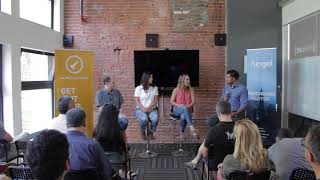
Sarah Goodman, Monique Gordon, and Craig Slagle discuss why they raised seed funding and where they found it: crowdfunding, friends and family, angels, and government grants like IRAP and SR&ED. They share how they prepared with mentors and pitch practice, and why choosing investors who can help with sales matters more than just the money.
Chapters
Foreign. Welcome to Launch Academy.
I'm Alana, I'm with Launch Academy, igr and Smartphone here. We actually have a lot of representation of Launch Academy up to the front. So for those who haven't been here before, Launch Academy helps entrepreneurs launch funding for other startups. Basically what that means is the pilot here called Launchpad. We are actually open for memberships right now. So if anyone knows of anyone who's looking for a state, you can go to LaunchAcademy CA and look at our membership. We also have a startup visa program which brings companies from all over the world to Canada. And we also have our monthly events including Traction, if you haven't got your.
Ticket yet at 5:11.
So thank you as well to our partner Angel. Angel essentially is an analytics platform that uses AI to match VCs and startups and they help participants. So thanks to them and we also have our lovely panel and moderator. So Ganesh Swami is from Covalent. He's going to be moderating today. We have Sarah Goodman from Vital Signs, Monique Gordon from lendify and Kreisle from Renco.
So I'm going to hand the mic.
Over to Ganesh and good luck.
Thank you, Lana. Super excited to be here guys. So a small story about Covalent. I've been a tenant at Launch for about two years and finally after two years, closed round of seed funding. So I think the scars are still fresh and so I think I'm really looking forward to this and thank you to the panelists for their generosity with their time. So let's just get started. So can you tell us a little about your current role and how you got there?
Sure. Do we need to talk into that or is this working? So I'm Sarah Goodman. I was the CEO of Vital Signs. We just brought in on a new CEO. I'm the COO of Vital Signs. We're a health tech company from Vancouver and we make products that measure science backed health metrics that make sense to regular people to help them improve their health and live longer and healthier lives. So we developed a product called Iheart and we've sold that for three years. We've done three rounds of funding, friends and family like A seed A and A seed B. And yeah, we just passed our 1 million revenue mark.
Yeah, awesome. Good for you. So I'm Anique Gordon. I'm actually CEO of lendify Technologies. But the route that I took to get here was I had started a startup, Mintio, which was out of Launch Academy and did a little seed round and went down to techstars did techstars tried to raise money there and then got acquired by lendify. So we were trying to raise money and raise as much as we wanted to. Got acquired by lendified and that gave us more Runway, more gas in the tank. And lendified has just done, I guess you might call it a larger seed or something like that. So I've seen it from kind of both sides and now I run the tech side of the business. So looking forward to telling you this story. The highs and the lows, the up and the down that I'm sure we've all gone for. Yeah.
I'm Craig Slagle, I'm the founder, the CEO as well, but I prefer founder of RunGo. We started, we make a running app. It's now being used as alternative to route maps. So people use it for running routes for walking tours and it really just talks to you and tells you which way to go. Rungo is actually our third app. We tried two other apps first of all, but no one wanted, including me, so I wanted to make it apply. People wanted Runga was started late 2013 for funding. We actually haven't raised any money, so they still allowed me to come here. We are looking to raise money at some point. We were just about to raise money, but then something else happened. So we decided to hold off a bit, raise money back and talk about that later.
Is that something you guys got profitable or.
Yeah, so I actually went to an indoor vesto. I, I have some advisors. If you haven't got advisors, get advisors because they're really useful because you don't know everything and some people know more than you. So I did a whole new pitch deck. I got everything ready. I said, okay, now we're ready to go. And I showed to my advisor. He said, well, this looks really good, but why aren't you making more money? And I said, well, I hate doing sales. And he said, well, I'll do the sales for you. So he came on and took over our sales and now we're profitable. So we're going to work on that. We're going to increase our sales over the next three to four months and then look, raising money then, and it'll be a lot easier and we have a lot more options.
Thank you.
Yeah.
All right, so before we get started, the first question I'd like to ask is, why seek external funding? What was that trigger moment in your decision making process? Why not Bootstrap?
We did Bootstrap for a long time and we were able to develop a Full product. And then we did. Our first, I guess, outside funding would have been when we launched on indiegogo with our MVP and we got about like 36,000 in and then we needed to grow and so we brought in.
Yeah, yeah, for us, we're in the fintech space, so it actually took a while to build the product. I know you always try to go out with an mvp, but there's actually like a lot of data, a lot of integrations, a lot of support security that we had to do before then. So it felt like a long time to get there, so we just didn't. Even though when we initially put our plan together, we thought the revenue would come earlier and it didn't. And so to sort of keep going, we needed to, you know, get some investment in, to keep going, even though we, some of us weren't paying ourselves. But you have to pay some developers. You know, it was very, very lean. So if you can bootstrap, it's great because then you don't have to dilute yourself. But it is the balance between, you know, how fast you can grow and how fast you can get there. There's a sort of chicken and egg that goes on. So everyone kind of has to decide for themselves if it's, you know, worth it. And you should also be careful. You can get desperate for money, but not all money is created equal. So you want to be careful, you know, who you bring on as investors, too. Okay. Yeah.
Anyway, we're just all loud volumes up. So again, yeah, we haven't actually done any external investors. We've actually done some friends and family, bootstrapped. You know, I put a lot of my own money into the company. I looked at loans. Turns out if you want to get a loan, you have to pay yourself. Because I wasn't paying myself. They wouldn't give me a loan, so. And I could pay myself. I would have had to take my money, put in the company, then pay myself from the company money. But I refuse to do so. That's my reason not getting a loan. I know there's some other options. And then when we're looking at raising and we decide we are going to raise at some point, it's really about growth. I mean, you know, we don't want to be desperate. Like I'm going to die if I don't get money. Because I don't think we should be looking for money at that point. I think you're just going to end up the wrong investor. But I think we've got some ideas of Things we want to do in the future, but we can't do without more money. We want to build secondary products that we feel will be a much larger market and work much larger customers. And for those things, we'd have to increase our team size quite dramatically. I think that's when we want investors and that's what we're trying to do is get to that point where we have these contracts in our hand. And now we say, look, we have these. Now we need money. Cool.
Thank you, guys. Okay, so the next question is, if you've decided to go raise funding, who would you approach? There are lots of avenues. You can go for government funding, you can go to angel investors. If you have rich friends and family, you can go ask them for money. You can get a bank loan. You can go directly to institutional. So what was your thought process along those lines?
We weren't seeing a ton of revenue right away in a bank loan we didn't even think was an option for us. We had people who wanted to invest in the company and we were happy to take their money and grow then.
And these were angel investors?
Yeah, angel investors. First friends and family and then angel investors. But now there's so many other programs that you can take advantage of. Like this was a while ago and like with FuturePreneur and BDC and looking into like lower interest rate loans is a really good idea. So you don't dilute yourself early on because you'll usually have multiple rounds of funding and you don't want to cut yourself short.
We did. So yeah, it was initially kind of friends and family and founders that invested. And then after that we did do irap. I know irap, the amount of money they have each year sort of changes and how much they put out and who they're giving it to. But we did manage to get some IRAP money. We also made sure that we put our SHREG claim in. So that was actually for most of the money that was going out was going on the development side. So being able to put the SHREG claim in and get that money sort of helped with cash flow. So we tried to maximize all of that. We did look for if there was sort of grants and you know, sometimes that becomes almost a full time job just trying to, you know, do that. It seemed a little wasn't quite worth our while at that stage. And then we have. So you can't. There's all sorts of things depending on when you start to get, you know, revenue. You can actually, you know, get financing on Your shreg claim. So once we had had a shreg claim and then you get your prediction for the next year shred, you know, you can you know, get basically a loan and in advance on that. So that helps with your cash flow. So that's another option once you've kind of done shred. So we have done that because we're in the fintech space right now and the other co founders are bankers, they know how to go and get sub debt and all sorts of stuff. But there, there is a cost to that. So you know, in some cases the interest rate is significant high, you've got it for a short time frame. So there's you know, pros and cons to that that could also eat into your cash flow. But it helps you get the cash initially to get where you need to go. And then you know, went through a round that was looking at follow on money for people who had been there and then trying to get, you know, additional investors angels in and just recently got some institutional money in. So back to, I think what you were mentioning about advisors is make sure you do have a really good suite of advisors and some of them might be angel investors. So they're not going to be an investor to start with. But if you can talk to them and get their advice, that's a way for them to get to know you and hear your story and see that you're progressing. So they're going to want to see if you see them every month or every quarter that you're making progress and that's part of your sales pitch towards the investors. So like the guy that, the guy that joined you, he's like, hey, this is good, this is so good. I believe it. I want to, you know, be a part of it. So if you can get smart money like that's, that just, that's like, that's perfect.
We got smart with that money. So that's what we. The funny thing was the money was going to be to hire someone like him. And so we didn't actually need the money if he was willing to do it for free. So it made sense. He gets a commission but then it works out really well this way.
Yeah. And one of our angel investors like knew the space was connected and so was really helping us. So it wasn't just the money that he put in. He was vested into the company and was quite involved and super helpful. You could reach out whether it was for connections and meetings or to strategize about stuff. So that was hugely, hugely valuable.
There's a question.
Yeah.
You mentioned about the strategy. Does it really make quite a lot of difference for startup, tech startup at the very beginning?
Yes, yes.
So on the technical side, anyone, any developers that you're using, you get like 60% or more back in whatever you paid them. Whether you get more if they're an employee, but you still get a significant amount if they're a contractor. So it's definitely worth it. Even if it's 50,000 and you get 30,000 back, you know, the next year, it's hugely valuable.
I got my strength check today. Yeah, we talk about the grants things. I mean, we, we did irap. It's pretty straightforward. Things cost and developers were extreme. So if you increase their cost by 60%, it's totally worth it. You have to understand the process. You have to know to document things properly. We should be doing that anyway, so. And then, yeah, we boost up as much as possible. When things got really tight, we reached out to friends and family. And then actually, I think being tight at times is really good for your company because then you say, okay, how can I make more money? And every time I've seen a boost in revenue is when it's like, I'm going to ran some money soon, so I better start figuring out how to make money. Maybe I should focus on more sales or how can I optimize revenue. So I really think sometimes too much money is not a good thing. And I think that's why, you know, getting as far as you can without investment sometimes is good as well.
Thanks.
Yeah.
All right, so the next question is, how did you prepare to fundraise? So when I was fundraising, I've seen every single episode, every single season of suits, so I thought, you know, I had. And then I go into the fundraising meeting and then they throw words like pro rata and all this stuff. And I think I skipped. Maybe I slept during the season. But how did you guys prepare with the fundraising process?
So I was working out of launch and I practiced a ton and I took advantage of every mentor that I could talk to here about how to begin the process. I started talking to people who were in the industry that we were in, and I entered every pitch competition I could and was very humble and took all of the criticism that my pitch deck sucked over and over and over again until I learned how to make a really good one. And then, yeah, same as, like finding people who have experience or have been in the tech community, like Ray Walio was awesome. And I still update these people like four years later. Like every quarter, but doing all my research, figuring out who actually invests in companies like mine and then getting introductions from other people. Oh, there's Ray. Hi.
Shout out to Ray.
Didn't even see you there, I promise. But yeah, just, just making connections and meeting people and going to like every single event and just trying to figure out who would be interested in what we're making and talking to them. And a lot of people didn't end up investing, but I'm still tight with them and I. And you learned so much. Yeah, yeah.
You have to have a thick skin. Don't take like, take the feedback for what it is. Don't be like, well, no, that's not right. Listen, I always say perception is reality. So if that's the way they're perceiving it, then you've got to digest that and figure out how do you change it so that you're telling the story that you want to tell.
Yeah, I lost so many competitions but like there was, I got so much perspective out of it and I won some like, you know.
Yeah, yeah, you'll get better. It is practice and then you need, you need different versions of pitches. So you need your, if you've got someone for 30 seconds or a minute, what do you going to tell them? If you're going to have a three minute pitch, a five minute pitch, a.
Ten minute pitch and who's the person? What are they like?
Yeah, and then if you have an hour and then you really have to be prepared because they might want to drill down however deep it goes. So it's, yeah, practice, practice, practice. And, and you have to be concise on your, on your story. Don't make it confusing. Don't go too far into details. Like I think that's, that's the hard part is you can like, you can probably talk about your company for hours and hours, but it's not all going to stick. So it's, how do you, how do you tell a story? And you know, there's a pretty formulaic way to put your investor deck together and follow that format because all the investors are used to that. It's like, what's the problem? What's your solution? How big is the market? How are you different? What's your business model? You know, what are your projections? What are you asking for? Or what's the team? It's pretty prescribed, so find a tight way to tell the story.
I think, sorry, just before you go over, one thing that's been really helpful that I didn't do the first round was creating a really nice investor funnel and breaking people down into top priority. Who's the contact? Who do I know them through? And being able to have it organized like a sales funnel was really helpful.
Yeah, that's a really good idea. And you do need a lot. And it's. And it's hard. It's just like sales, except it's the other way. You might not be able to get a meeting with someone or you keep trying or you see who can make an introduction to them or. And the practice, practice on the. I always say, don't ask the prettiest girl in the room to dance first. So if you're going to a big heavy hitter, angel investor, like, you better have your shit together. And you don't go in and practice on them, go practice on friendlies.
There's so many people at places like this that will help you.
Yeah, yeah.
They're so happy to help you and they'll rip you apart, but then it'll be better.
Yeah, yeah. And the pitch, I did a ton of them as well.
They're.
It's great because you have to be up there under pressure in a time frame. And I still occasionally go and do it if there's actual money you can get. That's another way to get some money is there are some pitches where you. It's not just for the glory. You can actually get some investment. So be aware of that and don't pay to pitch.
Well, you can win money too at these things and lots of actual investors go to these pitch competitions and then they'll come up to you after.
Yeah.
So, yeah, just like Sarah, I was also at Launch Academy, so I went to the pitch practice sessions, lots of that. Went to a couple of different pitch competitions and then we both were at Dragon's Den. Yeah, that's a very different kind of pitching.
Yeah.
It definitely made me like study every little bit in detail about my company.
More from Ray




A Founder's Story. Creating the World’s First Laundry Robot — Joshua Rabanne, Laundrx

Bits&Bytes with Sherry Li, Assistant Professor at Berklee, Co-Founder of ICTUS Audio

Why This Young Person Left Child and Youth Care To Work in Tech - Bits & Bytes with Samson Li




